CT Arts Organizations to Participate in Make Music Day on June 21, Joining 800 Communities in 120 Countries

A year ago, over 800 cities around the world threw citywide music celebrations on June 21. Three decades after the concept was born in France, the Make Music celebrations has spread throughout the world and is now marked in more than 120 countries.  Later this spring, it arrives in Connecticut for the first time.

Make Music Connecticut will feature an eclectic mix of over 250 free outdoor musical events, and is part of Make Music Day, a global music celebration that takes place on the summer solstice each year and brings people of all ages and skill levels together to make music.

In addition to Connecticut, more than 70 U.S. cities will collectively host thousands of Make Music performances. The event is not a concert, or series of concerts, organizers point out.  Any musician, amateur or professional, young or old, is invited to take part by signing up at MakeMusicCT.org. Registration closes on May 21, 2018.

In addition, Connecticut businesses, buildings, schools, churches, and other institutions can visit the website to offer their outdoor spaces as concert locations.  It is the world’s largest annual music event.

The event was held for the first time in North America 11 years ago.  The numbers continue to grow.  On June 21, 2017, 53 North American cities organized 4,138 free concerts at 1,179 locations.

Each Make Music city is independently organized. Often it’s a local community group, media outlet, arts presenter, government agency, or civic leader who champions the musical holiday in their hometown.

Make Music Day Connecticut is being administered in partnership with the Connecticut Office of the Arts and the following organizations: Greater Hartford Arts Council, Southeastern Connecticut Cultural Coalition, The Arts Council of Greater New Haven, Windham Arts, Stamford Downtown, Middletown Commission on the Arts, Northwest Connecticut Arts Council, Fairfield Theatre Company, Waterbury Symphony Orchestra, the City of Waterbury and City Lights Gallery in Bridgeport.

The plan at the  Greater Hartford Arts Council is for “sidewalks, parks, front porches, and public spaces throughout the city” to become “stages for local musicians to perform and for all to enjoy.” Registration has opened, with  matchmaking software in place for musicians to register, create profiles and find a match for their Make Music Hartford performance.  Similar initiatives are being launched by the other participating Connecticut organizations.  Circle June 21 on the calendar!  Wherever you are in Connecticut, music won't be too far away.

Eversource Hartford Marathon Brought $14.5 Million in Economic Benefit to Region in 2017

Just four years ago, in 2014, there was a title sponsor changing-of-the-guard at Connecticut’s premier spectator sporting events, as Eversource took over sponsorship of the Hartford Marathon, Travelers stepped in to save the state’s PGA Tour event (now the Travelers Championship), and United Technologies took the lead sponsorship that same year of what had been the Pilot Pen tennis tournament, now renamed as the Connecticut Open. Aside from a source of pride in maintaining marquee sporting events, the economic impact of the events continue to underscore the significance of local corporations coming through to sustain the events.

The latest evidence comes with news that the Hartford Marathon Foundation’s 2017 Eversource Hartford Marathon, Half Marathon, Team 26.2 Relay and Charity 5K brought an estimated $14.5 million of economic value to the area over the course of race weekend.  That figure is up from an estimated $13.6 million in 2015.  Eversource is signed on as title sponsor through 2019.

Official indicated that the Hartford Marathon Foundation (HMF) spent approximately $1 million to produce the Saturday, October 14th race in 2017, primarily working with local vendors and service providers.

In addition to a local economic boost to the city of Hartford and surrounding communities, the marathon drew 71,780 spectators, participants and volunteers to the area. Officials point out that runners, friends and families stayed in Hartford lodging, shopped in the area and dined in local restaurants. Significantly, 87 percent of participants visited Hartford primarily for the event. Of those traveling from out of state, 44 percent were visiting the city for the first time, officials specified.

Thousands of runners are motivated to use the race to raise funds on behalf of various charities and causes. Through these efforts more than $288,000 was raised and reported by the event’s 20 official charities and other groups, although charity fundraising is not required to be reported, so the true numbers may be higher.

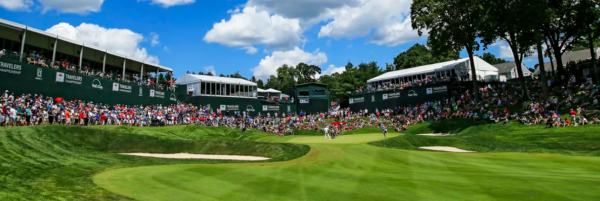
The annual Travelers Championship has an annual economic impact on the state of $68.2 million, according to a recent study by Connecticut Economic Resource Center, Inc. (CERC). An economic impact study conducted a decade ago, in 2008, found that the tennis tournament predecessor to the Connecticut Open contributed approximately $26 million to the regional economy, including $10 million in local economic impact.

The Hartford Marathon will mark its 25th running on October 13, 2018.  The 2018 Travelers Championship, will be held June 18-24 at TPC River Highlands in Cromwell.  The Connecticut Open, at the Connecticut Tennis Center at Yale, will be held August 17-25 in 2018.
“We’re proud to host people from across the country to achieve personal goals and celebrate their accomplishments,” said Beth Shluger, CEO of the Hartford Marathon Foundation and Race Director of the Eversource Hartford Marathon and Half Marathon. “We are able to highlight the best of what the capitol region has to offer in a positive and truly inspiring event that allows tens of thousands to run, walk, volunteer or spectate. We are excited to be celebrating our 25th running in October 2018 and hope to create an even bigger positive impact through this milestone event.”

The Hartford Marathon Foundation also produces more than 30 events through the year, many that contribute to other organizations’ community fundraising goals.  The 2017 Mystic Half Marathon and 10K in May 2017 generated $28,000 to benefit the charitable works of the Mystic Rotary Club.  Additional fundraising events HMF was contracted to produce races for in 2017 include the Mahoney Sabol 5K to benefit Hospital for Special Care, CT Race in the Park to benefit CT Breast Health Initiative, Zero Prostate 5K to benefit ZERO - The End of Prostate Cancer, Achilles CT Hope & Possibility 5K & 10K to benefit Achilles International – CT Chapter, Pumpkin Run/Walk to benefit Youth & Family Services of Haddam-Killingworth, Inc. and the Norwich Winterfest 5K to benefit Reliance Health, Inc.

Economic Impact of Travelers Championship Doubles in Past Six Years, Analysis Finds; 2017 Tournament is PGA Tour’s Best

The Travelers Championship has an annual economic impact on the state of $68.2 million, according to a recent study by Connecticut Economic Resource Center, Inc.(CERC)  – and the recognition of its success is not only local, but national.  The tournament has been selected by the PGA tour as recipient of the prestigious “Tournament of the Year” award for 2017. The Travelers Championship also won awards for “Most Fan-Friendly Event,” “Best Sales” and the inaugural “Players Choice.” CERC first conducted an impact analysis of the tournament in 2011, and completed another impact analysis for the Travelers Championship in 2017.  The results were compared, to look at the changes over time and factors that may have influenced changes in the tournament’s economic effects.
The results: The economic impact had more than doubled between 2011 and 2017, due to two primary factors; a much larger total number of spectators, especially the increased number of individuals from outside the state, and increased spending by the tournament in preparing for and administering the increased number of events that occur during the tournament week.

“The Tournament activities and events, along with all of its associated events throughout the year has grown substantially over the past few years, which has resulted in a large increase in the number of spectators from Connecticut and beyond its borders,” said Alissa DeJonge, Vice President of Research, CERC. “Attendance increased dramatically, which increased spending at the event and among the local businesses.”

With record attendance, sales and fan engagement, the 2017 Travelers Championship raised the bar across the board through a strategic approach that focused on providing a first-class experience for fans, players, sponsors, volunteers and charity, officials pointed out. This marks the first time that the Travelers Championship has been recognized as “Tournament of the Year.”
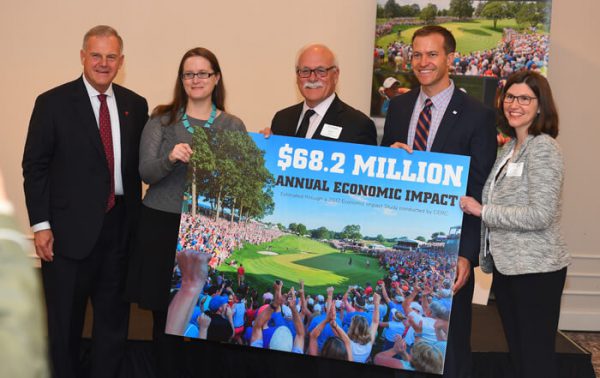
The Travelers Championship, which donates 100 percent of its net proceeds to charity, announced last month that the 2017 tournament generated $1.72 million for more than 165 local charities, including The Hole in the Wall Gang Camp, the primary beneficiary of this summer’s tournament. With approximately 4,000 volunteers worked over 80,000 hours.

It is the largest core amount raised in the history of the tournament, officials pointed out. The record-setting 2017 total brings the total money generated to $14.7 million since Travelers became title sponsor in 2007. More than 750 charities have received funds from the tournament over that time.

“We’re proud of the partnerships we’ve built with local organizations that need help,” said Travelers Championship Tournament Director Nathan Grube. “Handing out these checks to so many worthy charities is the highlight of our year. We won’t forget the week we had at TPC River Highlands, with Jordan Spieth winning in such dramatic fashion and the celebration that ensued. But knowing that more than $1.7 million is being given to such a wide spectrum of nonprofits this year reminds us why we do this. It inspires us.”

As the “Most Fan-Friendly Event,” the tournament provided options for fans of all ages, including affordable access, more than 18 food and beverage locations, fan and kid zones and public on-site concerts. The tournament increased fan engagement by 441 percent through creative video and dynamic content, and following Spieth’s thrilling hole-out to win, the tournament handle trended on Twitter for nearly four hours and the video reached YouTube’s front page within 24 hours.

The tournament continued to enhance the player and caddie experience, providing a complimentary charter flight from the preceding event, healthy food options and a variety of special features including caddie appreciation day, a performance by Kevin Nealon and multiple off-site events. To determine the new “Players Choice” category, TOUR players were asked to vote for one event based on tournament services, hospitality, player and family amenities, community support and attendance.

“We work hard on making sure everyone who attends or participates in our event has a world-class experience, so no detail toward that goal is too small,” said Andy Bessette, Executive Vice President and Chief Administrative Officer of Travelers. “We are proud to associate our brand with the PGA Tour and this event, and are honored by this tremendous recognition. The best part is that any success we have means more money and attention raised for so many local charities that partner with the tournament.”

The 2018 Travelers Championship, will be held June 18-24 at TPC River Highlands in Cromwell.

Andy Bessette, Executive Vice President and Chief Administrative Officer of Travelers; Sarah Ficenec and Bob Santy, CERC; Nathan Grube, Tournament Director at Travelers Championship; and Alissa DeJonge, CERC

State Branding Drives Tourism, Economic Development Goals

As Connecticut suffers through budget deficits, cuts in spending and services, and high-profile departures of leading businesses, states nearby are advancing economic development branding and marketing strategies to retain and attract business, according to a new report by the state legislature’s Office of Legislative Research. “As competition among states increases, economic development organizations (EDOs) continue to develop plans and campaigns to brand and market their states as great places to live, work, visit, and do business,” the report observes. “However, the effectiveness of such campaigns is mixed, often reflecting the authenticity of the message and the extent to which it reaches targeted audiences.”

Effective branding efforts can drive business recruitment and development efforts and change perceptions of a state, the report noted. It provides examples of marketing efforts in several states, including Florida, Louisiana, Maryland, New York, North Dakota, Rhode Island, Vermont, and Wisconsin.

The report, issued last week, describes branding as the message an organization is trying to convey, and marketing as the tools and tactics used to deliver that message.

According to the 17-page report, Tennessee’s “Mastered in Tennessee” branding effort is cited by several industry groups as an example of effective state branding. The campaign highlights Tennessee’s unique competitive advantages and demonstrates why it is a great place to live and work.

Michigan provides an example of how tourism branding can also serve economic development goals. The campaign, “Pure Michigan,” was designed to create an emotional brand that resonated with families and drew attention to the state’s vast, unspoiled beauty. It is widely regarded as successful among marketing and tourism professionals, with Forbes naming it the sixth-most successful tourism campaign of all time.

Greater Rhode Island Economic Development Partnership recently launched a campaign to market Rhode Island as a hub of entrepreneurship and challenge negative perceptions of the state. Greater Rhode Island developed a new website, which saw a 122% increase in web traffic, 68% increase in engagement on the site, and a 288% increase in the time users spend on the site.

Many in Connecticut are familiar with New York’s “Start Up NY” campaign, which aired many commercials in Connecticut markets, the report indicated. The campaign marketed a host of economic development incentives available to businesses that relocate to or expand in New York.

Vermont recently launched a digital ambassador campaign as part of its three-year marketing plan launched in 2016. According to the plan, the campaign uses business and community leaders, entrepreneurs, and other Vermont-loving influencers to share business announcements, national media placements, and other information that reflects well on Vermont as a great place to live, work, start and grow a business, and raise a family.

The report did not include a review or analysis of Connecticut’s branding efforts.  In 2012, Connecticut launched a two-year, $27 million marketing campaign to promote tourism and brand the state as “still revolutionary.” The state spent $500,000 on its new logo and other creative materials, with most of the remainder of the two-year budget going to the placement of ads on television, radio, billboards and social media, according to published reports. It also created a new website, ctvisit.com.

Two years later, the state announced plans to spend $3.4 million to promote Connecticut tourism ahead of the summer travel season within the state and to audiences in New York, Rhode Island and western Massachusetts.  And last year, the state’s tourism website was re-launched with a new look for the first time in a decade.

A study prepared for the state, “The Economic Impact of Travel in Connecticut,” released in March, 2017, found that the state’s tourism industry generated $14.7 billion in total business sales in 2015, a 4.6 percent increase over 2013. During the same period, tourism employment grew 2 percent, supplying 82,688 jobs in 2015, the fifth straight year it generated more jobs than the year before, according to the study.

The state’s recently adopted two-year budget includes $6.4 million for statewide tourism marketing in 2017-18 and $4.1 million for 2018-19, according to published reports.  The slogan “Still Revolutionary” remains in place.

Local Museums, CRIS Radio, Collaborate to Bring Audio Narration to the Art

CRIS Radio and the New Britain Museum of American Art (NBMAA) are working together to offer CRISAccess™ at the museum, which offers instant, on-demand audio descriptions of selected masterpieces on display by using a personal smartphone and QR Code reader.  The new initiative launched earlier this month. The goal of CRIS Radio and NBMAA’s collaboration is to provide its museum visitors with disabilities the same experience and access enjoyed by their friends, classmates and family, officials explained.

CRIS (Connecticut Radio Information System) is a 39-year-old nonprofit and is Connecticut’s only radio-reading service, providing audio access 24/7 to news and information for people who are blind or print-challenged, including those unable to read due to a medical condition/treatment, physical, learning, intellectual or emotional disabilities.

The New Britain Museum of American Art’s founding in 1903 entitles the institution to be designated the first museum of strictly American art in the country. The singular focus on American art and its panoramic view of American artistic achievement make the NBMAA a significant teaching resource available to the local, regional, and national public.

CRIS Radio is integrating QR Code technology to instantly “link and play” audio files of information posted on signs or other printed materials for people who are blind or print-handicapped. Visitors can access the audio files with any mobile device downloaded with a QR Code Reader application.

CRISAccess™ is part of CRIS Radio’s new Adaptive Audio Accessibility services initiative that promotes access to information at museums for people who have difficulty reading posted signs. The audio displays are triggered by QR code (Quick Response Codes) apps downloaded onto smartphones. A patron simply captures the QR code with the camera phone. The QR code apps are available for download on most online app stores, like Apple or Google.

Michelle Hargrave, Deputy Director at the NBMAA, said, "The New Britain Museum of American Art is thrilled to partner with CRIS Radio in this endeavor to bring greater accessibility to the institution. The Museum is committed to being a welcoming, dynamic, distinguished, and educationally ambitious art museum, and we are very excited that this opportunity will open our galleries to a broader audience."
CRIS Radio’s state-of-the art broadcast center is headquartered in Windsor, where numerous audio recordings are produced. CRIS also operates regional studios located in Danbury, Norwalk, Norwich, Trumbull, and West Haven.

National studies report that only 11 percent of people with disabilities visit museums. The collaboration between the two nonprofits provide a low-cost and simple approach to enhance the visitor experience for people with visual or other print disabilities. CRIS Radio based its CRISAccess program on the recommendations of a focus group comprised of people with visual disabilities convened by the Smithsonian.

CRIS has already been working with leading museums in the state and region, with more to come.  Plans are underway to add the Mark Twain House & Museum to the QR code portfolio. Those already up and running include:

The recently re-opened Jonathon's Playground, in Bloomfield, is the first outdoor venue to use the technology.  CRIS provided audio descriptions of the playground equipment.

The core of CRIS services is the daily recording of articles featured in more than 70 newspapers and magazines, including the most extensive line-up in the nation of award-winning children’s magazines featuring human narration, all available online and on demand.

CRIS also provides streaming CRIS programs directly to hospitals and other health care facilities through their in-house systems, or through Internet radios installed at assisted living facilities or nursing homes.

The Connecticut Valley Tobacco Museum also recently launched special digital audio guides for the sight impaired, or for patrons who have reading difficulties, as part of the CRIS museum initiative.  The project was funded by the Windsor Lions Club, with the assistance from the Connecticut Radio Information System (CRIS).

Programs powered by CRIS Radio include: CRIS Radio; CRIS Listen Now (online streaming); CRIS Listen On Demand; CRISKids™ and CRISKids™ for Schools;  CRISAccess™ (for museums); and CRIS En Español (featuring Spanish-language newspapers and magazines). CRISKids and CRISKids for Schools offer teachers a low-cost tool to help improve student literacy and reading ability.

CRIS employs a staff of four full-time and three part-time people. Operations rely on approximately 300 volunteers statewide to help with the production, programming and the day-to-day operations of CRIS.

PHOTO:  At left, Michelle Hargrave, deputy director of the New Britain Museum of American Art, watches as Diane Weaver Dunne, executive director of CRIS Radio, demonstrates CRISAccess, which provides audible information about selected masterpieces on display at the New Britain Museum of American Art.

Done Deal: Upstate New York Will be Home to Northeast’s First Legoland

The bricks have fallen into place, and Legoland will be coming to upstate New York in 2020.  Despite local opposition groups, a change in the preferred host community, and two years of uncertainty, United Kingdom-based Merlin Entertainment has announced that the third Legoland in the United States and the first in the Northeast will be built in Goshen, New York.  The site is just an hour or two from most parts of Connecticut and 60 miles north of Manhattan. There are no indications that Connecticut was ever seriously considered for the theme amusement park.  Currently, there are two operating Legoland locations in the U.S., in California and Florida. 

The $500-million amusement park and hotel are scheduled to be built on 500 acres right off Route 17 near exit 125 in Orange County, New York.  Legoland anticipates generating $283-million in taxes for Orange County over 30 years, more than 1,000 jobs at the park and 800 for construction.

In 2015, Merlin Entertainment had tried to build in a nearby community, but the plan fell through.  They next turned to Goshen, a small community with a population of just over 5,000. New York will support the project by investing $18 million, according to published reports, improving the current road infrastructure, upgrading traffic signals and building a bridge over Route 17. The project will also receive $7.1 million in grants through the Regional Economic Development Council Initiative and $8 million through the Upstate Revitalization Initiative.

The timing of the announcement followed a planning board vote in October, approving an umbrella resolution for its site plan, and permits to clear and grade the land. The review process took 17 months. The proposed Legoland theme park in Goshen had cleared a major hurdle in September when the Town Board amended Goshen’s comprehensive plan to allow commercial entertainment. A year ago, the plan was in doubt due to a variety of concerns raised locally, from traffic to environment to history.

“We have spent a lot of time building relationships in the community, listening and responding to concerns, and we are looking forward to building a theme park that will enhance the community and be a tremendous neighbor,” said Merlin Entertainments Chief Executive Officer Nick Varney. “I am honored to announce Legoland New York is officially moving forward.”

Merlin Entertainments, the developer of Legoland in New York, is one of the largest entertainment company operating in Europe, operating 123 attractions in 24 countries across four continents. About 2 million visitors annually are projected for Legoland New York, with the facility to be open each year from April 1 through Halloween.

The design of the New York location will build upon parks operating in California, Florida, the United Kingdom, Germany, Malaysia, Denmark, Dubai and Japan, where the most recent Legoland debuted.

“Museum Day Live” Event to Include 18 Connecticut Museums

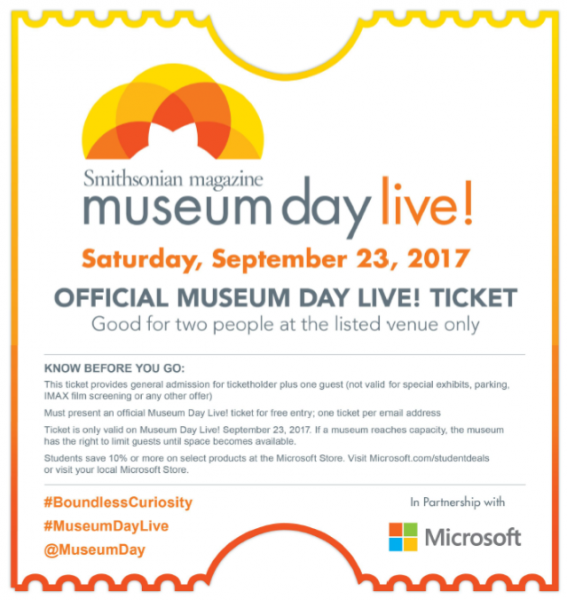
Eighteen Connecticut museums in twelve communities will be participating in Museum Day Live! On September 23, offering free admission in a national initiative led by Smithsonian magazine and supported by Microsoft, to increase awareness of the assets that museums have to offer residents throughout the country. Museum Day Live! is described as “an annual celebration of boundless curiosity.” Participating museums and cultural institutions across the country provide entry to anyone presenting a Museum Day Live! ticket. Individuals can get tickets on-line to any of the participating museums, simply by indicating the museum they intend to visit.  A ticket specific to that museum is then downloaded, and recipients can either print the ticket or show it on their smart phones in many of the museums.

To get free admission, guests must present an official Museum Day Live! Ticket, which provides general admission for the ticketholder plus one guest.  It is not valid for special exhibits, parking, IMAX film screening or any other offer.

Across the country, there are nearly 1200 participating museums, including 457 museums in the Northeast, 188 across the South, 402 in the Mid-West and 136 in the Western U.S.

Participating museums in Connecticut include:

BRISTOL

DANBURY

Danbury Museum and Historical Society Authority

FAIRFIELD

Fairfield University Art Museum 

GREENWICH

Bruce Museum

HARTFORD

MASHANTUCKET

Mashantucket Pequot Museum & Research Center 

NEW HAVEN

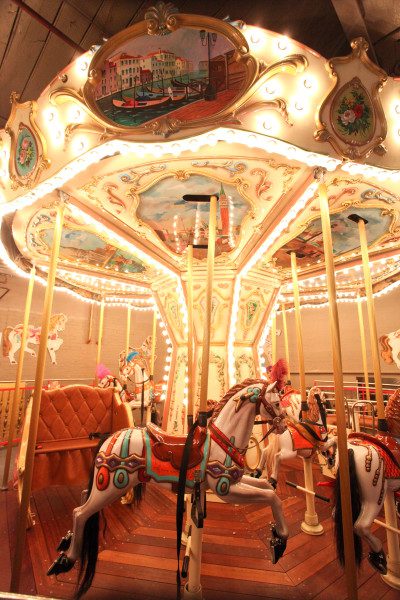
NEW LONDONCustom House Maritime Museum

RIDGEFIELD

The Aldrich Contemporary Art Museum

TOLLAND

WEST HARTFORD

Art Museum, University of Saint Joseph 

WOODBURY

Glebe House Museum & Gertrude Jekyll Garden


Quantum Science is Specialty for CT Medal of Science Recipient

Professor Robert Schoelkopf, Sterling Professor of Applied Physics and Physics and Director of the Yale Quantum Institute, has been selected as the 2017 recipient of the Connecticut Medal of Science for his seminal contributions to the entire field of quantum science and to the new field of circuit quantum electrodynamics. Schoelkopf is a leading experimental physicist, whose research has helped establish the field of quantum computation with solid-state devices.  The Connecticut Medal of Science is the state’s highest honor for scientific achievement in fields crucial to Connecticut’s economic competiveness and social well-being.

Connecticut’s most talented young scientists and engineers were also honored by the Connecticut Academy of Science and Engineering at its 42nd Annual Meeting and Awards Dinner, held this spring.  Winners of this year’s Connecticut Science & Engineering Fair, Connecticut Junior Science and Humanities Symposium, and Connecticut Invention Convention were recognized during program ceremonies.

Together with his faculty collaborators at Yale, Michel Devoret and Steven Girvin, Schoelkopf has pioneered the approach of integrating superconducting qubits with microwave cavities, known as Circuit Quantum Electrodynamics. Some of Schoelkopf’s other inventions include the Radio Frequency Single-Electron Transistor and the Shot Noise Thermometer.

He is regularly called on to advise industry and federal agencies on the development and commercialization of quantum technologies, and he is a co-founder of Quantum Circuits, Inc., a Connecticut-based company working to deliver the first quantum computers.

Modeled after the National Medal of Science, the award is bestowed by the State of Connecticut, with the assistance of the Connecticut Academy of Science and Engineering, in alternate years with the Connecticut Medal of Technology.

Student work was also honored by CASE.  The H. Joseph Gerber Medal of Excellence, established by CASE and presented in partnership with the Connecticut Center for Advanced Technology, was awarded to the top winners of the Connecticut Science & Engineering Fair. The medal was created to recognize and honor H. Joseph Gerber’s (1924-1996) technical leadership in inventing, developing and commercializing manufacturing automation systems for a wide variety of industries, making those industries more efficient and cost-effective in a worldwide competitive environment.

The Connecticut Academy of Science and Engineering was chartered by the General Assembly in 1976 to provide expert guidance on science and technology to the people and to the state of Connecticut, and to promote the application of science and technology to human welfare and economic well-being.

Student Awards:

The 2017 H. Joseph Gerber Medal of Excellence:

  • Shobhita Sundaram, Greenwich High School, Greenwich, CT

2017 Connecticut Science & Engineering Fair – 1st Place, Life Sciences-Senior Division

Project: Detection of Premalignant Pancreatic Cancer via Computational Analysis of Serum Proteomic Profiles

  • Ethan Novek, Greenwich High School, Greenwich, CT

2017 Connecticut Science & Engineering Fair – 1st Place, Physical Sciences-Senior Division

Project: Novel Low-Temperature Carbon Capture Using Aqueous Ammonia and Organic Solvents

  • Maya Geradi, Wilbur Cross High School, New Haven, CT

2017 Connecticut Science & Engineering Fair – Urban School Challenge High School Winner

Project: A Study of Circadian Genetics and Abiotic Stress Towards Sustainable Agriculture

2017 Connecticut Science & Engineering Fair –

Middle School Winner, Urban School Challenge

  • Madison Lee, Sport and Medical Sciences Academy, Hartford, CT Project: Natural Plastic: Milk Plastic Biodegradation Versus Commercial Plastic Degradation

2017 Connecticut Junior Science and Humanities Symposium

  • 1st Place: Shobhita Sundaram, Greenwich High School, Greenwich, CT

Project: Detection of Premalignant Pancreatic Cancer via Computational Analysis of Serum Proteomic Profiles

  • 2nd Place: William Yin, Greenwich High School, Greenwich, CT

Project: Portable, Low-Cost Tattoo-Based Biosensor for the Non-Invasive Self-Diagnosis and Quantification of Atherosclerosis

  • 3rd Place: Haya Jarad, Amity Regional High School, Woodbridge, CT Project: Identification of Novel Small Project: Identifying Quasi Periodic Patterns in fMRI Versus CBF Data
  • 4th Place: Gabrielle Stonoha, Manchester High School, Manchester, CT

Project: Growth and Sustainability of Metarhizium on Low-nutrient Substrates

  • 5th Place: Lauren Low, Engineering & Science University Magnet School, West Haven, CT Project: A Novel Rapid Diagnostic Test for Zika Virus NS1 Protein Using Nanoribbon Microfluidics


Waterbury, Hartford, Simsbury Receive National Recognition for Main Street Initiatives; Eight Local Efforts to Receive Awards

Three Connecticut communities in the Connecticut Main Street network have achieved accreditation for meeting the commercial district revitalization performance standards set by Main Street America, a subsidiary of the National Trust for Historic Preservation. The Connecticut Main Street programs that earned accreditation for their 2016 performance are Simsbury Main Street Partnership, Upper Albany Main Street (Hartford), and Main Street Waterbury.

The accreditation was announced at the 2017 Main Street Now Conference in Pittsburgh. Each year, Main Street America and its partners announce the list of accredited Main Street programs, which have demonstrated exemplary commitment to historic preservation and community revitalization through the Main Street Four Point Approach.

"Connecticut's Main Street America Accredited programs, Simsbury Main Street Partnership, Upper Albany Main Street (Hartford), and Main Street Waterbury, are well-established Main Street management organizations with histories of strong and dynamic leadership. Each has developed and maintained outstanding programs that increase the economic value of their districts while improving the quality of life for area residents," said Kimberley Parsons-Whitaker, Associate Director of Connecticut Main Street Center.

"Main Street revitalization is sustainable when the professional management organization is committed to engaging local stakeholders (business and property owners, anchor institutions, local government, and local residents) in envisioning a vibrant Main Street, and developing strong partnerships that result in action-oriented steps that bring the Main Street neighborhood back to life."

Working in partnership with Main Street America, Connecticut Main Street Center evaluates each of the state's Designated Main Street Programs annually to identify those programs that meet ten performance standards. Evaluation criteria determine the communities that are building comprehensive and sustainable revitalization efforts and include standards such as fostering strong public-private partnerships, securing an operating budget, tracking programmatic progress and actively preserving historic buildings.

The recognition doesn’t stop there.  Connecticut Main Street Center will be presenting its annual Awards of Excellence on Thursday, May 18 at the Legislative Office Building in Hartford.

Among the recipients: a downtown management organization engaging the community in envisioning two underutilized parks as places that downtown residents, visitors, workers and families can mingle with artists and creatives, and a regional planning organization that created a program focused on supporting local businesses, creating jobs and filling vacant spaces in eight village.

In total, eight recipients have been selected to receive the prestigious awards, including organizations and initiatives from Bridgeport, Unionville Village in Farmington, Hartford, Meriden, New Britain, New Haven, and the Northwest Corner.

Among the winning entries: a 14-acre flood control project that created a public park and mixed-use economic development in downtown Meriden; a comprehensive and complete overhaul of the City of Hartford’s zoning language and process; an interpretive wayfinding/signage program that connects Walnut Hill Park, Little Poland and Downtown New Britain; the restoration of a historic ball bearing mill on the banks of the Farmington River into a mixed-use campus in the heart of Unionville Village; a Twilight Bike Race & Street Festival that celebrates biking, food, culture and entertainment in Downtown New Haven; and the redevelopment of a 1903 factory building into 72 units of market rate housing within easy walking distance of jobs and transit in downtown Hartford.

Created in 2003 to recognize outstanding projects, individuals and community efforts to bring traditional downtowns and neighborhood commercial districts back to life, socially and economically, the Awards of Excellence are presented annually. CMSC’s mission is to be the catalyst that ignites Connecticut’s Main Streets as the cornerstone of thriving communities. CMSC is dedicated to community and economic development within the context of historic preservation, and is committed to bringing Connecticut’s commercial districts back to life socially and economically. CMSC is supported by its Founding Sponsors, the CT Department of Economic & Community Development (DECD) and Eversource Energy. CMSC is also supported by its Growth Sponsors, UIL Holdings Corp. and the State Historic Preservation Office.


Fun in CT? Ranked 37th in the US, But Among Leaders in Marinas, Fitness Centers, Money Spent on Recreation

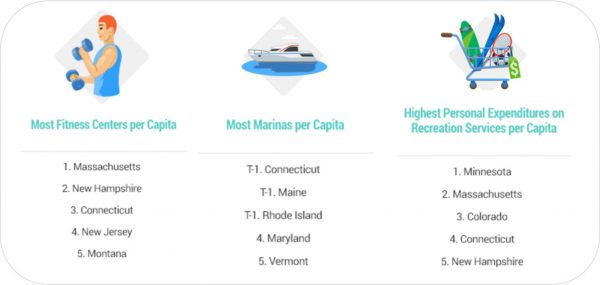
While Connecticut ranked 37th overall among the nation’s 50 states analyzed for their “fun” quotient, the state did have some standout rankings in specific categories – including the amount of money individual residents spend on recreation.  Despite ranking 35th overall in “entertainment & recreation” categories and 40th in “nightlife,” the state reached the top five in three sub-categories. In the analysis by the financial website WalletHub, Connecticut ranked third in the number of fitness centers per capita, at 15.7. New England neighbor Massachusetts ranked #1 with 17, and New Hampshire, New Jersey and Montana rounded out the top five in that category.

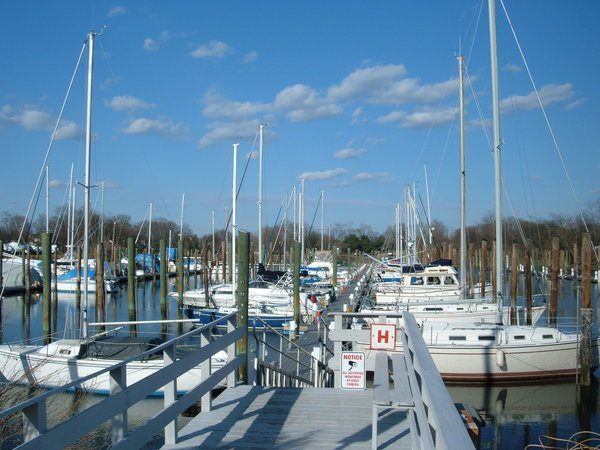
Connecticut ranked #1 in number of marinas per capita, tied with Maine and Rhode Island. Connecticut has 3.48 marinas per 100,000 residents, the data indicated. Maryland and Vermont ranked fourth and fifth, respectively.

In another top five finish, Connecticut ranked fourth in Personal Expenditures on Recreation per capita, at just over $1,900. Minnesota ranked first at $2,058. The Top 5 states, in order, were Minnesota, Massachusetts, Colorado, Connecticut and New Hampshire.

Overall, the “most fun states” were Nevada, South Dakota, Colorado, North Dakota, New York, Wyoming, Oregon, Louisiana, Montana, Hawaii, Maine, Minnesota, Florida, Vermont and California.  At the bottom of the list were Arkansas, Kentucky, Alabama, West Virginia and Mississippi.

The overall rankings were weighted 80-20 between Entertainment & Recreation and Nightlife.  The Entertainment & Recreation categories included restaurants, beaches, movie theaters,  national parks, arts venues, and state spending on parks and recreation. The nightlife category included average beer & wine prices, movie costs, music festivals and access to bars.
Data used to create the ranking, which included 22 separate sub-categories, were collected from U.S. Census Bureau, Bureau of Economic Analysis, National Park Service, Council for Community and Economic Research, TripAdvisor, Beachapedia, Stadium and Arena Visits, Graphiq, American Gaming Association and WalletHub research.