308 Structurally Deficient Bridges Across CT: Average Age 69 Years
/Just last month, it was revealed that more than 1,500 of California’s bridges are structurally deficient, meaning there is significant deterioration of the bridge deck, supports or other major components. More than half – 56 percent – of California’s bridges are at least 50 years old – the eighth highest rate in the nation.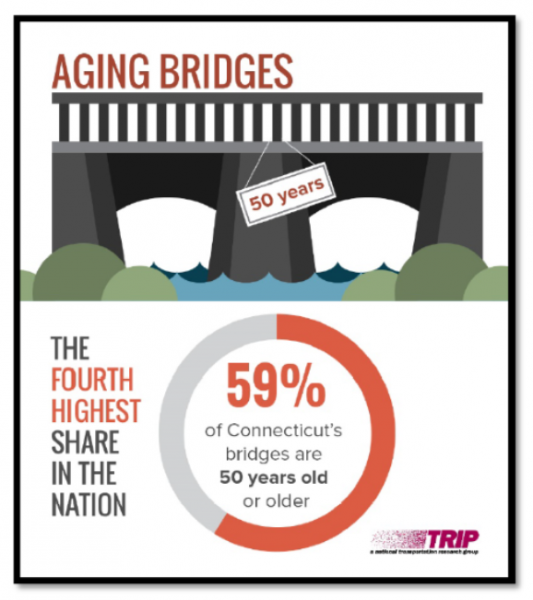 Yesterday, it was announced that 59 percent of Connecticut’s more than 4,000 bridges are 50 years or older, the fourth highest rate in the nation. The average age of all Connecticut’s bridges is 53 years, while the average age of the state’s 308 structurally deficient bridges – seven percent of the total - is 69 years. Structurally deficient bridges in Connecticut are crossed daily by 4.3 million vehicles.
Both reports were done by TRIP, a national transportation research group, based on an analysis of Federal Highway Administration National Bridge Inventory (2017). The organization did a similar report about Wisconsin, also released this week. It found that nine percent of Wisconsin’s locally and state-maintained bridges are structurally deficient.
Connecticut has 4,252 bridges (20 feet or longer), compared with 14,253 in Wisconsin and 25,657 in California.
The 20-page Connecticut report indicated that “To retain businesses, accommodate population and economic growth, maintain economic competitiveness, and achieve further economic growth, Connecticut will need to maintain and modernize its bridges by repairing or replacing deficient bridges and providing needed maintenance on other bridges to ensure that they remain in good condition as long as possible.”
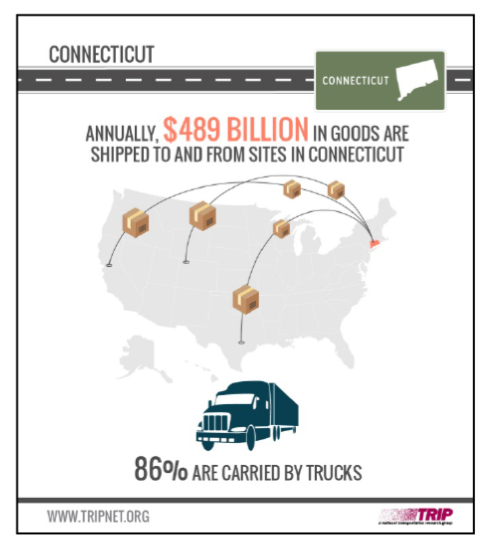 The report also noted that “annually, $489 billion in goods are shipped to and from sites in Connecticut, largely by truck,” adding that “approximately 731,000 full-time jobs in Connecticut in key industries like tourism, retail sales, agriculture and manufacturing are completely dependent on the state’s transportation network.”
Hartford, Fairfield and New Haven counties each have 60 or more structurally deficient bridges, with 65, 61 and 60 respectively. Litchfield County has 39; New London County has 32. The report listed Middlesex County with 22, Windham County with 17 and Tolland County with 12.
The report also sounded an alarm for Connecticut, a state seeking to attract and retain businesses to bolster a sluggish economy: “Increasingly, companies are looking at the quality of a region’s transportation system when deciding where to re-locate or expand. Regions with congested or poorly maintained roads may see businesses relocate to areas with a smoother, more efficient and more modern transportation system.”
Highway accessibility, the report pointed out, was ranked the number one site selection factor in a 2017 survey of corporate executives by Area Development Magazine.
“Without a substantial boost in federal, state and local funding, numerous projects to improve and preserve Connecticut’s bridges will not be able to proceed, hampering the state’s ability to improve the condition of its transportation system and to support economic development opportunities in the state,” the report concluded.
This summer, CT by the Numbers reported on a ranking developed by CNBC, found that 73 percent of Connecticut roads are in bad shape, giving the state a grade of D, while noting that nearly 8 percent of Connecticut’s bridges are deficient.
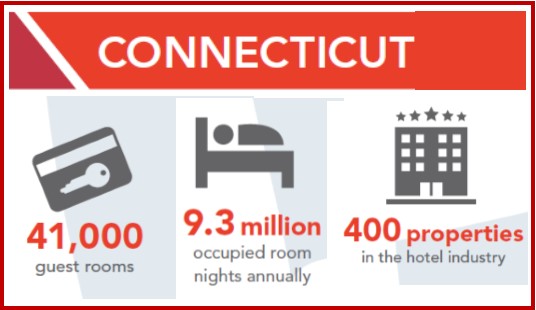 Overall, data for Connecticut compiled by the American Hotel & Lodging Association indicate that the state’s 400 properties in the hotel industry generate 55,000 hospitality jobs and 27,00 hotel hobs, which result in $4.4 billion guest spending at hotels, local businesses and on transportation. The industry contributes $5.1 billion to GDP.

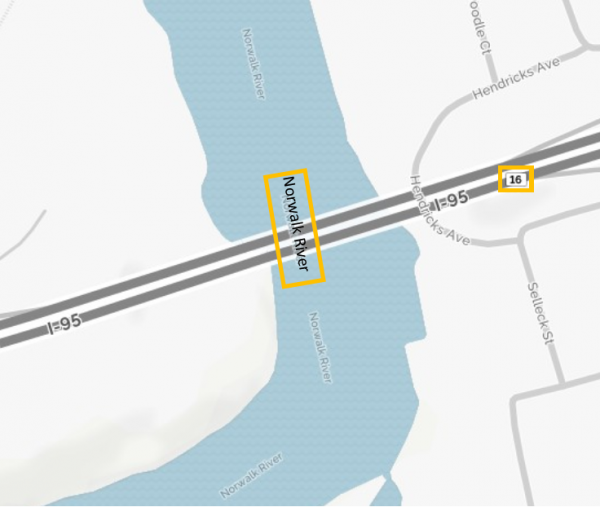
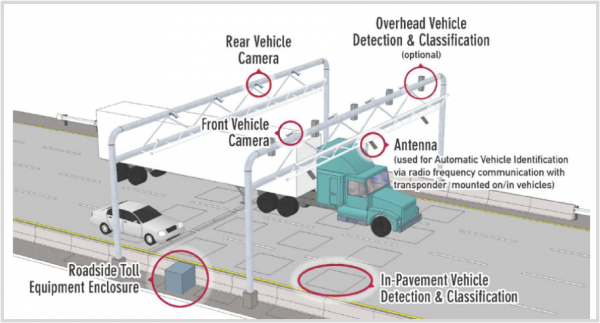
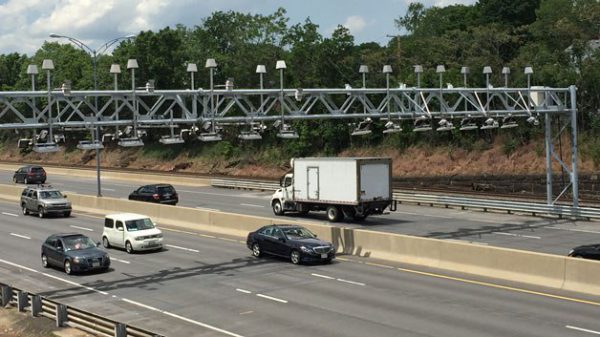 The Indianapolis Star reported earlier this summer that the state signed a $9.6 million contract with HNTB Indiana Inc. to study the impact of tolling and provide project planning if the state chooses to move forward with tolling. The administration of Gov. Eric Holcomb is required to study tolling under a road-funding plan lawmakers passed in 2017, but a decision has not been made on whether the state will go forward with authorizing a tolling plan, according to published reports.

 The ranking saw Davis and Berkeley California named the safest cities for bicyclists, followed by Boulder, Colorado; Eugene, Oregon; Palo Alto, Chico, and Mountain View, California; Fort Collins, Colorado; Santa Barbara, California, and New Haven. Minneapolis ranked number 12.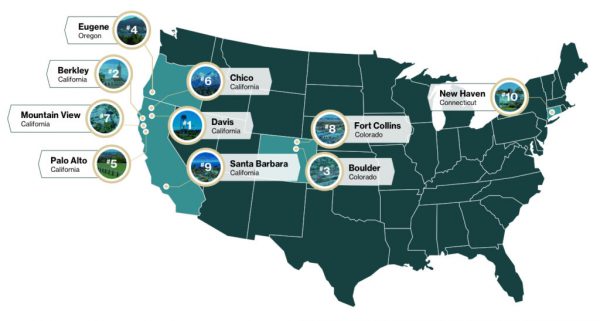


 The purpose of the pilot program, according to OPM, is to encourage and allow for the testing of fully autonomous vehicles (FAV) on local highways in Connecticut. The goal for the pilot program is to allow a variety of FAV testing to occur in four municipalities throughout the state, bringing Connecticut to the forefront of the innovative and burgeoning autonomous vehicle industry.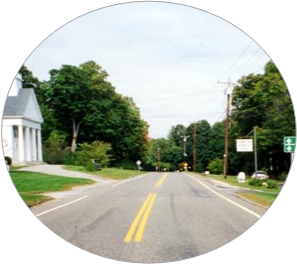
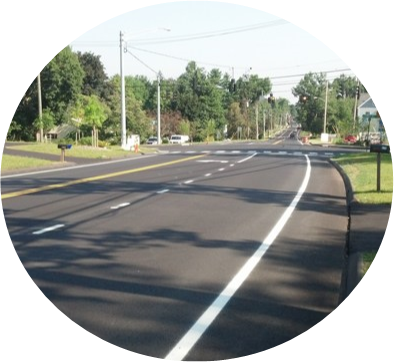 The state law outlines a framework of the minimum requirements to be included in agreements between municipalities and autonomous vehicle testers approved for participating in the Fully Autonomous Vehicle Testing Pilot Program (FAVTPP). The Connecticut law, according to the
  3 Seconds Behind the Wheel, which debuts on Connecticut Public on Thursday evening, is a new
  The film also gives audiences a firsthand look at emerging technologies that could one day offer solutions to rising crash statistics. The documentary follows researchers at Google who are using driving simulators to develop next-generation in-car infotainment systems, and explores how one Swedish company is experimenting with technology that could one day allow cars to understand human feelings and make driving decisions based on individual needs.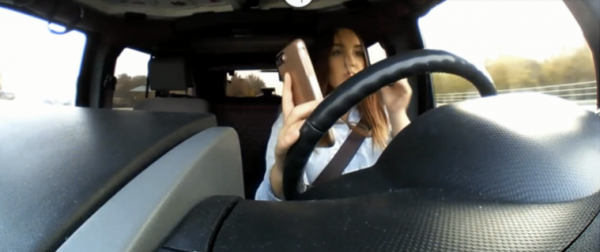


 The U.S. DOT invests in the future of transportation through its University Transportation Centers (UTC) Program, which awards and administers grants to consortia of colleges and universities across the United States. In the Northeast, other consortia with the same policy focus include a 9-institution UTC led by Rutgers, the State University of New Jersey and a 6-institution group led by Pennsylvania State University.