PERSPECTIVE: Why Now is the Time to Invest in CT’s Downtowns
/by John Simone Over the last few years, there has been a tremendous acknowledgement of the importance and appeal of downtown. Numerous studies have quantified this issue in myriad ways:
- showing the common demand among millennials and baby boomers for walkable town centers – whether they be in urban, suburban or rural communities;

- noting that money spent downtown stays downtown (in stark contrast to big-box retailers);
- showing that each new unit of downtown housing translates into thousands of dollars’ worth of business for the downtown; and
- finding that by even modest estimates vacant storefronts cost communities hundreds of thousands of dollars in lost tax revenue and rents each year.
At this point, it’s also widely agreed that development in these typically compact areas is amongst the most sustainable, environmentally friendly and economically robust thanks to ready infrastructure and a diverse mix of uses, businesses, and housing.
Connecticut especially is becoming hyper-sensitive to the importance of energetic and robust town centers as it finds itself in the midst of many opportunities and challenges.
First and foremost, our downtowns can provide the authentic, walkable communities needed to attract and retain the talented workforce Connecticut needs to compete locally, nationally and internationally. This is of particular importance because Connecticut is currently facing the dual burdens of a ballooning aging population coupled with a declining population of 18-34 year olds – both of whom increasingly want to be in walkab le, more active and transit-accessible downtowns. At the same time, an increasing demand for downtown living is paralleled with a general lack of diverse and affordable housing choices. Upper story space in existing older buildings is vacant and available, but expensive to renovate.
Connecticut’s downtowns also represent the greatest chance to restore social and economic balance to a state known to have both the richest and poorest neighborhoods, a divide that needs to be healed if true prosperity is to be gained. Creating robust downtowns will also ensure success of the State’s $1.5 billion investment in transit (notably CTfastrak and railway upgrades) which is already creating demand for development around these transit stations.
Given these tremendous opportunities and obstacles, it’s little wonder the Connecticut Main Street Center (CMSC) is being increasingly called on to further demonstrate the economic return of attractive, engaging and well-managed downtowns.
To meet this growing need, CMSC recently adopted a new strategic plan to guide us as we take on more of a lead role in calling for greater investment in our town and city centers. Not only will we proactively advocate for increased financing for mixed-use and transit oriented development, but also for policies and regulations that support and enhance our main streets, as well as identifying more and better models of downtown management, including training, education, and communication for downtown professionals. Championing sustainable financing for these downtown organizations will also be a priority.
Connecticut’s downtowns deserve to be recognized as the drivers of the state’s economy and epicenters of social equity and entrepreneurial ingenuity. By investing in the components of a healthy downtown, from walkable streets to inviting housing and interesting amenities, we’ll reach the goals set in our plan, making Connecticut’s rich mix of quaint village centers and bustling urban centers an irresistible draw for innovators of all ages to live, work and prosper.
___________________________________________
John Simone is President and CEO of Connecticut Main Street Center.
PERSPECTIVE commentaries by contributing writers appear each Sunday on Connecticut by the Numbers.
Also of interest: Progress Made on Regional Cooperation

 rly lost her life due to the carelessness and irresponsibility of a negligent driver who failed to obey the stop sign and also failed to avoid colliding with a cyclist. My wife’s journey to this date has been exceedingly long and tortuously painful. She has endured nearly 30 arduous surgeries and has been left with a body and mind crippled with pain and post traumatic stress.
 organize a bike tour to raise money for their program. Nearly 10 months later, the bike tour raised $12,000, which went toward purchasing four recumbent bicycles.
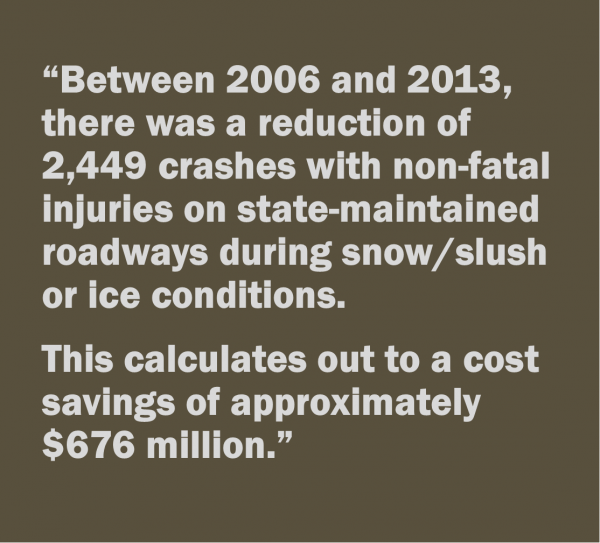
 son of 2006/2007 CTDOT has changed the way winter maintenance is performed. They have discontinued the use of abrasives (such as sand) and phased in methods known as ‘anti-icing’ strategies [1]. These strategies have been honed and polished continually over the past ten years.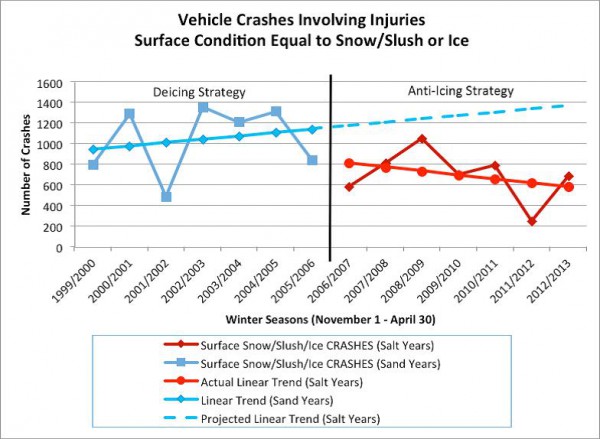

 These are true stories. The names are omitted and details smoothed over for obvious reasons. But they really happened this spring at MCC. The image of the college student – not a care in the world – partying and protesting, cramming just in time to pass an exam, and simply marking time until graduation has never really been accurate. It is certainly far from the truth today. College students face major financial and emotional stress just to get to the point where they can even settle into their studies, much less complete their degrees.

 For example, one year a third-party candidate ran for mayor. He also hosted a local cable talk show and a couple of years earlier, in a rant against the newspaper and me, he had urged viewers to dump their household garbage at the foot of my driveway. No one did, and I decided finally not to torture him.