PERSPECTIVE l Partnering Far to Benefit Near
/by John Simone Only a couple of weeks after the Connecticut Main Street Center’s (CMSC) workshop last month on Building Lasting DownTOWN/GOWN Partnerships, our friends and colleagues at the Connecticut Economic Development Association, a not-for-profit membership organization committed to advancing economic development, hosted an event at Middlesex Community College (MXCC) on how community colleges are leveraging resources to meet community workforce needs.
While this topic was touched on at the CMSC workshop, with Enfield’s Assistant Town Planner Courtney Hendricson and Asnuntuck Community College President James Lombella describing how they’re partnering to meet the town’s needs, the CEDAS event delved more deeply into emerging workforce trends in Connecticut, namely the expected growth in media-based jobs and a looming shortage of skilled manufacturing workers.
According to MXCC’s Center for New Media, Connecticut can expect an 11.7 percent job growth in all media categories – arts, sports and media, and entertainment through 2020 (the national average is 4.3 percent). And according to Marjorie Valentin, Associate Dean of Three Rivers Community College, without training there will be a critical skills gap of new and existing manufacturing employees, as an aging skilled workforce leaves the field and a stigma of the profession remains, leaving a shortage of skilled workers that threatens the future of manufacturing in Southeastern Connecticut.
In response, these and several other community colleges are partnering directly with manufacturers like Electric Boat, who offer input into the curriculum to ensure graduating students have the skills necessary to perform. And MXCC recently opened a beautiful, state-of-the-art Center for New Media, complete with high-tech classrooms, a high-definition studio, a video control room, green room, audio production studio, and a radio station.
While it was impressive to see and hear how much our community colleges have to offer today’s students, truly preparing them to succeed in a competitive workforce, what really struck me was our need to think beyond just our downtown borders when building strategic partnerships.
While we should absolutely strive to create fruitful relationships between our main street organizations and local anchor institutions, we also need to keep in mind that as a state, our successes and failures are often shared. So while Windsor may not have a community college within its borders, it may have high school students and a manufacturer who could benefit from a training program offered in Norwich. Meanwhile, a student can benefit from learning medical animation in Middletown, working at a downtown Hartford hospital during the day, before going home to Portland at night.
Offering attractive, inviting downtowns and Main Streets with a variety of housing, businesses and resources accommodates a population that is fluid not just over the course of a lifespan, but often over the course of a day!
By being mindful that a wider, regional or even state-wide partnership can benefit our towns and downtowns at a very local level, we ensure our successes are complementary, not exclusive.
John Simone is President & CEO of Connecticut Main Street Center, which provides solutions that help communities create great downtowns across Connecticut, revitalizing downtowns as the social and economic heart of the community. At the local level, CMSC works with dedicated stakeholders including municipal employees, business owners and volunteers to help them craft an inviting, vibrant downtown. Learn more at www.ctmainstreet.org
____________________________________________________________________________
CT by the Numbers publishes opinion articles of 600 words or less. Submissions should be emailed to info@ctbythenumbers.info. Perspectives are published at the discretion of CT by the Numbers.
 The tournament is hosted annually by different states to ensure that the cost of running the tournament doesn't fall disproportionately on any particular state.

 Civics First


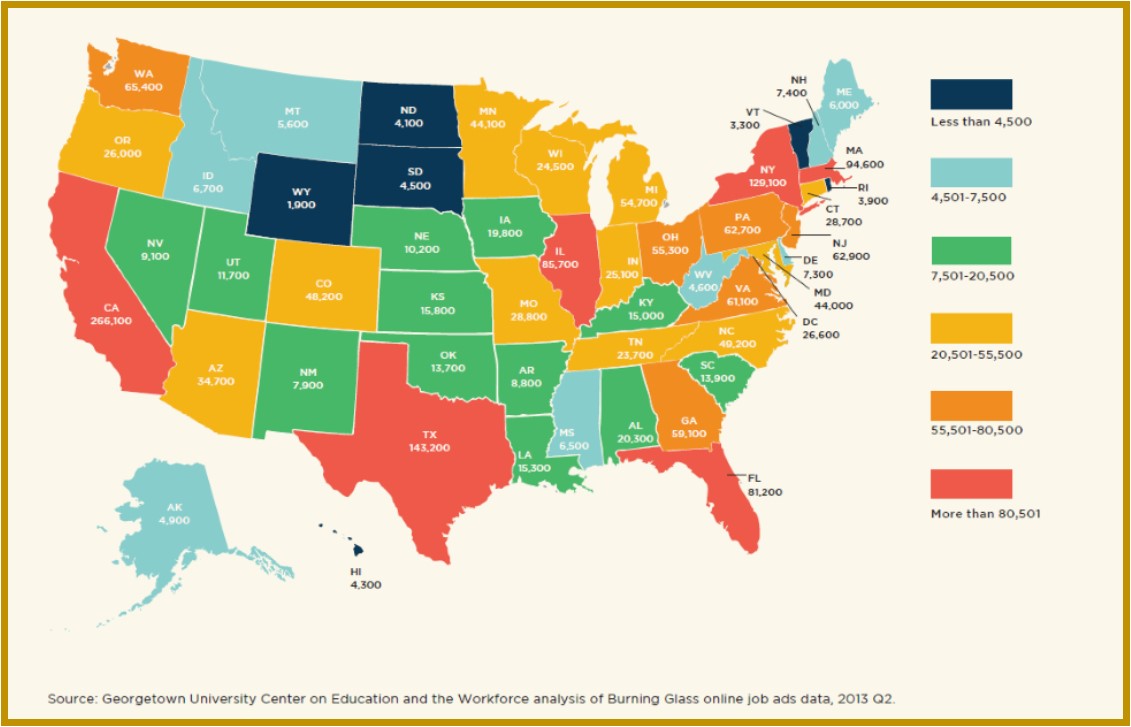
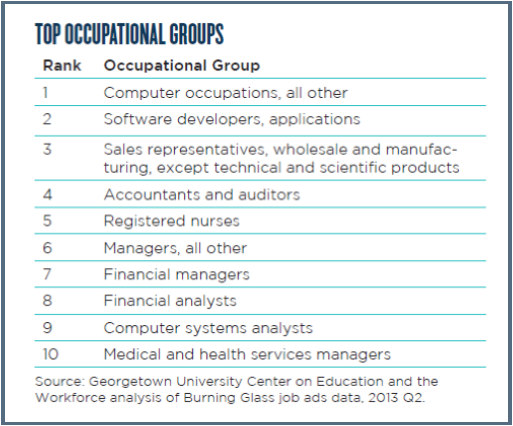 The top occupational groups reflected in the online job ads were 1) computer occupations, 2) software developers, 3) sales representatives,4) accountants and auditors, 5) registered nurses, 6) managers, 7) financial managers, 8) financial analysts, 9) computer system analysts and 10) medical and health services managers.
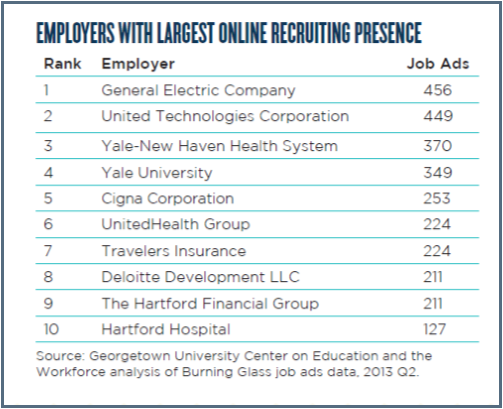 The Georgetown University Center on Education and the Workplace is affiliated with the McCourt School of Public Policy. The study was done by Anthony Carnevale, Tamara Jayasundera, Dmitrirepnikov and Artem Gulish.
 The top 15

 Factors considered in the analysis include:
 Among

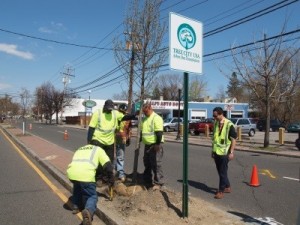 The Arbor Day Foundation also has a campus program, designating colleges and universities as a Tree Campus USA. The University of Connecticut is the only college in Connecticut to earn the designation.




 is to bring together professionals from every aspect of Connecticut’s tourism industry — including hotels, restaurants, casinos, tourist attractions, entertainment venues, historic sites, and cultural and arts institutions — to share best practices and learn from national tourism and travel experts. The statewide conference is managed by the DECD Connecticut Office of Tourism in partnership with the Connecticut Convention & Sports Bureau.
 igher education resources, a focus on New York City meeting planners, experts on capturing a share of the international tourist market, ways to maximize use of social media, Tourism Awards for outstanding industry leaders, and an array of workshops on areas including mobile marketing and group bus tours, as well as an exhibition of the most innovative products and services in the tourism sector, according to state officials. Cost for the conference is $99, for industry professionals.
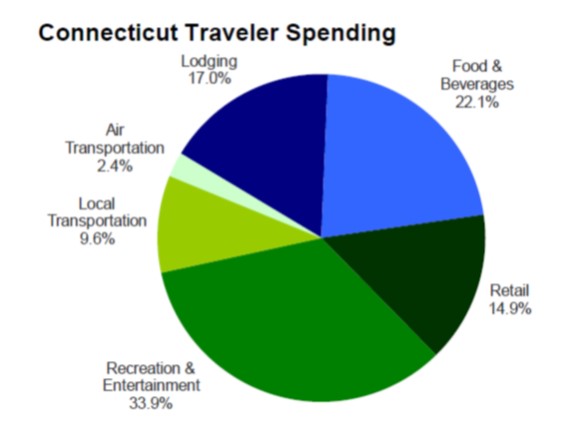 Traveler spending of $8.3 billion generated $14 billion in economic activity statewide in 2013, according to a study released recently by the office of Gov. Dannel P. Malloy. The study shows funds generated directly, through traveler spending, or indirectly, as employees, businesses and other beneficiaries turned around and paid for goods and services. Travelers to Connecticut destinations spent 3.0% more in 2013 than in 2012. Of all Connecticut travelers in 2013, nearly two-thirds were day travelers (66%). The tourism
sector supported more than 118,500 jobs in 2013, according to a recent state report.
 irectors, a Greenwich-based live action production company, is producing a series of six on-air commercials for the Connecticut Office of Tourism, working in conjunction with Avon ad agency