Insurance Department Recovers $6 Million for Policyholders, Taxpayers in 2015; Recoveries, Fines Both At 4-Year Low

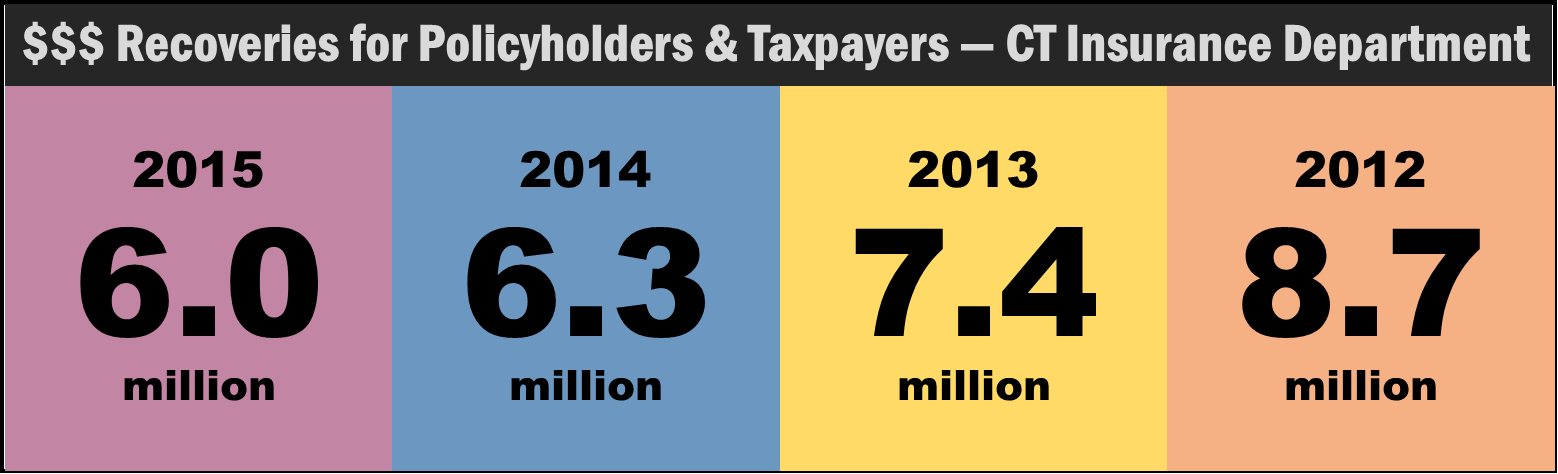
The Connecticut Insurance Department recovered approximately $6 million for policyholders and taxpayers in 2015, helping individuals and families with their claims and complaints.  The total dollar amount of the recoveries declined for the third consecutive year, down from a high of $8.7 million in 2012, $7.4 million in 2013 and $6.3 million in 2014. Officials indicated that the Department’s Consumer Affairs Unit (CAU) fielded more than 6,100 complaints and inquiries and helped policyholders recoup more than $4 million from January 1 to December 31, 2015.  The number of complaints and inquiries dropped slightly from the previous year, when 6,500 were handled, recouping $4.3 million for policy owners.  In 2013, policyholders saw $4.7 million returned.  In 2012, the numbers were virtually identical to 2015.ctInsuranceDept
“Behind these statistics are the individuals and families the Department was able to help through our intervention,” Commissioner Katharine L. Wade said. “In many cases we were able to make a real difference in their lives and I encourage anyone with questions or concerns about their insurance to contact the Department. We are here to help consumers.”

The department, in announcing the annual totals for 2015, also highlighted some individual recoveries, including:

  • $27,000 for home health care services for a senior citizen under her long-term care policy
  • $13,000 to pay for speech therapy for an autistic child
  • $16,000 paid to a policyholder for an inpatient stay at a skilled nursing facilityrecoveries
  • $37,000 in an additional payment to a homeowner to settle a claim

“Our staff makes certain that companies and agents comply with all state insurance laws and regulation and have extensive knowledge to answer a wide range of insurance questions,” the Commissioner said.

In addition to recoveries for policyholders, the Department’s Market Conduct division levied approximately $1.7 million in fines against carriers and returned that money to the state General Fund in 2015. The fines resulted from a variety of violations and settlements ranging from untimely claim payments to improper licensing. That was the lowest total for fines in recent years, perhaps signifying greater compliance.  In 2014, fines totaled $2.03 million, in 2013 the total was $2.7 million and in 2012 fines levied totaled $4.6 million.

The majority of the funds recovered for policyholders stemmed from complaints over health, accident, homeowners and life and annuities policies.

The following is the breakdown of funds recovered in 2015:

  • Accident, Health - $2.7 million, compared with $2.5 million in 2014
  • Auto - $430,000, compared with $381,000 in 2014
  • General Liability - $17,200, compared with $65,000 in 2014
  • Homeowners - $530,000, compared with $65,000 in 2014
  • Life, Annuities - $294,000, compared with $330,000 in 2014

Recoveries in 2013 were largely focused on homeowners, as a result of Superstorm Sandy-related claims. Department recoveries in 2012 reflect the impact of claims from 2011 Storm Irene and the late October snow-filled Nor’easter that landed in Connecticut.

The Department calculates its consumer recoveries based on what the policyholder received as a result of the Department’s intervention. The inquiries and complaints also help the Department identify industry trends that may adversely affect consumers and trigger investigation by the Market Conduct division, officials said.

In addition, complaint data also help determine topics for consumer education and serve as tools to help the Department monitor the industry.  The Market Conduct enforcement actions are posted on the Department’s web site at www.ct.gov/cid

PERSPECTIVE: Is Philanthropy Women’s Work?

by Mary Cahalane The numbers

In Connecticut, the nonprofit sector employs almost 14% of our workforce. Connecticut nonprofits generate $33.4 billion in revenues annually. Individuals in Connecticut contribute $2.7 billion a year. The sector is important to our state.

Recently, I wrote about the struggles of balancing work and life – especially for those of us in the nonprofit world.

Stress is a real problem in the sector. And it’s getting in the way of our organizations’ missions.

PageLines- CTperspective.jpgThe New York Times article that inspired my original post looked at the problem of stress in our lives.

The author suggested as a society, we’ve separated caregiving and work. Work we prioritize; caregiving is sidelined. And the need for both in our lives puts a great deal of pressure on the people who are caregivers – mainly women.

The impact on women in the nonprofit sector

Our approach to caregiving versus work is also holding women back. The need to juggle so many responsibilities at work and at home becomes impossible.

Women in Connecticut make up almost 70% of private nonprofit salaried workers. Yet median wages for women are $46,004 compared to $60,168 for men.

Nationally, it’s the same: nonprofit workers are also overwhelmingly women. Yet men fill most of the leadership roles – particularly in larger organizations.

The impact on nonprofit organizations

Dan Pallotta wrote a piece for The Daily Beast 6 years ago, Gender Trouble at Nonprofits. One paragraph really whacked me in the face.quote

Charity is not allowed to use the same tools as business because society subconsciously regards it as female, and discriminates against it the same way it has historically discriminated against women. Charity is subservient. The for-profit sector heads to the office every day to do the real business of the world, while charity stays at home and dabbles in idealism and sentiment. Even the governing structure of charity is patriarchal; business people direct nonprofit staff—seven in 10 of whom are women—from the perches of their board seats.

Wow.

We have a leadership problem

Here’s the irony of it all, though. When you survey people about the most important leadership qualities, they’re the ones most associated with women.

Diversity is needed to build a strong organization. We applaud it in theory, but struggle with it in practice. That’s not lip service, that’s fact. Surveys point to a need for the qualities women score more highly on. These traits include “expressive”, “plans for the future”, “reasonable”, “loyal”, “flexible” and “patient”.

Why the disconnect? An article in the Harvard Business Review talks about second generation bias – unconscious, unintentional, but still present.

It’s a trap for women: men who score high on likeability are also seen as more competent leaders. For men, the two leadership traits are complementary. Women are seen as less competent if they’re more likable.

This infographic from TCC Group makes the problem of gender diversity in our sector quite clear.

Double whammy?

Nonprofit organizations must work twice as hard to care for the needs of the world. And as Pallotta says, they’re denied many of the tools used in the for-profit world. Somehow, we’re supposed to innovate without investment. We’re supposed to care for people while not caring for our employees.

Nonprofit work is seen as less important – even though it’s desperately needed. (And not likely to be done by the private sector.)

That’s bad enough. But then within our sector, women are still fighting for a place at the grown-ups’ table.

So what can we do?

We can mentor. We can push for flexibility. We can be conscious of bias when we hire or promote. We can model kinder, gentler organizations.

But what’s needed to create real change is leadership.

We need leaders with those qualities usually identified with women.

We need the loudest voices to be those who value empathy, vulnerability, loyalty, flexibility and patience.

This isn’t only about what’s just.

It’s about what’s best for the sector and for the world. It’s about effectiveness.

We’re killing ourselves to save the world.

Doesn’t that mean we’re doing it wrong?

___________________________________________

Mary Cahalane is a nonprofit fundraising consultant, and author of the blog Hands-On Fundraising.  She has more than 30 years of experience with community-based organizations, major regional theaters and a variety of nonprofit organizations in Connecticut and beyond. 

PERSPECTIVE commentaries by contributing writers appear each Sunday on Connecticut by the Numbers.

Yelp Means Help for Three Hartford-Area Nonprofits

Three Hartford area nonprofit organizations have received a financial boost from the charitable foundation of Yelp, the website of business recommendations. This past fall, Yelp nominated three non-profit organizations in 75 cities around the country that support the Yelp Foundation’s mission of addressing the needs of local communities, including access to information, education, local economic development, and freedom of expression. In Hartford, those organizations were The Connecticut Forum, Literacy Volunteers of Greater Hartford and reSET Social Enterprise Trust. yelp

The Yelp Foundation announced it would grant $5,000 to the organization with the most votes at the end of a web-based public voting campaign. The second and third place winners would be granted $3,000 and $2,000 respectively. Individuals could vote once each day during the two-week web voting period.

The Foundation announced this week that the top-vote getter, The Connecticut Forum, will be receiving a $5,000 grant.  Literacy Volunteers of Greater Hartford will be receiving a $3,000 grant; reSET Social Enterprise Trust will receive $2,000.CT Forum

The Yelp Foundation's mission is to support charitable organizations and activities addressing the needs of local communities, including access to information, education, local economic development, and freedom of expression, and to promote a culture of philanthropy among employees of Yelp Inc. Nationwide, 225 organizations will be receiving grants totaling $750,000.

The Connecticut Forum presents live, unscripted conversations among renowned experts and celebrities, and community outreach programs including the Connecticut YOUTH Forum. The organization’s mission: “to encourage the free and active exchange of ideas in Forums that inform, challenge, entertain, inspire and build bridges among all people and organizations in our community.”

literacyLiteracy Volunteers of Greater Hartford is a private non-profit organization that has provided adult literacy services in Greater Hartford since 1972. Their “vision is to build a stronger, more resilient Greater Hartford by creating a community of fully literate adults.”  Annually, the organization now serves over 850 adults in 20 towns throughout the region.

reSET is a non-profit organization whose mission is to advance the social enterprise sector. Its strategic goals are threefold: to be the “go-to” place for impact entrepreneurs, to make Hartford the Impact City, and Connecticut the social enterprise state. reSET serves all entrepreneurs, but specializes in social enterprise ― impact drivenPicture3 business with a double and sometimes triple bottom line. In addition to providing co-working space and accelerator and mentoring programs, reSET aims to inspire innovation and community collaboration, and to support entrepreneurs in creating market-based solutions to community challenges.
reSETYelp was founded in 2004 to help people find great local businesses like dentists, hair stylists and mechanics.  Yelp had a monthly average of 89 million unique visitors who visited Yelp via their mobile device in the third quarter of 2015, according to the company, which also notes that “Yelpers” have written more than 90 million reviews since the company’s inception.

In 2011 Yelp Inc. established the Yelp Foundation with one percent of company equity to support charitable organizations and activities addressing the needs of local communities, including access to information, education, local economic development, and freedom of expression, and to promote a culture of philanthropy among employees of Yelp Inc.

The Foundation accomplishes its charitable goals by making grants to deserving nonprofits throughout the U.S. and matching donations made to charities by Yelp employees up to $1,000 per person per year, according to the Foundation website.   In 2014, the Foundation committed $1 million to charity.  To learn more about the Yelp Foundation, visit http://www.yelpfoundation.org/


Bullying Is Parents Top Concern, Depression Next

Across the country, parents with children under age 18 are most concerned about their child being bullied, with 6 in 10 expressing that concern.  The next most prevalent concern – expressed by a majority of those surveyed by the Pew Research Center – is that their child will struggle with anxiety or depression.  Fifty-four percent have that concern. Noting that comprehensive statistics on bullying are difficult to obtain, Pew referenced the 2013 Youth Risk Behavior Study (which covered only high-school students) finding that 19.6 percent had been bullied on school property in the previous 12 months, and 14.8 percent had been electronically bullied. In both cases, white teens and female teens were more likely to say they’d been bullied.FT_16.01.05_parentalConcerns

Connecticut’s statistics were higher than the national average in both categories.

In the 2012-13 school year, there were more than 1,400 incidents which an investigation was conducted and active bullying was concluded to have occurred, according to the state Department of Education.  The most recent data posted on the department’s website indicates that “21.9% of Connecticut students had been bullied on school property. Nationwide, the rate is 19.6%. In Connecticut, the prevalence of having been bullied on school property is significantly higher among females (26.1%) than among males (17.9%). The prevalence of having been bullied on school property is significantly higher in grade 11 among students in CT (22.8%) than in the US (16.8%).”

The Youth Risk Behavior Study also indicated that 17.5% of Connecticut students had been electronically bullied. Nationwide, the rate is 14.8%, according to the study report.youth risk report CT

Earlier this month, the parents of a high school freshman in Westport who died last month asked the local Superintendent of Schools to investigate reports that their son may have been the target of bullying and the nature of widespread social-media comments about his death among students.

In a letter to school officials, the parents wrote: “several current Staples High School students have reported observing bullying, humiliating or inappropriate behavior by one or more peer or peers toward others, and these students report that they do not know how to respond or intervene. They feel guilty and ashamed of their inaction and passive consent to the blatant behaviors. This is a critical area needed to stop these types of malevolent behaviors.”

Published reports indicate that police have found no evidence of bullying in the student's death.

The likelihood of their child facing anxiety and depression is also of great concern to parents, ranked second-highest in the survey.  About one-in-ten adolescents, or around 2.6 million, have experienced major depression in the past year, according to 2013 data reported by National Institute of Mental Health, the Pew report indicated; for 7.7 percent, their depression caused severe impairment.

Depression was three times as common among teen girls as teen boys (16.2% versus 5.3%). Available data suggest that a quarter of teens have experienced some sort of anxiety disorder (such as phobias, panic disorder or post-traumatic stress disorder) at some point in their lives, according to the National Institute of Mental Health.

The nationwide survey by the Pew Research Center survey also found that the nature of parental concerns varies considerably across demographic groups.  The research found, for example that:

  • low-income parents are more concerned about teen pregnancy and their kids getting in trouble with the law than are higher-income parents.
  • Black parents are more likely than white parents to worry about their children being shot, while white parents are more likely than black parents to worry tFT_15.12.21_parentalConcerns_shoothat their children will struggle with anxiety or depression.
  • Hispanic parents worry more than black or white parents in all eight areas of concern, from being bullied to having problems with drugs or alcohol

Pew Research Center points out that in 2014, the rate of firearm deaths for black youths was 4.26 per 100,000, almost three times the rate for white youths and nearly four times the rate for Hispanic youths. Hospital emergency departments, from which the Centers for Disease Control and Prevention gathers its injury data, don’t always obtain information on race and ethnicity for their patients, the report noted. But based on the 80 percent or so of nonfatal firearm injury cases involving juveniles in 2013 for which race and ethnicity data are available, the disparity among different subpopulations was stark: 1.68 per 100,000 for white youths, 5.3 per 100,000 for Hispanic youths and 24.67 per 100,000 for black youths, the Pew report indicated.

The report also indicated that every state in the nation, as well as the District of Columbia, has a lower teen birthrate than it did in the early 1990s. The birthrate for 15- to 19-year-olds (the metric tracked by federal researchers) has been dropping for decades, Pew pointed out, and hit a record low in 2014. There were just 24.2 births per 1,000 teen females that year, compared with 61.8 per 1,000 in 1991 and 41.5 as recently as 2007.


Rockies, Yard Goats Extend Relationship; Among Top 10 Farm Systems in MLB

When the Hartford Yard Goats take up residence at the new Dunkin’ Donuts Park later this spring, they will continue to be a Double-A farm team of the National League’s Colorado Rockies, which run one of major league baseball’s top 10 farm systems, according to a pre-season analysis  by the website minorleagueball.com. At the top of the rankings – the “elite” organizations – are the Chicago Cubs, Boston Red Sox, Minnesota Twins, Los Angeles Dodgers and Texas Rangers.  The next five, described as organizations that “should be considered very productive with a chance to move into the top group soon,” include the New York Mets, Pittsburgh Pirates, Toronto Blue Jays, Colorado Rockies and Houston Astros.  The New York Yankees farm system was ranked at #13. Primary_Logo_for_the_Hartford_Yard_Goats

The Hartford Yard Goats Double-A baseball club will launch its inaugural season at home in Hartford on May 31, a delayed opening due to stadium-construction delays.  The team will begin its season playing on the road in April and May.  The Yard Goats will play the Boston Red Sox affiliate Portland Seadogs in June and July of 2016, the New York Yankees affiliate Trenton Thunder in August, and the Binghamton Mets in July and August.

When they finally arrive home, it appears that the Rockies-Yard Goats relationship will not be short-lived.  This week, the Colorado Rockies announced a player-development contract extension for another two years with the Hartford Yard Goats. It will keep the two teams together through the 2018 season.  The original agreement signed in the fall of 2014 was set to expire at the conclusion of this season.

The Yard Goats recently announced the addition of a third founding sponsor.  Stamford's Frontier Communications, which has expanded its Connecticut telecom offerings through its $2 billion acquisition of AT&T landline assets last year, will pay an undisclosed sum for the right to display its signage inside and outside the $66 million stadium under construction in the Downtown North neighborhood.Colorado_Rockies_logo.svg

The company's name will also be on the Frontier Communications Stadium Club, and the deal includes provision of free Wi-Fi for fans at home games.  Frontier joins founding sponsors Travelers and The Hartford Financial Services Group. In addition, Dunkin' Donuts owns the naming rights to the stadium.

Playing lwpopast season as the New Britain Rock Cats, the team finished with a record of 69-71, a fourth place spot in the six-team Eastern League’s Eastern Division.

The Hartford Yard Goats have also announced that all 142 games (home and away) will be broadcast live on News Talk 1410AM (WPOP) and will be available for fans to listen on iHeartRadio. News Talk 1410AM will serve as the Yard Goats flagship station over the next three seasons, through 2018. Veteran broadcaster Jeff Dooley will be the "Voice of the Yard Goats" and lead play-by-play announcer for the games.

Caregiving Is Critical Issue as "Incredible Demographic Transformation" Continues, Aging Report Stresses

The United States continues to experience “incredible demographic transformation,” according to the Final Report of the White House Conference on Aging (WHCOA), a year-long, nationwide endeavor throughout 2015. In Connecticut, with the nation’s 7th oldest population, input was provided by legislative and executive branch agencies, which held hearings and offered expert testimony from organizations including AARP, the state Department on Aging, Legislative Committee on Aging and Commission on Aging. “No topic attracted more attention in the lead-up and follow-up to the 2015 WHCOA than caregiving. It echoed across all four of the conference issue areas,” the report indicated, referencing the four common themes that emerged as particularly important to older Americans: Retirement Security, Healthy Aging, Long-Term Services and Supports, and Elder Justice.cover  The final report noted the participation, at the Boston Regional Forum, of Connecticut’s Commissioner of the Department of Public Health, Jewel Mullen.

Among the findings in the report, issued by the White House, that will demand the attention of policy makers in the next decade:

  • Over 10,000 baby boomers are turning 65 every day, and the fastest growing demographic in the U.S. is women over age 85. The proportion of older adults representing racial and ethnic minorities is also increasing rapidly.
  • There is a need to break down the silos between housing, transportation, health care, and long-term services and supports in order to support healthy aging. The United States must also take advantage of an “increasing array of web-based technologies, robotics, and mobile devices” that “help older adults access the services they need, stay connected to family and friends, and remain active and independent.”
  • The majority of assistance for older Americans is generally provided at home by informal caregivers, especially family and friends, and are often the “primary lifeline, safety net, and support system for older adults.” Although rewarding, caregiving can be demanding, and “informal caregivers need to be supported and sustained with appropriate resources.”
  • With family structures changing as Americans are having fewer children and increasingly moving away from families of origin, the availability of family members to provide care is diminishing. “Direct care is a demanding profession with low wages, long hours, and limited benefits. It is critical for there to be efforts to recruit and retain a sufficient number of direct-care workers to keep pace with the growing need.”chart

The White House has held a Conference on Aging every decade, beginning in 1961, to identify and advance actions to improve the quality of life of older Americans. In 2015, the United States marked the 50th anniversaries of Medicare, Medicaid, and the Older Americans Act, as well as the 80th anniversary of Social Security. The White House Conference on Aging provided "an opportunity to recognize the importance of these key programs as well as to look ahead to the next decade."

At a public hearing in May at Connecticut's Legislative Office Building, state officials noted that Connecticut is undergoing a “permanent and historic transformation” in its demographics.  Statistics released as part of the WHCOA report echoed that observation.

65-600x249On July 13, 2015, President Obama hosted the sixth White House Conference on Aging, joining older Americans and their families, caregivers, and advocates at the White House and virtually through hundreds of watch parties across the country.

The July event built on a year-long dialogue; the White House Conference on Aging launched a website to share regular updates on its work and solicit public input; engaged with stakeholders in Washington, D.C. and listening sessions throughout the country; developed policy briefs on the emerging themes for the conference and invited public comment and input on them; and hosted regional forums with community leaders and older Americans in Tampa, Florida; Phoenix, Arizona; Seattle, Washington; Cleveland, Ohio; and Boston, Massachusetts.  Additional hearings, including those in Connecticut, were shared with conference officials.  Individuals and groups participated via live webcast in watch parties held in every State and were able to ask questions of panelists and others via Twitter and Facebook.

The Final Report, completed in late December and publicized by the White House this week, now goes to policy makers at the federal and state level to review findings and consider policy actions to respond the critical issues cited as requiring attention.

ph-whcoa-blog-collage


Average Age of Mothers Increasing in CT and Nationwide, Federal Data Reveals

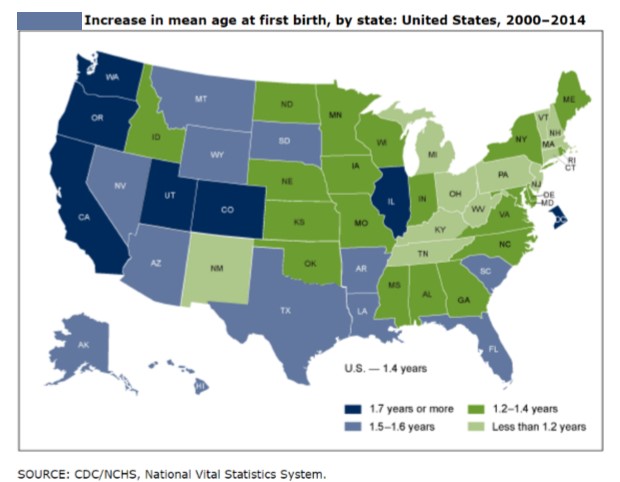
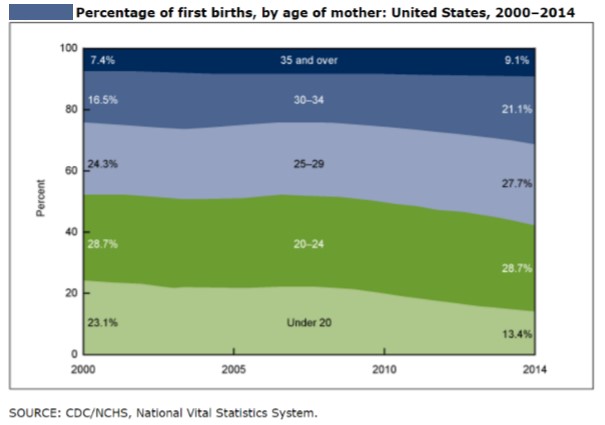
First-time mothers are older than ever, new federal data has revealed.  Since 2000, the average mother’s age at the birth of her first child has increased in every state in the nation, rising 1.9 years or more in D.C., California, Oregon, and Utah, while increasing by less than a year in Connecticut, Michigan, New Hampshire, and West Virginia. Overall, the average age of mothers has increased from 2000 to 2014 for all birth orders, with age at first birth having the largest increase, up from 24.9 years old in 2000 to 26.3 years in 2014, according to newly released data compiled by the Centers for Disease Control and Prevention.  Connecticut is among a dozen states with the smallest increases in the average age of first-time mothers. graph

The federal agency points out that “a mother's age at birth, and particularly the average age when a mother has her first child, is of interest to researchers and the public. Mean age can affect the total number of births a mother has over a lifetime, which in turn impacts the composition and growth of the U.S. population. Age of mother is associated with a range of birth outcomes, such as multiple births and birth defects, the agency noted.

The largest factor in the rise a mother’s average age when her first child is born is the decline in the proportion of first births to mothers under age 20, down 42 percent from 2000 to 2014, or from approximately 1 in 4 births to 1 in 7.

Increases in the average age for all birth orders were most pronounced from 2009 to 2014, according to the data.  While the average age at the birth of a mother’s first child was fairly stable for the first half of this time period, greater increases were observed from 2009 (25.2 years) to 2014 (26.3 years).new mom

Increases from 2000 to 2014 in average age for higher birth orders were less than those for first births, rising 1.4 years for first births, 1.0 years for second births, 0.8 years for third- and fourth-order births, and 0.5 years for fifth- and higher-order births.  As a result of the different rate of increases by birth order, the gap in the average age between sequential birth orders is less than previously. For example, the difference in a mother’s average age at first birth compared with the mean age at second birth was 2.8 years in 2000 and fell to 2.4 years in 2014.

States with larger increases (1.7 years or more) in the average age at first birth tended to be in the western United States (California, Oregon, Washington, Utah, and Colorado), the data indicated. Greater increases were also seen in Illinois, Arkansas, and D.C.

mapThe report emphasized that over the past several decades, the United States continued to have a larger number of first births to older women along with fewer births to mothers under age 20. “This trend and the more recent uptick in delayed initial childbearing can affect the number of children a typical woman will have in her lifetime, family size, and for the overall population change in the United States,” the federal agency pointed out.

This report contains data from the birth data set, which is part of the National Vital Statistics System (NVSS). NVSS contains all live births reported in the United States. The birth data set is the primary data set for analyzing birth trends and patterns in the United States.


PERSPECTIVE: Gun Reforms vs. Gun Servants

by Dick Polman Why do Republicans nauseatingly refuse to address America's gun murder epidemic? Why are they so determined to sustain our well-earned reputation as the most violent nation in the civilized western world? Why are they jerking their knees in reflexive opposition to President Obama's modest attempts to defend our right to remain alive?

Of course we know why. It's Obama hatred and gun lobby love.

You would think, judging by their tiresomely predictable reactions, that Obama is poised to dispatch an army of flying monkeys to swoop into American homes and spirit away the 270,000,000 guns that we apparently hold dear.PageLines- CTperspective.jpg

But this fever swamp rhetoric is flatly contradicted by reality. Obama is basically tweaking existing gun laws to make them work better. Which is exactly what Republicans have been urging all along.

For instance, the federal background check system is notoriously understaffed and under-financed. Under federal law, if the FBI can't complete a check within three days, the buyer gets his gun without the check having been completed. That's what happened last year in Charleston, South Carolina. Remember the white racist terrorist who killed nine people at the historic black church? He got his gun because the understaffed feds didn't obtain his criminal record within the mandated three days.

So Obama is beefing up the background-check system - directing more money and manpower to weed out the criminals and mentally ill. Plus, he's earmarking an extra $500 million to mental-health services, to better help those who have woes between their ears.

Yet the Republicans don't like any of that.

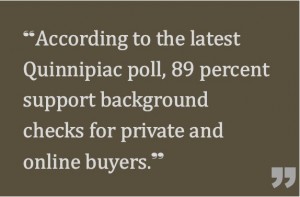
Obama also took action to close loopholes in existing laws - most notably, the one that allows people to buy guns, without any background screening, from private sellers and online sellers. Isn't it logical to tweak existing laws so that everybody gets screened prior to buying bang-bangs? The American public certainly thinks so; according to the latest quoteQuinnipiac poll, 89 percent support background checks for private and online buyers.

The Republicans don't want any of that, either.

Requiring shippers to report stolen guns - that makes sense, too. Investing in advanced technology so that kids can't accidentally pull gun triggers - that makes sense, too. And yet, not a single Republican has spoken up to say, hey, that's a good idea.

Instead, all we got was the usual pap, plus a lot of whining about Obama's alleged kingly behavior. They're basically complaining that Obama is doing end-runs around the Republican Congress, somehow forgetting that the Republican Congress is invested in doing the gun lobby's business by doing nothing. Just last month, in fact, it squashed a bill designed to beef up background checks.

Kathleen Parker - the center-right political columnist, no friend of Obama's - says it well on Wednesday: "In fairness to the gun lobby, which may not deserve such charity, one can understand reservations about limiting access to guns. What is less easily understood is the refusal of Republicans to take the reins of any given issue and do something constructive rather than invariably waiting to be forced into the ignoble position of 'no.' It is one thing to be in the pocket of the National Rifle Association. It is another to do nothing and then assume a superior posture of purposeful neglect, as though do-nothingness were a policy and smug intransigence a philosophy."

Can Obama's executive actions substantially curb our annual gun murder epidemic? No way. We have too many guns in circulation for that to happen. He freely acknowledged that on Tuesday, saying, "We know we can't stop every act of violence, every act of evil in the world.  But maybe we could try to stop one act of evil, one act of violence."

There it is - the desire to save at least a few of the lives that would otherwise be lost. Doing something to dent the death toll sure beats thoughts 'n' prayers.

Or to paraphrase the Talmud, "He who saves a single life, saves the world entire."

__________________________________________

Dick Polman is a former columnist at The Hartford Courant and was founding editor of The Hartford Advocate.  He is the national political columnist at NewsWorks/WHYY in Philadelphia and a "Writer in Residence" at the University of Pennsylvania. Email him at dickpolman7@gmail.com. Copyright 2016 Dick Polman, distributed exclusively by Cagle Cartoons newspaper syndicate.

PERSPECTIVE commentaries by contributing writers appear each Sunday on Connecticut by the Numbers.