PERSPECTIVE: The Midnight Art of Pavement Markings
/by Jennifer Paquin The long and short of line painting is – the world needs it! It keeps chaos at bay. Imagine going to a mall that does not have pavement markings, especially during the holiday season. Pavement markings help prevent accidents and, at the scene of an accident, are often used to determine fault. The markings are for your safety: they protect you and, most importantly, they guide you to where you want to go.
If you’ve ever traveled on a newly paved road or parking area before the markings have been painted, you quickly realize how dangerous life would be without them.
While you are sleeping somewhere soft and warm – workers in this profession are painting lines on parking lot pavement that will tell you where to park, turn, and stop when you pull into school, or a store, or the dentist’s office, tomorrow morning. 
This is the world of highway and pavement “marking,” also known as line painting or line striping. It is one of the few services performed in the dead of the night, so that parking stalls, arrows, fire lanes and those cross-hatches will seem to have magically appeared when you arrive at work or hit the road the next day.
A typical night has many challenges, and on occasion, unexpected surprises. First we position our trailer in a safe, central location, which allows for quick and easy access to paint cans and necessary tools. Then, we wait. And wait. For the parking lot, or at least a section of it, to empty out. This could take minutes or hours, depending on how cooperative people are, intentionally or unknowingly.
And yes, there is always that one car. No one knows who it belongs to or how long it has been there – or how long it might remain unmoved. Patience is a requisite. This is especially true when you realize that you have finished painting an entire lot, loaded everything back into the trailer to head home, and then along comes the person who owns that one car. 
If the job is to repaint over old lines, the work begins with cleaning each line with a broom and a leaf blower. Next, we measure lines that are completely faded out, mark them with yellow crayon, and snap each line with blue chalk from a snap-line. This process, which can take hours, has a rinse, repeat cycle to it. If the weather is windy, the chalk dust will fly everywhere except on the line.
If the job calls for a brand new layout (as with new pavement for a new business) then additional time must be factored in. The measuring is more precise and close attention must be paid to the contractor’s blueprint. Strong math skills, along with precision and patience, are necessary in this profession if the job is to be done right.
The machine needs to be loaded with paint and the paint gun positioned based on what type of work will be done first. The process of filling the paint machine usually goes smoothly; however the paint must be strained through a colander to ensure that no lumps will block the machine pump. Lumps can shut down the whole operation from minutes to hours while the pump is taken apart to locate, and then relieve, the blockage.
Paint color is determined by the business owner or the town. Yellow is preferred for visibility, especially during the winter months. The paint gun position is a trial and error process with an array of different sized gun tips available. For example, when painting stencils such as the Handicapped symbol, a larger tip is used. A large fabric tarp is placed on the ground to pre-test the width of the spray. The objective is for the paint gun to spray a four inch wide line.
Then come the “stalls.” There are three types: Standard, Hollywood, and Handicapped. (Yes, it is really called “Hollywood” in the industry.) A Standard stall consists of two lines, nine feet wide by eighteen feet long; a Hollywood stall consists of two rectangular boxes, one on each side of the stall, to allow more room when opening vehicle doors; and the Handicapped stall size and layout is determined by the Americans with Disabilities Act, and the town.
 Constant alertness is needed on a job site. Cars and pedestrians can appear quickly, seemingly out of nowhere, so both painter and assistant need to watch and listen attentively, especially when the paint machine is running. Reflective vests and pants are a safety must, and a flashlight should be hooked onto your clothing as well, to be ready at all times.
Interruptions will occur throughout the night. People ask questions about what we are doing; onlookers are fascinated by the process; and cars can slip in and park without notice on larger jobs.
There is a lot of running around; it is in the nature of the job. Often, people come by to ask for directions, and as the night goes on, the questions can get strange. My favorite question has been, “Where is the nearest grocery store?” – as we were painting the grocery store’s parking lot! Another common question, “How long does it take for the paint to dry?” Answer: It depends on temperature and weather conditions. On dry, hot days, it takes about fifteen minutes or less; but, when the temperature drops, drying time can take up to two hours.
When the sun starts to rise and the job is completed, we usually get a few early birds entering the lot before the paint has fully dried. Some people are annoyed about being re-directed to a different parking area, especially if they are late to their destination. Sometimes we have no choice but to reluctantly let them go, as they drive through the orange cones, because they have already driven over the paint that needed just a little more time to completely dry.
And now, as the clock reads 6:00 a.m., and the dawn awakens a new day, we are heading home. Another hundred-plus stall parking lot awaits us tomorrow.
________________________________
Jennifer Paquin is a seasoned legal marketing and business development professional, residing in Tolland County. She is currently writing her first novel and can be found frequently assisting her husband with his line painting business, A&A Line Painting.
PERSPECTIVE commentaries by contributing writers appear each Sunday on Connecticut by the Numbers.


 Participating schools will be encouraged to take innovative approaches to teaching civics in the classroom and to consider involving extracurricular activities that promote civic and community engagement.
 necticut ranked as the most energy expensive state mainly due to its high retail prices for energy,” analyst Jill Gonzalez told CT by the Numbers. “The state has the third highest retail price for electricity and heating oil at $0.20 per kWh and almost $4 per gallon, respectively. Natural gas isn't cheap either, ranking 14th highest, at $14 per thousand cubic feet. These prices paired with high heating consumption in the winter months put Connecticut on top of these rankings."


 Connecticut’s top junior gymnast, Riley McCusker of New Milford, put herself squarely on the radar screen for the future with a solid second place finish in the P&G Gymnastics Championships junior women’s event, held in St. Louis. That earned McCusker, who turns 15 this month, a slot on the eight-member U.S. National Junior Women’s Team, with international competition on the horizon.
 m for this summer’s Games in Rio de Janeiro, Brazil. The U.S. Olympic Trials were July 8 and 10 in San Jose. The 16-year-old Hernandez was the 2015 junior national champion, and is a competitor that McCusker trains with and is inspired by.
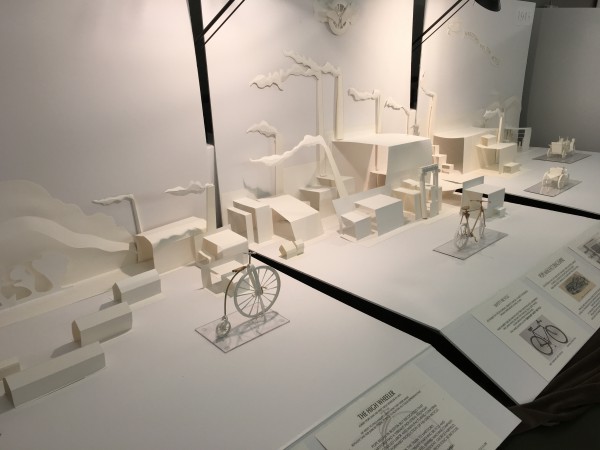
 Describing Hartford’s prominent manufacturing history, Hinz said “Hartford, CT, is a classic story in the history of American technology. If you have ever wondered why people refer to “Yankee ingenuity,” this is what they are talking about.” He adds, “In the mid and late 1800s, the United States overtakes Great Britain as the world’s foremost economic superpower, largely on the strength of its prowess in inventing and manufacturing new technologies. Hartford is at the center of that revolution.”
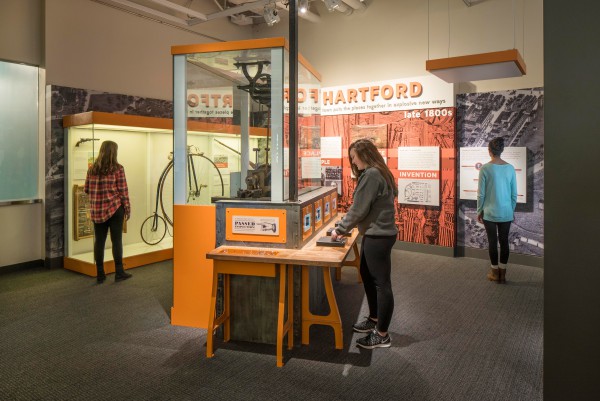 The exhibit notes that by the 1850’s “Hartford became the center of production for a wide array of products—including firearms by Colt, Richard Gatling and John Browning; Weed sewing machines; Royal and Underwood typewriters; Columbia bicycles; and even Pope automobiles.”
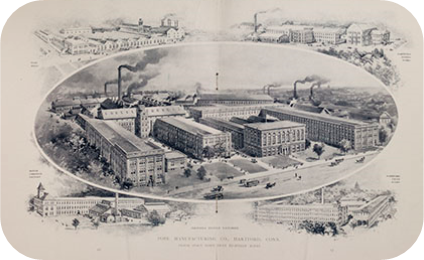 rode his high-wheeler from the station down Capitol Avenue to the Weed Sewing Machine Company.’”
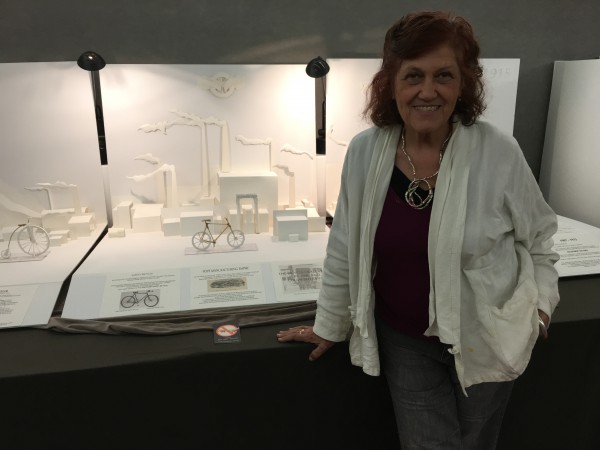 Jeanne Manzelli, a resident of Windsor, has a
  BFA in Sculpture from the Massachusetts College of Art and her MED in Art Education from the University of Massachusetts, Amherst. Her experience includes a 20 year career in design, manufacture, appraisal and sale of jewelry, two decades as mural artist working closely with interior designers as an industry professional, and 14 years teaching basic and advanced drawing, sculpture and 3D design as well as color theory at Tunxis Community College.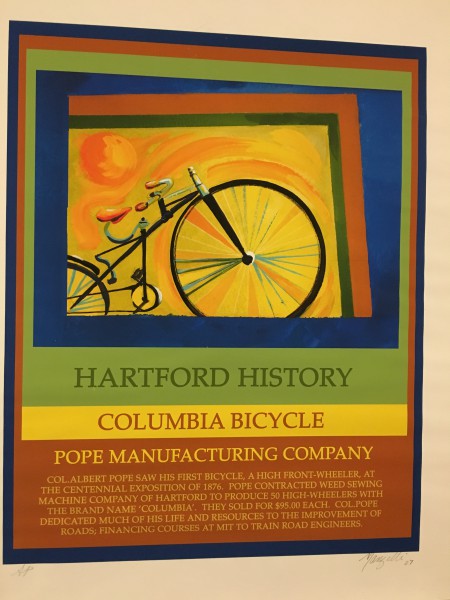
 is is a significant omission.


 The site said of
  s, including:

 Des Moines Golf and Country Club was the site of the 1999 U.S. Senior Open Championship which drew a record 252,800 spectators.