PERSPECTIVE: For Families of Special Needs Children, Thoughtful Financial Planning Can Provide A Roadmap
/by Valerie Dugan The anniversary of the Americans with Disabilities Act, on July 26, reminds us of the unique challenges families of children with special needs routinely face. One particular source of stress is financial: how will the special needs child be cared for in the event one or both parents pass away?
Wise investment and planning for the future is not only critical, but it also is much more complicated than for other families. Yet, planning carefully for future events can help alleviate some of the anxiety that parents of special needs children may feel. Planning for the care of their child can bring comfort.
Keeping in mind the goal – that is, to create an integrated financial and life strategy that allows the special needs child to maintain a sense of security, dignity and autonomy – here are some guidelines to consider:
- Government benefits. Remember there are public benefits such as disability benefits, Supplemental Social Security Income (SSI) and Medicaid. These government benefits may be available to provide food, shelter, health care and other living expenses for special needs children.
- Limited Conservatorship. Established at age 18, a limited conservatorship can help protect the child from possible fraud and embezzlement. A trusted, qualified individual serves as a watchdog of sorts.
- Special Needs Trust. This could be used to fund a child’s specific needs, including special therapies and interventions, educational programs, caregivers, equipment, and so on. A Special Needs Trust could help ensure that the child remains eligible for government benefits, both federal and state. Protected from creditors and litigation, its assets can be managed in a variety of ways; like any trust, it can be funded with stock, real estate, or other assets, but typically is most easily managed with cash and liquid assets. Another instrument to fund the trust is life insurance. Your estate attorney can set up a trust.
- Life Insurance. Life insurance policies can be transferred to a Special Needs Trust that designates the Trust as owner of the policy; thus, the death benefit of the policy is removed from the parents’ estate. Clearly, there are numerous details that need to be considered; hence an experienced life insurance broker and estate attorney should be involved.
- Succession Plan. This can be included in the Special Needs Trust for any assets remaining after the death of the special needs child.
- Letter of Intent. This can help clarify the parents’ wishes for their child’s future care and living arrangements. It can outline such details as the child’s preferences for everything from food to environment. It is the vehicle through which parents can express wishes for caring for their child and can pass on their legacy. A Letter of Intent is usually not legally binding, but it can guide conservators or other types of guardians.
- Independent Trustee. An Independent Trustee or Licensed Professional Fiduciary can be retained to ensure that the provisions of any trust are carried out as intended. This person can also provide assistance with tax returns, court filings, trust distributions and other budgeting issues.
- Gifts and bequests. Many people assume that a direct gift or bequest to their child is sufficient. While it may be straightforward, a special needs child may be incapable of managing the gifted assets. Such a gift, because of income limitations, could also render the child ineligible for government benefits.
Approached thoughtfully and comprehensively, financial planning for special needs children can provide for a lifetime of care. Knowing that their wishes and best intentions will be carried out may assuage some of the anxiety that many parents face.
____________________________________
Valerie B. Dugan, CFP, is a Senior Vice President and Financial Advisor with the Global Wealth Management Division of Morgan Stanley in Hartford. For more information, contact Valerie at 860-275-0779.
PERSPECTIVE commentaries by contributing writers appear each Sunday on Connecticut by the Numbers.


 The Connecticut Interscholastic Athletic Conference


 The
The  In lower Fairfield County, the city of Norwalk launched a rebranding initiative earlier this year. Using the new slogan “The Sound of Connecticut,” the campaign, according to Mayor Harry Rilling “was necessary to help reposition Norwalk. Our visual brand and identity system will become a recognized symbol of Norwalk’s progressive and connected vibe. We understand and live the brand’s values, goals and promises on a daily basis.” The Mayor


 Connecticut Voices for Children Executive Director Ellen Shemitz said the poll results indicate that there are potentially great rewards for leaders to work on this issue, and not many penalties. In addition, the results show the public’s willingness to devote money to this issue, and that people are looking to their elected leaders to make these investments, Shemitz pointed out.
 The site pointed out that “unless we pay attention to attendance even among young children, we are missing the opportunity to use early educational experiences to build an essential skill: showing up on time, every day to school. A growing body of research and practitioner experience shows that paying attention to attendance for our youngest children is essential.


 Constant alertness is needed on a job site. Cars and pedestrians can appear quickly, seemingly out of nowhere, so both painter and assistant need to watch and listen attentively, especially when the paint machine is running. Reflective vests and pants are a safety must, and a flashlight should be hooked onto your clothing as well, to be ready at all times.

 Participating schools will be encouraged to take innovative approaches to teaching civics in the classroom and to consider involving extracurricular activities that promote civic and community engagement.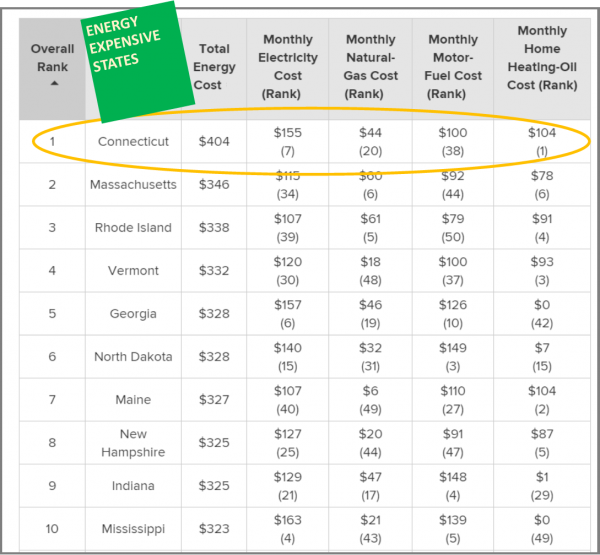
 necticut ranked as the most energy expensive state mainly due to its high retail prices for energy,” analyst Jill Gonzalez told CT by the Numbers. “The state has the third highest retail price for electricity and heating oil at $0.20 per kWh and almost $4 per gallon, respectively. Natural gas isn't cheap either, ranking 14th highest, at $14 per thousand cubic feet. These prices paired with high heating consumption in the winter months put Connecticut on top of these rankings."