Nonprofits, Local Companies See Benefit From Business Arrival in Capital City

The arrival of Blue State Coffee in downtown Hartford has been more than a convenient place to grab a cup of coffee for supporters of a number of nonprofit organizations in the Capitol City.  It has also meant the introduction of a new revenue stream for organizations they care about, at a time when budgets have been particularly tight. Most recently for Our Piece of the Pie, Journey Home, Unified Theater, The iQuilt Plan, Partnership for Strong Communities, Dream Camp at Trinity College, CT ALIVE and Hartford Food Systemblue state, Blue State Coffee’s policy of sharing two percent of their profits with local organizations suggested by their customers has been most welcome.

Turns out it can make a difference with a retail business with a commitment to social benefit comes to town.

Blue State Coffee, founded in Rhode Island in 2007, provides their customers at each of their store locations to choose four local non-profit organizations twice a year for a six-month period. Each time a customer makes a purchase he or she may vote for one of the four non-profits being supported at that time. They then allocate 2 percent of sales based on the number of votes each organization receives during the six month donation period.

IMG_0522Since their first store opened in July of 2007, the company reports they have donated over $635,000 to more than 250 non-profit organizations. In total, the company operates eight cafes: four cafes in Connecticut, two in Rhode Island, and two in Massachusetts.

Hartford, which opened just under a year ago at 777 Main Street, was the fourth location in Connecticut, following three in New Haven (84 Wall Street opened in January 2009, 276 York Street opened in May 2010, and 320 Congress Avenue opened in September 2012).  There are also two locations in Boston and two in Providence.   In New Haven, nearly 100 nonprofit organizations have received support since the first coffee shop opened in the Elm City.

Blue State is also very much a part of the trend to use local farms, local goods and local vendors.  The Hartford location, for example, features eggs from Bloomfield, milk from Lebanon, bread from Deep River, Bagels from Cheshire, produce from Simsbury and maple syrup from North Grosvenordale. IMG_0523

As the company website points out, “We will continue to grow, creating community within our stores and demonstrating that business can be a positive force for good.”

Two CT Companies Among Inc. 500 As Fastest Growing Private Businesses; 40 in State Reach List of 5,000

Two companies with Connecticut addresses are among the 500 fastest growing private companies in America, cited in the annual survey published by Inc. magazine in their September edition.  Saatva, which sells “America’s best priced luxury mattress” exclusively on-line, is ranked at #316 and Discover Video, a video hardware and software company that works across multiple industries, is ranked #428. They were the only two companies to earn a slot in the top 500.  An additional 38 Connecticut companies were listed on the Inc. 5000, also announced recently.

saatvaWallingford-based Discover Video provides software and hardware to corporations and educational institutions that seek to improve their communications through the use of video. The company ranks #428 on the Inc. 500, is ranked #5 among America’s fastest growing media companies, and #2 in Connecticut. The company has grown 893 percent in the last three years.

“We are thrilled to be recognized” said Rich Mavrogeanes, Discover Video CEO. “We provide great products, love our customers, and have a fantastic team. Our customers take comfort in our financial stability and long term prospects, and this award certainly demonstrates that.”

Founded in 2009, Discover Video, LLC provides “powerful and affordable video streaming and digital media solutions to organizations of all sizes in three ways: Products, Services and Expertise,” according to the business website. Clients include the Emmy Awards, the National Association of Broadcasters and the White House, according to the company.site-logo-small

Ranked at #316 on the Inc. list, Saatva’s three year growth is 1,220.9 percent.  The company constructs and sells luxury mattresses.  The company’s administrative mailing address is Wright Street, in Westport; another administrative office is located in Austin, TX.  The online Inc. summary indicates they are a Connecticut company; the magazine’s print edition lists the company as based in New York City, where back-office logistics emanate.  The business has 18 factories around the country; the CEO is Ron Ruzdin.

The seven-year-old Saatva was named to Forbes Top 100 "America's Most Promising Companies" last year, and was ranked the 8th fastest growing e-tailer in the Top 500 Guide for 2015 by Internet Retailer.  The company sells exclusively online and does not have showrooms. Saatva provides “nationwide in-home delivery and set-up,” and highlights it’s mattresses’ “individually wrapped coils, edge & lumbar support, steel coil support base, organic cotton cover, and euro pillow top with a memory foam enhancement in the lumbar area.”

SafronRoadFood-Logo-newAlso reaching the Inc. 5000 were Saffron Road Foods, a consumer products and services business (American Halal Company) based in Stamford, at #703; Votto Vines Importing, a food and beverage business in Hamden, at #786, and Continuity, a New Haven software company, at #955, launched in 2008.

Saffron Road is the culmination of Founder and CEO Adnan Durrani’s life’s work.  Right after the turn of the 2000 millennium, the natural food pioneer first envisioned a halal food brand which also embodied ethical consumerism: halal, sustainably farmed, authentic, anti-biotic free, and 100% vegetarian fed, all harvested on family-owned farms, the company’s website explains.

vottoVotto Vines is a family-operated business focusing primarily on the importation and wholesale distribution of fine wines produced by leading boutique vineyards around the world as well as high-profile private label and wine licensing transactions.

Continuity provides a combination of technology, expertise and leadership “designed to make compliance a seamless part of how your institution does business,” providing compliance management solutions.  By combining regulatory expertise and cloud technology, Continuity provides a proven way to reduce regulatory burden and mitigate compliance risk. In addition to its New Haven headquarters, thlogocontinuity_2xe company has an office in Boston.

Connecticut-based fast growing businesses on the first-half of the list of 5,000 nationwide also include HPC Wireless Services (#1,033), InterMerchant Services (#1,392), Charles IT (#1,631), Northeast Private Client Group (#1,786),eEuroparts.com (#1,912), Clarity Software Solutions (#,2108), Johnson Brunetti (#2,380), Square 9 Softworks (#2,387), and DGDean (#2,436).

The full list of Connecticut companies is at http://www.inc.com/inc5000/list/2016/state/ct/

chart

CT's Economy Among 10 Worst States But Rising, Governor's Approval Rating is Nation's Second-Worst

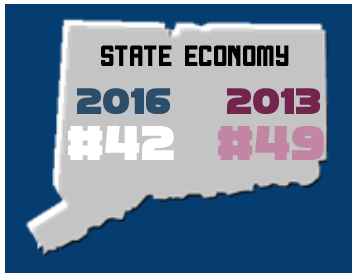
Connecticut’s economy is among the ten worst states in the nation, but that is an improvement from three years ago, when the state ranked 49th out of the 50 states.  Now the state ranks 42nd in a ranking of overall economic performance by Governing magazine, with results that show a connection between a state's economic performance and its governor's approval ratings. The approval ratings for governors of the top 10 states averaged 62.1 percent, according to the publication, while the gubernatorial approval ratings for those in the bottom 10 averaged 50.8 percent. No governor in the top 10 states had an approval rating lower than 54 percent, while six of the governors in the bottom 10 states had approval ratings below 50 percent and one -- Connecticut's Dannel Malloy, a Democrat -- had an approval rating as low as 29 percent, Governing’s analysis showed.

rankingsIn 2013, Connecticut’s economy ranked 49th, and Governing said this: “Gov. Dan Malloy is a Democrat in a solidly blue state and has won plaudits for his handling of the Newtown school shooting and for his leadership during several weather emergencies. However, his poll numbers from Quinnipiac University are mediocre -- a 47 percent to 47 percent split in job approval, with only 44 percent of voters saying he deserves re-election, compared to 46 percent who say he does not.”  Malloy was re-elected, but his poll numbers have plummeted in the nearly two years since, as Connecticut has remained mired in the nation’s 10 worst performing economies.

The top-ranked state is Massachusetts, where Republican Governor Charlie Baker has an approval rating of 72 percent.  Also earning a slot in the top 10 are Oregon, Delaware, Colorado, California, Tennessee, New Hampshire, Utah, Virginia and Maryland, where Republican Gov. Larry Hogan has a 71 percent approval rating.Picture5

The worst-ranking state economy is in West Virginia, followed by Alaska, and Wyoming – all states where the Governor has an approval rating exceeding 60 percent.  Most others among the bottom 10 states have approval ratings in the 40’s – the lowest by more than 12 points is Malloy’s 29 percent approval rating.

The only Governor in the nation less popular than Malloy is Sam Brownback, Republican of Kansas, with an approval rate of 26 percent.  Michigan’s Rick Snyder (R) at 32 percent, Kentucky’s Matt Bevin (R) at 33 percent, Illinois’ Bruce Rauner (R) at 34 percent and New Jersey’s Chris Cristie ( R) with a 36 percent approval rating are the others at the low end of the survey, conducted by Morning Consult, weighted using the U.S. Census Bureau’s Current Population Survey, and published in Governing.

Louisiana, just behind Connecticut at number 46, like other states on the bottom 10 list has been heavily influenced by a decline in the energy sector. In addition to Louisiana, today's bottom 10 includes such energy-dependent states as Alaska, New Mexico, Oklahoma, West Virginia and Wyoming. In fact, two of these states -Gov_logo- Alaska and West Virginia -- actually ranked in the top 10 in 2013, before the full force of the energy decline was felt, Governing reported.

Among state economies in the Northeast and New England, Massachusetts, Delaware and New Hampshire ranked in the top 10; New Jersey was number 24, Vermont number 25, Maine number 28 and New York number 29.  Rhode Island was ranked 35th.


Connecticut’s Anxiety Above National Average, Analysis of Google Searches Shows

High anxiety.  It is apparently as American as apple pie.  At least that is what an analysis of Google searches is showing.  And Connecticut is above average, although less anxious than the rest of New England. In a state-by-state comparison of anxiety levels based on Google searches, topping the list was Maine, 21 percent above the national average.  At the other end of the spectrum was Oregon, 26 percent below the U.S. average. anxiety

The states with the highest percentages of Google searches for “anxious” and related terms include Maine, New Hampshire, Vermont, Massachusetts, Rhode Island, Pennsylvania, West Virginia and North Dakota.  The least anxious:  Oregon, Nevada, Virginia, Kansas, Alaska and Hawaii.

The New York Times reports that Google’s measure of anxiety includes a broad range of searches, including “anxiety help,” “anxious” and “anxiety symptoms.”

“While Google searches may not be a perfect measure of anxiety,” a Times columnist reports, “there is increasing evidence that searches on a health condition highly correlate with the number of people suffering from that condition.” The rates of Google searches for anxiety in a state also correlate with survey measures of anxiety, explained Seth Stephens-Davidowitz, an economist and a contributing opinion writer for the Times.

Nationwide over the past eight years, Google search rates for anxiety have more than doubled. They are higher this year than they have been in any year since Google searches were first tracked in 2004, according to Stephens-Davidowitz.  Anxiety, however, is not uniquely American.  A review of online searches in the United Kingdom in 2014 found that 'What is anxiety?' was one of the top 10 most searched for questions.

us mapAmong the leading searches this year in the U.S. are driving anxiety, travel anxiety, separation anxiety, anxiety at work, anxiety at school and anxiety at home. Connecticut is the only New England state where the rate of Google searches for anxiety is not more than 10 percent above the national average.  The analysis indicates that “Americans anxieties are up 150 percent compared with 2004, based on internet searches.”  And still climbing.

The two leading drivers, according to the analysis:

  • Poverty, and/or a major recession. States that were more deeply affected by the Great Recession saw bigger increases in anxiety during and after the recession. The estimate is that each percentage point increase in unemployment is associated with a 1.4 percent increase in anxiety. Google searches for anxiety tend to be higher in places with lower levels of education, lower median incomes and a larger part of the population living in rural areas, the analysis discovered.
  • High opiate prescription rates — and high search rates for opiate withdrawal — are among the places with the highest search rates for panic attacks. These areas include Appalachia and the South. During years in which many people complained of opiate withdrawal, many people also complained about panic attacks. Searches for opiate withdrawal consistently start high at the beginning of the year. They mostly drop through the year, although they rise in the summer and then surge around Christmas.

Some have raised questions about the inferences in the analysis, wondering if opiate usage, for example, is a cause or effect reflected in the Google searches.  Others have suggested that merely the act of using Google to investigate real or perceived symptoms can make an individual more anxious, and more likely to search Google again, and the pattern could then repeat, leading to more frequent searches.

PERSPECTIVE: Back to School—Don’t Forget Your Child’s Mental Health

by Rachel Papke Back to school time is upon us. Parents are scurrying around shopping for back to school deals for their children—clothes, school supplies, and more. For parents with college-aged students the prep-work is more extensive: purchasing dorm room items and packing boxes to start. There are long “to-do” lists, calendar updates, alerts, reminders—a whirlwind of things to do to ensure that your child is ready for the school year. But what actions are you taking to check-in on your child’s mental health?

First, familiarize yourself with the symptoms of a mental health condition by accessing these mental health screening tools.CT perspective

According to the Center for Disease Control and Prevention, 1 in 5 young adults has a diagnosable mental health disorder, yet most are not receiving help. If left untreated, the risk for suicide increases. Suicide is the second leading cause of death for persons aged 15-24. With suicide rates at their highest in 30 years, prevention programs like those of the Jordan Porco Foundation need your support more than ever to help save young adult lives.

First-Year College Students

Majority of U.S. first-year college students feel underprepared emotionally for college. 65% said they tended to keep their feelings about the difficulty of college to themselves, 60% of students wish they had gotten more help with emotional preparation for college, and 87% of students said college preparation during high school focused more on academics than emotional readiness.1 These statistics are striking and we need to fill the gap to combat these statistics.

q1Connecticut Statistics

During the past 12 months, 26.6% of Connecticut high school students felt so sad or hopeless almost every day for two weeks or more in a row that they stopped doing some usual activities. This is suggestive of clinical depression, meaning that more than a quarter of high school students should be receiving treatment for depression or depressive symptoms.

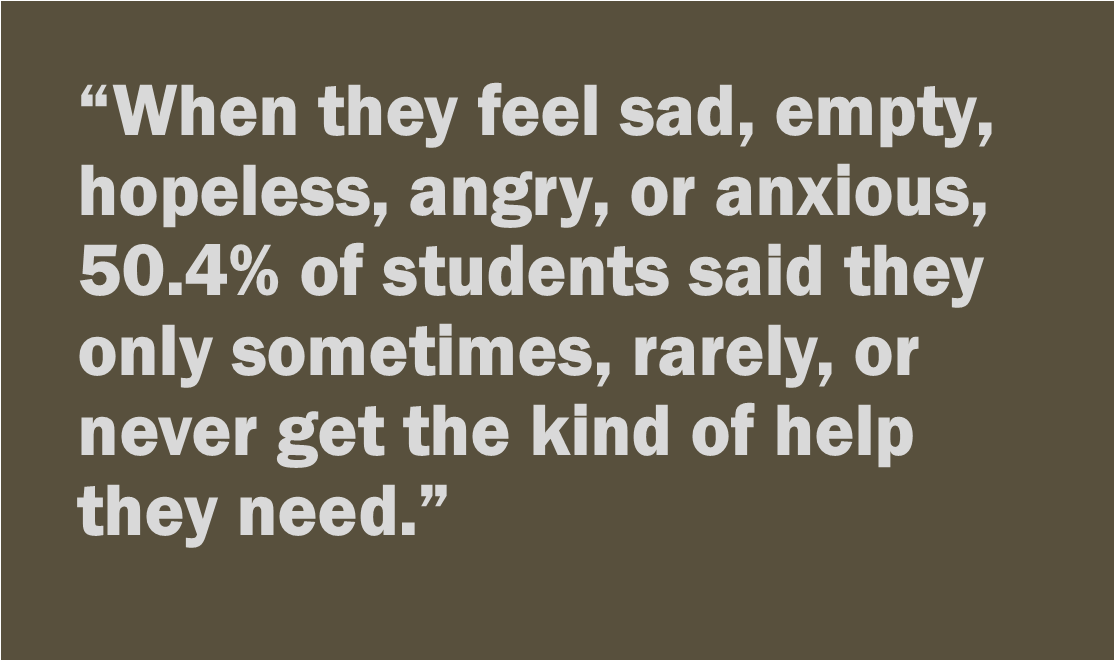
When they feel sad, empty, hopeless, angry, or anxious, 50.4% of students said they only sometimes, rarely, or never get the kind of help they need. Talk your children, listen, and validate their feelings.

18.5% of CT high school students did something to purposely hurt themselves without wanting to die, such as cutting or burning themselves on purpose, within the past year. If your child displays the signs and symptoms of self-injury, you should consult a mental health professional with self-injury expertise. Learn more, here .

13.4% of Connecticut high school students seriously considered suicide in the past 12 months. It’s more common than you think, and it may well be your child or one of their friends. For more information about the warning signs of suicide visit our Nine out of Ten website.

Stay informed and attuned to any changes in behavior. Keep the mission of the Jordan Porco Foundation, the Hartford, CT-based non-profit, at the forefront to help you in your discussions.

q2The mission of the Jordan Porco Foundation is to prevent suicide, promote mental health, and create a message of hope for young adults.

To accomplish this, they:

Help challenge stigma by talking openly about mental health issues

Offer engaging and uplifting programming, emphasizing peer-to-peer messaging

Promote help seeking behavior, self-care, and coping skills

Educate about the risk factors and warning signs of suicide and other related mental health concerns

They do this in the name and spirit of Jordan Porco, who died by suicide in 2011. They’re in it for life every day. Saving lives is the heart and soul of their cause. Mental health needs a voice: you are that voice; we are that voice.

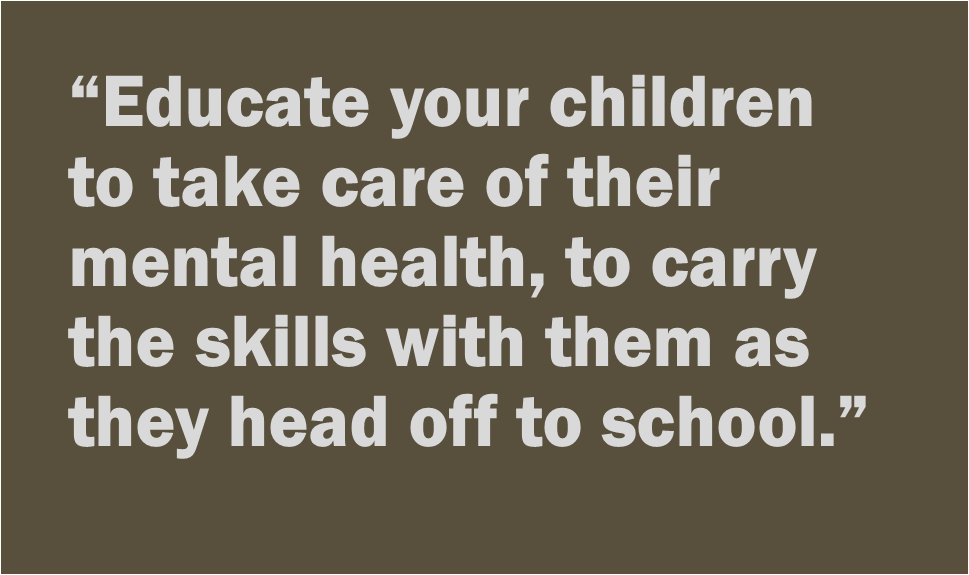
Work to create a message of hope for your children. Encourage open, honest conversations about mental health. Talk about feelings. Listen to your children and know what mental health resources are available in your area and at school. Educate your children to take care of their mental health, to carry the skills with them as they head off to school. Help them understand that they are not alone—where there is help, there is hope.

_________________________________

Rachel Papke is Communications Coordinator for the Jordan Porco Foundation.  She may be contacted at (860) 904-6041 or rachel@rememberingjordan.org.  Learn more about the Jordan Porco Foundation at www.rememberingjordan.org

PERSPECTIVE commentaries by contributing writers appear each Sunday on Connecticut by the Numbers.

Also of interest: Creating a Message of Hope for Young Adults 


1 – The “First-Year College Experience Survey” was commissioned by the JED Foundation, Partnership for Drug-Free Kids, and the Jordan Porco Foundation, and conducted online by the Harris Poll among 1,502 U.S. college freshmen between March 25 and April 17, 2015. Survey respondents were students 17-20 years old in the second term of their first year at college, and attending some classes in person at a 2-year or 4-year college. For complete survey methodology, including weighting variables and subgroup sample sizes, visit www.SettoGo.org.

Travelers Initiative Aims to Predict Chronic Pain from Workplace Injuries

Can chronic pain, often the lingering result of a workplace injury, be predicted? The Travelers Companies, Inc. believes the answer is yes.  The company has developed what it describes as the first predictive model designed to reverse a sharp rise in chronic pain caused by workplace injuries.

The Travelers Early Severity Predictor (patent pending) identifies the likelihood of an injured employee developing chronic pain so that they can avoid it in recovery and reduce the need to use opioids or other painkillers.

“Millions of American workers are injured on the job each year, and the number of cases in which chronic pain interferes with an employee’s recovery has risen from less than 10 percent a decade ago to more than half of all serious injuries today,” said Dr. Adam Seidner, the National Medical Director at Travelers, when the initiative was announced in April.chronic-pain

According to A.M. Best, Travelers is the largest workers compensation carrier in the United States. The company manages more than 250,000 workplace injury claims and 3.5 billion medical treatments per year.

“When someone develops chronic pain, they are prescribed opioids or other painkillers more than 90 percent of the time. Our goal is to work with injured employees and their doctors to eliminate or substantially reduce the need for painkillers that can slow their recovery or lead to devastating long-term addiction.”

The Travelers Early Severity Predictor has been applied in more than 20,000 cases since early 2015. Of those, more than 9,000 injured employees were identified as being at risk of developing chronic pain. These employees received a customized, sports medicine-like regimen of treatment precisely sequenced to aid and accelerate their recovery, the company explained.

Injured employees who participated in the program in the past year have, on average, recovered and returned to work more quickly, the company said. They were also far less likely to receive a prescription for opioids, and when they did, it was typically a lower dosage or only for short-term use. At the same time, medical expenses, which cost American employers an average of nearly $40,000 per injury, were reduced by as much as 50 percent.

In 2014, there were 107.1 cases of nonfatal occupational injuries or illnesses requiring an employee to miss work for every 100,000 full-time American workers, according to the U.S. Bureau of Labor Statistics (BLS), the website IPWatchdog reported. Although this represented a decline from 2013’s workplace injury numbers, it still resulted in 1,157,410 days away from work among private, state government and local government employees. BLS statistics show that workplace injury incidence rates were highest in the industries of transportation and warehousing as well as health care and social assistance, according to the website.Travelers-Logo

Two patent applications published this year by the U.S. Patent and Trademark Office cover technologies associated with the Early Severity Predictor project, IP Watchdog reported.

The Centers for Disease Control issued a guideline earlier this year, the Insurance Journal reported, for primary care physicians for treating chronic pain. The new CDC guideline aims to lessen opioid use disorder and overdose. When opioids are used, doctors should prescribe lowest possible effective dosage, according to the guideline. The CDC guideline also suggests increasing the use of other effective treatments available for chronic pain, such as non-opioid medications or non-pharmacologic therapies.

According to research into physician dispensing of opioids, the Workers Compensation Research Institute (WCRI) noted that three out of four injured workers with pain are prescribed opiods, with the amount per claim varying by state, the Insurance Journal reported.  Nearly 1 in 12 injured workers given narcotics are still on them 3 to 6 months later as few doctors appear to be following recommended treatment guidelines to prevent abuse, according to WCRI research in 2012.

A 2012 study in the Journal of Occupational & Environmental Medicine found that when long-acting opioid painkillers are prescribed, workers’ compensation claims are nearly four times more likely to turn into catastrophic claims with costs tallying more than $100,000.

“Helping employees avoid chronic pain and the slippery slope to possible opioid dependency is critical to reversing this disturbing and costly health crisis,” Seidner emphasized.

The Travelers Companies, Inc. is a leading provider of property casualty insurance for auto, home and business. The company’s main offices are in New York, Hartford and St. Paul.  A component of the Dow Jones Industrial Average, Travelers has approximately 30,000 employees and generated revenues of approximately $27 billion in 2015.

Americans Moving Less Often, Changing Jobs Less Frequently - Divorce May Be Among Reasons Why, UConn Researcher Says

Surprisingly, Americans are moving far less than they used to, only about half as much as they moved 50 years ago.  And Americans aren’t moving or changing jobs with the frequency of decades past.  Counter-intuitive, but true, according to the mounting data. In the early 1980s, about 17 percent of Americans changed their address each year. Now it’s less than 12 percent. Bigger moves, between different states, have dropped even faster, the Boston Globe reported this month.

“When Ronald Reagan took office in 1981, about one in 10 Americans changed occupations in a given year. As of 2012, it’s more like one in 24,” the Globe reported, citing data from a team of researchers at the Federal Reserve and the University of Notre Dame.cook-inter-state-migration
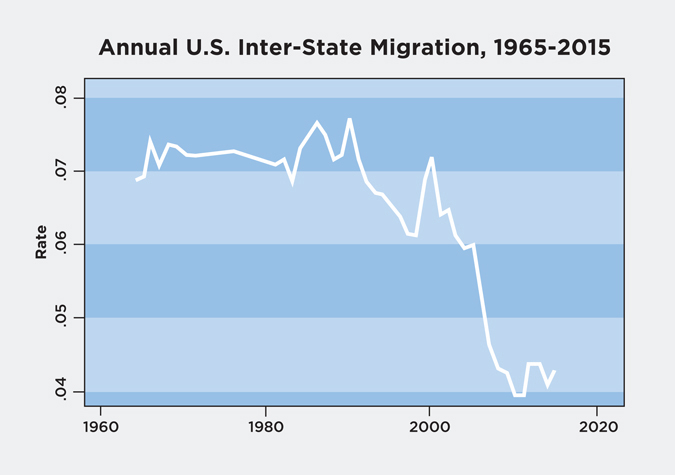
A researcher at the University of Connecticut has developed a theory regarding a key contributing factor to the diminishing moves and job changes.

“I’ve been banging my head against a wall for almost a decade, trying to figure out why migration rates are declining like this,” says Thomas Cooke, professor of geography in the College of Liberal Arts and Sciences.

Cooke spent the spring of 2015 in the Department of Demography at the University of Groningen in the Netherlands on a Fulbright fellowship, where he worked on just this problem, UConn Today reported. His research findings give the first direct evidence for one major factor contributing to this trend: divorce and child custody.

“Changes in family complexity, like divorce and child custody, make a big difference for migration,” he told UConn Today.  Cooke’s current work stemmed from the idea that in the 21st century, families are becoming increasingly complex. More women are working, people often live with elderly parents or grandparents, and step-children and cousins often live under the same roof.

Less moving is not good news for the economy, published reports have indicated.

Economists worry that the lower turnover is an indication of stagnation, not stability, the Los Angeles Times reported earlier this year. “Workers are staying put because there are fewer better jobs to move to, or they face other barriers that are keeping them locked in their current positions. And with declining job movement may come slower gains in overall employment, wages, productivity and, ultimately, economic growth,” the LA Times reported.moving

The Globe report suggests that “one big reason people jump between states and careers is because they’re lured away by the promise of higher pay and grander opportunities. The fact that fewer people are moving suggests fewer are getting those life-altering chances.”

The Times reports that experts also blame government policies for suppressing job creation and labor market mobility, whether through taxes or burdensome regulations.  Government restrictions on who can work in which jobs have expanded greatly over time, academic economists Steven Davis and John Haltiwanger, who have written extensively on labor market flows, told the Times. Citing other research, they note that the share of workers required to have a government-issued license to do their jobs rose from less than 5 percent in the 1950s to 29 percent in 2008.

A New York Times report in May, citing data highlighted by the Brookings Institution, indicated that “Fluidity rates varied widely throughout the country, but the Brookings paper found that they declined in every state. Most of the largest drops occurred in the West: Oregon, Wyoming, Washington, Oregon, South Dakota, Montana, Idaho and Alaska were all in the bottom 10.

States with the most activity included North Carolina, South Carolina, Connecticut, New York, New Jersey and Illinois – but even these were not as fluid as they used to be, the paper reported.sign

There are broad adverse economic consequences to the lack of mobility, the Globe reports.  “A recent study authored by two Harvard professors found that poor states are barely gaining any ground. Between 1880 and 1980, income differences among the states tended to shrink about 2 percent a year. This catch-up growth was only half as fast from 1990 and 2010. And if you focus on the few years just before the recession that began in 2008, there was virtually no convergence at all.  Should this trend continue, the gap between rich and poor America may become a permanent feature of economic life,” the newspaper reported.

Cooke focused on child custody following divorce. His analysis confirmed that divorced people with children were even less likely to move than those without children. The findings support the idea that people’s lives are still linked, even if they divorce, Cooke explained.  At the University of Connecticut Cooke has directed both the Urban Studies program and the Center for Population Research. His research focuses on the family dimension of internal migration, and the shifting concentration of poverty. In 2013 he earned the Research Excellence Award from the Population Specialty Group of the Association of American Geographers.

Cooke noted that the findings are the first direct evidence of divorce and child custody affecting migration in the U.S. Unlike the ’60s and ’70s, when state divorce proceedings usually awarded custody of children to the mother, joint custody is the norm today, he pointed out.

Combined with other factors affecting migration, such as the ease of telecommuting and the use of technology to communicate with loved ones far away, these divorce factors could spell a new era of rootedness, Cooke predicted.

E-Cigarettes Remain Controversial as New Federal Law, Yale Academic Study Weigh In

Even as new federal rules restricting the sale of e-cigarettes take effect, advocates in Connecticut continue to urge state lawmakers to impose tougher restrictions on electronic cigarettes and vapor products when they reconvene next year.  They warn that a growing number of young people are using these electronic delivery systems to "smoke" what could be harmful and addictive substances. The U.S. Food and Drug Administration announced rules earlier this year that will forbid e-cigarette shops nationwide from selling the products to people younger than 18 and will require staff to ask for identification that proves customers are old enough to buy.  The rules – which take effect this month - would also extend long-standing restrictions on traditional cigarettes to a host of other products, including e-cigarettes, hookah, pipe tobacco and nicotine gels. Minors would be banned from buying the products.e-cigs-poison

Teens who initially tried e-cigarettes because of their low cost had significantly stepped up their use of e-cigarettes by the time researchers checked in six months later, according to a study that senior researcher Suchitra Krishnan-Sarin, a professor of psychiatry at Yale University School of Medicine, told WebMD in an article published last week.  The low cost of the devices and the promise they can help teens quit smoking tobacco are the two strong predictors of continued use, she said.

In addition, teens who tried e-cigarettes to quit smoking were more than 14 times more likely to keep using e-cigarettes than those who did not consider this a reason to try the devices, the findings showed.  However, e-cigarettes didn't seem to help the kids quit. Four out of five teens who tried e-cigarettes to quit smoking were still puffing regular cigarettes six months later, the investigators found.

"Even though they said they were using e-cigarettes to quit smoking, it doesn't appear to have necessarily helped them," Krishnan-Sarin said.

Jennifer DeWitt, executive director of the Central Naugatuck Valley Regional Action Council, told members of the General Assembly's Public Health Committee this spring that every principal in the 12-town region her organization covers "has a desk drawer of these items that were confiscated from teens this year," including some retrofitted to smoke marijuana, the Associated Press reported.flavor

"Tobacco is a success story for us in the overall picture of prevention. However, we will take a back-slide if electronic nicotine delivery devices continue to be available in the ways that they are currently," DeWitt said.  She said 7.2 percent of Connecticut high school students are e-cigarette users, marking a higher usage rate than all tobacco products combined.

According to the CDC, nationally, 7 out of 10 middle and high school students who currently use tobacco have used a flavored product. In addition:

  • 63% of students who currently use e-cigarettes have used flavored e-cigarettes (1.6 million)
  • 61% of students who currently use hookah have used flavored hookah (1 million)
  • 64% of students who currently use cigars have used flavored cigars (910,000)

Beginning this month, retailers are prohibited from selling the tobacco products to those under 18, placing them in vending machines or distributing free samples, under the new FDA rules. While nearly all states already ban sales of e-cigarettes to minors, federal officials said they will be able to impose stiffer penalties and deploy more resources to enforce the law. The FDA action comes five years after the agency first announced its intent to regulate e-cigarettes and more than two years after it floated its initial proposal, according to published reports.

“Millions of kids are being introduced to nicotine every year, a new generation hooked on a highly addictive chemical” Health and Human Services Secretary Sylvia Burwell said. “We cannot let the enormous progress we’ve made toward a tobacco-free generation be undermined by products that impact our health and economy in this way.”

The CDC indicated that in 2013, more than a quarter million middle and high school students who had never smoked regular cigarettes had used e-cigarettes, a number that had grown three-fold in just two years. A high proportion of middle and high school students saw e-cigarette advertisements (in 2014) from one or more of the following four sources: retail, Internet, TV/movies, and Magazines/newspapers. Overall, 66% of Middle School Students and 71% of High School Student.

sourcesThe New Haven Register reported that Dr. Roy Herbst, chief of medical oncology at the Yale Cancer Center and Smilow Cancer Hospital, said state and federal policy-makers should do more to rein in the spread of the devices.


“It didn’t go as far as we would’ve liked but it’s a good step in the positive direction and allows for more research,” Herbst said of the new federal rule. “I think now that we finally have this regulation, it will begin to stem the rapid use of e-cigarette use that is running rampant in the United States and around the world.”


New Documentary, Travelers Championship Heighten Attention to ALS, Sports is Once Again Common Theme

Public awareness of ALS - amyotrophic lateral sclerosis – has been intertwined with sports since Lou Gehrig played with the New York Yankees, and saw his career and his life, tragically shortened by the neurodegenerative disease eight decades ago.  Gehrig’s Yankee Stadium speech in 1939 has endured as one of the century’s most memorable. Earlier this month, the Travelers Championship on the PGA Tour raised more money for charity than in any previous year, when $2.8 million was raised with ALS as the primary charity.  Travelers Executive Chairman of the Board Jay Fishman announced in August 2015 that he had been diagnosed with ALS.jay fishman

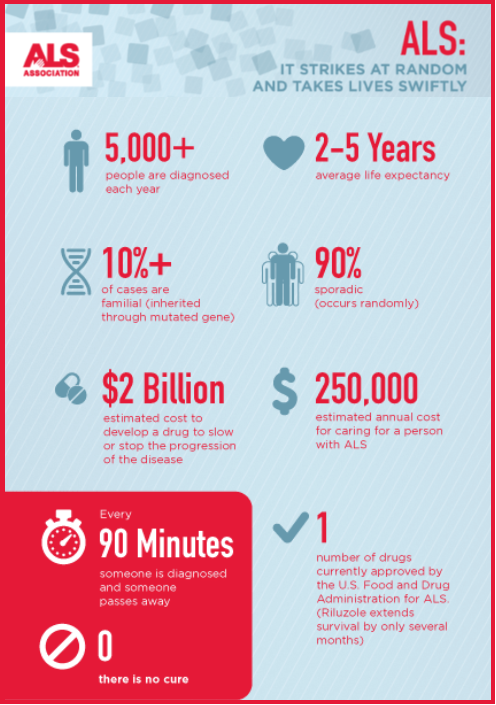
And now, a new motion picture documentary telling the story of a former NFL player afflicted with ALS is reaching theaters across the country, including Connecticut.  The film, Gleason, goes inside the life of Steve Gleason, the former New Orleans Saints defensive back who, at the age of 34, was diagnosed with ALS and given a life expectancy of two to five years. Gleason played for the Saints from 2000-2008.

The primary beneficiary for the 2016 Travelers tournament was the ALS Clinic at the Hospital for Special Care (HSC) in New Britain. Each year, HSC cares for more than 250 Connecticut residents with amyotrophic lateral sclerosis (ALS). HSC is the only facility in Connecticut that is part of the ALS Association’s national network of Certified Treatment Centers of Excellence and is certified by the Muscular Dystrophy Association for ALS care.

Copyright Michael C. Hebert

According to the ALS Association, amyotrophic lateral sclerosis is a progressive neurodegenerative disease that affects nerve cells in the brain and the spinal cord. When a muscle has no nourishment, it "atrophies" or wastes away. "Lateral" identifies the areas in a person's spinal cord where portions of the nerve cells that signal and control the muscles are located. As this area degenerates it leads to scarring or hardening ("sclerosis") in the region.  Motor neurons reach from the brain to the spinal cord and from the spinal cord to the muscles throughout the body. The progressive degeneration of the motor neurons in ALS eventually leads to their demise.

ALS burst back into the public conversation during the 2014 ALS Ice Bucket Challenge, as millions of people started talking about ALS. Recently, there have been some indications that the money raised during that social media explosion may have helped to advance research into ALS.ALS

As the movie tells it, just weeks after his diagnosis, Gleason found out his wife, Michel, was expecting their first child. A video journal that began as a gift for his unborn son expands to chronicle Steve’s determination to get his relationships in order, build a foundation to provide other ALS patients with purpose, and adapt to his declining physical condition—utilizing medical technologies that offer the means to live as fully as possible, according to the movie synopsis appearing on the film’s website. The documentary was highly regarded at the 2016 Sundance Film Festival, and is making its Connecticut debut at Cinema City at the Palace 17 in Hartford.

ALS usually strikes people between the ages of 40 and 70, and approximately 20,000 Americans can have the disease at any given time (although this number fluctuates), the ALS Association reports. For unknown reasons, military veterans are approximately twice as likely to be diagnosed with the disease than the general public.

The Greater Hartford Walk to Defeat ALS will take place on September 25 in East Hartford.  The New Haven Walk will be held on October 2 in New Haven.

https://youtu.be/WgkQU32XSFQ

Distracted Driving Attracts Police Attention in CT

Five seconds is the average time your eyes are off the road while texting. When traveling at 55mph, that's enough time to cover the length of a football field blindfolded. That statistic underscores why Connecticut State Police and more than 50 local police departments across the state are participating in the “U Drive. U Text. U Pay” initiative, for the second time this year.  It is an effort to get the attention of motorists who choose to text, talk or otherwise distract themselves from the task of driving by using a hand-held mobile phone. The campaign began August 3 and runs through August 16, (a similar effort was conducted in April) with law enforcement agencies taking aim at distracted drivers—especially those on their phones. Texting-U pay

The state Department of Transportation observed a significant drop in hand-held mobile phone use at selected enforcement locations after a similar effort last year. The data demonstrated a decrease in distracted driving from 9.6 percent before April 2015 to 7.8 percent in August 2015, representing a 23 percent drop in phone use at the selected enforcement nationwide.

Under Connecticut’s cell phone and texting law, violations involve heavy fines, ranging from $150 for a first offense to $300 for a second violation and $500 for each subsequent violation.  In 2014, an estimated 3,179 people were killed (10 percent of all crash fatalities) and an additional 431,000 were injured (18 percent of all crash injuries) in motor vehicle crashes involving distracted.distracted

“Crashes due to cell phone usage are preventable. Keep your eyes on the road and your hands on steering wheel all of the time that you are driving. That incoming text and outgoing phone call can wait. Nothing is more important than arriving at your destination safely,” said Commissioner Dora B. Schriro of Connecticut’s Department of Emergency Services and Public Protection.teen-driver-texting-

At any given daylight moment across America, approximately 660,000 drivers are using cell phones or manipulating electronic devices while driving. Ten percent of all drivers 15 to 19 years old involved in fatal crashes were reported as distracted at the time of the crashes. This age group has the largest proportion of drivers who were distracted at the time of the crashes.

The National Highway Transportation Safety Administration points out that studies show that parents have a great influence on teen behavior. “While you may not think you have great influence, that’s it’s all about peer pressure, you’re still the greatest influence on your teen. Talk to your teen and set rules to keep your teens from driving while distracted. Know the facts and share it with them. Engage your teens in a dialogue about the problem.”  A national website, www.distraction.gov, has relevant information.csp_patch

Connecticut remains the only state in the nation to receive special distracted driving prevention funds to create special patrols to identify, stop and cite drivers who choose to ignore distracted driving laws. Over $6.8 million dollars has been awarded to the state over the last three years to fund distracted driving prevention campaigns.