Aerospace Components Manufacturers to Convene in Hartford

Aerospace Components Manufacturers (ACM) “Future WorkForce Opportunities” Fair and Trade Show draws over 850 students to learn about the many career paths available in the local aerospace manufacturing industry. The event takes place the afternoon of Nov. 9 at the Connecticut Convention Center in Hartford.worldsaerospacealley_logo_rev-1 ACM comprises one of the largest, most experienced concentrations of world-class aerospace companies, the world's AEROSPACE ALLEY! ® The organization points out that member firms grew up where aerospace was born. Today, precision components manufacturer in the state take to the skies every day, in every corner of the globe, as they have since the inception of powered flight.

ACM member companies are “united by a single goal; be the world leader in providing customers with aerospace components of unsurpassed quality, at competitive prices and always, on-time delivery.”

To achieve that goal, officials work with peers and with regional, national and international experts to ensure continuous improvement of our products and services. The cornerstone of the effort is an aggressive program for adopting and implementing lean enterprise practices and conducting ongoing workforce training and development.acmlogo-notagline2

Student attendees of the event will have an opportunity to meet and talk with representatives of 100 top suppliers, all in one place at one time.  Last year, over 800 students and teachers visited from 32 schools spread across Connecticut and southwestern Massachusetts to learn about the array of career choices available in the aerospace manufacturing industry.


CT's Science and Technology Ranking Rises to 6th in the Nation

Following three consecutive finishes ranking ninth in the nation in the State Technology and Science Index (STSI), Connecticut has moved up to number six in 2016, it’s highest finish in more than a decade.  The state ranked ninth in 2010, 2012 and 2014 in the analysis produced every other year by the Milken Institute, following a 7th place ranking in 2008 and 10th in 2004.  The ranking was the highest for the state in all seven releases of the STSI index. The STSI benchmarks states on their science and technology capabilities and broader commercialization ecosystems that contribute to company growth, high-value-added job creation, and overall economic growth, the institute’s website explains.  ct-ranks-6th

“We view the STSI as a measure of a state's innovation pipeline. The index isn't intended to be a measure of immediate economic impact, but rather to demonstrate that the return on science and technology assets will accrue in future years.”

The top five states in 2016 are Massachusetts, Colorado, Maryland, California and Washington.  Rounding out the top 10, after Connecticut, are Minnesota, Utah, Virginia and Delaware.

In specific categories, the state’s ranking varied, with considerable improvement in some categories. In the Technology and Science Workforce composite index, Connecticut ranked 10th, an improvement from rankings of 16th in 2014, 13th in 2012 and 14th in 2010.  This composite measures the relative presence of high-end technical talent, and consists of 18 eighteen various indicators.

stsi-reportThe STSI's 107 individual indicators are sorted into five composites: Research and Development Inputs, Risk Capital and Entrepreneurial Infrastructure, Human Capital Investment, Technology and Science Workforce, and Technology Concentration and Dynamism.  The report indicated that "Connecticut showed major improvement in the Technology Concentration and Dynamism index, going from 21st to 10th. This dramatic rise marks one of the larger overall changes on this index. While modest increases were seen in the Research and Development Inputs index and Human Capital Investment index, these two indices have a much heavier focus on stock measures, and Connecticut’s aerospace and defense sectors help anchor the state’s performance in these areas."

Connecticut also ranked 10th in the Technology Concentration and Dynamism composite index, the state’s highest ranking in that category, and largest jump from two years ago.  In 2014, Connecticut ranked 21st.  In the two previous analyses, Connecticut was 12th in 2012 and 18th in 2010.

logoIn the Human Capital Investment composite index, Connecticut ranked third, as it did in 2014 and 2012, after ranking fifth in 2010.  In Research & Development, Connecticut placed eighth, its second highest finish, after ranking tenth, seventh and seventh in previous indexes.  Connecticut ranked 11th in Risk Capital and Entrepreneurial Infrastructure, up from 14th two years ago, but not as high as sixth place in 2012 and third in 2010.

The Human Capital Investment composite index looks at how much is invested in developing the workforce—the most important intangible asset of a regional or state economy. Twenty-one indicators are included in this composite index.  The R&D composite examines a state's R&D capacity to see if it has the facilities that attract funding and create innovations that could be commercialized and contribute to economic growth, and includes eighteen indicators.  The Risk Capital and Entrepreneurial Infrastructure Composite Index determines the success rate of converting research into commercially viable products and services. It includes 12 indicators.

While Connecticut was gaining ground, other states were bottom dwellers.  The analysis raised alarms regarding the prospects for those states.

map“The states with the weakest innovation assets and ecosystems for starting and growing innovative firms face a bleak future unless changes are made. West Virginia, Arkansas, Mississippi, Kentucky, and Louisiana make up the bottom five in this year's STSI. They are the least knowledge-intensive and their residents exhibit weak entrepreneurial skills. All of them have undertaken efforts to change their position in technology and science but have had limited success.”

Massachusetts remained in first place with a score of 83.7, retaining the position it has held since the inaugural STSI was released in 2002.

Wyoming, the most improved state, climbed 10 places, to 36th. The state had broad gains but benefited most from the broader definition of occupations in the Technology and Science Workforce category, which included its talent in mining engineering, the analysis pointed out. Missouri rose six spots, to 28th; seen as primarily attributable to a 24-place leap in Risk Capital and Entrepreneurial Infrastructure.

PERSPECTIVE: Living in an Aging Connecticut

In Connecticut, a person born today can expect to live an average of 80.8 years, the third highest life expectancy in the nation. However, there are significant disparities in life expectancy between racial and ethnic groups.  Life expectancy is 89.1 years for Asian Americans; 83.1 years for Latinos; 81.0 years for Whites, and 77.8 years for African Americans.

Between 2010 and 2040, Connecticut’s population of people age 65 and older is projected to grow by 57 percent, but its population of people age 20 to 64 is projected to grow by less than 2 percent.CT perspective

We live in an aging Connecticut.  More than one-third of Connecticut’s population is over the age of 50, and that proportion continues to rise.  Nearly every facet of our society will be impacted.

Increasing numbers of older adults will play pivotal roles, both as caregivers and as recipients of care in both families of origin and of choice.  They will prompt municipal and state leaders and their partners to ensure that communities have the features, services and funds to support aging in place.  And they will challenge our state’s creativity, polities and budgets as they increasingly outlive their financial resources, despite working longer.

q1Connecticut’s demographic transformation has been spurred by medical, social and economic advances.  And it has been buoyed by baby boomers, people born between the years 1946 and 1964, who were part of the noticeable increase in birth rate post-World War II.



At every stage, baby boomers have been changing this country, and now is no exception.  Not only are their sheer numbers larger than any other previous generation, but they are also longer-lived.

Overwhelmingly, these growing numbers of older adults what to stay in their communities and to have choice, independence and dignity.  By 2025, older adults will comprise at least 20 percent of the population of almost every town in Connecticut.

This perspective first appeared on the website of the now-defunct Connecticut Legislative Commission on Aging, with research and data analysis in conjunction with the Connecticut Data Collaborative.

UConn Study Questions Marketing, Ingredients in Food Advertised to Young Children

It would be disingenuous to describe the results as surprising, but a new study has found that marketing for baby and toddler food and drinks often contradicts the advice of health professionals. According to the study by the Rudd Center for Food Policy and Obesity at the University of Connecticut, companies tend to use marketing messages that may lead parents to believe that these commercial products are healthier alternatives to breastmilk or homemade food.baby-facts

The new Baby Food FACTS report found that companies spent $77 million in 2015 to advertise infant formula, baby food, and toddler food and beverages to parents, primarily through TV, magazines, and the internet. By comparison, companies spent $98 million to advertise fruits and vegetables in 2015 – products intended for the entire U.S. population.

“Our analysis shows that marketing for baby and toddler food, infant formula, and toddler milk and nutritional supplements often contradicts expert guidance and in some cases encourages parents to feed their young children products that may not promote healthy eating habits,” said Jennifer Harris, UConn Rudd Center Director of Marketing Initiatives and the report's lead author.

The report analyzed companies spending $100,000 or more in total advertising in 2015 and documented changes in advertising over the past five years. Eight brands from three companies (Nestle, Abbott and Mead Nohnson) were responsible for 99 percent of advertising spending. Four additional baby and toddler food brands spent $100,000 or more in advertising in magazines and online, including Plum Organics (Campbell Soup Company), Beech-Nut (Hero A.G.), and Happy Baby and Happy Tot (Nurture Inc.).rudd-logo-300x77

Among the findings:

  • Infant formula brands had the most internet advertising and were most active in social media and on mom blogs.
  • Nearly 60 percent of advertising dollars promoted products that are not recommended for young children, including sugar-sweetened toddler drinks and nutritionally poor snack food.
  • Beech-Nut and Gerber marketed their baby food products in a way that supported most expert recommendations on best practices for feeding infants.
  • Toddler milk products including Enfagrow, Gerber Good Start Grow, Nido 1+, Similac Go & Grow, and Happy Tot Grow & Shine, contained added sweeteners, including sugar, glucose syrup solids, honey, and corn syrup solids.
  • Pediasure Grow & Gain, a nutritional supplement aimed at toddlers, had 240 calories per serving and as much sugar as an 8-ounce sports drink.
  • In contrast to nutritious baby and toddler fruit, vegetable, and meal products, just four of 80 baby and toddler snack foods, such as cookies, cereal bars, puffs, and fruit snacks, were nutritious choices for young children.
  • Fifty percent of baby and 83 percent of toddler snacks contained added sugars.

kids-eatingThe findings included in this report “provide policymakers, health professionals, public health advocates, industry representatives, and parents an opportunity to address misinformation conveyed through marketing of baby and toddler food and drinks.”

The study also found that traditional advertising spending (primarily on TV and magazines) by infant formula brands declined substantially—from more than $30 million in 2011 to less than $10 million in 2015.

Among the recommendations, the Rudd Center researchers indicated that toddlers’ diets should help them develop gross and fine motor skills and learn to enjoy the taste, flavors, and textures of real fruits and vegetables. By age two, toddlers should be eating the same food as the rest of the family. For all children, they stated, a healthy diet should include a variety of fruits and vegetables every day, and limited consumption of saturated fat and sodium. Children under two should not consume any food with added sugars.

The report called on the U.S. Food and Drug Administration to issue final guidance on claims on infant formula packaging, including claims that compare infant formula to breastmilk, and also regulate claims on toddler milk packaging. The Federal Trade Commission should similarly regulate claims made in advertising, the report advised. The food industry was also urged to expand the Children’s Food and Beverage Advertising Initiative (CFBAI) self-regulatory program for improving food advertising to children to incorporate marketing of baby and toddler food and drinks.

The study was funded by a grant from the Robert Wood Johnson Foundation and presented Nov. 1 at the American Public Health Association’s 2016 Annual Meeting and Expo in Denver.  The Rudd Center for Food Policy & Obesity at the University of Connecticut is a multi-disciplinary research center dedicated to promoting solutions to childhood obesity, poor diet, and weight bias through research and policy. For more information, visit www.UConnRuddCenter.org.

New London’s Hearing Youth Voices is Finalist for Region’s First-Time $50,000 Prize

Hearing Youth Voices, a youth-led social justice organization working to create systemic change in the education system in New London, is one of seven youth organizations in New England with a chance to win a $50,000 grant from The Nellie Mae Education Foundation, the largest philanthropic organization in the region focused exclusively on education. The first-ever Nellie Mae Education Foundation Youth Organizing Award honors a New England youth organizing group that has shown tremendous commitment to advancing student-centered learning or redesigning education to meet the needs of all students - specifically focused on public secondary education.hearing-youth-voices-logo

At Hearing Youth Voices (HYV), youth leaders identify issues, research solutions, and run campaigns aimed at making concrete, meaningful changes in their public schools. The core membership and leadership are working class youth of color, many of whom are also LGBTQI, and/or immigrant, and/or have been pushed out of school.

The winner from among the finalists will be decided by online votes of the public, during a month of balloting.  From November 1 at 12:00 PM EST – November 30 at 12:00 PM EST, the public is invited to vote for finalists through email on the Students at the Center Hub and via text message. The organization with the most votes will receive a $50,000 grant to continue the organization's work around advancing student-centered learning or redesigning education to meet the needs of all students.picture3

Hearing Youth Voices describes itself as “a youth-led organization that trains young people of color to organize, fight, and deconstruct systems of oppression in our community.” Recently, HYV youth ran the “We Want to Graduate Campaign,” which focused on systemic obstacles to students graduating, specifically absence-based credit loss and suspensions.

After two years of hard work on the part of hundreds of youth, the New London Public Schools (NLPS) revised its attendance policy to offer supportive interventions instead of punishments for absent students, a change that affected the more than 3,000 students and families in NLPS. Additionally, HYV youth worked alongside a broader coalition of parent advocates, school staff, and Board of Education members to create the district's first-ever Restorative Practices pilot project.

Most recently, HYV successfully advocated for students to become voting members of the Board of Education's Policy Committee, integrating student voice into the highest level of policy decision-making in the district. Youth leaders identify issues, research solutions, and run campaigns aimed at making concrete, meaningful changes in their public schools.

“Our seven Youth Organizing Award finalists are leaders in promoting student ownership and voice as part of school decision-making in New England,” said Nick Donohue, president and CEO of the Nellie Mae Education Foundation. “These students have committed themselves to improving educational experiences for their peers while building the knowledge and skills which will serve them long after graduation. I’m proud to offer a well-deserved congratulations on the great work they’ve achieved as well as the impact they are making for future students.”

In a student-centered environment, learning is personalized, competency-based, happens anytime, anywhere and allows students to take ownership of their education. Student-centered learning prepares students to master the academic knowledge, critical thinking, problem solving and communication skills they need to thrive.

Also vying for the prize are Portland Empowered (Maine), Sociedad Latina (Boston), Granite State Organizing Project (New Hampshire), Young Voices (Providence), Providence Student Union (Providence), and UP for Learning (Vermont).

The HYV website explains that “our work is different- it is about collective action to solve systemic problems. We don't want to make life easier for one young person or one family. We want to go right down to the root of the problem and fix the system so that no more youth and families have that problem! And we believe that the people who have lived the problem are experts on it and need to help define what the solution could be.......and lead the charge to make that change happen.”

The Nellie Mae Education Foundation supports the promotion and integration of student-centered approaches to learning at the high school level across New England—where learning is personalized; learning is competency-based; learning takes place anytime, anywhere; and students exert ownership over their own learning. To elevate student-centered approaches, the Foundation utilizes a four-part strategy that focuses on: building educator ownership, understanding and capacity; advancing quality and rigor of SCL practices; developing effective systems designs; and building public understanding and demand.

https://youtu.be/WtTuHED6TM4

Diverse Hispanic Workforce More Likely to Face Challenges, Report Finds

There are about 24 million workers of Hispanic descent in the United States. While this group is frequently referred to as a single entity, the reality is that these workers come from a variety of ethnic backgrounds, each with their own challenges in the labor market. A new report from the Center for Economic and Policy Research (CEPR) provides an overview of the diverse backgrounds of the Hispanic workforce, and shows how each group experiences unique challenges in the labor market, specifically in terms of unemployment, wages, poverty, language barriers, and access to health and retirement benefits.workforce

The report, “Hispanic Workers in the United States” also shows that union representation has helped to address some of these challenges. Some highlights from the report include:

  • Workers of Mexican descent are by far the largest subgroup of the Hispanic workforce (14.9 million);
  • Women make up only 43.3 percent of the overall Hispanic workforce, but they are a majority of several subgroups, including Panamanians (58.1 percent), Bolivians (53.2 percent), and Paraguayans (51.0 percent);
  • sq-social-media-logo-gray200pxby200pxAbout two-thirds of Hispanic workers are U.S. citizens – Puerto Ricans (98.7 percent) and Spaniards (90.9 percent) are the groups most likely to be citizens;
  • Hispanic workers in general are more likely than workers of any other race/ethnicity to be in poverty. Among Hispanics, Guatemalans are most likely to be members of the working poor (19.1 percent);
  • About 30 percent of Hispanic workers do not have health insurance, but over half of Guatemalan and Honduran workers lack health insurance.

hispanics-ctConnecticut’s population is 15 percent Hispanic, the 11th largest Hispanic statewide population share nationally, according to the Pew Hispanic Center.  The Latino population increased by 50 percent in Connecticut from 2000 to 2010. The highest percentage of Hispanics in Connecticut municipalities are in Hartford, Willimantic, Bridgeport, New Britain, Waterbury, Meriden, New Haven, New London, Stamford and Danbury, according to Zip Atlas. In Connecticut, Mexicans are the second largest Hispanic community in the state behind Puerto Rican residents, CT Mirror has reported. Willimantic, New Haven and Norwalk have the three highest Mexican populations in Connecticut, with 5.24 percent, 2.8 percent and 2.28 percent, according to 2013 data.

The American Immigration Council reports that the Latino share of Connecticut’s population grew from 6.5% in 1990, to 9.4% in 2000, to 14.7% (or 527,163 people) in 2013. In 2009, 94.4% of children in Latino families in Connecticut were U.S. citizens.

Orlando Rodriguez, former legislative analyst at the now-defunct state Latino and Puerto Rican Affairs Commission, told ctlatinonews.com last year that Connecticut’s future is largely dependent on how successful Latinos are in getting into the middle class, and how successful the state is in being able to create middle class jobs for them.

“Simply put,” he said, “The numbers are growing, and if Latinos don’t enter the middle class of Connecticut in large numbers, the state’s economy will feel it negatively…and if they do enter it in large numbers, the economy will grow.”

Cherrie Bucknor, author of the CEPR report explained, “Understanding the diversity and challenges faced by Hispanic workers is key to making better policy decisions.”  The Center for Economic and Policy Research (CEPR) is an independent, nonpartisan think tank that was established to promote democratic debate on the most important economic and social issues that affect people's lives.

Children Who Primarily Attended Early Childcare Centers Before Kindergarten Start School Stronger in Math, Reading

Young children who attended day care, preschool and other types of center-based care in the year before kindergarten earned higher scores in math and reading and had stronger learning and cognitive flexibility skills than their peers who did not participate in such activities, according to a national report by Institute of Education Sciences (IES). The study revealed racial and ethnic disparities in early care arrangements. The percentages of first-time kindergartners who received center-based care as their primary early care and education arrangement the year before kindergarten were lower for Hispanics (48%) and Pacific Islanders (28%) than for whites (58%), blacks (56%), Asians (62%), American Indians/Alaska Natives (57%) and kindergartners of two or more races (61%).cover

About 36 percent of kindergartners from households where a primary language other than English was spoken had no regular early care and education arrangement in the year before kindergarten, compared with 18 percent of kindergartners whose primary home language was English. The data of the study, released this year, is from the fall of 2010.

The 60-page report, produced by the American Institutes for Research (AIR) for the U.S. Department of Education’s National Center for Education Statistics (NCES), drew from a nationally representative sample of U.S. kindergartners as they entered school.

Connecticut's Office of Early Childhood, established in 2014, notes that "Study after study confirms the value of high-quality early childhood education for developing the cognitive, social and emotional skills that children need to succeed in kindergarten."

Major findings from the study, which examined children’s performance as they entered kindergarten in fall 2010, include the following:

childrenReading: children who had no regular early care and education arrangements the year before kindergarten and those whose primary arrangements were home-based relative care or non-relative care tended to score lower than children who were primarily in center-based care or who spent the same amount of time in multiple care arrangements.


Math: children who had no regular early care and education arrangements the year before kindergarten tended to score lower than children who attended any type of arrangement outside of parental care. Children who were primarily in home-based relative care scored lower than children who were primarily in home-based non-relative care, center-based care or multiple care arrangements for equal amounts of time.

Cognitive flexibility scores were lower, on average, for children who had no regular early care and education arrangements the year before kindergarten and for those whose primary arrangements were home-based relative care than for children who primarily attended center-based care. (These scores measure a child’s ability to adjust behavior or attention in response to changes in the environment.)

Approaches to learning—in which teachers rated students on attentiveness, task persistence, eagerness to learn, learning independence, flexibility, organization and ability to follow classroom rules—tended to be lower for children who had no regular early care and education arrangements the year before kindergarten than for those who were primarily in home-based non-relative care, center-based care or multiple care arrangements for the same amount of time.

The report examined five categories of primary early care and education arrangements for children:

  1. center-based care, including day care centers, Head Start programs, preschool, prekindergarten and other early childhood programs;
  2. home-based relative care;
  3. home-based non-relative care;
  4. multiple arrangements for equal amounts of time;
  5. no regular early care arrangement (i.e., mainly parental care only)

It found that the percentage of children who attended center-based care as their primary arrangement before kindergarten has increased only slightly over nearly two decades, from 55 percent in 1995 to 58 percent in 2012.

The American Institutes for Research (AIR) is a nonpartisan, not-for-profit organization that conducts behavioral and social science research and delivers technical assistance both domestically and internationally in the areas of health, education and workforce productivity.


https://youtu.be/bs_Svx6JPro

PERSPECTIVE: All Ways Able Best Describes Deaf and Hard-of-Hearing

by Jeffrey S. Bravin This is a pivotal time for the American School for the Deaf.

In April, we celebrate 200 years of deaf education in the United States and ASD’s bicentennial anniversary.  While much has changed since our early days, ASD’s dedication to providing a quality education for all deaf and hard of hearing children has remained the same. CT perspective

We continue to explore innovative teaching methods while incorporating state-of-the-art technology into our classrooms.  ASD is equipped with the latest technology to provide students with total access to language – this includes signing, captioning, and advanced digital systems to assist students with hearing aids and cochlear implants.

We firmly believe that the use of sign language is also critical to ensure that our students benefit from communication access in all environments.  Exposing children to a communicatively accessible environment at the earliest possible age results in language development and academic success.  The bilingual approach will foster this accessible environment while providing our students with the tools to achieve fluency in two languages. q1

Now in the second year of our three year strategic plan, we are hard at work growing our enrollment, raising our academic rigor, and integrating the American Sign Language/English Bilingual Approach on campus.

With our eyes to the future, we are also completing a comprehensive branding and marketing effort to reposition ASD as the first choice in education for all deaf and hard of hearing students.

We have unveiled a new logo, tag line (ALL Ways Able), and credo (see below) for the school that not only captures ASD’s centuries of excellence, but also translates our visions for the future as we embark on our next 200 years. Our credo:

What does it mean to be able?asd-logo

It means you can.

You have what it takes.

To think.

Question.

Decide.

Dream.

Achieve.

Not just in a classroom, but in the world.

So we prepare deaf and hard-of-hearing students

not only for diplomas,

but for their whole lives.

By nurturing the whole child:

Intellectually.  Emotionally.  Physically.  And socially.

and by giving every student everything they need

to focus not on obstacles or challenges,

but on opportunities and potential.

Our students and their families find we’re more than a school -

we’re a true community, made up of passionate professionals

And, using a holistic ASL/English bilingual approach,

we help students and their families be well-prepared

To participate in everything tomorrow will bring.

Because we want all our students

To look forward to futures in which they’re…

ALL ways able.

_______________________

Jeffrey S. Bravin is Executive Director of the American School for the Deaf, located in West Hartford.  Founded in 1817, the American School for the Deaf was the first permanent school for the deaf in the United States and a nationally renowned leader in providing comprehensive educational programs and services for deaf and hard-of-hearing students.

https://youtu.be/MaMJ_sXbnc4

Pasta Making Business Continues to Grow, Government Continues to Help

Sometimes, home-grown businesses decide to stay in Connecticut.  That was the case this fall as Carla’s Pasta – an American Dream business success story – reportedly spurned an offer to relocate to a western state, and chose instead to expand in South Windsor, aided by a significant tax abatement. The company produces filled pastas, Italian sauces and pestos, appetizers, and entrees. The brainchild of Carla Squatrito, the business now employs 156 people, including her sons, Sandro Squatrito and Sergio Squatrito, who are vice presidents of business development and operations, respectively. The Italian food product manufacturer, which was launched in 1978, in Manchester and moved to South Windsor in 1997. carlas1

The latest expansion deal, as reported by the Journal Inquirer, will see the town give the family-run Carla’s Pasta a 70 percent tax abatement for seven years, reducing the company’s tax burden by well over $200,000 per year.  The planned expansion is expected to generate 60 to 100 new jobs, and is due to be completed next fall. In 2013, Carla's completed a 30,000-square-foot expansion of its South Windsor facility, the Hartford Business Journal reported.

Town Manager Matthew Galligan, the JI reported, said the state of Utah was courting the company, but Carla’s ultimately decided to stay in town as a result of the deal that was approved by the Town Council.

Carla, a native of the small Italian village of Madonna del’Olmetto, emigrated to the U.S. at age 27.  Her business began as a means of bringing “home-made filled pastas, Italian Sauces and Pestos, made from fresh ingredients, the flavors of her youth” to local customers, retail and later wholesale.  Since 2010, Carla has been recognized by the National Women Business Owners Corporation as an outstanding CEO.carla

The company distributes its pasta to restaurants, institutions and supermarkets. In 2012, the company estimated that it was making about 2 million pounds of pasta per month, with projections to increase that number by a third.

The company received a bridge loan of $2,175,000 from Connecticut Innovations that year to help purchase and install a fuel cell along with a $750,000 grant from the Connecticut Clean Energy Fund. The state assistance was aimed at supporting the company efforts to be environmentally conscious and energy efficient.

In Oct. 2015, the company launched its own retail brand, Cucina di Carla.  Among the distinctive products inspired by the season:  autumn-inspired cinnamon clove pasta ravioli filled with golden pumpkin, whole milk ricotta and Fall spices.

https://vimeo.com/150720277

Digital Citizenship Summit, Born in CT, Grows on Twitter

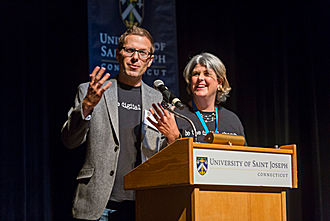
A year ago, the first annual Digital Citizenship Summit was held in West Hartford, hosted by the University of Saint Joseph.  This Friday, the second annual Summit will be held in San Francisco, hosted by Twitter at their global headquarters.  The livestream is expected to reach 3.2 million people globally via Twitter Livestream. The mission of the initiative hasn’t changed as the reach has grown - to unite people, organizations, and companies around the world committed to the safe, savvy, and ethical use of social media and technology. The Digital Citizenship Summit, being held on October 28, is described as a global event, with speakers from Australia, Spain, England, Ireland, Canada, and Kenya.  Attendance can be in-person or virtual.digcitsummit-logo-twitter

The event includes a diverse range of well-known and emerging voices with “quick and powerful” 10-minute talks, along with a range of panels covering the breadth of digital citizenship.  The three themes for the Summit are: Citizenship, Literacy, and Advocacy.

Organizers say “the Digital Citizenship Summit isn’t a conference, it is a movement - away from fear and distrust, and towards educating, empowering and engaging all groups.”  The Summit will share best practices and insights, and promote collaboration, bringing together educators, parents, students, organizations and industry.

The initiative was launched by West Hartford’s David Ryan Polgar and academician Marialice B.F.X. Curran.  Dr. Curran's teaching, scholarship and service focus on digital citizenship and social media in K-12 teacher education. She was named one of the Top 10 Digital Citize65ea16_1edb198f98dd4c51bfd32665595a5f99-mv2nship bloggers to follow in 2014 by Common Sense Media. Polgar, an attorney and college professor, is a frequent speaker (three-time TEDx) and tech commentator on television and in print, focusing on digital citizenship, creativity, cyber ethics, tech balance and humanizing the online experience.

“Millions of people are struggling with modeling safe, savvy and ethical behavior online.  Beneath the surface, there are major conflicts between parents, students, educators and administrators that span personal safety to politics.  The Digital Citizenship Summit bridges the gap between what we want to see online and how to actually be the digital change,” organizers point out.

The event will be emceed by Kelly Wallace, a digital correspondent and editor-at-large for CNN. It is also serving as the kick-off for US Media Literacy Week. The Digital Citizenship Summit will be livestreaming from Twitter headquarters from 9 AM PST to 5:00 PM PST. It can be seen on the Summit website or from Twitter's @Safety account. Individuals do not need to register in order to watch the live stream, but all registrants will receive post-event videos and resources, according to organizers.

2fbe44_14adf49eed2f4d16a1a2b224de945ee0-mv2Joining internationally renowned speakers, there will be student voices – “passionate voices from elementary school students to college-age advocates who are already leading us into the future as positive role models.”  Among the speakers is Jim Steyer, Founder and Chief Executive Officer of Common Sense Media, the nation’s leading non-partisan organization dedicated to improving media and technology choices for kids and families. He is also the Co-Founder and Chairman of the Center for the Next Generation.
In addition to the annual flagship summit event, past digital summits have been held in Ireland and the United Kingdom, with plans for a summit in Australia later this year.