PERSPECTIVE: Municipality Prevails as Fire Department Takes Over Ambulance Services in Milford
/by David Slossberg In a first-of-its kind decision in Connecticut, the state has granted a municipality’s petition to revoke the basic level transport license of its national ambulance provider and reassign that license to its superior municipal fire department. This pioneering effort was championed by the City of Milford, which now benefits from complete municipal control over the operation of, and revenue from, the provision of emergency medical services within its boundaries.
The City of Milford filed a petition with the Connecticut Department of Public Health (”DPH”) in December 2014 requesting that it assign the Milford Fire Department as the City’s primary service area (“PSA”) responder for basic level ambulance service, a change that meant ousting American Medical Response (AMR), which had held the PSA license for Milford since 1995.
The City filed its petition pursuant to a newly enacted statute that gives municipalities the right to petition for removal and reassignment of its primary service area responders. The City presented written briefs, testimony and oral arguments explaining why and how provision of ambulance service by its Fire Department would effectively maintain or improve patient care in the area. Problems cited included AMR’s delayed response times, refusal to negotiate a service contract with improved standards, and failure to provide a bariatric ambulance (a specially-outfitted ambulance to accommodate the severely obese).
After nearly two years of proceedings before the DPH, the State agreed that the Milford Fire Department is better suited to meet community needs. The finding is based on Milford Fire Department’s plan for additional ambulances, considerably shorter response times, increased personnel training requirements, decreased costs, and more intense scrutiny of performance standards.
 This decision is particularly important because it focuses emergency response on patient care, and makes clear that communities can have cost effective emergency services tailored to local needs that does not have to be compromised by the bottom line financial concerns of a large, national company.
I believe the decision is an effective first step towards breaking up AMR’s monopoly in the region. Over the last 15 years, AMR has compiled regional strongholds by buying smaller, local ambulance companies. However, as it has become more regionally based, it has also become less responsive to the needs of local communities like Milford. By controlling the primary service area, municipalities can either provide services themselves at standards suitable for their citizens, or place those services out to bid at standards set by the municipality. That effectively prevents companies like AMR from citing, among other things, the costs to provide ambulance coverage on a regional basis and labor issues as reasons why they cannot agree to meet faster response times and more rigorous performance review and reporting requirements. If they want the work, they must meet these higher standards.
The final decision of the Commissioner of the Department of Public Health transferred control of the basic level ambulance service in Milford to the Milford Fire Department in mid-October. The City has now implemented its plan to the benefit of its residents. Emergency responders currently serve the city’s population of some 55,000 in an area of approximately 26 square miles.
Milford Mayor Ben Blake lauded the decision, emphasizing that “it is a culmination of almost two years of hard work to develop a better response system for our residents and secures important advancements that will benefit patients and taxpayers.”
Of the victory, Milford’s Fire Chief, Douglas Edo said,” It was important for the City of Milford to have control over these services, which are so crucial to the public’s health and safety. We are thrilled that the issue was decided in our favor to the great benefit of our community.”
_____________________________________
Atty. David Slossberg is a named partner in the Milford-based law firm Hurwitz, Sagarin, Slossberg and Knuff, LLC. He can be reached at 203-877-8000.
PERSPECTIVE commentaries by contributing writers appear each Sunday on Connecticut by the Numbers.


 h between 2012 and 2015. Founded in 2012, Loot Crate has more than 650,000 subscribers worldwide in 35 countries. The ranking summary points out that "Loot Crate’s position at the top of this year’s list showcases how innovation isn’t always about new technology and invention, but also about ingenuity, the recombining of existing assets, and know-how in new ways to maximize value."
 The focus of the Connecticut firms that made this year’s list reflected the overall composition of the rankings, which were based on companies’ revenue growth between 2012 and 2015. Software continues to have the greatest impact across technology sectors, representing 58 percent of the entire list and five of the top 10 winners overall.


 That is the highest number of states falling short of revenue projections since 36 states budgets missed their mark in 2010, according to the NASBO report and


 “The company will hire 14,000 new employees over the next 13 years,” the



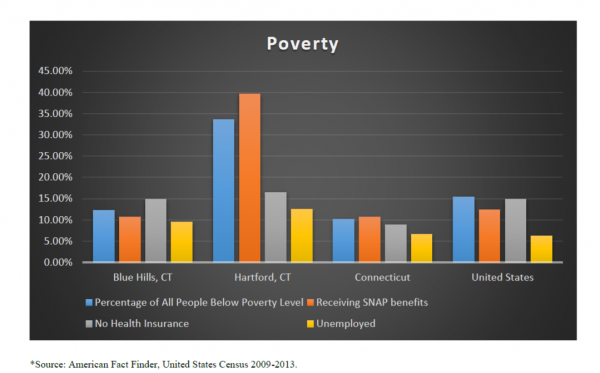 this book, education is the ultimate determinate of success. In order for Hartford to excel, the population must be educated. The emerging majority must be able to support itself and children require cutting edge educational opportunities.”

 So where are we today? Confronted by this alarming new statistic: in 2015, more than 35,000 people died on American roads, a seven percent increase from 2014. More than four thousand of those deaths were in teen-driver-related crashes. In 2016, we are on pace for yet another increase. Decades of progress are beginning to reverse.


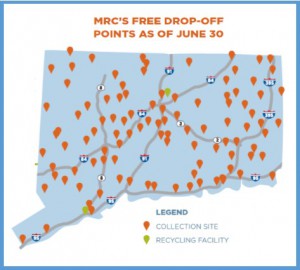
 The Mattress Recycling Council (MRC), a non-profit organization established by the mattress industry that created and manages the program in Connecticut, California and Rhode Island, presented its inaugural
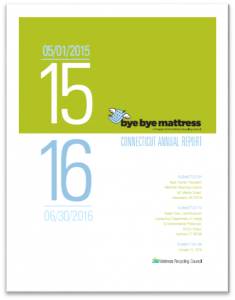 “We are pleased with the program’s productive start and will continue to work with city leaders, businesses and the state to improve the program, expand the number of communities served, and increase the volume of mattresses recycled,” said Ryan Trainer, President of MRC and the International Sleep Products Association.
 explains. “Anyone can become a victim of abuse, but vulnerable older Americans — especially those who are women, have disabilities and rely on others for care or other type of assistance — are among the easiest targets for such misconduct.”

 As of June 28, 2016, there were 2,007 bakery-cafes in 46 states and in Ontario, Canada operating under the Panera Bread, Saint Louis Bread Co. or Paradise Bakery & Cafe names. Published reports indicate the company has 97,000 employees nationwide and saw a 3.4 percent growth in sales in its third quarter this year. In 2015, it reportedly generated roughly $2.7 billion in revenue. Founder and CEO Ron Shaich