State Steps Up to Help Residents Locate What’s Lost
/Connecticut’s Office of State Treasurer has long been responsible for what is described as “unclaimed property” – assets that rightful owners have lost track of – as well as efforts to reunite people with their money. Now, the State Department of Insurance is getting into the “lost and found” business, too.
Insurance Commissioner Katharine L. Wade has announced that the Department is offering a free online service to help consumers search for a deceased family member’s lost life insurance policies and annuities.
“It can be a frustrating and overwhelming process at times to locate a missing policy. Whether you are settling the estate of a deceased loved one or trying to help an elderly relative sort out his or her affairs, the Department has resources to help,” Commissioner Wade said. “We are pleased to offer this latest tool that will streamline and simplify the process while protecting confidentiality.”
The Department’s Frequently Asked Questions will help consumers through the process. Consumer requests to find a lost policy are encrypted and secured to maintain confidentiality. Participating insurers will compare submitted requests with available policyholder information and report all matches to state insurance departments through the locator. Companies will then contact beneficiaries or their authorized representatives within 90 days.
The Life Insurance Policy Locator, developed by the National Association of Insurance Commissioners (NAIC), provides free nationwide access for help in finding old policies and annuities. There are an estimated $1 billion in benefits and life insurance policies that are unclaimed in the U.S.
 Also this month, the State Treasurer’s office is closing the year with a push urging consumers to check the agency’s CT Big List to determine if misplaced assets can be claimed. State Treasurer Denise L. Nappier said the special online publication is one component of the Treasury’s efforts to reunite rightful owners with their unclaimed property and is available through its homepage, www.ott.ct.gov.
The mission of the Treasury’s Unclaimed Property Division is to safeguard assets until rightful owners step forward to claim them. Unclaimed property includes money from uncashed payroll checks, bank accounts and utility deposits, insurance proceeds, liquidated assets from safe deposit boxes, stocks, and bonds.
The electronic special edition at www.CTBigList.com has 49,729 names with property valued between $50 and $100; 36,467 names with property valued between $100 and $500; 4,941 names with property valued between $500 and $1,000; 3,538 names with property valued between $1,000 and $5,000; and 551 names with property valued greater than $5,000. Five owners have unclaimed property valued at more than $100,000, with two having property valued at more than $250,000.
The Treasury’s interactive website, www.CTBigList.com, contains the complete list of about 1.5 million names of individuals and entities that may be entitled to as much as $807 million in unclaimed property. The website features a searchable database -- updated with new names weekly -- that makes it easy for residents to find their names. Often, people are unaware that they have inherited money, and others may simply have forgotten an old savings account or payroll check that went uncashed, officials point out.
Treasurer Nappier emphasized, “Searching the Treasury’s unclaimed property website is free.” She said that state residents are regularly contacted by firms, often called “finders,” offering search services for fees that go as high as 10 percent of assets recovered – and that some individuals hire these firms, believing it is the only way to recover lost assets.
“But that’s not true. My advice is that before you send your hard earned money to strangers, check out the CT Big List first – there is no charge for this public service,” Treasurer Nappier said.

 This decision is particularly important because it focuses emergency response on patient care, and makes clear that communities can have cost effective emergency services tailored to local needs that does not have to be compromised by the bottom line financial concerns of a large, national company.

 h between 2012 and 2015. Founded in 2012, Loot Crate has more than 650,000 subscribers worldwide in 35 countries. The ranking summary points out that "Loot Crate’s position at the top of this year’s list showcases how innovation isn’t always about new technology and invention, but also about ingenuity, the recombining of existing assets, and know-how in new ways to maximize value."
 The focus of the Connecticut firms that made this year’s list reflected the overall composition of the rankings, which were based on companies’ revenue growth between 2012 and 2015. Software continues to have the greatest impact across technology sectors, representing 58 percent of the entire list and five of the top 10 winners overall.


 That is the highest number of states falling short of revenue projections since 36 states budgets missed their mark in 2010, according to the NASBO report and

 “The company will hire 14,000 new employees over the next 13 years,” the


 this book, education is the ultimate determinate of success. In order for Hartford to excel, the population must be educated. The emerging majority must be able to support itself and children require cutting edge educational opportunities.”
 So where are we today? Confronted by this alarming new statistic: in 2015, more than 35,000 people died on American roads, a seven percent increase from 2014. More than four thousand of those deaths were in teen-driver-related crashes. In 2016, we are on pace for yet another increase. Decades of progress are beginning to reverse.

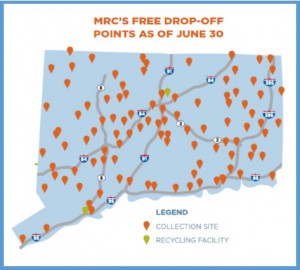
 The Mattress Recycling Council (MRC), a non-profit organization established by the mattress industry that created and manages the program in Connecticut, California and Rhode Island, presented its inaugural
  “We are pleased with the program’s productive start and will continue to work with city leaders, businesses and the state to improve the program, expand the number of communities served, and increase the volume of mattresses recycled,” said Ryan Trainer, President of MRC and the International Sleep Products Association.
 explains. “Anyone can become a victim of abuse, but vulnerable older Americans — especially those who are women, have disabilities and rely on others for care or other type of assistance — are among the easiest targets for such misconduct.”