Charitable Giving in CT Not Keeping Pace with U.S., Report Finds
/The latest report from the Connecticut Council of Philanthropy (CCP), which highlights philanthropic giving in Connecticut shows that as giving across the U.S. has increased, the opposite is true of Connecticut, even as individual giving – which makes up the lion’s share of giving – has increased.
The report, which highlights calendar year 2014 and the years leading up to it, reveals that while total giving in the U.S. increased from 2013 to 2014, total giving in Connecticut dropped from $4.66 billion to $4.51 billion. Over the five years through 2014, individual giving by Connecticut taxpayers who itemized rose 14 percent, less than the increase nationally of 25 percent. More than three-quarters of giving in Connecticut is by individuals. 
In 2014, Connecticut was ranked number one in per capita income by state and 45th in charitable giving. All six New England states rank at the bottom in per capita giving, while Southern states rank near the top. Yet the proportion of tax returns reporting contributions in 2014 at 34.5 percent was considerably higher than the national average of 24.5 percent, the report indicated.
The annual report, Giving in Connecticut, looks at charitable giving by Connecticut grant makers and residents, including: individual giving through reported contributions, bequests made through estate giving, and foundation giving. Giving in Connecticut uses data from the IRS Statistics of income Division, the Foundation Center, and self-reported data gathered by CCP.
 The report, published this month, found that:
- Giving in Connecticut from all sources at $4.51 billion was down 3.2 percent from 2013, due primarily to a drop in bequests.
- The giving breakdown: $3.39 billion from individuals; $1.02 billion from foundations; $.09 billion from bequests
- Giving by individuals was up 2.8 percent.
- Giving by all foundations was up 2.1 percent.
- Giving via bequests was down 74 percent after being up the previous year by 76 percent.
- Giving by individuals and bequests combined at $3.48 billion amounted to 77 percent of all giving.
The report indicated that giving by foundations saw most grants going to Education and Health. Giving by foundations is greatest in Fairfield County where 56 percent of Connecticut foundations are based. They gave $747 million to charities, representing 73 percent of total foundation grant making.
Religion is the largest single category of recipient type of charity across the U.S., at 33 percent. Education ranks second at 15 percent.
The 20-page report also found that in 2012, individual giving in Connecticut spiked, apparently in response to Superstorm Sandy and the tragedy at the Sandy Hook elementary school in Newtown.
Connecticut has 1,425 Private Foundations, 79 of which are Operating Foundations, 59 are Corporate Foundations and 20 are Community Foundations, according to the report. Community Foundations assets showed strong growth of 41 percent from 2010 to 2014, from $1.37 billion to $1.92 billion. Connecticut Corporate Foundation giving remained steady during the five year period while private foundation giving climbed. 
The top five foundations, by giving, were the Boehringer Ingelheim Cares Foundation, Dalio Foundation, GE Foundation, The Zoom Foundation, and the Steven & Alexandra M. Cohen Foundation. Rounding out the top 12 in 2014 were Hartford Foundation for Public Giving, Seedlings Foundation, Newman’s Own Foundation, The Community Foundation for Greater New Haven, Smith Richardson Foundation, Connecticut Bar Foundation and Aetna Foundation.
The Connecticut Council for Philanthropy is an association of grantmakers committed to promoting philanthropy for the public good.




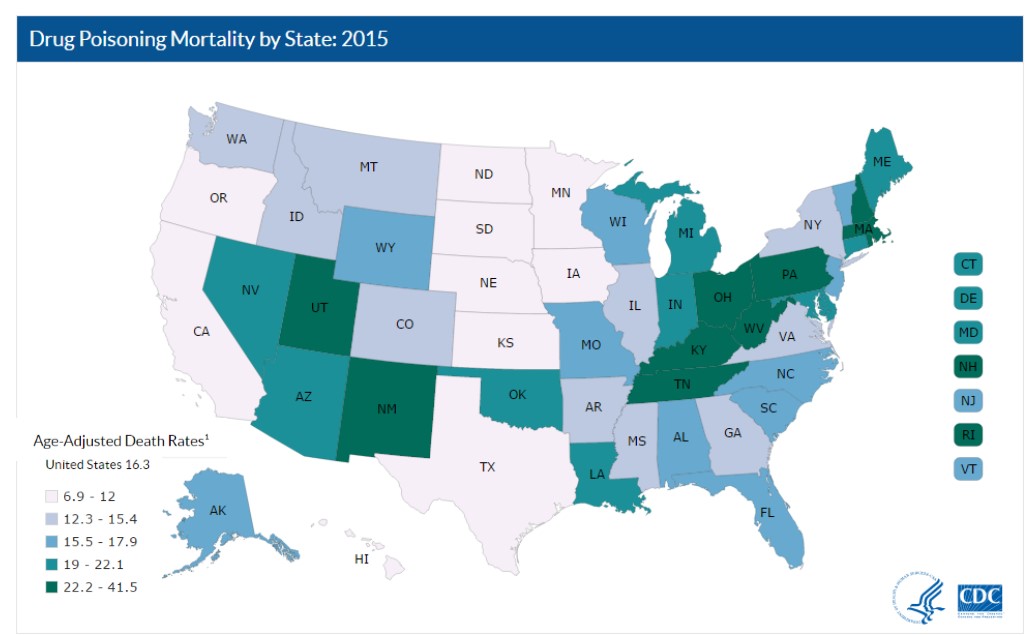 The five states with the highest rates of death due to drug overdose were West Virginia (41.5 per 100,000), New Hampshire (34.3 per 100,000), Kentucky (29.9 per 100,000), Ohio (29.9 per 100,000), and Rhode Island (28.2 per 100,000).


 The marketplace of ideas is of great value. But just as in the actual marketplace, we all need help deciding which products are reliable and which are not. Consumer Reports is available for car buyers—whose decisions are a lot simpler than the typical policy choice. Yet, in our hyperpolarized political world, institutions recognized as credible sources of independent knowledge continue to lose ground.
 Consider the most maligned policy of recent years: the Affordable Care Act. Even as the law has expanded health coverage while moderating costs, critics continue to spew out disinformation and insist their direst predictions have come true (and get a respectable hearing from the news media). They claim millions are losing good insurance despite a historic expansion of coverage. They claim costs are skyrocketing despite a historic slowdown of medical inflation...
 The
The  The purpose of the CTCDR is to provide members of the traffic-safety community with timely, accurate, complete and uniform crash data. The CTCDR allows for complex queries of both datasets such as, by date, route, route class, collision type, injury severity, etc.
 The review and analysis found at least seven areas in Connecticut, based on zip code geography, where the percentage of children found to have elevated lead levels exceeded – more than doubled – the percentage in Flint.
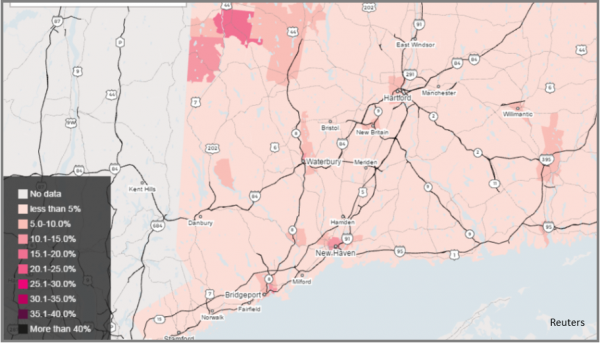
 each year, the report indicated.
 Also this month, the State Treasurer’s office is closing the year with a push urging consumers to check the agency’s CT Big List to determine if misplaced assets can be claimed. State Treasurer Denise L. Nappier said the special online publication is one component of the Treasury’s efforts to reunite rightful owners with their unclaimed property and is available through its homepage, www.ott.ct.gov.
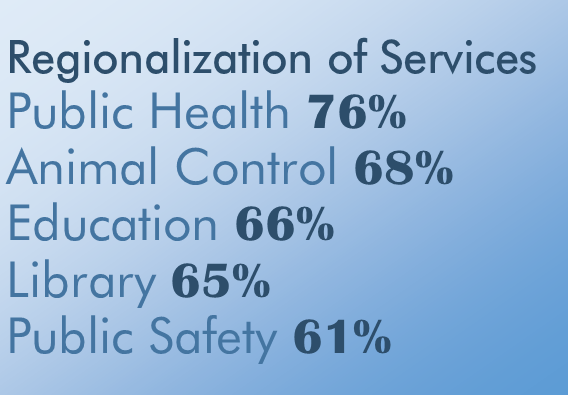 “Increasingly, towns will not be able to afford to sustain the level of services to which they have become accustomed, as budget pressures increase along with a reluctance to raise taxes. Residents showed concern, and a willingness to consider regionalism as a partial solution,” said Robert W. Santy, who serves as Board Chair of Inform CT and is President & CEO of the Connecticut Economic Resource Center (CERC) Inc.