Connecticut and TESLA: The Battle Lines Expand
/It was a one-two punch from Connecticut aimed at Tesla, in the marketplace and in the boardroom. On Tuesday, at the company’s annual shareholder meeting at the Computer History Museum in Mountain view, CA, a shareholder resolution advocated by the Office of State Treasurer Denise Nappier was on the agenda.
And on Wednesday, the Connecticut legislature concluded the 2017 regular session, leaving behind a proposal that would have enabled Tesla to sell cars directly to Connecticut consumers, as is done in many other states. It was the third consecutive year that the plan did not receive approval from legislators, in the face of strong opposition from the Connecticut Automotive Trades Association.
The Tesla proposal was approved by two legislative committees - Transportation and Finance, Revenue, and Bonding - but was never voted on by House or Senate members in their respective chambers. The bill pitted the state’s longstanding car dealers against the new model that Tesla prefers.
The Connecticut Retirement Plans and Trust Funds shareholder resolution called for the declassification of Tesla’s board and for the annual election of all of Tesla’s directors. The $32 billion Connecticut Retirement Plans and Trust Funds (“CRPTF”), of which Treasurer Nappier is principal fiduciary, owned 32,837 shares of Tesla, Inc. common stock with a market value of $11.6 million as of June 6, 2017.
Tesla’s board currently is classified, which means that each year only a portion of the directors are elected by shareholders. This year shareholders had the opportunity to vote on three of Tesla’s seven directors. The company’s board recommended that “our stockholders vote against this proposal.”
“Independent shareholders gave Tesla a clear message: it's time to sharpen the company's governance profile and strengthen board member accountability to shareholders, whose interests they are elected to represent,” Nappier said after the shareholder vote.
Connecticut’s resolution, the first ever filed to declassify Tesla’s board, received an estimated 47 percent of the votes not controlled by directors and officers, indicating strong support for the annual election of directors, acco rding to the Treasurer’s Office. Representing the Connecticut Treasurer’s Office at the annual meeting, and presenting the proposal, was Aeisha Mastagni, a Portfolio Manager in the Corporate Governance Unit of the California State Teachers’ Retirement System. Overall, according to a U.S. Securities & Exchange Commission filing, 74.7 million shareholders voted against the proposal, with 32.7 million voting in favor.
“And now that Tesla has joined the ranks of the Fortune 500, we encourage the company to take particular heed of the recent vote,” Nappier added, “given that most of its largest U.S. company peers have already embraced annual election of directors. It should reconsider its opposition to this fundamental provision of good governance.”
“At the end of the day, Tesla has and will continue to develop and deploy new technologies and products that will be an important part of the global economy’s clean energy future. The company’s corporate structure should likewise evolve toward a more accountable governance framework that will fortify its bottom line and sustainable value,” said Nappier, a veteran shareholder activist.
In the aftermath of the Connecticut legislative session, a spokesman for Tesla told CT NewsJunkie that the company wasn’t quite ready to give up on the state. Tesla is allowed to sell direct to consumers in most jurisdictions in the U.S. and around the world. They are prohibited from selling directly in Connecticut, Michigan, Texas, and West Virginia, according to the company.
“The residents of Connecticut overwhelmingly want Tesla to be able to freely operate in the state, and despite inaction during this session,” a company spokesman said. There are approximately 1,300 Tesla vehicles registered in Connecticut.


 When answering, tell stories about your achievements and use concrete examples – but keep your answers brief and meaningful. Stay composed, and don’t let an interviewer’s quirky questions rattle you. Unless a question or request is discriminatory, just go with the flow.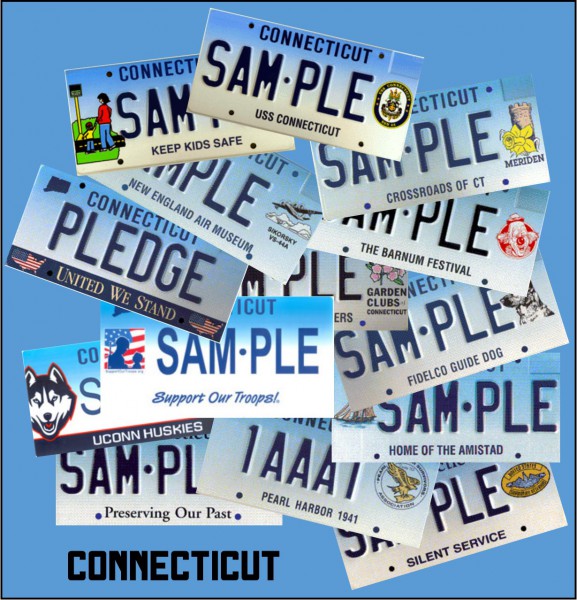
 Organization vanity plates include Amistad, Benevolent & Protective Order of the Elks, IUOE Local 478, Grand Lodge of Connecticut, Knights of Columbus, Olympic Spirit, P.T. Barnum Foundation Inc., Preserving Our Past CT Trust for Historic Preservation, Red Sox Foundation, Lions Eye Research Foundation, Special Olympics, Federated Garden Clubs, Fidelco Guide Dog Foundation, Keep Kids Safe, New England Air Museum and the U.S.S. Connecticut Commissioning Committee.
 International migration has helped, the data shows, but not enough to offset domestic out-migration. Average international in-migration has grown 29% post-recession compared to pre-recession, but in terms of overall net migration, the state has seen an increased loss starting from 2012.


 Venture capital firms are typically deep-pocketed, small companies that bet on startup success by investing millions in exchange for an ownership interest and hopes of high returns. Published