PERSPECTIVE: Beyond the Land of Unsteady Habits
/by Kevin B. Sullivan These days, it may seem like Connecticut is the land of unsteady habits. As Governor Malloy says, sometimes it just feels like we always see the glass half empty.
For example, those of us in the capital area get a steady stream of bad news about our capital city in crisis. Yet, right next door, there’s West Hartford where our state’s 8th largest municipality exemplifies diversity, good governance, fiscal sustainability and continuous economic re-invention.
So let’s not waste time obsessing about Aetna’s headquarters move, like we did with GE. Neither move is about competitiveness in taxes or cost of living. Both are more about the beggar-thy-neighbor bidding war among the states for public subsidies.
Make no mistake, our rhetoric – especially our political rhetoric – influences how we see ourselves and how others see us. No democracy or economy, national or state, can thrive by looking backwards, devaluing our shared assets or chasing short-term satisfactions. So stow the political back-biting and skip the pity party. Let’s get back to work.
I am a realist, but not a pessimist. Being a realist means building from our strengths, facing our weaknesses, embracing our challenges and creating new opportunities. Right now is the best opportunity we have to get it right. That starts by understanding there is no magic – just smart decisions, hard work and a vision that’s fiscally sustainable and economically nimble.
With long years of service in the State Legislature behind me, I see so many things we did right but also many that we did wrong or just ignored. Now, as Revenue Services Commissioner, I get to have a new window on the state economy every day. So what do I see?
Prior to the Great Recession, Connecticut experienced one of the strongest and longest runs of economic growth in the nation. Confident in our highest per capita income and traditional economic base, we were complacent. Then, in the hard times that followed, we failed to see that a very long and very deep recession also masked tectonic economic shifts. We have been struggling ever since just to understand that this time it’s not about recovery – it’s about renewal.
Under Republicans and Democrats, state spending has outpaced economic growth and personal income growth for the past twenty years. Worse still, most of the growth and most of every state budget is fixed costs. Unfunded liabilities that no one before Governor Malloy has challenged. No wonder, under Republican and Democratic governors, three major tax increases in the past twenty years have now reached a point of diminishing return.
Connecticut’s income tax is the third most progressive in the nation. It includes an earned income credit that helps working families and puts money back into the economy. Income taxes should be progressive. But over-reliance on a highly progressive income tax and a relatively small segment of very high income taxpayers produces big revenue volatility.
While our [tax] rates are comparatively high, the business-backed national Council on State Taxation continues to rank Connecticut among the lowest total effective tax burden states. But that does not mean we cannot do better.
Led by DRS, supported by the Governor and working with the business community, we have already achieved a trifecta of corporate tax reforms. With conversion to a unitary, single factor, destination sourced approach, we have ended a tax regime that used to favor out of state businesses while burdening Connecticut-based businesses. Whether corporate income or pass-through income, DRS is also stepping up in audit to challenge those who tilt the playing field through off-shoring and transfer pricing schemes that are tax evasion by any other name.
 However, fewer and fewer businesses are organized as corporations. Personal taxation of pass-through business income now drives state business tax revenue. Different taxes and different rules for businesses that differ in form only. There are also many other types of Connecticut business taxes determined solely by the nature of the product or service provided.
Add to that the irritant of Connecticut’s so-called Business Entity Tax, a fee that is often the first tax slap experienced by new enterprises well before turning even a first dollar of profit. As other states have done, it’s time to at least consider rationalizing this mess with a single receipts-based tax that includes meaningful start-up and reinvestment credits.
In fact, there are so many ways to use smart revenue policy as an economic driver. With transportation gridlock and aged infrastructure ham-stringing growth, we need a modern toll system that generates essential reinvestment. Let’s ramp up tax credits for R&D, job creation, training for new workers, retraining for displaced workers and business reinvestment.
We can even pay for it by getting rid the remaining mishmash of credits and abatements that make no appreciable economic difference at all. Rather than pile on more loans, let’s drag antiquated systems of public and private higher education into the 21st century and then use tax policy to provide incentives for graduates to stay in Connecticut as next generation entrepreneurs and skilled workers.
In exchange for real political and structural reform, we can also use tax policy - rather than bailouts, bankruptcies or yet another layer of government – to re-invent livability and economic viability in our struggling cities.
Connecticut’s economic strengths need to be the basis of any diagnostic for improved competitiveness. A long and strong run of economic performance still leaves us a great state to live and work. We continue to rank highly on so many key economic measures: personal income, low poverty levels (although dangerously concentrated), R&D investment, GDP per capita, invention and productivity, manufacturing and finance as competitive growth engines, educational attainment, public safety and livability, and location.
Connecticut may not economically be what it was, but there is no good reason why we cannot be what we want to be now and into the future.
________________________________
Kevin B. Sullivan is Commissioner of the state Department of Revenue Services, and previously served as Lieutenant Governor, Senate President Pro Tempore and a member of the State Senate. This is adapted from remarks delivered in June at the Connecticut Business Summit.
 The index publication is supported by the Anthem Blue Cross and Blue Shield Foundation. It is a scientific snapshot of the health and fitness status at a metropolitan level using data made up of personal health, community and environmental factors.
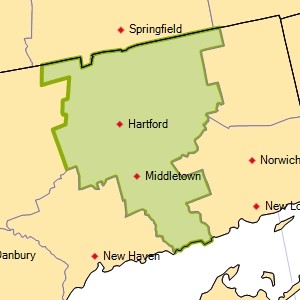 The region’s personal health rank was 13; its community/environmental indicators rank was 25, leading to an overall ranking of 13th. The analysis points to “Areas of Excellence,” in the region, including:





 since 1897. In 2015, Saint Francis became part of Trinity Health of New England, an integrated health care delivery system that is a member of Trinity Health, Livonia, MI, one of the largest multi-institutional Catholic health care delivery systems in the nation.
 ted Nations and vetted by the State Department in a process that takes at least 18 months. By comparison, a million or so legal immigrants arrive annually. From October 2001 through 2016, Burma, Iraq, Somalia, Bhutan, and Iran are the top five nations that send refugees to the U.S.

 There were nine states that had less than 500 refugees from a single country since October 2001: Alabama, Alaska, Arkansas, Delaware, Hawaii, Mississippi, Montana West Virginia and Wyoming.

 Early in Nikole's recovery, she knew she had to do something to help combat motor vehicle crashes caused by young drivers, the number one killer of teens in America. She met members of !MPACT (an acronym for Mourning Parents Act, Inc.) at a presentation she made at Cromwell High School. Not long afterwards, she began delivering her safe teen driving message with the !MPACT moms at high schools across Connecticut and into greater New England.


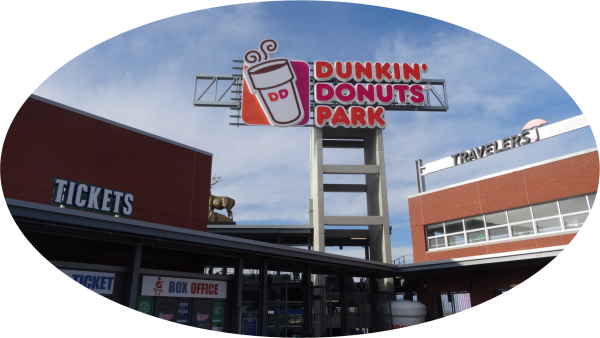
 Dunkin’ Donuts Park is the first brand new venue to open in the Eastern League since Northeast Delta Dental Stadium—home of the New Hampshire Fisher Cats—opened its doors in 2005, and it is seen as the biggest change to the league’s facility landscape since the extensive multi-phase renovation to the Harrisburg Senators’ FNB Field was completed prior to the 2010 season.