

UConn Study: When State Pays for ACT Exam, More Poor Youth Reach College
/New research finds a simple strategy can modestly boost the share of students with limited financial resources who go on to college: requiring, and paying for, all students to take the ACT or SAT. A University of Connecticut researcher examined the effects of requiring and paying for all public high school students to take a college entrance exam – which 11 states have done since 2001- and found that while the impact isn’t enormous, the policy is relatively inexpensive, and does move the needle on college enrollment.
At just $34 per student, increases in four-year college attendance reach about 1 percentage point for low-income students, the higher education website Chalkbeat reports. Ohio was the latest state to require all members of the junior class to take the exam, as of this past spring.
“Although these increases in the four-year college enrollment rate might not appear to be dramatically large, relative to other educational interventions this policy is inexpensive and currently being implemented on a large scale,” writes Joshua Hyman, an assistant professor at the University of Connecticut.
Hyman cautions, however, that paying for every student, regardless of income, to take the exam only goes so far.
“The results suggest that requiring all students to take a college entrance exam increases the supply of poor students scoring at a college-ready level by nearly 50 percent. Yet the policy increases the number of poor students enrolling at a four-year institution by only 6 percent. In spite of the policy, there remains a large supply of disadvantaged students who are high achieving and not on the path to enrolling at a four-year college.”
The research and 30-page journal entry “validates recent efforts … to expand access to these tests,” Chalkbeat points out, “which are required to enroll at most colleges and universities.” In order of adoption, according to the paper, the states are Colorado, Illinois, Maine, Michigan, Kentucky, Tennessee, Delaware, North Carolina, Louisiana, Wyoming, and Alabama.
 In Connecticut, April 5, 2017, was the Connecticut SAT School Day administration. SAT scores are used by the Connecticut State Department of Education (CSDE) for school and district accountability purposes, state Education Commissioner Diana Wentzell explained in a letter to parents earlier this year.
The research, published this summer in the peer-reviewed journal Education Finance and Policy, examined Michigan’s policy to require — and, importantly, pay for — high school juniors to take the ACT. Unsurprisingly, the number of students taking the exam jumped from 56 percent statewide to 91 percent after the policy was implemented in 2007. College attendance in the state then increased by nearly 2 percentage points (though the study can’t show how much of the increase was because of the mandatory ACT).
“The mandatory college entrance exam policy is more cost-effective than traditional [college financial] aid at boosting postsecondary attainment,” the study states.
 Hyman found that, prior to the policy, a substantial number of Michigan’s low-income students didn’t take the ACT even though they would have scored at or above the standard for college readiness. That might been due to financial or logistical barriers, like the cost of the test (between $30 and $50) or difficulties traveling to an exam center on a Saturday. (Both the SAT and ACT offer fee waivers to low-income students, but the study notes that the waivers are underused.)
“I show that for every ten poor students taking a college entrance exam and scoring college-ready, there are an additional five poor students who do not take the test but who would score college-ready if they did,” Hyman explains. “In spite of the policy, there remains a large supply of disadvantaged students who are high-achieving and not on the path to enrolling at a four-year college.”
Hyman, an Assistant Professor in the Department of Public Policy at the University of Connecticut, has a joint appointment in the Department of Economics and Neag School of Education. His research focuses broadly on labor economics, public finance, and the economics of education. As for the interest in Michigan, Hyman earned a Ph.D. in Economics and Public Policy from the University of Michigan in 2013.
 search has helped establish the field of quantum computation with solid-state devices. The Connecticut Medal of Science is the state’s highest honor for scientific achievement in fields crucial to Connecticut’s economic competiveness and social well-being.


 However, fewer and fewer businesses are organized as corporations. Personal taxation of pass-through business income now drives state business tax revenue. Different taxes and different rules for businesses that differ in form only. There are also many other types of Connecticut business taxes determined solely by the nature of the product or service provided.
 The index publication is supported by the Anthem Blue Cross and Blue Shield Foundation. It is a scientific snapshot of the health and fitness status at a metropolitan level using data made up of personal health, community and environmental factors.
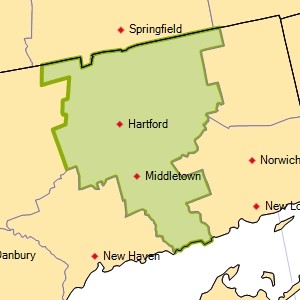 The region’s personal health rank was 13; its community/environmental indicators rank was 25, leading to an overall ranking of 13th. The analysis points to “Areas of Excellence,” in the region, including:





 since 1897. In 2015, Saint Francis became part of Trinity Health of New England, an integrated health care delivery system that is a member of Trinity Health, Livonia, MI, one of the largest multi-institutional Catholic health care delivery systems in the nation.
 ted Nations and vetted by the State Department in a process that takes at least 18 months. By comparison, a million or so legal immigrants arrive annually. From October 2001 through 2016, Burma, Iraq, Somalia, Bhutan, and Iran are the top five nations that send refugees to the U.S.

 There were nine states that had less than 500 refugees from a single country since October 2001: Alabama, Alaska, Arkansas, Delaware, Hawaii, Mississippi, Montana West Virginia and Wyoming.

 Early in Nikole's recovery, she knew she had to do something to help combat motor vehicle crashes caused by young drivers, the number one killer of teens in America. She met members of !MPACT (an acronym for Mourning Parents Act, Inc.) at a presentation she made at Cromwell High School. Not long afterwards, she began delivering her safe teen driving message with the !MPACT moms at high schools across Connecticut and into greater New England.





















