Stamford Taking Strides to Respond to Student Mental Health Concerns; Research Recommendations Lead to Progress
/Stamford Public Schools, acting on recommendations developed by the Child Health and Development Institute of Connecticut (CHDI), is making strides in addressing students mental health needs that may provide effective approaches for schools systems in Connecticut and nationwide that are looking to better address mental health issues, especially in light of increased public attention on issues from suicide prevention to trauma response.
“While appreciating that the schools’ primary role is to educate children, many districts such as Stamford are increasingly seeking ways to address behavioral health concerns as an important way of supporting academic achievement, school climate and overall well-being,” said Dr. Jeana Bracey, Director of School Community Initiatives at CHDI.
Results reported in an Issue Brief published by CHDI highlight some of the measurable “improved outcomes” in Stamford Public Schools following an intensive study and systemic recommendations for what is described as a “trauma-informed model for school mental health”:
- Data from 76 Stamford students who completed specific programs in FY 17 and 31 students in FY 16, showed significant reductions in PTSD symptoms and problem severity symptoms.
- Feedback from parents and teachers indicate a decrease in the severity of behavioral concerns in the classrooms and at home.
- School personnel report important changes in culture and climate that reflect an understanding of trauma, how it impacts students, and how to better address students’ needs using supportive and restorative approaches, rather than punitive measures.
The review of Stamford’s mental health services and supports for K-12 students, initiated in 2014 following a series of student suicides and an increase in the number of students experiencing suicidal thoughts and hospitalization, included an examination of the behavioral health needs of students, as well as the districts’ strengths and areas of concern in addressing these needs. The process included focus groups and interviews and led to recommendations for improving Stamford’s school-based and school-linked mental health services and supports in four priority areas initially:
- Ensuring Sufficient Clinical Staff Capacity
- Providing Professional Development in Mental Health
- Engaging in Mental Health Planning and Oversight
- Promoting Data Collection and Evaluation
In the 2 ½ years since CHDI began to work with Stamford, the local school district has expanded the number of evidence-based services for students from zero to four, implemented district-wide trauma and behavioral health training and supports for staff, and collaborated to build internal capacity and integrate community and state resources and services for students.
Overall, officials report positive feedback from parents, teachers and other school personnel to the changes, and their impact on students and the school communities.
The Issue Brief notes that “Lessons learned in Stamford can help guide other districts seeking to improve their mental health services and supports.” Among the recommendations to achieve a system “that is more responsive to the needs of their students,” are a commitment from district administrators and school board members, a comprehensive needs assessment, an examination of public and private funding sources, a blending of school-based and community-based services, establishment of peer groups to support mental health staff, and creating small pilot projects that would provide information that would inform subsequent efforts.
 In Stamford, CHDI assisted in training school social workers and psychologists to deliver Cognitive Behavioral Intervention for Trauma in Schools (CBITS), a school-based group intervention for grades 5-12, and its counterpart for younger elementary school children, Bounceback. CBITS began in July 2015 and has been used in 46 schools across the state, reaching more than 800 students. The results in Stamford mirrored those in other communities utilizing the approach; it has been shown to reduce PTSD and depression symptoms and psychosocial dysfunction in children who have experienced trauma.
Significantly, of the children who likely met the criteria for PTSD prior to treatment, approximately half of them no longer met the criteria for PTSD after 10 sessions of CBITS/Bounce Back.
The Child Health and Development Institute (CHDI)’s goal is to improve the health and well-being of Connecticut’s children by building stronger and more effective health and mental health systems that result in better outcomes for all children in Connecticut, especially the underserved. The organization pursues these objectives with research, evaluation, training and technical assistance and support for demonstration projects that inform system change.
 riers low-income students face, eliminating it won’t solve the problem. Access to higher education in America is much more complex.
 mon? Both made equal access to educational opportunity a top priority.
 If our educational system in America provided equal educational opportunity to all students regardless of income level, making the SAT and ACT free might significantly increase the number of low-income students in college. However, since this is a far cry from our current reality, it is higher education’s responsibility to think more creatively about whom it allows in the door. We are a long way from ensuring that every citizen has equal access to high-quality education, but in the meantime, universities can play a significant role in ensuring inclusivity of all talent.
 The National Institutes of Health estimates that between six to 17 percent of school-age children have some form of dyslexia, although not all of those students have been identified by their schools.
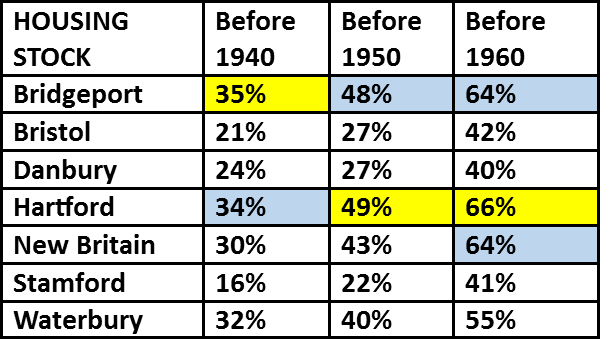




 In Hartford, the university intends to “interweave top-tier academic programs with the vitality and unique educational and service opportunities offered by Connecticut’s capital city.” The campus – at a cost of $140 million - is anchored by the historic former Hartford Times building as part of a neighborhood campus that includes nearby cultural institutions and state and city government offices, including Hartford Public Library, which will house 12,000 square feet of UConn classrooms, a library collection, and study areas.
 go, the Board of Trustees voted to extend the Graduate Business Learning Center’s (GBLC) lease at 100 Constitution Plaza, and to add two additional floors to the existing space, allocating a total of six floors of classroom, meeting and office space.
 The building is six stories tall and will have 116 apartment units. the school's website explains. The maximum occupancy of the building is approximately 350 students, but because some of the bedrooms will be single occupancy, the target occupancy is 290 students. Plans call for 100 designated parking spaces for students will be available for a small additional charge.
 These research findings have important implications for society. If early childhood programs produce healthier adults, investing in these programs could reduce the burden on the health care system. If children who participated in early childhood programs grow up to experience higher employment rates and earnings, requests for public assistance should decrease. If these children are less likely to engage criminal activity, their communities and society as a whole should benefit.


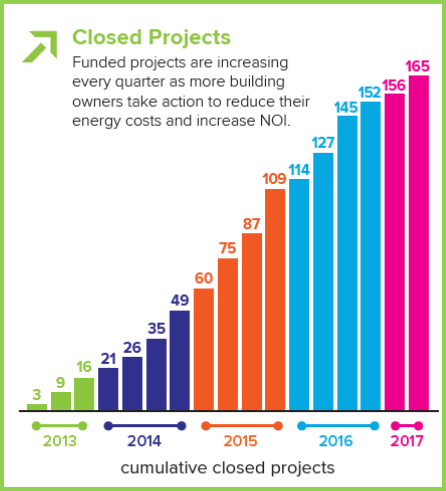 boilers, energy efficiency lighting measures, HVAC systems, and other energy improvements that help building owners to take control of their energy costs.
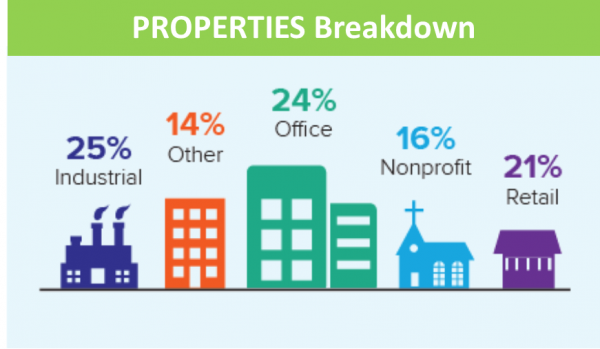 without the support of our contractors, capital providers, municipal officials, and other stakeholders who have contributed to the C-PACE movement,” said Mackey Dykes, Vice President of Commercial, Industrial and Institutional programs at the Connecticut Green Bank. “There is still significant potential for energy improvements for Connecticut businesses and non-profits, and we look forward to bringing cleaner and cheaper energy to more building owners across the state.”
 make the financing of clean energy deployment more accessible and affordable for consumers and businesses. In 2011 the state legislature created the Connecticut Green Bank, the nation’s first green bank. It uses public funds to attract private capital investment in green energy projects. By leveraging private investment, the Green Bank significantly increases the total amount of financing available for clean energy projects.