

Feds Urged to Complete Study Assessing Safety of Crumb Rubber Playing Fields, Playgrounds
/If at first you don’t succeed, try, try again. That’s not only a well-worn adage from youth, it is apparently the game plan for Connecticut U.S. Sen. Richard Blumenthal and his multi-year quest for a comprehensive federal study of the health risks of crumb rubber turf, a surface made of recycled tires that is widely used on playgrounds and athletics fields in Connecticut and nationwide.
Blumenthal, along with colleagues in the Senate, are this week urging a federal task force to finish a long-overdue study into potential health risks. The crumb rubber used in artificial turf fields is mainly composed of recycled tires, which contain man-made and natural rubber, according to the state Department of Public Health. Chemicals called polycyclic aromatic hydrocarbons (PAHs) and volatile organic compounds (VOCs) can be found in the crumb rubber. Crumb rubber can also contain heavy metals such as zinc and copper.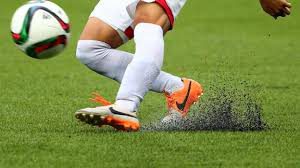
After a year and a half, WTNH-TV reported, the Senators are convinced progress on a comprehensive federal study has stalled.
It isn’t the first time that Blumenthal has been a lead voice to prompt action. In November 2015 Blumenthal and Senate colleague Bill Nelson of Florida urged the Consumer Product Safety Commission to conduct a study. In March 2016, Blumenthal was among those urging Congress and the President to allocate sufficient funds to conduct the study. “Parents deserve to know if there is a danger to their children playing on these fields,” he said that month at a news conference held at Yale University.
 A synthetic turf study was undertaken in 2016 by four United States agencies — EPA, Consumer Products Safety Commission, the Centers for Disease Control and Prevention/Agency for Toxic Substances and Disease Registry — which has yet to be finalized.
With it’s completion in doubt, Blumenthal is highlighting the imperative to get scientific answers to guide communities that are considering how best to replace natural grass or other types of field surfaces. It is estimated that there are more than 10,000 artificial-turf surfaces in use across the country.
Earlier this year, plans for a crumb rubber synthetic turf field in North Haven brought local opposition. The town decided to go forward with the less controversial encapsulated crumb-rubber infill over the traditional crumb rubber option, according to an article on the controversy published this month in The Atlantic.
Last year, Hamden opted not to go ahead with plans for crumb rubber, switching to a mix of cork shavings and coconut husk, called “GeoFill,” along with a “shock pad” in response to safety concerns. Bloomfield High School installed a synthetic turf field, South Windsor decided to use acrylic-coated sand instead of crumb rubber. Madison and Guilford are also among the communities with crumb rubber surfaces for fields or playgrounds, according to published reports.
Testifying at the Connecticut State Capitol earlier this year, medical staff from the Children’s Environmental Health Center at the Icahn School of Medicine at Mount Sinai in New York City, urged that “Until the findings of these studies are available and conclusively demonstrate the safety of recycled rubber playground surfaces, we recommend a ban on the use of these materials where children play.”
Legislation that would have prohibited the installation of ground cover that contains shredded or ground rubber recycled from motor vehicle tires in municipal and public school playgrounds in Connecticut was approved by two legislative committees (Committee on Children, Committee on Planning & Development) in March, but the proposal was not considered by the full legislature in the session that concluded in June.
 Blumenthal first became concerned about the artificial surface when his children were playing on the crumb-rubber athletic fields. “I became concerned as a parent, as much as a public official, ten years ago, and at first was somewhat skeptical, but now very firmly believe that we need an authoritative, real study about what’s in these fields,” Blumenthal told ABC News two years ago.
The state Department of Public Health (DPH) website points out that “the advantages of these fields include less maintenance costs, ability to withstand intense use and no need for pesticides.” To address public safety concerns, four Connecticut state agencies collaborated in 2010 to evaluate the potential exposures and risks from athletic use of artificial turf fields, the DPH website explains.
A two year investigation of releases from five fields during active play was conducted by the Connecticut departments of Public Health, Energy and Environmental Protection, University of Connecticut Health Center, and The Connecticut Agricultural Experiment Station. The study was peer-reviewed by the Connecticut Academy of Science and Engineering.
The overall conclusion of the report, according to the DPH website, is that “use of outdoor artificial turf fields does not represent a significant health risk.” A news release issued by the department did note “higher contaminant levels at one indoor field indicate that ventilation of indoor fields should be considered. Storm water run off findings indicate that proper management of this run off is prudent to address possible environmental effects.”

 Henkel is #158 on Forbes magazine’s Global 2000 list of Top Multinational Performers, and #307 on the list of America’s Best Employers. Charter Communications is #38 on the Forbes list of Growth Champions and ranks #107 on the Global 2000.

 Most Connecticut residents may also be unfamiliar with Charter Communications. Connecticut has 24 cable franchise areas; Charter provides local cable service in only three of them, in the western and northeastern regions of the state for about 35 mostly rural communities. The larger franchise owners in Connecticut are Cablevision, Comcast and Cox. But the Connecticut map is deceiving – nationally Charter is the second largest cable provider in the nation.


 Once underway, the new daily service will mean that from New Haven to Hartford, trains will increase from six to 17 per day. Between Hartford and Springfield, trains will increase from six to 12 per day. A new station in North Haven station is currently being designed, and is not due to be built and open until 2020. Stations in Enfield, Newington, West Hartford, Windsor and Windsor Locks stations are also part of the Hartford Line plans. Trains will arrive at stations in New Haven, Wallingford, Meriden, Berlin and Hartford every 45 minutes during peak hours and every 60 to 90 minutes during off-peak periods.


 A new online resource for business owners exploring ways to control insurance costs and manage their risk, “CT Captive Solutions for Business,” has recently been launched by state Insurance Commissioner Katharine Wade. The toolkit includes instructions on licensing a captive in Connecticut, a list of recognized captive managers, FAQs and Insurance Department contacts. Click

 Connecticut also provides insurance brokers and producers, captive insurance managers, and tax professionals in insurance fields access to innovative solutions and resources to drive the industry forward, including a collaborative workforce and support from leadership at all levels of State government. The Connecticut Department of Insurance Captive Division has significant regulatory expertise and a collaborative consultative approach that can help support and grow innovative captive insurance companies.

 CPAN’s most recent contact expired in September, was extended through October, and was on a day-by-day basis this week. The 33-person staff worked with an annual operating budget that was unexpectedly reduced by


 The 21 honorees were selected by economic development officials in each of 10 regions across Connecticut for their contribution to the state’s economy – such as consistent or growing employment levels, playing a critical role in changing the character of its community or civic engagement, strong public/private collaboration to encourage new investment, or leadership resulting in growth or improvements.





 Sitrep, based in Cheshire, was founded in 2014 to “develop monitoring systems that are intuitively usable.” Principals are Harland Christofferson, Gary Martin and Michael Byrne.
 The mission of Stratford-based FallCall Solutions, LLC is “to become the premier innovator in simplified communication solutions for the geriatric population and their caregivers.” The company website explains that the company aims to maximize elder independence and caregiver peace of mind by “building software based solely on the needs of the consumer rather than the trying to create and introduce new ecosystems into our customers’ lives.”





















