As Demographics Change, Connecticut Extends Borders, Colleges Seek More Diverse Student Population

When it comes to college tuition, Connecticut’s borders are expanding and colleges across the state are focused on potential students that likely wouldn’t have on the radar screen only a few years ago.  The impetus is a declining population of college-age students, expected to intensify over the next decade particularly in the Northeast, and declining financial support from state governments.  The results are dramatic efforts to further diversify the student populations - in geography, income, ethnicity and other factors, including offering the lower in-state tuition to out-of-state students. In the case of Connecticut, the state Board of Regents, which oversees four universities and 12 state colleges, has proposed merging the colleges into one statewide college with 12 campuses in a controversial plan that has drawn doubts and substantive questions from students, faculty, and legislators in Connecticut, and the region’s accrediting board, the New England Board of Higher Education, which is considering the plan.  It would be the largest merger of colleges in New England’s history, and the resulting college would be among the largest in the nation.

The number of high school graduates in Connecticut is expected to drop 14 percent from 2012-13 to 2025-26, according to reports citing U.S. Department of Education statistics, driven by the nation’s second-largest proportional decline in public school students over the next 10 years. CT Mirror reported this week that “The major organization that accredits colleges has said many questions need to be answered before the new college system is awarded accreditation, which is essential to make students eligible for federal financial aid and to guarantee the college’s degrees have educational value.”

Fall student headcount at the 12 colleges has dropped from a peak of 58,253 in 2012 to 50,548 in 2016, the lowest level in a decade.  The four state universities (Central, Eastern, Southern and Western) have seen enrollment decline from 36,629 in 2010 to 33,187 in 2016, the lowest level in this century.
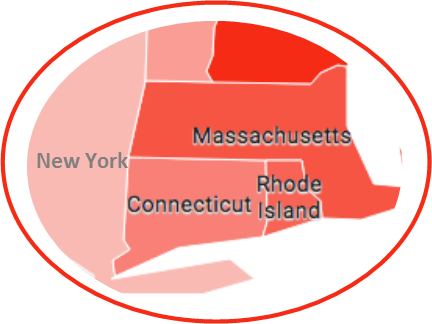
Even in advance of the merger plan, the Board of Regents has been extending lower tuition offers in every direction, reaching out to students in Massachusetts, Rhode Island, New York and even New Jersey, making offers that the Regents hope will be tough to refuse.

Eight of Connecticut’s public colleges and universities extended in-state tuition to residents of neighboring states this academic year, primarily in response to declining enrollment and seeking to boost income.  The initiative expanded a pilot program by previously implemented at Asnuntuck Community College in Enfield, just south of the Massachusetts border.  Asnuntuck saw a 34 percent increase in students from the Bay State since the program began in June 2016.

Norwalk, Housatonic and the Danbury campus of Naugatuck Valley community colleges extended in-state tuition to New York residents, and t hree Rivers Community College in Norwich does the same for Rhode Island residents.  Northwestern Connecticut Community College in Winsted offers in-state tuition to Massachusetts residents, and Quinebaug Valley Community College in Killingly offers in-state tuition to Massachusetts and Rhode Island residents.

At Norwalk Community College, for example, the in-state tuition program reduces the cost for full-time tuition from $12,828 to $4,276 for the 2017-18 academic year, a savings of $8,552 for New York residents, the Norwalk Hour reported.
In addition, students from New York and New Jersey considering Western Connecticut State University will be able to pay in-state tuition — less than half the current rate for out-of-staters – beginning in the fall.  After receiving Board of Regents approval, the university announced a two-year pilot program to combat declining enrollment. Under the new pricing, students from the two states will pay $10,017 a year instead of the $22,878 out-of-state rate, the Danbury News-Times reported.  The program extends a smaller across-the-border recruitment effort that offered seven Hudson Valley counties in-state rates last fall, which led to an increase in students residing in those counties from 74 in the fall of 2016 to 243 in 2017.

The Boston Globe reported this month that the nation’s high school population “is becoming increasingly diverse and increasingly unable to afford high tuition prices. Additionally, experts predict a major drop in the number of high school graduates overall after the year 2025 — especially in New England — because people have had fewer babies since the 2008 economic recession. As a result, local colleges will have to work harder to bring students to campus and offer them significantly more financial assistance. And some of them, experts predict, will find this a daunting new calculus, leading to more college mergers and even closures.”

At Trinity College in Hartford, the Globe reported, “Angel Perez, the vice president for enrollment and student success, met with his staff to formulate a plan for how they will recruit amid the expected demographic shifts.  “This is the biggest challenge higher education has right now,” Perez told the Globe. When Perez sends out his recruiters each year, he urges all of them to seek out low-income, first-generation students, even though it can be more time-consuming and expensive, the Globe reported. The paper noted that they “meet students not only during the day at high schools but increasingly at after-school programs that help such students successfully make it to college.”

The Globe also noted that in a report released in December, Moody’s Investors Service “changed its outlook for the higher education industry from stable to negative because of the expected slowing of tuition revenue growth.”
Among the Wealthy, CT’s Gender Pay Gap is 4th Widest in the U.S.

In Connecticut, among the top 2 percent of wage earners, men earn an average of $658,000 while women earn an average of $214,000, a gap of $444,000.  That’s 67 percent less earned by women in the top 2 percent.  It is the fourth largest wage gap in the nation, comparing people earning in the top 2 percent in all 50 states. The data, compiled by the website howmuch.net, used information from the United States Joint Economic Committee.  The analysis indicates that the pay gap is “enormous everywhere you look. There isn’t a single place in the country where it doesn’t exist. The best state for pay equality is Alaska, but even there, women make 25% less than men.”

The largest pay gap between wealthy men and women is in Wyoming, at 71 percent, followed by Nebraska (68.7%), Oklahoma (68%), Connecticut (67.4%) and New York (67.3%).

The website indicates that for people earning an average income, the gender pay gap is typically around 20 percent. “For the ultra-rich, however, women make 60-71.76% less than men in a whopping 37 different states.”

In 1963, only 44 percent of prime working-age women (ages 25 to 54) were in the labor force. Around that time, women held fewer than one in three jobs. Today, about 75 percent of prime working-age women are in the labor force and women hold almost half (49 percent) of all jobs, according to data compiled by the Bureau of Labor Statistics.

Connecticut’s average for men in the top 2 percent of wage earners - $658,000 – was the highest in the country, just ahead of Washington, DC ($637,000), New York ($613,000) and New Jersey ($555,000). Massachusetts was next, at $551,000.

For women in the top 2 percent, Washington, D.C. topped the list at $280,000, followed next by Connecticut at $214,000, and New York, New Jersey, Massachusetts and California at $200,000.

The website analysis concludes that the pay gap “gets worse the richer you are."

PERSPECTIVE: Intellectual Freedom and Net Neutrality

by Andrew Boyles Petersen By the time this comes to press, the Federal Communications Commission (FCC) will have voted on the future of the free and open internet we rely upon.   Current FCC chairman Ajit Pai’s proposal, Restoring Internet Freedom, seeks to eliminate the 2015 FCC protections for net neutrality. The existing regulations on net neutrality were passed in 2015 to establish clear rules prohibiting internet service providers (ISPs) from throttling, prioritizing, or blocking online content. As the fight for net neutrality continues around the country, it’s important for us as librarians to understand what net neutrality is, as well as the potential implications for our profession.

On a basic level, net neutrality is the expectation your ISP will treat all websites and content you access equally, allowing you to access any websites you desire. This principle has guided the formation, growth, and use of the internet, aligning with libraries’ service goals by providing patrons with equal access to information. Overturning net neutrality could directly go against this core tenant of our profession, resulting in access to different websites being prioritized or impeded based off of the beliefs or profit-model of the ISP.

As with many profit-based programs, consumers will likely be burdened with the consequences of these changes, with marginalized communities bearing the worst of this affront. Pairing with the push to end net neutrality, a November 16 FCC vote seeks to scale back the Lifeline program—a program designed to provide discounted phone and internet services to low-income households. Throttling back the Lifeline program alongside rescinding net neutrality will target many of our most vulnerable populations, both re-pressing possible avenues for their free speech and constraining marginalized communities to public telecommunications offerings, including our library services. This will likely lead to an increased demand for library services, particularly internet access. Responding to this demand, however, might be more and more difficult.

Without net neutrality in place, the payment plan for ISP customers, including libraries, could increase dramatically. As ISPs are presently prevented from blocking or slowing online content, customers are currently charged based on their service provider and desired download/upload speeds. Under the new plan, ISPs could slow or block web content, charging content companies and end-users to reach specific websites or receive priority access to content.

Along with higher monthly bills from their ISPs, consumers and libraries could also see increased costs from content companies once these companies begin paying ISPs for preferential treatment. Trickle-down from these increased costs would likely result in increased product and subscription charges for the average consumer. With state governments making cuts to library budgets and ISPs raising monthly rates, addressing an increased demand for library internet services may be challenging, or for some libraries, impossible.

On a national level, the American Library Association (ALA) has consistently supported maintaining net neutrality, resisting both the current and 2015 moves to repeal. Following the decision there will likely be legal challenges to the order in the federal court of appeals, as well as possible legislative action.

Throughout, the ALA has committed to “work with other supporters of strong net neutrality protections to ensure policymakers know how important a free and open internet is to libraries and the communities we serve” (Satterwhite, 2017). Similarly in our state, the Connecticut Library Association Intellectual Freedom Committee (CLA IFC) is here to support you in this struggle, as well as in challenges to materials, library services, and patron privacy. Coinciding with the ALA’s Office for Intellectual Freedom, the CLA IFC seeks “to recommend such steps as may be necessary to safeguard the rights of library users, libraries, and librarians…” For that reason, we will be providing regular updates on these issues via this column in CLA Today.

In our digital age, we must together as a profession continually focus on protecting patrons’ rights online, seeking to support our patron’s right to free speech online and the confidentiality of their digital identities, just as we long have with their physical selves.  Although the FCC vote on net neutrality has now passed, there is still time to speak up on this issue.  Read through the ALA’s advocacy information on net neutrality, and follow the ALA Washington Office’s District Dispatch blog as this continues to unfold. If this debate transitions to Congress, call your senators and express your support for net neutrality. As we move toward a new year, we can together support our libraries and communities by speaking out against affronts to intellectual freedom and by working together to protect the rights of our patrons.

___________________________

Andrew Boyles Petersen is Instruction and Outreach Librarian at The Loomis Chaffee School in Windsor and a member of the Connecticut Library Association Intellectual Freedom Committee. This article first appeared in the latest issue of CLA Today, the newsletter of the Connecticut Library Association.    The publication will be providing updates on these issues in future issues.

Insurance Department Recovers Almost $7 Million in 2017, Nearly Even with Previous Year; Industry Fines Increase

The Connecticut Insurance Department recovered nearly $7 million for policyholders and taxpayers in 2017, helping individuals, families and employers with their claims and complaints.  That’s slightly less than the $7.5 million recovered in 2016, but higher than the $6 million that was recovered for policy holders in 2015.  About $2 million in fines were issued against carriers, an increase from $1.6 million and $1.7 million during each of the previous two years. “Consumers have every right to expect that the promises made to them by their insurance companies will be kept and the Department is here to help them every step of the way. Protecting consumers is our mission and the Department makes certain that carriers adhere to all insurance laws and regulations are followed,” Insurance Commissioner Katharine L. Wade said. “We assist thousands of consumers every year who have brought their questions and concerns to us.”

The Department’s Consumer Affairs Unit (CAU) fielded 5,800 complaints and inquiries in 2017 and helped policyholders recoup nearly $4.8 million from January 1 to December 31, 2017. Also in 2017, the Department’s Market Conduct Division levied approximately $2 million in fines against carriers and returned that money to the state’s General Fund. The fines resulted from a variety of violations and settlements ranging from untimely claim payments to improper licensing.

The majority of the funds recovered for policyholders stemmed from complaints over health, accident, homeowners and life and annuities policies. The following is the breakdown of funds recovered in 2017:

  • Accident, Health - $2.9 million
  • Auto - $584,200
  • General Liability - $101,000
  • Homeowners and Commercial Property - $344,600
  • Life, Annuities - $739,000
  • Miscellaneous - $89,000

A year ago, in 2016, the Department’s recoveries were somewhat higher than in 2017 - recovering $7.5 million for policyholders and taxpayers.  The Department’s Consumer Affairs Unit (CAU) fielded more than 5,800 complaints and inquiries during the year.

In 2015, there were more consumer inquires and complaints, which resulted, however, in a lower total of money recovered with the department’s assistance.  The department recovered approximately $6 million for policyholders and taxpayers in 2015, when the majority of the funds recovered for policyholders stemmed from complaints over health, accident, homeowners and life and annuities policies. That year, the Department’s Consumer Affairs Unit (CAU) fielded more than 6,100 complaints and inquiries.

Officials explained that the Department calculates its consumer recoveries based on what the policyholder received as a result of the Department’s intervention. The inquiries and complaints also help the Department identify industry trends that may adversely affect consumers and trigger investigation by the Market Conduct division, they added.

The Insurance Department also highlighted three matters that were dealt with during 2017 which resulted in recoveries for policy owners.

  • When an individual who had health coverage through his employer complained about being overcharged for a visit to the emergency room, intervention by the Department’s Consumer Affairs Unit resulted in corrective action not only for that individual but for nearly 200 people whose employers used that same health insurance company for their health plans. The Department required the carrier to review similar claims for that plan, resulting in $47,000 in total recoveries for those affected individuals. As a result, the Department’s Market Conduct Division is investigating to determine if this was an isolated incident or is a systemic issue with the carrier.
  • The Department intervened when a family was denied a $100,000 death benefit because the life insurance company said the deceased had pre-existing health issues that disqualified the payment. The Department determined the company issued the policy without first looking into the individual’s health history despite having the opportunity to do so and therefore was obligated to make good on the claim. The family received the full death benefit plus interest.
  • The Department helped expedite a damage claim for a widow who was trying to get her husband’s gravestone replaced when it was one of several damaged by a car that crashed in a cemetery. The auto insurance company for the driver had the claim for three months but once the Department got involved, the carrier settled it within 10 days and paid nearly $30,000 to repair the cemetery damage.

Complaint data also help determine topics for consumer education and serve as tools to help the Department monitor the industry, officials noted. The Market Conduct enforcement actions are posted on the Department’s website at www.ct.gov/cid.


New Haven Chamber Names New Leader; MetroHartford Alliance Next?

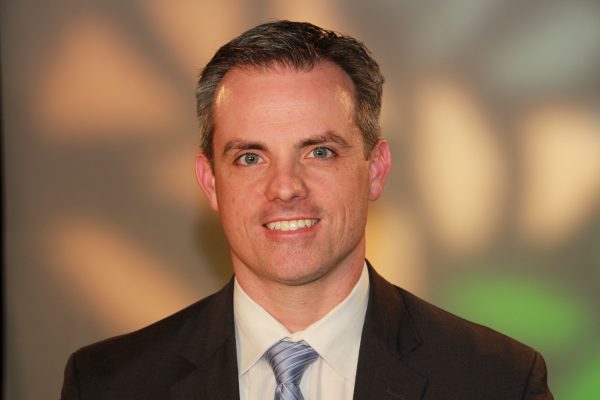
One down, one to go.  While the MetroHartford Alliance’s search for a new leader continues, the Greater New Haven Chamber of Commerce has announced their choice to succeed Anthony Rescigno, who led the organization for nearly two decades. The Chamber’s Board of Directors named Garrett F. Sheehan as President of the Greater New Haven Chamber of Commerce and Quinnipiac Chamber of Commerce.  Sheehan has experience working with local companies, building partnerships throughout communities and the state, and understanding regional growth and competitiveness, serving most recently as a Community Relations & Economic Development Specialist at Eversource. He will begin work in his new position on March 1, 2018.

“I am honored and humbled to have been selected for this role,” said Sheehan. “The Greater New Haven Chamber of Commerce is a pillar of our community and has an excellent track record of providing services for our membership and leadership on key issues affecting the New Haven region. I am excited to begin working with the staff, board, members, and volunteers of this amazing organization to help write the next chapter for the Chamber.”

At Eversource, he provided leadership on strategic initiatives including enhancements to the Company’s economic development program, and was actively engaged in Eversource’s commitment to volunteerism and community giving.  He also served as the primary point of contact between the utility and chief elected officials in 23 municipalities in Connecticut.

Prior to his position with Eversource, Sheehan served as an economic developer at The United Illuminating Company, where he was responsible for regional business growth and expansion and strategic partnerships with state organizations, chief elected officials, and business leaders.

Sheehan grew up in Middlefield, and after attending Syracuse University, moved to Mississippi to take a job as a television news reporter. After five years in journalism, Garrett transitioned to a career in economic development. In addition to his work in economic and community development, Sheehan served as a Law Clerk for the Honorable Bethany J. Alvord of the Connecticut Appellate Court, conducting legal research and drafting legal opinions.

During his career, he also served in the Connecticut Army National Guard as an infantry officer in the New Haven-based First Battalion, 102nd Infantry Regiment.  In 2010, Sheehan completed a tour of duty in Afghanistan, serving as a platoon leader and executive officer.

The MetroHartford Alliance has hired New York economic-development consultancy Camoin Associates to assist with the search for its next CEO. Travelers Cos. Executive Vice President and Chief Administrative Officer Andy Bessette, who chairs the Alliance's board, told the Hartford Business Journal recently that the nonprofit seeks to have a successor in place by early 2018.  Oz Greibel, who led the Alliance for the past 16 years (one less than Rescigno led New Haven’s Chamber) resigned late last year and subsequently launched an independent candidacy for Governor.

Established in 1794, the Greater New Haven Chamber of Commerce is the nation’s third oldest business organization.

Five in Connecticut Reach Forbes List of America’s Best Employers for Diversity

Studies published by Massachusetts Institute of Technology, Harvard Business Review, and numerous others during the past decade have consistently concluded that diverse teams – and diverse companies - have stronger financial performance.   With that backdrop, Forbes worked with research firm Statista to compile a list of the best employers for diversity in America. Two Connecticut-based companies, ESPN and Stanley Black and Decker made the top 100 list; ESPN at number 36, Stanley Black & Decker at number 67.  They were the only Connecticut companies to do so. The LEGO Group, with U.S. headquarters in Enfield, was ranked number 169.  Starwood Hotels and Resorts, headquartered in Stamford, was number 197 in the rankings.  Yale New Haven Health was just outside the top 200, at number 208.  Yale University also made the Forbes ranking, at number 242.

Statista surveyed 30,000 U.S. employees in August 2017 to inform the list, asking questions about diversity, gender, ethnicity, sexual orientation, age and disability, according to Forbes. Responses among underrepresented ethnic minorities, women and people aged 50 and older received greater weight in the ranking.

Bristol-based ESPN, the Worldwide Leader in Sports, launched in 1979 as 30,000 viewers tuned in to watch the premier episode of SportsCenter. ESPN aired its 50,000th episode of SportsCenter in 2012 and the channel is has been the main attraction for sports coverage despite challenges through the years.  A 2013 study by the Institute for Diversity and Ethics in Sports concluded that when it comes to diversity, the Worldwide Leader is leading the way.

Reporting on the study, the publication Think Progress indicated that “ESPN has a strong diversity hiring policy outlined on its web site and it has won numerous awards for hiring a diverse cast writers, editors, and columnists. It regularly features minority and female hosts, analysts, announcers, and journalists on both its scheduled programming and its live broadcasts. ESPN is proof that there are qualified minority and female reporters and editors out there, and it is also proof that the rest of the sports world needs to do a better job finding them.”

Other factors Statista incorporated, according to Forbes, were the gender split of companies’ management teams and boards, and whether a company proactively communicates about diversity. It also looked at the gap in diversity perceptions at a given organization. For example, if women, older employees and underrepresented minorities rated an employer poorly on diversity, but everyone else rated it highly, Statista considered that a negative indicator and adjusted the score downward. Only companies with 1,000 or more workers were eligible to qualify for the list.

Last summer, Stanley Black & Decker held its first-ever Global Diversity & Inclusion conference, joining together established affinity networks from around the company.  Affinity networks – voluntary, employee-driven groups – have been established throughout the company’s business and regions to “provide an environment where employees can engage around a particular shared interest or experience,” the company’s website explains.

“The objective of the groups is to engage, enable, and empower by providing networking opportunities, improve representation across the business and promote career advancement.  We embrace and respect differences – and diversity and inclusion are embedded into our company values and purpose,” the website points out.

The top 10 included:

  1. Northern Trust, Chicago
  2. The Smithsonian Institution, Washington D.C.
  3. Levy, Chicago
  4. Intuit, Mountain View, California
  5. Harvard University, Cambridge, Massachusetts
  6. Principal Financial Group, Des Moines, Iowa
  7. Emory University, Atlanta, Georgia
  8. Wegmans Food Markets, Austin, Texas
  9. Keller Williams Realty, Austin, Texas
  10. AbbVie, North Chicago

In addition to the Connecticut-based organizations named in the top 250, New York City-based NBC Universal Media, with a strong presence in Stamford, placed at number 42.  TIAA-CREF, which coordinates the state’s college savings program for the State Treasurer’s Office, was ranked at number 59.  GE, which departed Fairfield for Boston, also made the top 100 at number 85.

PERSPECTIVE: Dialogue, Diversity and Progress Amidst News of Dysfunction

by Martha McCoy What better way to spend the day than with a broad diversity of people from across Connecticut who want to make our towns, cities and state even greater places to live – who are working to create inclusive communities and make a difference on the issues we face.

For six years, Everyday  Democracy and the Secretary of the State’s office have been bringing together an expanding group of civic leaders to consider indicators of our state’s civic heath – such as how well neighbors relate to each other, how often people participate in community affairs, and how well we collaborate across differences. 

On a sunny day with day with a New England chill in the air, 75 Connecticut residents recently gathered for the first annual Connecticut Civic Ambassadors Summit at the Hartford Public Library to celebrate our public life and find ways to improve it. During an afternoon of sharing food and conversation, we deepened our understanding of the “civic health” of our state and continued to find ways to take action together.

State news coverage often focuses on dysfunction. Our state was one of the last in the country to pass a budget. We are struggling to pay for important services, develop the economy, and address large racial and economic inequities. When we hear about towns and cities, it’s often about ways they are pitted against each other.

But the tone of the recent Saturday gathering was completely different. While we all acknowledge that our state faces tough issues, we believe that there are ways “we the people” can address them, working with each other and public officials in more inclusive and democratic ways.

Throughout the day, we heard from people of all ages (grade school to senior citizens) and all backgrounds and walks of life who are using their voices, generating productive collaborations, standing up for justice, and making a tangible difference in their homes, schools, communities, and regions.

Here are just some of the things we heard:

  • “People are yearning to have discussion, to understand the world, and to come together to transform dialogue into action.”
  • “Use the gifts you have to change the world around you…”
  • “Young students have the power to change the world.” “Teachers need support so that they know how to help their students talk about divisive public issues in respectful ways.”
  • “We need to start talking about things before they become hot-button issues. A tweet is not action.”

At the close of the Summit, 40 Civic Ambassadors were sworn in, pledging to be a dedicated and engaged community member to uphold civic values of civility, respect for our democratic institutions, principles of social justice, and nonpartisan civic action toward community improvement.

The goal of the Summit was to engage more people as Connecticut Civic Ambassadors.  Join us.  Civic Ambassadors are everyday people – all of us have a voice and can make a difference. We all need ways to resist the cynicism and polarization that are so prevalent both in our state and across the nation.  Whether you live in or outside of Connecticut, please call us so that you can learn about the civic health work going on in your state.

---------------------------------------------

Martha McCoy is Executive Director of Everyday Democracy.  A national organization based in Hartford,  Everyday Democracy works to strengthen democracy by making authentic engagement and public participation a permanent part of the way we work as a country. Since their founding in 1989, the organization has worked with hundreds of communities throughout the U.S., first by offering small, structured dialogues that led to positive and lasting change, and now offering an array of flexible resources, discussion guides, coaching and technical assistance.


https://youtu.be/jVue1tX-eI0

Yale, UConn Fall Among Peers as Full-Time MBA Enrollment Continues Nationwide Decline

Full-time two-year MBA programs in the United States have seen declines in application volumes since 2014. Last year, only one-third (32%) of programs reported increased application volumes; 64 percent saw declines, according to the Graduate Management Admission Council’s Application Trends Survey 2017. When Bloomberg Businessweek ranked the nation’s business schools offering two-year full-time MBA programs, Harvard, the University of Pennsylvania’s Wharton School and the MIT Sloan School of Management topped the list, issued in late-2017.  Among Connecticut business schools, Yale University ranked at number 16 and the University of Connecticut placed at number 66.  Yale dropped two places from the previous year, UConn dropped three.  In 2015, Yale ranked #11.  A total of 85 schools nationwide received rankings.

Each school’s ranking is based on surveys of recruiters, alumni, and students, as well as recent graduates’ success at landing jobs and securing high starting wages. The methodology Bloomberg Businessweek uses to arrive at its annual MBA ranking involves weighting each of five principle factors: 35 percent for the Employer Survey score, 30 percent for the Alumni Survey score, 15 percent for the Student Survey score, 10 percent for the Job Placement Rate score, and 10 percent for the Starting Salary score.

UConn’s employer survey rank was 77 among the 85 business schools tallied, the job placement rank was 67, and the student survey rank was 73.  The bright spots in the rankings were UConn’s alumni survey rank, 48th, and salary rank, 39th.

Yale’s top rankings were in the alumni survey (9th) and salary survey (15th), with the School of Business ranked 21st in the employer survey, 27th in the student survey and 42nd in the job placement rankings.

The Graduate Management Admission Council report, issued in September 2017, pointed out that “For many years, U.S. programs have come to rely on international candidates to add to their application pipeline. However, the recent change in political administration became a concern among potential international candidates. Three-quarters (75%) of programs reported declining international application volumes.”

That same month, the Wall Street Journal reported that “applications to full-time M.B.A. programs in the U.S. fell for a third straight year, the latest signal that business schools are struggling to entice young professionals out of a strengthened job market.”  Fortune later reported that “while applications to business school overall have declined over the past three years, this isn’t necessarily the case across the board. On the contrary, the top-ranked business schools are seeing a massive influx of interest from students. Yale University’s School of Management, for example, has seen a whopping 45% increase in applications since 2013.”  Harvard increased by 11 percent during that period; UPenn’s Wharton School by 3 percent.

In addition to Yale and UConn, full-time MBA programs are in place at Connecticut schools including Fairfield, Quinnipiac, Sacred Heart, Central Connecticut, and the universities of Hartford and New Haven.

Number of World Language Students in Connecticut More Than Triples Over Past 25 Years

In 1991, 65,252 students were enrolled in world languages in Connecticut’s K-12 schools.  A dozen years later, in 2003, that number had climbed steadily, reaching 95,154.  By 2015, another 12 years later, the number of students taking language instruction had more than doubled, to 208,627 during the 2015-16 academic year. Data provided to CT by the Numbers by the state Department of Education also showed that nearly one-quarter of those students were taking Spanish.  Also, during those two and a half decades, the number of students taking Chinese language instruction has grown from less than 100 to more than 5,500.

Twenty-five years ago, in 1991, the most popular languages taught were Spanish, with 37,963 students; French, with 17,281; Latin, with 4,764; and Italian, with 2,989.  There was also a smattering of German (1,290 students), Russian (318), and Portuguese (193).  The number of students other languages was relatively tiny – 72 were learning Chinese, 67 were taking Japanese and 36 were in Polish language classes.   

By 2003, the most frequent world language choices for Connecticut students had not changed, but the numbers had jumped.  Spanish grew from just under 38,000 students to just over 62,000.  The number of French students was virtually unchanged, and would drop slightly in the years following, as the number of Latin students grew from just under 5,000 to just over 7,500 and the number of students taken Latin closed in on doubling from just under 3,000.

By 2015-16, there were 54,308 taking Spanish, plus another 2,142 taking Spanish for Native Speakers.  Just under 27,000 students were taking French, and 5,500 taking Chinese. The ratio of French students to Chinese students had dropped from more than 200 to 1 in 1991 to about 5 to 1 by the 2015-16 school year.

Slightly more than 7,000 students were learning Italian in 2015-16, more than double the number in 1991. Arabic, which barely registered in 1991, was being taken by 343 students and Russian was the language of choice for 86 students by 2015-16.

According to “The State of Languages in the U.S.: A Statistical Portrait,” Connecticut was one of seven states, along with New Jersey, Pennsylvania, Maryland, Vermont, New Hampshire and Wisconsin, where more than 30 percent of K-12 students were enrolled in language. As of 2014, only twelve states had more than one in four elementary- and secondary-school students studying languages other than English.

The report was published by the American Academy of Arts & Sciences in 2014, noting in the introduction that “While English continues to be the lingua franca for world trade and diplomacy, there is an emerging consensus among leaders in business and politics, teachers, scientists, and community members that proficiency in English is not sufficient to meet the nation’s needs in a shrinking world.”

“What a lot of Americans remember is language as an academic pursuit,” Marty Abbott, director of education for the American Council on the Teaching of Foreign Languages told the nonprofit organization Great Schools in 2016.  “They learned a lot about a language, how to conjugate every irregular verb. Today, the emphasis is on developing students’ communications skills — what they can do with a language. That’s a radical departure.”

There were approximately 191,000 students taking a world language in Connecticut in the 2013-14 and 2014-15 school years; that number jumped to more than 208,000 the following year, in the most recent data available from the state Department of Education.  Data for specific languages may vary, as course descriptions differ from district to district in Connecticut.

PERSPECTIVE: Access to Healthy Foods: How Far Are You Willing to Go?

by Garth Graham For the first time in the history of the United States, today’s youth are expected to have a shorter life-span than their parents. With medical, scientific and technological advances, this notion seems dumbfounding. But when we step away from the science and technology and take a deeper look at our communities, you can find the root causes.

Access to healthy food, public safety and environmental factors are all driving forces behind this decline in longevity. These social determinants of health are becoming increasingly influential to our health as individuals and as communities.

Increasing access to healthy foods is one of the primary social determinants of health that the Aetna Foundation is trying to address. We know that living closer to super markets or retailers that provide healthy food lowers health issues related to obesity, such as diabetes. Providing a community with healthier food doesn’t just benefit the well-being of the people that live there – it has also been show to increase economic activity.

While many of us are lucky enough to have full pantries and fridges, a large portion of the country is not as fortunate. More than 23 million Americans, including 6.5 million children, live in food deserts—places where fresh fruit and vegetables (and healthy foods in general) are largely inaccessible. A significant percentage of this group live in low-income neighborhoods, both urban and rural.

It will require more than a merger between Whole Foods and Amazon to reduce the number of food deserts across the country. Solving this problem starts by giving communities direct access to healthier options, which can help address the fact that more than 90 percent of people don’t eat the recommended amount of fruits and vegetables.

One approach that is helping communities across the country is the development of community gardens and farmer’s markets. The Aetna Foundation is committed to helping communities with this approach and has already supported 5,538 garden beds that have been planted across the country. More than three-quarters of nutrition education participants say that they consume more fruits and vegetables as a result of these activities. Some of the programs that are already making a difference in their local communities include:

  • The e3p3 Live Well Perris in California is establishing community gardens and providing healthy food education and resources to its residents.
  • Healthy St. Pete Empowering Change in Florida serves children, adults and seniors in low-income or low access areas of the city and designated food deserts, and also encourages policy change regarding nutritional access and availability.

Aetna is also working with groups like Meals on Wheels America to combine improved access to healthy food with innovative models for patient care coordination. Aetna recently announced a collaboration that will integrate Meals on Wheels’ daily nutritious meals, social support and critical safety checks into a continuum of care required as people age. Meals on Wheels and Aetna will pilot this model in several markets, and identify best practices intended to improve vulnerable seniors’ health outcomes.

Access to healthy food remains a pressing issue when it comes to determining the health of individuals and communities. We must find sustainable and scalable solutions that can be implemented in communities across the country. By improving access to healthy food, we can increase healthy behaviors, drive economic growth, and lower costs associated with obesity – one community at a time.

Garth Graham, M.D., MPH, is a leading authority on social determinants of health. President of the Aetna Foundation since 2013 and Vice President of Community Health for Aetna, Inc., Dr. Graham is a former deputy assistant secretary at the U.S. Department of Health and Human Services under the Obama and Bush administrations where he also ran the Office of Minority Health. Dr. Graham holds a medical degree from Yale School of Medicine, a master’s in public health from Yale School of Public Health and a bachelor of science in biology from Florida International University in Miami. He holds three board certifications including internal medicine, cardiology and interventional cardiology and serves as an Associate Professor of Medicine at the University Of Connecticut School Of Medicine.  This article first appeared on HuffPost and is published here with permission of the author.