Connecticut Bridges Falling Down? One-Third Are Deficient; State’s Highways Ranked 5th Worst for Cost and Condition
/Seven states – including Connecticut – report that more than one-third of their bridges are deficient. The other six are neighboring Rhode Island, Massachusetts and New York, as well as Hawaii, West Virginia, and Pennsylvania. Overall, only four states have state highway systems deemed worse than Connecticut, which ranks 46th in the nation, according to a new nationwide analysis of cost and condition.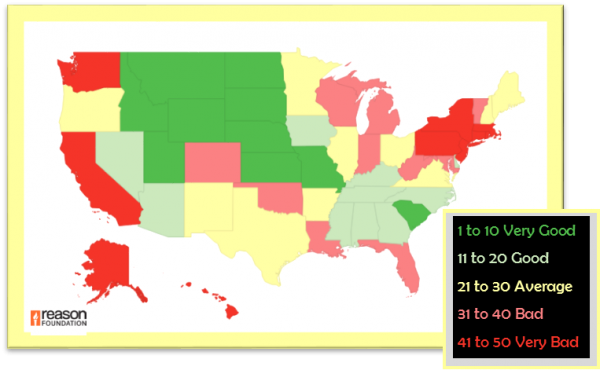 Reason Foundation’s Annual Highway Report ranks the performance of state highway systems in 11 categories, including spending per mile, pavement conditions, deficient bridges, traffic congestion, and fatality rates. At the bottom were New Jersey, Rhode Island, Alaska, Hawaii and Connecticut. Topping the list were North Dakota, Kansas, South Dakota, Nebraska, South Carolina and Montana. New York and Massachusetts were also in the bottom ten, ranked just above Connecticut.
The report indicates that federal law mandates the uniform inspection of all bridges for structural and functional adequacy at least every two years; bridges rated “deficient” are eligible for federal repair dollars. Of the 603,366 highway bridges reported nationwide, 130,623 (about 21.65%) were rated deficient. In Connecticut, it was 34 percent. The states with the highest percentage of deficient bridges are all located in the Northeast or along the eastern seaboard.
In the overall rankings, New Jersey ranked last in overall performance and cost-effectiveness due to having the worst urban traffic congestion and spending the most per mile — $2 million per mile of state-controlled highway, more than double what Florida, the next highest state, spent per mile.
 The report also considered costs related to state roads and bridges.
In maintenance disbursements, the costs to perform routine upkeep, such as filling in potholes and repaving roads, Connecticut ranked 31st. On a per-mile basis, maintenance disbursements averaged about $28,020 per state; there has been an upward trend nationally over the past decade, the report points out.
Connecticut ranked on the far end of the spectrum among the states in administrative disbursements for state-owned roads. On a per-mile basis, administrative disbursements averaged $10,864 per state, ranging from a low of $1,043 in Kentucky to a high of $99,417 in Connecticut.
The report, released this month, is based on spending and performance data that state highway agencies submitted to the federal government for the year 2015, the most recent year with complete data available. New Jersey ranked last, 50th, in overall performance and cost-effectiveness due to having the worst urban traffic congestion and spending the most per mile — $2 million per mile of state-controlled highway, more than double what Florida, the next highest state, spent per mile.


 A donor, for example, may want to ensure that people in our community do not go hungry. Rather than trying to figure out how to get meals to hungry people on their own, the donor gives money to a local food pantry that has programs to feed the hungry. In that way, the food pantry connects the donor to the outcome he or she is seeking.

 “It is no secret that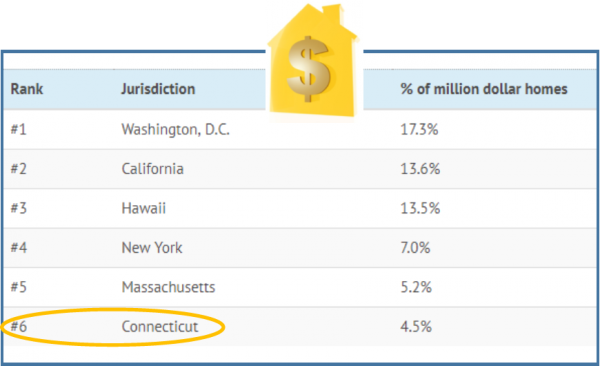
 The five metropolitan areas with the largest share of homes worth $1 million in 2017, according to CBS News, are: San Francisco, San Jose, Los Angeles, Fairfield County, CT, and Long Island, New York.
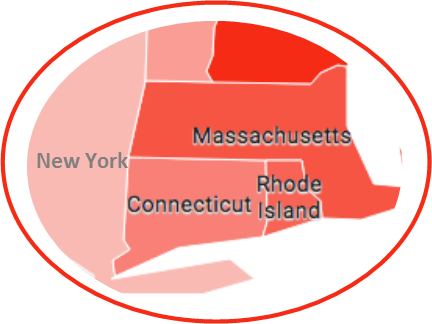 Even in advance of the merger plan, the Board of Regents has been extending lower tuition offers in every direction, reaching out to students in Massachusetts, Rhode Island, New York and even New Jersey, making offers that the Regents hope will be tough to refuse.




 Sheehan grew up in Middlefield, and after attending Syracuse University, moved to Mississippi to take a job as a television news reporter. After five years in journalism, Garrett transitioned to a career in economic development. In addition to his work in economic and community development, Sheehan served as a Law Clerk for the Honorable Bethany J. Alvord of the Connecticut Appellate Court, conducting legal research and drafting legal opinions.