Women's History Month Focuses on Current Issues, Locally and Globally
/As Women’s History Month unfolds in the light of #METOO and #TIMESUP, two Hartford-area events bookend the month and underscore the evolving contributions of noteworthy women on the local and global scene. The World Affairs Council of CT and the University of Saint Joseph Women’s Leadership Center “work to motivate women to continue to be bold, to press for progress and take groundbreaking action that truly drives the greatest change for women locally and across the globe.” The two organizations will present “Global Changemakers” on March 7, in observance of International Women’s Day. The event, on the University campus, opens with a 5 p.m. reception followed by a 6 p.m. program and audience questions.
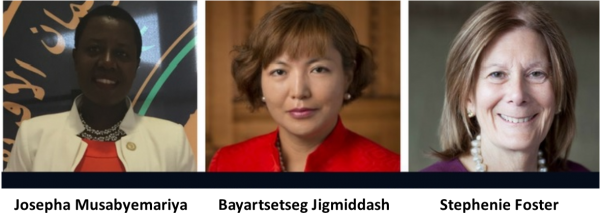 On campus will be:
Bayartsetseg Jigmiddash has held senior government positions in the justice sector and has been at the forefront of Mongolia’s far-reaching reform initiatives. Currently, she is CEO and Founding Director of Veritas Consulting. From 2012 to 2016, Jigmiddash served as Secretary of State of the Ministry of Justice of Mongolia, becoming the first woman appointed in this position. Under her leadership, the legal policy on gender-based violence has been significantly improved, including criminalization of domestic violence. Prior to this top civil service post, she served as legal advisor to the president of Mongolia, and has been involved in the judicial reform as well as abolishment of death penalty in Mongolia. She has extensive civil society experience and pioneered an array of initiatives to promote human rights and access to justice.
Stephenie Foster is a Partner in Smash Strategies and a former Senior Advisor and Counselor to the Ambassador-at-Large for Global Women’s Issues at the U.S Department of State. As a member of the leadership team, she coordinated, managed and implemented a wide range of policies and programs, including the women, peace and security initiative, women’s political participation and women’s economic empowerment. At the State Department, Ms. Foster represented the United States in various multilateral and bilateral forums. She served at the U.S. Embassy in Kabul, Afghanistan, focusing on women and civil society, travelling extensively throughout the country to work with individuals and organizations advancing the role of women in Afghan society. Ms. Foster served as Chief of Staff to two United States Senators, Barbara Mikulski and Christopher Dodd.
Josepha M. N. Musabyemariya is the United States Rwandan Community Abroad (USRCA) Commissioner for Gender and Social Affairs. She also is President of Rwandan Community Abroad (RCA) in Maryland, District of Columbia and Virginia (DMV). She has more than 25 years of experience in handling special projects and initiatives designed to positively impact lives of people in her home country of Rwanda, the communities in and outside DMV and around the globe. She works for the African Union in the U.S. In this office, she was among the handful of individuals charged with setting up the African Union office in Washington DC which was just prior to the arrival and assumption of duties of the first Permanent Representative in 2006. Josepha’s passion lies in dealing with all issues concerning gender and women empowerment.
Later this month, “The Evolving Role of Women in Politics and Governance” will be presented by Duncaster, the Hartford area’s first LifeCare community, located in Bloomfield. With more women than ever running for public office in the United States, including in Connecticut, organizers say, the discussion will focus on their evolving roles on the local and national political stage. The panelists will include:
- State Senator Beth Bye of West Hartford
- Mayor Suzette De Beatham-Brown of Bloomfield
- Assistant Attorney General Claire Kindell of Bloomfield, a candidate for Connecticut Attorney General
- Mayor Erin Stewart of New Britain, who has an exploratory candidacy for statewide office.
The program will be moderated by Carole Mulready, the past president of the Great Hartford League of Women Voters. It begins at 11:00 a.m. on Friday, March 23. The event is free, but pre-registration is required.

 But why girls?
 Confidence, we’ve heard, comes from execution. Early results from



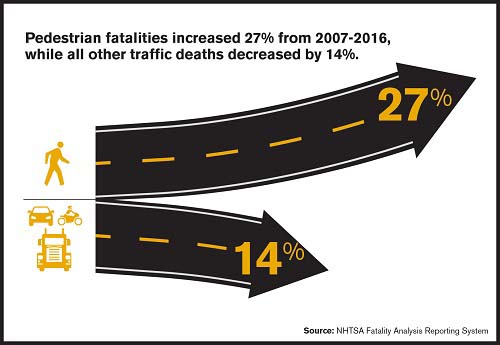 The total number of multimedia messages sent has more than tripled since 2010. The report also suggests a possible link with marijuana use. According to the report, the seven states (Alaska, Colorado, Maine, Massachusetts, Nevada, Oregon, Washington) and DC that legalized recreational use of marijuana between 2012 and 2016 reported a collective 16.4 percent increase in pedestrian fatalities for the first six months of 2017 versus the first six months of 2016, whereas all other states reported a collective 5.8 percent decrease in pedestrian fatalities.
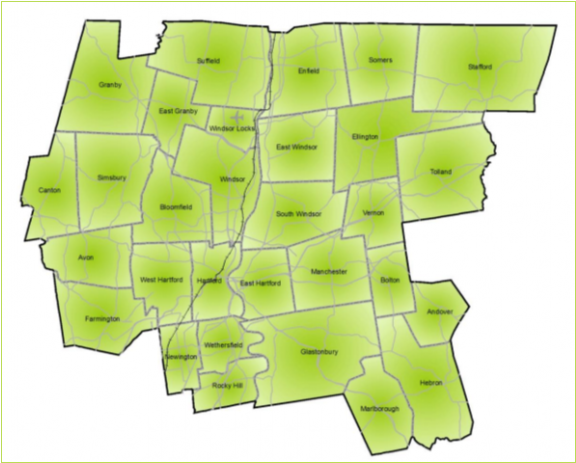 “There is only one way our region will achieve equitable and sustainable economic growth. We must eschew the past squabbles and divisions that have kept us mired in anemic progress,” said Jay Williams, president of the Hartford Foundation and co-chair of the CEDS Advisory Committee. “If we commit to a bold, collaborative, and pragmatic approach, we can develop a roadmap to capitalize on the enormous talent and multiple assets our region possesses. I’ve seen the success of this approach in other parts of the country and there is absolutely no reason it can’t occur here, unless we lack the collective will to make it happen.”


 Only 54 percent of working women in Connecticut work full-time, compared with 67 percent of men. That may be a possible explanation for women's lower wages - fewer women work full-time than men. DataHaven notes that part-time workers tend to earn much less money than full-time workers, and there are many reasons why someone might not be working full-time. “But that doesn't explain everything,” the DataHaven summary notes.

 The move comes just under four years after MassMutual


 While pay equity details that a woman should be paid the same as a man when doing equal amount of work in the same job, the gender wage gap differs. It describes the measured statistical difference in income between men and women. In Connecticut, the wage gap results in full time working women losing collectively $15 billion (Connecticut Women and the Wage Gap 2017).


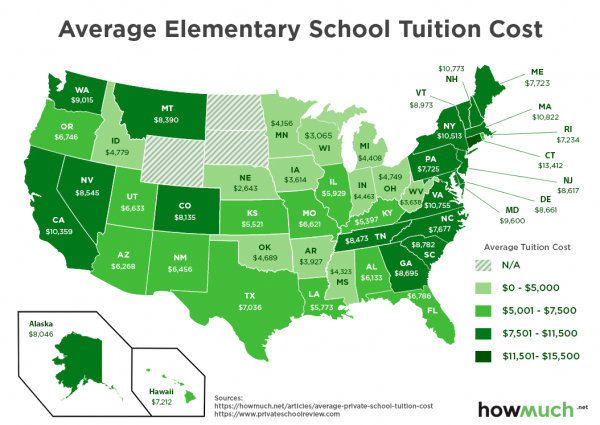
 The most expensive average elementary school tuition cost is also on the East Coast, and Connecticut leads the way. The average private elementary school tuition is $13,412, with Massachusetts ($10,822), New Hampshire ($10,773), Virginia ($10,755), and New York ($10,513) rounding out the top five.
 In a