PERSPECTIVE: ATT/Time Warner Merger Could Wreak Havoc on Consumers Without Net Neutrality

by Bob Duff and Derek Slap We were pleased to see that Connecticut joined 21 other Democratic Attorneys General in the lawsuit to halt the Trump Administration Federal Communications Commission’s efforts to repeal net neutrality provisions. In addition, we proposed Senate Bill 2, An Act Concerning Internet Service Providers and Net Neutrality Principles, which would require internet service providers to abide by consumer friendly principles. We hope both efforts are successful and help protect Net Neutrality in Connecticut.

There is another pending matter that could have disastrous consequences in the absence of net neutrality: the proposed acquisition of Time Warner by AT&T. The Trump Department of Justice is suing to block the proposed merger.  Sometimes people do the right thing for the wrong reasons.  This appears to be the case here.  President Trump’s well-known animus against CNN has fueled his opposition to the deal. Many people are speculating that DOJ is suing to block the merger to curry favor with the President.

It is impossible to assess the AT&T / Time Warner merger without taking into consideration the impact that the Trump Administration FCC’s proposed net neutrality rollback would have. AT&T is the third-largest broadband provider in the United States, with 15.7 million subscribers. And they own DirecTV, by far the largest satellite television provider, with over 20 million subscribers. If the Trump Administration is successful in fully implementing its net neutrality repeal, but is unsuccessful in blocking the AT&T / Time Warner merger, it would create a nightmare scenario for consumers.

There would be nothing to stop AT&T or its subsidiaries from placing streaming content it controls – properties which would include HBO, the sporting events broadcast on Turner Sports, which include the NBA, the NCAA Men’s Basketball Tournament, and the Major League Baseball Playoffs, and the entire Warner Brothers film catalog – in a fast lane, or from slowing down delivery of content they don’t own to their subscribers.

In addition to the multi-state lawsuit to block the Trump Administration’s net neutrality repeal, we also believe Connecticut, under the leadership of Attorney General George Jepsen and Elin Katz of the Office of Consumer Counsel, should initiate an investigation and consider filing a separate suit to block the proposed merger between AT&T and Time Warner on behalf of consumers.

We need the answers to important questions regarding how a mega-merger could manipulate the internet and should do whatever we can to protect Connecticut consumers. We should not be afraid to lead this fight.

_______________________________

Representative Derek Slap (D-West Hartford) is the Vice-Chair of the legislature's Energy and Technology Committee.  Bob Duff (D-Norwalk) is the Senate Majority Leader.  

CT Arts Organizations to Participate in Make Music Day on June 21, Joining 800 Communities in 120 Countries

A year ago, over 800 cities around the world threw citywide music celebrations on June 21. Three decades after the concept was born in France, the Make Music celebrations has spread throughout the world and is now marked in more than 120 countries.  Later this spring, it arrives in Connecticut for the first time.

Make Music Connecticut will feature an eclectic mix of over 250 free outdoor musical events, and is part of Make Music Day, a global music celebration that takes place on the summer solstice each year and brings people of all ages and skill levels together to make music.

In addition to Connecticut, more than 70 U.S. cities will collectively host thousands of Make Music performances. The event is not a concert, or series of concerts, organizers point out.  Any musician, amateur or professional, young or old, is invited to take part by signing up at MakeMusicCT.org. Registration closes on May 21, 2018.

In addition, Connecticut businesses, buildings, schools, churches, and other institutions can visit the website to offer their outdoor spaces as concert locations.  It is the world’s largest annual music event.

The event was held for the first time in North America 11 years ago.  The numbers continue to grow.  On June 21, 2017, 53 North American cities organized 4,138 free concerts at 1,179 locations.

Each Make Music city is independently organized. Often it’s a local community group, media outlet, arts presenter, government agency, or civic leader who champions the musical holiday in their hometown.

Make Music Day Connecticut is being administered in partnership with the Connecticut Office of the Arts and the following organizations: Greater Hartford Arts Council, Southeastern Connecticut Cultural Coalition, The Arts Council of Greater New Haven, Windham Arts, Stamford Downtown, Middletown Commission on the Arts, Northwest Connecticut Arts Council, Fairfield Theatre Company, Waterbury Symphony Orchestra, the City of Waterbury and City Lights Gallery in Bridgeport.

The plan at the  Greater Hartford Arts Council is for “sidewalks, parks, front porches, and public spaces throughout the city” to become “stages for local musicians to perform and for all to enjoy.” Registration has opened, with  matchmaking software in place for musicians to register, create profiles and find a match for their Make Music Hartford performance.  Similar initiatives are being launched by the other participating Connecticut organizations.  Circle June 21 on the calendar!  Wherever you are in Connecticut, music won't be too far away.

Students Excel in Winning Connecticut Science & Engineering Fair Recognition

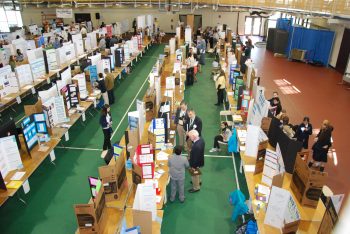
Students from across Connecticut won awards at the 70thConnecticut Science & Engineering Fair (CSEF) held this past weekend at Quinnipiac University.  Students were recognized for their achievement and innovation in a half dozen categories, including physical science, life science, biotechnology, and engineering.  Individual and team awards were presented, for grades 9-12 and grades 7-8.  There was also an Urban School Challenge category. The individual high school physical and life science first and second place winners, as well as the Alexion Biotechnology, CASE Urban School Challenge, and UTC Aerospace Engineering winners are packing their project boards to compete at the prestigious Intel International Science & Engineering Fair (Intel ISEF), to be held this week in Pittsburgh, PA.

Other CSEF winners will represent Connecticut and compete for cash and scholarships at other competitions, including the 2018 GENIUS Olympiad and the 2018 Broadcom MASTERS competition.

The Connecticut Science & Engineering Fair is a yearly, statewide science and engineering fair open to all students in grades 7-12 residing, or enrolled, in Connecticut and Fishers Island schools.

The primary objective of the fair is to attract young people to careers in mathematics, science, and engineering while developing critical thinking and public speaking skills. Through their participation in the fair, students are encouraged to pursue independent work using proper research methods.

The fair is supported by academic and industrial organizations through the state. The non-profit Connecticut Science & Engineering Fair is a volunteer organization fund that directs funds toward student awards, educational presentations, fair operations, and workshops.

Students from Bethany, Danbury, East Lyme, Greenwich, New Haven, West Hartford, Wilton, and Windsor earned top prizes at the 2018 event.

Individual winners in Grades 9-12 include:

Physical Science – Maya Geradi, Wilbur Cross High School, New Haven

Life Science – Emily Philippides, Greenwich High School

Biotechnology – Shobhita Sundaram, Greenwich High School

Engineering – Keshav Vedula, CREC Academy of Aerospace & Engineering High School, Windsor

Individual winners at the middle school level include:

Physical Science - Khushi Parikh, Westside Middle School Academy, Danbury (Grade 8)

Varun Vadhera, Middlebrook School, Wilton (Grade 7)

Life Sciences - Grace Flynn, St. Timothy Middle School, West Hartford (Grade 8)

Athena Brown, Worthington Hooker Middle School, New Haven (Grade 7)

Biotechnology - Paloma Lenz, Westside Middle School Academy, Danbury

Engineering - Timothy Chen, Westside Middle School Academy, Danbury

See the full list of winners here.

Connecticut Export Week, Which Starts Today, is One-of-a-Kind in U.S.

There is only one state in the nation that has an “export week,” designed to encourage more in-state businesses to take the first steps toward building international business connections.  “Connecticut Export Week,” now in its third year, takes place March 19-23, 2018. The week-long focus on the business potential of exports features a dozen events and webinars with expertise offered in a range of broad and very specific aspects of international business. It is a joint initiative of the U.S. Export Center and the affiliated District Export Council.  Connecticut is the only state where the local office of the federal agency functions as the State Trade Office.

The initiative has been very successful in exporting awareness and training for companies, according to officials.  The information shared by experts at programs and events during the week helps companies become “Export Ready” so that when they use agency services to meet new customers and get into new markets, they are better prepared to close the deal.

According to the Connecticut Business and Industry Association's 2017 international trade survey, there are nearly 6,000 companies exporting from within the state.   Connecticut achieved export levels in goods and services reaching $14.4 billion, contributing to the more than $1.45 trillion in U.S. commodity exports in 2016.

Topics during the week will include Market Research, Global Intellectual Property, Digital Strategy, Doing Business with NATO, export Finance and Insurance for U.S. Exporters, Understanding Foreign Exchange and Letters of Credit and Export Documentation Basics.  There will also be a CEO’s and Managers Export Forum, a session focused on Opportunities for Advanced Manufacturing in Germany, and another on Infrastructure in Peru.

According to U.S. Census Bureau 2017 data, nations topping the list of exports from Connecticut are France (14.3%), Canada (12.8%), Germany (12.4%), United Kingdom (8.8%), Mexico (7.0%), China (5.4%), Netherlands (4.2%), Japan (3.7%), South Korea (3.6%) and Singapore (2.7%).

CBIA noted that the vast majority (89%) of Connecticut businesses engaged in international trade are small and midsize enterprises employing fewer than 500 workers.  The top three areas where Connecticut companies are looking for assistance, the survey found, are market research (52%), making connections with customers (32%), and finding foreign representatives (19%). Connecticut's top three export categories, the CBIA survey pointed out, are transportation equipment, machinery, and computer and electronic products, sold primarily to France, Germany, and Canada.

Between 2007 and 2017, there has been a steady increase in the number of Connecticut companies engaging in international trade, the CBIA survey found —from 53% to 77% over the 10-year period.


PERSPECTIVE - Changing Minds and Changing Lives: The Measurable Business Benefits of Hiring People with Disabilities

by Kris Foss Nearly 40% of employers are having challenges hiring qualified employees, while at the same time one in five people in the United States have some type of disability and are facing challenges in getting hired.  Some disabilities are visible, such as physical disabilities, and some are hidden; including mental health conditions, medical conditions, learning and cognitive disabilities.  We also have a large population “aging into disability” for the first time and veterans with disabilities returning to the civilian workforce.

I am often asked about the types of jobs a person with a disability can do and my answer is always the same—“What do you have?”  The reality is that the talent pool of people with disabilities remains underutilized, even though it includes job seekers with a wide and diverse range of education, degrees, professional certifications, work experience and skills. 

Talent with disabilities brings alternative perspectives to getting a job done, to solving a problem, and to reaching a goal.  It is this unique perspective and life experiences that can contribute innovative ideas, processes and market reach.

Opportunity:  Market

People with disabilities in the United States alone represent an annual spending power of $645 billion, and their friends and families—those who would make spending decisions based on how inclusive and accessible a company may be, represent another $4 trillion in annual spending, according to the Return on Disability Group.

Opportunity: Talent

Hiring people with disabilities is not about charity, but about smart business.  Ranging across industries and business lines, our clients include some familiar brands such as PepsiCo, Synchrony Financial, American Express, Aon and Staples.  These companies and others are taking action to meet their talent needs across the board and seeing real business results including key HR metrics:

  • An average 14% higher retention rate in the same roles;
  • 33% decrease in interview to hire ratios, saving talent acquisition professionals valuable time while decreasing time to fill;
  • 53 points and 28 points higher rates of voluntary “self-disclosure” among jobseekers with disabilities and veteran’s respectively—important compliance results for government contractors and reflecting a positive and inclusive corporate culture;

Diversity within Disability

People with disabilities cut across all dimensions of diversity and several areas of EEO reporting including:

  • 35% Women
  • 21% Veterans
  • 19% Hispanic
  • 36% White
  • 42% Black

Making the Connection

Companies have several ways to connect with jobseekers with disabilities. Cultivating talent partnerships is an important part of creating strong talent pipelines in the community. Disability Solutions creates customized inclusive hiring strategies that forge these talent partnerships, or recruiters can take the following steps:

  1. Conduct research within your geographic recruitment area. There can often be 50 to 75 community-based organizations in your area. It is important to start wide, in order to identify partners who can connect you with jobseekers who meet your particular talent needs.
  2. Utilize those partnerships to increase your pipeline of talent through a variety of pre-application engagement activities. These can be onsite informational and training sessions, or simply a guide to help partners prepare their referrals prior to application.  This leads to qualified and work-ready candidates heading your way!
  3. Post open positions on employment websites for people with disabilities such as the Disability Solutions online Career Center, disabilitysolutionstalent.org. It is a great way to begin building a new pipeline of talent. More than 400,000 people with disabilities visit the site every month to find a career.
  4. Focus on talent acquisition and retention. Smart employers focus on developing talent. Provide natural supports, mentors, and ongoing training to develop the best employees and promote retention.

Growing Talent Competition

As the competition for top talent increases, leading companies are searching for new and valuable talent pools.  Those taking action in reaching talent with disabilities are recognizing measurable and meaningful business outcomes.  What type of jobs can a person with a disability do?  What have you got?

____________________________________

Kris Foss is the Managing Director of Disability Solutions at Ability Beyond, located in Bethel, Connecticut.  The consulting division of nonprofit Ability Beyond, Disability Solutions is CHANGING minds and CHANGING lives by creating customized plans for companies to strengthen their workforce by hiring and retaining talent with disabilities.   Their consultants have partnered with top companies to successfully fill talent gaps by attracting a historically under tapped talent pool – people with disabilities. 


Firm Inspecting New London's Gold Star Bridge Project Also Designed Collapsed Florida Pedestrian Bridge

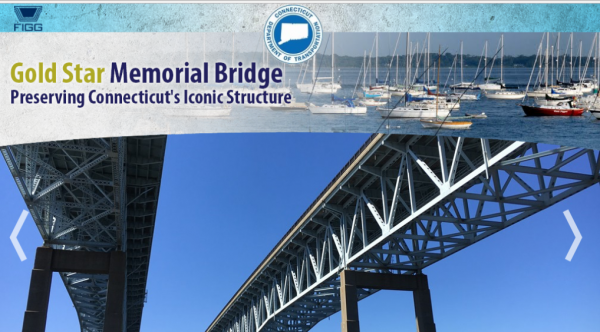
Project inspection and oversite for the rehabilitation of the southbound Gold Star Bridge structure on I-95 in New London and Groton, due to be completed later this year, is being conducted by the Connecticut Department of Transportation and FIGG Bridge Inspection.  FIGG, whose logo appears prominently on the website devoted to providing the public with project information, is the firm that designed the pedestrian bridge that collapsed at Florida International University on Thursday. The Gold Star Memorial Bridge, described as “Connecticut’s most iconic structure,” is the largest bridge in the State of Connecticut. It is 6,000 feet long and over 150 feet tall at the center span. The bridge is actually a pair of steel truss bridges that span over the Thames River, between New London and Groton, according to the project website.

The project was awarded to Mohawk Northeast in December 2016 and onsite activities began a year ago, in April 2017. Project inspection and oversight, conducted by the state Department of Transportation and FIGG Bridge Inspection, is anticipated to be completed by late Fall this year.

UPDATE:  The Miami Herald is reporting that an engineer from FIGG working on the Florida project notified the state two days before the collapse of cracking on the bridge.  

FIGG has its headquarters in Tallahassee with offices in Pennsylvania, Minnesota, Texas and Colorado, the Miami Herald reported. The company specializes in all types of bridge design and focuses solely on bridge design and engineering both in the U.S. and abroad, according to the company's website. The FIU-Sweetwater UniversityCity Bridge is the largest pedestrian bridge moved via Self-Propelled Modular Transportation in U.S. history, the University's website noted prior to the collapse.

The newspaper also reported that FIGG, which provides design, engineering and construction services, was cited by the Virginia Department of Labor for four violations in 2012 after a 90-ton piece of concrete fell from a bridge under construction near Norfolk, Virginia.

At the Gold Star Bridge, plans call for the structure’s expansion joints to be replaced, as well as overhead sign structures, according to the project website. In total, the bridge has more than 1,000,000 square feet of deck surface area spread over 11 vehicle traffic lanes and a pedestrian sidewalk. The average daily traffic count is 117,000 vehicles.

“Repairs and maintenance of the bridge’s structural steel includes steel girder end repairs, bolt replacements, and bearing replacement and maintenance.  Repairs to the substructure include concrete repairs and crack sealing,” the website explains.

The site notes that “During off peak hours the number of lanes may be reduced to accommodate repairs and improvements,” and there will be periodic closures of the sidewalk.

The company’s website touts “FIGG's exclusive focus on bridge design and construction engineering inspection enables us to provide state of the art technology, innovative aesthetics and materials, and a unique capacity to partner for research.”

After the 2007 collapse of the Highway 35 West bridge in Minneapolis, Minnesota, FIGG built a $233.8 million 10-lane replacement bridge, the Tallahassee Democrat reported.  It was heralded for its state-of-the-art safety systems, including sensors designed to monitor bridge stress and corrosion.

FIGG focuses solely on bridge design and engineering both in the U.S. and abroad. Since 1978, the company has built, studied and designed $10 billion in bridges in 39 states and six countries, according to its website.

The Northbound Gold Star Bridge was built 30 years prior to its sister Southbound Gold Star Bridge.  Repairs on the Northbound bridge are due to begin later this year, the project website indicated. “In the end,” the website predicts, “the service life of the iconic Gold Star Bridges will be extended for decades.”


https://www.youtube.com/watch?v=xYLrBQv3t4o

CT School Administrators Oppose Arming Educators

As students at schools across Connecticut held local observances in memory of the 17 students killed one month ago at Marjory Stoneman Douglas High School in Parkland, Florida, the Connecticut Association of School Administrators released the results of a survey of its members on proposals to arm teachers and administrators as a means of combating the growing problem of gun violence in school settings. When asked “Do you support providing teachers and administrators with firearms?” 84 percent of respondents said no, and 16 percent were supportive.  Asked if schools “will be safer if teachers and administrators are armed,” 85 percent said they would not; 15 percent thought they would.

“The recent proposal to combat school shootings by allowing armed teachers and administrators has little support. Millions of students attend schools throughout the nation for one purpose, to get an education,” said Anthony Ditrio, Chair of the Connecticut Association of School Administrators and a retired administrator who was a Norwalk School Principal for three decades.

“While we agree students should feel safe in every learning environment, arming school teachers and administrators is not the right course of action,” Ditrio added. “The results of our survey don’t surprise me or our organization at all.”

The Connecticut Association of School Administrators is a non‐profit membership organization aimed at advocating to protect the status and welfare of Connecticut school administrators, below the rank of assistant superintendent, in elementary, middle, and secondary schools or working in their board's central office. The Association includes approximately a thousand members from urban, suburban and rural school districts.

More than 160 members participated in the brief survey.

Nominations Open for Annual Connecticut Book Awards

Read a good book lately?  Written by a Connecticut author or featuring a local illustrator?  You may want to urge that their work be submitted for a 2018 Connecticut Book Award.  The annual awards returned last year after a multi-year hiatus, to solid reviews.  The Connecticut Center for the Book (CCB) at Connecticut Humanities, which sponsors the awards, is now looking to build on that momentum.

The awards are designed to recognize and honor those authors and illustrators who have created the best books in or about the State of Connecticut, and celebrate the state’s rich history of authors and illustrators.

“There was such a wonderful selection of books submitted last year in each category that it was very hard to choose” said Lisa Comstock, director of the Connecticut Center for the Book. “We are confident that submissions this year will be exceptional as well.”

Eligibility requirements for the 2018 Awards include:

  • Authors and illustrators must currently reside in Connecticut and must have lived in the state at least three consecutive years or have been born in the state. Alternatively, the work may be substantially set in Connecticut.
  • Titles must have been published for the first time between January 1, 2017, and December 31, 2017, or have a copyright within 2017.
  • All submitted books must have a valid ISBN.
  • Anthologies are acceptable. Author(s) must currently reside in Connecticut and must have lived in the state at least three consecutive years or have been born in the state. Alternatively, the works must be substantially set in Connecticut.
  • Books by deceased authors will be accepted only if the author was still living at the beginning of the eligibility year (January 1, 2017).

The deadline for submission for the 2018 Connecticut Book Awards is April 20, 2018. Finalists will be announced in September and winners announced in October. For more information, visit: http://ctcenterforthebook.org/submission-guidelines/.

Last year’s winners in each category include: Poetry: Fugitives by Danielle Pieratti; Lifetime Achievement for Literary Excellence to Gray Jacobik represented by The Banquet: New and Selected PoemsYoung ReadersThe Weight of Zero by Karen Fortunati; NonfictionNever Look an American in the Eye by Okey Ndibe; and in FictionCajun Waltz by Robert H. Patton.  They followed in the footsteps of literary legends like Mark Twain, Harriet Beecher Stowe, Wallace Stevens – and more recently, Connecticut-connected authors such as Annie Proulx, Suzanne Collins, Elizabeth Gilbert, Maurice Sendak and Luanne Rice.

Connecticut Humanities (CTH) is the state affiliate of the National Endowment for the Humanities and administers the Connecticut Center for the Book.  Established by Congress in 1977 to “stimulate public interest in books and reading,” the Center for the Book in the Library of Congress is a national force for reading and literacy promotion.

Not eligible for the 2018 Connecticut Awards are reprints of books published in another year, eBooks, and books written by staff or families of Connecticut Center for the Book, Connecticut Humanities, or members or families of the CT Book Award review committee and/or its judges.


Public Access to State Government Data Would be Strengthened by Proposed Law

“If we want better government, we need better data.”  That succinct observation by Michelle Riordan-Nold, Executive Director of the Connecticut Data Collaborative, summed up the push for legislation that would codify in state law an “expectation of increased access to state government public data.” The proposal, House Bill 5172, supports the ongoing work of the State’s Open Data Initiative, which is currently maintained by the state Office of Policy and Management.  Riordan-Nold, in supportive testimony last week, said passage of the bill would be “an important step in institutionalizing the state’s commitment to public open data sharing.”  She noted that Connecticut has been a national leader in its commitment to open data, adding that passage of the bill was necessary to “continue the momentum.”

The Connecticut Data Collaborative works with state agency staff, nonprofit staff and community organizations.  Riordan-Nold said that “data users from all sectors across the state are hungry for unbiased, high quality public data,” pointing out that “the increased availability of public data from state agencies will not only aid many individuals, organizations and researchers in their daily work, it will also drive programming decisions, support funding opportunities and illuminate the health and well-being of our residents and municipalities.”

State Comptroller Kevin Lembo told the Government Administration Committee that “Making raw data regarding state agency performance and operations available to the public increases accountability. Access to data allows third parties in the public, including journalists and academics, to review and critique government performance, resulting in a more efficient and responsive government.”

Lembo added that passage of the bill would “affirm Connecticut’s commitment to open government. It allows existing transparency efforts to evolve and grow, providing easy access to public data while increasing government accountability and responsiveness.”  The Comptroller’s Office has a number of initiatives on its website that provide easy public access to data, and Lembo said passage of the bill would ensure that the data necessary for the sites would continue to be available to the public.

State Consumer Counsel Elin Swanson Katz added that the bill “provides the confidence and volume of data that users require through the open access to the quality and unbiased public data that H.B. 5172 ensures.”  She said the bill “will allow for increased agency accountability and responsiveness in order to improve public knowledge of the state government and its operations, by safely providing timely data that the state makes easily accessible to the public.”

In his testimony before the committee, David Wilkinson, Commissioner of the Office of Early Childhood, said “by advancing better data systems, customer feedback mechanisms, and outcomes-driven contracting, we will get smarter and spend smarter, becoming more cost-effective as we achieve better results.”  A recent report by Connecticut Voices for Children pointed out that “integrated data would improve reporting and decision making within agencies, but public access to data is also vital.”  The report also noted that “the state needs more holistic and actionable data on health and social determinants of health in order to work towards health equity.”

The bill would codify Governor Malloy’s Executive Order 39, signed in 2014, which requires executive branch agencies to regularly publish data that is of high value to the public.

On behalf of the Hartford Foundation for Public Giving,  Research and Community Indicators Director Scott Gaul testified in support of the provisions in HB 5517  that would establish the Connecticut Data Analysis Technology Advisory Board and encouraged the state to involve philanthropy and nonprofits on the Board. In recent testimony before the Commission on Fiscal Stability and Economic Growth, the Foundation asked the Commission to prioritize the development and coordinate use of high-quality research and data to ensure that limited public and private resources support best practices and policies.


PERSPECTIVE: Crying in the Cafeteria

by Ellen Fuller My teacher is crying in the cafeteria. The teacher who is over six feet tall and wears stylish black heeled boots and winged eyeliner and leather jackets with extraneous zippers everyday. The teacher who prances exuberantly in front of the classroom waving Julius Caesar and riling up the students into caring deeply about a play written hundreds of years ago. The teacher who snaps her gum to get your attention and grades papers with emoticons. She is crying into her hand as the social studies teacher wards off concerned and interested students.

Rumors spread, of course. We guess everything we think a 20-something-year-old middle school teacher could have to cry about – her boyfriend broke up with her, her pet died, she found out she is pregnant, a family member is sick, a student told her she was a bad teacher. If we had made a list of a thousand items from most likely to least likely, we still never would have guessed the truth. Seventh grade was a time when we never would have guessed that only a couple miles away, a man had killed 20 little babies. Seventh grade was the last time when a school shooting seemed a remote possibility.

There was talk of going home early, although none of the students knew why. Outside, there was no sign of snow. In the end, we stayed for the entire day, although the teachers, still the only ones in the building who knew the truth, just drifted through the remaining hours. Every teacher set boring tasks to be completed in silence, much to the complaints of the students. I know now why the teachers couldn’t bear to stand in front of us and act as though it were any other day. They were busy watching the door, their eyes sometimes drifting to cabinets and closets. They were busy wondering if they could protect us. If their quick thinking and altruism could be enough to stop the bullets of an AR-15 assault rifle.

I only heard about it at 2:50 p.m. on the bus ride home that day. My best friend had received a text from her mom, but none of us had been allowed to check our phones during school. I remember that she had to explain it to me several times. I asked questions like, “How many did he kill?” and “But how did he kill them?” And she gave me answers like, “I don’t know, my mom says about 20 and a couple teachers” and “With a gun.”
But those weren’t the answers I was really looking for. I didn’t want a death count. I wanted an estimate of the number of years of life lost. I wanted a numerical answer to how many times over the next 40 years their parents would stare into the smiling eyes of their 5-year-old’s school photo and try to imagine them with acne or facial hair or wedding dresses. I wanted a hypothesis at the number of prescriptions filled out for PTSD from the other students. I didn’t want to know the weapon. I wanted to know how he had come across it. I wanted to know how their lockdown drill had failed as naively as a duck-and-cover method from the atomic bomb.

I acted cool, of course. I was 45 miles away from Sandy Hook Elementary School, I was seven years older than the students killed, and I went to a school with only around 500 students. These numbers were a thin barrier between me and something unthinkable. There was no real reason that I was alive and these 26 people were dead. I callously shrugged it off because I was in seventh grade and I was trying to stay calm for my friends and I didn’t want to go to school thinking about it every day. I don’t think, at that point in my life, I ever expected our lawmakers to take the same apathetic stance.

My mom hugged me that afternoon, even though I was in the stage of life when hugging me was like hugging an extremely embarrassed prickly pear cactus. “Every parent across America should be hugging their child and telling them that they love them today,” my mom said. I returned the sentiment without much thought. I didn’t think how much those parents would pay to hear their child say “I love you” one more time or how the phantom feel of their baby’s chubby arms around their necks would haunt them.

Dec. 14, 2012, was a day of endings. The ending of lives and my own innocence. I learned that day that in our constitution, the Second Amendment – the right to own a gun – came before the First Amendment – the right to life; that my safety was dependent only on the whims of the adults around me; that my government cared more for the NRA than their own children.
From that day on, lockdown drills were never as much fun. Now, there is no giggling. We scrunch ourselves into tighter balls and, just like my seventh grade teachers, plan our escape. My last one, I hid under a grand piano with five of my best friends and we all trembled as the assistant principal checked the door. A lockdown drill is not a safety precaution; it is a memorial service. As the lights dim to nothing and the shades are drawn, we are all dressed in black. The loudspeaker blares like the officiant at a funeral: We are now going into lockdown. We bow our heads and imagine, for half-an-hour, how it must have felt to be a 5-year-old staring down the barrel of a gun. They never tell us if it is a drill.

This is the best protection the United States government can offer us: a piano canvas and our backpacks clutched to our chests. In school, the only lesson you ever need to learn is how to get really good at hide-and-seek.

There is another one now. Another “anomaly.” According to some estimates, it’s around the 18th “anomaly” this year. I wonder how many “anomalies” it will take before they admit it is a pattern. I hear about the latest shooting on the radio while passing through the kitchen. Now, five years after Sandy Hook, I am not confused. My first thought when I hear the word “school” on the news is “another one.” I am not shocked. I am a girl raised in a country where school shootings are a part of life. I am a girl desensitized to the massacre of children 50 minutes from my house. I am a girl who had her first kiss on a playground built in memory of a murdered 5-year-old. I am a girl like every other child in Connecticut who was in school on Dec. 14, 2012; ever since that day, we have all wondered “Why wasn’t it enough?” I am just a tiny part of the state that had a school shooting back when school shootings were still news.
I am a girl who is going to be a teacher. Teachers don’t take an oath to protect and serve, yet they are the front lines in a battle that America is losing. There isn’t a single teacher – or student – in America who hasn’t wondered what they would do in a school shooting. I’d be willing to bet that most of the teachers, administrators, and security guards around the country have come to the same grim conclusion: that there is a unspoken clause in their job description.

What do I want to be when I grow up? Anything but a statistic; anything but the mother of a dead child; anything but a human shield; anything but cannon fodder in defense of a murderer’s right to murder; anything but a teacher crying in the cafeteria.

___________________________________

Ellen Fuller is a senior at Hall High School in West Hartford and an aspiring writer.  This piece originally appeared on we-ha.com and is published here with permission.