Increase in College Student Voting Rates in CT Among Largest in US in 2016 Election, Study Finds

Across all regions of the U.S., students voted at higher rates in 2016 than 2012, with students enrolled in New England and the Mid-East having the highest increases (5.1% and 5.0%), according to a comprehensive new student on student turnout by the Institute for Democracy and Higher Education at Tufts University.  Connecticut saw the 7th highest increases in voting rates among the states. The National Study of Learning, Voting, and Engagement (NSLVE), which included college and university students attending 1,023 higher education institutions in the U.S. across all 50 states, found that Connecticut college students voted in higher numbers in 2016.  Nearly two dozen colleges in the state were included, and according to the data, all saw increases in student voting from 2012 to 2016.

Compared to the rest of the country, institutional voting rates in New York, Pennsylvania, and Massachusetts tended to increase the most, followed by California, Texas, Illinois, Connecticut, Indiana and Florida.  Institutions in Georgia, Wisconsin, and Mississippi had the largest decline.

The demographics of the nearly 10 million students in NSLVE resemble those of the approximately 20 million college students in the U.S, according to the study, which is described as “a significant step forward in measuring students' political interest and engagement.”

By combining student enrollment records with publicly available voting records, the Institute has “created a one-of-a-kind database that provides the higher education community with its only objective measure of student voting,” according to the study authors.  Overall, NSLVE students voted at a higher rate in 2016 than 2012 by about three percentage points, rising from 45.1% to 48.3%, according to the report. Relative to the turnout of the general U.S. population of 18 to 24-year-olds, NSLVE student turnout was somewhat higher in both election years and increased slightly more between elections.

Among undergraduates, turnout increased from 2012 to 2016 across all class years—first-years, sophomores, juniors, and seniors. In both elections, seniors voted at the highest rate (47.0% in 2012 and 51.8% in 2016) and first-years' turnout was lowest (39.5% in 2012 and 42.8% in 2016). Individual data for the participating colleges, or specific state-by-state data was not released in the national study.

Across the country, nine institutions saw turnout increases of at least 15 percentage points between 2012 and 2016. The study also found that 60.4% of students enrolled at women’s colleges voted in 2016, compared to 53.1% in 2012, an increase of over seven percentage points.  In addition, the study found that “unlike voting rates, registration rates did not increase appreciably.”

In addition, the largest increase in voting rate was among private four-year institutions, where turnout increased by 4.1 percentage points from 2012 to 2016, although four-year public institutions still have the highest turnout rate overall, the report indicated. Women voted at rates nearly seven percentage points higher than men in both elections.

The study also found that voting rates increased from 2012 to 2016 in all academic fields of study. In both election years, students majoring in the social sciences voted at the highest rate, followed by those studying health professions, the humanities, and business. Students majoring in STEM fields (science, technology, engineering, and math) voted at the lowest rate in both election years. These differences could be due to many potential factors, including civically engaged students self-selecting into more civically oriented majors, the study analysis theorized.

The objective measure of student civic engagement that the data provides can be particularly insightful to the extent that voting can be seen as a proxy for student interest in public affairs.  The Institute is in the Jonathan M. Tisch College of Civic Life at Tufts University.

Women's History Month Focuses on Current Issues, Locally and Globally

As Women’s History Month unfolds in the light of #METOO and #TIMESUP, two Hartford-area events bookend the month and underscore the evolving contributions of noteworthy women on the local and global scene. The World Affairs Council of CT and the University of Saint Joseph Women’s Leadership Center “work to motivate women to continue to be bold, to press for progress and take groundbreaking action that truly drives the greatest change for women locally and across the globe.”  The two organizations will present “Global Changemakers” on March 7, in observance of International Women’s Day.  The event, on the University campus, opens with a 5 p.m. reception followed by a 6 p.m. program and audience questions.

On campus will be:

Bayartsetseg Jigmiddash has held senior government positions in the justice sector and has been at the forefront of Mongolia’s far-reaching reform initiatives. Currently, she is CEO and Founding Director of Veritas Consulting. From 2012 to 2016, Jigmiddash served as Secretary of State of the Ministry of Justice of Mongolia, becoming the first woman appointed in this position. Under her leadership, the legal policy on gender-based violence has been significantly improved, including criminalization of domestic violence. Prior to this top civil service post, she served as legal advisor to the president of Mongolia, and has been involved in the judicial reform as well as abolishment of death penalty in Mongolia. She has extensive civil society experience and pioneered an array of initiatives to promote human rights and access to justice.

Stephenie Foster is a Partner in Smash Strategies and a former Senior Advisor and Counselor to the Ambassador-at-Large for Global Women’s Issues at the U.S Department of State. As a member of the leadership team, she coordinated, managed and implemented a wide range of policies and programs, including the women, peace and security initiative, women’s political participation and women’s economic empowerment. At the State Department, Ms. Foster represented the United States in various multilateral and bilateral forums. She served at the U.S. Embassy in Kabul, Afghanistan, focusing on women and civil society, travelling extensively throughout the country to work with individuals and organizations advancing the role of women in Afghan society. Ms. Foster served as Chief of Staff to two United States Senators, Barbara Mikulski and Christopher Dodd.

Josepha M. N. Musabyemariya is the United States Rwandan Community Abroad (USRCA) Commissioner for Gender and Social Affairs. She also is President of Rwandan Community Abroad (RCA) in Maryland, District of Columbia and Virginia (DMV). She has more than 25 years of experience in handling special projects and initiatives designed to positively impact lives of people in her home country of Rwanda,  the communities in and outside DMV and around the globe. She works for the African Union in the U.S.  In this office, she was among the handful of individuals charged with setting up the African Union office in Washington DC which was just prior to the arrival and assumption of duties of the first Permanent Representative in 2006. Josepha’s passion lies in dealing with all issues concerning gender and women empowerment.

Later this month, “The Evolving Role of Women in Politics and Governance” will be presented by Duncaster, the Hartford area’s first LifeCare community, located in Bloomfield.  With more women than ever running for public office in the United States, including in Connecticut, organizers say, the discussion will focus on their evolving roles on the local and national political stage.  The panelists will include:

  • State Senator Beth Bye of West Hartford
  • Mayor Suzette De Beatham-Brown of Bloomfield
  • Assistant Attorney General Claire Kindell of Bloomfield, a candidate for Connecticut Attorney General
  • Mayor Erin Stewart of New Britain, who has an exploratory candidacy for statewide office.

The program will be moderated by Carole Mulready, the past president of the Great Hartford League of Women Voters.  It begins at 11:00 a.m. on Friday, March 23.  The event is free, but pre-registration is required.

PERSPECTIVE: Time to Arm Our Girls to be Entrepreneurs

by Jennifer Openshaw If there are millions of teachers and nurses needed, why on earth should we be equipping our girls to be entrepreneurs? People like Apple’s Steve Jobs, Microsoft’s Bill Gates, or even Oprah Winfrey?

It’s all about the numbers, in Connecticut and beyond.

It turns out, that that “entrepreneurial mindset” – the ability to solve problems, adapt to new situations, and execute -- will be one of the single most important qualities to a successful future.

Did you know that 40% of the US workforce -- 50 million people -- will be operating in a ‘gig’ economy just by 2020?  Further, as David Noble, head of the Entrepreneurship Institute at UConn told me: “Employers today are asking: ‘So, show me what you’ve done.’”

But why girls?

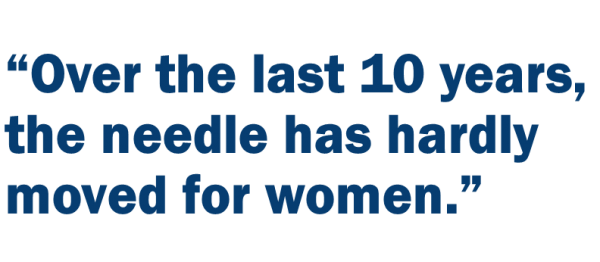
Over the last 10 years, the needle has hardly moved for women.

Here we are, and still just 6% of Fortune 500 CEOs are women, 14% of engineers are women, and just 36% of women are entrepreneurs.

We need to change this – today -- and we can’t rely on our schools alone. Here’s why.

First, girls have tremendous capabilities that have gone ignored.  It turns out that even in college, young girls excel in entrepreneurship. In our study, just 18% of college women participated in business competitions, but they overwhelmingly ranked at the top: a whopping 60% of the winning teams had a woman on the founding team and 40% had a female CEO. And they took home the bulk of the prize money - $90,000 of $180,000.

Yet, without early exposure, girls opt-out of these economic opportunities. Even dads understand this: “This is business conditioning my daughter needs; it starts now,” said Dr. Steve Allard, the father of one Girls with Impact member.

Second, early lack of confidence holds girls back. Research by Proctor & Gamble highlights the particular fears of failure that girls face in high school. Those fears – like the pressure to please others or a sense that society will reject them if they fail -  prevent potential entrepreneurs or CEOs from emerging into the marketplace with their unique products and services, ultimately creating a drag on our economic productivity as a nation.

Confidence, we’ve heard, comes from execution. Early results from Girls With Impact finds that, after the 12-week “mini-MBA program, 4 out of 5 parents said they saw a difference in the confidence in their daughters. And girls themselves showed a 140% improvement in their confidence in leading teams and overwhelmingly said they are benefitting with college prep, business and financial skills, and handling rejection.

“I don’t know how to explain it, but I feel powerful,” is how Greenwich High student Jody Bell, 16, described her experience. (watch what girls are building)

The time is now. From technology that allows the delivery of these programs affordably to the pent-up desire of men and women to enable and empower the next generation, it’s never been a better time.

These programs can address the “disconnect” with extra-curricular activities, says Harvard entrepreneurship professor Lynda Applegate, between what students are doing versus what “they could be doing to build their futures.”

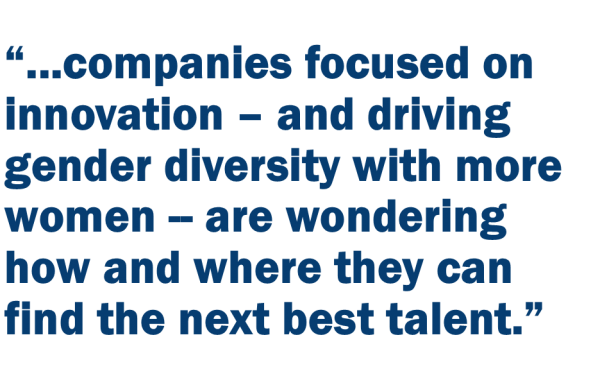
Plus, companies focused on innovation – and driving gender diversity with more women -- are wondering how and where they can find the next best talent.

There is just no question that our daughters are the answer to this and more. They have the capability to lead from the top – as CEOs and entrepreneurs. We just need to give them the tools.

_________________________________________

Jennifer Openshaw is CEO of Girls With Impact (www.girlswithimpact.com), the only entrepreneur and leadership program created just for girls.  @jopenshaw  @girlswithimpact 

Applications are now being accepted for the Girls with Impact six week Summer Program.  More information here; application form here


https://youtu.be/WKGAat6uV6s

Marijuana, Cellphones May Increase Pedestrian Fatalities, Federal Report Suggests; Fewer Deaths in CT as 23 States See Increase

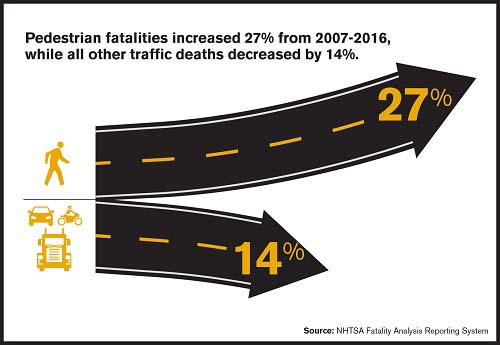
Connecticut is one of 20 states that saw a decline in the number of pedestrian deaths in the first half of 2017, as compared with the first half of the previous year.  The trend nationally, however, is in the opposite direction, as 23 states saw pedestrian deaths increase.  Seven states were virtually unchanged.  And the trend in recent years has also been a rising death toll. The number of pedestrian fatalities increased 27 percent from 2007 to 2016, while at the same time, all other traffic deaths decreased by 14 percent. A new national study raises the possibility of a number of factors for the increase – an increase in the number of cars on the road, the increasing use of cell phones, and the use of marijuana, which has been legalized for recreational use in some states, including neighboring Massachusetts. The report suggests that it "provides an early look at potential traffic safety implications of increased access to recreational marijuana for drivers and pedestrians."

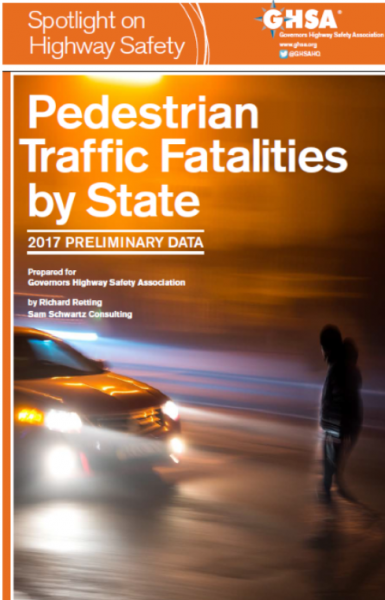
The Governors Highway Safety Administration (GHSA) released a 38-page study this week estimating that just under 6,000 pedestrians lost their lives last year, essentially the same death toll as 2016. The projected total in both years represent the highest levels seen since 1990, Governing magazine reported.  The number of states with pedestrian fatality rates at or above 2.0 per 100,000 population has more than doubled, from seven in 2014 to 15 in 2016. From 2015 to 2016, pedestrian fatalities in the nation’s ten largest cities increased 28 percent (153 additional fatalities), according to the GHSA report.

The number of miles traveled by vehicles increased nationally by 2.8 percent between 2015 and 2016 then rose another 1.2 percent the first half of last year, according to Federal Highway Administration data  The GHSA report noted that nearly 6,000 pedestrians died in motor vehicle crashes in 2016 and 2017, coming after a spike in the number of pedestrian deaths in 2015. "It has been more than 25 years since the U.S. experienced this level of pedestrian fatalities. Because both 2015 and 2016 saw large increases in pedestrian fatalities, the continuation of pedestrian fatalities at virtually the same pace in 2017 raises continued concerns about the nation’s alarming pedestrian death toll," the report stated.

“We’ve plateaued at a very bad place,” Richard Retting, who authored the report, told Governing. “This should not be a new normal.”

While pedestrian deaths have increased over the past decade, other types of traffic fatalities declined. Pedestrians accounted for 16 percent of all motor-vehicle related deaths in 2016, up from 11 percent in 2007. Federal data suggests nighttime collisions are a major problem -- three quarters of fatal crashes occurred after dark.

In Connecticut, there were 31 pedestrian fatalities in the first half of 2016; 20 in the first half of 2017, a decrease of 35 percent. Connecticut was one of 11 states, 2014-2016, where 20 percent or more of the pedestrian deaths were among people age 70 or older.  Connecticut's pedestrian fatality rate in 2016 was 1.73 per 100,000 population, which ranked 20th in the U.S.  In the first half of 2017, the state ranked 31st.

Retting told Governing that he suspects cellphone use by drivers and pedestrians could also be a culprit. The GHSA report stated that "Without stating a direct correlation or claiming a definitive link, more recent factors contributing to the increase in pedestrian fatalities might include the growing number of state and local governments that have decriminalized recreational use of marijuana (which can impair judgment and reaction time for all road users), and the increasing use of smart phones (which can be a significant source of distraction for both drivers and pedestrians).

The total number of multimedia messages sent has more than tripled since 2010.  The report also suggests a possible link with marijuana use.  According to the report, the seven states (Alaska, Colorado, Maine, Massachusetts, Nevada, Oregon, Washington) and  DC that legalized recreational use of marijuana between 2012 and 2016 reported a collective 16.4 percent increase in pedestrian fatalities for the first six months of 2017 versus the first six months of 2016, whereas all other states reported a collective 5.8 percent decrease in pedestrian fatalities.
One example cited is Washington state, where marijuana was legalized in late 2012 and the first dispensaries opened in mid-2014.  According to data from the Traffic Safety Commission, Governing reported, Washington state saw an increase in 2015 and 2016 in fatal crashes where THC, the primary psychoactive chemical in marijuana, was present in blood tests of either the pedestrian or driver.

It was noted, however, that the totals, while higher, still remain relatively small. THC levels can be detected days or even weeks after marijuana use, and Washington state’s data also indicates that between 70 and 80 percent of drivers found to have THC also tested positive for alcohol or other drugs, according to that report.

The federal report also indicates that Connecticut DOT recently completed a statewide overhaul to replace old signage, including signs for pedestrian safety. "These are new, bright signs that are up to code," the report explained.  "The Highway Safety Office also launched an outreach and advertising campaign titled 'Watch for Me CT' which focuses primarily on pedestrian safety but also includes bicyclists."  Law enforcement training for this issue is currently being developed, the report said.

Nationally, there were 4,457 pedestrian fatalities in 2011 and 5,987 in 2016.  The data for the first half of 2017 is considered preliminary, and may rise higher as some state records are updated with additional data, the report indicated.

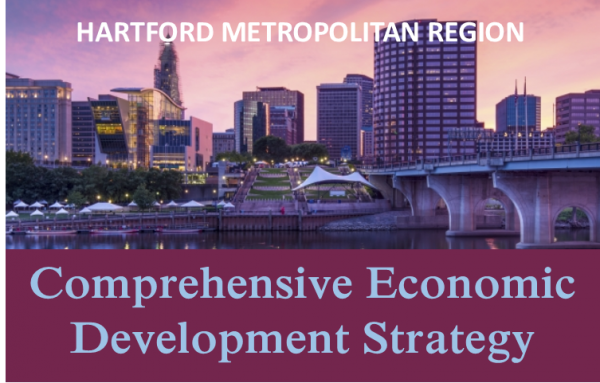
Hartford Region Coalition Embarks on Development of Economic Strategy

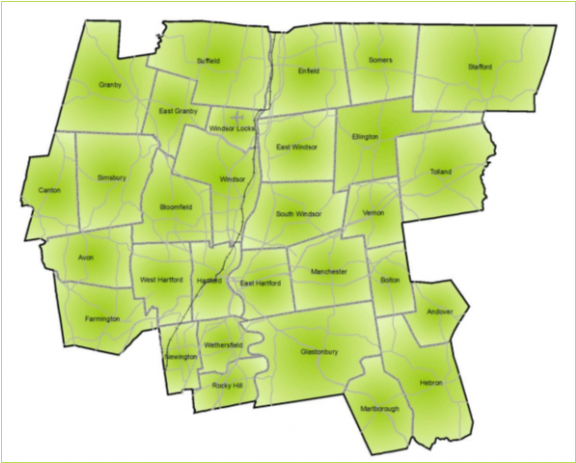
A coalition of prominent business, transportation and community development organizations in the Hartford Metropolitan Region has begun the process of taking a fresh look at its position in the global economy, with an eye toward taking advantage of economic opportunity. In announcing the initiative, the organizations noted that the region and the state have struggled to recover from the 2008 recession and that global, national, and local trends are reshaping the region’s economy. The state and many of the region’s 38 municipalities face increasingly difficult fiscal situations that hamper their ability to pursue projects that will lead to growth, officials said.

Recognizing that these trends, if left unaddressed, can dramatically impact the region, the organizations – the Capitol Region Council of Governments (CRCOG), Hartford Foundation for Public Giving (HFPG) and MetroHartford Alliance - will be working as an advisory committee to develop a new Comprehensive Economic Development Strategy (CEDS) for the Hartford Metropolitan Region. The most recent strategy was developed in 2012, and a previous effort took place in 2006.

“This strategy will take a hard look at the region and identify and prioritize the most promising opportunities for creating lasting economic growth. This region is a leader in insurance, finance, and advanced manufacturing; we need to build on these strengths to encourage the kind of growth that will lead to lasting fiscal stability,” said Jim Scannell, Senior Vice President, Administrative Services, at Travelers and co-chair of the CEDS Advisory Committee.

The effort gets underway with new leadership at the helm at a number of the organizations, which may impact the perspective along the way, if not the final results.  Led by the CRCOG, and longtime Executive Director Lyle Wray, the initiative is in partnership with the Hartford Foundation, where President Jay Williams, a former Assistant Secretary of Commerce for Economic Development and mayor of Youngstown, OH relocated to the region last year, and the MetroHartford Alliance, which hired David Griggs, mostly recently leading economic development efforts in Minneapolis-St.Paul as its new President and CEO.  Williams joins Scannell as co-chair of the CEDS Advisory Committee.

The consulting firm of Fourth Economy Consulting has been hired to help the region complete a situational assessment and develop “game changer” initiatives to serve as the core of a new economic development strategy. Fourth Economy, based in Pittsburgh, recently worked with the 100 Resilient Cities initiative to help cities around the world become more resilient to economic changes.

The process will be led by an advisory committee comprised of representatives of businesses, governments, educational institutions and non-profits throughout the region. A smaller working group, comprised of partner organizations like the New Britain Chamber of Commerce, will work closely with the consulting team and the advisory committee to develop a regional vision and turn it into an actionable plan.

Four primary tasks have been identified for the initiative:

  • Goal-Setting: Build consensus around the need for accelerating inclusive/equitable economic growth; that is raising incomes across the income distribution with particular attention to opportunities for engaging those who have often been left behind.
  • Situational Analysis: Do a clear-eyed assessment of our situation: who, what, where to identify opportunities that we should be pursuing as a metropolitan region (i.e., SWOT with an emphasis on context and opportunities).
  • Strategic Planning: Formulate a limited number of “game changer” strategies that will move the trajectory of inclusive economic growth in the right direction.
  • Capacity-Building: Identify organizational forms and collaborations that we will need to implement and sustain the strategies over time.

During this process the Advisory Committee will also identify potential partner organizations and set up an organizational structure to implement the initiatives.  A final strategy report is due next winter.  CRCOG has set up a website that already includes key resources, and will be updated as the work proceeds during the year.

“There is only one way our region will achieve equitable and sustainable economic growth.  We must eschew the past squabbles and divisions that have kept us mired in anemic progress,” said Jay Williams, president of the Hartford Foundation and co-chair of the CEDS Advisory Committee.  “If we commit to a bold, collaborative, and pragmatic approach, we can develop a roadmap to capitalize on the enormous talent and multiple assets our region possesses.  I’ve seen the success of this approach in other parts of the country and there is absolutely no reason it can’t occur here, unless we lack the collective will to make it happen.”

Similar efforts occur throughout the state led by various economic development regions. The WestCOG Region’s first Comprehensive Economic Development Strategy (CEDS) was developed throughout 2017.  WestCOG includes 18 towns in the Stamford - Norwalk - Danbury region of the state.  Public comment on the draft plan was solicited last fall.

The state’s South Central Connecticut region, centered around New Haven, undertook a similar effort in 2013, which has been updated annually. The Strategic Planning Committee and sector subcommittees have been established for 2018, and are currently gathering data and input from community stakeholders, according to the website for that region’s economic strategy planning initiative. It is led by Economic Development Corporation of New Haven,  a private, non-profit organization, dedicated to business and economic development within the city of New Haven and REX Development, which was formed as the economic development entity for the fifteen towns served by the South Central Regional Council of Governments (SCRCOG).

Of the Hartford region’s CEDS initiative, East Hartford Mayor Marcia Leclerc, the Chair of the CRCOG Policy Board said “Our metropolitan region needs to competitively position itself for the future in relation to other regions in the country, as well as globally. To do that we need to take a hard look at our current situation and our opportunities.”


CT Saves Week Focuses on Individual Finances (Not State Finances)

When the Legislative Office Building hosts a Financial Education Expo on Wednesday as part of Connecticut Saves Week, there may be more than one passerby suggesting that legislators pay particular attention, given that the state budget has been perpetually out-of-balance in recent years. The Expo, from 10 a.m. to 1 p.m., is open to the public.  Connecticut Saves Week, which runs through March 3, is part of America Saves Week, which began in 2007.

In addition to the expo at the State Capitol complex, there are three financial action workshops this week at American Job Centers around the state, with a focus on setting financial goals, reducing expenses and improving credit. They are being held from 9 to 11 a.m. on Tuesday in Hamden, 1 to 3 p.m. on Tuesday in Bridgeport and 9 to 11 a.m. on Thursday in Hartford.

UConn Extension will also be holding a Beyond Paycheck to Paycheck workshop series at its New Haven County Extension Center from 6 to 7:30 p.m. on March 5 and March 12 (The first of three sessions was held on Feb. 26).

“These workshops are designed to help individuals and their families take charge of their educational and career goals by providing budgetary guidance that will lead to future success,” said state Labor Commissioner Scott D. Jackson. “Whether the plan is to purchase tuition and books, buy a car to get to work, or start a savings plan, the end goal is improving economic security and employment opportunities for our residents.”

According to a May 2016 report from the Federal Reserve, 46 percent of adults surveyed said they could not cover an emergency expense costing $400.  Results from the 2015 FINRA Investor Education Foundation US Financial Capability Study indicate that among Connecticut residents, 48 percent do not have emergency funds, 52 percent have not set aside money for children’s college education, and 18 percent are spending more than their income. Financial literacy is offered in some Connecticut schools, but it is not required by the state for high school graduation.

Chris Lee, president of Connecticut JumpStart, a local nonprofit that works to get financial literacy into schools, told WNPR in December 2017 that a part of the state’s budget problem might be because lawmakers aren't very financially literate, the news station reported.

"I've always said I think a lot of members of the House and Senate both need to take some financial literacy courses and get some background in it before they go in to do some budget talks just to understand how all this stuff works," Lee told WNPR. "They don't understand financial literacy and they don't understand why it's important."

A financial literacy survey of high school and college students in Fairfield and New Haven counties and surrounding areas conducted last year showed 29 percent of local young adults do not have checking accounts or regularly use only cash, highlighting the need for expanded financial literacy education.  The survey was conducted by Stamford-based Patriot Bank.

An online “pledge” is available for interested individuals that will trigger periodic information, advice, tips, and reminders sent by email or text message, designed “to help you reach your savings goal, ” according to the CT Saves website.

The Connecticut Saves campaign encourages residents to assess their savings and save automatically to achieve financial goals. It is coordinated by UConn Extension and partners that include the Connecticut Department of Banking; the Connecticut Department of Labor; Connecticut State Library; Hartford Job Corps Academy; People’s United Bank; Human Resources Agency of New Britain, Inc.; Connecticut Association for Human Services; the Better Business Bureau Servicing Connecticut; Chelsea Groton Bank; and Community Renewal Team.

Pay Equity Remains Elusive in Connecticut, Data Shows

The average Connecticut worker is paid over $7,398 more per year than workers across the country. By many measures, Connecticut is a very rich state. Disparities, however, remain abundant. Analysis by New Haven-based DataHaven of  the most recent U.S. Census Bureau American Community Survey data indicate that working women in Connecticut are paid 69 cents for every dollar paid to working men, as the state’s wage gap stubbornly continues.  The Connecticut gap is slightly wider than the national average, which indicates that women are paid 71 cents for every dollar a man earns.

The wage gap appears within each education level, according to the DataHaven analysis. In fact, Connecticut women who have attended some college but didn't complete a degree earn less money than men who never started college, and women with graduate degrees on average earn less than men with only a bachelor's degree.

Only 54 percent of working women in Connecticut work full-time, compared with 67 percent of men. That may be a possible explanation for women's lower wages - fewer women work full-time than men. DataHaven notes that part-time workers tend to earn much less money than full-time workers, and there are many reasons why someone might not be working full-time. “But that doesn't explain everything,” the DataHaven summary notes.

The analysis points out that the wage gap isn't closed among full-time workers.  Women working full-time earn 81 cents on the full-time male dollar.  The gap among full-time workers is smaller, but still persistent.

Taking the analysis one level deeper, DataHaven found that even within the same occupation type, women are paid less, and the gap is worse in some occupations than others. There's an especially large pay gap within the high-salary management, business, and finance occupations.

Connecticut also has a racial divide.  White and Asian women are much closer to closing the wage gap than Black and Latina women. On average, white and Asian women in Connecticut actually make more money than Black and Latino men, the data indicate. When looking at just full-time workers, white and Asian women are closer to equal pay with men, but black and

Latina women are paid far less.

DataHaven's mission is to improve quality of life by collecting, interpreting and sharing public data for effective decision-making. The organization has served Greater New Haven and Connecticut as a nonprofit organization since 1992, working with many partners to develop reports, tools, and technical assistance programs that make information more useful to local communities.

(Infographics developed by DataHaven)

MassMutual Tax Break Raises Questions in MA; Enfield Looks for New Tenant 4 Years After CT Celebrated Renewed Commitment

When MassMutual moves up the road from Enfield to Springfield, adding 2,200 jobs in Massachusetts over the next four years, and adding a new $240 tower to the Boston cityscape that will employ about 500, the company will see $46 million in tax breaks that has some questioning the Bay State’s return on investment. In the lead business story in Sunday’s Boston Globe, the newspaper described the package provided to MassMutual, announced earlier this month, as “huge for a state that has historically been tight-fisted with corporate subsidies.”  It is “twice as generous as the next largest award ever handed out” under the specific state program utilized, and the largest ever state subsidy in Western Massachusetts, the Globe reported.

By comparison, the report indicated that the $120 million that helped lure GE from Fairfield to Boston was an investment in real estate to seal the deal, which should remain with the state should GE decide at some future date to depart.  MassMutual, however, need only create 2,000 jobs in Massachusetts during the next few years to receive the tax break.

The move comes just under four years after MassMutual stressed its commitment to Connecticut, receiving a 10-year, $13 million tax abatement from the State of Connecticut for renovations to their Enfield location, which employed between just over 1,500 people.   (On the day of the announcement in 2014, the company indicated 1,600; the Governor’s Office indicated 1,900 employees.)

For Enfield, the news isn’t great, but many of the people who live in town won’t have to relocate their families when their business address crosses the state line.

“Those people will still be part of the local economy,” Enfield town Manager Bryan Chodlowski told the Globe, adding that “maybe this facility represents a corporate headquarters for a new user.”

MassMutual has been the town’s largest taxpayer, and the largest major corporate presence since the departure a few years ago of Hallmark, which moved operations to the mid-west. Hallmark, which was the fifth largest taxpayer, decided to close its 1-million-square-foot Enfield distribution center in 2015 and eliminate 570 jobs, ending 63 years of operation in the town.  The Kansas City-based company said in announcing the closure that about 40 percent of Hallmark products had shipped out of Enfield.  Hallmark’s departure announcement came one year –almost to the day - after the MassMutual tax break and renovation announcement.

In 2014, MassMutual led the announcement of its Connecticut facility renovations by “Underscoring its commitment to the insurance and financial services sector in Connecticut,” as it “unveiled the more than $38 million renovation of its Bright Meadow campus, the primary location for the company’s retirement services and workplace insurance businesses.:”

Company Chairman, President and CEO, Roger Crandall said: “We now have a world-class facility to accommodate the excellent growth potential of this business, and we look forward to delivering an outstanding service experience for our customers here for many years to come.”

Connecticut Governor Dan Malloy added: “Most importantly, MassMutual's long-term commitment to expand in Connecticut keeps 1,900 good paying jobs with good benefits here and will have a lasting impact on the state and local economies for years to come."

The tax abatement was to come through the Urban and Industrial Sites Reinvestment Tax Credit (URA) program. Administered by the Department of Economic and Community Development (DECD), the tax credit program allows for a dollar-for-dollar corporate tax credit for an investment up to a maximum of $100 million in a project, according to an announcement by the Governor’s Office in 2014.

MassMutual, founded in Springfield in 1851, plans to bring in employees now located not only in Enfield, but in North Carolina, New Jersey, Pennsylvania and Tennessee.  The company anticipate

s a workforce of 4,500 in Springfield, somewhat larger than the 3,150 currently at company offices in the city, the Globe reported. The company expects to retain offices in Amherst, Mass., New York City and Phoenix, AZ, which provide access to specific talent pools and business solutions, a company news release pointed out.

Company facilities in Springfield and Enfield were each about 60 percent occupied, a company spokesman indicated, explaining the logic behind the move. In total, MassMutual Plans to invest nearly $300 million into the Commonwealth and increase its workforce in the state by approximately 70 percent by the end of 2021, the company said earlier this month.

Was an expansion in Connecticut ever considered?  “It’s not clear,” the Globe reported, indicating that a spokesman for the Connecticut Department of Economic and Community development declined to comment on whether state officials had been involved in any negotiations with MassMutual this year.

MassMutual is ranked number 77 on the Fortune 500 list with $675 billion in assets under management.

PERSPECTIVE: Closing the Resume Gap To Keep Careers on Track and Benefit Businesses

by Emma Buth Pay equity has been a hot topic in recent national debates. We even observe gender pay discrepancies in the workforce right here in Connecticut.

There is a drive today not only to combat this problem, but many others. Pay equity, the wage gap, and what is coined ‘the motherhood penalty,’ are metrics frequenting our news more and more. We all want to ensure women receive equal treatment when finding a job and while working. However, there is another measurement yet to be termed and quantified that further documents workforce inequalities. Often it fails to come up on our radar, but it takes an economic toll on women, businesses, and the economy alike.    

Do males and females with comparable education and equal years of professional experience record salary differences? When one (often the female but possibly, or even increasingly, the male) has paused their career for caregiving, they suffer reduced pay for the remainder of their career or are sidelined entirely.

The Center for Work-Life Policy finds a woman’s earning power declines by 11 percent when having a gap in employment of less than a year.  This increases to 37 percent for those who have been out of the workforce for over three years (Helping Women Opt-in 2018). Similar to the effects of “the motherhood penalty”, smart women, with experience, are making much less relative to peers (male or female with equivalent degrees and years of experience) when starting their careers once again.

One firm, a social enterprise launched in Connecticut, Untapped Potential Inc., is working to remove barriers that keep those with a gap sidelined. It is estimated that Connecticut women are paid just 83 cents for every dollar a man makes, women of color experience an even greater disparity in pay (CWEALF 2015). It’s projected that a woman cannot expect to earn the same as a man for the same job within our state until the year 2061! Since these figures fail to include the variation in income of equivalently educated and experienced workers underemployed (or un-engaged), Founder Candace Freedenberg contemplates whether the true pay equity is being captured.

While pay equity details that a woman should be paid the same as a man when doing equal amount of work in the same job, the gender wage gap differs. It describes the measured statistical difference in income between men and women. In Connecticut, the wage gap results in full time working women losing collectively $15 billion (Connecticut Women and the Wage Gap 2017).

Note the use of the qualifier ‘full time working women’. The Center for Talent Innovation highlights that 30 percent of working mothers choose to opt-out of full employment to manage work and family. During the opt-out years and beyond women experience a pay gap within the pay gap down the line. This overall gap may be tied to the employers relying on the historical salary question, and exclude those who have taken a break from their careers.

It is critical to observe that not all of those investing in higher education are taking part in the workforce. A Vanderbilt study concludes that the, “full-time employment rate for MBA moms who earned bachelor’s degrees from a tier-one institution is 35 percent” (Wolf 2013). Loss of 65 percent of educated professional women from a subset of higher universities has a measurable impact to an economy that critically relies on innovation.

Neither the wage gap nor the motherhood penalty take into account the many who have paused their careers to raise our nation’s next generation. Opt-outers or those who have left their job, find difficult barriers to overcome in order to get back in the workforce. Since 2000, 25- to 29-year-old women having a bachelor’s degree or higher college degree outnumber those attained by their male counterparts by ten percent (The Condition of Education 2017).

Educated and experienced women re-joining the workforce often face difficulties due to a lack of connections and bias when looking for jobs. Roughly 80 percent of jobs come through networking, and once women fall out of the know-to circle, it is much harder to get back on the career path (Adler 2016). Current job board systems sift out not only those with a gap but those missing key terms that rely on recent work engagement. These factors along with the fact that the prevailing requirements of industrial-age workplace modes in the internet-age largely keep mothers from seeking employment during their caregiving years.

That is where Untapped Potential (UP) comes in. Based in Hartford, the Benefit Corporation offers a programmatic approach to remove the barriers that keep educated experience professionals from engaging in our nation’s economic engine.  By creating a network of support, a skills portal to ramp up with latest tools and short courses and crucial mid-career engagements (Flex-returns) with forward-thinking companies, UP’s three prong solution tactically addresses the barriers of lack of contacts, skill currency and confidence.

Why would women who have opted out be so crucial to the work environment?

Freedenberg explains that businesses and our GDP ultimately struggle when these smart educated women are left out of the economy. As the Hamilton Project relates, “[B]arriers to participation by women also act as brakes on the national economy, stifling the economy’s ability to grow.” The lives and fortunes of women in the workplace affect us all. Untapped Potential curates talent not currently available in the marketplace, and businesses benefit from that high caliber talent that is eager to engage and grow the economy.

Ted Pizzo, SVP of Lockton companies, stressed how vital UP’s services are to the workforce by contending that, “Untapped Potential’s approach is almost like a surgical strike, they create a returnship for business that fuses talent to business needs.”

UP will host upcoming educational seminar titled the “Economic Value of Returning Women to YOUR Workforce Pipeline”  where businesses can meet our talent in a speed interview format. The third event of this kind is planned for March 9 in Hartford. The event is sponsored by Travelers and Quinnipiac Corporate Training. The event works to overcome the barrier that prevents hiring managers from ever seeing the caliber of talent that would inevitably be missed in the jobs board/keyword search scenario.

By pricing the Flex-returns at a competitive rate UP hopes to reduce the friction for companies to open their workplace to a mid-career internship with a high potential candidate that is indeed missing the latest key terms from their resume. Companies can learn how they can host a Flex-Returner at www.upotential.org.  Doing so works to return women to the company’s pipeline for senior roles, impacting gender equity over one’s career.

_______________________

Emma Buth, an aspiring journalist, is a senior at Avon High School interning for Untapped Potential as part of the  “Achieve" Avon High School Internship Program.

Transportation Officials Announce "Stunning" Findings in I-95 Congestion Study

“For years, the accepted thinking was that the only way to relieve congestion on I-95 was to add a lane in each direction from border to border. After a detailed study of alternatives, we have determined that strategic, directional widening on I-95 between New Haven and New York can significantly reduce congestion and can be built within existing right of way.” Those comments, from Connecticut Department of Transportation (CTDOT) Commissioner James P. Redeker , accompanied the release of a study on the impact of widening and improving both the western and eastern portions of Interstate 95 in Connecticut, and which also outlined “the consequences of failing to act.” The report indicated that “limited,  directional and strategic widening yields major benefits.”

Redeker added that “Similar strategic, localized investments can also reduce congestion between New Haven and Rhode Island. These findings indicate that we can achieve congestion relief through strategic and much less costly investments far sooner than previously thought. In addition, the return on these investments would far exceed the cost of the projects.”

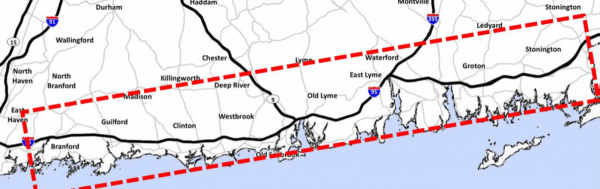
Currently, peak morning and evening congestion on the highway accounts for 54 million hours of delay and costs $1.2 billion in lost time annually. Key areas studied were Fairfield to Bridgeport Northbound (6.3 miles), Stamford to New York Southbound (9.3 miles) and Stamford to Fairfield Northbound (11.1 miles).  The report noted that safety, as well as travel time, was a key element in the recommendations.  For example, from Branford to the Rhode Island border, it was indicated that there were 3,380 crashes during 2014-2016, including 997 injuries and 23 fatalities.

The I-95 widening projects were included in the $4.3 billion in projects canceled or suspended by the CTDOT last month because of what the Governor’s office described as “long-term failure to adequately fund the Special Transportation Fund.”  The Governor’s revenue proposal – which includes a seven-cent increase in the gas tax over four years and the implementation of electronic tolling – would allow for these investments to go forward, the Office said.

“CTDOT is excited to announce that after a detailed study of options for relieving congestion on I-95, we are able to report a stunning set of findings,” Commissioner Redeker said in releasing the report.

Among other findings, the report notes that just one of the projects proposed – adding one northbound lane between exits 19 and 28 – would reduce travel time from the New York border to Bridgeport from 63 minutes – if no improvements are made – to 41 minutes during weekday afternoon peak times. .Short-term, mid-range and long-range options were presented for I-95, including exists 54 to 55, 88 to 90, 80-74 80-82A, and the I-95/Route 32 interchange.  Long-range improvements from exit 54 to 69 “requires further study” the report said.  It also called for “strategic improvement” Northbound from Exit 19 to 28 to “remove bottleneck.”

In announcing the report’s findings, Governor Malloy warned that without legislative action this session to shore up the Special Transportation Fund (STF), this type of investment will be impossible.

“These improvements shouldn’t be seen as optional,” Malloy said. “But without new revenue to stabilize the Special Transportation Fund, critical projects like the I-95 widening will not be possible. I put forward a reasonable proposal last month, and I look forward to working with the legislature this year to find real, long-term transportation solutions.”

“Connecticut deserves this rational, sensible and cost-effective investment to support our economic growth,” Redeker added. The DOT first announced a study of the I-95 corridor in October 2016.