Dangers of Distracted Driving Focus of New Documentary Produced in CT
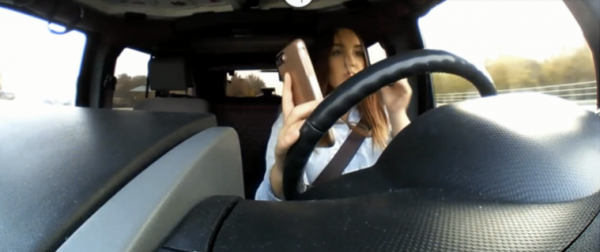
/A decade ago, local producer/director/writer Jennifer Boyd’s documentary Teens Behind the Wheel brought an EMMY Award and generated impactful airing on Connecticut Public Television and PBS, along with much discussion on news programs and increased awareness at driving schools across the country. Well, it’s a decade later, and technology has provided the foundation for a sequel that is, in many ways, more troubling than the original.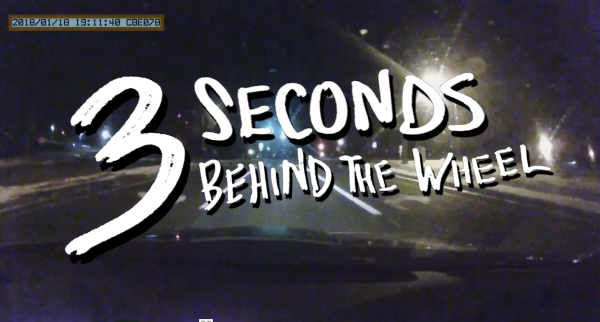 3 Seconds Behind the Wheel, which debuts on Connecticut Public on Thursday evening, is a new documentary and podcast series that follows the lives of eight drivers over six months using in-car cameras and tracking technology to expose the often-hidden behavior of distracted drivers.
The documentary is scheduled for national release in this fall. It has been described as a “window into our own lives,” by its realistic depiction of the pervasiveness – and dangers - of districted driving.
Why three seconds? That is the amount of time it takes to send a text message, choose a song, or engage in other activities that can impact safe driving behavior. That is also how long it takes to drive across a football field.
Producers gathered weekly data from subjects in Florida and Connecticut to get an honest picture of the many activities drawing drivers’ attention off the task of driving. Experts from MIT, Cambridge Mobile Telematics, Safety Track, and the University of Connecticut provided monitoring equipment, data storage, and expert analysis. The production took well over a year to complete.
 The film also gives audiences a firsthand look at emerging technologies that could one day offer solutions to rising crash statistics. The documentary follows researchers at Google who are using driving simulators to develop next-generation in-car infotainment systems, and explores how one Swedish company is experimenting with technology that could one day allow cars to understand human feelings and make driving decisions based on individual needs.
“While many of these drivers’ habits will shock you, this is a very honest and intimate look at human nature,” said Jennifer Boyd, producer, director and writer of 3 Seconds Behind the Wheel. “And it provides a little insight into some truths about all of us.”
State DOT Commissioner James Redeker noted that distracted driving is a major contributor to crashes and deaths on highways. Officials also noted that “it only takes three seconds to take a life or to end your own.”
Over the past 20 years, Boyd has produced public television documentaries on topics ranging from climate change to gun control, and she's won 9 Emmy Awards for that work. Assisting her on the latest project were Catherine Sager, Senior Producer/Corporate Liaison; Cecilia Prestamo, Video Editor/Producer and Script Supervisor; Paul Smith, Director of Photography; and Tom Nelson, Editor. Nancy Bauer, Connecticut Public’s Vice President Sales/Corporate Support, is credited a being a driving force in the decision to research and produce the documentary.
3 Seconds Behind the Wheel premieres Thursday, June 21 at 8 p.m. on Connecticut Public Television and will rebroadcast Tuesday, July 17 at 10 p.m. and Saturday, September 15 at 7 p.m. More information about 3 Seconds Behind the Wheel can be found at 3seconds.org. Funding for 3 Seconds Behind the Wheel is made possible by Presenting Sponsor Travelers with additional support from General Motors and the Connecticut Department of Transportation.
 The U.S. DOT invests in the future of transportation through its University Transportation Centers (UTC) Program, which awards and administers grants to consortia of colleges and universities across the United States. In the Northeast, other consortia with the same policy focus include a 9-institution UTC led by Rutgers, the State University of New Jersey and a 6-institution group led by Pennsylvania State University.
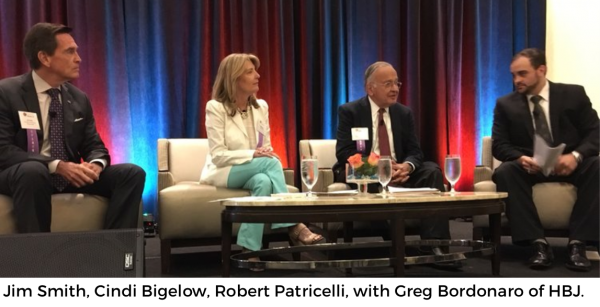
 Smith and Robert Patricelli, former CEO & Founder of Women's Health USA, who co-chaired the panel, were featured along with Commission member Cindi Bigelow, CEO of Bigelow Tea, at an event coordinated by the Hartford Business Journal last week. It was one of nearly 100 forums, discussions and one-on-one meetings that the co-chairs and other commission members have had since their findings and recommendations were issued.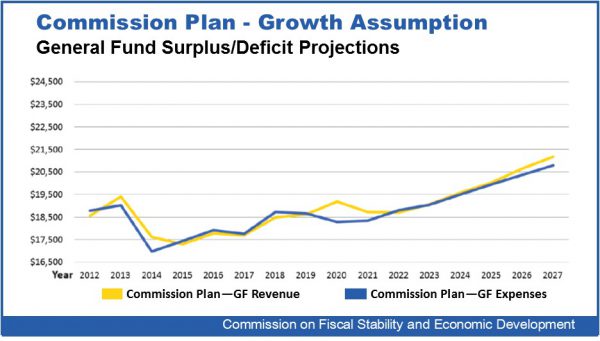
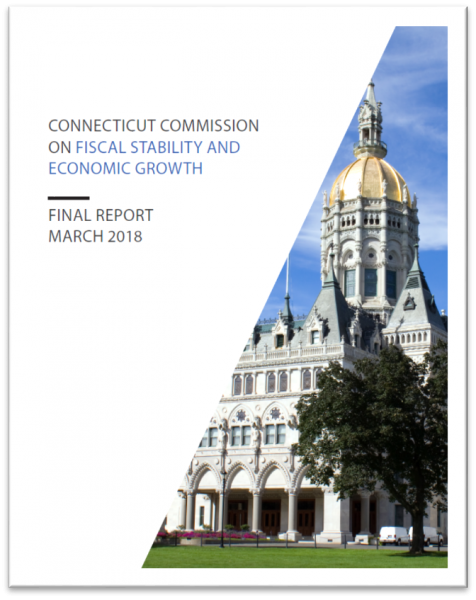 The co-chairs say it is understandable that more was not done with the Commission’s recommendations during the short 2018 legislative session, largely because an election was just around the corner. Instead, the legislature opted to have the Office of Policy and Management (OPM) coordinate two studies, soon to get underway. One would look at the Commission’s recommendations that involve “rebalancing of state taxes to better stimulate economic growth without raising net new taxes”; the other would conduct a study of the proposal for reform of the Teachers' Retirement System.
 e the overall economic health of each town, their business climates, and their relative affordability. Next, we came up with a score for each town—a city’s highest possible score was 5. We also considered qualitative data like access to small business resources, overall quality of life, and economic and commercial development initiatives in each town to come up with a more holistic definition of the “best.”
 Katherine Houlihan was elected as president. She is a partner in Insurance Provider Group, a Wethersfield insurance brokerage serving clients in manufacturing and other industries, serving as Chief Talent Officer.
 The election is yet another milestone for Mayer in just the past six months. The great granddaughter of Bead Industries, Inc. founder, W. Calvin Bryant, she was promoted to CEO of the family-owned company at the start of this year. In addition to her duties as CEO and as an officer on the NHMA Board, she is a board member of the University of New Haven’s Entrepreneurship and Innovation Program.


 The survey found that 38 percent of students whose grades were mostly A’s texted or e-mailed while driving a car on at least one occasion in the 30 days prior to the survey. The percentage was slightly less among students with lower grades: 31% of students with mostly B’s, 30% of students with mostly C’s and 23% of students with mostly D’s and F’s.

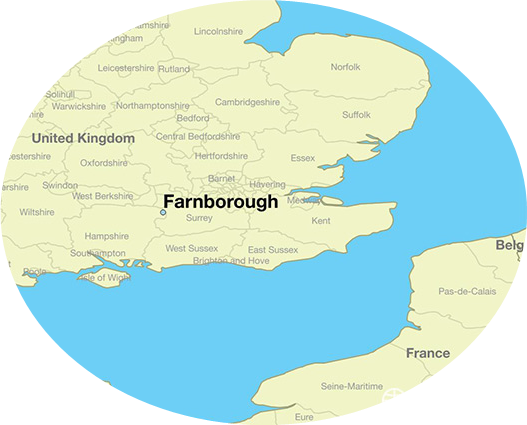 Satisfied Connecticut companies in 2016 include Windsor-based
 The ranking does not capture the full extent of deprivations or hardships affecting children. Instead, it focuses on some key rights, or “guarantees” of childhood: life, healthy growth and development, education and protection from harm. If a child experiences all of these, his/her childhood is considered to be “intact.”
 The report notes that “While children are only 20 percent of the population, they are 100 percent of America’s future.” Save the Children’s ranking reveals children in New Jersey, Massachusetts, Vermont and New Hampshire are far more likely to experience safe, secure and healthy childhoods than children in Louisiana, Mississippi, Oklahoma and New Mexico.
 Although written testimony still will be available on the legislature’s website, the give-and-take between those testifying and committee members will be known only to the people in the hearing room. That’s unfortunate because the commentary provided by lawmakers is often used to ascertain legislative intent. Moreover, not everyone who testifies submits written copies.