CT's BIO Industry Has Strong Presence at Record-Setting International Convention

Connecticut was one of 18 states to have a strong presence at the BIO International Convention, held this week in Boston. It was a record-setting year, as 18,289 U.S. and international attendees – the most in the last 10 years – participated in what was described as “the epicenter of the biotechnology industry” for four days of programming, 46, 916 partnering meetings (setting a new Guinness World Record for “The Largest Business Partnering Event”) and entertainment. More than a dozen Connecticut companies had a presence in the state’s pavilion at the event:  Jackson Laboratory, Sema4, Genotech Matrix, AlvaHealth, RallyBio, Cantor Colburn, Pfizer, e-Path Learning, Thetis Pharmaceuticals, XViVO, Clarity Quest, Lucerna, Wyant Simboli, Boehringer Ingelheim, Aeromics, LambdaVision, Pattern Genomics.

Also participating were Southern Connecticut State University, Yale University and the University of Connecticut, as well as the City of New Haven, and the town of Branford, along with BIO CT, Connecticut Innovations and the Connecticut Department of Economic and Community Development.  Additional companies from the state were on-hand, although not as part of the state’s coordinated effort.

All told, there were more than 1,000 companies from dozens of nations represented at the 25th anniversary conference.  The organizations represented at the BIO International Convention include the world’s leading biotech companies, top 25 pharma companies, top 20 CROs and CMOs, and more than 300 academic institutions including the major research labs and government agencies. Organizers indicate that one out of three attendees based outside of the U.S. and nearly 40 percent are C-level executives at their respective companies.

"If you are or want to be any type of a life science hub, you need to be at this convention," Dawn Hocevar, president and CEO of BioCT, recently told New Haven BIZ. "Connecticut participated in the last two conventions, however, this is the largest footprint we've ever had." BioCT is the bioscience industry voice for the state of Connecticut.  BioCT is dedicated to growing the vibrant bioscience ecosystem in Connecticut by supporting innovation, collaboration, networking, education, talent engagement and advocacy. 

This year’s educational programming was more robust and diverse than ever before, according to organizers, with more than 180 educational sessions, including brand new tracks on genome editing, opioids and corporate best practices.

Among the presenters, panelists, and featured speakers was Scott Gottlieb, Commissioner of Food and Drugs at the U.S. Food and drug Association, a graduate of Wesleyan University in Middletown.

https://youtu.be/rT-HCSKcsqU


Foodshare Ups Commitment to Healthier Young People, Communities

Foodshare has signed a three-year commitment with the Partnership for a Healthier America (PHA),  a national nonpartisan nonprofit led by some of the most respected health and childhood obesity experts in the country, along with health advocates such as former First Lady Michelle Obama and U.S. Senators Bill Frist and Cory Booker. Earlier this month, Foodshare was recognized as a new healthy Food Assistant Partner at the 2018 PHA Summit in Washington, DC. The program “elevates and accelerates the work of food banks and large-scale food pantries committed to addressing hunger and malnutrition,” according to PHA.   

At the organization’s annual Summit in 2018, “we were thrilled to welcome Foodshare as one of several new partners in this program.”  More than 15 million U.S. children live in “food insecure” households, according to PHA.

Dr. Katie Martin, the nonprofit’s Chief Strategy Officer, represented Foodshare at the Summit.  In a recent article that she co-authored, Martin pointed out “food pantries have significant potential to promote better nutrition for the communities they serve,” adding that “recent national data show that 63 percent of households who visit food pantries acquire food through the charitable food system on a regular basis to help with their monthly food budget.”

As part of the commitment, Foodshare has agreed to:

  • Use a nutrition stoplight system to rank the nutritional quality of food in our inventory;
  • Increase the amount of nutritious food and beverage distributed through our network;
  • Increase the demand for healthy food and multiply its impact with promotional materials.

“This is an exciting opportunity for all of us at Foodshare. More produce and healthier options: that’s the future of food banking,” said Jason Jakubowski, President and CEO of Foodshare.

Foodshare is the regional food bank serving Connecticut’s Hartford and Tolland counties, where 121,000 people struggle with hunger. As a PHA partner, Foodshare will increase supply and foster demand for healthier options in several ways, such as evaluating the nutritional quality of at least 50 percent of the food in its inventory, increasing the amount of nutritious food and beverages it distributes, and incentivizing the organizations it works with to select more nutritious foods.

Foodshare joins ten other partner food banks from across the country, as well as Feeding America, in this national partnership. Created in 2010 with the goal of ending the national epidemic of childhood obesity within a generation, PHA’s strategy rests on transforming the marketplace, so that the healthy choice becomes the easy choice for American families.

Communities, Innovators Recognized for Excellence in Main Street Awards

A hybrid business incubator that provides unique opportunities for collaboration between schools and business to increase college and career readiness while expanding downtown Wallingford business, and a Connecticut Trust for Historic Preservation website that is a point of entry for those seeking to spur redevelopment of Connecticut’s historic mill buildings are just two of this year’s Awards of Excellence winners recognized by the Connecticut Main Street Center (CMSC) at annual ceremonies held this year in Danbury. In total, seven initiatives receive the prestigious awards, including organizations and initiatives from Danbury, Hartford, New London, Wallingford, and Windsor, as well as the CT Trust for Historic Preservation and the State of Connecticut.
Winning entries also included collective efforts in bringing more people to Hartford through creative placemaking; a block-by-block initiative to create a positive perception of downtown New London by working with store owners to install LED lights inside storefront windows; a young professionals’ initiative to highlight the diverse culture in downtown Danbury through weekly food truck events; a multi-year deliberate and incremental effort to redevelop Windsor Center with residential and office use around transit; and the State of Connecticut’s coordinated approach to improve the economy and quality of life through investments in development around transit.

Individual awards were also presented to Andrea Pereira, Executive Director of Local Initiatives Support Corporation (LISC), and R. David Genovese, CEO of Baywater Properties in Darien.

CMSC’s mission is “to be the catalyst that ignites Connecticut’s Main Streets as the cornerstone of thriving communities.” CMSC is dedicated to community and economic development within the context of historic preservation, and is “committed to bringing Connecticut’s commercial districts back to life socially and economically.”

The Jack Shannahan Award for Public Service for 2018 goes to Andrea Pereira, a former Board Chair of Connecticut Main Street Center, who has been a partner in CMSC’s Come Home to Downtown program, providing financing through the Come Home to Downtown Loan Fund. Pereira, Executive Director of Local Initiatives Support Corporation (LISC), earned the recognition for her leadership in “guiding strategic investments aimed at creating tangible, sustainable improvements in our communities.”

She has led LISC for over 20 years, having previously served as the Director of Urban Revitalization & Investment at the State of CT Department of Economic & Community Development. She is an accomplished community development professional with expertise in community development finance, organizational development, nonprofit management, grant-making, public policy, and program development. LISC Connecticut provides financial and technical resources to over 60 local housing and community development organizations each year. LISC also offers predevelopment, acquisition, bridge and/or construction financing for affordable housing and other community development projects.

The 2018 CT Main Street Founder’s Award, presented by Eversource, is presented to R. David Genovese of Baywater Properties in Darien, founded in 2001. Genovese and his team have “committed themselves to transformational projects in Darien, remaining thoughtful, creative, flexible, innovative, and respectful of the community.”  For more than a decade, he has led numerous key developments in downtown Darien that “breathed new life into the area, revitalizing buildings and reinvigorating its residents.”

Genovese has led a multi-disciplinary team of architects, civil engineers, landscape architects, retail consultants and legal advisors in creating Your Downtown Darien. Otherwise known as the Corbin Development, Baywater assembled this portfolio of properties over the course of nearly 15 years, to be redeveloped to create a mixed-use center incorporating retail, offices, and luxury residences.

“This year’s winners represent a culture of inclusivity in ensuring that Main Street belongs to everyone,” said CMSC Associate Director Kimberley Parsons-Whitaker. “From enlivening our public spaces with ethnic cuisine and multi-cultural entertainment, to redeveloping formerly abandoned mills and blighted areas around bus and train stations with residential and commercial options for people of all background and incomes, our 2018 award recipients are leading their communities and our state in improving the quality of life and our economy.”  The 2018 Awards of Excellence went to:

▪  Great Placemaking in Hartford; including Know Good Market, Riverfront Recapture, One World Market at CTfastrak Station in Parkville, Hartford BID Bicycle Roadside Assistance Program, Pratt Street Patio, and Winterfest)  – Recipients: Breakfast Lunch & Dinner, Riverfront Recapture, International Hartford, Hartford BID, and iQuilt Partnership.

▪  Light Up New London – Recipient: New London Main Street. Partners: Dominion Foundation, National Main Street Center.

▪  Downtown Chow-Down, Danbury – Recipients: CityCenter Danbury, City of Danbury. Partners: Get Downtown Danbury, Greater Danbury Chapter of CT Young Professionals.

▪  HUBCAP Wallingford – Recipients: Wallingford Center, Inc., Town of Wallingford Board of Education, Wallingford Economic Development Commission.

▪ Mills: Making Places of Connecticut – Recipient: CT Trust for Historic Preservation. Partner: Connecticut State Historic Preservation Office.

▪ Coordinated Approach to Responsible Growth and Transit Oriented Development – Recipient: State of Connecticut.

▪ Setting the Stage for TOD in Windsor Center – Recipient: Town of Windsor. Partners: CIL Development, Lexington Partners, LLC.

The Town of Windsor was recognized for the redevelopment of the portion of Windsor Center lying just east of the railroad tracks in town, which previously contained a mix of obsolete industrial and municipal uses which no longer contributed to the vitality of the Center.  The turn-around, with an eye towards transit-oriented development, included development of Windsor Station, a 130-unit market-rate rental project on a 6.5 acre site adjoining the passenger rail station.

The $23 million development project included demolition of two former industrial buildings, environmental remediation and construction of two, four-story elevator buildings with parking and site amenities. The project includes 32 studio, 65 one-bedroom and 33 two-bedroom units and is targeted to an underserved rental market of young professionals 20 to 35 years of age and baby boomers.  Construction was completed a year ago, and 90 percent occupancy was achieved within five months.

Connecticut Adds High School Certificate of Global Engagement

Much has been said but less has been done to encourage Connecticut students to prepare for an ever more connected and interdependent world.  Until now.  The State Board of Education has voted to establish a Connecticut Certificate of Global Engagement, which high school students can earn by completing specific aspects of the curriculum, and aims to prepare “globally competent students who are college and career ready.”  The Certificate would be noted on high school transcripts. The Connecticut Certificate of Global Engagement was established, according to the curriculum overview, “to recognize public high school graduates who have successfully completed a global education curriculum and engaged in co-curricular activities and experiences that fostered the development of global competencies and global citizenship.”

“In today’s intricately interconnected world, informed citizens require an increasingly broader base of knowledge and perspective, because local communities, societies and economies are directly affected by events and trends that occur well beyond national borders,” the newly adopted curriculum guidelines point out.

The Certificate is based on the guidelines of the Connecticut Social Studies Frameworks and American Council on the Teaching of Foreign Languages (ACTFL) World Readiness Standards, and builds upon the recommendations of the Council of Chief State School Officers (CCSSO).  It supports student literacy as defined by the Common Core Standards and provides a pathway for 21st Century Skills.
Officials stress that the Certificate does not require additional resources in local school districts, “as all coursework would already be part of the curriculum. The Certificate, however, gives school districts an opportunity to evaluate the entire school curriculum through the lens of global knowledge.”

The mission of the Certificate program, officials explain, is to provide Connecticut students a “pathway to gain global knowledge and skills that will increase their competitiveness and ability to succeed in college and career and their participation as informed citizens.  In today’s global marketplace, it is in the long-term economic, social, and democratic interests of the United States, Connecticut, and local communities to encourage and facilitate international connections in the community, state and beyond.”

To be recognized for the Certificate, students will need to complete the following requirements:

  • coursework in world languages;
  • coursework with strong global implications and analysis;
  • extracurricular activities and experiences with global themes; and
  • a global service learning or action project.

The guidelines indicate that through coursework and co-curricular activities, globally competent students will demonstrate the following competencies:

  • investigate and express ideas about the world beyond their immediate environment;
  • recognize and articulate their own and others’ perspectives;
  • communicate ideas effectively with diverse audiences; and
  • translate ideas into appropriate actions to address a contemporary global issue.

Globally-Focused Coursework would require at least 7.0 credits or demonstration of mastery and Globally-focused Student Activities would require competency in global citizenship through active participation in “at least one or more co-curricular and other school-sponsored or endorsed activities over at least 3 years of their high school experience with suggested involvement of a total of at least 15 hours.”
The guidelines for the Certificate of Global engagement were approved at the Board’s May 2 meeting and is now available for high schools throughout the state to implement.  A copy of the guidelines appears on the State Department of Education website alongside the state’s Social Studies Frameworks and Resources.

The curriculum plan was developed by a 24-member committee including Stephen Armstrong, the state’s Social Studies Consultant in the Department’s Academic Office, David Bosso, President of the Connecticut Council for the Social Studies, Robert Rader, Executive Director of the Connecticut Association of Boards of Education, high school teachers, superintendents, language specialists, college professors and representatives of the World Affairs Council of Connecticut.

PERSPECTIVE: Building a Foundation to Reduce Reliance on Social Welfare

by Martha Guidry According to Forbes, an individual on social welfare in Connecticut collects on average $25/day, which equals over $9,000 a year.  A 2013 Hartford Courant article stated that a mother with two children participating in seven major welfare programs (Temporary Assistance for Needy Families, Medicaid, food stamps, WIC housing assistance, utility assistance and free commodities) could receive a package of benefits worth $38,761 (untaxed $106/day), the fourth highest in the nation behind Washington, DC, Hawaii, and Massachusetts.

Social welfare is not taxed, while wages are. Using the Connecticut state tax calculator for 2017-18, a mother with two children in Connecticut would have to earn $48,500 ($23.32 per hour) for her family to be better off than they would be on welfare. That's more than double the current minimum wage of $10.10 and more than 14 percent higher the $42,494 starting wage of a teacher in Connecticut.  Even scarier, that mother would have to hold 2.3 full-time jobs at minimum wage to reach this salary. Bear in mind, this does not include the cost of daycare, wardrobe, transportation or other expenditures required to hold a job 40 hours per week. 

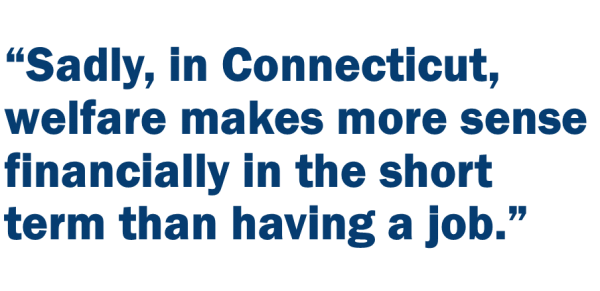
Sadly, in Connecticut, welfare makes more sense financially in the short term than having a job.  Unfortunately, this will likely hurt an individual in the long term as having a job is one of the many important steps to ultimately breaking the cycle of poverty.

How can we help stop this cycle of social welfare reliance?  Two potential solutions exist:  1) policy changes and 2) provide children with the opportunity to learn how to work to improve their chances regardless of whether they get a degree above high school. According to National Clearinghouse Data, in Hartford, only 2 out of every 10 graduates earn a degree above high school after 6 years.

According to Michael Tanner in his Hartford Courant article (August 2013), “if reducing welfare dependence and rewarding work is the goal, Connecticut legislators should consider ways to shrink the gap between the value of welfare and work by reducing current benefit levels and tightening eligibility requirements.”  He continues on to say that Congress should remove exemptions and narrow the definition of work to enhance welfare work requirements.

While policy changes would be ideal, at the Capital City Education Alliance, a Hartford-based nonprofit, we attack option two.  In our signature program, Let’s Paint!, we engage students thru hands on learning on color theory, design and early intervention workforce readiness skills as they learn commercial painting skills.
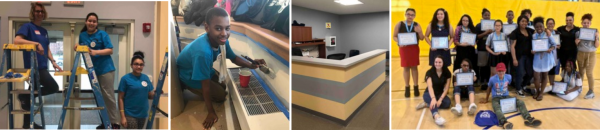
Since our start in May 2016, we’ve had 106 students work with the Let’s Paint! staff using over 376 gallons of paint and working over 7,390 total student hours. These students have transformed a variety of spaces including a 24-bay graffiti-covered garage by Route 84; the Southwest Boys & Girls Club career center and building exterior; hallways, the auditorium, and the office at Burns Latino (South End) and the lobby and several hallways at West Middle School (Asylum Hill).

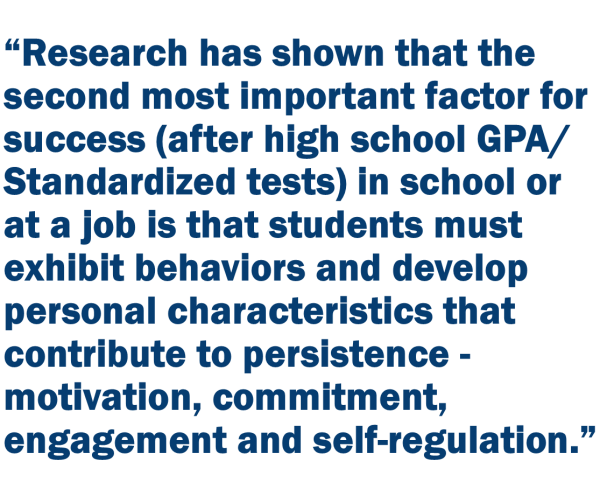
Research has shown that the second most important factor for success (after high school GPA/Standardized tests) in school or at a job is that students must exhibit behaviors and develop personal characteristics that contribute to persistence - namely motivation, commitment, engagement and self-regulation. Let's Paint! is designed to specifically focus in these areas of need that are not directly addressed in school curriculum.

CCEA believes that patterning behaviors right and providing positive/opportunistic feedback at the start helps teach the life and job success skills. To this end, students must complete an application and interview with our staff to be part of the “paint crew”. Each program day, students must formally greet a staff member with a "confident" handshake to practice this important skill. Students are also evaluated on their work skills such as teamwork, having a positive attitude, and being properly dressed for work. With regular, positive attendance, students also receive a small stipend to take their “job” seriously. And, just like in the real world, they are docked pay for being late!

Adult volunteers also contribute to workforce readiness.  On scheduled days, volunteers informally mentor the kids while painting side-by-side, thus providing an opportunity for the students to practice workforce soft skills - eye contact, greetings, shaking hands, and engaging in conversation – while the adults have lots of fun.

In Summer 2018, CCEA will launch its adjunct program “Broken 2 Beautiful” (B2B) where graduates of “Let’s Paint!” will have the opportunity to rejoin the staff for ongoing work experience, financial literacy and career engagement learning.  Painting will also play a role in B2B.  Students will refinish furniture and record crates with bold colors as well as do “pop up” exterior painting projects through the greater Hartford area.

  • The former will be part of a social enterprise to sell the goods allowing youth to learn about all the different careers that may be open to them in Hartford – sales, marketing, operations, etc. – to broader their views of jobs.
  • The latter will continue their involvement in community service to make their city a more beautiful place and feel the success of making a difference. In addition, students will learn about financial literacy and budgeting. One of the best ways to work oneself out of poverty is to actually understand that one can’t spend more than one earns!

We can’t change policy, but we can help change the skill sets of our students.  Consider volunteering, donating and attending our events to help us achieve success and, just possibly, reduce some of Connecticut’s 80+ social welfare programs.

_________________________________________

Martha Guidry is Executive Director of the Capital City Education Alliance, which lays the foundation for workforce readiness by inspiring and empowering pre-teen and teens in Greater Hartford through project and partnership that build character, skills and pathways to success. Individuals 18 years of age or older may sign up on the CCEA website to volunteer, as well as teenagers with an accompanying adult.  Corporate teams are also welcome to participate on Tuesday afternoons; contact Colleen@CCEAHartford.org for more details, and learn more at www.CCEAHartford.org  

Exhibit at Wadsworth Atheneum Shows Hartford Roots

Life and art come full circle this month at the Wadsworth Atheneum in Hartford, with the opening of an historic exhibition with an unmistakable hometown connection.  Frederic Edwin Church was a prominent American landscape painter in the 1800’s, born in Hartford, and a central figure in the Hudson River School of American landscape painters. His family wealth came from Church's father, Joseph Church, a silversmith and watchmaker in Hartford.  Joseph subsequently also became an official and a director of The Aetna Life Insurance Company. Joseph, in turn, was the son of Samuel Church, who founded the first paper mill in Lee, Massachusetts in the Berkshires, which allowed Frederic to pursue his interest in art from a very early age, according to the website that features his work.

At eighteen years of age, Church became the pupil of Thomas Cole in Catskill, New York after Daniel Wadsworth, a family neighbor and founder of the Wadsworth Atheneum, introduced the two. Now, the Wadsworth Atheneum Museum of Art will present “Frederic Church: A Painter’s Pilgrimage,” bringing together approximately 50 of the celebrated Hudson River School painter’s compositions of sacred terrain in the Middle East and the Mediterranean.

“This is a rare opportunity for our audience to explore a side of Church’s working process and fierce entrepreneurship beyond the usual experience of landscape paintings,” says Robert H. Schutz, Jr., Associate Curator of American Paintings and Sculpture Erin Monroe. “Church’s story started in Hartford, so it is particularly fitting for the Atheneum to feature this exploration of his pilgrimage as a way to reconnect the artist with his personal and professional origins.” The exhibition opens to the public at noon on June 2 and is on view through Aug. 26.

A leading painter of 19th-century America, Frederic Church was the most popular and financially successful painter in the United States during his lifetime. As a young artist Church’s first formal training was facilitated by Atheneum founder Daniel Wadsworth, who arranged for Church’s apprenticeship with painter Thomas Cole, the father of the Hudson River School. While committed to the natural sciences, Frederic Edwin Church (1826–1900) was "always concerned with including a spiritual dimension in his works".

Organized by Kenneth J. Myers, curator of American art at the Detroit Institute of Arts, “Frederic Church: A Painter’s Pilgrimage” explores the enduring appeal of pilgrimage through a lesser-known body of work resulting from the artist’s journey to powerful sites of spiritual and historical significance in the late 1860s.

As he further established his career, Church traveled to remote places to sketch majestic scenes unfamiliar to his American audience, turning them into dramatic, large-scale paintings. These travels provided Church with ideas and material to produce major paintings for his wealthy patrons, including prominent American industrialists and financiers such as Hartford’s Timothy Mather Allyn, J. Pierpont Morgan and firearms manufacturer Elizabeth Hart Jarvis Colt.

From 1868–1869, Church, his wife and their young son visited the lands of modern-day Syria, Lebanon, Israel, Palestine, Jordan and southeastern Turkey, with Church taking expeditions to Athens, Damascus, Petra, Baalbek and Jerusalem. Church made countless small-scale pencil drawings and oil sketches on these trips, noting observations including colors, light, time of day and even weather patterns. Upon returning to his New York studio Church created large-scale compositions.

“These historic views are especially compelling and relevant now,” says Monroe. “It is a chance to foster conversation around the destruction and urgent need for preservation of cultural heritage sites in the 21st century.”

An illustrated catalogue accompanies the exhibition.  Tours of “Frederic Church: A Painter’s Pilgrimage” are offered Saturdays and Sundays at 2:30 p.m. from June 9–Aug. 26. Free lectures include “Sacred Geographies: Frederic Church, the Holy Land, & the Hudson Valley” with Yale University professor Jennifer Raab, June 12 at 6 p.m. “Art After Dark: Rock the Kasbah” on June 7 at 5 p.m. will feature live music, exhibition tours and an outdoor bazaar; tickets are $5-10.

Focus on Preventing Driving Deaths During Deadliest Period

The period between Memorial Day and Labor Day is the time when motorists are more likely to be injured or killed in fatal crashes involving a teen driver.  It is described as the “100 deadliest days,” by the AAA Foundation for Traffic Safety. More than 1,000 people were killed in crashes involving teen drivers in 2016, according to the organization, a 14 percent increase compared to the rest of the year and a figure that equates to 10 people per day.

The two AAA Clubs in Connecticut -- AAA Northeast and AAA Greater Hartford -- gathered with Federal and State traffic safety advocates in Hartford to draw attention to the data in the hopes of reducing the numbers in the coming three month period.

"The number of fatal crashes involving teen drivers during the summer is an important traffic safety concern for AAA," says Fran Mayko, AAA Northeast spokeswoman.  “Research shows young drivers are at greater risk during this time, and have higher crash rates compared to older, more experienced drivers because of two factors: speeding and nighttime driving."

Over the last five years in Connecticut, there have been 44 fatal crashes involving teen drivers, including 12 last summer during the 100 "Deadliest Days" period. At least half of the crashes occurred after 9 pm, according to data obtained through UConn's CT Crash Data Repository, officials pointed out.

Although none of the victims in those 12 crashes was a teen driver, the driver's passengers or someone in another vehicle were either injured or killed. "Statistics shows these crashes affect everyone on the road, not just teen drivers or their parents," says Mayko. "Education, coupled with proper driver training and parental involvement, will help teen drivers become better, safer drivers on our roadways."

Based on 2016 National Highway Traffic Safety Administration data, the AAA Foundation research highlighted the following:

  • 36% of all motor teen driver vehicle fatalities occurred between 9:00 pm and 5:00 am;
  • There was a 22% increase in the average number of nighttime crashes per day involving teen drivers between May and September compared to the rest of the year;
  • 29% of all motor vehicle deaths involving a teen driver were speed-related;
  • 1 in 10 nighttime crash fatalities and 1 in 10 speed-related fatalities involved a teen driver.

Overall, Connecticut traffic deaths have been inching up for most of the past few years on average, mirroring a national trend.  Traffic deaths were down in 2017 to 284, according to the UConn Crash Data Depository, after  reaching an historic high of 311 in 2016, after a steady increase in the previous few years (278 in 2015, 248 recorded in 2014).  Nationally, traffic fatalities are the highest they’ve been since 2008.

AAA urges parents to discuss the higher risks teens face during the summer and to familiarize themselves with Connecticut's Graduated Drivers Licensing (GDL) laws and become actively involved in the learn-to-drive process involving their inexperienced teen.  To prepare for the summer drive season, AAA also encourages parents to:

  • Discuss early and often the dangers of risky driving situations with their teens;
  • Teach by example and minimize their own risky behavior when behind the wheel;
  • Make and enforce a parent-teen driving agreement that sets driving limits based on the state’s GDL.
  • Visit TeenDriving.AAA.com that offers tools such as interactive widgets, highlighting teen driving risks and state licensing information. An online AAA StartSmart program also offers parental resources on how to become effective in-car coaches and ways to manage their teen’s overall driving privileges.

The AAA Foundation for Traffic Safety is a not-for-profit, publicly funded research and educational organization, whose mission is to prevent traffic deaths and injuries by conducting research into their causes. It also educates the public about strategies to prevent crashes and reduce injuries when they do occur.


https://youtu.be/QmCJKvyXhEQ


After 100 Year Absence, National Association of the Deaf to Meet in Hartford This Summer

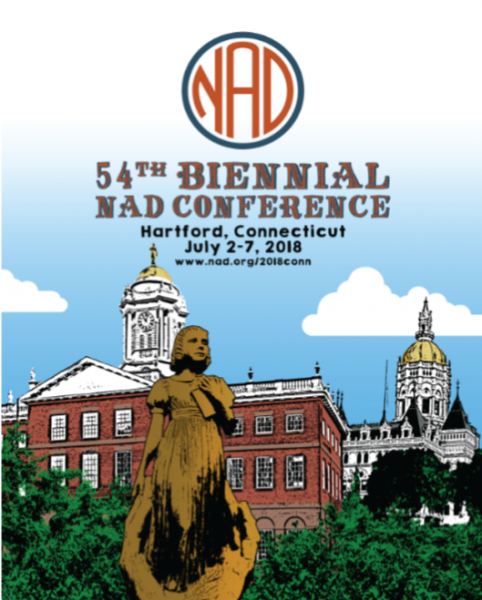
For the first time in a century, the biennial conference of the National Association of the Deaf returns to Hartford this summer. The conference was first held in the United States since 1880, and has been held every two years for the past 50 years.  The 1917 conference was the only appearance in Hartford.

The 2018 edition, July 3-7, 2018, will feature multiple education tracks, seminars and workshops, including specific training sessions in racial justice and “the real way to be normal a round deafblind people.” The conference will begin with “an inspiring Opening Ceremony” honoring 200 years of “deaf education and contributions made in our community,” conference organizers indicate.

NAD President Melissa S. Draganac-Hawk said “The location and timing of the conference has a special significance, the 200th Anniversary of the founding of American School for the Deaf in Hartford.  This momentous event also served as the basis for the conference theme.  The serialized signs memorialize the main effects of the partnership between Thomas Gallaudet and Laurent Clerc in laying the groundwork for Deaf Education in America.”

Sessions include Best Practices for Communication Accessibility at Professional Sports Venues, Navigating the Gray Areas of Hearing-Deaf Dynamics, Achieving Legal Recognition of Sign Languages, and Entrepreneurship for All, among nearly 50 choices available to conference attendees. Workshop papers presented at the conference will include career and professional development topics as well as personal development, among the tracks offered. For instance, typical workshops include those on workplace interpersonal dynamics, career advancement, leadership and communication abilities, networking skills, and more.

The 54th NAD Conference will be held at the Connecticut Convention Center.  The NAD will partner with three other organizations during this conference — the National Deaf Education Conference (NDEC) will be hosting their conference and will handle and take charge of the Education track; Deaf In Government will handle and take charge of Government Employment Training (GET); and the Registry of Interpreters (RID) Region I will handle and take charge of the Interpreting track. The remaining education tracks are the responsibility of the NAD.

Delegates to the  Biennial Conference are members of State Associations and Affiliated Non Profit Organizations (NPOs) who are attending from throughout the country, and participating in the organization’s Council of Representatives.  Biennial NAD Conferences are specifically tailored for deaf, deaf-blind, late-deaf, hard of hearing and hearing consumers, educators, professionals, and business owners and managers.

The conference will also feature an exhibit hall that will be open to the public.  Organizers predict that more than 2,000 people are expected to come and browse through the products and services that will be featured.

The NAD was established in 1880 by deaf leaders who believed in the right of the American deaf community to use sign language, to congregate on issues important to them, and to have its interests represented at the national level. The NAD today ensures that the needs and concerns of the nation’s deaf and hard of hearing community are well represented on the federal level through collaborative and cross disability efforts with consumer based and professional organizations.

In recent years, Atlanta was the 2014 host and Phoenix was the location in 2016.  Two years from now, the conference will be conducted in Chicago. The NAD mission is “to preserve the civil, human, and linguistic rights of deaf and hard of hearing people.”

State Data Plan, Technology Board, Review of Agency Data Required by Approved Legislation

Connecticut’s commitment to advancing the use of, and public access to, electronic data was nudged forward during the just-concluded legislative session. The legislature approval a plan to put into law – and expand – an Executive Order by Governor Malloy issued four years ago that had increasingly made open data a state government priority. The legislation establishes data requirements for executive branch agencies, including authorizing the state’s Chief Data Officer (CDO) to direct agencies on data-related topics, requiring a biennial state data plan, and establishing a Connecticut Data Analysis Technology Advisory Board.  It was approved without opposition by the House and Senate in the final week of the 2018 General Assembly session.

The plan authorizes the Office of Policy and Management (OPM) to designate an existing employee to serve as the CDO to direct executive branch agencies on data use, management, sharing, coordination, and formulation of the state data plan and transparency plans. It also requires executive agencies to annually inventory their data assets and submit the inventory to OPM, and requires OPM to continue operating and maintaining the Open Data Portal.

In regard to executive branch agencies, the legislation defines “high value data” as any data that the department head determines can increase an agency's accountability and responsiveness, improve public knowledge of an agency and its operations, further its core mission, or create economic opportunity; is critical to the agency's operation, frequently requested by the public, or used to satisfy any legislative or other reporting requirements; or responds to a need and demand identified through public consultation.

So-called “protected data” means any data, the public disclosure of which would violate federal or state laws or regulations; endanger the public health, safety, or welfare; hinder the operation of the federal, state, or municipal government, including criminal and civil investigations; or impose an undue financial, operational, or administrative burden on the executive branch agency. It includes any records that are exempt from disclosure under the Freedom of Information Act.

Executive branch agencies will be required to designate one employee in each agency as the agency data officer, to serve as the agency point of contact for inquiries, requests, or concerns regarding access to data. The agencies must develop an open data access plan, in a form prescribed by OPM, and detail the agency's plan to publish, as open data, any public data that the agency has identified and any protected data that can be made public through aggregation, redaction of individually identifiable information, or other means sufficient to satisfy applicable state or federal law or regulation.

Non-executive branch agencies, quasi-public agencies, and municipalities would be permitted to voluntarily opt to comply with the open data provisions and requires OPM to publish on its website an updated list of all agencies that are complying with the policy, whether voluntarily or because they are mandated to do so. The state data plan can include recommendations concerning data management for the legislative or judicial branch agencies, but the recommendations are not binding on these agencies, according to analysis by the Office of Legislative Research.

The legislation (HB 5517) creates a 16-member Connecticut Data Analysis Technology Board to, among other things, advise the three branches of state government and municipalities on data policy.  The board members, to be appointed by legislative leaders by July 1, must have professional experience or academic qualifications in data analysis, management, policy, or related fields.  Ex-officio members are to include representatives of the Commissioner of Administrative Services, executive director of the Freedom of Information Commission, Attorney General, Chief Court Administrator, State Librarian, State Treasurer, Secretary of the State, State Comptroller and the state’s Chief Data Officer.  The Board’s first meeting would be this summer, and they will be required to meet at least twice annually.

By November 1, 2018 and every two years after, the new legislation requires the CDO to submit a preliminary draft of the plan to the Connecticut Data Analysis Technology Advisory Board which must then hold a public hearing.  A state data plan, to be completed by December 31, 2018 and biennially thereafter, requires inclusion of the information technology-related actions and initiatives of all executive branch agencies, including the acquisition of hardware and software and the development of software.  It is to include specific, achievable goals within the two years following adoption of the plan, as well as longer term goals and a timeline for a review of any state or federal legal concerns or other obstacles to the internal sharing of data among agencies, including security and privacy concerns.

The legislation also expands the scope of LEANCT, a statewide process improvement initiative as well as state agencies' ability to suspend paper filing or document service requirements when an electronic filing system is established.

Executive Order 39, the basis for many of the legislation’s provisions, established open data requirements for executive branch agencies and established the Connecticut Open Data Portal and the position of Chief Data Officer.  It was signed by Gov. Malloy in February 2014.

Another Federal Agency Says School Buses Should Have Lap/Shoulder Belts; Most States, Including CT, Don't

The National Transportation Safety Board (NTSB) this week recommended to states that all new large school buses be equipped with both lap and shoulder seatbelts, the first time such a recommendation has been issued for the vehicles by the agency. The board also recommended requiring collision-avoidance systems and automatic emergency brakes on new school buses, but the follow-through on the recommendations falls to states and local jurisdictions.  The NTSB recommendation is not a federal requirement, and comes three years after a similar call by the National Highway Traffic Safety Administration (NHTSA). Connecticut, as most states, does not require lap and shoulder seat belts in school buses.

The NTSB recommendations, made to the 42 states, the District of Columbia, and Puerto Rico, all of which lack requirements for lap/shoulder belts on large school buses, were accompanied by a recommendation to the states of Florida, Louisiana, New Jersey, and New York to amend their statutes to upgrade their seat belts requirements from lap-only belts to lap and shoulder belts.

Connecticut’s legislature has previously debated a lap-and-shoulder belt requirement on school buses, but has failed to pass such a requirement, including, most recently, last year. Legislation that would have imposed a requirement in Connecticut, effective in 2022, failed to gain approval from the Transportation Committee after a public hearing.

Last summer, Nevada joined California, Florida, Louisiana, New Jersey, New York and Texas in enacting laws requiring seat belts. The law in Louisiana requires school buses be equipped with seat belts, but this is subject to appropriation for the purchase of such buses and the state legislature has not provided funding to trigger the requirement. Similar language in Texas’ law was removed in 2017, according to the National Conference of State Legislatures.

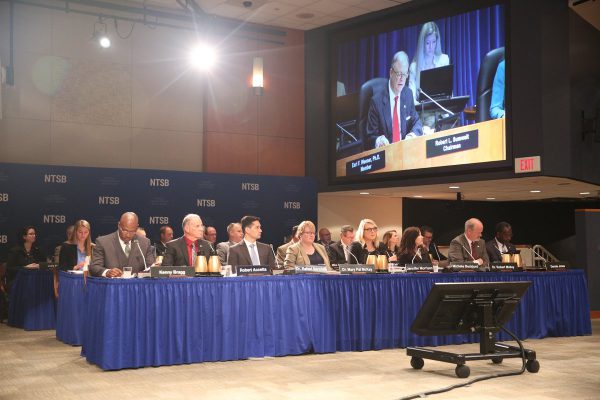
NTSB Chair Robert Sumwalt said at the close of Tuesday’s NTSB meeting this week, which included a review of two 2016 school bus crashes that killed 12 and injured 37, “The recommendations that we issued and reiterated today, if acted on, will help ensure that new school buses are manufactured with tried and true occupant protection such as lap-shoulder belts, as well as collision avoidance technology such as automatic emergency braking.”  The meeting was held just days after a school bus accident in New Jersey that killed a young student and teacher.

The recommendation comes three years after a similar stance from the then-Administrator of NHTSA, Mark Rosekind:  "The position of the National Highway Traffic Safety Administration is that seat belts save lives," Rosekind said in November 2015. "That is true whether in a passenger car or in a big yellow bus. And saving lives is what we are about. So NHTSA's policy is that every child on every school bus should have a three-point seat belt."

“The main hold up continues to be funding,” State Rep. Fred Camillo of Old Greenwich, who introduced Connecticut legislation to accomplish that objective, told CT by the Numbers last year.  Passage has been elusive here, and elsewhere, despite the change in position by NHTSA more than two years ago.  The federal agency previously viewed school buses as safe without seat belts, because of their construction.

That changed in 2015.  Since then, as Connecticut’s Office of Legislative Research noted in a 2016 report to the legislature, “NHTSA has been exploring ways to make seat belts on schools buses a reality.” NHTSA points out that seat belts have been required on passenger cars since 1968; and 49 States and the District of Columbia have enacted laws requiring the use of seat belts in passenger cars and light trucks.

The Connecticut Association of Public School Superintendents testified against the measure last year, calling for approval to be “postponed” until a series of questions – ranging from the use of bus monitors to the cost of seat belt maintenance to district liability from unused seat belts – could be answered.

The Connecticut Association of Boards of Education (CABE) – representing local elected school boards across the state – also voiced their opposition at a January 30, 2017 public hearing.  CABE officials expressed concern about “years of busses” that would “need to be replaced or retrofitted.”  They also noted that lap belts “would not work best for 5-year-olds and 18-year-olds alike.”  In addition, questions were raised about students who might “unclick the belt” and the liability of bus drivers if they did.

Camillo initially proposed the bill in 2011 after a Rocky Hill student was killed in a school bus crash.  Last year in Connecticut, in March, after a school bus accident in Canterbury sent five students to the hospital, public discussion on the pending proposal was renewed, but the legislature ultimately did not take action.  “This accident today is just another reminder that we really need to do something regarding this issue. We don’t want to wait for another tragedy to occur,” Camillo told the Norwich Bulletin.  Later that month, five people were injured after a crash involving a school bus in North Haven.

At NTSB, Robert L. Sumwalt was sworn in as chairman last August, after being nominated by President Trump and confirmed by the U.S. Senate. He began his tenure at the NTSB in August 2006 when President Bush appointed him to the Board and designated him as Vice Chairman. In November 2011, President Obama reappointed him to an additional five-year term as Board Member.

The NTSB this week also called for “facial recognition data to catch driver license fraud at every opportunity, with data shared across states. It demands that certified medical examiners effectively play their role in denying medically unfit drivers a medical certificate.”  Added Sumwalt:  “Action on the safety recommendations issued and reiterated today will constitute a crackdown, but only from the point of view of drivers who put the safety of our children and other road users at risk. Such a crackdown is long overdue.”