Senior Deaths from Falls Climbs Nationally, in Connecticut, During Past Decade

Fatal falls among senior citizens are on the rise in Connecticut and across the United States, according to a new government report. The overall rate of older adult deaths from falls increased 31 percent from 2007 to 2016, according to the Centers for Disease Control and Prevention (CDC). In 2016, a total of 29,668 Americans ages 65 and older died as a result of a fall - that is 61.6 out of every 100,000 senior citizens that year. A decade earlier, in 2007, there were 47 fall-related deaths for every 100,000 senior citizens.  Connecticut’s rate was the 17th lowest in the nation among the 50 states and District of Columbia.  The only New England state with a lower rate was Massachusetts. 

In Connecticut, the number of deaths of persons age 65 or older attributable to falls increased from 243 in 2007 to 357 in 2016. The death rates from falls ranged from 24.4 per 100,000 in Alabama to 142.7 per 100,000 in Wisconsin.  Connecticut’s rate was 56.9 per 100,000 in 2016, an increase from 44.9 per 100,000 in 2007.

Falls are the leading cause of injury-related deaths among people who are at least 65 years old, according to the report. Deaths from unintentional injuries are the seventh-leading cause of death among older adults, and falls account for the largest percentage of those deaths, the CDC said. The CDC has previously noted that less than half tell their doctor that they have fallen, and that falling once doubles your chances of falling again.

The rate of deaths from falls increased in the United States by an average of 3.0% per year during 2007–2016, and the rate increased in 30 states and the District of Columbia (DC) during that period.

The largest AAPC in mortality rates from falls (11.0% per year) occurred in Maine, followed by Oklahoma (10.9%) and West Virginia (7.8%). A significant increase in the rate from 2007 to 2016 occurred in 30 states, including Connecticut. There was no significant change in fall mortality rates in 11 states.

Once every 19 minutes, a senior citizen in America dies as a result of injuries sustained during a fall.  The older Americans became, the greater their risk of dying from a fall. In 2016, there were 15.6 fatal falls for every 100,000 Americans between the ages of 65 and 74. Among adults ages 75 to 84, there were 61.4 such deaths per 100,000 people. And for those ages 85 and up, there were 247.9 fatal falls per 100,000 people.

The data was included in the CDC’s Morbidity and Mortality Weekly Report, published last week. To reduce older adult falls, CDC created the Stopping Elderly Accidents, Deaths, and Injuries (STEADI) initiative to help clinicians make fall prevention part of their clinical practice. The CDC notes that more than 10,000 people in the U.S. turn 65 every day.

“As a result, the country will experience a growth in falls and fall injuries, resulting in a cost increase if preventive actions are not taken now,” the agency has pointed out.


Increasing Engagement by Providers and Consumers, Greater Focus on Holistic Health at Heart of Changing Industry, CVS-Aetna Merger Plan

“This is a transformational merger and it gives us the opportunity to reshape the health care industry, Aetna President Karen Lynch said this past week, looking at the potential impact of a CVS-Aetna merger.  “We expect to transform what a CVS store looks like.” “For too long we’ve been practicing sick care and not health care and the potential of a CVS-Aetna merger is really to organize around the consumer and the consumer experience.  It will allow us to be in the local communities, to create another gateway to access healthcare and it will also give Americans a go-to destination for their health care services and their health care needs,” Lynch said.

Appearing this month on Conversations on Health Care, a radio program produced by Middletown-based Community Health Center, Lynch noted that CVS has over 10,000 stores across the United States and that 70 percent of Americans live within five miles of a CVS.

CVS Health chief executive officer Larry Merlo recently said the company’s $69 billion acquisition of health insurance giant Aetna is “making good progress” with state regulators and on track to close later this year, according to published reports.

Merlo said the company is seeking approval from 28 departments of insurance and many are holding hearings, with the key market of Florida already giving it approval. CVS also continues to provide information to the U.S. Department of Justice, which is reviewing the pharmacy chain's agreement to buy the Hartford-based health insurer.

Lynch described a post-merger CVS as “an interactive hub where individuals can come in and learn more about their health care, where they can access healthcare services and they can have further assistance in navigating the overall healthcare system.”  Right now, she said, “Your zip code is more important than your genetic code. What that means is your individual behaviors and your environment clearly have meaningful impact on health care costs.”

“Our overall goal is to achieve affordable, quality care for the individuals that we serve,” Lynch said. Lynch was named by Fortune as one of the 50 Most Powerful Women in 2017 and 2016, and is one of the most senior women in the health insurance industry.  She joined Aetna in 2012.

CVS has a network of nearly 10,000 retail pharmacies in 49 states, the District of Columbia, Puerto Rico and Brazil and more than 1,100 Minute Clinic locations in 33 states. Aetna – the nation’s third largest insurer - has more than 20 million enrollees in its various health plans.  The latest CVS in Connecticut opened this weekend in West Hartford, supplanting a local pharmacy.

In looking ahead to evolving changes in the health insurance industry, Lynch highlighted three areas: provider engagement, consumer engagement and an increasing focus on holistic health.

She explained that “Aetna and providers have one common purpose – to improve the quality and affordability of health care and with value-based care we can demonstrate that partnership to do just that”.  She also stressed the importance of “consumer engagement, and being in local communities and really focusing on individual behaviors and the social determinants of care. I believe that can be a very powerful step in reshaping how we think about healthcare.”  Another key factor, looking ahead, will be holistic health, “treating the whole person, physical, emotional and behavioral aspects of one’s health,” which she said “could make a meaningful difference on the impact of healthcare.”

Noting that the U.S. spends more on healthcare than any country in the world, which continues to grow at what Lynch described as “an unsustainable rate,” Lynch said “we need to understand people’s health ambitions and we need to support them in their individual behaviors, we need to provide better access, and we need to give them more affordable and more transparent health care in America to really drive down overall health care costs.”

She indicated that 30 percent of Americans now suffer from diabetes, compared with less than one percent in the 1950’s. Citing another major – and costly – health concern, she said that 40 percent of adults and 20 percent of children are considered obese today.  And she said that over 900 billion dollars – one in three dollars – “is waste in our healthcare system.”

Aetna Chairman and CEO Mark Bertolini has routinely stressed that "if we keep people healthier, there's lower costs in the system." He has described the health care system as “backwards” – responding to when people are ill rather than seeking to prevent the illness.

Lynch said that technology also drives the changing healthcare landscape, predicting that greater attention would be paid to “leveraging telehealth and telemedicine and having people have access in ways that are unique and different.”  Aetna, for example, is increasingly able to access data in real time utilizing newly designed apps and cloud technology, often placing nurses armed with ipads in individual’s homes.

“Having data at our fingertips will allow us to remotely monitor and get information about people where they are so that we can immediately get information back out to them,” Lynch said.  “Having real-time access can really change individual behaviors and how people think about their health.”

Conversations on Health Care focuses on opportunities for reform and innovation in the health care system. Co-hosts Mark Masselli and Margaret Flinter each bring four decades of experience in overcoming the barriers that block access to care in their work at community health centers.  It is heard on radio stations from Connecticut to Washington state, and online at www.chcradio.com.  Flinter is Senior Vice President and Clinical Director, and Masselli is the President/CEO of Community Health Center, Inc., Connecticut’s largest and most comprehensive provider of primary health care services for the uninsured and underserved.

PERSPECTIVE: Life Lessons Grown in Connecticut Continue to Resonate

by Keith Hovan I never imagined delivering a commencement speech. In fact I don’t remember any of the speeches from any of the commencements that I have ever attended. So I’m not expecting any of you to remember this one either.  Given that this speech is unlikely to be memorable I will attempt to make it mercifully brief.

In early 1962, shortly after I was born, someone, my birth mother I suspect, took a look at me ... and decided that she didn’t want me .... I was discarded, as I later learned.  Found in a dumpster.

It’s true.  That really happened.

I always say it’s because I was an ugly baby. I was born with a birth defect that twisted my feet out of shape — club foot. I have scoliosis, which still makes my left leg shorter than my right — although nowadays I can hide it pretty well. And I have a condition that formed my chest a little differently than most people’s.

Despite all that, someone found me .... Someone rescued me.

Soon I landed in the home of Andrew and Eleanor Hovan, the second-generation Russian immigrants who adopted me. Two wonderful, loving people who thought I was worthy of being called ... son. They gave me the start in life that I was nearly denied.

From that simple, loving act flowed opportunities that I never could have imagined — including right here, right now — speaking to you, the University of Massachusetts Dartmouth Class of 2018.

I am humbled to be on this podium because I know the sacrifices you made to achieve the advanced degree that you will receive today. Very likely, your parents, your spouse or partner and your children made sacrifices, too. The late nights you spent alone, studying after work. The weekend fun you forfeited. The fellowship, family time and sleep you denied yourself. The children’s plays, art shows and games you might have missed.

I know because my family and I made the same sacrifices. And ... because I am ahead of you on the journey you are about to start, I’ll share some lessons that you might consider taking with you.

Lesson No. 1: As my story so far might illustrate to you — it doesn’t matter where you start in life. It matters what you do with your life.

I grew up in a blue collar home in Connecticut, where my father — a veteran of the terrible Pacific island battle on Okinawa in World War II — worked long hours at Schick Safety Razor. He usually walked around with holes in his shoes and made $17,000 in his best year. But we always had food on the table and my parents showed my brother and I what it meant to work hard for everything they ever got.

To make money as a teenager, I took a job at a garden store. One of the managers there, a man named Richard, got to know me and thought I could go in one of two ways — very good ... or very bad. So he decided to give me a nudge in the right direction by exposing me to some career options.

He arranged for me to shadow a lawyer in court. I didn’t see myself practicing law. I spent time with a trader on Wall Street, actually down on the floor. Again, it wasn’t for me. This process was repeated several times. But I never made a real connection. (I think Richard began getting worried).

Then he had me spend time with a nurse anesthetist from Yale New Haven Hospital. It was then that I could see my future. Suddenly, my expectations to spend my working life as a landscaper were replaced by something much more powerful — they were replaced by a dream. I wanted to be like those nurses who were helping people in a way that was real, direct and hands on.

Lesson No. 2: Look for mentors in unexpected places, and then allow yourself to be mentored.

Others may see potential that you don’t recognize in yourself, as Richard, that garden shop manager, saw in me.

I enrolled in college to study nursing. My parents had saved enough money to pay for my first semester, but the rest of my education was on me. So I worked nights as an emergency room tech and studied during the day.  By the time I graduated — the first in my family to earn a college degree — I had a young son, Nicholas.

I decided that I could make more and have more significant impact with an advanced degree. Maybe you yourselves made a similar calculation. I studied for a master’s in nursing with an emphasis in management, with the goal of becoming a chief nursing officer at a hospital.  I also completed work towards an MBA, and while I studied, I always worked full time to support my son.

Lesson No. 3: This one is from my mom — my mother said to me over and over again — what doesn’t kill you makes you stronger.

I started my healthcare management career in the busy emergency department at Bridgeport Hospital in Connecticut. Three years after I arrived as an RN, nearly the entire nursing leadership team in the emergency department resigned or retired. Much to my surprise, I was chosen to lead the department. Even though I was only 24 years old. I had responsibility for the management of the state’s fourth busiest emergency department and trauma center.

This was the 1980s, when hospitals were suffering a severe nursing shortage.

That made it easy to work clinical shifts at other hospitals at night. The money came in handy, of course. But as important, the extra work provided me with an incredible learning opportunity. I chose to work at medical centers where I could get ideas to bring back to my department and make it a better place for patients, families and my staff.

Lesson No. 4: Your education does not end with this degree. Opportunities to learn will present themselves throughout your career. They are a gift. Learn to recognize them and take advantage of them.

And yet, as I progressed through my career, I noticed that no matter how much I learned, I alone would never know enough. Healthcare is humbling in that way. The pace of progress is often dizzying. Diseases that were once incurable, can now be cured. Ailments that once had no treatments can now be treated.

I will never forget being in the Cath lab to observe a first in Connecticut. It was the middle of the night and I watched a cardiologist, Dr. Joseph Babb, thread a wire through a clot in the coronary artery of a dying patient.  That was followed by a drug called Streptokinase, which was infused directly into the heart. Miraculously, blood started flowing again and a dying patient was snatched from death.

And that was just the start of a career witnessing firsts. Procedures that once lasted many hours, requiring long incisions and long recoveries, can today be completed in a fraction of the time, with far smaller incisions and faster and healthier recoveries.  Even now, 30-plus years into my career, I am awed by what medicine can do. (...)

So that leads to Lesson No. 5, perhaps one of the most important that I will share today. You cannot do this alone. Surround yourself with good people.

People who are smarter than you in their areas of expertise. Individuals who share your values and the values of your organization. Individuals who share your compassion and passion for the work you do.  Success in your career will demand constant learning. And many people around you will have something to teach — not just those who run conferences, teach formal classes or who have the highest academic degrees or professional standing.

The success of the organization I work for — Southcoast Health — depends not just on the amazing doctors who bring us the latest that medicine has to offer. It depends on all 7,500 of our employees.  You know... I work with some incredibly smart people. Physician scientists, information technology experts, enterprise risk managers, executives of all types. But some of the best advice I receive is from our staff who are on the front lines.

There is a security guard at Southcoast Health named Frank. Frank — like many of our staff — has my personal cellphone number ... and he’s not shy about using it. From time to time Frank will call, though he will usually text, and say ... brother Hovan ... we need to talk. We’ll meet for breakfast at the Village Cafe in Dartmouth (Great spicy hash) and we will talk as two people — equals. He will let me know what he thinks about a decision or an issue — it will either reinforce a plan that we might have been formulating and accelerate it ... or might cause me to completely rethink a strategy.  Then again... it might just be two guys having breakfast trading stories about our families.

Lesson No. 6: Practice humility.

Everyone — everyone — is deserving of your respect.  Whether you are a department head, a unit leader or a CEO, you will always have a lot to learn. And lessons come from unexpected places.

After you receive your diploma today and — I hope — do a little celebrating, you may be moving on to a new job or promotion. Maybe you will seek work in a new field. And I’ll bet that one or two of you will go right from this ceremony to work at a job.

Whatever your plans, your education will afford you a chance at a privileged life — one with satisfying work, financial rewards, and stability and progress for your family.

But it also will bring you new ways to apply your skills and expertise. You may already have discovered that your professional responsibilities don’t end at the office door. Your learning and your work experience will lend you new insights that you are obligated to share with your communities and your larger professional network.

In my career, it became clear to me that healthcare doesn’t happen within the confines of a hospital or a clinic. Good health is linked to economic opportunity. To decent housing. To strong schools. To well-stocked grocery stores close to home. And to governments and societies that recognize problems like the scourge of opioid addiction and find ways to address them.  For that reason, I commit time to local, statewide and national organizations that are devoted to strengthening communities — as well as healthcare.

Lesson No. 7: Now this may be a hard one to hear but here it goes — today is not just about you and your career.

It is easy to turn a blind eye to the issues that challenge our communities. But I urge you to think about the concept of community and what it means to really care.

Think about how you will contribute.

We live in a challenging time. The political divide is as wide as it has ever been in our country, with strident and angry public discourse. The very technologies that join us and make our lives easier, also bring us false information that confuses us. Children feel unsafe in their schools. People’s differences — race, ethnicity, gender and sexual orientation — make them targets for discrimination and mistreatment, rather than valued for the richness they provide.

Terrorist attacks, war and warlike posturing. There is a lot going on in our world that is broken.

Fixing what is broken starts in our communities — the communities that you will enter with your new education. I urge you, I beg you, to use what you have learned to help solve problems and to contribute to the social good.  The decisions you made in the past brought you to this day. Your decisions going forward will write the narrative of your personal future. They also will contribute to the narrative of our collective future.

You are our hope.

Oh...And one final lesson — say thanks.

Say thanks to your friends and loved ones who stuck with you and helped make this day possible. Thanks to your professors and fellow students at UMass Dartmouth. And thanks to the university itself. An institution devoted to pursuing and sharing knowledge is a vital good for a community and our nation, and UMass Dartmouth brings countless benefits to our region.

As a man who started life in a trash can, who as a teenager had friends who nicknamed him “Garbage Can Hovan” — perhaps a bonus lesson is, be careful what stories you share. .... I have lots to be thankful for — especially my loving wife Erin and my children including my daughter Reya who is here today.

We all have reasons to be thankful.

___________________________

Keith Hovan, President and CEO of Southcoast Health, grew up in Connecticut, attended Sacred Heart University and began his career at Bridgeport Hospital.  He was appointed President and CEO of Southcoast Hospitals Group, Inc. in 2008 and in 2011 as President and CEO of Southcoast Health System, Inc.  Previously, he served as Executive Vice President and Chief Operating Officer at Danbury Health System. He delivered the commencement address this month at University of Massachusetts – Dartmouth.   Southcoast Health is a not-for-profit, community-based health system with multiple access points, offering an integrated continuum of health services throughout southeastern Massachusetts and Rhode Island.

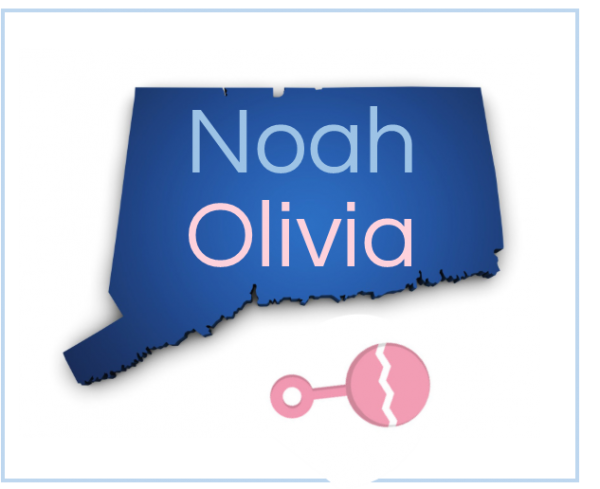
Noah and Olivia Top Names for CT Newborns in 2017; In US it was Liam and Emma

The most popular names for children born in the United States in 2017 were Liam for boys and Emma for girls.  Connecticut, however, had different top choices, according to the U.S. Social Security Administration.  The state’s most popular names for newborns were Noah and Olivia. The top five female names in Connecticut in 2017 were Olivia (230), Emma (219), Ava (169), Mia (162) and Sophia (159).  The leading names selected for boys were Noah (222), Liam (208), Logan (189) Jacob (187), and Michael (175).

Olivia and Noah were also the leading names selected for newborns in Connecticut in 2016; Noah also topped the list in 2015 in Connecticut, when the top female name was Sophia.  In 2014, Olivia and Mason were the top choices in Connecticut.  In 2013 it was Olivia and William; in 2012 Mason and Emma were most frequently selected.

Nationally, it was the first time that Liam was atop the list of popular male names, after Noah was number one for the previous four years, Jacob for the 14 years before that, and Michael every year from 1961 to 1998.

Among girls names selected across the country, Emma has been the most popular for the past four years, Sophia for the three years before that and Isabella for the previous two years.  Emma also topped the list in 2008, after Emily had done so every year from 1996 through 2007.  From 1970 through 1995, Jennifer led the list for 15 years, Jessica for 8 years and Ashley for two years.

Since 2010 nationally, the top boys names are Noah (145,195), Jacob (140,091), Mason (133,535), Liam (133,019) and William (131,241).  The top girls names this decade are emma (158,573), Sophia (152,936), Olivia (147,486) Isabella (142,064) and Ava (125,937).  Ranking at the bottom of the 200 most popular for boys are King, Jase, Maximus and Maverick, each chsen for more than 15,000 baby boys.  At the bottom of the 200 most popular girls names since 2010 are Eliza, Angela, Athena and Leilani, each selected as the names for more than 12,000 baby girls.

One hundred years ago, in the decade beginning in 1910, the most often used boys names were John, William, James, Robert and Joseph; for girls, it was Mary, Helen, dorothy, Margaret and Ruth.

https://youtu.be/aQhssyOhLUk

Yale Cancer Center, Globally-Connected Students Honored by World Affairs Council

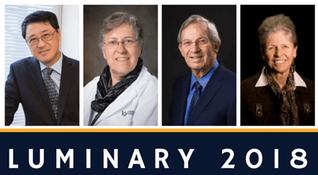
The World Affairs Council of Connecticut marked Connecticut’s global leadership in cancer research and innovation at the organization’s 2018 Luminary Awards program.  The Council honored Yale Cancer Center, a ground-breaking center for global health, as the 2018 Luminary Award recipient, noting that “innovations made here in Connecticut impact health on a global scale.” The Yale Cancer Center is one of the select few centers in the nation and the only one in southern New England designated a comprehensive cancer center by the National Cancer Institute. Through pioneering research, health innovations, and breakthrough treatments, the Yale Cancer Center is leading the world in cancer research for the betterment and advancement of our global community.

“Through collaboration among world-class institutions of education, healthcare, bio-pharma, and research here in Connecticut, the state has developed a health ecosystem that enables scientific risk-taking and fosters a well-developed network of some of the world’s premier hospitals,” the Council website pointed out.

Honored at the event, and participating in a conversation moderated by CBS News medical correspondent Dr. Max Gomez, highlighting their work in the field, were:
  • Lieping Chen, MD, PhD, described as the “Father of Immunotherapy”
  • Patricia LoRusso, DO, a transformational leader in cancer clinical trials
  • Vincent DeVita, MD, a pioneer of chemotherapy and founder of the leading international textbook of oncology, “Cancer: Principles & Practice of Oncology”
  • Joan Steitz, PhD, an international pioneer in understanding the role of RNA in biology & cancer development & progression

Also in attendance to receive the Yale Cancer Center’s recognition was Dr. Charles Fuchs, Director of the Yale Cancer Center, Physician-in-Chief of the Smilow Cancer Hospital, and Richard & Jonathan Sackler Professor of Medicine at the Yale School of Medicine.

The annual Luminary Award is the signature event of the World Affairs Council of Connecticut. It honors one or more individuals or an organization from Connecticut that has profoundly influenced global affairs, with a strong emphasis on achieving the overall betterment of the world.  Past recipients include United Technologies, AmeriCares, ESPN International, and Hole in the Wall Gang Camps.

In addition to the focus on the work of the Yale Cancer Center, a number of students were recognized for their accomplishments by the World Affairs Council.

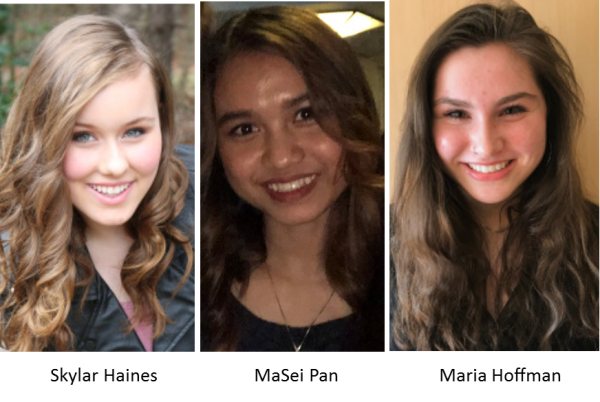
Hartford Public High School student MaSei Pan, who will be attending Central Connecticut State University this fall to study international affairs, received the Peter G. Kelly Global Scholar Award.  She arrived in the U.S. six years ago as a refugee from Thailand.  She grew up in a refugee camp, was delayed in starting school until age 8, and came to the U.S. without knowing English.  Today, she excels in school and uses her experience to help others, including newly arrived immigrants.

The Global Engagement Award was presented to RHAM High School student Skylar Haines, who traveled to Mexico to teach English at the Serapio Elementary School, and subsequently organized fundraisers to purchase a computer lab and musical instruments for the school. She has also written a book of poetry about her experiences.

Global Engagement honorees were Maria Hoffman of Glastonbury High School, who focused on climate change and elephant migration in Botswana, and a trio from Westminster School in Simsbury, Shane Wahlberg, Lucas Wahlberg and Carson Roth, who devoted their attention to Sustainable Farming and Humanitarian Assistance for Cuba.


Reversal of Fortunes: A Decade Up, A Decade Down for Connecticut’s Economy

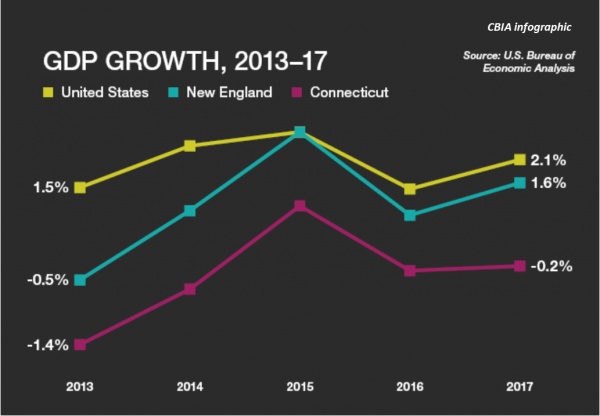
Connecticut’s economy is now smaller that it was 2004. The state’s lackluster performance stands in sharp contrast with all of the other New England states, whose economies have seen real growth, as have those of New York, New Jersey, Pennsylvania. The state’s economy contracted in 2017, as it did in 2014 and 2016, and its overall performance for the year ranked 49th, topping only Louisiana. An analysis by the University of Connecticut’s Connecticut Center for Economic Analysis (CCEA) points out that since 2008, Connecticut’s economy, measured in real GDP (corrected for inflation) has contracted every year, except for 2015. That year’s positive blip of 1.1 percent growth was quickly overtaken by contraction in the two subsequent years.

The suddenness of this persistent downturn for Connecticut has been dramatic.  Between 1997 and 2007, the state’s economy grew by 3 percent annually, outpacing Massachusetts (2.9%), Rhode Island (2.5%), and New York (2.3%), based on the compound rate of annual real GDP growth.  In the decade since, through 2016, the Connecticut economy contracted by 0.9 percent annually while Massachusetts and New York grew by 1.6 percent and Rhode Island by .6 percent, according to data from the U.S. Bureau of Economic Analysis.
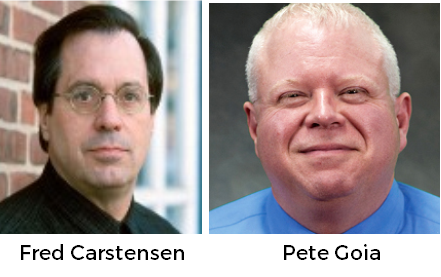
The Bureau reports the state's GDP shrank 0.2 percent last year—one of just three states with negative growth— after contracting by 0.3% the previous year.  At the same time, the national economy expanded 2.1 percent, CBIA recently pointed out.  CBIA economist Pete Gioia said “We are missing the economic growth party that the region and most of the country are experiencing."  He noted that through March this year, Connecticut has recovered just 80 percent of all jobs lost in the 2008-2010 recession, the slowest recovery in New England. The U.S. has recovered 219 percent of jobs lost.

At the same time the state economy has contracted, Connecticut has seen 78 continuous months of job creation, measured year over year, since 2010, the CCEA analysis acknowledges. While private sector jobs are now above their previous peak, public sector jobs- including those at Foxwoods and Mohegan Sun - have been contracting, and will likely continue to contract for a couple more years, points out Center Director Fred Carstensen.  He adds that jobs created in the private sector have been broadly of lower quality than that of jobs lost. Thus real personal income, like real output, has been contracting even as employment has grown.  So the common focus on job creation has been deceptive: rising job numbers has not meant economic growth.

Adding to the complexity of the situation in Connecticut, Carstensen explains, is the increasing number of residents who work out of state. Since 2016, more than 35,000 additional Connecticut residents have found job outside of the state —so the number of Connecticut residents employed is near an all-time peak. Unfortunately, those 35,000 all pay their income tax first to the state where they work, thus contributing to the fiscal crisis in Connecticut, Carstensen noted.

In 2017, Massachusetts led the way in New England with 2.6 percent growth, followed by 1.9% in New Hampshire, with Rhode Island (1.6%), Maine (1.4%), and Vermont (1.1%) all showing growth, unlike Connecticut. In November, 2017, the Connecticut Department of Labor reported that total payroll employment in the state had fallen below the level of February, 1989, according to CCEA.

“The dramatic reversal in fortunes for Connecticut, shifting from a decade and more of strong growth to a persistently contracting economy, is nearly unprecedented among state economies.  The next Governor and Legislature need to make a determined effort—absent to date—to understand what drove this climatic reversal of fortunes in Connecticut’s economy health.  Such an understanding is central to adopting policies and initiatives to reverse the state’s decline,” Carstensen argued.

The Connecticut Center for Economic Analysis (CCEA), under the direction of Carstensen, is a University Center located within the School of Business at UConn.  CCEA specializes in economic impact and policy analysis studies, as well as advising clients regarding business strategy, market analysis, and related topics.  CBIA’s research department, led by Goia, provides in-depth economic and policy analysis and survey research assistance to CBIA’s legal, insurance, and human resources divisions and member companies.

Connecticut-Grown Businesses Lead Stand-out Cohort of Entrepreneurial Start-Ups

reSET, the Hartford-based Social Enterprise Trust, whose mission is advancing the social enterprise sector and supporting entrepreneurs of all stripes, has announced the winners of its 2018 Venture Showcase, and three Connecticut-grown businesses took the top awards. The annual event recognizes the talented entrepreneurs and innovative businesses that have just graduated from reSET’s nationally recognized accelerator. This year, 18 early stage enterprises graduated from the most recent cohort, and eight finalists competed for $20,000 in unrestricted funding.  reSET’s goal is to meet entrepreneurs wherever they are in their trajectory and to help them take their businesses to the next level.

The entrepreneurs pitched their business models to an audience of founders, investors, and community and corporate stakeholders. The panel of judges included Claire Leonardi, former CEO of Connecticut Innovations; Alan Mattamana, Partner at Fairview Capital Partners; and Lalitha Shivaswamy, President of Helios Management Corporation.

Winning the top $10,000 award was Loki, which was created in a “group independent study” through UConn’s Digital Media and Design program by Andrew Ginzberg and co-founders Jeffrey Santi, Brian Kelleher, and Case Polen.  Described as “a new kind of media company” - a video sharing platform exclusively for smartphones - Loki is “a place where you can watch events through collections of many perspectives, live-streamed through the eyes of people actually there.”  The company’s website is welcoming people who would like to learn more to leave an email address.

Taking the second-place $6,000 award was Florapothecarie, a line of 100% natural + vegan skincare products, “lovingly handmade in Connecticut” by Sami Jo Jensen.  The line of products is certified vegan and cruelty-free by Leaping Bunny and PETA.

The third-place entrepreneurial business was Bare Life, launching a line of crave-worthy food products with the world’s first Organic, Vegan, Paleo, Non-GMO, Dairy Free, Gluten Free and Refined Sugar Free Hot Chocolate Powder.  Founded by local resident Ali Lazowski, who was put on a very restricted diet due to numerous medical conditions and learned first-hand how scarce allergen and irritant-free foods are. So, she set out to create them. Bare Life's mission is to make these allergen and irritant friendly foods and recipes convenient for everyone, especially the chronically ill.

The event was held last week at the YG Club at Dunkin’ Donuts Park to a sellout crowd of 225. Before selecting the 18 ventures that would participate in the Accelerator class, officials had reSET had to sift through an applicant pool that was the most competitive yet, with 110+ submissions from all over the world.  Since 2013, reSET has graduated 105 companies from its accelerator program and has awarded more than a quarter of a million dollars to scaling ventures.

The Superlative Award for “Most Improved Pitch” was won by FieldOwler, a new business that provides auditing and risk management software and solutions to help businesses, organizations, and agencies.  Other finalists were CNG Fit, LLC / Fit Party Me, Lioness Magazine, Noteworthy Chocolates, RecordME, and SKYWIREme .

The Accelerator program and Venture Showcase was made possible by reSET’s partners and sponsors, including  CTNext, The Hartford Foundation for Public Giving, Travelers, The Walker Group, Bank of America, The Hartford, GoodWorks Insurance, and People’s United Community Foundation.  SnapSeat Photo Booths also provided in-kind services.

reSET, the Social Enterprise Trust is a non-profit organization whose mission is to advance the social enterprise sector. reSET serves all entrepreneurs, but specializes in social enterprise ― impact driven business with a double and sometimes triple bottom line. In addition to providing co-working space and accelerator and mentoring programs, reSET aims to inspire innovation and community collaboration, and to support entrepreneurs in creating market-based solutions to community challenges.


Four Stores in CT Warned by FDA for Selling e-Cigarettes to Minors as Popularity, Concern Grows

The U.S. Food and Drug Administration has sent out warning letters to 40 retailers in 17 states  – including four in Connecticut - as part of a “concerted effort to ensure youth are not able to access” e-cigarettes – specifically responding to what officials describe as the “surging youth uptake” of JUUL products. According to the federal agency, those receiving the warnings in recent weeks included four Connecticut retailers: Discount Tobacco and Vape in Vernon, Mobil Mart in Waterbury, Shell/Henny Penny in Lisbon, and Smoker’s Outlet in West Hartford. The retailers were warned about selling the increasingly popular – but hazardous – products to minors.

The FDA explained that warning letters are sent to retailers the first time a tobacco compliance check inspection reveals a violation of the federal tobacco laws and regulations that FDA enforces.  During undercover buy inspections by agency representatives, “the retailer is unaware an inspection is taking place” and the minor and inspector “will not identify themselves.”

Published reports nationwide indicate that vaping is increasing rapidly in popularity with young people, especially with the most popular brand, JUUL. Its devices are tiny, and look like a pen or flash drive. When someone vapes, there is no fire, ash or smoky odor — instead, the devices heat up and vaporize a liquid or solid.  School bathrooms, where cigarette smoking was done in “secret” a generation ago, are now often referred to as “juul rooms” according to numerous reports – the nicotine fix of choice of the current generation.  A recent New York Times article prominently featured a description of the magnitude of the problem in a suburban Connecticut high school.

“The FDA has been conducting a large-scale, undercover nationwide blitz to crack down on the sale of e-cigarettes – specifically JUUL products – to minors at both brick-and-mortar and online retailers,” said FDA Commissioner Scott Gottlieb, M.D.

Gottlieb highlighted the danger – and the attraction – of the products to youth.

“We understand, by all accounts, many of them may be using products that closely resemble a USB flash drive, have high levels of nicotine and emissions that are hard to see. These characteristics may facilitate youth use, by making the products more attractive to children and teens.  These products are also more difficult for parents and teachers to recognize or detect. Several of these products fall under the JUUL brand, but other brands, such as myblu and KandyPens, that have similar characteristics are emerging.”

Businesses receiving the warning letters are directed to provide, within 15 days, “an explanation of the steps you will take to correct the violation(s) and prevent future violations (for example, retrain your employees, remove the problematic items, etc.),” the agency website points out.  In addition to federal restrictions, purchase/possession of an electronic nicotine delivery system or vapor product by persons under age 18 is prohibited in Connecticut.

The FDA also sent an official request for information directly to JUUL Labs, requiring the company to submit important documents to better understand the reportedly high rates of youth use and the particular youth appeal of these products.

Said Gottlieb: “We don’t yet fully understand why these products are so popular among youth. But it’s imperative that we figure it out, and fast. These documents may help us get there.”  The agency plans what it calls a “full-scale e-cigarette prevention effort” in the fall.

In addition, the FDA also recently contacted eBay to raise concerns over several listings for JUUL products on its website. eBay took what the agency described as “swift action to remove the listings and voluntarily implement new measures to prevent new listings” from being posted to the website.

PERSPECTIVE: Government Algorithms and the Public’s Right to Know

by Mitchell W. Pearlman In many respects, computers have made life easier. But they have also made life quite a bit more complicated. For example, before the computer age most government documents were on paper. Today, people not only need access to government information on computer media and in computer-readable formats, they need access to the computer programs and systems government uses to make policy and other important decisions. Yale Law Professor Jack Balkin calls this “algorithmic transparency.”

An algorithm is the step-by-step procedure by which a task is performed. People use simple algorithms in their lives every day, such as for adding numbers or sorting books. On the other hand, algorithms used in computers are often highly complex. They require sophisticated logic and advanced mathematical modeling in the design and functionality of the applications in which they are embedded. Because of this, algorithms are considered intellectual property and deemed trade secrets by most private enterprises and many government agencies that create and use them.

Governments now gather almost incomprehensible amounts of information, organize them into vast databases, and make and implement important decisions using the algorithms they create or purchase. Governments use computer algorithms in making tax policy and budget decisions; they use them in forecasting various transportation and infrastructure needs; and they use them in analyzing public health and environmental issues and formulating policy based on these analyses. Of course, if the data used are less than complete or accurate, or if the algorithms themselves are based on flawed reasoning or assumptions, then government policies and decisions based on them will likewise be flawed. Such errors can lead not only to unsound decisions, but they also can lead to an enormous waste of public resources and even to a significant loss of life.

In Connecticut, as elsewhere, various government agencies forecast income and expenditures to help guide lawmakers in constructing state budgets. Each of these offices has access to the same data sets. But the assumptions programmed into their algorithms can differ significantly, leading to different outcomes in determining whether a budget will or will not be in balance. The 2018 state budget was out-of-balance by several hundred million dollars just weeks after it was enacted. How did this happen? Was it because the data was faulty? Or was it because the algorithms, and the assumptions built into them, were wrong?

The first shots in the battle for algorithmic transparency have already been fired. Recently the New York City Council passed an algorithmic accountability bill, which establishes a task force to study, and within 18 months of passage report, how city agencies use algorithms to make decisions. The bill was enacted in the wake of a racially biased algorithm used to assess risk factors of criminal defendants. The algorithm’s source code was confidential until a federal judge ordered it to be disclosed and the bias subsequently identified.

Trade secrets and confidential commercial information – which are exempt from public disclosure under current Freedom of Information laws – often represent a significant financial investment by those enterprises and organizations that create or own them. On the other hand, computer algorithms are now – and increasingly will be – vital components in government policy and other decision making. To prevent significant errors or miscalculations in the future, many government algorithms need to be transparent so they can be publicly vetted before policy decisions are made or legislation becomes law.

Thus, proprietary rights face an important competing value when they would prevent the disclosure of information about which there is a legitimate and important public interest. The notion of an informed and knowledgeable electorate is one of the cornerstones of our country’s democratic tradition. To paraphrase the Connecticut Supreme Court in another context, trade secrets and confidential commercial information must give way when balanced against the publication of matters of public interest, in order to ensure the “uninhibited, robust and wide-open discussion of legitimate public issues.”

So in this case, as in others before it, the balance of competing interests must be resolved in favor of algorithmic transparency to the greatest extent possible. This is not to say that government need not provide some measure of just compensation if it discloses secret or confidential proprietary information. But the bottom line is that algorithmic transparency is essential to the continuance of our democratic system of governance.

___________________________

Mitchell Pearlman is the former executive director of the Connecticut Freedom of Information Commission. He currently teaches law in the Journalism Department of the University of Connecticut at Storrs. Rogers Epstein, MIT class of 2019, also contributed to this article. The article is abstracted from a “White Paper” published by the Connecticut Foundation for Open Government (CFOG), which can be found in its entirety at www.ctfog.org.


PERSPECTIVE columns from contributing writers appear each weekend on Connecticut by the Numbers.

Quasi-Public Agencies Avoid Many Requirements, Controls

In addition to an array of nearly 100 state agencies of varying sizes and responsibilities, Connecticut has 15 quasi-public agencies, which operate under different rules of the road from run-of-the-mill state agencies. The main reason for establishing the “quasis,” as they’re often called, “was their organizational location outside the structure of state government,” according to a report this year from the Office of Legislative Research (OLR).  Thus, “they could avoid many of the requirements and controls imposed on governmental agencies.”

That status, according to OLR, meant “they could respond to problems and opportunities faster and more efficiently than a comparable state agency, while maintaining a degree of oversight and accountability.”

Some, such as the Connecticut Airport Authority, which runs Bradley International Airport and other airports in the state, the Connecticut Lottery Corporation, Access Health CT and the Connecticut Student Loan Foundation are relatively well known.  Others, such as the State Education Resource Center or the Materials Innovation and Recycling Authority, less so.

The full list of 15 quasi-public state agencies:

  1. Connecticut Innovations, Incorporated (CII);
  2. Connecticut Health and Educational Facilities Authority (CHEFA);
  3. Connecticut Higher Education Supplemental Loan Authority (CHESLA);
  4. Connecticut Student Loan Foundation (CSLF);
  5. Connecticut Housing Finance Authority (CHFA);
  6. State Housing Authority (SHA);
  7. Materials Innovation and Recycling Authority (MIRA);
  8. Capital Region Development Authority (CRDA);
  9. Connecticut Lottery Corporation (CLC);
  10. Connecticut Airport Authority (CAA);
  11. Connecticut Health Insurance Exchange (doing business as Access Health CT);
  12. Connecticut Green Bank (CGB);
  13. Connecticut Retirement Security Authority (CRSA);
  14. Connecticut Port Authority (CPA); and
  15. State Education Resource Center (SERC).

Each quasi-public organization has its own governing board, and funding sources for quasi operations varies, ranging from fees to ticket sales.

The law requires each quasi-public agency to submit an annual report to the governor and auditors of public accounts, OLR explains.  The report must, at a minimum, include:

  • a list of all bonds issued for the prior fiscal year, including their cumulative value, value of outstanding bonds, and the state's contingent liability;
  • a list of all projects, other than those pertaining to owner-occupied housing or student loans, receiving financial assistance during the preceding fiscal year, including each one's purpose, location, and funding amount;
  • a list of all outside individuals and firms receiving more than $5,000 in loans, grants, or payments for services;
  • a balance sheet showing all revenues and expenditures;
  • the affirmative action policy statement, a description of the agency's workforce composition, and a description of its affirmative action efforts; and
  • a description of planned activities for the current fiscal year

The law also prohibits quasi-public agencies from contracting with the same financial auditor or auditing firm for more than six consecutive fiscal years and each quasi-public agency must submit two quarterly reports to the Office of Fiscal Analysis (OFA).

All quasi-public agencies (except the Connecticut Lottery Corporation) must obtain the state treasurer's approval before borrowing any money or issuing any bonds or notes that are guaranteed by the state or for which there is a capital reserve fund that the state contributes to or guarantees.

The newest of the quasi-public agencies is the Connecticut Port Authority, established by the state legislature in 2015.