Aetna, CVS Health Earn Place Among 50 Civic-Minded Companies
/Hartford-based Aetna and Rhode Island-based CVS Health, with their merger plans currently under review at the state and federal levels, have both been named to The Civic 50 for 2018, reflecting their community-minded programs and policies. They are among the public and private companies with U.S. operations and revenues of $1 billion or more, selected based on four dimensions of their U.S. community engagement program. Both companies also reached the list of 50 in 2017. The Civic 50 survey, produced annually since 2011 for Points of Light, has provided “a national standard for superior corporate citizenship and showcased how companies can use their time, skills and other resources to improve the quality of life in the communities where they do business,” according to Points of Light.
 The survey analysis is administered for the Points of Light Foundation by True Impact, a company specializing in helping organizations maximize and measure their social and business value, and analyzed by VeraWorks. The survey instrument consists of quantitative and multiple-choice questions that inform the Civic 50 scoring process. It is the only survey and ranking system that exclusively measures corporate involvement in communities.
Among findings highlighted in the latest annual report:
- Civic 50 companies are evolving from being supporters to engaging as stewards of social causes. Instead of confining themselves to writing checks or piggybacking off of nonprofit work, Civic 50 companies are involving themselves in all aspects of social causes which they champion. In 2018, 70 percent of Civic 50 companies took national leadership positions on four or more public education or policy efforts, an increase from 62 percent in 2017.

- Civic 50 honorees continue to exemplify one of the core tenets of corporate citizenship: "doing well by doing good". The 2018 honorees demonstrate that integrating community engagement initiatives into business strategy can support business interests. The 2018 honorees are using community engagement to drive key business functions, including employee engagement (86 percent), marketing/PR (78 percent), diversity and inclusion (74 percent), skill development (74 percent) and stakeholder relations (56 percent)
- Leading innovations for purpose at work, Civic 50 honorees have found community engagement as a meaningful and valuable investment to inspire employee changemakers and create a strong culture of giving back. 68 percent of Civic 50 companies include community engagement as a formal component of employees' performance reviews, an increase from 62 percent in 2017.
- Civic 50 companies understand the importance of impact: to ensure the sustainability and success of their community engagement initiatives, Civic 50 companies are using measurement practices to not only measure quantifiable outputs, but social outcomes. Civic 50 companies are making sure to measure social outcomes as part of regularly implemented data collection. In 2018, 68 percent of Civic 50 companies collected and analyzed data on organizational grants and 42 percent did so for volunteerism.
Among the other companies included in the Civic 50 are KeyBank, Marriott International, Wells Fargo, UPS, Prudential Financial, and Comcast NBC Universal.
 In its Corporate Social Responsibility Report, Aetna noted that as the company “pursues its goal of building healthier communities, we view social responsibility as a critical driver of success and an integral part of how we conduct our business.”
The report notes that “three quarters of Aetna employees are women, a third are people of color, 11 percent self-identify as LGBT and nearly 5 percent self-identify as having a disability. Additionally, millennials com prise 31 percent of Aetna’s employees, which was a key driver of our new program to provide up to $10,000 to qualified recent college graduates to help them repay education loans.”
CVS Health, in the company’s social responsibility report, shares that their work “is rooted in our company’s values: innovation, collaboration, caring, integrity and accountability.” Three pillars – Health in Action, Planet in Balance and Leader in Growth – make up the company’s Prescription for a Better World, which provide the framework for the CVS Health strategy in corporate responsibility.
The four-dimension criteria used in assessing companies include:
- Investment: How extensively and strategically does the company apply its resources to community engagement in the United States, including employee time and skills, cash, in-kind giving and leadership?
- Integration: How does the company integrate their U.S. community engagement programs into key business functions, including employee engagement, marketing/PR, diversity and inclusion, recruiting, stakeholder relations and skill-development?
- Institutionalization: How does the company support community engagement in the United States through organizational policies, systems and incentives?
- Impact: How does the company measure the social and business impact of their U.S. community engagement program?
Points of Light is the world’s largest organization dedicated to volunteer service. It grew from the vision of 1,000 points of light shared by founder President George H. W. Bush in his 1989 inaugural address. The Points of Light Corporate Institute is a leading resource for community-minded companies looking to build and expand effective employee volunteer programs.
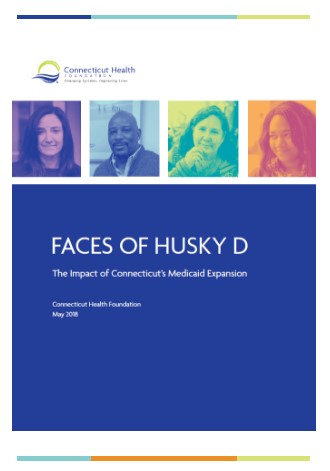
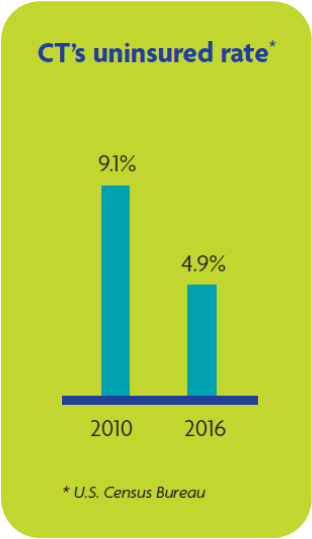
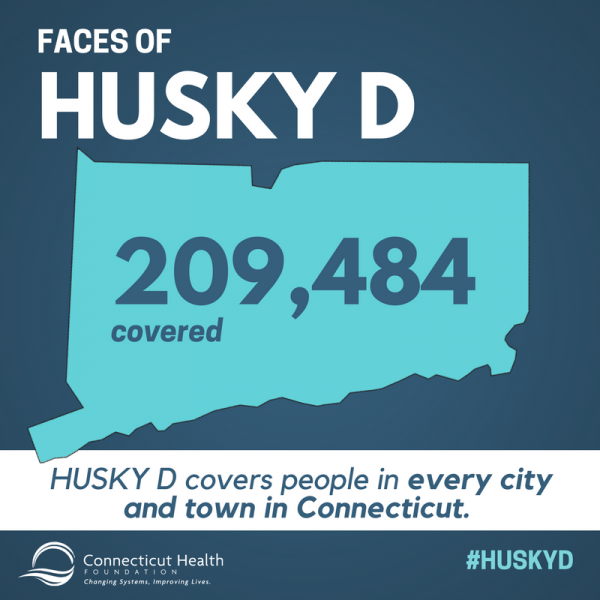 han 90 percent of the cost of the program, allowing Connecticut to cover more than 200,000 people with a relatively small budgetary impact.” Currently, the federal government pays 94 percent of the cost of coverage and the state pays 6 percent. The report also identifies challenges associated with HUSKY D, including concerns raised by health care providers about Medicaid payment rates and uncertainty in federal funding.
 The purpose of the pilot program, according to OPM, is to encourage and allow for the testing of fully autonomous vehicles (FAV) on local highways in Connecticut. The goal for the pilot program is to allow a variety of FAV testing to occur in four municipalities throughout the state, bringing Connecticut to the forefront of the innovative and burgeoning autonomous vehicle industry.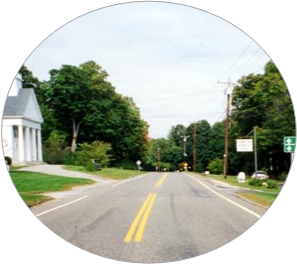
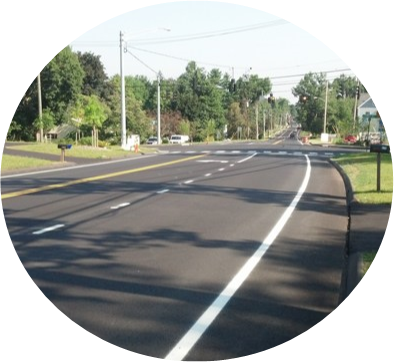 The state law outlines a framework of the minimum requirements to be included in agreements between municipalities and autonomous vehicle testers approved for participating in the Fully Autonomous Vehicle Testing Pilot Program (FAVTPP). The Connecticut law, according to the
 Congested highways, overflowing sewers, and corroding bridges, are constant reminders of the looming infrastructure crisis that jeopardizes our nation’s economic prosperity as well as the quality-of-life for our citizens. With new grades just published in 2017, the condition of our nation’s infrastructure has shown little to no improvement since receiving a collective grade of a C- in 1988 and with some areas even sliding toward failing grades.
 Westport (477), Cromwell (486) and New Fairfield (493).

 3 Seconds Behind the Wheel, which debuts on Connecticut Public on Thursday evening, is a new
  The film also gives audiences a firsthand look at emerging technologies that could one day offer solutions to rising crash statistics. The documentary follows researchers at Google who are using driving simulators to develop next-generation in-car infotainment systems, and explores how one Swedish company is experimenting with technology that could one day allow cars to understand human feelings and make driving decisions based on individual needs.

 The U.S. DOT invests in the future of transportation through its University Transportation Centers (UTC) Program, which awards and administers grants to consortia of colleges and universities across the United States. In the Northeast, other consortia with the same policy focus include a 9-institution UTC led by Rutgers, the State University of New Jersey and a 6-institution group led by Pennsylvania State University.
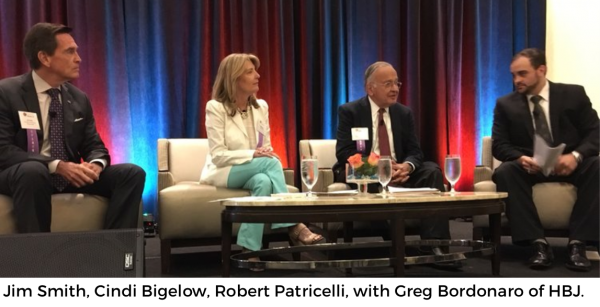
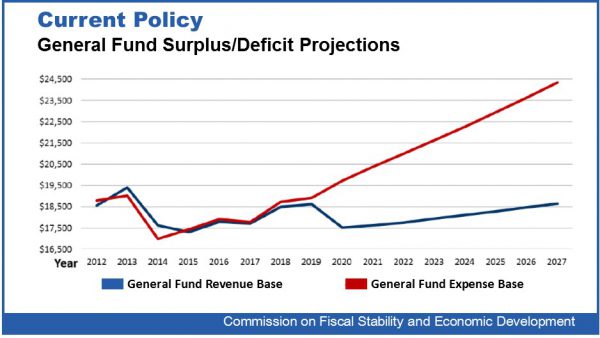 Smith and Robert Patricelli, former CEO & Founder of Women's Health USA, who co-chaired the panel, were featured along with Commission member Cindi Bigelow, CEO of Bigelow Tea, at an event coordinated by the Hartford Business Journal last week. It was one of nearly 100 forums, discussions and one-on-one meetings that the co-chairs and other commission members have had since their findings and recommendations were issued.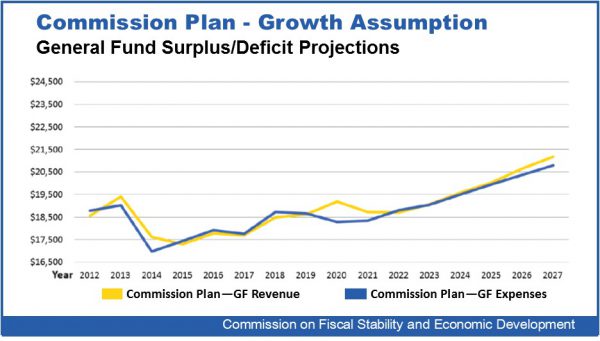
 The co-chairs say it is understandable that more was not done with the Commission’s recommendations during the short 2018 legislative session, largely because an election was just around the corner. Instead, the legislature opted to have the Office of Policy and Management (OPM) coordinate two studies, soon to get underway. One would look at the Commission’s recommendations that involve “rebalancing of state taxes to better stimulate economic growth without raising net new taxes”; the other would conduct a study of the proposal for reform of the Teachers' Retirement System.
 e the overall economic health of each town, their business climates, and their relative affordability. Next, we came up with a score for each town—a city’s highest possible score was 5. We also considered qualitative data like access to small business resources, overall quality of life, and economic and commercial development initiatives in each town to come up with a more holistic definition of the “best.”
 Katherine Houlihan was elected as president. She is a partner in Insurance Provider Group, a Wethersfield insurance brokerage serving clients in manufacturing and other industries, serving as Chief Talent Officer.
 The election is yet another milestone for Mayer in just the past six months. The great granddaughter of Bead Industries, Inc. founder, W. Calvin Bryant, she was promoted to CEO of the family-owned company at the start of this year. In addition to her duties as CEO and as an officer on the NHMA Board, she is a board member of the University of New Haven’s Entrepreneurship and Innovation Program.