New Haven is Among Safest Cities in U.S. for Cycling, Analysis Shows

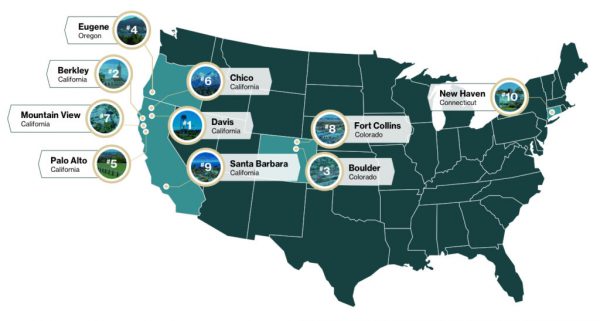
New Haven is one of the nation’s ten safest cities for cyclists, according to a new analysis.  In a ranking dominated by communities in California, with six of the top ten, New Haven was not only the lone Connecticut city to earn a spot among the top ten, it was the only city in the Northeast to do so.  The ranking saw Davis and Berkeley California named the safest cities for bicyclists, followed by Boulder, Colorado; Eugene, Oregon; Palo Alto, Chico, and Mountain View, California; Fort Collins, Colorado; Santa Barbara, California, and New Haven.  Minneapolis ranked number 12.

Five other Connecticut cities made their way into the top 100 nationally:  Hartford at number 55; Norwalk at number 82; Bridgeport at number 85; New Britain at number 91 and Waterbury, which was ranked at number 92.  Lower down the list were Stamford, ranked number 221 and Danbury,  which came in at number 229.

New Haven debuted Connecticut’s first protected bike lanes a year ago, according to published reports, from City Hall to Long Wharf, and city officials have said  “New Haven encourages alternative transportation options in the city so there is a variety of existing supported infrastructure available, including off-street shared use paths, on-street bicycle lanes, a contra-flow bike lane, bike boxes at intersections, on-street bike corrals, bike racks on sidewalks, bike racks on parking meters and bike racks on buses.”

"New Haven likely fared well due to their bike laws, a high percentage of spending per capita on bike lanes and their low percentage of fatal crashes," said Laura Schmitz, Safety Writer with Your Local Security. "The city of New Haven should be proud of their efforts to make their city safer for cyclists!"

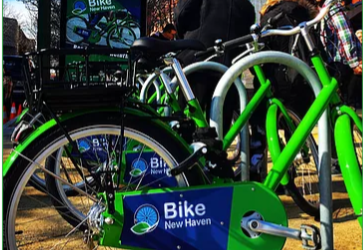
The city also launched a bike sharing program this year, in February, and celebrated National Bike to Work Day in May with a program encouraging bike riding.  In addition, Yale University is a Gold-level Bicycle Friendly University, as awarded by the League of American Bicyclists, and the city has developed on-line bike route maps.

The safest city in Massachusetts, Somerville, ranked number 58.  Providence was the safest in Rhode Island, but ranked number 482 on the national list.  Syracuse was determined to be the safest in New York State, ranking number 537.

The rankings were issued by yourlocalsecurity.com, an ADT Authorized Premier Provider.  To determine the safest and least safe US cities for bikers, metrics and data were used from Census.gov, the National Highway Traffic Safety Administration, People for Bikes, and The League of American Bicyclists to find the percentage of bike commuters, number of fatal crashes, amount of bike lanes, and what bike laws are in place or in the works in each city.

At the bottom of the list, the ten most dangerous cities included Los Angeles, New York, Houston, and five cities in Iowa.  Cities were included if these sources had data for them. Cities included had populations of 20,000 or more.

Community College Manufacturing Program Continues to Expand

Tunxis Community College in Farmington is establishing Connecticut’s eighth advanced manufacturing education programme as employers struggle to keep up with demand for workers. Brian J. Fries, president of Atlantic Precision Spring Inc., a Bristol-based metal-stamping manufacturer, said the college training program, set to launch in August, can’t come soon enough.

“The last thing I need is to have jobs and not have personnel,” he said following a meeting of employers and state education officials at Tunxis in Farmington.

Jim Lombella, president of Asnuntuck and Tunxis community colleges, said he receives phone calls daily “from employers looking for skilled workers.”

Connecticut is benefiting from rising demand for commercial and military jet engines, submarines and helicopters. However, thousands of manufacturers in the state are scrambling to hire qualified workers to keep up with production and fill jobs left vacant by retiring baby boomers.

More than 13,600 manufacturing workers — machinists, welders, tool and die makers and others — are needed, according to a survey by the Connecticut Business & Industry Association.

The state currently operates advanced manufacturing programs at Asnuntuck, Housatonic, Manchester, Middlesex, Naugatuck Valley, Quinnebaug Valley and Three Rivers community colleges.

“Now we have an opportunity to build on that at Tunxis,” Mark Ojakian, president of Connecticut State Colleges and Universities, said at the meeting.

Many central Connecticut manufacturing industries, including automotive, aerospace, defense and medical equipment, are expected to also benefit. The Tunxis program is close to what Ojakian called a “ripe market for manufacturing” in Bristol, Hartford, New Britain, Newington, Plymouth and Southington.

It will offer associate degrees in manufacturing and machine technology. It also will offer certificates in machine technology and manufacturing electro-mechanical maintenance technology.

The program, accommodating 30 to 50 students, will provide course work that meets the needs of manufacturers and avoids a “disconnect between employers in the region and programs on campus,” Ojakian said.

Citing the state’s fiscal troubles, he asked business representatives to lobby the General Assembly for funding for the advanced manufacturing centers.

“We cannot scale this without additional support,” he said.

Lombella said the initial cost will be $700,000 for laboratory equipment, renovation and other requirements. But, he said, there will be a funding gap between the $16,000 it costs the college to educate each student and tuition of $8,500.

___________________

This article first appeared in The Gulf Today, a 36-page English-language daily newspaper based in the United Arab Emirates.

Engineering Entrepreneurship Leads Three CT Institutions to Collaborate in Masters Program

The latest effort to attract talented entrepreneurs from around the world to the state of Connecticut is a new partnership between the University of Connecticut, Trinity College and the University of New Haven, launching a joint Master’s of Engineering in Global Entrepreneurship. It is the first engineering-focused entrepreneurial graduate degree in the state.

The new master’s degree program aims to create what officials describe as “a nurturing ecosystem” to enable novice entrepreneurs to learn best practices, receive mentorship from veteran entrepreneurs, and be “set-up for success.”

The program, which is fully funded, will recruit individuals from all over the world who are in the early stages of developing start-ups, or who have shown an impressive penchant for entrepreneurship, to apply to the program. Accepted students will receive full tuition remission, a yearly stipend, and significant other resources to help them commercialize their ventures.

“This program, and its related initiatives, will be a major step towards bringing in the best and the brightest from all over the world, giving them the tools they need, and turning them into major entrepreneurial advocates for the state of Connecticut,” said UConn associate dean of engineering Mei Wei. “If we can bring them in early, train them, and open up doors toward commercialization, then we can literally help create start-ups from scratch, and help them to grow roots in this state.”

Similar programs are being offered by universities across the country, including at Brown, Dartmouth, University of Pennsylvania, and Villanova.  Some include a focus at the undergraduate and graduate levels, while others are certificate, rather than degree, programs. Support for the Connecticut program comes from CTNext, with a funding match from UConn’s Schools of Engineering and Business, Trinity College, and the University of New Haven.

Kazem Kazerounian, dean of UConn’s School of Engineering, says it is essential to spread the net wide when recruiting in order to bring in the most talented students, regardless of their state or country of origin, in the same way student-athletes are recruited. “We have to search nationally and internationally to assemble the best possible collection of talent.”

John Elliott, dean of the School of Business, says that creating more entrepreneurial programs in a wider variety of academic concentrations will have a significant impact on Connecticut’s economic future.

“At the School of Business, we have a tremendous opportunity to help other entrepreneurs, in the sciences, engineering, medicine, and other specialties, to develop the business knowledge and meet the mentors and advisers who can help them take a great idea and bring it to the marketplace.

The three institutions will work during the next few months to develop the curriculum, establish an advisory board, create a virtual inter-institutional platform, and plan to start recruiting for the first cohort of students. All three institutions have a lengthy pedigree in engineering, and effective programs to advance entrepreneurship at the undergraduate level.  UNH offers the Kern Entrepreneurial Engineering Network (KEEN), focused on fostering an entrepreneurial mindset in engineering students.  Trinity College President Joanne Berger-Sweeney has described engineering, entrepreneurship and innovation as part of the college’s DNA.

The program is being co-led by David Noble, professor-in-residence in management, director of the Peter J. Werth Institute for Entrepreneurship & Innovation, and co-director of the UConn Entrepreneurship and Innovation Consortium; Hadi Bozorgmanesh, professor of practice in engineering entrepreneurship and co-director of the UConn Entrepreneurship and Innovation Consortium; Sonia Cardenas, dean of academic affairs and strategic initiatives at Trinity College; and Ron Harichandran, dean of the Tagliatela College of Engineering at the University of New Haven.

PERSPECTIVE: Marketing Connecticut to College Grads

by Kevin McLaughlin As a rising senior at the College of the Holy Cross in Worcester, Massachusetts, I find that there is one thing at the forefront of my mind, and the minds of all my fellow classmates who are entering their final year of college: post-graduation plans.

The mere mention of those three words causes stress and anxiety levels to skyrocket amongst many college seniors. The significance that those in college place on post-grad plans can be discerned through the fact that, according to a major annual survey of incoming students conducted by UCLA, the number one reason that people attend college is to “get a better job,” which has superseded the former number one reason, which, before 2006, was to “learn about things that interest me.”

Disregarding the question of whether this shift is a positive or negative one, the fact remains that college students today are overwhelmingly preoccupied with securing their futures. Despite this, college students are struggling to find the good jobs that they desire. According to the Federal Reserve Bank of New York, nearly half of new college graduates are underemployed, which means that they are working in jobs that do not require a Bachelor’s degree.

If college students care more than ever about getting a job after graduation, then why are they struggling to find good jobs in a relatively strong economy? The disjunction here is apparent. Many potential factors can explain this disconnect, but one that I find prevalent on my campus is that all rising seniors seem to want to work in the same select few cities.

When you ask the average college student at Holy Cross where he or she would like to work post-graduation, the answer is almost always one of two locations: Boston or New York City. Sometimes you will hear answers that are as exotic as Washington D.C., San Francisco, or Chicago, but places more obscure than these are rarely, if ever, considered by the vast majority of Holy Cross students, and it seems as if this is a familiar refrain expressed across colleges throughout the northeast.

This reality is disconcerting for Connecticut because one key way to develop the Connecticut economy is to inject it with the region’s best available young talent. This will fail to happen if college students never consider Connecticut, along with its cities and towns, as a worthwhile destination for post-graduate employment.

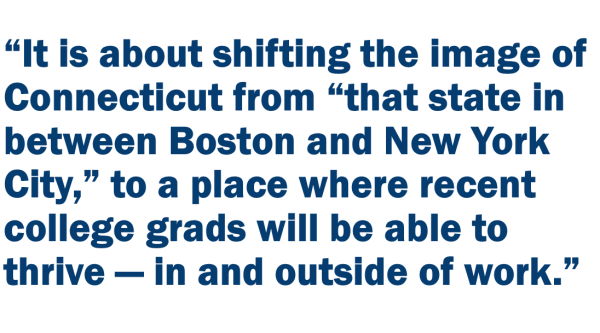
If there is a large supply of new college graduates wishing to find good jobs, and there is demand from the Connecticut economy for these new college graduates, the question becomes how Connecticut can attract these students by marketing itself as the great job source and place to live that it is. It is about shifting the image of Connecticut from “that state in between Boston and New York City,” to a place where recent college grads will be able to thrive—in and outside of work.

With the goal of conveying some of the qualities that make Connecticut a great place to live and work for young college grads, the following are my top 5 qualities of Connecticut that should attract young workers:

  1. Cities – Connecticut cities such as Hartford and New Haven offer cultural attractions that young college graduates crave, but are not as large as Boston and New York City—a smaller size that allows young people to feel a more integral part of the community. Cultural attractions in Connecticut’s cities include concerts, festivals, and ballgames which, along with vibrant bars and clubs create a great nightlife.
  2. Nature – Immediately outside of its cities, Connecticut offers premiere natural attractions, with serene lakes and miles of hiking and walking trails, that give young people an escape into nature only minutes outside the city. Furthermore, Connecticut also has many miles of breathtaking shoreline which are a quick drive from most Connecticut towns and cities. Weekend or even day-trip getaways to lakes, mountains, or to the beach are easily accomplished in Connecticut, which creates a balance between city and country living that is unrivaled by any location proximate to downtown Boston or New York City.
  3. Convenient Location – In addition to being situated between Boston and New York City, with easy access to both, Connecticut provides its residents with proximity to a hassle free international airport and easy access to busses and trains. This convenience means that if you want to leave the state for any reason, there are painless ways to get anywhere across the country, and the globe.
  4. Affordable Rents – Connecticut offers housing that is far more affordable than that found in either New York City or Boston. This is evidenced by the statistic that, according to the apartment listing website Rent Jungle, the average one-bedroom apartment in Boston rents for $2703 a month, while the average one-bedroom apartment in Hartford rents for only $1291 a month. This significantly lower rent gives recent college graduates more available capital to spend on cultural attractions, and to pay back student loans!
  5. Opportunities to Give Back – Connecticut offers its recent grads great opportunities to volunteer and improve the lives of people around the state. Since Connecticut is home to many small cities and towns, young volunteers can have a real, tangible impact in those communities. This is a significant social impact that they cannot as easily access in big cities such as Boston and New York.

If Connecticut can successfully market itself as an ideal place for recent college graduates, a more significant portion of those graduates will move to Connecticut towns and cities, which will in turn promote economic growth, leading to more opportunities. It is a path dependent process, meaning that once a more significant portion of young people settles in Connecticut, the culture will shift, and more young people will follow. Now, it is imperative to get the ball rolling.

____________________________

Kevin McLaughlin of Farmington will be a senior at the College of the Holy Cross in Worcester, MA this fall.  This piece first ran as a blog post on the website of the Connecticut Economic Resource Center (CERC), where he is interning this summer.  It is reprinted with permission.


State Funds Continue to Support Transit-Oriented Development; $8.5 Million in New Grants to 5 Municipalities

Five Connecticut communities – Danbury, Hartford, Stamford, Torrington and West Hartford - will share approximately $8.5 million in funding under the second phase of the state’s 2017 Responsible Growth and Transit-Oriented Development (TOD) Grants. They are the latest in a series of competitive state grants to be awarded in recent years to support the development and implementation of TOD initiatives around the state. The competitive grant program “supports transit-oriented development and responsible growth in the state and is targeted at boosting economic activity and creating jobs,” according to state officials. Administered by the Office of Policy and Management (OPM) the grants rely on a combination of funding from the Responsible Growth Incentive Fund and the Transit-Oriented Development and Pre-development Fund.

A year ago, OPM released a request for applications for the current grant program, and the State Bond Commission approved a total of $15 million to be used – comprised of $5 million from the Responsible Growth Incentive Fund and $10 million from the Transit-Oriented Development and Pre-development Fund. Following that, OPM – with input from other state agencies – reviewed, rated, and ranked each of the proposals.

In this round of funding, Danbury’s Downtown Streetscape Project is receiving $2 million to prepare design drawings and construct sidewalk and streetscape infrastructure improvements along key downtown pedestrian routes within the vicinity of the Danbury train station. Improvements include the new construction or replacement of sidewalks, intersection improvements, landscaping, removal and installation of street trees, ornamental lighting, and pedestrian access improvements as detailed in the city’s Downtown TOD Planning Study.

Stamford’s Springdale TOD Implementation project is receiving $1,994,188 to prepare design and engineering drawings and construct improvements around the Springdale train station consistent with the recommendations of the Glenbrook/Springdale TOD Feasibility Study. Improvements include safer bicycle and pedestrian access to the village center and rail station, realignment and modification of the station’s main entrance at Clearview Avenue, and other improvements to landscaping, lighting, and general accessibility in and around the station area.

In Torrington, the East Main Street (Route 202) Sidewalk Implementation will receive $1,997,700 to construct new sidewalks, and repair/replace existing sidewalks along portions of East Main St (Route 202) between Torrington Heights Road and the Big Lots Plaza. The city will use a portion of the funding to evaluate existing conditions at nine signalized intersections within the project boundary, and at more complex sections of roadway which lack sidewalks, to determine if additional pedestrian improvements are feasible.

Hartford’s Main Street Complete Streets Vision Plan and Innovation District Activation will receive $450,000 to develop a Complete Streets Vision Plan for a section of Main Street from State House Square to the vicinity of South Green in order to identify improvements to bike and pedestrian amenities, and prepare complete construction documents for future buildout. In addition to bike and pedestrian amenities, the final plan is to identify potential improvements to transit services, new streetscaping, a new cycle track, and other linkages to improve bike and pedestrian connections within the project area.

A portion of Hartford’s funding will also be used to implement the Innovation District Activation Program, to provide grants to new and existing businesses within the project area to support capital and other investments such as façade improvements, building infrastructure, marketing, business planning, public events, and other business/community support services with the objective of creating vibrant employment and residential hubs.

West Hartford’s New Park Avenue Complete Streets Implementation will receive a grant of $2,000,000 to construct complete streets infrastructure improvements along New Park Avenue from New Britain Avenue to Oakwood Avenue, consistent with the recommendations of the 2017 New Park Avenue Transit Area Complete Streets Study. Improvements include a road diet with center turn lane, landscaped medians and protected bike lanes, new street trees, lighting, wayfinding signage and other amenities, and a pocket park at the gateway to the Trout Brook Trail.

“Transportation isn’t just about cars, trains, and buses – it’s about building vibrant communities and continuing to make Connecticut a more attractive place to live, visit and do business,” Gov. Malloy said in announcing the grants. The awards “will build upon the smart, targeted investments we have made in recent years, which have already led to significant growth in transit-oriented development across the state.”

The first round of grants under the current initiative were released in December 2017, with eleven projects to receive $15 million.  Communities selected to receive funds were Berlin, Clinton, East Windsor, Madison, New Britain, Norwalk, Stratford, Wallingford, Winchester, Windsor Locks, and the Southeastern Connecticut Council of Governments.

In 2016, state officials announced that twenty projects in towns and cities across Connecticut would receive a total of nearly $11 million to transit-oriented development and responsible growth, targeted at boosting economic activity and creating jobs. At the time, Gov. Malloy said “Our focus is on not only improving overall quality of life for residents in these areas, but also encouraging economic development by making our towns and cities more accessible."

Communities selected were Berlin, Branford, Canton, Clinton, Danbury, Hartford, Madison, New Canaan, New Haven, Old Saybrook, Torrington/Winsted, Waterbury, Westport, Windsor, and Windsor Locks.  Also receiving funds were the Capitol Region Council of Governments, Naugatuck Valley Council of Governments, and Northwest Hills Council of Governments.

Previously, 11 state grants between $75,000 and $150,000 were provided in 2015 to “prospective planning projects that best support transit oriented development.”  Receiving the state grants were Berlin, Bethel, Bridgeport, Enfield, Meriden, Milford, New Britain, New Haven, Stratford, Wallingford and West Hartford.

Aetna, CVS Health Earn Place Among 50 Civic-Minded Companies

Hartford-based Aetna and Rhode Island-based CVS Health, with their merger plans currently under review at the state and federal levels, have both been named to The Civic 50 for 2018, reflecting their community-minded programs and policies.  They are among the public and private companies with U.S. operations and revenues of $1 billion or more, selected based on four dimensions of their U.S. community engagement program.  Both companies also reached the list of 50 in 2017. The Civic 50 survey, produced annually since 2011 for Points of Light, has provided “a national standard for superior corporate citizenship and showcased how companies can use their time, skills and other resources to improve the quality of life in the communities where they do business,” according to Points of Light.

The survey analysis is administered for the Points of Light Foundation by True Impact, a company specializing in helping organizations maximize and measure their social and business value, and analyzed by VeraWorks. The survey instrument consists of quantitative and multiple-choice questions that inform the Civic 50 scoring process. It is the only survey and ranking system that exclusively measures corporate involvement in communities.


Among findings highlighted in the latest annual report:

  • Civic 50 companies are evolving from being supporters to engaging as stewards of social causes. Instead of confining themselves to writing checks or piggybacking off of nonprofit work, Civic 50 companies are involving themselves in all aspects of social causes which they champion. In 2018, 70 percent of Civic 50 companies took national leadership positions on four or more public education or policy efforts, an increase from 62 percent in 2017.
  • Civic 50 honorees continue to exemplify one of the core tenets of corporate citizenship: "doing well by doing good". The 2018 honorees demonstrate that integrating community engagement initiatives into business strategy can support business interests. The 2018 honorees are using community engagement to drive key business functions, including employee engagement (86 percent), marketing/PR (78 percent), diversity and inclusion (74 percent), skill development (74 percent) and stakeholder relations (56 percent)
  • Leading innovations for purpose at work, Civic 50 honorees have found community engagement as a meaningful and valuable investment to inspire employee changemakers and create a strong culture of giving back. 68 percent of Civic 50 companies include community engagement as a formal component of employees' performance reviews, an increase from 62 percent in 2017.
  • Civic 50 companies understand the importance of impact: to ensure the sustainability and success of their community engagement initiatives, Civic 50 companies are using measurement practices to not only measure quantifiable outputs, but social outcomes. Civic 50 companies are making sure to measure social outcomes as part of regularly implemented data collection. In 2018, 68 percent of Civic 50 companies collected and analyzed data on organizational grants and 42 percent did so for volunteerism.

Among the other companies included in the Civic 50 are KeyBank, Marriott International, Wells Fargo, UPS, Prudential Financial, and Comcast NBC Universal.

In its Corporate Social Responsibility Report, Aetna noted that as the company “pursues its goal of building healthier communities, we view social responsibility as a critical driver of success and an integral part of how we conduct our business.”

The report notes that “three quarters of Aetna employees are women, a third are people of color, 11 percent self-identify as LGBT and nearly 5 percent self-identify as having a disability.  Additionally, millennials comprise 31 percent of Aetna’s employees, which was a key driver of our new program to provide up to $10,000 to qualified recent college graduates to help them repay education loans.”
CVS Health, in the company’s social responsibility report, shares that their work “is rooted in our company’s values:  innovation, collaboration, caring, integrity and accountability.”  Three pillars – Health in Action, Planet in Balance and Leader in Growth – make up the company’s Prescription for a Better World, which provide the framework for the CVS Health strategy in corporate responsibility.

The four-dimension criteria used in assessing companies include:

  • Investment: How extensively and strategically does the company apply its resources to community engagement in the United States, including employee time and skills, cash, in-kind giving and leadership?
  • IntegrationHow does the company integrate their U.S. community engagement programs into key business functions, including employee engagement, marketing/PR, diversity and inclusion, recruiting, stakeholder relations and skill-development?
  • InstitutionalizationHow does the company support community engagement in the United States through organizational policies, systems and incentives?
  • ImpactHow does the company measure the social and business impact of their U.S. community engagement program?

Points of Light is the world’s largest organization dedicated to volunteer service.  It grew from the vision of 1,000 points of light shared by founder President George H. W. Bush in his 1989 inaugural address. The Points of Light Corporate Institute is a leading resource for community-minded companies looking to build and expand effective employee volunteer programs.

Report: Connecticut's Medicaid Expansion Increased Coverage, Access to Preventive Care and Behavioral Health Treatment

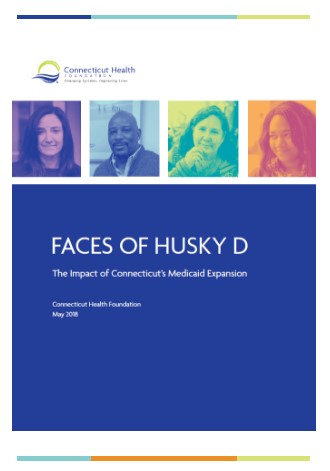
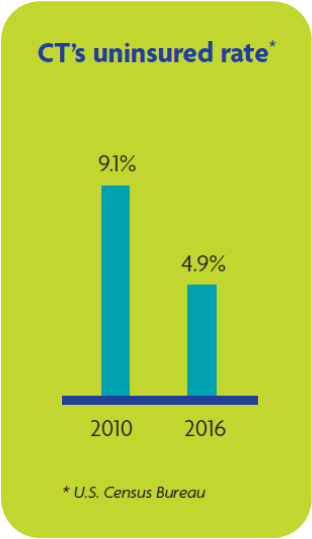
A recently issued report found that emergency department visits are down; coverage seen as critical in fight against opioids has expanded, and preventative care and mental health care have become more prevalent – all resulting from a 2010 policy decision made by Connecticut’s elected officials to expand Medicaid coverage. That decision, made collaboratively by a Republican Governor (M. Jodi Rell) and Democratic-controlled legislature – helped to reduce Connecticut’s uninsured rate from 9.1 percent in 2010 to 4.9 percent in 2016 and created a significant source of coverage for preventive health services and behavioral health care, according to the report developed by the Connecticut Health Foundation.

The report examines the impact of HUSKY D, as the Medicaid expansion is known, and highlights a number of key findings:

  • Most people covered by HUSKY D are using their insurance to get care. Just over 80 percent of people with HUSKY D used the coverage for preventive or outpatient health services in 2016.
  • Emergency department usage among HUSKY D members is down significantly. The rate of emergency department visits fell by 36 percent from 2012 to 2016.
  • HUSKY D is a significant source of coverage for behavioral health care. In 2016, more than one in three HUSKY D members – 36 percent – used their coverage to get care for a mental health condition or substance use disorder.
  • Outcomes have improved for diabetes patients with HUSKY D. A review of more than 500 HUSKY D members with diabetes found that the percentage whose blood glucose was under control rose from 31 percent to 50 percent from 2012 to 2016.

The report also examines the role HUSKY D plays in other policy work in the state, including addressing the opioid crisis and helping those leaving prison get medical and behavioral health treatment when they return to society. The report notes that before HUSKY D, individuals with substance use disorders were generally not eligible for Medicaid, creating a major barrier to treatment.

“Health insurance coverage is a critical first step to health, but it is also important to ensure that people are able to use that coverage to get care, and for that care to make a difference in people’s health,” said Patricia Baker, president and CEO of the Connecticut Health Foundation. “This research underscores the importance of HUSKY D in giving low-income state residents the tools to take care of their health.”

HUSKY D covers adults ages 19 to 64 who do not have minor children and whose income falls below 138 percent of the poverty level – the equivalent of $16,643 for an individual. (For comparison purposes, a person working 30 hours per week at Connecticut’s minimum wage – $10.10 per hour – would earn $15,756 in a year, the report indicates.)

The report concluded that “nearly eight years after Connecticut expanded HUSKY to cover more low-income adults, HUSKY D has made a significant impact on the state’s uninsured rate and the lives of thousands of people. The majority of those covered are using this insurance to get preventive care, and the rate of emergency department usage has declined, a promising trend.”

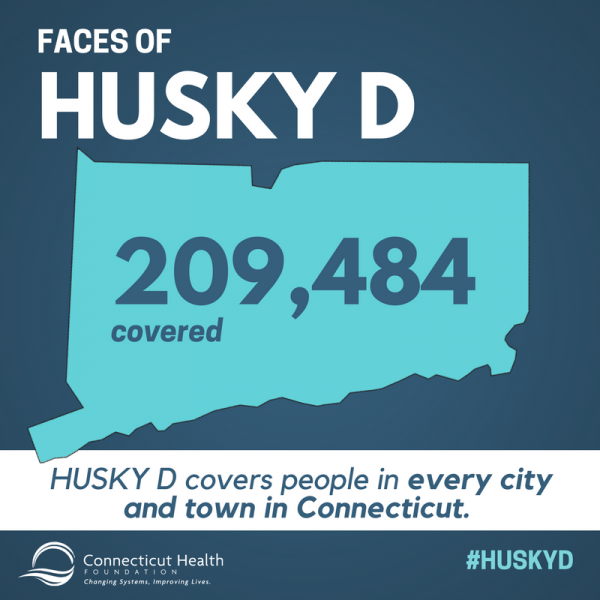
The report also notes that the federal government has “financed more than 90 percent of the cost of the program, allowing Connecticut to cover more than 200,000 people with a relatively small budgetary impact.” Currently, the federal government pays 94 percent of the cost of coverage and the state pays 6 percent. The report also identifies challenges associated with HUSKY D, including concerns raised by health care providers about Medicaid payment rates and uncertainty in federal funding.

The report’s analysis indicates that HUSKY D enrollees live in every city and town in Connecticut.  The largest number of covered individuals live in Hartford (18,404), Bridgeport (16,330), New Haven (15,583), Waterbury (13,989), New Britain (8,439) and Stamford (6,110).

The Connecticut Health Foundation is the state’s largest independent health philanthropy dedicated to improving lives by changing health systems. Since it was established in 1999, the foundation has supported innovative grantmaking, public policy research, technical assistance, and convening stakeholders to achieve its mission – to improve the health of the people of Connecticut. Since its creation, the Connecticut Health Foundation has awarded grants totaling more than $60 million in 45 cities and towns throughout the state.


CT Pilot Program Testing Fully Autonomous Vehicles Begins Accepting Municipal Applications

Driverless cars may be coming to a Connecticut town near you. The state Office of Policy and Management, pursuant to Public Act 17-69, has begun accepting applications from municipalities to participate in a Fully Autonomous Vehicle Testing Pilot Program (FAVTPP). The state agency can select up to four municipalities to participate in the pilot program.

The purpose of the pilot program, according to OPM, is to encourage and allow for the testing of fully autonomous vehicles (FAV) on local highways in Connecticut. The goal for the pilot program is to allow a variety of FAV testing to occur in four municipalities throughout the state, bringing Connecticut to the forefront of the innovative and burgeoning autonomous vehicle industry.
Thus far, state and local officials indicate that two municipal application have been filed, from Stamford and Windsor Locks, three additional communities have expressed interest (Bridgeport, Manchester, and New Haven) and at least one additional application is anticipated.  A handful of other communities have expressed some degree of interest, but are uncertain if they will be applying to participate in the pilot program.  OPM expects to begin its review process of the filed applications shortly.

In order to apply, interested municipalities must complete and submit the formal application now on the agency’s website, along with a copy of the City/Town Council’s resolution approving the application.The law stipulates that OPM consult with the Department of Motor Vehicles (DMV), Department of Transportation (DOT), Department of Emergency Services and Public Protection (DESPP) and the Connecticut Insurance Department (CID).

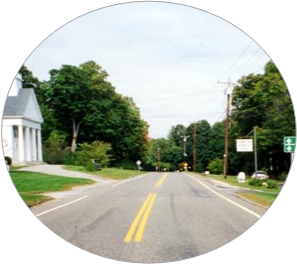
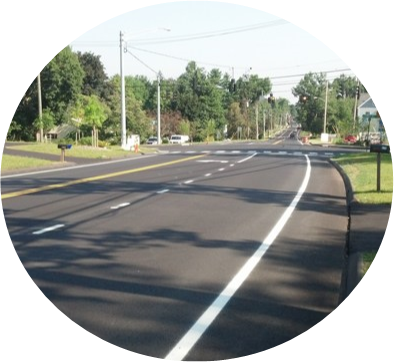
Connecticut municipalities provide a wide range of challenges and opportunities for testing the limits of FAV technologies and services, according to the program description. Examples cited include operation in communities with varying climate and weather conditions, urban and rural geographies, access or lack thereof to adequate transportation and/or workforce opportunities, new and aging infrastructure, varying levels of traffic volumes and congestion and users of multiple modes of transportation including car, pedestrian, bicycle, bus, rail, freight, etc.

Prior to completing an application, interested municipalities are encouraged to search for and partner with interested autonomous vehicle testers.  The application must include “Specific Location(s) and Route Where FAV Testing is Expected to Occur.”  Municipalities are asked to attach a map “with the anticipated location(s) and route highlighted” and to “identify all public roads, all private roads, and any important entities or buildings (i.e. critical infrastructure, schools, hospitals, fire stations, etc.) within/near the testing area.”

OPM also is asking the applying municipalities to describe what it hopes to achieve by participating in the pilot program, why specific locations were selected, and “the municipality’s ability to safely oversee fully autonomous vehicle testing.”

The program requirements include that while operating a FAV, the autonomous vehicle operator shall at all times:

  1. Obey all traffic laws, provisions of the general statutes and ordinances of the applicable municipality concerning the operation of motor vehicles.
  2. Be seated in the driver's seat of the FAV.
  3. Be monitoring the operation of the FAV.
  4. Be capable of taking immediate manual control of the FAV.

In addition, municipalities are required to conduct a public outreach campaign to notify local officials, first responders, the general public and local media outlets about their participation in the FAVTPP prior to testing.  At a minimum, as part of the public outreach campaign, the municipality must outline an education program for police and residents regarding FAVs and the municipality’s participation in the FAVTPP; and share the finalized specifications on where and when such FAV(s) will be tested within the municipality as part of the FAVTPP.

The posting of electronic or printed signs at various testing area entry and exit points may be required by the municipality to inform the public and emergency responders when and where testing of FAVs is taking place. The signage must be approved by the municipality’s Traffic Authority, and that with respect to State highways and bridges and State railroad rights-of-way, the planned signage must be approved by the state DOT.

The state law outlines a framework of the minimum requirements to be included in agreements between municipalities and autonomous vehicle testers approved for participating in the Fully Autonomous Vehicle Testing Pilot Program (FAVTPP). The Connecticut law, according to the National Conference of State Legislatures (NCSL), specifies the requirements for testing, including having an operator seated in the driver’s seat and providing proof of insurance of at least $5 million. It also establishes a task force to study fully autonomous vehicles. The study must include an evaluation of NHTSA’s standards regarding state responsibility for regulating FAVs, an evaluation of laws, legislation and regulations in other states, recommendations on how Connecticut should legislate and regulate AVs, and an evaluation of the pilot program.
In the event that a FAV experiences a crash during the FAVTPP in which a death, physical injury or property damage occurs the autonomous vehicle tester and applicable municipality must comply with specific notification and investigation procedures outlined by OPM.  A recent testing death in Arizona continues to receive scrutiny.

According to NCSL, 29 states including Connecticut have enacted legislation related to autonomous vehicles, and the Governors of seven additional states have issued executive orders on the subject.

PERSPECTIVE – America’s Infrastructure: Is Our Country on the Road to Ruin?

by Roger L. Kemp, PhD The term “infrastructure” refers to the basic facilities and installations necessary for society to operate.

These include public transportation and communication systems (highways, airports, bridges, telephone lines, cellular telephone towers, post offices); educational and health facilities; water, gas, and electrical systems (dams, power lines, power plants, aqueducts); and such miscellaneous facilities as prisons, national park structures, and other improvements to real property owned by higher levels of government.

In the United States, the infrastructure components are divided into the private and public sectors. Public facilities are owned by the municipal, county, state, and federal governments. There are also special district authorities, such as the Port Authority of New York and the Los Angeles Department of Water and Power, among many others.

The American Society of Civil Engineers (ASCE) — the only professional membership organization in the nation that grades our nation’s public infrastructure — recognizes and evaluates the major categories of our government’s infrastructure: aviation, bridges, dams, drinking water, energy, hazardous waste, inland waterways, levees, ports, parks and recreation, rail, roads, schools, solid waste, transit, and wastewater.

Managing and Financing America’s Infrastructure

All levels of government are facing a new era of capital financing and infrastructure management. Revenues that once were available for capital construction, restoration, and maintenance, have either diminished or evaporated entirely in recent years. Portions of our national public infrastructure that were once adequate are now experiencing signs of distress, even decay, with no end in sight to the ongoing deterioration of our nation’s public infrastructure.

Congested highways, overflowing sewers, and corroding bridges, are constant reminders of the looming infrastructure crisis that jeopardizes our nation’s economic prosperity as well as the quality-of-life for our citizens. With new grades just published in 2017, the condition of our nation’s infrastructure has shown little to no improvement since receiving a collective grade of a C- in 1988 and with some areas even sliding toward failing grades.

ASCE’s 2017 Report Card for America’s Infrastructure assesses the same categories as it did in their previous survey. The grade comparisons of the various categories of America’s infrastructure between ASCE’s original 1988 survey, and its most recent survey in 2017, are highlighted below in alphabetical order:

  • Aviation – Received a grade of B- in 1988, and a grade of D in 2017.
  • Bridges – Received a grade of C+ in 1988, and a grade of C+ in 2017.
  • Dams – While not graded in 1988, they received a grade of D in 2017.
  • Drinking Water – Received a grade of B- in 1988, and a grade of D in 2017.
  • Energy – While not graded in 1988, this category received a grade of D+ in 2017.
  • Hazardous Waste – This category receive a grade of D in 1988 and D+ in 2017.
  • Inland Waterways – While not graded in 1988, they received a grade of D in 2017.
  • Levees – While not graded in 1988, they received a grade of D in 2017.
  • Parks and Recreation – While not graded in 1988, they received a grade of D+ in 2017.
  • Ports – While not graded in 1988, they received a grade of C+ in 2017.
  • Rail – While not graded in 1988, this category received a grade of B in 2017.
  • Roads – Received a grade of C+ in 1988, and a grade of D in 2017.
  • Schools – While not graded in 1988, this category received a grade of D+ in 2017.
  • Solid Waste – Received a grade of C- in 1988, and a grade of C+ in 2017. This is the only infrastructure category to increase its grade since the original “graded” evaluation was done nearly 30 years ago.
  • Transit – Received a grade of C- in 1988, and a grade of D- in 2017.
  • Wastewater – Received a grade of C in 1988, and a grade of D+ in 2017. The average public infrastructure grade for our nation was a C- in 1988 and a D+ in 2017.

The most recent Infrastructure Report Card reveals that we made some incremental progress towards restoring our nation’s public infrastructure. But it has not been enough! As of 2017, America’s cumulative GPA is once again a D+, the same as it was four years ago after the last evaluation of our nation’s infrastructure.

The 2017 grades range from a B for Rail to a D- for Transit, illustrating the clear impact of our public investment — or lack thereof — in our nation’s infrastructure categories.

National Leadership Is Needed

The prevailing philosophy of our national government has been to let the lower levels of government (states, counties, and cities) solve their own infrastructure problems, regardless of the nature of their complexity or the magnitude of the funds needed. If a solution is to be forthcoming, the political posture of our government needs to become more positive and proactive.

Assertive federal government leadership, like the President and the Congress, must make the difficult policy decisions, as well as approve the funding required, to solve our country’s infrastructure problem.

Fundamental changes are needed to redirect national priorities about how public infrastructure investments are made. Officials at all levels of government must recognize that they can no longer build public facilities without adequately maintaining them in future years.

__________________________________________ 

Dr. Roger L. Kemp, PhD., has been a career city manager in Connecticut, California and New Jersey. He has been an author, editor, and contributing author to nearly 50 books focusing on America’s cities, including their public infrastructure. He is a Practitioner in Residence, Department of Public Management, University of New Haven, and can be reached via his website or at rlkbsr@snet.net.  This article first appeared in the Spring 2018 issue of CT Planning and appears here with permission of the author and CT Planning, a publication of the Connecticut Chapter of the American Planning Association.

Nine CT Communities Among Nation’s 500 Best to Start Small Business

Nine Connecticut communities are among the best in the nation for starting a small business, according to student loan company LendEdu, which has produced a list of the 500 Best Cities to Start a Small Business in the U.S. Storrs/Mansfield topped the list in Connecticut at 89. Also making the list were Stamford (178), Farmington (214), Windsor (247), Hamden (285), Oxford (387), Westport (477), Cromwell (486) and New Fairfield (493).

LendEdu, founded in 2014, describes itself as a marketplace for private student loans, student loan refinancing, credit cards and personal loans.

The top 10 included three cities in North Dakota, four from Virginia, and cities in Maryland, Colorado and Alabama.  The highest ranked New England community – Canton, MA – was number 49. Storrs-Mansfield was the leading community in Connecticut.

Cities were ranked based on the following criteria:

  • Population Score (20 points maximum) – including the daytime population score - the difference in the normal population and the population that is present during standard working day hours – and the population growth score - forecasted population growth over the next five years.
  • ​Income Score (40 points maximum) – consisting of the average disposable income available to residents and forecasted income growth over the next five years.
  • Expense Score (40 points maximum) – which includes consideration of property tax rates, sales tax rates, average cost of utilities, rate of burglaries and property crimes compared to the national averages.

On the population score rankings alone, New Fairfield had the eighth best score in the nation.  On the income score scale, Hamden ranked 29th, highest among the Connecticut communities.  On the Expense scale, Stamford, just outside the top 50, was tops in Connecticut.