PERSPECTIVE: “Mamas, Please Let Your Babies Grow Up to Be CPAs” (apologies to Willie and Waylon)
/by Bonnie Stewart
Farm Aid, an event synonymous with Willie Nelson, will visit Connecticut this year on September 28. The event makes me think of the great Willie and Waylon (Jennings) country anthem where each chorus pleads “Mamas, don’t let your babies grow up to be cowboys…” The duo continues their advice with “Let 'em be doctors and lawyers and CPAs…” 
Well, all right, they don’t actually sing “and CPAs…”
But they should. Here’s why…
Parents counseling their children on careers would do well to suggest that of the certified public accountant, as it offers outstanding opportunity, reward, and respect. There’s never been a better time than today to be a CPA -- except for maybe tomorrow! And it comes down to – you guessed it – the numbers.
Opportunity
First, we need more CPAs. Lots more. Connecticut’s CPA profession is aging. We expect that 75 percent of CPAs will retire over the next 15 years; at the Connecticut Society of Certified Public Accountants (CTCPA) it’s referred to as “The CPA Silver Tsunami.” And yes, it’s tied directly to the national demographic phenomenon of Baby Boomers qualifying for Medicaid to the tune of 10,000 per day – every day – until 2029, according to the Pew Research Center.
 In its 2018 Salary Guide for Accounting and Finance Professionals, Robert Half, a global staffing firm specializing in accounting and finance professionals, reports “There’s high demand for top talent in public accounting due to a severe shortage of skilled candidates…” Their “In-Demand Certifications” list puts “CPA” at the top.
Nationally, college accounting enrollment remains at an all-time high – 79,524 in 2016 – but the number of new CPA exam candidates for that year was far lower at 48,044. At the same time, the U.S. Bureau of Labor Statistics reports that employment of accountants and auditors is expected to grow faster through 2018 than for all the occupations the bureau tracks.
Some CPA firms now start recruiting accounting majors on campus as early as the students’ sophomore and even freshman years, and certainly by the time they are juniors and seniors, these students know where they’ll land well before they don cap and gown and “walk.” Not every college grad shares such a bright employment outlook. Hey, even during the 2009 recession, the unemployment rate for the accounting profession was 4.5 percent – equal to full employment.
Reward
CPA expertise is in demand, and people are willing to pay for it. CPAs earn 10 to 15 percent more than non-CPA accountants. Recent grads with “up to one year” of experience who are good to very good candidates start at a range of $46k to about $55k annually; for superstars, that jumps up to the low $70k’s. Senior managers are well into six figures and new partners can earn upward of $250,000 annually and as much as $500,000 or more when you factor in bonuses and other parks. 
Respect
In addition to the compensation, there are intrinsic rewards, such as respect. Ninety-one percent of business decision makers consider CPAs valuable assets to their organizations. Many CPAs serve as expert members on the various boards of municipal governments, not-for-profits, and volunteer organizations, where their fellow board members appreciate the talent those CPAs bring to the table.
Forget the so-very-yesteryear, hackneyed Hollywood image of the pocket-protected number cruncher. Today’s and tomorrow’s CPAs increasingly must understand technology but more so, its application. A recent Deloitte survey showed 21 percent of organizations currently have blockchain in production, with 25 percent more planning to do so in the next year. Artificial intelligence, cybersecurity, data analytics, and the so-called “disruptive changes” taking place today and tomorrow will only further heighten demand for CPAs and their analytical skills.
As long as people and their various organizations seek to maximize financial outcomes, manage business performance, make informed investment decisions, plan for their financial futures, and comply with local, state, federal, and international rules, regulations, and taxes, the CPA will be in demand.
“Mamas, please…“
Indeed!
_____________________________
Bonnie Stewart is Executive Director of the Connecticut Society of Certified Public Accountants. The Connecticut Society of CPAs is celebrating more than a century of service to membership and community alike. Formed by nine CPAs in 1908 at New Haven’s Union League Club, today CTCPA has a current membership of almost 6,000 individuals in public practice, business and industry, government, and education. Its function is to advocate on behalf of the accounting profession, foster a professional community among CPAs, and provide continuing education opportunities as well as a comprehensive peer review program and a variety of membership services for CPAs in Connecticut.


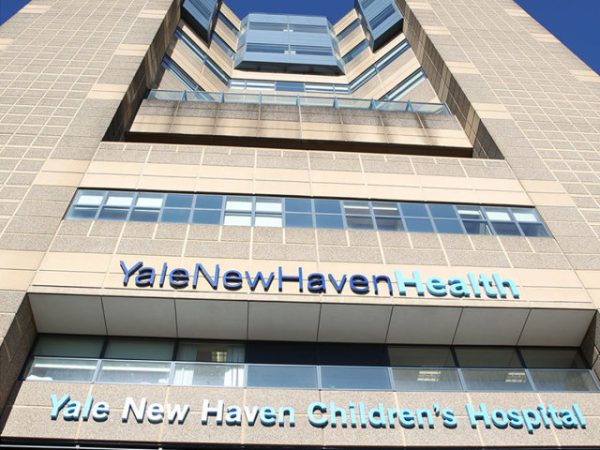
 Atop the rankings in the pediatric specialty were Children’s National Medical Center (Washington, DC), Children’s Hospital of Philadelphia, Boston Children’s Hospital, Children’s Hospital Colorado, Cincinnati Children’s Hospital Medical Center, Rainbow Babies and Children’s Hospital (Cleveland), UCSF Benioff Children’s Hospital of San Francisco and Oakland, New York-Presbyterian Morgan Stanley-Komansky Children’s Hospital, St. Louis Children’s Hospital-Washington University, and C.S. Mott Children’s Hospital – Michigan Medicine (Ann Arbor).
 e, infection rates in the NICU and other data collected from a detailed U.S. News clinical survey of children's hospitals, produced 85 percent of each hospital's score. The other 15 percent reflects nominations from pediatric specialists and subspecialists who responded to surveys in 2016, 2017 and 2018 and recommended the hospital for serious cases in their specialty.

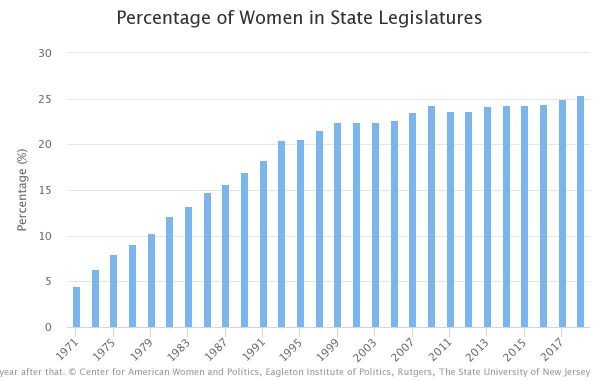
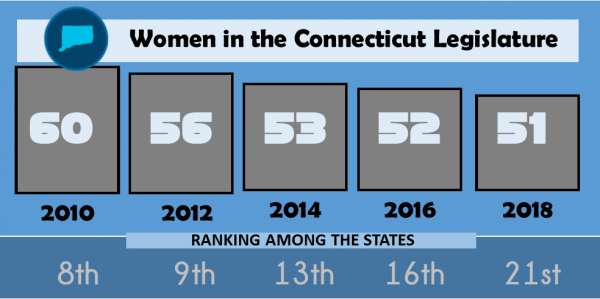 The 2018 election year has been widely declared the year of the woman in politics, a reaction to the MeToo movement and related issues that have risen to the top of many political agendas. It appears that Connecticut ballots may have a record number of women candidates in November, depending upon the outcome of the August 14 primaries in some legislative districts.
 Leading the nation were Arizona (40%), Vermont (40%), Nevada (38.1%), Colorado (38%), Washington (37.4%), and Illinois (35.6%). Women make up 25.4 percent of all state legislators
 Why is this so important?


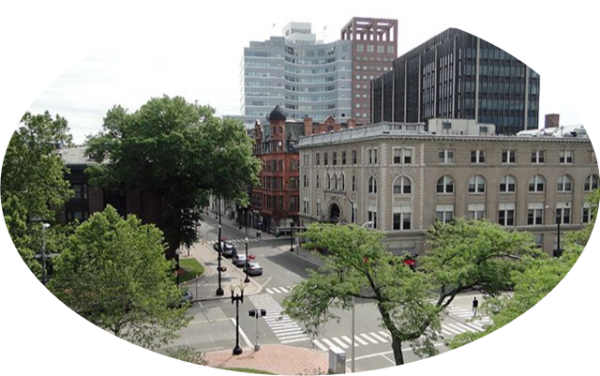
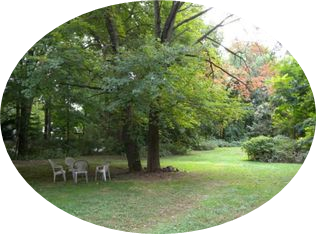
 According to the Nature Conservancy, Bridgeport currently has a 19% tree canopy cover, for example. If all open spaces, vacant lots and parking lots could be planted, the city would have a 62% tree canopy cover. The ramifications would be substantial, impacting various health and quality of life factors.

 The review of the research, conducted by Connecticut-based Rodriguez Data Solutions, points out that policymakers often promote K-12 regionalization as a way to achieve cost savings, but often fail to consider the consequences for student educational achievement. The report reviewed initiatives to promote K-12 regionalization in several states including Connecticut, Maine, New York and Vermont. Among the findings:

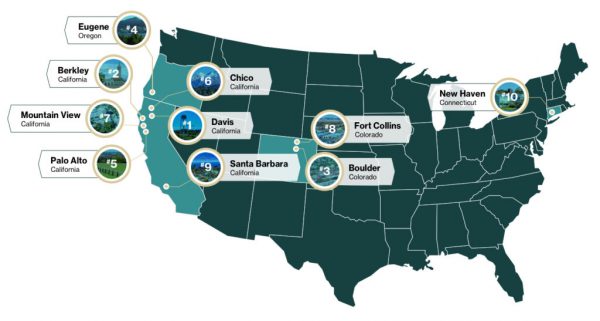
 The ranking saw Davis and Berkeley California named the safest cities for bicyclists, followed by Boulder, Colorado; Eugene, Oregon; Palo Alto, Chico, and Mountain View, California; Fort Collins, Colorado; Santa Barbara, California, and New Haven. Minneapolis ranked number 12.