PERSPECTIVE: Unhealthy Options Persist in Fast Food; Voluntary Efforts Falling Short
/Fast-food consumption is associated with poor diet quality in youth. Therefore, improving the nutritional quality of fast-food meals consumed by children is an important public health objective.
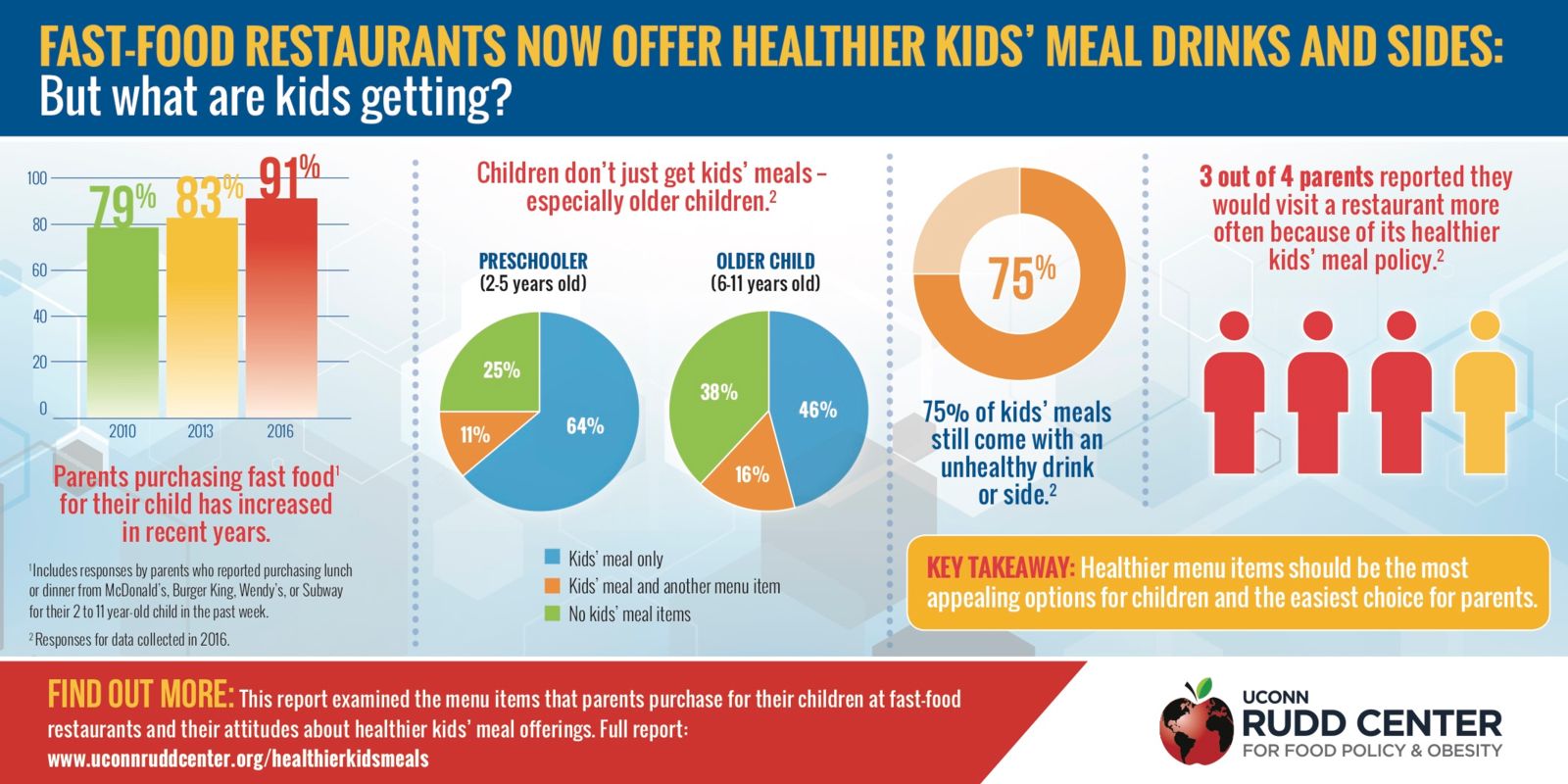
In response to public health concerns, several of the largest fast-food restaurants have introduced policies to offer healthier drinks and/or sides with their kids’ meals. However, few research studies have examined the menu items that parents purchase for their children at fast-food restaurants or their attitudes about healthier kids’ meal offerings.
The primary purpose of [a study by the UConn Rudd Center for Food Policy & Obesity] was to document parents’ reported fast-food purchases for their children (ages 2-11) and examine changes over time. [The] findings indicate numerous reasons for continued concern about the impact of fast-food consumption on children’s diets and health.
In 2016, we identified 10 different fast-food restaurants where at least one-quarter of parents reported that they purchased food for their child(ren) weekly or more often. In addition, more than 90% of parents surveyed reported that they visited at least one of the four largest fast-food restaurants to purchase lunch or dinner for their child (ages 2-11) in the past week, and they purchased food for their child at 2.4 of these restaurants on average.
 These numbers are high, but they correspond to previous research showing that on any given day, one-third of children consume fast-food… Furthermore, parents’ purchases of fast-food for their children increased significantly during the years examined, with parents reporting increased frequency of visits to most individual fast-food restaurants from 2013 to 2016…
These results also suggest that healthier kids’ meal policies could result in unintended public health consequences if they lead parents to view the restaurants more positively and increase their visits, but continue to order the unhealthy items for their child.
These findings indicate numerous opportunities for restaurants to enhance their efforts to improve the nutritional quality of fast-food consumed by children.
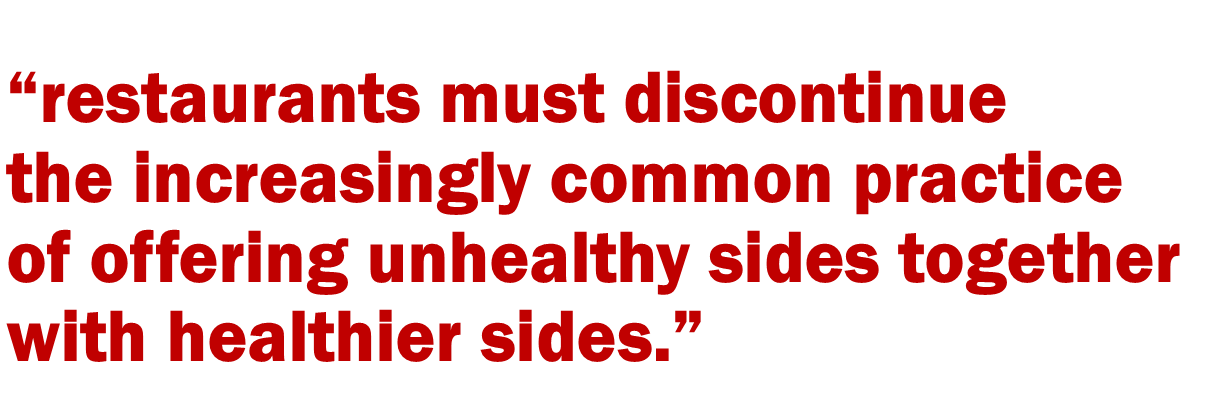
First, restaurants should introduce healthier kids’ meals that are also appropriate and appealing to older children… In addition, restaurants must discontinue the increasingly common practice of offering unhealthy sides together with healthier sides, and/or they should remove unhealthy sides from their kids’ meal menus altogether, as they have pledged to do with kids’ meal drinks…
Finally, since parents often choose restaurants that are convenient and that their kids like (more than for healthy options), restaurants should make the healthier items the most appealing options for children to choose. They should also make the healthier items the easiest options for parents to order, for example, by making them the default for kids’ meals. Given parents’ positive attitudes about healthier kids’ meals, there appears to be a substantial marketing opportunity for restaurants to introduce and promote healthier kids’ meals that appeal to both parents and children…
If restaurants do not implement further improvements voluntarily, advocates should continue to work with state and local municipalities to introduce public policies to improve the healthfulness of kids’ meals. Policy makers should follow the lead of communities in California and Colorado and consider legislation or regulation to require that all restaurants serve healthier kids’ meals…
 Unhealthy options, including main dishes, sides, and desserts, remain on kids’ meal menus at most restaurants, and purchases of a kids’ meal plus another menu item for their child have increased. Although future research is required to explain the reasons for these trends, they do indicate that restaurants’ voluntary pledges, as currently implemented, are unlikely to substantially reduce children’s fast-food consumption overall, or increase their selection of available healthier drink and side options.
Furthermore, parents’ positive attitudes about restaurants’ healthier kids’ meal policies indicate that such policies could backfire for public health and increase the frequency of purchasing fast-food for their children without increasing healthier purchases. These findings demonstrate that restaurants must implement more effective healthier kids’ meal policies to avoid additional state and local regulations that would mandate healthier options for children.
_________________________
This is an excerpt from Parents’ Reports of Fast Food Purchases for Their Children: Have They Improved?, published in September 2018 by the Rudd Center for Food Policy & Obesity at the University of Connecticut. The report’s authors are Jennifer L. Harris, Maia Hyary, Nicole Seymour and Yoon Young Choi. The full report is available here.
https://youtu.be/2Ng_X4D4SSA
 e the community a better place.”


 “This aging population has contributed to diminished economic growth, with Connecticut being one of only four states in the country with contracting output. This occurred while its population growth was nearly at the bottom for all states, along with having one of the largest contractions of prime working-age adults,” S&P noted in their analysis. “The outlook is equally dim. We expect the state's higher concentration of middle-aged and elderly residents compared with young adults and children to worsen.”
 It went on to explain that “upon further look, there is a profound distinction among the projected population shift when broken down by age. Between 2010 and 2040, Connecticut’s age 65 years and over population is on pace to increase by 57%. However, its population between the ages of 20-64 is projected to grow less than 2% and the population age 18 and under is projected to decline by 7%.”
 Just over a decade later, her business acumen and history of public service put her on a ticket for statewide office. In 1990, New Haven-area Congressman Bruce Morrison won a primary to be the Democrats choice for Governor, former U.S. Senator Lowell Weicker started his own political party to launch is comeback with a candidacy for Governor, and Republicans nominated another Congressman, John Rowland of Waterbury.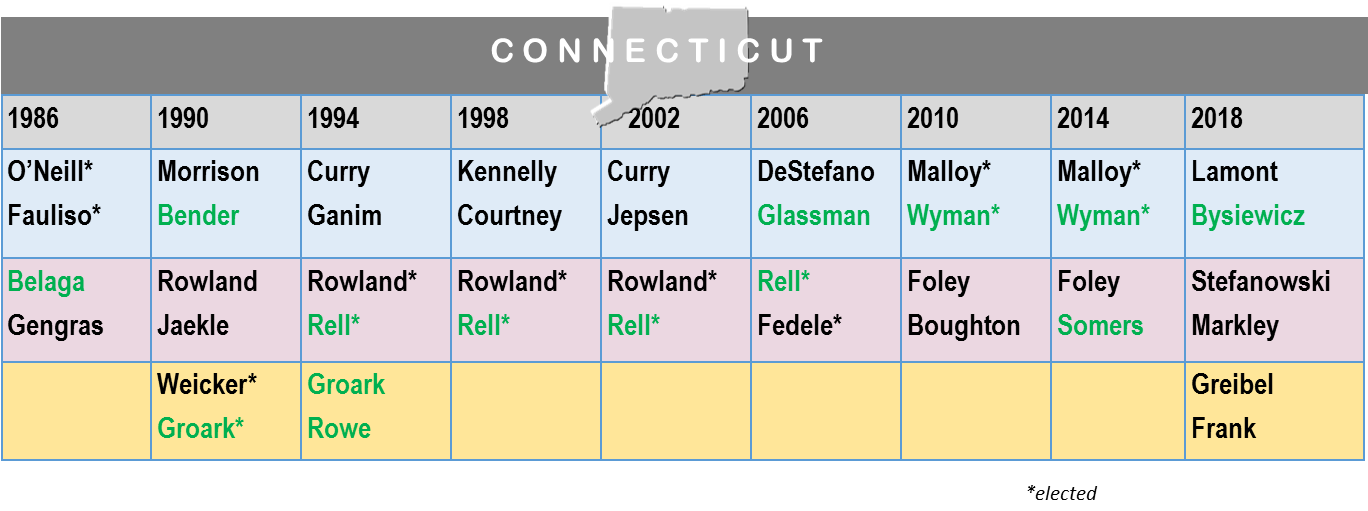
 She is also remembered as the Democratic candidate the first time two women were on the November ballot for Lieutenant Governor of Connecticut. That occurred again in 1994 and 2014. At least one woman has been a candidate for Lieutenant Governor or Governor - or both - in every election cycle since 1986, and Connecticut's voters elected Nancy Wyman to serve as Lieutenant Governor in 2010 and 2014, following one term of a man in that role, the only such term since 1990. This year, Susan Bysiewicz is on the ballot for that office. A woman has been elected either Governor or Lieutenant Governor in Connecticut in every election since 1990.
 While we are pleased to see that you share our concerns about the potential impact of Texas v. U.S. on people with pre-existing conditions, as evidenced by your recent introduction of the Ensuring Coverage for Patients with Pre-Existing Conditions Act (S.3388), the safeguards presented in this legislation fall far short of the patient protections encompassed in existing law. This bill as written is far from an adequate replacement for the protections for individuals with pre-existing conditions that are provided under current law.

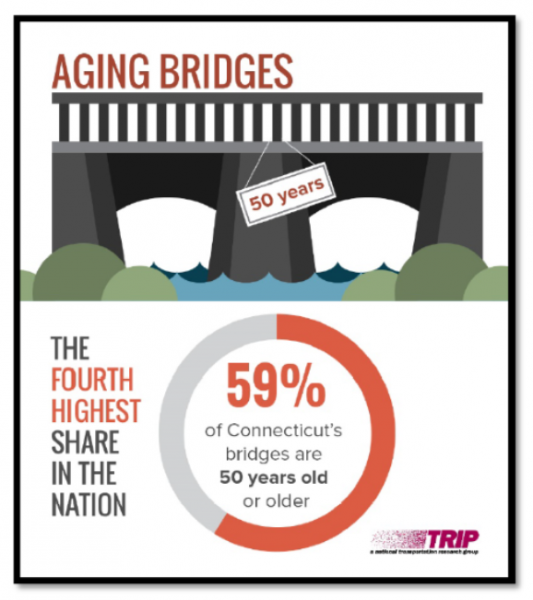 Yesterday, it was announced that 59 percent of Connecticut’s more than 4,000 bridges are 50 years or older, the fourth highest rate in the nation. The average age of all Connecticut’s bridges is 53 years, while the average age of the state’s 308 structurally deficient bridges – seven percent of the total - is 69 years. Structurally deficient bridges in Connecticut are crossed daily by 4.3 million vehicles.
 The report also noted that “annually, $489 billion in goods are shipped to and from sites in Connecticut, largely by truck,” adding that “approximately 731,000 full-time jobs in Connecticut in key industries like tourism, retail sales, agriculture and manufacturing are completely dependent on the state’s transportation network.”
 Companies in the portfolio, according to published reports, include Omada Health, a digital therapeutics company treating chronic diseases; Prognos, a predictive analytics company for healthcare; Contessa Health, a home-patient care service; Mdlive, which provides remote health consultations; and Cricket Health, a special kidney care provider.

 Obesity is a problem in virtually every city and town, and every income and social sector. But its impact is most serious in communities where conditions make access to healthy foods and regular physical activity more difficult, such as lower income and rural areas, including many communities of color. The national costs of obesity are enormous, officials point out. Obesity drives an estimated $149 billion annually in directly related healthcare spending, and an additional $66 billion annually in lowered economic productivity. Also, one in three young adults is ineligible for military service, due to being overweight, officials noted.
 Finally, there is the “Stupid Hat Syndrome.” I first heard this expression from a successful businessman, famously generous with both his money and his volunteer board service. He coined the phrase to express his frustration after years of observing “some of the smartest and most successful business people he knew join a nonprofit board and immediately put on their Stupid Hat.” In other words, they habitually checked their immense brain power and experience at the door. The Stupid Hat metaphor may be hard edged, but the phenomenon is real and all too commonplace in the sector. It’s the 800-pound gorilla in the corner, and it’s as true as the truism that in general “you get what you pay for.”