Ghosts of Whalers Past Return in Carolina with Win, Attendance Boost, and Criticism

With the ghosts of Hartford Whalers past brought back to life for a one-night stand in Raleigh, North Carolina this past weekend, a glimpse at attendance numbers may give some perspective on what was, what is, and what might have been. The Carolina Hurricanes home attendance in the 31-team National Hockey League ranks 29th in the league thus far in the 2018-19 season, after 20 home games, not including Whalers night.  The team has been drawing considerably better on the road (17,258) than at home (13,245). 

That home attendance figure should come as no surprise.  It is on pace for last season’s home attendance average over 41 games of 13,320.  Then as now, it was the third lowest home attendance average in the league.  Only Arizona and the New York Islanders drew fewer fans to home games.

It’s no wonder that the Hurricanes were seeking to recapture some of that Whalers magic – or should we say Bonanza.  And also cash in on merchandise sales, as well as seeking an attendance boost, even if only for a night.

In early 1996, a 45-day “Save the Whale” season-ticket drive in Hartford resulted in 8,300 season tickets sold, about 3,000 more than the previous year.  In the aftermath of the season ticket drive, and heading into the 1996-97 season, the Whalers management said they would remain in Hartford for two more years, in accordance with their lease. Yet they ended their 18-year history as the Whalers in Hartford, moving to Greensboro, North Carolina seeking redder pastures and becoming the Carolina Hurricanes for the start of the 1997-98 season.

In the Whalers’ final season in Hartford, 1996-97, attendance at the Hartford Civic Center had grown to 87 percent of capacity, with an average attendance of 13,680 per game.  Published reports suggest that the average attendance was, in reality, higher than 14,000 per game by 1996-97, but Whalers ownership did not count the skyboxes and coliseum club seating because the revenue streams went to the state, rather than the team.  Attendance increased for four consecutive years before management moved the team from Hartford. (To 10,407 in 1993-94, 11,835 in 1994-95, 11,983 in 1995-96 and 13,680 in 1996-97.)

During the team’s tenure in Hartford, average attendance exceeded 14,000 twice – in 1987-88 and 1986-87, when the team ranked 13th in the league in attendance in both seasons.  The Hurricanes had somewhat higher attendance numbers in the immediate aftermath of winning the Stanley Cup a decade ago, but they did not sustain those levels and were among the top half of NHL teams in attendance only once.

Keep in mind that as we approach 2019, after two decades in North Carolina, the Hurricanes are only a couple of seasons removed from the recent low water mark in NHL attendance.  In the 2016-17 season, the average home crowd was the lowest in the NHL – only 11,776.  It was the second consecutive season that the Hurricanes had the league’s worst home attendance numbers. (They were second worst the previous year.)

The Hurricanes/Whalers will next skate in Boston against the Bruins in early spring, taking to ice in the green uniforms originally worn as road uniforms by Hartford from 1985-89, then again in 1991-92.  The Whalers, by the way, are now undefeated this season, as the Hurricanes defeated the Bruins 5-3 on Sunday afternoon.  The win was not without criticism, with one published report describing the Hurricanes new first-year management as leading "the desecration of a grave and a shameless ploy to drum up some jersey and merchandise sales. A cash grab."

The crowd was, as CBS Sports phrased it: "much bigger than they’re used to":  17,491.


https://twitter.com/twitter/statuses/1076998933707177986


CT Attorney General Initiates Lawsuit Against Stamford's Purdue Pharma for Role in National Opioid Crisis

Connecticut Attorney General George Jepsen has initiated a lawsuit against Stamford-based Purdue Pharma and several current and former members of Purdue's management and board of directors alleging that they designed, financed and waged a pervasive and aggressive campaign to mislead doctors and patients, claiming that prescription opioid medications manufactured and marketed by the company were safe and effective and strategically downplaying risks of addiction that they knew were inherent in their opioid products. The state alleges that Purdue "peddled a series of falsehoods" to push patients toward its opioids, reaping massive profits from sales while opioid addiction skyrocketed to the crisis level that is currently impacting Connecticut and states across the country.

"For a number of months, Connecticut and our multistate partners have been engaged in intensive negotiations with opioid manufacturers and distributors in the hope of resolving potential legal claims in a way that would avoid protracted litigation and would bring opioid treatment resources to those who are desperately in need," said Attorney General Jepsen.  Jepsen, who leaves office next month, currently serves as  part of the leadership of a multistate coalition of attorneys general who are investigating opioid manufacturers and distributors. "I expect those negotiations to continue, and I remain hopeful they will bring a resolution that helps to address this ongoing crisis."

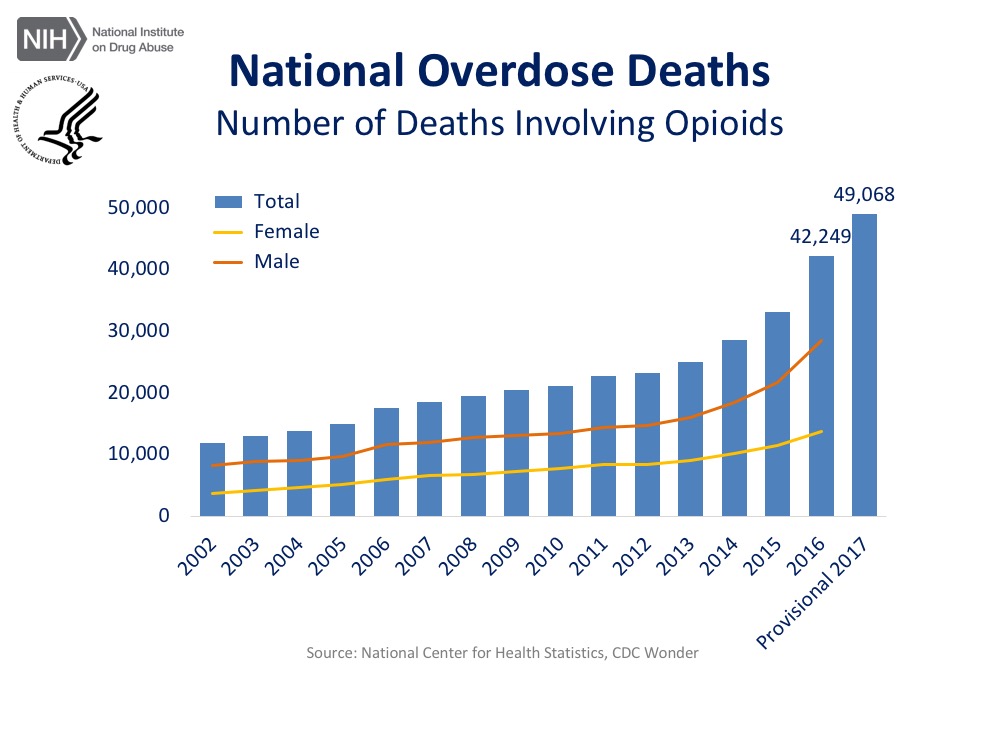
In Connecticut, 1,038 people died of accidental drug overdoses in 2017, the vast majority from opioid-related overdoses. The Connecticut Office of the Chief Medical Examiner has projected that 1,030 more people will die of overdoses in 2018. From 2013 to 2016, Connecticut experienced a fourfold increase in deaths from prescription opioid overdoses, and the estimated economic cost of the opioid epidemic in Connecticut in 2016 was $10.27 billion.  Nationwide from 2002-2017 there was a 4.1-fold increase in the total number of deaths involving opioids, according to the National Institute on Drug Abuse. 

The Attorney General said that Purdue Pharma “has not demonstrated to me that it is serious about addressing the states' very real allegations of misconduct and coming to a meaningful settlement. It is my hope that, in filing this lawsuit at this time, Connecticut can assist in the collective effort to hold this company and responsible individuals accountable.

Jepsen said the state alleges that “Purdue knowingly put its own exorbitant profits first when it purposefully and systematically misled doctors by not just downplaying the terrible risks of addiction, but by forcefully asserting that opioid products were safe, that the risk of addiction was low, and that patients experiencing symptoms of addiction should actually be prescribed higher and greater doses of Purdue's opioid drugs. We allege that this behavior was endorsed and promoted by the highest leadership of the company and that it was in violation of Connecticut law."

The state alleges that Purdue misinformed patients and doctors to get more and more people taking its premier opioid drug, OxyContin, and its two other opioid medications, Hysingla and Butrans.

The lawsuit will be filed in Superior Court in Hartford. It alleges four counts of violations of the Connecticut Unfair Trade Practices Act and seeks damages, civil penalties, forfeiture of ill-gotten profits and restitution as well as permanent injunctive and other relief.  The suit indicates that Purdue allegedly:

  • led patients and doctors to believe that opioids were safe to treat even minor pain, and that patients could and should take higher and more dangerous doses.
  • sent sales representatives to doctors' offices, clinics, pharmacies and hospitals in Connecticut to make deceptive sales pitches about opioid drugs;
  • rewarded high-prescribing doctors with attention, meals, gifts and money; and
  • awarded prizes and bonuses to sales representatives who generated the most opioid prescriptions.

The company did not tell doctors that higher doses of opioids carried heightened risk of addiction, overdose and death, the state alleges, and the company funded and distributed publications that misrepresented the addictive nature of prescription opioids and made claims that were not supported by scientific evidence.

The state further alleges that Purdue promoted the idea of "pseudoaddiction," suggesting that patients who appeared to be addicted were instead receiving inadequate doses and needed more prescription opioid drugs.

In addition to the company, the state's lawsuit names current and former board members as defendants, alleging that they tracked sales representatives and oversaw the tactics used to push opioid drugs. The individual defendants include: Richard Sackler, Jonathan Sackler, Mortimer D.A. Sackler, Kathe Sackler, Ilene Sackler Lefcourt, Beverly Sackler, David Sackler, Theresa Sackler, Cecil Pickett, Paulo Costa, Ralph Snyderman, Frank Peter Boer and Judy Lewent. The lawsuit also names past CEOs John Stewart and Mark Timney as defendants.

Ratepayers, Businesses, and Environmental Advocates Seek to Reverse Decision on Ratepayer Fund Raids

Attorneys for ratepayers, efficiency businesses and environmental organizations have filed an appeal in the U.S. Court of Appeals for the Second Circuit in New York , asking the appellate court to reverse an October 25 U.S. District Court decision that denied plaintiffs a remedy in their lawsuit to force the State of Connecticut to restore $145 million in ratepayer dollars intended to save families money on energy bills and reduce climate pollution. The original lawsuit, filed in May, was filed to stop the state legislature’s 2017 sweep of Connecticut’s energy efficiency and clean energy funds, and to prevent future diversions of ratepayer funds. The original complaint argued that diverting ratepayer funding to plug a budget deficit instead of using the dedicated funds for its intended purpose violates the Contract Clause and Equal Protection Clause of the United States Constitution and functions as an illegal tax on tax-exempt organizations like churches and nonprofits.

“We are pursuing the case to fix the damage the raids have done to Connecticut families and businesses,” said Roger Reynolds, chief legal director at Connecticut Fund for the Environment. “Residents trusted that their ratepayer dollars would go where their electric bills said they would—towards energy efficiency and clean energy programs that save money and cut climate pollution. Instead those hard-earned dollars were used to plug a hole in the state budget. We believe the appellate court will see that the state’s action violated federal contract and tax law, and ask them to correct that mistake to put Connecticut back on the path to a healthier energy future and a stronger economy.”

Judge Janet C. Hall at the U.S. District Court in New Haven ruled in October that the state’s 2017 budget that swept ratepayer funds did not impair contracts between ratepayers and their electric distribution companies because neither utility tariffs nor state law ever promised ratepayers that their dollars would not be transferred to the General Fund for unrelated purposes.

The organizations filing the suit pointed out that when the General Assembly found itself facing a deficit in fall 2017, they passed a budget instructing the state to “sweep” and divert the energy efficiency and clean energy funds to the general fund. However, these funds are not government property, they stressed,  and were not raised through state taxes but were paid by ratepayers to utilities for specific services. Therefore, "seizing these funds amounts to taking ratepayer funds that were paid for another purpose."

As a result of the "raids", the filers of the lawsuit pointed out that "12,900 homes will not receive energy assessments, weatherization upgrades, reduced pricing on insulation, or associated energy bill savings. Furthermore, 5,600 of these are low income households that often require additional financial assistance to close the energy affordability gap.  The award-winning Connecticut Green Bank leverages $6 in private investment for every $1 of renewable energy funding. Yet these sweeps resulted in a 53% reduction in this program’s budget, requiring layoffs and project cancellations."

This case raises an important legal issue relevant beyond Connecticut, according to environment groups,  because it is the first time ratepayers argued in court that when they pay their utility bills with surcharges dedicated for specific programs or services—such as energy efficiency and renewable energy—enforceable contracts arise that cannot be invaded by any state.

"Connecticut’s leaders broke the trust of their constituents when they turned electric ratepayer dollars into an illegal tax,” said lead plaintiff Leticia Colon de Mejias, chair of Efficiency For All (EFA) and founder. “Even in these difficult times, it is obvious that stealing ratepayer funds intended to help Connecticut residents and businesses reduce energy waste, save money on energy bills, and access clean resources is a bad choice."

“Sierra Club Connecticut supports this legal appeal by Connecticut Fund for the Environment and allies, and the advocacy of groups including Efficiency for All, to restore the misappropriated energy efficiency monies that our General Assembly voted to take away and use as a stop gap for our budget woes" said Martha Klein, chair, Sierra Club Connecticut. "It was a myopic mistake, as these funds have been proven to create jobs, make revenue for the state, and reduce climate-destroying greenhouse gas emissions. This type of fund raiding hurts all of us in the long run. That money was taken from ratepayers specifically to improve the efficiency of our whole state, which would save all of us money on energy costs, and improve our health and climate.”

When the initial suit was filed against the state back in May, Governor Malloy  issued a statement that, rather than defending the state action, seemed to take the opposite view:

"This should come as a surprise to no one. I have long maintained that these shortsighted sweeps would increase energy costs for consumers and businesses and cause untold harm to our green energy economy. [W]e should be cementing our role as a national leader in our efforts to combat climate change and protect our communities. The energy sweeps . . . represented a massive step backwards, and I continue to strongly oppose them," Malloy said.

PERSPECTIVE - Finding Magical Doors: Notes on Borders, Race, and Belonging

by Sunil Bhatia I would like to begin by sharing with you some reflections on my summer reading.

I read a New York Times article about children who were separated from their parents at the U.S. border. Leitica, a petite, 12-year-old girl from Guatemala and her younger brother, Walter, were separated from their mother when they crossed the border without documents. These siblings were sent to a detention facility in Texas, which has a list of several rules that these young migrants must follow, “Do not misbehave. Do not sit on the floor. Do not share your food. Do not use nicknames.” The detention center also included this rule, “It is best not to cry. Doing so might hurt your case.” “Do not touch another child, even if that child is your hermanito or hermanita–your little brother or sister.”

Another child requested her lawyer mail a letter to her detained mother, with whom she had been separated for over three weeks. The girl wrote, “Mommy, I love you and adore you and miss you so much.” And then she pleaded: “Please, Mom, communicate. Please, Mom. I hope that you’re OK and remember, you are the best thing in my life.”

Leticia and her brother belong to over 65 million refugees and migrants worldwide who are displaced and are in harm’s way. After overcoming the perils of leaving home and embarking on an uncertain and often dangerous journey, they cross the border only to be treated as unwanted and inhuman others.

The story of Leticia and Walter haunted me.

I wondered when they would reunite with their mother.

Then I read the Pakistani author Mohsin Ahmed’s book, Exit West.  The story focuses on Saeed and Nadia, whose love story unfolds in a nameless city that is filled with refuges and is teetering on the edge of war. Saeed and Nadia’s courtship speeds up against backdrop of raids, rocket fire, truck bombs and the constant noise of helicopters and drones that hover over the city. Their city gradually becomes unlivable. The government collapses, the militia take over the city, and the threat of violence is around every corner.

Suddenly there are rumors in their city that there are doors that open up to other countries. These trickster doors are like black holes or rips in reality that transport people across to countries and spaces of relative safety in an instant. Saeed and Nadia escape their city through these magical doors that eventually takes them to Greece, London and then to California.

Forgive me for getting seduced by the magical realism of this gorgeously written novel. But all summer, I have been hoping, rather dreaming, that Leticia and her brother find a magical door that takes them out of the cold and grotesque reality of detention centers in Texas and reunites them with their mother.

I have been dreaming that all families separated by migration have access to those doors that takes them to places, where they are loved, and can live fulfilling lives.

Alas, we know, there are no such mystical doors.

But think again.

I believe the magical realism of supernatural doors in Ahmed’s novel is not only about physical borders and doors. It is really about opening up the reader’s imagination and making them connect with people who are different from us. The magical doors are a metaphor that represent our human abilities to imagine and empathize.

Ahmed shows us a future world that is on the move because the greater portion of humanity is ravaged by economic inequality, war, extreme poverty and climate change.

He tells us that there is a possibility that every one of us can become a refugee.

The author asks us to imagine: what if the College Green where we have assembled on today becomes a tent-city for us refugees next week? Would you close the doors on migrants and refugees if you knew that one day you too would become a migrant? Would you call migrants animals and rapists if your destiny was linked with their lives?

Our ability to imagine a different world than the one we have been given is our magical door. Some people are looking for actual doors that give them entry into new countries and spaces and some others are entering through a figurative door.

Sometimes both are needed for making sense of our life journeys.

My Journey Here

found my magical door over 25 years ago when I made a journey that is very similar to the freshman Class of 2022.

I left my home from Pune, India, and travelled to the U.S. to become a graduate student at Clark University, a liberal arts school, in Worcester, Massachusetts. Like many international students from my era, I carried a suitcase with my precious belongings: photographs of my father and mother taken at a studio, farewell photos with my friends, Hindi film music, my best ever report card from 6th grade when I stood third in class, boxes of tea leaves, recipes, and small bags of turmeric, cumin, and coriander powder.

My first week or rather the first year in this new world was disastrous. I was so fresh off the boat that when my American friends greeted me with, “How are you?” I poured my heart out and told them my life story. I had missed the cultural point that a greeting is just a means of making polite talk. Instead of talking about the weather, I told strangers how I missed home, my family, friends and the smells of Indian streets.

My life was downright pre-historic compared to the Class of 2022. Every week I would handwrite dozens of letters home to my friends and family telling them about my life in America. Then an Indian owl would travel thousands of miles to Worcester and drop letters from home in my mail box. Well, the Owl bit may be exaggerated.

I was not fleeing a war zone or poverty, but yet I experienced a displacement that comes from being uprooted from home. Crossing borders brought pain and anxiety about the world I had left behind and the future that was yet to unfold. With time, I found a way to settle in the new world of American university life. Life at the university was fulfilling, but when I left the campus to go back to my apartment I witnessed another America.

This was an America segregated from the campus by just one street. Coming into my neighborhood in South Main in Worcester was like crossing a border or entering another country. The homes were crumbling, the schools were failing, and the old factories and mills had been abandoned. The university warned us about the dangers of South Main and we were told to avoid walking at night as it was filled with “dangerous people.” These so-called dangerous people bore a resemblance to my people back home–they were mostly brown, immigrants, the invisible and the poor.

One day, during summer, I went to a local bar to play pool with friends. When I moved close to the pool table, one of the local white youth told me to leave with the following words: “We don’t play with no Puerto Ricans. They are not wanted here.” Being called Puerto Rican was not about mistaken identity–it was a racist gesture.

I sensed an impending threat of violence. I left the bar. That day I went from being an international student to an immigrant and a person of color.

This was an important turning point in my journey.

I felt humiliated and reflected on this and similar incidents that I had previously chosen to ignore. I was an outsider to the American racial formation so I had the privilege of disregarding racism. This is what racism does to people. It shames them, makes them feel inadequate, and silences them. The experience of racism creates doubt and makes you believe that your story could not be true.

I was a newcomer to racism. I was a newcomer to segregation.

African-Americans had been here long before me for centuries fighting racial terrorism and resisting racism. Their inner lives are an inspiring tribute to the enduring spirit of humanity. I soon realized my new home and university was once the home of the Nipmuc Indians. Their land was stolen, their lives were destroyed and their culture was frozen in history.

My racial awakening made one thing clear to me: Whiteness served as a powerful norm, but its power was rarely interrogated. When I overcame my fear and questioned whiteness, I was often met with indifference or anger. It was only much later in life, when I encountered the term “white supremacy” that I fully understood how deeply whiteness had become integrated into everyday living and structures of American society: courts, schools, law, medicine, media, higher education, and politics.

My racial consciousness taught me something deeper. Whiteness had largely reinforced a narrative that people of color had a deficient humanity, they did not belong in this country, and their stories did not matter in the media or the curriculum. When people from marginalized communities showed up in the books I was reading, they often served as caricatured props and tokens for advancing the cause of whiteness or as victims that needed to be saved.

The psychology I had encountered in my graduate school in India and the U.S. was largely built on colonial knowledge, universalistic principles and Eurocentric cultural assumptions about individuality and rationality. It was a psychology based on 5 percent of the human population but yet it had the power to speak on behalf on the 95 percent of humanity.

There was something wrong with this picture.

I did not find my story in the canons of psychology so I wanted to tell a different story of psychology. I challenged psychology’s claims of universalism and its refusal to acknowledge history, culture, and politics.

I failed several times to articulate my vision of psychology. But reading books, doing research, engaging in teaching, and having conversations with a community of learners became my enchanted doors.

To put it simply, I found the tools to make sense of my emotional and intellectual life.

My education in a liberal arts university was a gift. My research focused on understanding how migrants, who have never thought of their identity in racial terms, become people of color in the United States.

My biography in America became the basis of my research. My first book, American Karma, and my early publications, drew on anti-colonial and anti-racist frameworks to challenge the universality of longstanding racial and ethnic assimilation models in psychology and human development.

Turning Point

9/11 marked another turning point in my career.

Immediately after 9/11, I was conducting ethnographic research for my first book. During an interview, a Sikh man, who worked as a high-level scientist for a local company, told me that he had not stepped outside for a week. He was afraid of being a target of a hate crime, so his wife did the groceries.

When I arrived at his home, he was in the middle of a family meeting discussing whether he and his son should cut their hair, beard, and if they should stop wearing their turban because it brought unwanted attention.

I did research on the changing notions of cultural citizenship and racial identity formation driven in large part by Islamophobia. I examined how the Sikh American community with their turbans, beards and their “brown identities” had become suspect in the larger American public space. They were framed as outsiders and turned into targets of racial profiling, scrutiny, and hate speech.

Since then I have continued my quest to radically transform my field. In my latest book, Decolonizing Psychology, I write about the shaping of Indian youth identities within the context of globalization, colonization, and neoliberalism. By focusing on the lives of youth in the Global South, I challenge Euro-American scientific psychology to recognize its own limits and to become more inclusive, reflexive and relevant to the majority of humanity.

Looking back, I can tell you that I am standing up here and sharing my story with you because I had access to a liberal arts education. Yes, that education gave me a livelihood, but what is even more remarkable is that it gave me meaning and purpose in life. Every major milestone in my career was achieved because I had support from colleagues, family, and community.

For over two decades now, my classroom has become my dwelling and my research is my imaginary homeland, and it is from these spaces my students and I together go out searching for those magical doors.

Your Journey Begins

Class of 2022, I know that like my own journey you too will cross several imaginary, physical, and conceptual, borders and you will experience many crucial turning points in your education. Your story, your journey and your discovery will be different than mine.

You have arrived on this campus to commence a new term and a new stage of life, but your racial, ancestral, sexual and cultural histories that brought you here are complex and diverse. For some of you, this College reminds you of home. You may feel you belong here. You have found your place. For some others, you may feel out of place and even out of your mind.

Use your time here at the College to make sense of your identity and the structures that shape your evolving self. Try to connect your story to people like Saeed, Nadia and Leticia and other people you have not yet met. Those characters don’t just live in fiction, detention centers, and brochures. You will find that brown, black, lesbian, gay, bisexual, transgender, queer or questioning, intersex, asexual or allied, heterosexual, cisgender, native, white, Asian, biracial, immigrants, international, local, and first-generation, members live in this community. You will meet them in your classrooms or at Harkness, Windham, Coffee-Grounds and Harris.

Your journey here is not a solo expedition. Rather you will be building community with these diverse members and you will collectively work towards transforming this institution. The word “liberal” in liberal arts is derived from the Latin word “liberalis,” which means to be free or a free-thinking person. The right to dissent and protest in the in the pursuit of learning to become a critical and free thinker is at the heart of a liberal arts education.

James Baldwin, an African American novelist and social critic, reminds us that the true “nature of society is to create, among its citizens, an illusion of safety.” So, if your belonging in the community feels like an illusion or makes you feel unsafe, he says, go ahead and use nonviolent means to disturb the peace to make it equitable and inclusive.

Think about this for a moment, Class of 2022. You have already witnessed in your lifetime such powerful attempts to break the illusion of safety: The resistance offered by the birth of Black Lives Matter, the rise of the MeToo movement, the constitutional rights accorded to same-sex or gay marriage and the example of solidarity shown by the native people of Standing Rock in the face of oppression. The people behind these nonviolent movements were imagining a different world and a different community than the one they have been given. Their struggle for justice and belonging opened up new magical doors so others could step in, rise up, feel loved, and know that their lives matter equally in this society.

What these big and small stories of social change tell us that a liberal arts education is more than employability and building a career. It is about cultivating humility, empathy, creating community, and practicing what Sikh American civil rights activist Valerie Kaur calls “revolutionary love.” She says, “Revolutionary love is the choice to enter into labor for others who do not look like us, for our opponents who hurt us and for ourselves.”

I believe cultivating critical thinking along with the capacity for revolutionary love is one of the most important projects of a liberal arts education.

Engaging with this form of education can give you knowledge needed for writing poetry, fighting for social justice, carving out your belonging, countering fake news, studying abroad, learning a new language, becoming a teacher, psychologist, scientist, sociologist, engineer, historian, artist, dancer, or a philosopher.

That is all you will need to soar high.

_________________________________

Sunil Bhatia is Professor of Human Development at Connecticut College in New London. This is an excerpt of the address he delivered at the college's Convocation at the start of the current academic year on August 27, 2018.

Attending College in CT, From CT, Staying in CT Afterwards?

The numbers have diminished during the past decade, but the percentage has remained relatively constant.  About 93 percent of students attending the state’s four regional universities – Central, Eastern, Southern and Western – are from Connecticut.  During that time, the student population has dropped from an all-time high of just over 36,000 in 2010, to just under 33,000 in the fall of 2018. At the University of Connecticut, the state's flagship university, the overall number of students has climbed from 30,034 (including 21,881 undergraduates) to 32,182  (including 23,845 undergraduate) last fall.  The number of Connecticut residents attending UConn dropped somewhat in recent years – from 23,201 students in 2011 to 22,934 in 2016, before bouncing back slightly. The number of in-state students starting at UConn this semester (Fall 2018) increased by 4 percent, with about 74 percent of the class made up of Connecticut natives, according to UConn officials. 

Two universities in New Haven reflect the contrast that illustrates where Connecticut students are headed for college.  Seven percent of Yale students are from Connecticut, compared with 95 percent of students at Southern Connecticut State University who are undergraduates in their home state.  The only other college with that high a percentage is the private Goodwin College in East Hartford, but with less than half the number of students.

The latest breakdowns for the four regional state universities, according to data on the website of the Connecticut State Colleges and Universities (CSCU):  Central has the largest number of undergraduates (7,235 full time in-state; 1,924 part-time in state, 341 part time in state, 46 part time out-of-state), followed by Southern (6,594, 1,222, 283, 23), Western (3,457, 832, 671, 68) and Eastern (3,787, 760, 6).    Together, the four universities have 27,704 undergraduate students and 5, 013 graduate students attending.

The University of Connecticut enrolled a total of 32,182 students in the Fall of 2017, including 23,845 undergraduate and 8,337 graduate/professional students.  Among the undergraduate students, 19,241 attended classes at the main campus in Storrs, while 4,604 were students of the regional campuses.

By number of undergraduate students enrolled in Fall 2017, the ten most populous colleges in the state are the University of Connecticut (23,845), Post University in Waterbury (10,840), Central Connecticut State University (9,554), Southern Connecticut State University (7,952), Quinnipiac University in Hamden (7,305), Yale University (5,746), Sacred Heart University (5,603), University of New Haven (5,216), University of Hartford (5,088), Western Connecticut State University (5,082) and Eastern Connecticut State University (5,073).

The top ten with the highest percentage of students from Connecticut reads quite differently.  Southern and Goodwin top the list at 95 percent, followed by Central and Eastern, both at 93%, Western (89.8%) UConn (76% at campuses statewide, 72% at Storrs), University of Bridgeport (55%), University of Hartford (53%), University of New Haven (42%),  Sacred Heart University (35%), and Fairfield University (29%).

Data on the percentage of students who remain in Connecticut after graduation is less clear, although the four public state universities, excluding UConn, indicate that the number exceeds 8 in 10.   In 2016, UConn announced that 78 percent of in-state students who graduated from UConn and started work in the previous year remained in the state.  In addition, UConn noted that about 30 percent of out-of-state students who graduate from the university and find work within a year put down roots in Connecticut.

Next Wave of Insurtech Startups Prepare to Descend on Hartford

Will insurance be as much the story of Hartford’s future as it was in the Insurance City’s past?  It is a distinct possibility if the combination of a strong insurance pedigree and receptivity to technological innovation come together as the organizers of the Hartford InsurTech Hub hope. Early next year, the city will witness the arrival of the next wave, as 10 startups arrive to participate in three months of activity, powered by Startupbootcamp, as part of the 2019 cohort for its acceleration program, hosted at Upward Hartford downtown.

Hartford InsurTech Hub is an initiative established in 2017 by Hartford insurance companies, the City of Hartford, and CTNext. The initiative is focused on addressing the need to attract new technologies and talent in insurance and technology into Hartford and the local ecosystem. Selected from more than 230 applications, each startup will relocate to Hartford for the start of the program in February and will remain for its three-month duration.

The chosen startups cover a wide range of abilities, from property insurance claims to peer-to-peer (P2P) insurance, and exhibit a variety of technologies and insurance types. Participating startup companies will receive support, resources, and industry and investor connections to help grow their businesses. With support from Startupbootcamp, the teams will be provided with access to an extensive range of partners, mentors, and investors from across the accelerator’s global network.

The 10 startups that will join the second year of the Hartford InsurTech Hub acceleration program will work closely with Hartford InsurTech Hub’s insurance corporate partners: Aetna, Capgemini, Cigna, Clyde & Co., Deloitte, The Hartford, Travelers, USAA, White Mountains and CTNext.

Sabine VanderLinden, CEO at Startupbootcamp InsurTech, explained that “The insurance industry is continuously evolving and technology is having a huge impact. InsurTech of the past has been about enhancing retail-based offerings with improved customer engagement. InsurTech of today is focused on business model innovation and reconfiguring value chains—something we are committed to developing in Hartford.”

The startups include:

  • Pineapple: Pineapple offers a fair, transparent, and affinity based P2P insurance and they’re coming to Hartford from South Africa.
  • handdii: Coming from Australia, handdii is a digital platform that automates the property insurance claim process from FNOL through to claim finalization.
  • Dream Payments: Dream Payments is a Fintech startup from Canada that powers digital and mobile payment services for business customers.
  • Pitch Gauge: Pitch Gauge, from Georgia, is a roofing estimating application using mobile devices to do property inspections.
  • Medyear: From New York, Medyear is a social network for healthcare collaboration. They connect consumers to over 190 health systems and 700k doctors for real-time chat, secure email, microblogging, and personal health records.
  • SkyWatch: SkyWatch is a licensed insurance broker in all 50 US states offering a holistic software solution for on-demand risk-aware solutions for connected, moving platforms. They’re originally from California.
  • Talem Health Analytics: Coming from Canada, Talem Health Analytics provides data driven insights on bodily injury claims cost.
  • See Your Box: See Your Box provides Industrial IoT tools to digitize supply chains. SYB is a tech-service platform that collects, analyses and extracts information related to goods across all steps of the supply chain and is coming to Hartford from Switzerland.
  • ClaimSpace: Coming from Australia, ClaimSpace is a platform that bridges the communication gap between customers, insurers and stakeholders during the claims process.
  • CareValidate: Powered by a life-saving light bulb called SafeLight, CareValidate provides health, safety, and quality of care telematics to transform workers’ compensation, senior living, long-term care, life, and health insurance products with plug-and-play insurtech solutions. They’re originally from Georgia.

VanderLinden added: “We have built strong foundations over the last 18 months and we’re on the way to transforming the city of Hartford into the InsurTech capital of the United States. There’s still much to do and I am therefore delighted to be welcoming some truly inspiring teams into the next program in Hartford to continue this transformation.”

The insurance industry employs just over  60,000 people in Connecticut, up 2.6 percent from last year, according to PwC’s 2018 Connecticut insurance market brief, released earlier this month.  The second Insurtech class of startups hopes to grow that number.  Some of the participants in the inaugural class a year ago are still in town, planting roots and Hartford and growing rapidly.

Hartford InsurTech Hub is part of Startupbootcamp, the award-winning global network of industry-focused accelerator programs that help startups gain access to relevant mentors, partners, and investors in their industries.


Top Companies Profiting from War: Two Have Major CT Presence

An analysis to determine the top 20 companies across the globe that are “profiting the most from war,” finds two with Connecticut connections. Virginia’s General Dynamics, parent company of Groton-based Electric Boat is ranked at #6 and Farmington-headquartered United Technologies is at #11. In its analysis, the website 24/7 Wall St. indicated that “global military spending increased by 3.9% in 2017, according to the Stockholm International Peace Research Institute. The global rise was driven partially by a $9.6 billion hike in U.S. spending — the United States is the world’s largest defense spender by a wide margin. What growing arms investments will mean for the future of international peace is unclear. What is clear is that defense companies around the world are benefitting tremendously.”

The analysis also found that:

  • Total arms sales among the world’s 100 largest defense contractors topped $398 billion in 2017 after climbing for the third consecutive years.

  • Russia became the second largest arms-producing country this year, overtaking the United Kingdom for the first time since 2002.

  • The United States is home to half of the world’s 10 largest defense contractors, and American companies account for 57% of total arms sales of the world’s 100 largest defense contractors (based on SIPRI data).

Leading the list was Maryland-based Lockheed Martin, the largest defense contractor in the world, with $44.9 billion in arms sales.  Rounding out the top five were Boeing, Raytheon, BAE Systems, and Northrup Grumman.

For United Technologies, the analysis indicated arms sales of $7.8 billion, total sales of $59.8 billion, and profit of $4.9 billion, led by its subsidiary brands Collins Aerospace and Pratt & Whitney.  Collins Aerospace designs and sells advanced systems for military helicopters, including rescue hoists, autopilot systems, and laser guided weapon warning systems, the report noted. Pratt & Whitney designs and manufactures engines currently in use by 34 militaries worldwide.

United Technologies recently announced plans to split into three independent companies. Plans are for company’s defense division to remain under the United Technologies name, as the Otis Elevator Company and Carrier breaking off as independent entities.

During 2017, General Dynamics – based in Falls Church, Virginia, - sold $19.5 billion worth of arms, the fifth most of any U.S. company and the sixth most of any company worldwide. In the past year, General Dynamics earned a $5.1 billion contract to design and develop a prototype of the Columbia-class submarine. Electric Boat was awarded a contract modification to continue development of the US Navy’s next-generation Columbia-class ballistic-missile submarine.

“In close collaboration with the navy and the submarine industrial base, Electric Boat will continue to lead key aspects of the Columbia-class development effort,” said General Dynamics Electric Boat president Jeffrey S Geiger.  “This work includes design, material procurement, construction and operating cost reduction. The entire Columbia-class team is committed to achieving an affordable and effective programme. Our nation’s security depends on it.”

Connecticut Ranks Third in U.S. in Preventing Youth Homelessness; Grant to Support Efforts

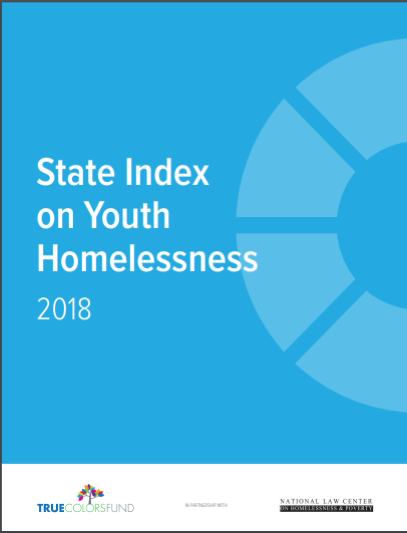
Washington, Massachusetts, and Connecticut are the most successful states at preventing youth homelessness, with Connecticut ranking third in the nation, according to the 2018 State Index on Youth Homelessness.  The report, by the True Colors Fund in partnership with the National Law Center on Homelessness & Poverty, analyzed 61 metrics in the 50 states and the District of Columbia. Homelessness is defined as experiences of sleeping in places not meant for living, staying in shelters, or temporarily staying with others while lacking a safe and stable alternative living arrangement. Alabama, South Carolina, Wyoming, and Arkansas were the least successful states at preventing youth homelessness.

In recent weeks, it was announced that Connecticut will use $6.5 million in federal grants to provide housing opportunities for homeless youth, building on its successful track-record. The grants will fund new, innovative housing assistance programs for young adults as part of a coordinated housing continuum that assures those in need can quickly obtain permanent housing and necessary supports, according to state officials.

The grants were allocated as part of a competitive process through the U.S. Department of Housing and Urban Development’s (HUD) new Youth Homelessness Demonstration Program (YHDP). To date, Connecticut has been awarded the largest grant of any jurisdiction in the country.

Building off the state’s nationally recognized progress in ending homelessness under the Malloy administration – which includes being the first state in the nation certified for ending chronic veteran homelessness, being one of only three states certified for ending general veteran homelessness, and matching all chronically homelessness individuals to housing – the state has set a goal of ending both youth and family homelessness by the end of 2020.

Speaking last week before a legislative working group, Gov. Malloy said “Nothing I suspect is more shattering as a child than to find oneself homeless – or even as a young adult – so I’m particularly happy over this past year that we’ve been able to fund a number of units designed specifically to meet the needs of younger homeless individuals.”

Overall, at the start of the year, homelessness in Connecticut was at a record low, according to a report from The Connecticut Coalition to End Homelessness.  It found that homelessness in the state has decreased for a fifth consecutive year and was at its lowest level to date. The report found that, as of Jan. 2018, roughly 3,300 people were homeless in Connecticut.  The Connecticut Coalition to End Homelessness states that overall homelessness in the state is down 25 percent from 2007.

Since 2011, the state Department of Housing and the Connecticut Housing Finance Authority have created, rehabilitated, or committed funding for nearly 25,000 units of housing – approximately 22,000 of which are affordable to low and moderate income individuals and families, officials point out. This represents a state investment of more than $1.42 billion, which has been matched by over $2.45 billion from other financial sources, including the private sector.


Pay Business Taxes in Bitcoin? In Ohio, Yes You Can

Just months ago, the news this month from Ohio’s State Treasurer might not have caused a ripple in Connecticut.  That was before Ideanomics, a global technology company focused on digital asset production and distribution, closed a deal to construct its first “Fintech Village” Center for Technology and Innovation in West Hartford.  Ideanomics is pioneering the new blockchain and AI-empowered economy. In Ohio, that technology has crossed another mainstream threshold.  Ohio has become the first state where businesses can pay their taxes in bitcoin. Bitcoin is the most well-known of cryptocurrencies, which all use distributed ledger technology. Distributed ledger technology -- such as blockchain -- allows users to record data and transactions instantaneously in a way that is mostly unhackable, Governing magazine reported.

Ohio Treasurer Josh Mandel (D) told Governing that he hopes accepting bitcoin for 23 business taxes will be particularly appealing to tech startups and international businesses. He eventually wants to expand payments to individual taxes and other types of cryptocurrencies.

"We want to project to the rest of America that Ohio is loud and proud about embracing blockchain technology," he says, noting that the launch of ohiocrypto.com coincides with a major blockchain conference in Cleveland. "We're trying to plant the flag and send the message to entrepreneurs and software developers across America that Ohio is open for business."

As for Ideanomics, through strategic partnerships with and ownership stakes in leading Artificial Intelligence (AI) and blockchain companies, Ideanomics is plans to bring transparency, efficiency, cost savings and new ownership paradigms to various markets including finance, commodities/energy, vertical industry/supply chain and consumer.

“The government adoption is the latest signal that cryptocurrencies are gaining legitimacy after initially being associated mainly with drug and weapons dealers on the dark web,” Governing magazine reported:    “First, BitPay -- much like currency exchange desks -- locks in an exchange rate and converts the currency to U.S. dollars. That makes the transaction less risky for government.  Second, bitcoin offers taxpayers an option with a lower fee -- 1 percent -- than those associated with credit cards, where there's usually a 2 or 3 percent surcharge for payments to the government.”

Seminole County, Fla., began accepting payments in bitcoin for things like license fees and taxes in late August.  Neither jurisdiction expects to see rapid utilization of the new payment method, Governing pointed out, but both expect to be leading the way for other governments to follow.  Ohio’s current treasurer leaves office in January, to be succeeded by Robert Sprague.

The $5.2 million purchase of land in West Hartford by Ideanomics, formerly the University of Connecticut greater Hartford campus, formally closed with the State of Connecticut and UConn in October.  Plans are to bring 330 new jobs to the town, and to achieve LEED Gold certification from the U.S. Green Building Council by investing in new and environmentally efficient technologies.