Connecticut Energy Costs are Third Highest in the US, Analysis Finds

The only states in the nation with higher monthly energy bills for consumers are Mississippi and Hawaii. Connecticut is ranked as the 3rd most energy expensive state in the country, according to a new analysis by WalletHub, which used six key metrics to rank the swh-best-badges-150x150-2tates according to their tendency to produce the highest or lowest monthly energy bills. The analysis points out that “lower prices don’t always equate with lower costs, as consumption is a key determinant in the total amount of an energy bill.” Connecticut’s monthly energy cost for consumers, according to the analysis, is $404, ranking the state 49th out of 51 (the 50 states plus the District of Columbia). Mississippi’s total monthly cost paid by consumers averages $414, while Hawaii’s is $451.

In terms of specific energy sources, the state ranked 50th in monthly electric cost ($143) and 48th in the cost of natural gas ($94). Perhaps due to the size of Connecticut, the state ranked 14th in fuel cost, at $167 per month, despite the state’s gas tax being among electricity pricethe highest in the nation. (see breakdown below)

In the United States, 7.1 percent of the average consumer’s total income is spent on energy costs, including fuel, natural gas and electricity.

The states with the least expensive energy costs for consumers, taking consumption into account, are Colorado ($301), Washington State ($302), Montana ($305), Rhode Island ($307), Nebraska ($312), the District of Columbia ($314), Pennsylvania ($317), Arkansas ($319), Delaware ($319) and Iowa ($319).

The other New England States, in addition to Rhode Island landing towards the top and Connecticut near the bottom, were bunched in the middle: Massachusetts ranked #35, New Hampshire #26, Vermont #28, and Maine #32. natural gas

Breaking out prices from consumption, Connecticut’s energy picture for consumers as compared with other states, is:

  • 49th – Price of Electricity
  • 16th – Electricity Consumption per Consumer
  • 44th – Price of Natural Gas
  • 48th – Natural Gas Consumption per Consumer
  • 46th – Price of Fuel
  • 10th – Fuel Consumption per Driver

The analysis was released in July because it tends to be the hottest month of the year in the contiguous U.S., and as a result it has the highest energy consumption.wallethub map

If you’re wondering how all this was calculated, WalletHub provides the answer: (Average Monthly Consumption of Electricity x Average Retail Price of Electricity) + (Average Monthly Consumption of Natural Gas x Average Natural Gas Residential Prices) + [Average Fuel Price * (Average Monthly Vehicle Miles Traveled / Average Car Consumption / Number of Drivers)] = Average Monthly Energy Bill Consumers Pay in Each State

WalletHub, described as “the social network for your wallet,” provides data to help readers “make smart financial decisions.” The site points out that “during the summer, when many Americans undergo major life transitions such as relocating to start a new job or start a family, the difference in energy costs among states becomes an important financial consideration.”  Connecticut ranks #49.



New Owners, Big Changes at Former “Big D”; Classic Rock Formats Differ by Geography

At the start of this week, Westport-based Connoisseur Media became the new owners of Connecticut’s oldest radio station, WDRC, owned for the past half-century by Buckley Broadcasting. The sale also included Buckley Connecticut stations WMMW AM in Meriden, WWCO AM in Waterbury and WSNG AM in Torrington, which have been added to Connoisseur stations in New Haven and Fairfield counties, WPLR, WYBC, the Fox and Star. At WDRC, virtually within minutes, several on-air personalities, the general manager and program director became former employees. The station’s website and Facebook changed, a new logo was launched, and a station with a heritage as one of the nation’s best know music stations as rock-n-roll took root in the 1960’s adopted a tagline that read “Classic Hits of the ‘70’s, ‘80’s and More.” Veteran broadcasters Mike Stevens, ‘Rockin’ Ron Sedaille, Floyd Wright and Grahame Winters were all dropped by WDRC’s new owners this week, along with Vice President/General Manager Eric Fahnoe. con_media2_6000px

The company’s largest cluster of stations is in the Northeast, predominantly in Connecticut, New York, New Jersey and Pennsylvania. But Connoisseur also owns stations in markets including Billings, MT, Rapid City, SD, Witchita, KS, Omaha, NE, and Bloomington, IL.

The station’s website now lists the quartet of Kim Zachary, Mike Lapitino, Allan Lamberti, and Rob Ray as on-air talent. Lapitino has been 99.1 WPLR’s afternoon air personality; Lamberti has handled the evening hours at thwdrc_main_logoe New Haven-based station. Lamberti, who has also been on air at Connoisseur’s Fairfield County classic rock station, 95.9 FOX, was on the afternoon drive shift at WDRC-FM. Chaz & AJ, the veteran morning drive duo, are heard simultaneously on both the New Haven and Fairfield County stations.
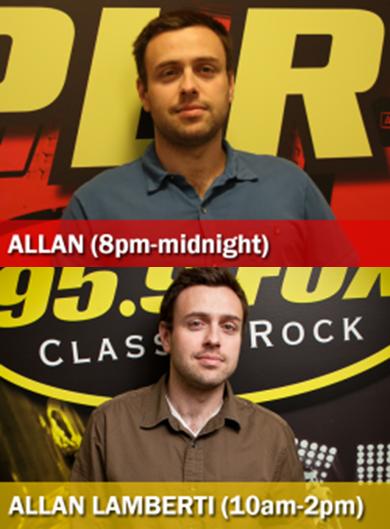
CEO Jeffrey D. Warshaw founded Connoisseur Communications Partners, LP, in 1993. Through strategic purchases of multiple single radio stations in medium to small sized radio markets, the company grew to 39 stations (owned or operated) prior to this week’s final sale of the Connecticut stations. Allan

In May, the company also announced plans to purchase WALK-AM/FM on Long Island, where the company already owns four radio stations. Among them are some Classic Rock formatted stations, although a national study released this week suggests that what listens hear in such a format varies across the country.

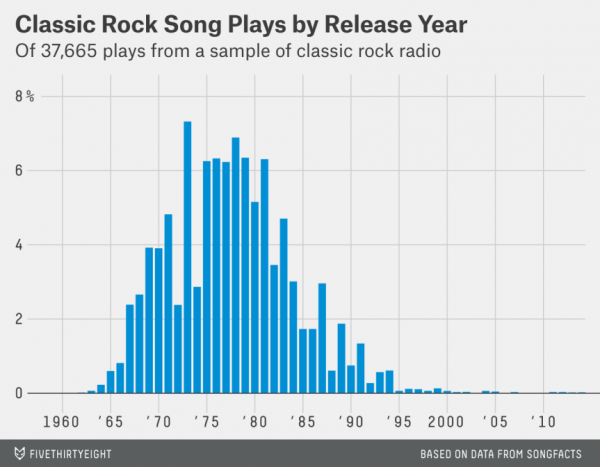
A new study by the well-respected data-driven website FiveThirtyEight “found that classic rock is more than just music from a certain era, and that it changes depending on where you live. What plays in New York — a disproportionate amount of Billy Joel, for example — won’t necessarily fly in San Antonio, which prefers Mötley Crüe.” The website studied the airplay of classic rock stations in the nation’s top 30 markets for a week, and analyzed what was played.

“Classic rock is heavily influenced by region, and in ways that are unexpected. For example, Los Angeles is playing Pearl Jam, a band most popular in the 1990s, five times more frequently than the rest of the country. Boston is playing the ’70s-era Allman Brothers six times more frequently.” WDRC was not included in their review of classic rock stations in the nation’s top markets.

The website reported that “the trend steadily held” for songs “of the ’70s and through the mid-’80s,” with the 10-year period from 1973 to 1982 accounting for 57 percent of all song plays. When ‘60’s songs were played, they were predominantly from the Beatles, the study summary noted. “Classic rock peaked — by song plays — in 1973.”

The analysis also found that “the top 25 most frequently played artists — the likes of Led Zeppelin, Van Halen and the Rolling Stones — together account for almost half of the spins on classic rock stations in the U.S. Another way of saying that is 5 percent of all the bands played on these stations made up nearly 50 percent of the song plays — which shows that there is at least a classic rock core.”

Staff changes are yet to be finalized, but at present Connoisseur ‘s General Manager for its stations in southern Connecticut, Kristin Okesson, will oversee the Hartford area stations. Okesson currently manages WPLR, WEZN, WFOX, and WYBC.

WDRC is considered the oldest radio station in Connecticut, begun in 1920 in New Haven by Franklin Doolittle Radio Corp., eventually relocating to Hartford (ultimately to 750 Main Street) and then to its current location at 869 Blue Hills Avenue in Bloomfield. WDRC-AM switched from a music to talk format decades ago, with WDRC-FM retaining the “Big D” style popularized in the ‘60’s and tweaked through the decades.

Greater Hartford Ranked #19 Among Best Places for Graduates in STEM Fields

If you’ve graduated college with a solid background and degree in hand in one of the in-demand STEM fields (science, technology, engineering and mathematics), there are some regions in America that are better than others to pursue your career. A new comparison of metropolitan areas across the country has ranked Greater Hartford as the 19th most desirable area in the country for college graduates who studied one of the STEM fields.

Hartford-West Hartford-East Hartford finished just ahead of San Diego – Carlsbad – San Marcos, California. One slot above Hartford in the rankings was Columbus, Ohio. Boston and Hartford were the only northeast cities to make the top 20 list.

Of all the jobs in the Hartford-West-Hartford-East-Hartford metropolitan area — which covers Hartford, Tolland and Middlesex counties — 6.6 percent were in STEM fields. That fact alone accounted for 50 percent of the total score Nerd Wallet assigned to the metro area, Hartford Business Journal reported. It also accounted for the area's $81,932 median annual wage for STEM jobs and itstem logos median gross apartment rent of $948.

The website Nerd Wallet determined the best places for STEM graduates by analyzing the following factors in the 75 largest U.S. metropolitan areas:

  • Income levels for STEM jobs: They looked at the annual mean wage for STEM occupations in each metro area, and factored in median gross rent as a cost of living metric to see how far the average income goes in each place.
  • Size of STEM industries: They included STEM occupations as a percentage of all jobs in a city to measure the robustness of the STEM industries and gauge availability of STEM jobs.

According to data from the Bureau of Labor Statistics, the annual mean wage for a STEM job is $79,395 — nearly 71% higher than the national annual average wage across all occupations and industries.  The top 10:

  1. San Jose – Sunnyvale – Santa Clara, California
  2. Seattle – Bellevue – Everett, Washington
  3. Washington, DC – Arlington, VA – Alexandria
  4. Houston – Sugar Land – Baytown
  5. San Francisco – San Mateo – Redwood City, California
  6. Austin – Round Rock – San Marcos, Texas
  7. Boston – Cambridge – Quincy, Massachusetts
  8. Raleigh – Cary, North Carolina
  9. Denver – Aurora – Broomfield, Colorado
  10. Dayton, Ohio

The analysis used U.S. Bureau of Labor Statistics data from May 2013 and rent data from the 2012 U.S. Census.

The region's focus on the STEM fields begins well before college graduation.  One recent example:  earlier this year, the CREC Academy of Aerospace and Engineering was ranked 15th in the nation and first in Connecticut in U.S. News & World Report's latest "Best High Schools" edition. The Connecticut International Baccalaureate Academy in East Hartford ranked 31st nationally and second in the state.

Nearly Two-Thirds of Americans Would Consider Coworking, If Only They Knew What It Was

Good news, bad news. That might be the best way to describe the results of a national survey by CoworkCT into public awareness of, and interest in, coworking. Nearly two-thirds of Americans (63%) said they would consider working in a collaborative work environment once they understood the concept (good news), but 60% said they had never heard of it (bad news). CoworkCT, a network of coworking communities whose members include small businesses, entrepreneurs, freelancers, and contractors who share space, resources, and ideas, conducted the national survey to better understand how familiar Americans are with coworking. Answer:  they're not.

A new website will be launched next week at www.coworkct.org, with more information about coworking in Connecticut.  Additional data, links and information will be added to the current test site, to assist in explaining the coworking concept to what the study suggests will be a receptive public.

According to the survey, the demographic groups most inclined to consider a coworking environment were 18 to 34 year olds (75%) and residents of the Northeast (72%). That is certainly true of ConneCoworkCT-Purple1-513x515cticut, which has seen growth in the concept in recent years, with coworking locations established in communities across the state, including Danbury Hackerspace, reSET (Hartford), the Grove (New Haven), B-Hive (Bridgeport), Stamford Innovation Center and Axis 901 (Manchester).  Each will have a presence on the news website, reflecting their growing community presence.

CoworkCT reports that the average cost of a coworking membership is $200 per month and the average cost of a private desk or office in a coworking facility is $350. The data from the survey showed that on average, people think the monthly cost of an individual coworking membership is $1,300.  Not even close.

Other key findings from the research include:

  • Nearly 40% of respondents said that collaboration with other professionals (not necessarily within their organization) was the most attractive feature of a coworking space, followed by 19% of respondents who chose affordability
  • Forty percent of respondents thought small businesses with fewer than 10 employees were best-suited for coworking, followed by 21% of respondents who said entrepreneurs wctnext-logo-finalould be the best fit
  • More than half of respondents (55%) said they thought it costs more than $500 per person per month for an individual space in a coworking environment

CoworkCT is a network of Connecticut coworking communities where members share space, resources, and ideas. The goal of the network is to educate the public on the benefits of coworking and increase general awareness for the collaborative work style.

CoworkCT is coordinated by CT Next, Connecticut’s innovation ecosystem supporting the success of companies and entrepreneurs by providing guidance, resources and networks to accelerate their growth. The statewide network “connects promising companies to mentors, collaborative work spaces, universities, vendors, suppliers and other like-minded entrepreneurs to help facilitate the growth and scalability of their business.”  CT Next is a program of CT Innovations, the leading source of financing and ongoing support for Connecticut’s innovative, growing companies.

Among the other coworking sites in Connecticut that are expected to be invited to the new CoworkCT website are SoNo Spaces in South Norwalk, Group 88 in Simsbury , and The Soundview, Colodesk and Comradity, all in Stamford.

The national data in the report was based on an ORC International telephone CARVAN® Omnibus survey conducted among a sample of 1,006 adults 18 and older living in the continental U.S. Interviews were completed from April 24 to 27, 2014. coworking

Connecticut Agriculture Growth Gains National Attention

Connecticut may be the third smallest state in the nation, but it has a large agricultural presence - which led to the state being featured recently by the U.S. Department of Agriculture (USDA) on the federal agency’s website. Bucking the national trend, USDA reports, Connecticut farming has been growing for the past two decades. The state - based on the 2012 Census of Agriculture - has nearly 6,000 farms, which is a remarkable 60 percent increase from the 3,754 farms in Connecticut in 1982. At the same time, the state’s farmland acreage remained relatively stable, which means that the size of an average farm has been trending down, to an average of 73 acres.farming in CT

More than 900 Connecticut farms harvested vegetables for sale in 2012, with bell peppers being the most popular crop. To meet the needs of East Coast homeowners and landscapers, in 2012, 880 of Connecticut's nurseries, greenhouses, floriculture and sod farms grew and sold almost $253 million worth of those crops.

In addition, Connecticut’s coastal area has hosted shellfish farms since Colonial times. In 2012, the state’s aquaculture industry sold nearly $20 million worth of seafood, primarily shellfish from Long Island Sound. There is livestock as well, USDA notes, with 774 farms in Connecticut raising cattle and calves. Most of the sales on the livestock end come from milk, however. In 2012, the state’s farms sold nearly $70 million worth of milk from cows.

Contrary to history and stereotype, in 2012 more than 25 percent of all Connecticut farms were operated by women as principal operators. That is an incremental increase from 23 percent in 2007. Overall, the 2012 Census counted more than 3,700 women farmers in the state.

Connecticut farmers have also stepped up their efforts to get agricultural products into consumers’ hands, the USDA report indicated. With the growing “buy local” movement, nearly a quarter of Connecticut farms market human food products directly to consumers. About 10 percent of the farms in the state now market their products directly to retail outlets such as restaurants, stores, and institutions; and at the same time, 218 of our farms participate in community-supported agriculture programs allowing local residents to partake in their harvest.ct_grown_local_flavor

Although the USDA did not specifically mention the longstanding “Connecticut Grows” campaign from the state’s Department of Agriculture, it has served as a lynchpin for intensified efforts using technology.

The CT Grown Program was developed in 1986, during the administration of former Gov. William A. O’Neill, when the now-familiar green and blue logo was created to identify agricultural products grown in the state. During nearly three decades, the CT Grown Program has blossomed into a multifaceted campaign that promotes these products through a diverse array of avenues in local, regional, national and international markets.

It now features CT Grown producer listings and brochures, connections to farmers markets, the CT Seafood Council, CT Farm Wine Development Council, CT Food Policy Council, CT Milk Promotions Board, and other related councils and commissions.

More recently, the website www.buyctgrown.com was established as “a place to connect people who are ready to discover CT Grown foods and experience Connecticut agriculture.” buyCTgrown is a program of the non-profit CitySeed and receives support from our partners including UConn Extension, CT Farm Bureau, CT NOFA, and the CT Department of Agriculture. Logo_Pledge10_Partner

The website’s “CT 10% Campaign” asks people to spend 10 percent of their existing food and gardening dollars on locally grown goods.” Individuals and businesses can sign up to “take the pledge” on the website, and will receive ongoing information about locally grown products.

Nonprofit Governance Has Room for Improvement, Survey Finds

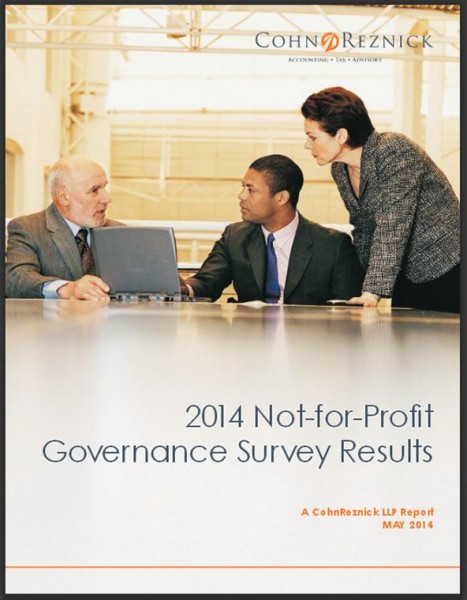
The 4.9% rise in charitable giving in 2013 is the largest gain since 2008, and comes at a time when greater attention is being paid by philanthropic donors and regulators to the governance practices of non-profit organizations. The CohnReznick 2014 Not-for-Profit Governance Survey reflects some progress as well as areas for improvement by nonprofits on a range of governance measures. The members of CohnReznick’s Not-for-Profit and Education Practice specialize in working closely with the boards and management of not-for-profit organizations to assist them in developing and implementing best-practices for their critical financial and operational functions. “Now more than ever,” the report indicates, “our clients are asking us questions about policies and procedures relating to audit committee governance and risk detection and minimization strategies.”

Key findings in the national survey included:

  • 58% of respondent organizations stated that they have an audit committee that is separate and apart from their finance topics coveredcommittee
  • 54% of respondents stated that their audit committees have between four and six members
  • 27% of the respondents stated that their organizations have a whistleblower hotline
  • 68% of respondents stated that their annual board meetings contain an educational component
  • 82% of responding organizations have a whistleblower policy in place.
  • 42%, stated that they do not have an audit committee that’s separate and apart from a finance committee.

When identifying conflicts of interest, the survey found that 77% of the respondent organizations have an annual disclosure statement in place.

The survey also found that 68% of the nonprofit organizations include an educational component to their board meetings and place a strong emphasis on financial, strategic planning, and governance. Other areas receiving attention at board meetings include industry trends, technology, risk management, regulation and tax issues.

According report coverto the National Center for Charitable Statistics (NCCS), there are more than1.4 million not-for-profit organizations registered in the U.S. This includes almost one million public charities, over 96,000 private foundations, and more than360,000 other types of not-for-profit organizations, including chambers of commerce, fraternal organizations, and civic leagues.

The survey found that less than 50 percent of boards noted that they are “very confident” in their organization’s governance practices. With the addition of new laws and regulations surrounding the industry, “this lack of confidence can give rise to much larger issues hesitation,” the report concluded. According to Forbes, charitable giving rose 4.9% in 2013, the largest increase in five years. This rise indicates “a renewed attention for not-for-profit organizations, which can also lead to renewed scrutiny.”

Knowledge of the intricacies of regulations and the effects that it will have on the governance practices of not-for-profit organizations is crucial to the success of affected organizations, the reported pointed out.

With origins dating back to 1919, CohnReznick LLP is the 10th largest accounting, tax, and advisory firm in the United States. Headquartered in New York City, CohnReznick serves its clients with more than 280 partners, 2,500 employees, and 26 offices – including Farmington, Glastonbury and New London in Connecticut, with plans for newly consolidated offices in downtown Hartford.

The consolidation of the two suburban offices in Glastonbury and Farmington is expected to relocate nearly 200 employees into Hartford later this year. The company plans to lease 50,000 square feet on the top two floors of the Metro Center building on Church Street.

Report Calls for Transition to Livable Communities Across Connecticut

In Connecticut, more than one-third of the population is over the age of 50, and that proportion continues to increase. Connecticut’s Legislative Commission on Aging has issued “Connecticut for Lireport covervable Communities,” a new report to the state legislature which outlines more than 50 recommendations for communities looking to enhance livability. The Commission has also launched a website which includes a list of communities that are responding to the call for more livable communities, and suggests a wide range of actions that communities can take.

Connecticut is undergoing a permanent and historic transformation in its demographics, the report points out. Between 2010 and 2040, Connecticut’s population of people age 65 and older is projected to grow by 57 pelivability chartrcent, with less than 2 percent growth for people age 20 to 64 during the same period.

Livable communities are vibrant, inter-generational places that are easy to get around, according to the report. “They include affordable, appropriate housing options, supportive community features and services, and adequate mobility options. They foster independence, engage residents in civic and social life, and allow people to age in place. Done well, they benefit community residents across the lifespan.”

The 50-page report indicates that residents born in Connecticut today can expect to live to be 80.8 years old - the third highest life expectancy in the nation. A lengthy series of recommendations are highlighted in seven different areas: community engagement, health and well-being, housing, planning and zoning, safety and preparedness, social and support services, and transportation.

The recommendations include promoting opportunities for intergenerational collaboration, promoting in-home programs that improve health outcomes, creating a balanced transportation system that connects residents with health care services, and adopting policies that encourage incorporation of accessible housing features into new construction. The recommendations also include a call for municipal plans of conservation and development that include planning for older adults and individuals with disabilities to remain in their homes and communities, and building compact, mixed-use development “to encourage walking and eyes on the street.”

Creating livability requires “robust partnerships, long-range planning and sustained commitment.” To support those efforts the Legislative Commission on Aging plans to be:

  • Providing educational opportunities on livable communities for community leaders and other partners in Connecticut;
  • Creating partnerships to support the multi-faceted, multi-disciplinary endeavor of creating livable communities;
  • Supporting, inspiring and incentivizing communities to enhance livability; and developing policies to support aging in place

To help communities implement the recommendations over time, the Commission plans to:

  • Recognize localities that have implemented livable communities initiatives, pursuant to Public Act 14-73 (which established the livable communities initiative)
  • Expand partnerships across multiple sectors to advance livability, logo
  • Continue to convene municipal leaders, legislators and other thought leaders for statewide and regional forums on creating livability;
  • Continue to identify funding opportunities for municipal leaders, seeking to implement or sustain livable communities initiatives;
  • Work with partners to conduct asset mapping across all Connecticut communities, with the goal of helping each community understand its facilitators and barriers to developing livable communities;
  • Continue to research models in other states, nationally and internationally;
  • Work with the Connecticut General Assembly to identify and advance policy solutions that incentivize and inspire the creation of livable communities;
  • Provide technical assistance to Connecticut communities seeking to enhance or promote livability; and
  • Create town-specific data profiles to enable towns to enhance livability in a targeted and strategic fashion.

Among the communities listed on the new website as having best practices in place in parts of their towns or cities are Branford, Guilford, Madison, Bridgeport, Danbury, Darien, Enfield, Hartford, Middletown, New Haven, New Canaan, Norwalk, Seymour, and Torrington.  The Commission plans to proceed with "asset mapping across all Connecticut communities" and "continue to identify innovations, ideas, and best practices for implementing livability in the state. "

Efforts to Connect Entrepreneurs Hit the Road Statewide

Some have suggested that the road back for Connecticut’s economy will be built one entrepreneur at a time. If that is the key to an economic rebound, an initiative by New Haven-based company Independent Software is looking to ramp up the process by gathering entrepreneurs in bunches. In fact, New Haven will be the next stop on eight-month Whiteboard Startup Roadshow tour across Connecticut, in the midst of the city’s celebrated International Festival of Arts and Ideas this week. Organizers indicate that cities like New Halogo whiteboardven are “overflowing with impossible ideas and the people who make them happen. We believe connecting to all three -- the place, the thinking, and the people -- can increase the probability of success for others who have impossible ideas.”

On Thursday June 26, from 2-5pm, The Whiteboard is bringing together New Haven area innovators and entrepreneurs for “a little history and to talk about the future.” The “Roadshow” stopped in Hartford last month, with a well-attended program at the reSET co-working space downtown.

Following the Arts and Ideas' "Innovation in the Ninth Square" walking tour of The Grove, SeeClickFix, and MakeHaven, individuals are asked to gather at Luck and Levity for an Open House and Entrepreneur Showcase beginning at 2 PM, followed at 4 PM by perspectives offered by:

  • Margaret Anne Tockarshewsky, New Haven Museum
  • Elon Boms, Launch Capital
  • Jim Gregory, Core Informatics

The Whiteboard - and the The Whiteboard Start-Up Roadshow – is operated by Independent Software, which runs from The Grove co-working space in New Haven, and is supported by CT Next.

Following a kickoff event in New Haven on April 1, the tour moved on to Stamford in April, then to Hartford in May, back to New Haven this week. In eight months’ time, organizers “expect to have a treasure trove of stories from each region and to see a larger, stronger, and more connected startup community state-wide.”  The list of cities to be visited for gatherings of local entrepreneurs is below.  whiteboard_logoheader1

Independent Software works with early-stage entrepreneurs “to develop the products, talent, and community they need to thrive.” The company also provides access to Connecticut’s vast startup community through The Whiteboard, which includes a diverse network of entrepreneurs, investors, and supporters.  The Whiteboard website outlines the Roadshow cities on the calendar:

  • July: Bridgeport-Fairfield: In the context of the city’s own summer arts festival, we’ll shine a light on the amazing progress Bridgeport’s entrepreneurial scene has made in recent years, working closely with the B:Hive, the Business Council of Fairfield County and others.
  • August: New London-Norwich: SECT Tech Center at Avery Point for bioscience startups and a robust arts scene makes the shoreline a unique place to start a business. Along with the New London-Groton area, Norwich is new territory for us so this area will be true exploration.
  • September: Storrs-Windham: From incubators to partnerships with UTC and others, UConn Storrs is a hub of activity for a myriad of innovation startups. Windham’s history, arts and social entrepreneurship adds to the mix for this not-so-quiet corner of the state.
  • October: Danbury-Waterbury: The Danbury Hacker Space is launching this year, and it’s just the beginning of activity for their entrepreneurs. As one of Connecticut’s many factory towns, Waterbury is looking to leverage its buildings to help launch small businesses.
  • November: Middletown-Meriden: As a connection point between the shore and Hartford, this area has pockets of innovation that you wouldn’t suspect. We hear rumblings of a startup culture and look forward to unearthing what’s here.
  • December: Torrington: Litchfield County is known for its organic farming and getaways. Yet, Torrington’s Warner Theater and energetic young politicians are fighting hard to be heard. We look forward to bringing these hidden gems to you.


Credit Card Delinquency Rate Places Connecticut At #20 Among States, Better Than U.S. Average

The credit card delinquency rate among Connecticut residents puts the state in the middle of the pack, ranked at #20 nationally, but the percentage has more than doubled compared with 2000 and climbed since 2006, according to data compiled by the financial website bloomberg.com. The credit card delinquency rate among Connecticut residents is slightly better than the U.S. average, and slightly better than the median among the states. credit card rate

The lowest credit card delinquency rates are among residents of North Dakota at 7.4 percent, Alaska at 7.6 percent, Nebraska at 8.3 percent, Wisconsin at 8.6 percent, and South Dakota at 8.7 percent.

Connecticut’s delinquency rate of 11.2 percent falls between Colorado at 11.1 percent and North Carolina at 11.2 percent. At the other end of the spectrum are California (17.7 percent), Florida (20.8 percent) and Nevada (22.4 percent). The U.S. average is 11.7 percent.

Since the beginning of the century, the credit card delinquency rate among Connecticut residents has climbed – from 5.2 percent in January 2000, to 7.8 percent in January 2003, to 11.2 percent in January 2009, where it has remained.

The national comparison is based on 2013 data, and was compiled this year. Credit card debt delinquency is the percent of all credit cards that are delinquent more than 90 days, including revolving accounts for banks, bank card companies, national credit card companies, credit unions, and savings and loan associations, according to Bloomberg.ee6b669580c44f948af5696e4913356f

Among the other New England states, Massachusetts ranks #39, Rhode Island is #44, Vermont is #16 and New Hampshire is #26. In the tri-state region, New York is #43 and New Jersey is #28 in individual credit card delinquencies among state residents.

Data on delinquent debt balances were collected as part of the Federal Reserve Bank of New York Consumer Credit Panel, a quarterly national survey of all individuals with a Social Security number and a credit report (usually aged 19 and over). It draws from a nationally representative 5 percent random sample from a database of about 40 million individuals’ detailed Equifax credit reports. The data is updated annually by the Federal Reserve Bank of New York, according to Bloomberg.

New Haven is Number One - Best Foodie City in America

New Haven is the number one “foodie city” in America, according to a new analysis published on the website Livability.com The site reports that “New Haven residents spend more on eating out than most Americans. Many frequent neighborhood bistros and cafes that get their ingredients from nearby farms. The city's farmers markets make it easy for home cooks to prepare fresh meals.”foodie

The Elm City outpaced cities including Boston in New York in the newly announced top 10 list, with New Haven praised for supporting local farmers, showcasing regional cuisine and providing residents with “bountiful opportunities to discover new flavors, textures, cooking techniques and healthy foods.”

To determine the top 10 “foodie” cities, editors analyzed data from Esri about how frequently families eat at locally owned restaurants and how much the average resident spends eating out. They also examined the accessibility residents of each city have to healthy foods like fruits, vegetables and quality meat with data from the Robert Wood Johnson Foundation.pepes

Also taken into account were cities with established farmers markets and restaurants that use locally grown ingredients, as well as critically acclaimed restaurants, successful chefs and winners of James Beard Foundation Awards.

“There’s a real foodie renaissance going on in U.S. cities,” says Livability.com Editor Matt Carmichael. “You’re seeing that coast to coast, but these cities really stand out as great places to live and eat.”

The site’s write-up of New Haven’s foodie choices noted that “restaurants cover the gamut of food genres. From Louis' Lunch to Frank Pepe Pizzeria Napoletana to Claire's Corner Copia, it’s no wonder New Haven residents spend more on eating out than most Americans.” Also among the New Haven restaurants mentioned in the profile of New Haven’s eateries are Sandra’s Next Generaclaire'stion, Mamoun’s, Prime 16, Skappo, Bella’s Care and Da Legna.

The 2014 list is quite different from a year ago. In 2013, the top city was Decatur, Georgia. Also reaching the top ten were Hoboken, New Jersey; Bloomington, Indiana; Berkeley, California; Madison, Wisconsin; Lafayette, Louisiana; Chapel Hill, North Carolina; Sante Fe, New Mexico; Alexandria, Virginia; and Burlington, Vermont. The only cities to reach the top 10 in both years were Berkeley and Burlington.  The 2014 list is the third annual developed by Livability.com.

Top 10 Foodie Cities, 2014louis lunch 1

  1. New Haven, CT
  2. Scottsdale, AZ
  3. Boston, MA
  4. Asheville, NC
  5. Traverse City, MI
  6. Berkeley, CA
  7. Boulder, CO
  8. Burlington, VT
  9. Omaha, NE
  10. Washington, D.C.