Six Connecticut Businesses Earn Honors from U.S. Commerce Department for Export Efforts

Four Connecticut companies - Dymotek of Ellington, Jonal Laboratories, Inc. of Meriden, Mutualink of Wallingford and Proton OnSite of Wallingford – were among 26 companies nationwide to receive the President’s “E” Award for Exports, as determined by the U.S. Department of Commerce.  In addition, Stamford-based Finacity Corporation and Hartford-based law firm Shipman and Goodwin were among 12 firms in the U.S. to earn an “E” award for Export Service. presidents_e_award U.S. Commerce Secretary Penny Pritzker honored a total of 45 American companies and organizations, many of which are small- and medium-sized enterprises (SMEs), at the 2015 President’s “E” Awards ceremony, held earlier this year.  The six Connecticut businesses were among the 45 honored.

Among the 45 businesses, Arizona joined Connecticut with the most businesses earning the “E” designation, with four.  Texas had three; Tennessee, Illinois and North Carolina each had two.  This year’s honorees represent 20 states, with 35 SMEs and 21 manufacturers receiving awards.finacity

The “awardees have made substantial contributions to increasing U.S. exports, which are critical to spurring economic growth and job creation,” said Commerce Secretary Penny Pritzker. “Exports continue to be a driver of our economy, supporting more than 11.7 million jobs in cities and communities across the country. Furthermore, these exporters are examples of the historic progress in our export growth. In 2014, U.S. exports hit an all-time high of $2.34 trillion, accounting for 13.4 percent of GDP. By exporting more Made-in-America goods and services, U.S. businesses are growing faster, hiring more workers, and paying better wages.”

dymotechProton Onsite makes hydrogen and nitrogen generators.  Mutualink manufactures equipment used to facilitate collaborative communication between public safety and first response teams at the scene of emergencies.  Jonal Laboratories makes sealant used in the aerospace industry.  Dymotek manufactures custom injection molded plastic and silicone parts for electronics, plumbing valves and juice dispensers. jonalLaboratories

Finacity is a world-class expert in accounts receivable securitizations, specializing in structuring, administration and reporting.

Twelve companies thamutalinkt assist and facilitate export activities were honored with the “E” Award for Export Service. Four firms received the “E” Star Award for Exports, which recognizes previous “E” Award winners who have reported four years of additional export growth. And, three companies were awarded the “E” Star Award for Export Service, which recognizes previous “E” Award winners that have shown four years of continued support of exporters since first winning the “E” Award.shipman

protononsiteThis year marks the 53rd anniversary of the “E” Awards presentation, which recognizes companies and organizations that make a significant contribution to the expansion of U.S. exports.  In 1961, President Kennedy signed an executive order reviving the World War II “E” symbol of excellence to honor and provide recognition to America's exporters. The President’s “E” Award is the highest recognition any U.S. entity can receive for making a significant contribution to the expansion of U.S. exports.

“Only a small percentage of America’s 30 million companies export, and of U.S. companies that do export, 59 percent export to only one country. Increasing this number can have a big impact on the U.S. economy,” Pritzker added.

 

English Language Learners May Hold Key to Economic Vibrancy of Region, State

One-third of Hartford’s population is Puerto Rican, making it the 4th highest percentage of Puerto Rican people in the continental United States.  But the rapidly increasing diversity of the state’s Capitol City, and the region that surrounds it, only begins there – as do the linguistic and workforce challenges. A new report produced by The Hartford Foundation for Public Giving Latino Endowment Fund focuses on the issues faced by English Language Learners and highlights the opportunities and the challenges of increased cultural and linguistic diversity.report

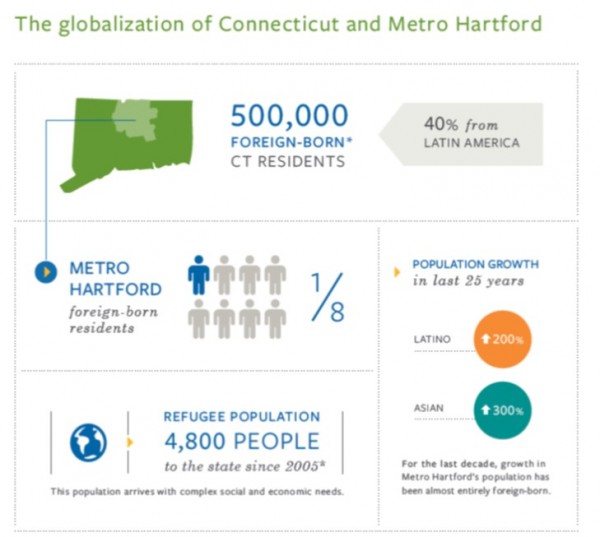
Approximately one-eighth of the Greater Hartford region’s population consists of foreign-born residents, including 4,800 people who have arrived in the state since 2005.  A total of 500,000 foreign-born residents are now living in Connecticut, including 40 percent who hail from Latin American countries.

During the past 25 years, population growth in the Hartford region has been “almost entirely” driven by foreign-born people taking up residence locally, according to the report. In the Hartford region, more than 1 in 5 people speak a language other than English at home.  About three-quarters of Connecticut English Language Learner (ELL) students speak Spanish.

The report found that the region’s “schools and communities are more diverse than ever, with more than 100 different languages spoken in homes throughout Greater Hartford.”  The report raises the question, “How can we harness the assets of a multilingual population to enhance our community and create stronger links to the global marketplace?”HFPG_VertLogo_rgb

The report notes that “researchers believe that, on average, it takes 2 years to master conversational English, yet 5-7 years to master academic English.”  The report indicated that when analyzing education and workforce data, English Language Learners are far behind their English speaking peers in terms of educational attainment and income.Highlighting one of the challenges for ELL students, the reported found that over the last 4 years, two of the top three teacher shortages in Connecticut have been bilingual and world languages educators.  About 20% of all adult ELLs experienced poverty in the last year, about twice the rate in the state as a whole. In Connecticut, the earned income of ELL adults is $25,000 per year—less than half of English-speakers’ earnings.

population“The Latino Endowment Fund has offered this report as a means to expand the important discussion on efforts to support English Language Learners in our communities,” said Luis Cabán, chair emeritus of the Latino Endowment Fund Steering Committee. “This document provides us with an opportunity to reframe how we think about our increasingly global community and recognize the advantages of people speaking more than one language to enhance the richness of our community and create stronger links to the global marketplace.”
The number of Hispanic entrepreneurs in the United States has more than tripled since 1990 from 577,000 in 1990 to 2,000,000 in 2012, according to the report. Immigrant-owned businesses employ 10% of all American workers and generate 16% of the overall US business income.  Connecticut is home to 14,000 Latino-owned small businesses, which represents a 50 percent growth rate since 2007.

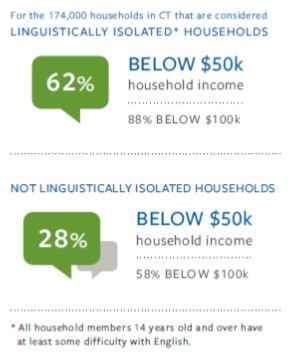
In Connecticut as of 2013, there were over 191,000 working-age adults with limited English proficiency.  This population has grown 32 percent since 20000 and now represents 10 percent of the total working-age population.  Over 58 percent of these are Spanish-speaking, the report indicated. teacher shortage

Some of the potential solutions highlighted in the report are:

  • Eliminating the state requirement that a district must have a minimum of 20 students requiring ELL support before receiving state funding. All districts that teach students who need ELL support should be eligible for state assistance.
  • Expanding dual-language immersion programs to build a more supportive multilingual environment that can cater to both urban and suburban families.
  • Developing an ESL/adult education curriculum for parents that focus on interactions with their children’s schools and teachers.
  • Providing additional support to create a smooth transition from adult education ESL classes to college-level ESL classes through the development of a coordinated curriculum.household income

“While we appreciate the recent actions by the legislature to support ELL students and their families, this report shows that much work needs to be done to assist the thousands of Connecticut children and adults who are not proficient in English,” said Nelly Rojas Schwan, chair of the Latino Endowment Fund and an assistant professor of social work and Latino community practice at the University of Saint Joseph. “The future of our state’s economy will largely be determined by how well we educate and train our English Language Learners and we hope this report will serve as a tool to aid in this discussion.”

Download a copy of the report.

Income Inequality Around Bridgeport Has Grown, Among Nation’s Largest Gaps, Research Shows

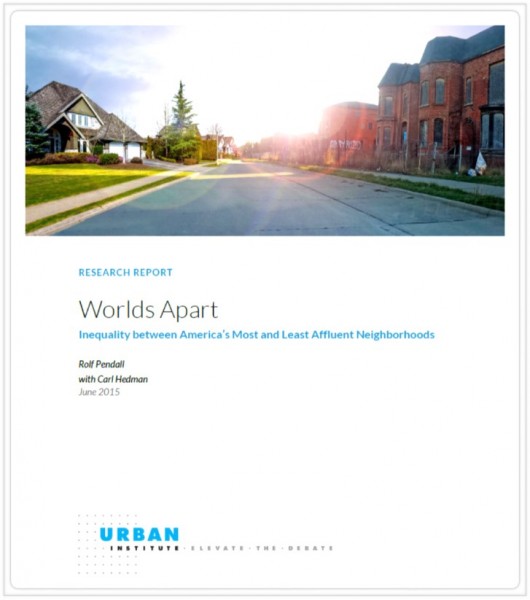
Commuting zones surrounding Bridgeport are among the commuting regions in the United States where neighborhood income inequality has grown notably most severe over the past 20 years, according to a new analysis developed by the Urban Institute and published in Governing magazine. From 1990 to 2010, inequality in the United States increased in many ways, the report explains, highlighting that the income, wealth, and educational attainment of residents in the most privileged neighborhoods in the U.S. escalated rapidly over these two decades. Meanwhile, “residents of the most disadvantaged neighborhoods gained little; many of these neighborhoods grew poorer,” the report indicated.

WOrlds ApartAs a result, the study found that inequality between “top and bottom income” neighborhoods intensified in the great majority of commuting zones. Even where inequality dropped, the story was not always positive: it often occurred because top-neighborhood incomes fell in the wake of economic stagnation.
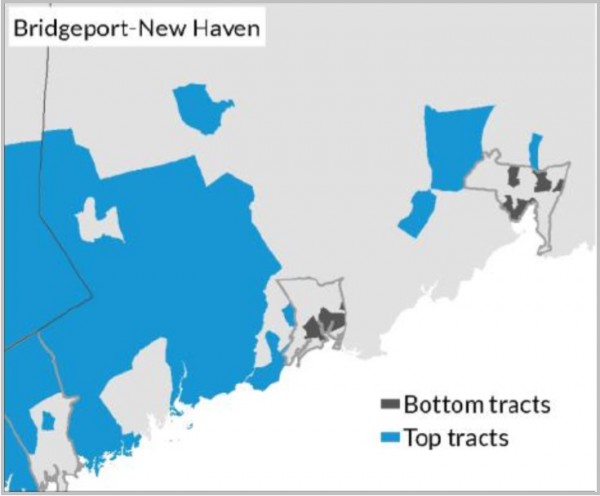
The research report, “World Apart:  Inequality between America’s Most and Least Affluent Neighborhoods,” found that “the national trend toward rising incomes among top-earning households” was reflected in the nation’s top tracts show growth from $123,000 to $138,300, over 12 percent” during the period 1990-2010.  Some top neighborhoods, including those surrounding Bridgeport, “had increases of over $30,000 at the top.”

Annual income in bottom tracts, meanwhile, grew from $36,800 to $37,150 – less than 1 percent over the twenty year period.  The average income of bottom tracts declined in 209 of the 570 commuting zones studied, the report indicated.  The most severe losses at the bottom among large commuting zones, the report found, occurred in Bridgeport, Newark and Dallas. Bridgeport is one of the ten cities with the largest “neighborhood inequality index.”

The report flatly stated that “Bridgeport, which includes the entirety of Connecticut, already was one of the most unequal commuting zones in 1990.  Its top and bottom neighborhoods pulled further apart in income between 1990 and 2010; practically all its top neighborhoods are still in the suburbs and practically all its bottom neighborhoods are in central cities.”bgpt NH

The only cities with commuting zones of over 250,000 people with a higher “neighborhood inequality index” than Bridgeport, as of 2010, are Austin, Baltimore, Birmingham, Columbus, Houston, Nashville, Richmond, and St. Louis.

As a result of changes at the top and bottom, the report noted, income inequality between top and bottom tracts grew from 1990 to 2010 in 433 of the 570 commuting zones. In 237 CZs, income inequality grew because of rapid increases at the top coupled with modest increases at the bottom.

To understand the differences between neighborhoods that share the same housing and labor markets, the Urban Institute analysis used commuting zones (CZs), county-based regions defined in the 1990s. Unlike metropolitan areas, commuting zones cover the entirety of the United States, and their definitions are constant over time.

The study ranked every CZ’s tracts from lowest to highest neighborhood advantage score. Then they identified the top 10 percent and the bottom 10 percent of tracts—the most advantaged and least advantaged neighborhoods in each CZ—for further exploration. There are described as top and bottom tracts. The study analyzed the 570 CZs that had at least 10 census tracts in 2010.

The nonprofit Urban Institute is dedicated to elevating the debate on social and economic policy. The organization’s website explains that “For nearly five decades, urban scholars have conducted research and offered evidence-based solutions that improve lives and strengthen communities across a rapidly urbanizing world. Their objective research helps expand opportunities for all, reduce hardship among the most vulnerable, and strengthen the effectiveness of the public sector.”

Hartford Area Ranked #5 Up-and-Coming City for Tech Jobs

As tech grows to increasingly  impact almost every aspect of our lives, it’s not surprising that the industry is moving beyond its traditional home of Silicon Valley and taking root in regions across the nation.  Where that growth is happening is the subject of continual scrutiny and intense interest.  Now, a new analysis indicates that among the leading up-and-coming regions for tech jobs is Connecticut's Capitol Region of Hartford-East Hartford-West Hartford, which placed fifth in a review of tech jobs by ZipRecruiter. By analyzing the hiring trends nationwide, the company has compiled a list of the Top 10 Up-and-Coming Cities for Tech Jobs.  Greater Hartford was one of two regions in New England to make the top 10 list; the other is Manchester, New Hampshire, three slots behind Hartford.  They were the only Northeast cities to earn a position on the list.region

According to the company’s website, “although it once suffered the same decline characterizing many Rust Belt cities, Hartford has diversified into the insurance, healthcare, and tech industries and exhibited positive growth as of our latest jobs report.” While noting that “the city is home to headquarters for United Technologies,” ZipRecuiter also indicated that the region “continues to attract new companies with its population of entry level job seekers from local universities and excellent quality of life.”  UTC recently announced it would be moving its headquarters from Hartford to Farmington, CT, just one town west of West Hartford.

Top 5 technology jobs, according to the analysis, in the Hartford-West Hartford-East Hartford region are:

  • Applications Engineer
  • Systems Analyst
  • Infrastructure Engineer
  • Java Developer
  • Data Architect

Top-Tech-Jobs-Overall, the top 5 up-and-coming regions for tech jobs in the U.S. were 1) Austin-Round Rock, TX, 2) Raleigh-Cary, NC, 3) Provo-Orem, UT, and 4) Fort Collins-Loveland, CO.  Also reaching the top 10 were 6) Indianapolis-Carmel, IN, 7) Boise City-Nampa, ID, 8) Manchester-Nashua, NH, 9) Nashville-Davidson-Murfreesboro-Franklin, TN and 10) Eugene-Springfield, OR.

ZipRecruiter allows small businesses, individual employers and recruiters to easily reach the right candidates and make the best hiring decisions with single-click postings to 100+ leading job networks azipnd online interview tools, all while eliminating bulky and expensive software. Founded in 2010, ZipRecruiter is a privately held company based in Santa Monica, California.


Business Conferences Seek to Help Businesses Stay and Grow in CT

As Connecticut’s overall policy attitude toward business growth and development continues to be the center of attention as legislators contemplate revisions to the recently passed state budget, a renewed effort to help businesses get underway this week. Employers interested in learning more about hiring incentives, tax credits, job creation programs, creating a business plan, opportunities for women and minority owned business, obtaining low interest financing and other opportunities are being asked to attend one of a series of workshops being offered this month and in September, at locations around the state.step up

The state Department of Labor and other agencies  are offering free Regional Step Up Conferences.  Online registration is now open for the three events in June. While there is no admission to the conferences, interested businesses are asked to complete the pre-registration form on the website.  The conferences are designed for local businesspeople to see how state and federal resources can help achieve business success.

The first conference will be on Tuesday, June 23 at Naugatuck Valley Community College (Fine Arts Center Lever Atrium-Main Stage Theatre), 750 Chase Parkway, Waterbury, 8:00 – 10:30 AM (light refreshments begin at 7 AM).  Tuesday’s conference will also offer tours of the college’s Advanced Manufacturing Center.

In addition to the Waterbury conference, this week will see Step-Up conferences in Stamford on June 24 and Shelton on June 30.  The conferences resume in the fall, with scheduled sessions in Middletown on September 9, New Haven on September 15, New Milford on September 17, Hampton on September 22 and Bridgeport on September 24, according to the state Department of Labor website.

The events are also sponsored by Governor Dannel P. Malloy and Lt. Governor Nancy Wyman, Secretary of the State Denise Merrill, the Connecticut Department of Labor, the Department of Economic & Community Development and a range of community partners, including Chambers of Commerce, local community colleges, business and manufacturing associations, workforce and community organizations, local legislators and organizations work with the African-American and Latino communities.

This free event will provide valuable information on how companies can take part in the state’s Subsidized Training and Employment (Step Up) programs, Small Business Express, tax incentives, tax credits and more.  Among the topics highlighted are:wby

  • Wage reimbursement & training incentives (Subsidized Training and Employment Program Step Up) and Veterans Step Up that reimburse your company up to $12,500 for new hires
  • Low Interest financing under the Small Business Express Program
  • How to find and recruit new and qualified employees, including veterans
  • Tax incentives for equipment upgrades and job creation
  • How to become a State of Connecticut vendor
  • Free business plan, marketing analysis
  • Incumbent Worker Training programs to develop your workforce
  • How apprenticeship programs can assist the trades and manufacturing sectors

CT Ranks 35th in Economic Clout of Women-Owned Businesses; Growth Rate Ranks 43rd

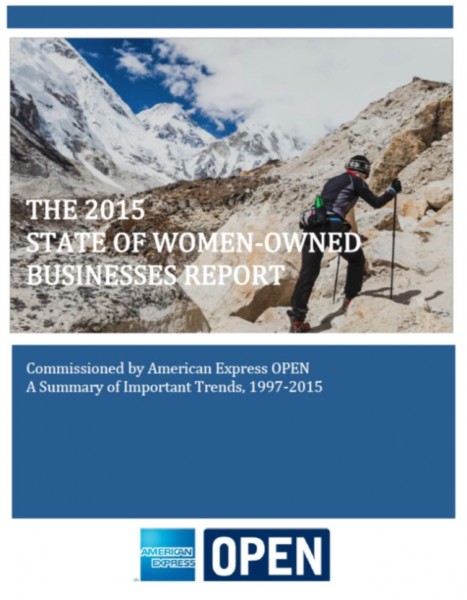
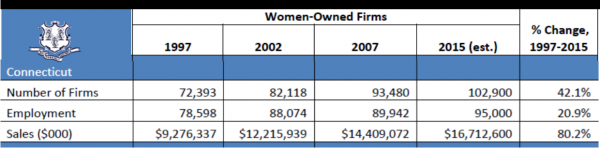
According to the latest State of Women-Owned Businesses Report, women-owned firms in the U.S. now make up 30 percent of all businesses -- and they're generating about $1.5 trillion in revenue, an increase of 79 percent since 1997.  Connecticut, however, ranks 43rd in the nation in the percentage of growth, below the national average, at 42.1 percent.  The state also ranks 28th in percentage of revenue growth of women-owned businesses, and 22nd in the growth of employment levels in women-owned businesses.  Overall, Connecticut ranks 35th in the nation in the combined "economic clout" ranking of women-owned businesses, considering growth in the number of firms, revenues and employment during the past two decades.report cover The newly released report, looking back at the past two decades, found that women-owned firms are found in every state and in every industry:
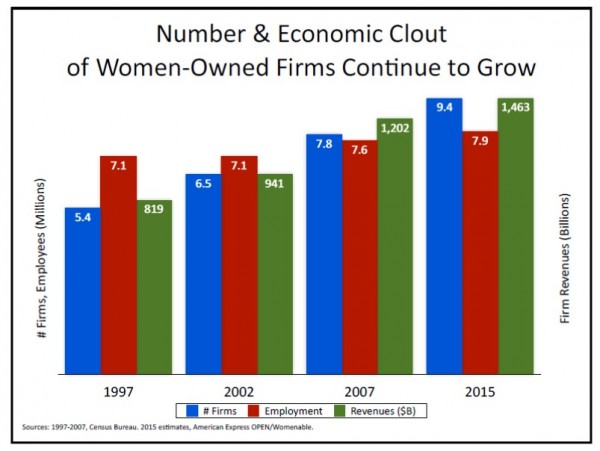
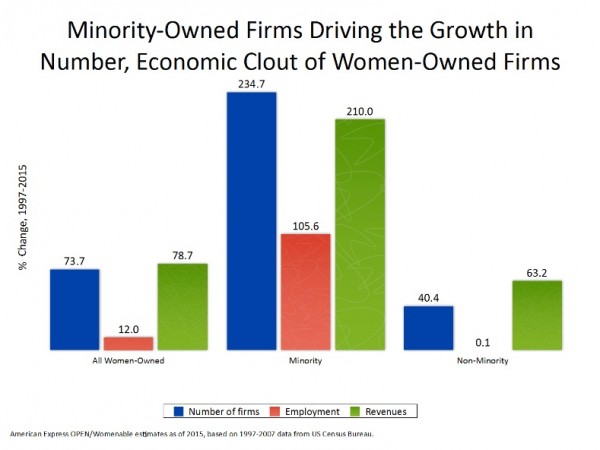
  • The number of women-owned firms in the U.S. continues to climb, and is now estimated to have surpassed 9.4 million enterprises—30 percent of all businesses in the country;
  • Women-owned firms now employ over 7.9 million workers (excluding owners), providing one in seven jobs among privately-owned businesses.
  • The fastest growing industry sector is educational services, which has seen a 67% increase in the number of women-owned firms since 2007 versus an overall 21% increase.

A study by American Express OPEN using U.S. Census data found the number of women-owned businesses has grown dramatically since 1997.  Since that year there have been an average of 608 net new women-owned firms launched each and every day across the nation—and the rate just over the past year stands at 887 per day. The number of women-owned firms is increasing at a rate 1.5 times the national average.

Connecticut has nearly 103,000 women-owned businesses employing 95,000 people and generating approximately $16.7 billion in sales, according to data outlined in the report.  Picture4

Nationally, the number of women-owned firms has increased by 74 percent since 1997. The states with the fastest growth in the number of women owned firms over the past 18 years are: Georgia (up 132%), Texas (116%), North Carolina (98%), North Dakota (89%) and New York (89%). The top ten states for women-owned firms, in terms of growth in number and economic clout, are North Dakota, Wyoming, D.C., Arizona, Georgia, Nevada, Maryland, Texas, Utah and Hawaii.  The states at the bottom of the list are Iowa, Rhode Island, Maine, Vermont and Ohio.

In 1997, there were just under 1 million (929,445) firms owned by minority women, accounting for one in six (17%) women-owned firms.  That number has skyrocketed to an estimated 3,111,300 as of 2015, now comprising one in three (33%) women--‐owned firms. These 3.1 million multicultural women--‐owned firms employ 1.6 million workers in addition to the owner and generate an estimated $268 Billion in revenues.women owned firms

The industries with the highest concentration of women-owned firms are healthcare and social assistance (53 percent of firms in this sector are women-owned, compared to a 30 percent share overall), educational services (45 percent), other services (42 percent), and administrative support and waste management services (37 percent).

In the mid-west, Illinois ranks 19th nationally with 68 percent growth in the number of female business owners over the last 18 years, while Indiana placed 45th nationwide with 37.7 percent growth (somewhat below Connecticut's ranking).  New Jersey ranked 25th for growth in the number of women-owned businesses, with a 58.3 percent growth rate between 1997 and 2015, and 40th for growth in revenue, at 58.2 percent.

The report also found that the number of minority women who own businesses has grown significantly. In 1997, minority women owned 17 percent of women-owned firms in the United States. Today, minority women own 33 percent of the nation's 9.4 million women-owned companies. African-American women own 1.3 million businesses and Latinas own 1.1 million companies.swob-report-weeks-openforum-embed1

The report points out that "the only bright spot in recent years with respect to privately-held company job growth has been among women-owned firms.  They have added an estimated 340,000 jobs since 2007.  Among men-owned and equally-owned firms, employment has declined over the past eight years."

The study also found that start-up activity among women is on the rise, as the daily rate of net new women-owned firms was 602 in 2011-12, 744 in 2012-13, 1,288 in 2013-14 and this past year was 887 net new women-owned firms per day - all higher than the overall 554 per day over the entire 2007-15 period, according to the report.

Among the 484 net new minority-owned firms per day last year were 223 African-American women-owned firms, 168 Latina-owned firms and 105 Asian American owned firms started each day in 2014.


Pratt & Whitney’s Caitlin Oswald Among Most Creative in U.S. Business for Propelling Jet Innovation

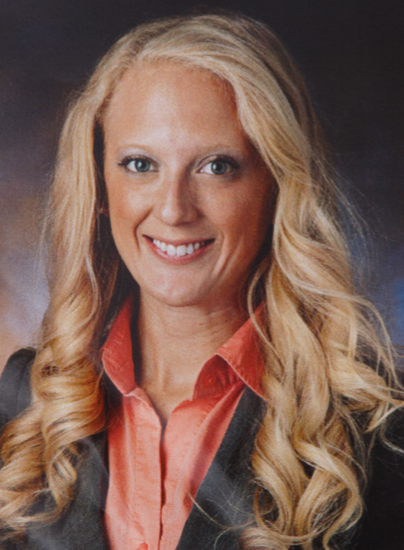
Pratt & Whitney additive manufacturing project manager Caitlin Oswald is one of the “100 Most Creative People in Business for 2015,” in a list compiled by Fast Company magazine featuring business and industry leaders well known – and some relatively obscure - from across the globe. The elite international list of scientists, fashion designers, app developers, architects and others from Nike, Evernote, IBM and Pepsico  and other well-known organizations are among those that Fast Company, the oft-cited media voice for innovation in business, keeps an eye on for the latest in technology and business models that have the potential to change the world.caitlin oswald photo

Oswald was recognized for her work in additive manufacturing, or "3D printing," especially as it has been applied to Pratt & Whitney's PurePower® Geared Turbofan™ (GTF) engine platform. She is credited with leading a team that incorporated additive manufacturing, specifically electron beam melting, through the development process and helping engineers approach challenges in a new way, according to the publication.sidebar-mcp-2015

As Fast Company explained Oswald’s business leadership:  “When a new fleet of Airbus regional jets take off later this year, they will feature something new under their wings: geared turbofan engines. Possibly the most sustainable jet engine ever built, the GTF will use 16 percent less fuel and significantly reduce CO2 emissions—a breakthrough that was only possible via advances in 3-D–printing technology.”

The publication indicated that “Caitlin Oswald led the team that incorporated 3-D printing into the design process, looking at each part of a jet engine to determine if it could be better developed with the new technique. As a result, engineers were able to approach challenges in a completely different way.”

"They’re able to print a part to scale and hold it in their hand," Oswald told Fast Company. "They can really understand what it looks like and what the capabilities and limitations are."

Added Oswald, a Design and Applied Technology Manager at Pratt & Whitney:  “This concept of additive manufacturing is this big, scary concept out there. Some people can take it and they look at it like it's the best thing since sliced bread and they're going to use it everywhere and let's forge ahead. Then there's the other side who thinks it's too risky; it's just a fad that's never going to gain any ground. My job is in this sweet spot where I'm able to take this big, scary concept and break it out into many bite-sized chunks.”

Pratt_&_WhitneyThe Fast Company top 10 include:  Charles Arntzen of Arizona State University’s Center for Infectious Diseases and Vaccinology; Rajan Anandan, Google’s Vice President and Managing Director for India and Southest Asia; Dao Nguyen, publisher of Buzzfeed; Maria Claudia Lacouture, president of ProColombia; Jens Bergensten, lead creative designer for Minecraft; and Leslie Dewan, CEO of Transatomic Power.

Oswald ranked #30 on the list, between Barbara Bush and Tracy Young.  Bush, the daughter of former President George W. Bush, is co-founder and CEO of Global Health Corps.  Young is co-founder of PlanGrid, which developed a software product allows a large team to share a master set of blueprints, so that each team member can add their own markings and see their changes reflected in real time.FCLA

The magazine’s awards were presented to the Most Creative People in Business recipients at a Fast Company conference in Los Angeles recently. Said Oswald of the experience: “What I really enjoyed was learning about how people use their passion for creativity to drive their goals."

Read the Fast Company profile of Caitlin Oswald


Leadership Greater Hartford Connects More Than 400 Volunteers with Nonprofit Board Service

In just over six years, more than 400 people in the Greater Hartford area have joined the board of directors of local nonprofit organizations, through an innovative matching program run by Leadership Greater Hartford.  The program has proven both popular and successful, and is seen as a win-win for the nonprofit organization in need of expertise and individuals looking for ways to contribute to the well-being of the community. The Leaders on Board program has matched 404 individuals – from young professionals to retirees - with more than 100 nonprofit organizations since January 2009.  The program attracts individuals with an interest in serving on a board, and looking to develop their leadership skills and serve the community.  Potential board members receive training in nonprofit organizational structure and management, are introduced to the role and responsibilities of board members and are encouraged to explore their own individual skills. The training session provides the foundation for effective board service. LOB no Express Logo 34

Leaders on Board, unique in Connecticut and perhaps the largest initiative of its kind in the region, provides a critical connection for nonprofit organizations who are looking for board members that have been trained in the basics of board membership and have expressed an interest in serving on a nonprofit board.  In some cases, individuals’ employers encourage such community activism, in others, the person is seeking to give back to the community or broader their involvement in issues that are of particular interest.  Corporations and businesses participate in the Leaders on Board program by offering board governance training to encourage their employees who are interested in serving the community.

The program works in a round-robin matching session, where representatives of nonprofit organizations conduct brief one-on-one interviews.  At the end of the session, both the individual and the organizations indicate where they think there might be a match.  If there’s agreement, there are further follow-up conversations to determine if selection to a specific board should go forward.  Often, the answer is yes.

“I decided to participate in leaders on Board because I was looking for a way to become a board member on a local, small to medium-sized nonprofit organization," explained Bill Valentine, Donor Relations Manager, United Way of Central and Northeastern CT. "Leaders on Board is the ideal way to learn the basic information about the responsibilities of being a board member and to learn about the organizations that are looking for new board members.”

At times, prospective board members learn of nonprofit organizations they had not been aware of or knew little about.  For people new to the region, and even those who have spent a career in Greater Hartford, the variety of nonprofit organizations, and they work they pursue with various populations, can be eye-opening.  The list of organizations that have placed members on boards through the Express Match process is quite impressive – a who’s who of community organizations.logo_block

In 2013, the Association of Leadership Programs, a national organization with affiliates across the country, presented Leadership Greater Hartford with its first “Excellence in Innovation” award for the implementation and success of the Leaders on Board program.  Recent years have also seen greater diversity among prospective board members, and interest by nonprofit organizations in having boards that more closely reflect the diversity of the community they serve.

"I had been considering pursuing board membership for a few years when The Junior League of Hartford offered its members a chance to participate in Leaders on Board," recalled Patricia Sasser, Dean of Students at Loomis Chaffee.  "The Leaders on Board orientation provided great information on what a prospective board member needs to know about board service; it definitely set me up for success.  I felt prepared and excited when I attend my first Leaders on Board Express Match. Having a chance to speak with different organizations about their mission and purpose opened my eyes to all the different types of organizations I could support. I found several that really spoke to my heart and was excited when I was matched with an organization I admired."

Among those who have recently accepted board of directors positions, following the most recent Leaders on Board session:

  • Ann Means - Hartford Preservation Alliance
  • Chris Whelan - First Choice Health Centers
  • Sue Murphy & George Montowski - Hebrew Health Care
  • Nancy Frede - Hartford Knights Youth Foundation
  • Jessica Dansereau & Veda White - Lupus Foundation of America - CT Chapter
  • Veda White - Trinity Academy
  • Michael Fournier, Richard Moriarty and Patrick Garrity - Kinsella Arts, Inc.
  • Chris Thomas - Mental Health Association of CT
  • Jim Barrett - St. Philip House
  • Bernard Jenkins, Meri Horowitz and Gary Brochu - Coram Deo Recovery, Inc.
  • Richard Moriarty and Patrick Garrity - Kinsella Arts, Inc.
  • Karen Adamson, Maia Brooks, and Anthony Viggiano - Project Genesis
  • Aaron Clay and Jasmine Baten - West Hartford YMCA

Leaders on Board operates with support from the Hartford Foundation for Public Giving.  For more information, contact Mae Ryan Maloney at 860.951.6161 x1900 or email Mae.Maloney@leadershipgh.org. The mission of Leadership Greater Hartford is to develop, connect and inspire diverse leaders to build strong and vibrant communities.

https://youtu.be/vuXF7lKGuew

New Partners, Speakers Add to Momentum for Digital Citizenship Summit in CT

Billed as “a national gathering of the leading thinkers in the digital citizenship community,” plans are rapidly developing for the Digital Citizenship Summit to be held in Connecticut at the University of Saint Joseph (USJ) in West Hartford in October. Organizers have announced four new national partners, the National Association for Media Literacy Education, Common Sense Education, Media Literacy Now and Cyberwise, and added additional speakers to an impressive roster of experts from around the country.  Signing on as partners for the Summit:digcitsummitlogo

  • The National Association for Media Literacy Education (NAMLE) is a New Jersey-based national membership organization dedicated to advancing the field of media literacy education in the United States. NAMLE members “weave a diverse network of people and organizations committed to advancing media literacy education as a new vision of literacy for the 21st century.”
  • Cyberwise is described as “the go-to learning source for adults who want to help kids use technology safely and wisely.” The organization helps parents and educators understand online safety, privacy, digital citizenship.”
  • Common Sense Education, based in San Francisco, is dedicated to helping kids thrive in a world of media and technology, “empowering parents, teachers, and policymakers by providing unbiased information to help them harness the power of media and technology.”
  • Media Literacy Now provides policy and advocacy information, expertise, and resources to develop state laws to implement media literacy education in schools.

The aim of the Digital Citizenship Summit, to be held on October 3, is to create positive, practical solutions along with amplifying the overall message of improving tech usage. Topics for the all-day Summit include digital literacy, etiquette, wellness, security, and law. The term “digital citizenship” describes appropriate, responsible tech and Internet use. Similar to the rights and responsibilities involved in being a citizen, there are legal and ethical obligations with being a digital citizen, notes co-organizer David Ryan Polgar, a tech ethicist and digital lifestyle expert from West Hartford.

"The Digital Citizenship Summit is striking a nerve nationwide. There is a tremendous level of enthusiasm to collectively work towards better tech use standards,” Polgar explained.  “What the Summit is doing is bringing all of those voices together and amplifying the message. It has been gratifying to see the level of support so far, and we're proud that Connecticut is playing such an integral role in shaping the national conversation concerning digital citizenship."namle-web-logo2015

Registration for the day-long Summit has recently opened, and organizers are anticipating the limited capacity will sell out quickly.  Already, attendees and participants from Florida to California have signed on.  The organizing committee includes Polgar, Marlialice B.F.X. Curran, an Associate Professor at USJ, and JoAnn Freiberg, an educational consultant with the Connecticut Department of Education.

Speakers added recently include Janell Burley Hofman, an author, speaker and consultant on topics including technology, media, health, relationships and personal growth.  Janell is the author of the book, iRules: What Every Tech-Healthy Family Needs to Know About Selfies, Sexting, Gaming and Growing Up. She has also presented at TEDx San Diego with a talk titled “Parenting in the Screen Age.” Janell is an essayist and contributor to the Huffington Post, and a contributor to APR’s Marketplace Tech. CYBERWISE-logo-300x81

Also added to the speaker roster is Tanya Avrith, the Lead Pedagogical Consultant at Amplified IT. She is a Google Certified Teacher, Apple Distinguished Educator and holds a M.A. in Educational Technology.  She previously served as the Lead Educational Technology and Digital Citizenship Teacher at the Lester B. Pearson School Board in Montreal, Canada. While there she was instrumental in the vision and execution of the district wide Digital Citizenship Program (dcp.lbpsb.qc.ca) leading to her being invited to Facebook to discuss Digital Citizenship Education.comon sense

Speakers at the October event also include Reuben Loewy, Founder and Director of Living Online Lab, a nonprofit organization dedicated to preparing students to be informed, critical and active participants in our digital society, and Denise Lisi DeRosa, Program Manager for the Family Online Safety Institute. She is dedicated to empowering families with the tools needed to embrace the current social and digital technologies in meaningful, creative and positive ways.1391787304Media-Literacy-Now-Logo

The University of Saint Joseph, which will host the Summit, has offered two digital citizenship courses since 2010, created and taught by Dr. Curran, an Associate Professor in the School of Education. Curran and Tracy Mercier, a consultant for Responsive Classroom and a graduate of the University of Saint Joseph, co-founded the first digital citizenship #digcit chat on Twitter.

Transportation Seen As Key for Growing Senior Population in CT

Connecticut is the 7th oldest state in the nation with the 3rd longest-lived average life expectancy, at 80.8 years.  Transportation is “the vital link,” according to a new report, “that connects residents across the lifespan with their communities and the elements of a vibrant and engaged life.”  By 2025, at least 20 percent of the population in every Connecticut town (except Mansfield and New Haven) will be age 65 or older, according to projections. As the state considers a range of transportation options – all carrying considerable price-tags – the impact of various alternatives on the state’s fast-growing senior population was the focus of a statewide survey and report led by the Connecticut’s Legislative Commission on Aging.47 8

The Commission’s Transportation Policy Brief, issued last month, was prepared in partnership with the Connecticut Chapter of the American Planning Association and the Capitol Region Council of Governments. Among the key findings:

  • Connecticut’s older adults are currently more likely than any other age group to rely on their cars as their primary form of transportation. Currently, 82% of all Connecticut adults use their cars as their primary form of transportation, versus 92% of adults age 50 and older.
  • However, Connecticut residents want to become less car-dependent. Compared to today (82%), 10% fewer Connecticut adults (72%) plan to use their cars as their primary form of transportation in the future. Moreover, 47% of Connecticut adults reported currently living in a suburb where most people drive to most places, but only 8% of Connecticut adults want to live there in the future.bike

The report calls for the state and municipalities to create environments that promote equity, environmental sustainability and support healthier lifestyles for everyone; retrofitting car-dominated infrastructure for the safety of all users; rebuilding the street as a public space for social experience; supporting economic activity, and sustaining, coordinating and growing both fixed route and demand-responsive transportation options.

Connecticut residents, especially older residents, are looking for transportation alternatives, according to the online survey conducted for the Commission this year by the Harris Poll:

  • Connecticut residents intend to use public transit more in the future, especially older adults. Among adults 66 years of age and older, more (12 percentage point increase) plan to use the bus as their primary form of transportation in the future (14%), compared to today (2%).
  • More Connecticut residents plan to bike in the future, with the highest increases for the 50-65-year-old age group (13 percentage point increase) and 66 years and older age group (9 percentage point increase).
  • Creating a more walkable infrastructure is a top priority for Connecticut residents, second only to maintaining existing transportation systems (41%). Among new public investments, the strongest demand by Connecticut residents is for new sidewalks and pedestrians crossings (38%).

The survey also found that as economic uncertainty continues, 43% of Connecticut adults identified keeping transportation costs low to be a high priority.  The survey found that 28% of Connecticut adults said the quality of life, including community transportation features, was the single most important factor in choosing where to live, ranking higher than friends and family living there (17%) or job prospects (11%).

“The Commission recognizes that continued strategic investments, as well as critical policy expansions and transformations, are necessary to shape a transportation system that values community and much as it values mobility” said Julia Evans Starr, Executive Director of the Commission.

coupleFixed route transportation operates along a prescribed route and on a fixed schedule, and includes buses and light rail. In 2014 in Connecticut, buses provided over 43 million passenger trips and rail provided over 39 million passenger trips.  Demand-responsive transportation provides routes and scheduling more individually tailored to the needs of the user. The Americans with Disabilities Act (ADA) requires transit agencies to provide paratransit service, subject to certain parameters, to people with disabilities who cannot use the fixed route services. Paratransit ridership in Connecticut in fiscal year 2014 under the ADA totaled over one million rides, and dial-a-ride ridership neared 100,000 rides.

Among the report’s 12 recommendations were a call to “incentivize and enhance funding for municipalities to engage in transit-oriented development in conducive locations to ensure that compact, walkable, mixed-used, mixed-income cCommission on Agingommunities are located within a reasonable distance of quality, dependable public transportation.” In addition, policy makers were urged to “identify funding streams to sustain, coordinate, grow and make more convenient both fixed route and demand-responsive transportation options (including providing door-to-door service), and provide technical assistance to support regionalization efforts.”

The report also advocated efforts that would “enhance collaboration with non-transportation partners, including those in housing, health care, public health, planning and zoning, social services, law enforcement, and the business community, among others.”  Improved data collection regarding key risk factors in road traffic injuries, and research into self-driving vehicles were also recommended.

Between 2010 and 2040, Connecticut’s population of people age 65 and older is projected to grow by 57 percent, but its population of people age 20 to 64 is projected to grow by less than 2 percent.

For more information and to read the full report visit the Legislative Commission on Aging website at www.cga.ct.gov.coa