With Resignation, Recommendations for Higher Education May Receive Renewed Attention
/With the resignation of Board of Regents for Higher Education President Gregory Gray – announced Friday and effective December 31 – there may be renewed review of structural recommendations enumerated in the state’s Strategic Master Plan for Higher Education, published earlier this year after a more than year-long study, and the subject of legislative action during the 2015 General Assembly session.
Developed by the Planning Commission for Higher Education, which was created by the Connecticut General Assembly and chaired by Judith Resnick of the Connecticut Business and Industry Association, the 19-member Commission included high-ranking individuals from higher education, state government and business. A revised commission was established by the state legislature earlier this year in legislation (Public Act 15-75) that took effect this summer, advancing many of the planning commission's recommendations. The new law "requires the Board of Regents (BOR) president to implement Planning Commission strategic master plan goals. It also narrows many BOR duties prescribed by law from a statewide to a BOR institution-specific scale," according to the official summary of the legislation.
Regarding higher education policy leadership in Connecticut, the Planning Commission indicated in a comprehensive 23-page report that “since the abolition of the former Department of Higher Education, Connecticut has not had an entity responsible for policy formulation and leadership for the higher education system as a whole.” The Department was abolished in 2011. The Board of Regents, created that year, oversees the four Connecticut State University campuses, the state’s 12 community colleges and Charter Oak State College. The University of Connecticut operates separately.
The report indicates that “the Board of Regents is appropriately focused on the important work associated with forging a system out of the disparate institutions under its purview. The UCONN Board of Trustees is similarly narrowly engaged in oversight of the institutions within its jurisdiction. The Office of Higher Education is an administrative and regulatory agency, not an entity taking the broad view of higher education policy and leading efforts to create a supportive policy environment.”
“What Connecticut needs – and does not have,” the report stresses, is “an entity or venue that has the authority and responsibility to:
- Establish, build consensus around, and sustain attention to long-term goals for post-secondary-level education attainment — or for the whole education system, P-20.
- Develop the metrics and data/information system necessary for measuring progress toward goals and holding the system accountable for performance
- Report annually on progress toward achieving the established goals
- Conduct highly respected analyses that can inform policy deliberations
- Provide a venue to discuss the challenges in reaching these goals and to shape recommendations to the Governor and Legislature on an action agenda to achieve goals (e.g., a two-year agenda toward long-term goals)

The report notes that “the population of Connecticut…is not educated to high enough levels to meet the skilled workforce needs in the foreseeable future.” A series of short- and long-term recommendations include finance and policy leadership proposals, accountability and governance/decision making authority changes, and regulatory revisions.
The Strategic Plans calls for such an entity to have “a degree of independence from, but trusting relationships with the state’s political leadership (the Governor and General Assembly) and the leaders of higher education institutions. To have the stature necessary to be effective,” according to the report, the entity “must be composed of the state’s most influential civic, business/industry, and cultural leaders and represent the diversity of the state’s population.” The 2015 law "requires the state, BOR, and UConn's Board of Trustees to align their policies with the three recommended goals of the Planning Commission's strategic master plan." Those goals are:
1. increase the education levels of the state's adult population,
2. develop a globally competitive workforce and economy in the state, and
3. ensure higher education affordability for state residents.
The legislation passed earlier this year also establishes a Higher Education Coordinating Council which meets annually and consists of "the two BOR vice-presidents, the Office of Policy and Managment Secretary, the education commissioner, the UConn president, the UConn chief academic officer, the UConn BOT chairperson, the BOR chairperson, and the BOR president."
CT-N coverage of Commission's January 2015 meeting, prior to issuance of its report and recommendations.


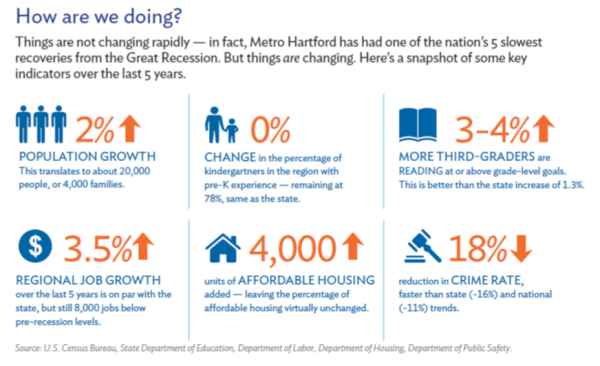
 Looking at five year trends, the report found that the region’s population of about 1 million people has grown by 2 percent, which translates to about 20,000 people or about 4,000 families. Regional job growth, 3.5 percent, is on par with the state, but remains about 8,000 jobs below pre-recession levels. The crime rate across the Greater Hartford region has been reduced by about 18 percent during the past five years, faster than the state (-16%) and national (11%) trends.
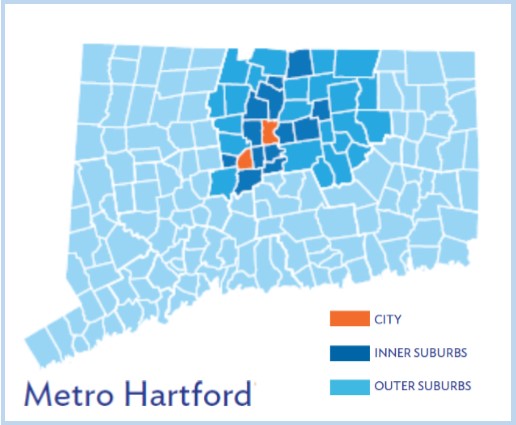
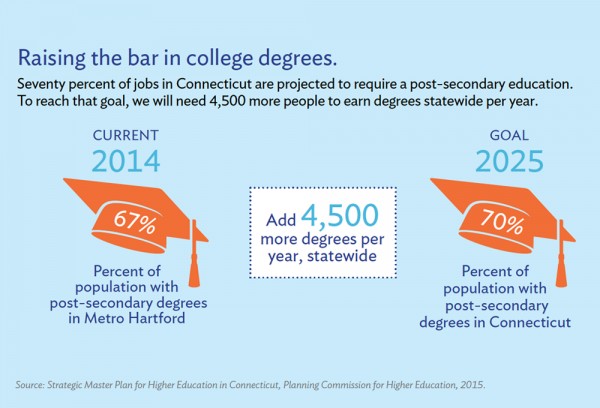 Partner organizations in developing the report include the Hartford Foundation for Public Giving, Capital Workforce Partners, Capital region Council of Governments, Metro Hartford Alliance, Hispanic Health Council, United Way of Central and Northern Connecticut, Urban League of Greater Hartford, Center for Urban and Global Studies at Trinity College, and the City of Hartford.




 The survey noted that more than two-thirds of consumers (68 percent) looking to purchase their first home are interested in move-in ready homes while one-third would like to buy a fixer-upper. And when it comes to amenities, respondents are most interested in their first home having a backyard or pool and an attractive design, followed by energy efficient / smart homes technologies.

 U.S. Commerce Secretary Penny Pritzker honored a total of 45 American companies and organizations, many of which are small- and medium-sized enterprises (SMEs), at the 2015 President’s “E” Awards ceremony, held earlier this year. The six Connecticut businesses were among the 45 honored.

 Proton Onsite makes hydrogen and nitrogen generators. Mutualink manufactures equipment used to facilitate collaborative communication between public safety and first response teams at the scene of emergencies. Jonal Laboratories makes sealant used in the aerospace industry. Dymotek manufactures custom injection molded plastic and silicone parts for electronics, plumbing valves and juice dispensers.

 t assist and facilitate export activities were honored with the “E” Award for Export Service. Four firms received the “E” Star Award for Exports, which recognizes previous “E” Award winners who have reported four years of additional export growth. And, three companies were awarded the “E” Star Award for Export Service, which recognizes previous “E” Award winners that have shown four years of continued support of exporters since first winning the “E” Award.

 This year marks the 53rd anniversary of the

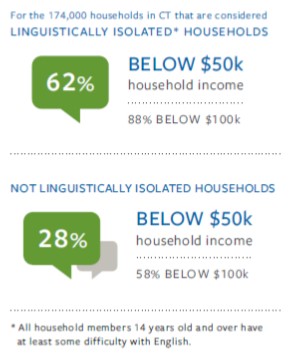
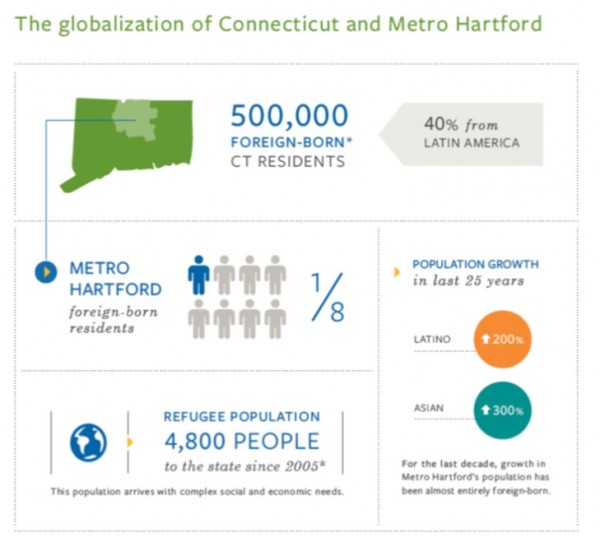 “The Latino Endowment Fund has offered this report as a means to expand the important discussion on efforts to support English Language Learners in our communities,” said Luis Cabán, chair emeritus of the Latino Endowment Fund Steering Committee. “This document provides us with an opportunity to reframe how we think about our increasingly global community and recognize the advantages of people speaking more than one language to enhance the richness of our community and create stronger links to the global marketplace.”