First Time Home Buyers: New Hartford, Westbrook, Coventry Most Attractive

In Connecticut, as elsewhere across the country, it is a home buyers’ market.  And that is especially prevalent in some of Connecticut’s smaller communities, and those in the central and northern parts of the state, according to an analysis by NerdWallet, a national finance website, which determined the top places for first-time homebuyers in Connecticut. The site identified the top communities for new home buyers, considering how much individuals would need to spend on a mortgage and examining the data on appreciation “to find the best locations, based on the health of the local housing market, the costs of housing, and the prosperity and safety in each community.”compare-mortgage-rates-1

“To be sure,” the website noted, “the state is not a magnet for first-time buyers based on affordability, but the places we identified stand out as being the most suitable for those looking for a foothold in the housing market.”

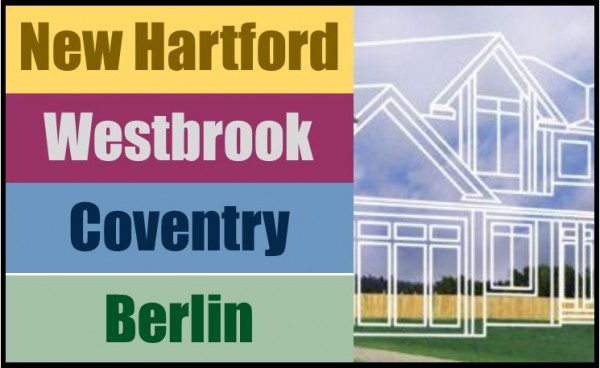
The top community was New Hartford, which was described as having “a population of just over 6,900, this small community was the 11th-safest among the 116 in the state we analyzed. Additionally, the select monthly ownership costs were the second-lowest among the top 10 cities, at $1,813; that’s $235 less than the median for all 116 communities.”

Runner-up was Westbrook, along the Connecticut shoreline.  Westbrook had “the second-most expensive home value among the top 10. But it also had the strongest home value growth rate among all 116 communities analyzed — a positive economic sign for homebuyers,” the website indicated.   “Although home values in many areas of the state fell between 2011 and 2014, they grew by 4.87% in Westbrook; that’s well above the median decline of 6.8% for all communities analyzed. Westbrook also had the lowest real estate tax rate among the top 10, at 1.15% of assessed value per year.

The top ten communities:home towns
  1. New Hartford
  2. Westbrook
  3. Coventry
  4. Berlin
  5. Colchester
  6. Windsor Locks
  7. Durham
  8. Ellington
  9. Marlborough
  10. Windsor

Of Coventry, the third-ranked community, the website said: “Homeowners here see median monthly ownership costs of $1,883, which is $165 less than the median of all communities analyzed. Among the top 10 locations, it takes the third-shortest amount of time to save for a down payment in Coventry (19.86 years). With a crime rating of "safe," low poverty rates and home values nearly $20,000 less than the state median, Coventry could be an ideal location for first-time homebuyers if they can find employment within commuting distance.”

The fourth-ranked town, Berlin, was cited for its population growth, “the third-highest of all 116 communities analyzed, rising 3.34% between 2011 and 2014 — much higher than the median population growth of 0.5% for all places analyzed. The median home value here as of 2014 was $286,800, slightly higher than the median of all places analyzed.”

Colchester, with a median age of 39, was described as the youngest among the to 10, and Windsor Locks, home of Bradley International Airport, was highlighted for the affordability of its homes, “the least expensive” among the top communities.

Rounding out the top twenty were South Windsor, Canton, Haddam, Suffield, Glastonbury, Burlington, Tolland, East Hampton, Southington and Lebanon.  A total of 116 communities were ranked in the analysis, with Stamford, Ansonia, Waterbury, New Haven,  and Bridgeport at the bottom of the list.  nerdwallet-logo-new

For their calculations, the website assumed a first-time homebuyer in Connecticut earns an annual income of $73,361, the 2014 state median for households headed by residents ages 25 to 44. They also assumed a personal savings rate of 4.8 percent, based on the U.S. 10-year average as measured by the Federal Reserve Bank. Assuming the homebuyers are starting with nothing in the bank, they then estimated how many years it would take to save for a 20 percent down payment

By following the Consumer Financial Protection Bureau's recommendation that homeowners shouldn't allocate more than 28% of their gross monthly income to housing costs, NerdWallet analysts determined that a first-time homebuyer in Connecticut could afford to spend $1,712 a month on ownership costs — mortgage, taxes, utilities and insurance.
Greater Hartford Residents Prefer Focus on Vibrant Communities Over Recruiting Businesses

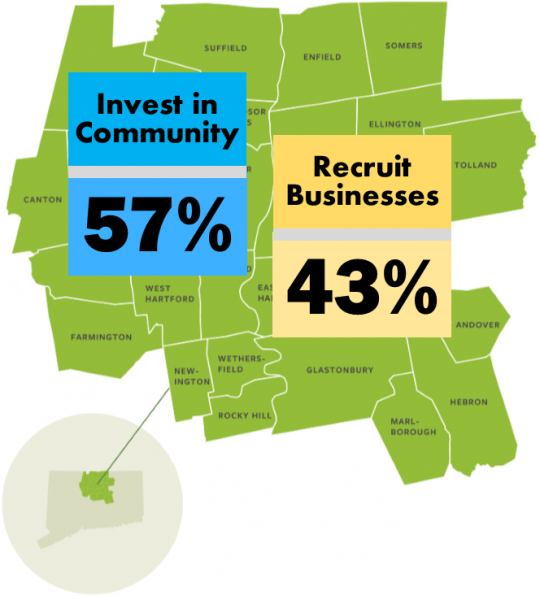
In a time of reduced resources and stark choices for policy makers, a survey of Greater Hartford residents suggests that investments aimed at creating vibrant communities, with the focus on local schools, transportation options, walkable, attractive physical environment is preferred to devoting greater resources to recruiting employers. In a survey for the Hartford Foundation for Public Giving as part of the Metro Hartford Progress Points effort, and conducted by Inform CT, residents of Hartford and Tolland County, by 57 percent to 43 percent, said that investing in communities was a better approach than recruiting businesses.HartfordFoundation

The findings reaffirm one of the key goals in the new three-year strategic plan of HFPG, launched earlier this year, developing vibrant communities.  The plan states that “All of our region’s residents should have the opportunity to live and contribute to strong, safe vibrant communities,” and calls for a “focus on people and places with the greatest need by engaging and supporting partners who promote meaningful civic engagement, safe affordable housing, quality health and mental health care and a rich diversity of cultural and other experiences to improve the quality of life.”

mapThe data from the survey reflect a difference of opinion among older residents of the region.  Individuals over age 46 took the opposite view from younger residents, with a majority expressing a preference for spending skewed toward recruiting companies.   The reversal was dramatic, with two-thirds of those age 36-45 preferring investing in communities, by a margin of 67%-33%, and individuals age 46-55 expressing a preference for resources to be aimed at recruiting companies, with two-thirds holding the opposite view, 63%-38%.


Across all age groups, a majority of homeowners preferred that the emphasis be on vibrant communities, 52%-48%, and an even larger majority of respondents who are not homeowners, 64%-36%, shared the same view.

The preference for policy to be targeted more towards assuring vibrant communities than recruiting companies was consistent across a majority of respondents of various education levels and among white, black and Hispanic residents of the region, according to the survey.  A majority of survey respondents who are currently employed full-time, as well as those working part-time, and those unemployed all expressed a preference for investing in communities rather than recruiting companies.

The Greater Hartford survey results are not inconsistent with data gathered elsewhere.  A March 2014 national survey by the American Planning Association (APA) found that Millennials and Baby Boomers want cities to focus less on recruiting new companies and more on investing in new transportation options, walkable communities, and making the area as attractive as possible. The national survey found that 65 percent of all respondents and 74 percent of millennials believe investing in schools, transportation choices and walkable areas is a better way to grow the economy than investing in recruiting companies to move to the area, according to the APA.mhppLogo

A 2013 study in Michigan, posing similar questions, brought similar results.  In the statewide survey, 64 percent of Michigan citizens said they believed the most important thing state government can do for job creation is to “provide quality education, good roads and transportation, good public services like safety, water, fire, parks and libraries that create an environment in which people want to live, work and run a business.”  This contrasts with 29 percent who said the most important thing state government can do is to “cut taxes for individuals and businesses.”

Earlier this month, at the annual Municipal Collaboration Summit organized by the Hartford Business Journal, one of the session’s was devoted to an exploration of “Building Vibrant Communities,” with observations from representatives of Connecticut Main Street Center, the Partnership for Strong Communities and the Connecticut Economic Resource Center.

The Hartford Foundation for Public Giving serves 29 towns, hundreds of nonprofits and more than 750,000 residents in the Greater Hartford region.  As Greater Hartford’s community foundation, HFPG brings together members of the community to “share information, understand local problems and put resources behind effective solutions.”Print

Developed by a group of key regional stakeholders, Metro Hartford Progress Points is a periodic 'check-up' to build greater understanding about issues facing the Greater Hartford community. The second edition of Progress Points, released late last year, takes a deeper look at key issues impacting our communities and how they are connected, with a particular focus on access to better schools, better jobs and stronger neighborhoods.  Along with the Hartford Foundation, partners include the Hispanic Health Council, MetroHartford Alliance, United Way of Central and Northeastern Connecticut, Urban League of Greater Hartford, Capitol Workforce Partners, Capitol Region Council of Governments, the Center for Urban and Global Studies at Trinity College and the City of Hartford.

The survey was conducted for the Foundation during the 4th quarter of 2015 by Inform CT.

Influx of Chinese Students in CT High Schools Reflects National Trend

When the soon-to-be-vacated UConn campus in West Hartford attracted the interest of a Chinese education company looking to establish their first international high school in the United States, some may have been surprised by the interest by the interest in having American, Asian, and other international students live and receive instruction on the suburban campus. But for those who have noticed the nearly exponential growth of Chinese high school students coming to the United States to study, the proposal submitted to the town of West Hartford and the UConn Board of Trustees was less surprising.

students CTChinese made up 35 percent of the 92,000 foreign secondary school students in the United States in 2015, according to the US Department of Homeland Security, by far the largest group studying here, the Boston Globe reported this week. That number has grown rapidly from only dozens a decade ago, fueled by the growing middle class in China and a desire to their children to gain an early advantage in efforts to attend college in the United States.

The number of international students across New England, with its long history and tradition of private schools, rose from 9,338 in 2010 to nearly 14,000 last year.

In Connecticut, with the second largest international student population in the region, the number has quickly climbed from 2,548 to 3.548, an increase of 39 percent in the past five years, the Globe reported, based on data from U.S. Immigration and Customs Enforcement.   In Massachusetts, the number has jumped from 3,780 to 5,963 during the past five years.  Every New England state has seen the number of international students attending local high schools increase, which Chinese students spurring the growth.

The number of Chinese K-12 students rose 290% percent to 34,578 as of November 2015 from 8,857 five years previously, according to data collected by the Student Exchange and Visitor Program, a unit of the Department of Homeland Security that tracks foreigners on student visas and the schools they attend, the Wall Street Journal reported.  Chinese students make up roughly half of the 60,815 foreign pupils in U.S. high schools and the 6,074 in primary schools, according to the newspaper.students

Founded in 1999, the Beijing-based Weiming Education Group is the largest and leading provider of private schools in China with over 40,000 students in 42 campuses. The Group, which is looking to establish the new international high school in West Hartford, has established a long-term international education partnership with more than 20 schools and education institutions from a dozen of countries including the United States, Britain, Canada, Singapore, and South Korea.

The company’s website points out that “Internationalized education has become the strategic direction” of the Weiming Education’s operation management, noting U.S. offices in Michigan and Connecticut. To date, about a half-dozen partner high schools in the United States are in Michigan.

The Hartford Courant reported last summer that Cheshire Academy, a private school with 400 boarding and day students in grades 8 through 12, had 85 students from mainland China this past academic year among its international contingent of 164 students from 32 countries, or more than 40 percent of its total enrollment.

West Hartford has yet to make a decision regarding the disposition of the UConn property, with a number of competing proposals under consideration.  The UConn Board of Trustees is poised to move forward with a sale of the property to Weiming, but the town retains right of first refusal, and ultimately has zoning control over the property, regardless of the owner.

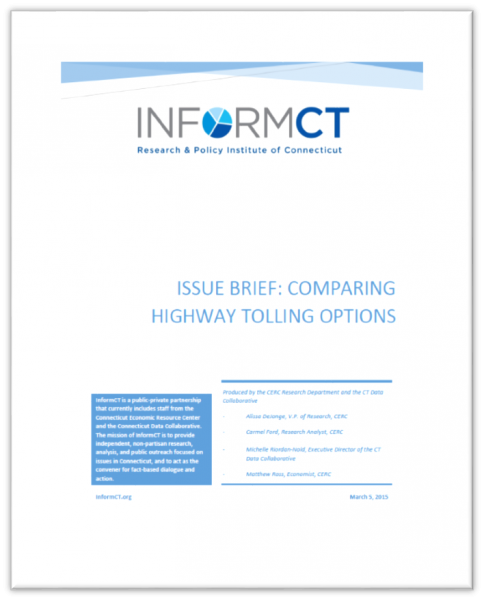
Increased Municipal Burden, Disproportionate Impact on Low-Income Drivers Among Possible Effects of Highway Tolls, Report Finds

If Connecticut opts to introduce a system of tolls on the state’s roads to help fund a significant expansion of transportation infrastructure projects in the years ahead, the toll system instituted could run the risk of causing an increased use of local roadways that “could shift the burden of maintenance and congestion to municipalities,” and lower income residents in the state could be faced with “a higher burden relative to their incomes than wealthier Connecticut residents.” Those warnings to policy makers are included in an Issue Brief  by Inform CT that reviews the various tolling options and respective challenges posed.  Connecticut eliminated tolls more than 30 years ago in the aftermath of a horrific accident at the Stratford toll plaza, and state leaders have been in a “perpetual debate about whether to reinstate them ever since,” the paper points out.issue brief

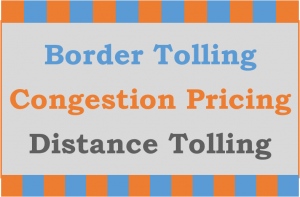
With overhauling the state’s transportation system is a leading element in Governor Malloy’s agenda to boost the state’s economy, renewed attention is being paid to methods of generating sufficient revenue to support those initiatives, and to issues raised in the 2015 policy brief.  Spurred by advances in technology, the possibility of imposing a system of electronic tolls, such as those in use in other states, are among the considerations, with border tolling, distance tolling and congestion pricing among the options.

920x920The issue brief indicated that a disadvantage of a distance toll system on all limited access highways in Connecticut would be that it “could create an incentive for people to use alternative roadways. The increased use of these roadways could shift the burden of maintenance and congestion to municipalities.” The advantage would be that distance tolls “could help to more efficiently allocate the cost of these roadways to drivers who use them the most.”
In analyzing the potential impact of tolls placed at Connecticut’s borders, the policy paper notes that while such an approach would “help to ensure that out-of-state residents driving through Connecticut pay for their use of Connecticut’s roadways,” border tolls “place a disproportionate burden on residents of Connecticut who commute out-of-state to work. This burden is further amplified if we believe that, on average, these out-of-state commuters use a smaller share of the roadways than their in-state commuting counterparts.”

toll optionsCongestion pricing, which provides for higher toll charges at peak traffic times, “helps to limit traffic on major roadways and create an incentive for people to use more environmentally friendly forms of public transportation,” the policy paper indicates.  However, a congestion pricing system “could polarize roadway use by displacing low income commuters during peak driving hours. Congestion pricing could also create displacement effects whereby the increased use of local roadways could shift the burden of maintenance and congestion to municipalities.”Print

The report suggests that “congestion pricing and distance tolls could become more affordable for low income residents if electronic payment systems were implemented that allow for income-based rate reductions.”

Earlier this year, a study panel recommended installing tolls and raising taxes in order to pay for Malloy's 30-year, $100 billion transportation program.  Legislators have said that any decision on the imposition of tolls is at least a year away, as attention focuses during the current session on establishing a method to assure that money allocated to transportation is not redirected to other areas of government.

The issue brief also stress that “a key consideration when trying to outweigh the benefits and costs of implementing tolling in Connecticut is how the revenue from the tax will be redistributed to the residents of the state.” It goes on to highlight that “as the bill stands, the monies raised would go into the Special Transportation Fund but allocation of the monies from there is not specified. The allocation of these funds is an important discussion that needs to take place before the impact of the legislation can be considered in earnest.”

InformCT is a public-private partnership that currently includes staff from the Connecticut Economic Resource Center and the Connecticut Data Collaborative. The mission of InformCT is to provide independent, non-partisan research, analysis, and public outreach focused on issues in Connecticut, and to act as the convener for fact-based dialogue and action.

Coalition Calls for Public Input, Comprehensive Analysis, Greater Scrutiny of Cigna-Anthem Merger

A coalition of consumer and medical organizations is calling for greater public input into the Connecticut Insurance Department’s review of the proposed Anthem-Cigna health insurance mega-merger, and is expressing concerns about the potential “negative impact on both the cost and quality of care in Connecticut” of that merger and the proposed Aetna-Humana merger. The groups – Universal Health Care Foundation, Connecticut Citizen Action Group and the Connecticut State Medical Society – formed the “Connecticut Campaign for Consumer Choice” coalition and urged state Insurance Commissioner Katherine Wade to “ensure an open, transparent hearing process in Connecticut, where policy holders, physicians and other interested parties are given maximum opportunity to share their views.”

In a letter to Wade, the organizations urged a series of actions as part of the Anthem-Cigna review “to protect our health care options in Connecticut” – that a public hearing be held at a time and place that “allows for maximum public participation,” that interested parties be granted intervenor status (which would allow witnesses to be called and cross examined), and that a department commission a study that will “analyze the potential impact on cost, access, and the Connecticut economy, including jobs,” as part of the agency’s deliberations on the merger proposal. coalition

Bloomfield-based Cigna and Indianapolis-based Anthem are two of the nation’s five largest health insurance companies.  It is anticipated that a hearing would be held sometime this spring, but plans have not yet been announced. The coalition leaders indicated that “all eyes from around the country will be on Connecticut,” as home of two of the nation’s leading health insurance companies.

They also launched a new website, www.consumerchoicect.org, which will provide the public with information about the proposed mergers.  The site states that “what’s really happening is that fewer choices mean higher costs for consumers and employers. With fewer insurers for the remaining three national companies to compete against, there will be less of an incentive to keep costs low or develop innovative servchoiceices to bring in new customers.”

Connecticut Insurance Department spokeswoman Donna Tommelleo said the department "is reviewing the proposed acquisition in accordance with all applicable  Insurance Holding Company Statutes. The Form A application is posted on Home Page of the Department’s Web site for public view and the site is updated frequently as more documents are filed. After the application is fully reviewed and deemed complete by the Department there will be public hearing held within 30 days. The public will be given ample opportunity to provide both written and oral comment."  She indicated that "the Department respects the coalition’s interest in the matter.” The Anthem-CIGNA merger was filed with the state Insurance Department last September.

In advocating for the merger, Anthem has established a website that highlights the company’s views on the benefits of a merged company, at www.betterhealthcaretogether.com  The site indicates that “the combined companies will operate more efficiently to reduce operational costs and, at the same time, further our ability to manage what drives costs, helping to create more affordable health care for consumers.”

Matthew Katz, executive director of the Connecticut State Medical Society, said that the merger “could be the demise of already struggling private practices,” and will aanthemdversely impact patient costs and access to care.  "Goliaths will not  benefit consumer choice," he said.   The Society opposes the merger, as do the other organizations in the coalition.  They indicated that a fair, open, transparent review process would make it more difficult for the merger to be approved as being in the public interest.

Noting that Wade serves as chair of the National Association of Insurance Commissioners working group on the Anthem-Cigna mercer, and that the working group’s proceedings are not open to the public, the coalition leaders stressed the importance of an open and comprehensive process in Connecticut.

The letter to Commissioner Wade, dated March 22, was signed by Frances Padilla, president of the Universal Health Care Foundation of Connecticut, Tom Swan, executive director of the Connecticut Citizen Action Group, and Matthew Katz, Chief Executive Officer of the Connecticut State Medical Society.

The Connecticut State Medical Society is a federation of eight component county medical associations, with total membership exceeding some 7,000 physicians. Universal Health Care Foundation of Connecticut is an independent, non-profit philanthropy, supporting research-based policy, advocacy and public education that “advances the achievement of quality, affordable health care for everyone in the state.”  CCAG, founded four decades ago by consumer advocate Ralph Nader,  has "created change on the issues members care about including quality, affordable health care, protection of consumers, the environment, and democracy."

CT Residents Believe Economy, Business Conditions Have Improved, But Uncertain About Future

Connecticut residents are somewhat more upbeat about the state of the state’s economy, but less than convinced that good economic news will keep coming, according to the results of the Connecticut Consumer Confidence Survey for the fourth quarter of 2015, released this week.  The quarterly survey,  by InformCT, a public-private partnership that provides independent, non-partisan research, analysis, and public outreach to help create fact-based dialogue and action in Connecticut, is designed to generate an ongoing measure of consumer confidence in the Connecticut economy.CTConsumConfSurveyLOGO When asked to think about overall business conditions in Connecticut versus 6 months ago, respondents – for the first time in three quarters – said conditions are better now than 6 months ago.  The margin was narrow - with 27 percent saying “better” and 25 percent saying “worse”, but that’s a reversal from the past two quarters, when more people were of the view that business conditions has worsened (22%-24% and 24%-28% in the two previous quarters).

The percentage of respondents who feel that the Connecticut economy is improving increased from 23 percent in the 3rd quarter to 27 percent in the most recent survey, and the percentage expressing concern that their job, or their spouses’ job, is in jeopardy, has declined in each of the four quarterly surveys, from 38 percent in the first quarter of 2015, to 36 percent, 35 percent and now 33 percent.SURVEY-RESULTS-v2

Administered for InformCT by the Connecticut Economic Resource Center, Inc. and Smith & Company, the analysis is based on the responses of residents across Connecticut and addresses key economic issues.  The most recent consumer confidence survey also saw an uptick in key indicators, as the percentage who believe:

  • there are “plenty of jobs for anyone who wants to work (as compared with 6 months ago)” increased from 10 percent to 13 percent
  • the employment situation will be better still in 6 months increased from 15 percent in the 3rd quarter to 17 percent in the 4th quarter
  • their personal financial situation is better now than 6 months ago increased from 63 percent in the third quarter to 65 percent in the 4th quarter survey.

Even though Connecticut residents feel conditions are improved, they are increasingly divided when asked if they expect that will continue.

When asked to look ahead six months, respondents have consistently believed business conditions will improve, but by a narrowing margin in each of the past four quarters.  In the beginning of the year, 30 percent thought business conditions would improve, as compared with 19 percent who thought conditions would worsen – an 11 point differential.  In the following three quarters, that differential narrowed to 9 points, then 5, and now 4.

There were other positive outcomes in the final quarterly survey of 2015, as the percentage who anticipate:

  • making a major consumer expenditure for furniture or some other product in the next 6 months jumped from 26 percent to 34 percent, reversing a slide from 36 percent in the year’s first quarterly survey.
  • buying a new car also increased, from 22 percent in Q3 to 25 percent in Q4, the highest percentage of any of the quarterly surveys on that question.
  • taking a vacation outside Connecticut in the next 6 months also rebounded, from 51 percent to 56 percent, reversing a diminishing percentage in each of the past two quarters.

There remain some troubling signs amidst the generally upbeat news.

The percentage who agree that Connecticut is a good place to live and raise a family and dropped slightly, and is under 50 percent for the first time in the quarterly surveys, at 47 percent.   The percentage of respondents who say they are likely to move out of the state in the next five years has increased in three consecutive quarters, from 32 percent to 34 percent to 37 percent, but remains lower than in the first quarterly survey, when it stood at 39 percent.

InformCT is a public-private partnership that currently includes staff from the Connecticut Economic Resource Center and the Connecticut Data Collaborative.  More information about subscribing can be found at informct.org.  Based in Rocky Hill, the Connecticut Economic Resource Center, Inc. is a nonprofit corporation and public-private partnership that provides economic development services consistent with state strategies, leveraging Connecticut’s unique advantages as a premier business location.  Smith & Company LLC, is a Shelton, Connecticut-based market research firm.


CT is Nation’s 5th Most Innovative State, Ranks 4th in Productivity

Massachusetts is the nation’s most innovative state, with California scoring a close second and Washington, New Jersey and Connecticut rounding out the top five states, according to The Bloomberg U.S. Innovation Index, in findings that highlighted the connections between education, research and innovation.index "There are some things that state governments can do to make their states more attractive to research and development," including R&D tax credits, Nariman Behravesh, chief economist at IHS Inc. in Lexington, Massachusetts told Governing magazine. "State governments — if they carefully target areas where they think they have a bit of a competitive advantage — they could develop a cluster around their universities, as well."

Bloomberg scored each of the 50 states on a 0-100 scale across six equally weighted metrics: R&D intensity; productivity; high-tech density; concentration of science, technology, engineering and mathematics (STEM) employment; science and engineering degree holders; and patent activity.

Mississippi, West Virginia and South Dakota are the three least innovative states.

Reviewing Connecticut rankings by category, the state ranked 4th in productivity, 8th in R&D intensity, 10th in science & engineering degree holders, 11th in patent activity, 13th in STEM concentration and 22nd in high-tech intensity. innovation

Rounding out the top 10 most innovative states were Oregon, Maryland, Colorado, Delaware and Minnesota.  Among the other New England states, New Hampshire ranked 12th, Rhode Island was 14th, Vermont ranked 25th, Maine finished near the bottom at number 43.

The data analyzed by Bloomberg came from the Bureau of Economic Analysis, Bureau of Labor Statistics, National Science Foundation, StatsAmerica.org and the U.S. Patent and Trademark Office.

mpa

No Word on When or Whether WTIC-AM Broadcast License Will Be Renewed by FCC

“This application remains on hold and I cannot say when it will be resolved.”  That is the latest update from the Federal Communications Commission on the pending license renewal application of radio station WTIC-AM in Hartford.  The station filed its license renewal application more than two years ago, on November 27, 2013.ticlogo_400x400 As the agency’s Enforcement Bureau considers “an alleged violation of FCC rules,” the agency’s Media Bureau cannot proceed with a decision on whether or not to renew the station’s broadcast license. The application was placed on “enforcement hold,” amidst speculation that the action was related to use of the station’s airwaves by former Governor and station talk show host John Rowland, who was previously and subsequently convicted of federal corruption and campaign-related charges.fcc-logo
The FCC had no comment on whether the delay in making a determination on the license renewal is among the longest in FCC history, and a spokesman this week said that the agency does not comment on the status of the license application.    Although the station’s broadcast license expired on April 1, 2014, more than 22 months ago, WTIC can continue to broadcast until the FCC makes a determination on its license renewal application, which was filed just days before the deadline back in 2013.  Stations in such a status routinely continue to operate without any interruption until a decision on license renewal is made.

If the station’s license renewal is granted, it would be for an 8-year period. There has been no comment by the FCC on specifically when or why the federal agency’s enforcement division placed the application on hold, or when it might be lifted.  FCC officials have indicated that most often enforcement holds are instituted due to a complaint being filed that requires investigation.  The reason for the enforcement hold is only made available to the licensee or their attorney, the FCC has said.

The station is owned by CBS radio, which this month announced that revenues from its radio stations were down 5 percent in the 4th quarter of 2015.  The website Radio Online attributed the decline to “continued softness in the ad radio ad marketplace and lower political advertising.”  One of the mainstays of the WTIC talk line-up, nationally syndicated Rush Limbaugh, was recently ranked as the second most popular national talk show, behind Michael Savage, which airs in Connecticut on other stations.dates

When the license renewal application does reach the agency’s Media Bureau, they will consider “how the allegation of violation was resolved,” as well as a range of other factors in deciding whether or not to renew the station’s license.  The other, more routine, factors include whether any other objections have been raised about the station, whether the station has been adequately serving the public in their area of license, their history of compliance with FCC regulations, and their overall performance.

micHartford Attorney Ken Krayeske filed an informal objection on October 1, 2014 to WTIC’s broadcast license renewal, alleging that the station “demonstrated serious malfeasance” and “helped conceal violations of federal law.”


As for the pace at which the FCC finalizes action on pending license applications, one indication came last week, when the FCC announced it had denied an objection to a station license renewal that was filed in October of 2013 in regards to station KKZZ in Port Hueneme, CA.  The AM station’s application for renewal was granted by the FCC on February 9, 2016 – more than two years after it was filed.

Four Connecticut Companies Among Most Innovative in National Rankings

Four Connecticut companies are among the most innovative, according to rankings published by Fast Company magazine.  Harman Industries, Oxford Performance Materials, Priceline Group and GE were named among dozens of the companies, in a range of industries, for noteworthy innovative business practices and systems. Overall, the top 10 most innovative companies of 2016, according to Fast Company, are Buzzfeed, Facebook, CVS Health, Uber, Netflix, Amazon, Apple, Alphabet, Black Lives Matter and Taco Bell.  The next 10 include, Robinhood, Universal Studios, Huawei, Cyanogen, InMobi, Novocure, Bristol-Myers Squibb, Amgen, Spotify and GE.fast company

Fast Company also announced Top 50 lists selecting the most innovative companies in more than two dozen sectors, including architecture, design, automotive, biotech, education, energy, fitness, enterprise software, gaming, healthcare, marketing & advertising, media, retail and robotics.

Stamford-based Harman International Industries reached the list of the most innovative companies in the world for vehicle technology, led by an auto sound system that creates individual “sound zones” within vehicles. Harman ranked seventh on the Fast Company ranking of the 10 most innovative companies in the automotive sector.HarmanLogo

According to published reports, Harman’s individual sound zone concept allows drivers and passengers to personalize their own audio experiences with limited disruption or interference from other vehicle occupants, with digital signal processing tuned to the vehicle cabin and speakers to reduce the signals from other zones, regardless of whether they are music, vocal or other sounds. The Harman system utilizes a vehicle’s existing speakersOPMlogo_no text with the addition of headrest and ceiling speakers.

A Connecticut-based biotechnology company, South Windsor-based Oxford Performance Materials (OPM), reached the biotechnology list, ranking seventh.  The company, founded in 2000, was recognized for developing spinal implants. OPM’s founder and CEO is Scott DeFelice.

A pioneer in personalized medicine, OPM Biomedical became the only company to receive FDA clearance to manufacture 3D printed patient‐specific polymeric implants when it received clearance for its cranial prostheses line for surgeons in 2013, the company website points out. The company reports it now has two additional FDA clearances, and is an original equipment manufacturer for maxillofacial implants as well as its first spinal implant line.The-Priceline-Group

In addition, Norwalk-based Priceline Group was recognized by Fast Company among hospitality companies for its Booking.com hotel reservation system. The Priceline Group is the world’s leading provider of online travel & related services, provided to consumers and local partners in over 200 countries through six primary brands:  Booking.com, priceline.com, KAYAK, agoda.com, rentalcars.com, and OpenTable.


https://youtu.be/rTrKd3vPyWk

Federal Transportation Funds to Increase As Connecticut Considers Long-Term Plan

As Connecticut policy makers consider a long-term infrastructure investment in Connecticut’s transportation system, they do so just months after the federal government, after years of inaction, adopted the FAST (Fixing America’s Surface Transportation) Act at year’s end.  It is the first comprehensive transportation law since 2005, according to Connecticut’s Office of Legislative Research (OLR). The act includes $225.2 billion for highway investment, $61 billion for federal transit programs, and $10 billion for the Federal Railroad Administration and Amtrak.  States will get about a 5.1 percent increase in funding in FFY 16 and annual increases ranging from 2.1 percent to 2.4 percent in subsequent years, according to OLR.fast-act

State lawmakers are considering Governor Malloy’s proposed $100 billion, 30-year Let's Go CT! program, unveiled earlier this month, which included a call to enact a constitutional amendment creating a financial lockbox to protect transportation funds. Officials have said that 47 percent of state-maintained roadways are in “less-than-good condition”, and 35 percent of Connecticut's bridges are functionally obsolete or structurally deficient.  The Connecticut Business and Industry Association has said that 42 percent of businesses think the state's road congestion hinders their opportunities and growth.

As a result of the FAST Act, Connecticut will receive about $3.5 billion over five years, or about $700 million annually, for highway and transit programs, which is about $62 million more per year than Connecticut received in 2015.  The state Department of Transportation says the act’s importance isn’t in the amount of money it provides, which does not change dramatically from previous levels, but in the predictability and assurance of funding it provides, OLR Principal Analyst Paul Frisman points out in a report to state legislators. ct usa

The FAST Act’s transfer of the $70 billion into the federal Highway Trust Fund (HTF) was essential to keep the fund solvent. The federal government has not increased the federal 18.4 cent gas tax in more than 20 years, and this has reduced the HTF’s purchasing power and reduced its ability to keep pace with rising infrastructure costs and inflation. Decreased revenues because of more fuel efficient vehicles and the popularity of alternative fuel vehicles also cloud the HTF’s future, the report indicates.  There continue to be concerns that if revenues going into the fund are not increased, insolvency may await, as soon as 2020.

The FAST Act also includes two new freight initiatives, including a National Freight Program which authorizes $6.2 billion over five years for national and state projects to improve highway freight transportation. The OLR report indicates that to participate, a state must complete a State Freight Plan, which it must update every five years. The American Road and Transportation Builders Association (ARTBA) has said that participating states will be able to obligate up to 10 percent of this funding to improve freight rail services or ports, which may be of particular interest to Connecticut.  The other new program is aimed at highway, bridge, rail-grade crossing, intermodal, and freight rail projects that cost at least $100 million, improve movement of both freight and people, reduce bottlenecks, and improve connectivity.

The FAST Act also makes changes to several highway funding programs, with a focus on surface transportation, local roads and bridges, transportation alternatives such as bicycling.  To increase efficiency and speed up the project review process, ARTBA reports that the FAST Act encourages the use of a single environmental review document throughout the entire review process, instead of the current practice of having each agency involved in a project conduct a separate review.

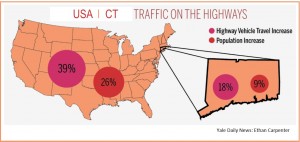
cars connecticutThe OLR report also indicates that a Federal Highway Administration pilot program permits up to three states to toll existing Interstate highways that they could not otherwise adequately maintain or improve, and increase funding available for public transportation initiatives.  In addition, $2.6 billion is provided to Amtrak’s Northeast Corridor (and $5.4 billion to other Amtrak lines) over five years. It separates the Northeast Corridor, from Boston to Washington, D.C, from other Amtrak accounts to ensure that the amounts assigned to that Corridor are used there, OLR reports.


Even with the additional funding nationwide, transportation officials in Connecticut and around the country continue to warn that “long-term, sustainable funding for transportation is yet to be achieved,” as described by the American Association of State Highway and Transportation Officials.