Awards Will Recognize Innovative Efforts Invigorating CT Main Streets

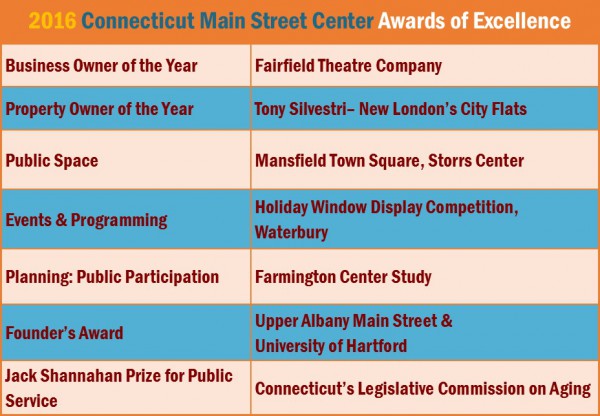
A local theater helping to re-energize downtown Fairfield and a New London developer and property manager who took it upon himself to improve a neighborhood by offering attractive housing that is also affordable are just two of the initiatives being recognized with a 2016 Award of Excellence from the Connecticut Main Street Center (CMSC). In total, five recipients have been selected to receive the prestigious awards, including organizations and initiatives from Fairfield, Farmington, Mansfield, New London and Waterbury.

Also being recognized with awards are a public outreach effort in Farmington that resulted in hundreds of residents voicing their opinion on plans for a new gateway into the town; a holiday window display competition that draws shoppers back to downtown Waterbury while garnering extra press and marketing for the businesses; and a new Town Square in Storrs Center, built around the unique needs of the space and the people that use it.chart

This year's awards will be presented on June 6th at E.O. Smith High School in downtown Storrs.  CMSC’s mission is to be the catalyst that ignites Connecticut's Main Streets as the cornerstone of thriving communities. CMSC is dedicated to community and economic development within the context of historic preservation, and is committed to bringing Connecticut's commercial districts back to life socially and economically.

In addition to the competitive Awards of Excellence, where CMSC members submit applications that are reviewed by a jury of industry-related professionals and CMSC staff, CMSC also named Upper Albany Main Street (a CMSC member community) and the University of Hartford to receive the Founder's Award for their long and fruitful partnership - a relationship that has not only helped improve the appearance of the Avenue, but empowered many of the small business merchants in the neighborhood as well.

In addition, the Jack Shannahan Prize for Public Service was awarded to the Legislative Commission on Aging in recognition of their Livable Communities initiative.  This initiative aims to create thriving places for residents to grow up and grow older, notably by helping prepare Connecticut for the challenges presented by a rapidly increasing aging demographic through education, awareness and advocacy.

"This year's crop of winners is really special, because they demonstrate how important incorporating the voice of the people is in the final success of a project," said CMSC President & CEO John Simone. "In Farmington, Fairfield and Mansfield especially, each one either specifically asked - or was smart enough to observe - what people wanted in the space, and made changes accordingly.  As a result, there is greater support and usage of their public spaces and private businesses, meaning more people on Main Street and more money for the town coffers."mainstreet1

The June 6 awards ceremony will be followed by interactive experiences in the new Storrs Center.  Activities will include guided tours of the downtown development, a collaboration with the Ballard Institute and Museum of Puppetry, time for dinner and exploration among the Center's many shops and restaurants, and a closing concert featuring the Funky Dawgz Brass Band.

Created in 2003 to recognize outstanding projects, individuals and partnerships in community efforts to bring traditional downtowns and neighborhood commercial districts back to life, socially and economically, the Awards of Excellence are presented annually at CMSC's Awards Gala.  The evening’s welcome Reception Sponsor is United Illuminating and awards are presented with support from Webster Bank and Eversource Energy. 

Greater Hartford Grows as Regional Workforce Ecosystem

It may not be widely recognized, but the Greater Hartford area has become a dynamic, participatory, collaborative regional ecosystem.  And during National Workforce Development Week, which is celebrated nationally this week, that is an especially salient development. What exactly does that mean?  First, the definition: any time that partners within a region come together to solve problems, and meet regularly to answer new challenges, a regional ecosystem in is play.  An “ecosystem” is defined as a system, or a group of interconnected elements, formed by the interaction of a community of organisms with their environment. A “Regional Ecosystem” is just that –specific to a geographic region. WkDevWeek

In North Central Connecticut, the regional ecosystem is helping business grow, and find the talent they need, and it is affecting the greater welfare of society, even in these extremely challenging times with budget deficits, and economic pressures that abound.  So says Thomas Phillips, President and CEO of Capital Workforce Partners, among the drivers of progress underway across the 37-town region.

Regional ecosystems are like a chain of links, he explains, with each link playing a key role in holding the work together.  “In workforce development – the regional ecosystem is comprised of strategic partnerships with industry, education, economic development, community organizations, labor and business-led workforce boards – leading programs that are nimble, flexible, adaptable and generating economic opportunity for business and job seekers.”

Among the leading examples of the local regional ecosystems - focusing on workforce development - which use a set of common goals and outcomes:

  1. MoveUp! – a regional ecosystem addressing the challenges relating to adult literacy, with 26 partners working collectively
  2. Opportunity Youth – a regional ecosystem addressing the challenges of reconnecting out-of-work, out-of-school youth to education, training and careers, with over 50 partners and funders working collectively
  3. Best Chance – a regional ecosystem addressing the challenges of returning citizens – finding sustainable employment for former offenders, with 15 partners working collectivelyworkforce ecosystem
  4. The Hartford Coalition on Education and Talent (soon to be renamed) – a regional ecosystem designed to help more youth complete post-secondary education while closing the gap experienced by employers, with 8+ partners working collectively. “Be on the lookout for the work this group is doing – building pathways of success for the youth in our region,” says Paul Holzer, President of Achieve Hartford, spearheading this effort.
  5. The Knowledge Corridor – a region that crosses the Connecticut and Massachusetts border, this area is also a home to a robust regional ecosystem that includes 64,000 businesses, 41 colleges and universities, a labor force of 1.34 million and an international airport.

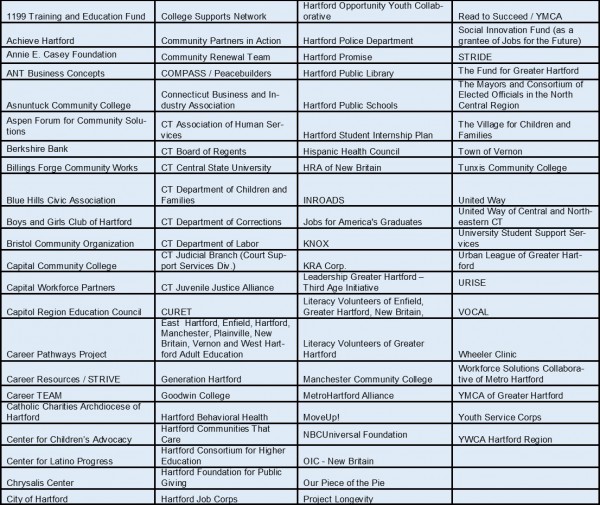
The organizations involved - scores of them - range from well-known names, such as Leadership Greater Hartford, Literacy volunteers, Capitol Region Education Council and the Hispanic Health Council, to those lesser known but just as vital.

“As ‘conveners,’ workforce development boards are often the ‘clasp’ of the chain, keeping all the links together, moving with changes in time,” says Phillips. “That means workforce development, economic development and education are responding collectively to work together toward sustainable jobs, talent creation and business growth.”

The number of organizations that collaborate continues to grow, with different organizations playing a lead role in select initiatives.  But there is definitely strength in numbers, they point out.cwp_logo_large

At the national level, officials note, the U. S. Conference of Mayors (USCM), Workforce Development Council is spearheading an effort to help each region have better access to best practices in building strong regional ecosystems.  The organizations is also working toward building more consistent communications and program focus that is designed to result in better outcomes.

That can best be accomplished region-by-region –addressing local area needs with locally based organizations.

Andrew McGough, Executive Director of the Portland, Oregon Workforce Development Board and Chair the USCM Workforce Development Committee, stresses that “Business-led local workforce boards lead the system through strategic partnerships with industry, education, community organizations, and labor, resulting in greater effectiveness and efficiency in serving businesses and job seekers in our communities.”

The Capital Workforce Partners website includes a list of participating community organizations.

community partners

Meriden Re-Make Continues, Spurred by State Support; Additional Funds Sought to Implement Plan

The City of Meriden is seeking $2 million from the State of Connecticut to improve six roadway sections in downtown Meriden, to improve traffic flow, improve accessibility and increase safety for vehicles, bicyclists and pedestrians traveling within Meriden’s Transit Oriented Development (TOD) zoning district. The grant application is the latest effort as part of the city’s “Meriden 2020 Bringing It Together” initiative, which is focused on transit oriented development to recapture the luster of the “Silver City”  and has received a steady flow of state funds in recent months to boost the effort.

The roadway sections - including Colony Street, West Main Street, State Street, Perkins Square/South Colony and East Main Street - were selected and analyzed for improvements in prior studies and investigations.  The initiative is an outgrowth of a two State of Connecticut TOD Pilot grants, a US Dept. of Housing and Urban Development (HUD) Sustainable Challenge grant and a HUD Choice Neighborhoods Planning grant.Hub_site_Feb_2016

A website, meriden2020.com, highlights the numerous efforts underway to redevelop the city’s central business, including ways to resolve historic flooding issues, repurpose underutilized brownfield sites, remake the rail station area into a modern transportation center, and provide links to the regional trail system.

Meriden’s Transit Oriented Development program seeks to “transform the Meriden Transit Center (MTC) and the half-mile area around it into a vibrant neighborhood that includes new residential and commercial development, public spaces and improved access to public transportation.” Construction of the new transportation center is underway, and local officials recently initiated a study to examine planned ridership and usage by area residents and businesses.

Last week, the Connecticut Housing Finance Authority (CHFA) and Department of Housing (DOH) announced approval funds meridenfor a proposed mixed use development project at 161-177 State Street, which is phase one of a multi-phase project that includes demolition of the Mills public housing project and implementation of the Harbor Brook Flood Control project north of the Hub site.   The new building will be within walking distance of Meriden`s new Transit center.

The proposed project will have 75-units of mixed-income family housing, with ground level retail space and a preschool. The property will include eight supportive units and 60 units targeted for households with incomes of 60 percent or less of Area Median Income (AMI). In addition, 26 of the 60 units will be supported by project based Section 8.

sealsIn February, the Connecticut Small Business Development Center (CTSBDC), the City of Meriden and The Midstate Chamber of Commerce announced the opening of the newest CTSBDC office, to be located at Meriden City Hall.

The new office is offering professional, confidential business advising to entrepreneurs in every stage of business and all industry sectors in the City of Meriden. “This beneficial partnership between the Connecticut Small Business Development Center and the City of Meriden ensures that entrepreneurs of the city have access to the necessary resources available to assist with starting or growing their business. This allows for economic growth and job creation in this area,” said CTSBDC State Director Emily Carter. CTSBDC also has a “virtual” location at the Meriden Public Library, where individuals can connect with CTSBDC advisors online.

In January, Meriden was awarded $100,000 in state funds to further revitalization and redevelopment in the TOD and Choice Neighborhoods target areas. The funding came through the state Department of Economic and Community Development (DECD) Brownfield Area-Wide Revitalization (BAR) Grant program, a year-old state pilot program that encourages communities to consider areas such as neighborhoods, downtowns, waterfront districts, or other sections with multiple brownfields and develop strategies to assess, clean up, and reuse the parcels for business, housing, and public amenities that will generate jobs and revenues and revitalize the entire area.Transit Center

Weeks later, the Department of Economic and Community Development awarded the Meriden a $2 million grant for the demolition and remediation of the Mills Public Housing Complex.  The city plans to demolish the structures at 144 Mills Memorial as a prerequisite to implementing the Harbor Brook Flood Control Plan at the site.  While the 144 Mills Memorial site will be used for flood control purposes and will not be used for development, officials say the construction of the flood control plan at the site will allow for development to proceed at the adjacent sites, which include the Meriden Hub Site (located at 1-77 State Street) and at the Mills Megablock site (located at 161-177 State Street and 62 Cedar Street).

Meriden officials point out that commuter rail service to Hartford and New Haven is scheduled to begin later this year.  The new commuter rail service is expected to spur significant “transit oriented development” in the city center.  Once the rail service is operational, nearly 140,000 workers located within one mile of a rail station will be able to commute to Meriden within a 40-minute ride, the website points out.

Structural Problems Seen in the Connecticut Economy

In an analysis highlighted by the Connecticut Institute for the 21st Century, well-known economist Don Klepper-Smith, in a newsletter to clients of economic forecasting consultancy DataCore Partners, is voicing concerns about Connecticut’s economic prospects, short and long-term.  His views come as the legislature grapples with approximately a billion dollars in projected deficit, and the Institute is signaling a heightened profile in the state, with a new director visibly sharing the organization’s economic concerns. Klepper-Smith’s latest findings, headlined “Troubling Trends,” are the result of comparisons between economic activity in different parts of Connecticut and Massachusetts conducted over the last several years, the Institute website reports. Although both states share many of the same characteristics, Klepper-Smith notes the Massachusetts labor market is notably healthier than the Connecticut market and that seems to be a key factor holding back the Connecticut economy.logo

The job recovery rate in Connecticut since 2006 is 76.6 percent, according to DataCore, compared with the Massachusetts job recovery rate of 240.3 percent. The significantly lagging job recovery rate in Connecticut has “led to negative impacts in other parts of the Connecticut economy.” Examples cited include that the median price for single family homes in Connecticut dropped 3 percent in 2015, while it went up by 3 percent in Massachusetts during the same period.

Similarly, over the last six months, Connecticut’s unemployment rate has edged upwards, while the Massachusetts rate has dropped slightly. Technically, according to DataCore, this is a sign of a growth recession in which the local economy is not strong enough to prevent a rise in the jobless rate, the Institute indicates.

The website goes on to state that “The DataCorp findings, when combined with other recently published reports, provides continuing evidence of a fundamental shift in the basic foundations of the Connecticut economy.”

Scott Bates, a Connecticut native, has recently been named as executive director of the Connecticut Institute for the 21st Century.  He previously served in the administration of Virginia’s Governor, for the U.S. House Select Committee on Homeland Security, and as president of The Center for National Policy in Washington.Scott_Bates_400x400

quoteIn an article appearing in this week’s Hartford Business Journal, Bates describes Connecticut’s fiscal dilemma as both a spending problem and revenue problem, indicating that “our state will only return to a sustainable fiscal model when incremental changes - taken together – substantially reduce the cost of government.”

Bates adds that “the tax problem is a major issue that may take years to sort out,” suggesting that available savings be pursued immediately.  Among the suggestions, moving to embrace a policy of “aging in place,” a change in approach that could save more than $650 million over the next 20 years according to a recent report from the Institute and the Connecticut Economic Resource Center.

The Connecticut Institute for the 21st Century is a non-partisan non-profit organization of businesses and civic groups dedicated to identifying effective and efficient ways for state and local government to deliver services while reducing cost to the taxpayer and making Connecticut’s economy strong.

The organization researches best practices, publishes reports, and educates policymakers and the public on key spending and policy issues including transportation, public pensions, smart growth and social service spending.

CT Unemployment Rate Highest in New England, Higher Since Year Began

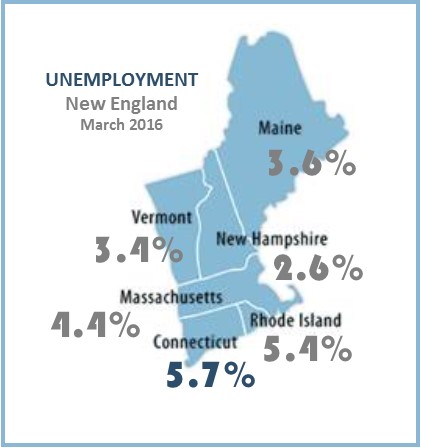
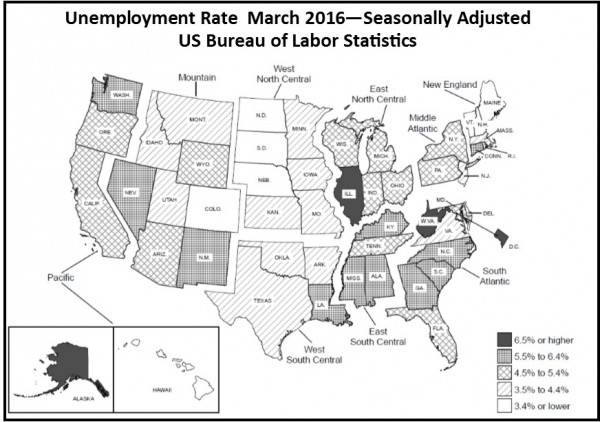
Unemployment in Connecticut nudged upwards in March from a month earlier, but remained slightly below a year ago.  The state’s jobless rate of 5.7 was higher than the national rate of 5.0 percent and the highest in New England. Nationwide, the regional and state unemployment rates were generally little changed in March, according to the U.S. Bureau of Labor Statistics:

  • 21 states had unemployment rate decreases from February,
  • 15 states including Connecticut had increases, and
  • 14 states and the District of Columbia had no change,

new englandThirty-six states including Connecticut (and the District of Columbia) had unemployment rate decreases from a year earlier, 12 states had increases, and 2 states had no change.

The national jobless rate, 5.0 percent, was little changed from February and was 0.5 percentage point lower than in March 2015. Job growth occurred in retail trade, construction, and health care. Employment fell in manufacturing and mining.

Connecticut’s unemployment rate was 5.9 percent a year ago in March 2015, dropped to 5.5 percent by January and February of 2016, and climbed to 5.7 percent in March.

Overall in New England, the unemployment rate was 4.5 percent in March, compared with 5.2 percent in March 2015.  Across the region, the unemployment rate has steadily declined during the past year.  The rate was 4.6 percent in January and 4.5 percent in February, according to the BLS data.2000px-Bureau_of_labor_statistics_logo.svg

Last month, the unemployment rate in Rhode Island was 5.4 percent, in Massachusetts was 4.4 percent, in Maine 3.4 percent, in Vermont 3.3 percent and in New Hampshire 2.6 percent.

The highest unemployment rates in the nation last month were in Alaska (6.6%), West Virginia (6.5%), D.C. (6.5%), Illinois (6.5%), Alabama (6.2%), New Mexico (6.2%), and Louisiana (6.1%).

South Dakota and New Hampshire had the lowest jobless rates in March, 2.5 percent and 2.6 percent, respectively, followed by Colorado, 2.9 percent.

“We are still struggling to come to terms with a stubborn new economic reality,” said economist Pete Gioia of the Connecticut Business and Industry Association. “We are adding back low-wage jobs at a much higher rate than high-paying jobs.”

Connecticut has now recovered 77 percent of jobs lost during the recession, CBIA reported, while the U.S. has recovered 161 percent of jobs lost during that same time, according to DataCore Partners.

usa map


CT Ranks Behind 33 States as Technology Innovation Adopter, Report Finds

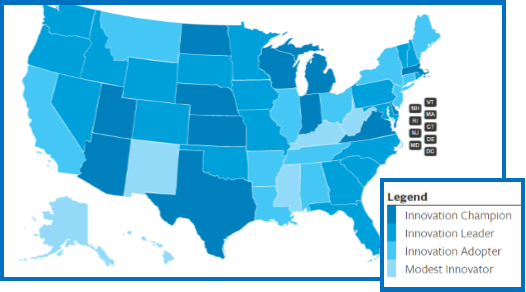
Twelve states and the District of Columbia are now championing innovation-friendly policies at the highest level according to the 2016 Innovation Scorecard, an annual innovation policy performance index developed by the Consumer Technology Association (CTA). Arizona, Kansas, Nebraska, North Dakota and Wisconsin are first-time Innovation Champions – the top designation - joining repeat champion winners Delaware, Indiana, Massachusetts, Michigan, Texas, Utah, Virginia and the District of Columbia.CT scorecard

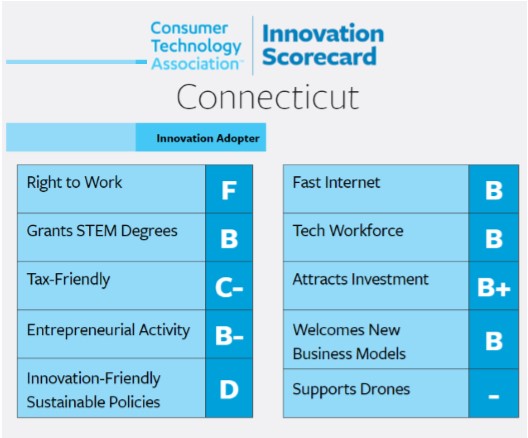
Connecticut ranked in the third of four tiers, as an Innovation Adopter. The CTA Innovation Scorecard grades every state and the District of Columbia on 10 criteria, ranging from quantitative to qualitative, and ranks them across four categories — Innovation Champions (13 states), Innovation Leaders (20 states), Innovation Adopters (12 states including Connecticut) and Modest Innovators (6 states).

"We hope the Innovation Scorecard will be a guide for states who want to embrace those policies that best drive innovation, create good jobs and fuel economic growth," said Gary Shapiro, president and CEO, Consumer Technology Association. "We've identified and measured some key practices that enable innovators to thrive including drawing entrepreneurs from across the country, welcoming disruptive business models and educating the workers of tomorrow. But unless more state policymakers adopt a light regulatory framework, they risk sending valuable talent and economic growth to a neighboring state - or, far worse, overseas."cover

The 2016 Innovation Champion states earned high grades for maintaining strong right-to-work legislation, fast Internet access, a robust entrepreneurial climate and an open posture to new business models and technologies. Other Scorecard criteria are tax policy, tech workforce, investment attraction; Science, Technology, Engineering and Mathematics (STEM) degrees; unmanned innovations and sustainability policies. Since the last edition of the Scorecard, six states regressed to a lower tier.

Connecticut’s top grade, a B+, come in the Attracts Investment category.  The state earned a B in four categories:  Fast Internet, Tech Workforce, Welcomes New Business Models and Grants STEM degrees, and a B- in Entrepreneurial Activity.  The state’s lesser grades were in the categories Tax Friendly (C-), Innovation-Friendly Sustainable Policies (D) and Right to Work (F).  The report indicates that “Connecticut’s state-run electronics recycling system overcharges residents and manufacturers of consumer tech products, who pay for recycling at twice the market rate.”

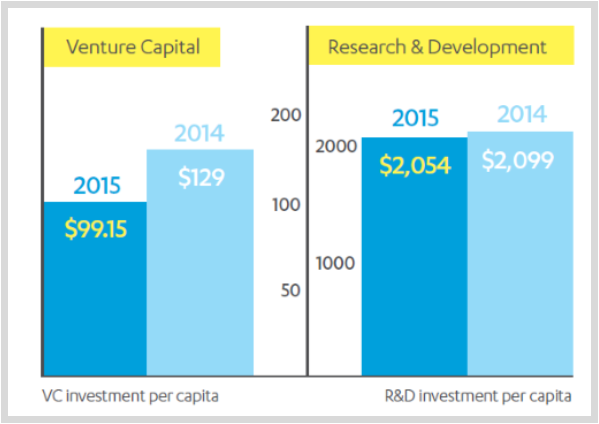
investmentThe report also highlights an area of decline in Connecticut:  “Over $100 million of venture capital left Connecticut in 2015, causing the state to lose ground after earning an ‘A-’ in the category in the inaugural 2015 Scorecard. Connecticut should improve its tax code, which is among the least growth-friendly in the country, and reform regulations that stifle innovation.”

Among the findings: Delaware, Massachusetts, Rhode Island, Utah and the District of Columbia have the fastest Internet speeds in the country; Montana, North Dakota and Wyoming are among the leading states - along with the District of Columbia - at creating new jobs and new small businesses; and Arkansas, Maryland, Mississippi and Oregon were the only states earning a top grade for creating a policy environment favorable toward drones.

Consumer Technology Association (CTA)™, formerly the Consumer Electronics Association (CEA)®, is the trade association representing the $287 billion U.S. consumer technology industry.

usa map

Indiana Insurance Department to Hold Hearing on Anthem Acquisition of CIGNA on April 29

The Indiana Insurance Department will consider the proposed acquisition of Bloomfield-headquartered CIGNA Health Care by Indianapolis-based Anthem, Inc. at a public hearing on Friday, April 29 in Indianapolis.indiana “Any member of the public interested in the proposed acquisition of control may attend the hearing,” indicates a public notice of the hearing. In addition, “Any policyholder of Cigna HealthCare of Indiana, Inc., or other person whose interests may be affected by the proposed acquisition of control shall have the right to appear and become party to the proceeding.”

Officials indicated that written testimony could be mailed in lieu of an in-person appearance, and would be considered. Members of the public may make written submissions  without appearing in person at the hearing. Length of submissions should not exceed 5 pages, double-spaced. Officials indiated that submissions should be sent to John Murphy, outside counsel to the Commissioner in this matter, by close of business on April 26, 2016. Contact information is: John T. Murphy, ICE MILLER LLP, One American Square, Indianapolis, IN  46282, (317) 236-2292, john.murphy@icemiller.com  [this information was updated on 4/19]


Consumer Groups, State Comptroller Call for Full Review

Among those aligned in opposition to the acquisition is the American Medical Association, noting that the deal would make the combined firm the nation’s largest insurer by membership and also give the company a tremendous amount of leverage when negotiating with providers.  In a press release, AMA President Steven J. Stack, MD, said such proposed mergers threaten to reduce competition and choice. “To give commercial health insurers virtually unlimited power to exert control over an issue as significant and sensitive to patient health care is bad for patients and not good or the nation’s health care system.”

Anthem and CIGNA suggested that the deal will create new efficiencies that will make the healthcare market function more efficiently.  A website, www.betterhealthcaretogether.com, has been established to highlight the companies commitment to “drive health care innovation.”

Last month, a coalition of consumer and medical organizations in Connecticut called for greater public input into the Connecticut Insurance Department’s review of the proposed Anthem-CIGNA  mega-merger, expressing concerns about the potential “negative impact on both the cost and quality of care in Connecticut” of that acquisition and the proposed Aetna-Humana merger. The groups – Universal Health Care Foundation, Connecticut Citizen Action Group and the Connecticut State Medical Society – formed the “Connecticut Campaign for Consumer Choice” coalition and urged state Insurance Commissioner Katherine Wade to “ensure an open, transparent hearing process in Connecticut, where policy holders, physicians and other interested parties are given maximum opportunity to share their views.” The coalition has been conducting public information sessions, including one in Mansfield this week, to provide state residents with information on "what the proposed health care mergers will mean for Connecticut consumers."

A week ago, State Comptroller Kevin Lembo, in a letter to the Department, urged an open and thorough review in order to address significant concerns raised by health care consumers and providers.  Lembo expressed his support for the efforts of the Connecticut Campaign for Consumer Choice, noting that a merger between Anthem and Cigna would increase the Connecticut health insurance concentration over 40 percent.   Lembo indicated that only Georgia is expected to experience a more significant increase in market concentration.

CIGNA Questions Anthem; Feds Question CIGNA

A week ago, Modern Healthcare, a web publication focused on healthcare business news, raised questions about the absence of detail in the year since Anthem disclosed “what was by far the largest data breach in healthcare history.  The cyberattack—in which hackers stole the names, birth dates, Social Security numbers, home addresses and other personal information of 78.8 million current and former members and employees – caused consumers to question “whether Anthem and other healthcare organizations could manage the volumes of data they had,” according to the news report. anthem-cigna-logos-thumb-400

The publication also questioned whether state regulators would consider not only the breach, but CIGNA’s reaction to it at the time:

“Trust with customers and providers is critical in our industry, and Anthem has yet to demonstrate a path towards restoring this trust,” CIGNA CEO David Cordani and former Board Chairman Isaiah Harris Jr. wrote in a June 21, 2015 letter: “We need to understand the litigation and potential liabilities, operational impact and long-term damage to Anthem's franchise as a result of this unprecedented data breach, as well as the governance and controls that resulted in this system failure.”  It was estimated that in Connecticut, about 1.7 million people were affected.

In January, published reports indicated that U.S. regulators temporarily banned CIGNA-HealthSpring from offering certain Medicare plans to new patients after a probe uncovered issues with current offerings, citing that CIGNA’s deficiencies “Create a Serious Threat to Enrollee Health and Safety.”  CIGNA disclosed that the U.S. Centers for Medicare and Medicaid Services (CMS) had suspended the company from enrolling new customers or marketing plans for CIGNA Medicare Advantage and Standalone Prescription Drug Plan Contracts. CIGNA acquired HealthSpring in 2012.CMS_logo

In an enforcement letter, CMS accused CIGNA of "widespread and systemic failures," including the denial of health care coverage and prescription drugs to patients who should have received them. The actions "create a serious threat to enrollee health and safety," said CMS, which required CIGNA to appoint an independent monitor to audit its handling of the matter.

“Cigna has had a longstanding history of non-compliance with CMS requirements. Cigna has received numerous notices of non-compliance, warning letters, and corrective action plans from CMS over the past several years. A number of these notices were for the same violations discovered during the audit, demonstrating that Cigna has not corrected issues of non-compliance,” said the 12-page enforcement letter from the Director of the Medicare Parts C and D Oversight and Enforcement Group.

CIGNA, First in Connecticut

Nearly five years ago, in July 2011, CIGNA announced it was to receive $50 million in economic benefits from the Connecticut Department of Economic and Community Development with the promise of adding at least 200 jobs the following two years, which would increase the company’s employment in the state to more than 4,000.  CIGNA also declared Bloomfield its corporate headquarters in the United States, replacing Philadelphia which had been the company’s corporate headquarters since 1982.gov_first_five_a

CIGNA was the first company to receive economic incentives under Governor Dannel Malloy’s “First Five” program, which was designed to spur job growth and support Connecticut businesses in becoming more competitive in the global marketplace. “CIGNA is proof that these tools work and that Connecticut is open for business,” Malloy said at the time.

“Through this partnership with the Governor and the state, we are building upon our long history in Connecticut,” added CIGNA Chief Executive Officer David Cordani.

Anthem's application states it has "no current plans or proposals to reduce in any material respect the number of employees employed by the Cigna companies."  The $54 billion merger would increase Anthem's membership from 38 million to 53 million members nationwide.

Approval in Florida, Concerns in California

“There are no meaningful adverse impacts resulting from the acquisition,” Florida’s Insurance Commissioner said last week in approving the acquisition in his state. “The companies, individually or in combination, are an important part of, but not a dominant factor in, the Florida market, and their combination does not noticeably increase the market concentration across the broadly measured market on a statewide basis.”

In California, the combined membership of Anthem Blue Cross and Cigna would make it the largest insurer in the state with more than 8 million members.  At a public hearing in California last month convened by that state’s Insurance Department, consumer advocates and the AMA opposed the acquisition.

"This merger would create the nation's largest insurer, which could have a significant impact on California's consumers, businesses, and the healthcare marketplace," said California’s Insurance Commissioner. "I am considering what is best for consumers and the overall marketplace. Anthem and Cigna bear the burden of demonstrating this proposed merger is in the best interest of California consumers and the health-care marketplace."

Shareholders of Anthem and Cigna voted overwhelmingly in favor of the merger plan late last year, and regulators in 26 states where the companies operate are at various stages of considering the acquisition.  Attorneys General in a number of those states, including Connecticut, are looking into the proposed acquisition on anti-trust grounds, and the U.S. Department of Justice has the final authority to approve the deal, published reports indicate.California_Department_of_Insurance_seal

The news site Business Insurance reported soon after the acquisition was announced that “viewed in tandem with rival Aetna Inc.'s recent $37 billion merger agreement with Humana Inc.— as well as St. Louis-based health insurer Centene Corp.'s proposed acquisition of Woodland Hills, California-based Health Net Inc. for $6.3 billion — experts said regulators may be more stringent in examining the Anthem/Cigna deal's potential to dampen health insurer competition.”

CT Businesses Expect More Hiring During 2nd Quarter, Survey Says

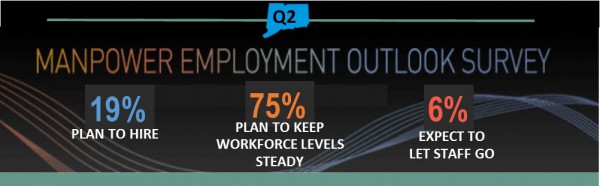
Employers in Connecticut expect to hire at a respectable pace during the second quarter of 2016, which began on April 1, according to the Manpower Employment Outlook Survey. From April to June, 19 percent of the companies interviewed plan to hire more employees, while 6 percent expect to reduce their payrolls. Another 75 percent expect to maintain their current workforce levels. This yields a Net Employment Outlook of 13 percent, according to the Survey.

“Hiring intentions are stronger compared to Q1 2016 when the Net Employment Outlook was 8 percent,” said Manpower spokesperson Becca Dernberger. “The hiring pace is expected to slow down compared to one year ago when the Net Employment Outlook was 19 percent.”

Q2CTFor the quarter just underway, job prospects appear best in Construction, Durable Goods Manufacturing, Transportation & Utilities, Wholesale & Retail Trade, Information, Financial Activities, Professional & Business Services, Education & Health Services, Leisure & Hospitality and Other Services. Employers in Nondurable Goods Manufacturing plan to reduce staffing levels, while hiring in Government is expected to remain unchanged, according to the projections.


Plans for potentially massive state employee layoffs, now anticipated in the coming weeks, had not been announced when the survey was conducted.

In the Northeast, the expectations are somewhat better than in Connecticut, as 21 percent  of employers surveyed plan to increase staff levels during Quarter 2 2016 while 4 percent expect a decrease in payrolls, resulting in a Net Employment Outlook of +17 percent.

Among Connecticut’s largest municipalities, the net employment outlook for Q2 includes 14 percent in Bridgeport, 13 percent in Hartford and 11percent in New Haven.  Survey results were developed for the 100 largest Metropolitan Statistical Areas, based on business establishment count.  Leading the list were Charlotte and Omaha at 29 percent, followed by Albany and Boise City and 28 percent, Dallas and Providence and 27 percent, and Phoenix and Toledo at 26 percent.

The Net Employment Outlook is derived by taking the percentage of employers anticipating an increase in hiring activity and subtracting from this the percentage of employers expecting a decrease in hiring activity.hiring_now

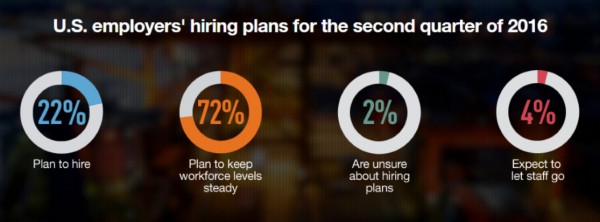
Of the more than 11,000 employers surveyed in the United States, 22 percent expect to add to their workforces, and 4 percent expect a decline in their payrolls during Quarter 2 2016. Seventy-two percent of employers anticipate making no change to staff levels, and the remaining 2 percent of employers are undecided about their hiring plans. When seasonal variations are removed from the data, the Net Employment Outlook is +16 percent, relatively stable compared to the Quarter 1 2016 Outlook, +17 percent.

The Manpower Employment Outlook Survey is conducted quarterly to measure employers’ intentions to increase or decrease the number of employees in their workforces during the next quarter. The weakest outlook for 2016 Q2 are projected in Youngstown, Akron, Baton Rouge, and Las Vegas.

“The U.S. labor market is strong compared to the global situation, with the economy still generating a sufficient number of jobs to keep the unemployment rate down,” said Kip Wright, Senior Vice President, Manpower North America. “However, we now live in a world of ‘certain uncertainty,’ where increased volatility may be here to stay. As a result, organizations and individuals need to be more agile in order to better adapt to this rapidly evolving environment, and a key differentiator to success is attracting and developing the right skills.”

US outlook

Former Hometown Stamford, Public Television Launch Ken Burns' Documentary on Jackie Robinson

As the 2016 major league baseball season begins, the eyes of the nation – and his former hometown of Stamford – will once again turn to the remarkable legacy of Jackie Robinson. A new documentary by acclaimed film director Ken Burns, titled Jackie Robinson, premieres Monday, April 11 at 9 p.m. and continues Tuesday, April 12 at 9 p.m. on PBS and CPTV. To kick-off the program’s debut, the Connecticut Public Broadcasting Network (CPBN) will host a special tribute to Jackie Robinson at The Palace Theatre, Stamford on Friday, April 8 at 7 p.m. The event will include live jazz music by award-winning saxophonist Albert Rivera, and commentary and a Q&A session with ESPN commentator and former Major League Baseball player Doug Glanville.Jackie_Robinson_Title_878x494

Although not a Connecticut native, Robinson lived in Stamford for nearly 20 years, having moved to the community while a member of the Brooklyn Dodgers in 1954.  Robinson, known world-wide for breaking the color barrier in major league baseball in 1947, died of a heart attack in 1972, at age 53.

The evening will include an advance preview screening of the new two-part documentary by Ken Burns. The story of the first African American to play baseball in the major leagues features interviews with President Barack Obama, Harry Belafonte, Tom Brokaw, and others who share how Robinson’s determination and heroism influenced generations.12191994_10153655136803080_6232117043660408872_n

Upon arriving in Stamford, Robinson and his family lived with Richard Simon, co-founder of Simon and Schuster, and his wife, Andrea and their family at their North Stamford home before building a home on Cascade Road in North Stamford. The Simons’ daughter, singer/songwriter Carly Simon, recalled going with Robinson to Ebbets Field to see the Brooklyn Dodgers when she was young, the Greenwich Time recently reported.

parkStamford has a public park named in his honor, recalling that Robinson represented tolerance, educational opportunity, and the confidence that inspires personal achievement and success. A life-size bronze statue of Jackie Robinson with an engraved base bearing the words “COURAGE,” “CONFIDENCE,” AND “PERSEVERANCE” stands in the park located on West Main Street, the gateway to downtown Stamford.

Just weeks ago, Jackie Robinson’s daughter Sharon and her mother Rachel accompanied President Obama to Cuba, and joined him and the United States delegation at an exhibition baseball game.  She told mlb.com:

robinson“It brought back very personal memories of my father talking about his trip to Cuba in 1947, when the Brooklyn Dodgers trained in Havana. At the time, dad was a member of the Dodgers' farm team, the Montreal Royals. Branch Rickey arranged for him to fly to Cuba for an exhibition game, just a couple of months before he broke down baseball's color barrier in the United States. To me, this connection to my father almost brought me to tears. I was watching a baseball game in the same stadium nearly 70 years later.”

In the two-part documentary, Ken Burns “reveals fascinating stories about the legend’s life on and off the field.”  In part one, Robinson “rises from humble origins to integrate Major League Baseball, performing brilliantly despite the threats and abuse he faces on and off the field and, in the process, challenges the prejudiced notions of what a black man can achieve,” according to PBS.  In part two, Robinson” uses his fame to speak out against injustice, alienating many who had once lauded him for ‘turning the other cheek.’” After baseball, during his years in Stamford, “he seeks ways to fight inequality, but as he faces a crippling illness, he struggles to remain relevant.”

The documentary “paints the picture of a man who challenged institutional racism in the face of harsh criticism. It also delves into his close-knit relationship with his wife, Rachel, and their children through candid interviews and personal family photos.”

In 1997, Major League Baseball “universally” retired his uniform number, 42, across all major league teams; he was the first pro athlete in any sport to be so honored. Initiated for the first time on April 15, 2004, Major League Baseball has adopted a new annual tradition, “Jackie Robinson Day,” in which all players on all teams wear #42.

Of his interest in sharing Robinson’s story, director Ken Burns said, “There was so much more to say not only about Robinson’s barrier-breaking moment in 1947, but about how his upbringing shaped his intolerance for any form of discrimination and how after his baseball career, he spoke out tirelessly against racial injustice, even after his star had begun to dim.”

My dad once said, "A life is not important except in the impact it has on other lives," Sharon Robinson recently recalled.

CT Women of Innovation To Be Honored This Week

The 12th annual Women of Innovation® awards gala this week will recognize 52 women who are accomplished in science, technology, engineering, math and who are involved in their community, five college students and seven high school students who have already begun to demonstrate similar accomplishment. The annual awards event is “a time for like-minded, successful women to network and celebrate their accomplishments,” continuing a tradition led by the Connecticut Technology Council aimed at recognizing women in a range of innovative businesses, education and communities, and highlighting role models for young women looking ahead to career pursuits.

The categories include:

  • Youth Innovation and Leadership
  • Collegian Innovation and Leadership
  • Community Innovation and Leadership
  • Research Innovation and Leadership
  • Academic Innovation and Leadership
  • Entrepreneurial Innovation and Leadership
  • Small Business Innovation and Leadership
  • Large Business Innovation and Leadership

One woman in each of the eight categories will be selected as a top Woman of Innovation in her category, at the April 6 awards ceremony.

Among the nominees, in the Entrepreneurial Innovation and Leadership category, are Marcia Fournier, Founder & CEO of BioArray Therapeutics, Inc.; Gloria Kolb, CEO/Owner of Elidah, Inc.; Wendy Davis, CEO of GestVision, Inc.; Amy McCooe, Co-CEO of Level Up Village; Nicole Bucala, CEO of MIFCOR; Kelly Simpson-Angelini, CEO and Chief Strategic Officer of Simpson Heathcare Executives; Janine Darling, Founder & CEO of STASH America, LLC; and Anuja Ketan, Chief Technology Officer at Zillion Group Inc.innovationlogo

The women nominated in the Small Business Innovation and Leadership category include Melissa Casini – etouches, Norwalk, (Director of Account Management); Dina Dubey – Z-Medica, Wallingford,  (Executive VP, Corporate Development); Merrie London – Connecticut Innovations, Rocky Hill (Manager, SBIR and Federal Leveraging Programs); Jackie Mulhall – SMC Partners, Hartford (Director); Pam Perdue – Continuity Control, New Haven (Founder, EVP Regulatory Operations); and Kathleen Roberge – etouches, Norwalk (VP of Global Sales).

The full list of nominees includes individuals at some of Connecticut’s leading companies, including Sikorsky Aircraft, Frontier Communications, Hartford Hospital, Pfizer, and Pratt & Whitney. Academic institutions with Women of Innovation include the University of Connecticut, Wesleyan University, University of Bridgeport, and Yale University.

The keynote speaker for the April 6 awards program will be Congresswoman Elizabeth H. Esty, U.S. Representative for the 5th Congressional District of Connecticut. During the past 11 years, more than 500 women have been honored by Women of Innovation.

“Our state’s innovation sector recognizes the essential contributions its female engineers, scientists, programmers, physicians, mathematicians and teachers make in developing new products and services, advancing health technologies and serving as educators and role models for generations of women that follow,”said Connecticut Technology Council President and CEO Bruce Carlson. “Women of Innovation® allows us to put the spotlight on these exceptional innovators and leaders and connect them with a professional network of other women who strive for excellence.”

https://youtu.be/Uz1gQ96Yk1c