Enforcement Hold Lifted, FCC Will Now Consider License Renewal Application of WTIC-AM, Pending for Two Years
/Just days after a federal appeals court upheld former Gov. John G. Rowland’s conviction for violating federal campaign laws, the Federal Communications Commission lifted an enforcement hold on WTIC-AM's license renewal. At the time that Rowland was accused of secretly accepting pay as a political consultant, he was also an afternoon radio host on WTIC-AM. His use of the airwaves in order to favor the candidate, Lisa Wilson-Foley, whose spouse was paying Rowland at the time, was raised during his trial.
The FCC is now “in a position to consider the objections that have been filed regarding the renewal application,” an agency official told CT by the Numbers. There is no timetable for that review, which is just beginning now that the agency’s enforcement hold has been “lifted,” or for a final decision on the station’s license renewal application.
The station’s broadcast license expired almost 27 months ago, on April 1, 2014. In accordance with FCC procedures, the station filed a license renewal application on November 27, 2013. By September 2014, the FCC’s enforcement division placed the renewal application on “enforcement hold,” which precluded any action by the agency on the renewal.
The station, owned by CBS Radio, could continue broadcasting while the FCC held the renewal application. Stations in such a status routinely continue to operate without any interruption until a decision on license renewal is made.
Even as the station remained on the air, the license renewal has been in limbo. As the agency’s Enforcement Bureau considered “an alleged violation of FCC rules,” the agency’s Media Bureau could not proceed with a decision on whether or not to renew the station’s broadcast license, typically an 8-year renewal.
The FCC has not provided the reason that the license application was put on hold. FCC officials have indicated that most often enforcement holds are instituted due to a complaint being filed that requires investigation, but they would not confirm whether that was true in this instance. That information is only made available to the licensee or their attorney, according to an FCC official.
Now that the license renewal application has reached the agency’s Media Bureau, they will consider “how the allegation of violation was resolved,” as well as a range of other factors in deciding whether or not to renew the station’s license. The other, more routine, factors include whether any other objections have been raised about the station, whether the station has been adequately serving the public in their area of license, their history of compliance with FCC regulations, and their overall performance.
Hartford Attorney Ken Krayeske filed an informal objection on October 1, 2014 to WTIC’s broadcast license renewal, alleging that the station “demonstrated serious malfeasance” and “helped conceal violations of federal law.” The FCC has confirmed the receipt of that objection.
Rowland resigned from his drive-time talk show on WTIC-AM in April 2014. The station currently airs a locally-originated sports talk program in that time slot. The FCC had no comment on whether the now more than two-year delay in making a determination on the license renewal is among the longest in FCC history.

 “Wholesome Wave is thrilled by the innovations that USDA is supporting through the new FINI grants, which are taking the work of increasing affordable access to healthy food to even greater levels of impact,” said Michel Nischan, CEO & Founder of Wholesome Wave. “So many SNAP shoppers are working parents with limited time to source healthier food choices. Through the new Farm-to-Grocery model, our partners in Connecticut and Vermont will be able to expand affordable access to SNAP consumers in a way that allows them to find and purchase more healthy food from a variety of retailers.”

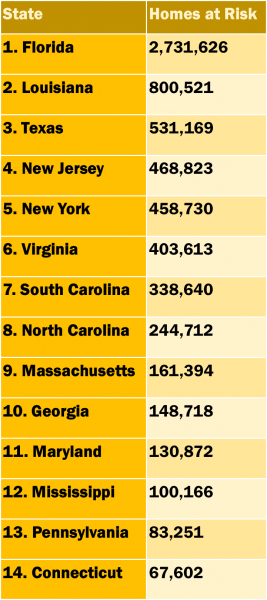 Among neighboring states, Connecticut ranked behind Massachusetts, New York and New Jersey.



 xpert guest lecturers from Connecticut companies will speak regarding subjects and crafts not included in the general curriculum. Officials indicate that upon successful completion of the DMCT, trainees will have completed a portfolio worthy project consistent with their selected track and representative of their work and learning. They will also receive a certificate of completion from the Connecticut Office of Film, Television & Digital Media for their selected track.
 The state’s Office of Film, Television and Digital Media supports and enhances Connecticut’s film, television and digital media industry. The film office is the statewide contact for motion picture, television and digital media production and serves as liaison between production companies, state agencies, municipalities, production facilities, local crew and vendors. The Office also administers the tax credit programs designed to incentivize the development of the industry here in Connecticut.
 “This is an effort to reassert Connecticut as one of the strongest economies in the nation and in the world,” State Representative William Tong recently told WNPR. He's co-chair of the state’s
 Another Connecticut school has received national recognition, as Military Times ranked the School of Business at Quinnipiac University as the best business school for veterans in Connecticut and the 24th best in the nation, according to its Best for Vets: Business Schools 2016 rankings.


 tion into one composite indicator of entrepreneurial business growth.”


 In addition to the public poll,