Gender Disparity Is Alive and Not-So-Well; Particularly in Connecticut, Analysis Finds
/Connecticut places dead last among the 50 states in the degree of gender gap in executive positions in the workplace and overall workplace environment for women, according to a new analysis prepared by the financial website WalletHub. The state also ranked in the bottom ten in the “education and health” category, ranking higher – in the top ten – only in “political empowerment,” despite having fewer women in the state legislature than about a decade ago.
Overall, the state ranked 28th among the “Best and Worst States for Women’s Equality.”
The challenges present in Connecticut are true – to varying degrees – nationwide. In 2016, the U.S. failed to place in the top 10 — or even the top 40 — of the World Economic Forum’s ranking of 144 countries based on gender equality, WalletHub reports.
Among the states, the top 10, with the slimmest inequality gap, were Hawaii, Nevada, Illinois, Minnesota, Washington, Maine, North Dakota, Oregon, Wisconsin, and Vermont. Among the other New England states, Massachusetts ranked #13, New Hampshire was #16, and Rhode Island was #34. The widest gaps were in Texas, Virginia and Utah.
"Connecticut ranked below average overall mostly because of its rankings for two of the categories we analyzed, Workplace Environment (50th) and Education & Health (43rd),” WalletHub analyst Jill Gonzalez told CT by the Numbers. “Connecticut's disparities between women and men are quite pronounced when it comes to the workplace environment. Women earn 23 percent less than men, 9th highest in the country, and Connecticut has the highest gap of women in executive positions. Large differences also appear when looking at higher-income earners, with a 13 percent gap between women and men, and the entrepreneurship gap in Connecticut is at 48 percent, again favoring men."
To determine where women receive the most equal treatment, WalletHub’s analysts compared the 50 states across 15 key indicators of gender equality in three central categories: workplace environment, education and health, and political empowerment Among the indicators used in the analysis, Connecticut ranked 46th with among the largest educational attainment gap among Bachelor’s Degree holders, 48th in the entrepreneurship gap, 49th in the disparity among higher income wage earners (in excess of $100,000 annually) and 50th with the largest executive positions gap.
According to the National Conference of State Legislatures, just over one-quarter of Connecticut’s legislators are women, at 27.3 percent, compared with the national average among state legislatures of 24.8 percent. There are 1,830 women serving in legislatures across the country. In Connecticut, 42 of 151 House members are women, and 9 of the Senate’s 36 seats are held by women. Among the states with the highest percentage of women in their legislature are Vermont, Colorado and Nevada with 39 percent, Arizona with 38 percent, and Illinois and Washington at 36 percent. Connecticut’s numbers have declined since 2009, when a total of 59 women held legislative seats, 8 in the Senate and 51 in the House.
The workplace environment category included data on income disparity, the number of executive positions held, minimum wage workers, unemployment rate disparity, entrepreneurship rate disparity and the disparity in the average number of work hours.
The analysis found that in every state, women earn less than men. Hawaii has the lowest gap, with women earning 12 percent less, and Wyoming has the highest, 31 percent. Connecticut ranked 41st. Rhode Island has the highest unemployment-rate gap favoring women, with 2.4 percent more unemployed men. Georgia has the highest gap favoring men, with 1 percent more unemployed women. The unemployment rate is equal for men and women in Illinois and Idaho. In Connecticut’s it’s nearly identical, with the 0.3 percent more unemployed men than women, based on the data reviewed.
Women continue to be disproportionately underrepresented in leadership positions nationwide. According to the Center for American Progress, women make up the majority of the population and 49 percent of the college-educated labor force. Yet they constitute “only 25 percent of executive- and senior-level officials and managers, hold only 20 percent of board seats, and are only 6 percent of CEOs.” In addition, salary inequity continues, and women are underrepresented in government.
The analysis was released to coincide with Women’s Equality Day, which is observed annually on August 26. The U.S. Congress designated the commemoration beginning in 1971 to remember the 1920 certification of the 19th Amendment to the Constitution, granting women the right to vote. The observance of Women’s Equality Day also calls attention to women’s continuing efforts toward full equality, according to the National Women’s History Project.
 In Hartford, the university intends to “interweave top-tier academic programs with the vitality and unique educational and service opportunities offered by Connecticut’s capital city.” The campus – at a cost of $140 million - is anchored by the historic former Hartford Times building as part of a neighborhood campus that includes nearby cultural institutions and state and city government offices, including Hartford Public Library, which will house 12,000 square feet of UConn classrooms, a library collection, and study areas.
 go, the Board of Trustees voted to extend the Graduate Business Learning Center’s (GBLC) lease at 100 Constitution Plaza, and to add two additional floors to the existing space, allocating a total of six floors of classroom, meeting and office space.
 The building is six stories tall and will have 116 apartment units. the school's website explains. The maximum occupancy of the building is approximately 350 students, but because some of the bedrooms will be single occupancy, the target occupancy is 290 students. Plans call for 100 designated parking spaces for students will be available for a small additional charge.


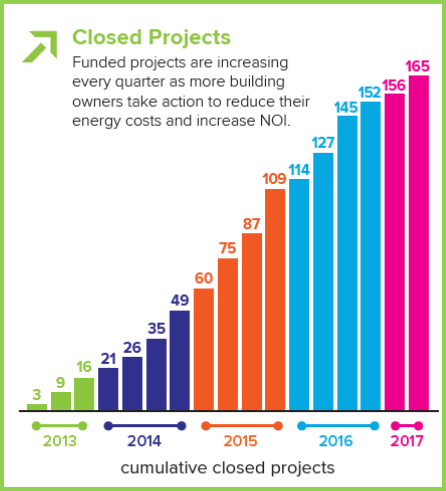 boilers, energy efficiency lighting measures, HVAC systems, and other energy improvements that help building owners to take control of their energy costs.
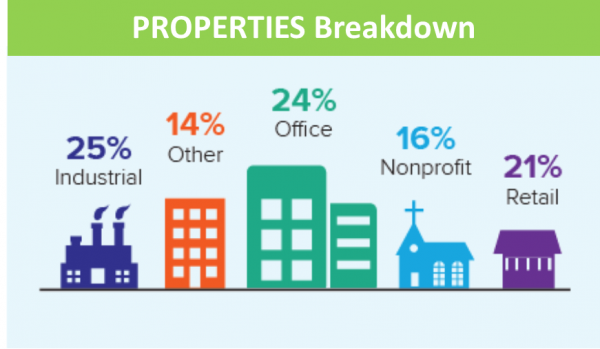 without the support of our contractors, capital providers, municipal officials, and other stakeholders who have contributed to the C-PACE movement,” said Mackey Dykes, Vice President of Commercial, Industrial and Institutional programs at the Connecticut Green Bank. “There is still significant potential for energy improvements for Connecticut businesses and non-profits, and we look forward to bringing cleaner and cheaper energy to more building owners across the state.”
 make the financing of clean energy deployment more accessible and affordable for consumers and businesses. In 2011 the state legislature created the Connecticut Green Bank, the nation’s first green bank. It uses public funds to attract private capital investment in green energy projects. By leveraging private investment, the Green Bank significantly increases the total amount of financing available for clean energy projects.

 The report noted that “Medicaid beneficiaries are prescribed opioids at twice the rate of the rest of the population, and research indicates they are at 3 to 6 times greater risk of a fatal overdose.” The report also observed the impact of the epidemic on the nation’s prison population: Eighty percent of prisoners have a history of drug abuse; 50 percent are addicted to drugs; 60 to 80 percent of prisoners abusing drugs commit a new crime after release; and approximately 95 percent of addicted prisoners relapse when they’re released, according to National Association of Drug Court Professionals (NADCP) data.
 For example, almost a quarter (23%) of Connecticut workers in science, technology, engineering, and math fields such as healthcare and bioscience were immigrants. Over 36,000 foreign-born Connecticut residents are self-employed, with immigrant-owned businesses generating $1.1 billion income in 2014 while employing 73,047 people. “Immigrants are already playing a huge part ensuring that Connecticut remains a leading innovator in industries like healthcare and bioscience,” according to the analysis.

 In May, Jepsen announced that Connecticut joined with 46 other states and the District of Columbia in an $18.5 million settlement with the Target Corporation to resolve the states' investigation into the retail company's 2013 data breach. The settlement represented the largest multistate data breach settlement achieved to date. That breach affected more than 41 million customer payment card accounts and contact information for more than 60 million customers. Connecticut will receive $1,012,936 from the settlement, which will be deposited in the state's General Fund.

 Tesla is prohibited from selling directly in Connecticut, Michigan, Texas, and West Virginia, according to the company. There are about 1,300 Teslas registered in Connecticut, nearly two-thirds of the electric vehicles in the state, according to the state Department of Motor Vehicles.
 For the uninitiated, an
 Put most succinctly, the website headlines, “Everyone should have access to science.” Towards that end, they’re in the midst of enlisting “a group of scientists dedicated to making science accessible to everyone,” by forming the “Massive Science Consortium.”

 The Hartford Line will act as a regional link with connections to existing rail services, including Metro-North, Shoreline East, and Amtrak Acela high-speed rail services on both the New Haven Line to New York and on the Northeast Corridor to New London and Boston. There will also be direct bus connections to the Bradley Airport Flyer and to CTfastrak. With a heightened level of direct and connecting service linking the region, the hope is that towns along the future Hartford Line will become magnets for growth – ideal places to live and to relocate businesses that depend on regional markets and travel.
 Also, very much a part of the strengthening transportation options with the potential to spur economic development is