

New Haven's “SeeClickFix” Selected by National Mag, Set to Host User Summit as Hurricane Residents Use Service
/When Fast Company magazine developed a feature article entitled “United States of Innovation” for its most recent issue, they selected one business in each state to highlight. Connecticut’s representative was SeeClickFix, a New Haven-based business that began a decade ago with a basic premise and has expanded steadily since.
As Fast Company described it: “A Help Desk for Citizens – New Haven resident Ben Berkowitz created the SeeClickFix app to allow locals to quickly report non-emergency issues ( broken meters and streetlights, potholes, and even excessive noise from ice-cream trucks). Officials can track, manage and reply within the app. It has since expanded to some 300 municipalities across the country.”
There have been a total of more than 3 million “issues fixed” according to the SeeClickFix website, in communities including Chicago, Minneapolis, St. Petersburg, Detroit, Oakland, Albany, Albuquerque, Washington, D.C. Of particular interest this during the past two weeks - SeeClickFix in numerous Florida communities, and in Houston.
In the aftermath of  Hurricane Harvey, the efforts with Houston instantly intensified. Berkowitz said SeeClickFix has worked with the city of Houston and several of its neighboring suburbs since 2009, handling an estimated 30,000 residents. Those numbers will likely jump when the totals for 2017 are tallied. Berkowitz told CTNewsJunkie that will be especially true in the coming weeks as operations shift from emergency calls handled by police and other emergency personnel to calls that are SeeClickFix specialties, such as power outages, downed trees and other types of “more routine” assistance.
In Florida, St. Petersburg is among the 10 communities with SeeClickFix in operation, and the site is filled with reports of downed trees, storm debris, broken water mains, non-working street lights, and other hazards, with many accompanied by photos illustrating the danger or dilemma. Other communities include Pinellas County (which includes Clearwater), Seminole, Gainsville, and Venice, which signed on a year ago.
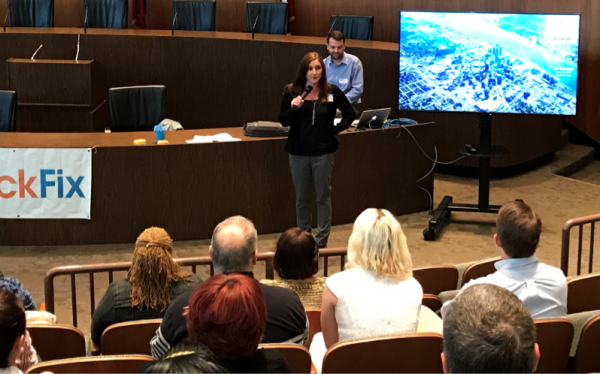 The company’s website continues to proudly boast “Made in New Haven” and Berkowitz’ company profile explains “The inspiration for SeeClickFix came from a desire to improve his own community with his neighbors and his government.”
Even before the hurricane in Houston this year, the company's growth has continued, with the first city in Kentucky signing on recently, and communities in Georgia and Michigan also added. A workshop, with municipal attendees from more than 80 communities, was held in Detroit. Next, a SeeClickFix User Summit is scheduled for September 13 & 14 in New Haven.
Fast Company summed up “50 projects that are really making America great again” noting that “Change doesn’t have to happen  from the top down” as the publication highlights “some of the most promising projects, initiatives, and companies that are springing up in every state of the union. Together, they present a portrait of the country today—its concerns and responses, and its enduring capacity for progress.”




 Attracting hundreds of women in manufacturing from across the country, WiM's annual Summit is the only national conference of its kind. This networking and educational event features manufacturing plant tours, professional development tracks, industry roundtables, keynote presentations and social events to expand participants' networks.
 any, TRUMPF Inc., and Pratt & Whitney, all on the opening day of the conference on September 13.
 Engineers, and George Saiz, President & CEO of The Association for Manufacturing Excellence.
 Among the host committee members is the Connecticut Business and Industry Association. The New Haven Manufacturers Association and the Waterbury Regional Chamber’s Manufacturer’s Council are among the Supporting Partners for the Summit.
 The analysis points out that a main reason why people don’t have access to broadband internet is due to a lack of income. Cited is a Pew Research poll that found 23 percent of people making under $30,000 per year don’t use the internet, possibly because of the high price for something they don’t consider a basic need. Most rural schools across the country still lack access to fiber and pay more than twice as much for bandwidth.

 Joining the WFSB sports team in 1980 at age 27, Marshall spend five years at channel 3, moving from the nation’s number 23 TV market to number 13 when he relocated to Miami in 1985. At the time, he became the first black sports anchor in South Florida, according to published


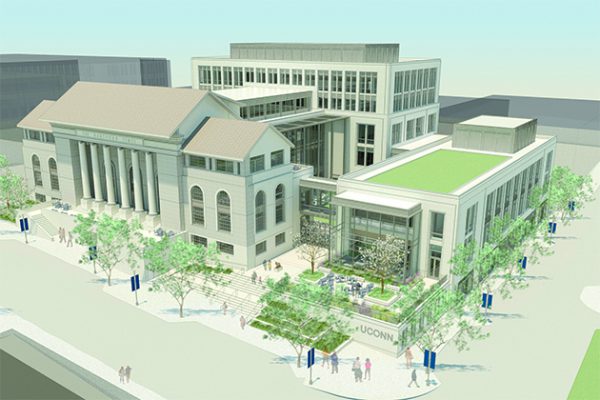 In Hartford, the university intends to “interweave top-tier academic programs with the vitality and unique educational and service opportunities offered by Connecticut’s capital city.” The campus – at a cost of $140 million - is anchored by the historic former Hartford Times building as part of a neighborhood campus that includes nearby cultural institutions and state and city government offices, including Hartford Public Library, which will house 12,000 square feet of UConn classrooms, a library collection, and study areas.

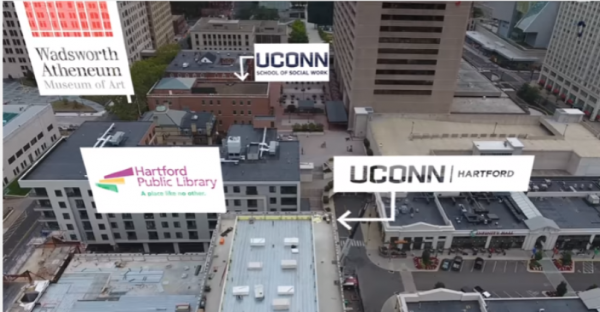 go, the Board of Trustees voted to extend the Graduate Business Learning Center’s (GBLC) lease at 100 Constitution Plaza, and to add two additional floors to the existing space, allocating a total of six floors of classroom, meeting and office space.
 The building is six stories tall and will have 116 apartment units. the school's website explains. The maximum occupancy of the building is approximately 350 students, but because some of the bedrooms will be single occupancy, the target occupancy is 290 students. Plans call for 100 designated parking spaces for students will be available for a small additional charge.


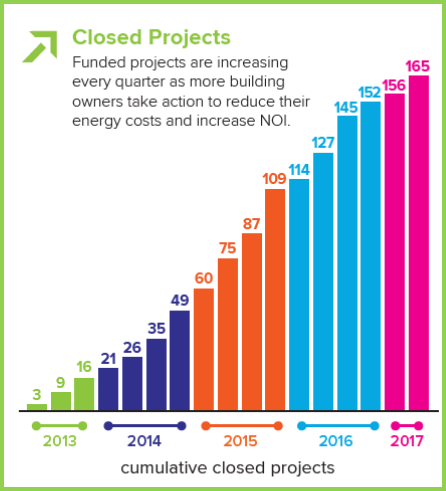 boilers, energy efficiency lighting measures, HVAC systems, and other energy improvements that help building owners to take control of their energy costs.
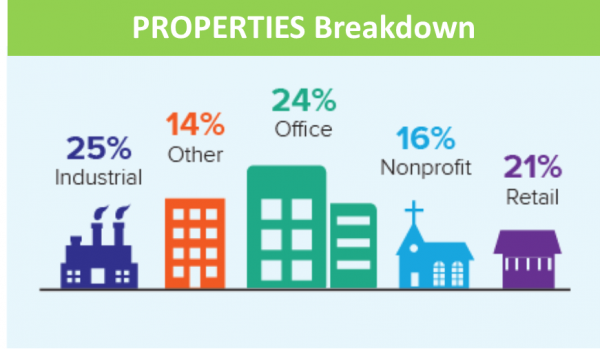 without the support of our contractors, capital providers, municipal officials, and other stakeholders who have contributed to the C-PACE movement,” said Mackey Dykes, Vice President of Commercial, Industrial and Institutional programs at the Connecticut Green Bank. “There is still significant potential for energy improvements for Connecticut businesses and non-profits, and we look forward to bringing cleaner and cheaper energy to more building owners across the state.”
 make the financing of clean energy deployment more accessible and affordable for consumers and businesses. In 2011 the state legislature created the Connecticut Green Bank, the nation’s first green bank. It uses public funds to attract private capital investment in green energy projects. By leveraging private investment, the Green Bank significantly increases the total amount of financing available for clean energy projects.




















