Accelerating Efforts to Prevent Suicide in CT as Numbers Climb
/The Centers for Disease Control and Prevention (CDC) released a report this year which indicated that suicide rates nationally jumped by 25 percent since 1999, a finding that “shocked” even experts who believed the rate had been flat. Each year, more than 41,000 individuals die by suicide, leaving behind their friends and family members to navigate the tragedy of loss, according to the National Alliance on Mental Illness. Connecticut's rate, 9.7 deaths per 100,000, rose 20 percent during that time, and 49 states saw an increase, according to the CDC. Connecticut’s suicide rate, is ranked number 46 in the country.
Suicide is the 10th leading cause of death in the U.S. with one occurring on average every 13.3 minutes.
For every suicide, there are 30 people who made the attempt, Dr. James F. O'Dea, vice president of the Behavior Health Network of Hartford Healthcare, recently told the Meriden Record-Journal. The U.S. Health Resources & Services Administration reports that “approximately 45% of suicide victims had contact with primary care providers within 1 month of suicide.”
“Connecticut suicide rates may have no t have increased as much in comparison to other states, but isn’t the real question, ‘Why is it increasing at all?’” Luis Perez, president and CEO of Mental Health Connecticut, told The Hartford Courant earlier this year.
“It’s been well-researched that most people who die by suicide do so because they want the pain to stop — and they don’t see any other way,” Perez said. “Prevention is critical. Knowing the safe and right way to talk to someone who may have thoughts of suicide and letting people know they are not alone, that millions of people struggle with suicide ideation is key.”
According to the state Department of Public Health, approximately 31 percent of victims had a history of treatment for mental illness and 42 percent had previously attempted or thought about suicide or disclosed their intent to commit suicide. The CDC offers 5 steps to help someone at risk: 1. Ask. 2. Keep them safe. 3. Be there. 4. Help them connect. 5. Follow up.
The U.S. government’s anti-bullying website, stopbullying.com, points out that “many issues contribute to suicide risk, including depression, problems at home, and trauma history. Additionally, specific groups have an increased risk of suicide, including American Indian and Alaskan Native, Asian American, lesbian, gay, bisexual, and transgender youth.” The site indicates that “this risk can be increased further when these kids are not supported by parents, peers, and schools. Bullying can make an unsupportive situation worse.”
Matt Riley, Chief Operating Officer of the Connecticut-based Jordan Porco Foundation, recently told WTNH-TV that suicide is the second leading cause of death for Americans ages 15 to 24. One in ten college students and one in five high school students consider suicide. Young people considering suicide are most likely to talk to peers, so the Jordan Porco Foundation focuses on peer-to-peer outreach and awareness, with a series of successful program initiatives on college campuses in Connecticut and across the country.
In recent years, a new student-driven primary prevention program was piloted to help high school students develop positive coping skills and enhance protective factors in preparation for life beyond high school. Schools and organizations participating included Manchester High School, Immaculate High School in Danbury, Enfield Public Schools, Capital Preparatory High School in Hartford, Institute of Living in Hartford, Jewish Family Services in West Hartford, Wilton High School, Boys & Girls Club of Bristol, and Guilford Youth & Family Services.
Numerous organizations across Connecticut offer Mental Health First Aid, an 8-hour training to teach participants how to help someone who is developing a mental health problem or experiencing a mental health crisis. The evidence behind the program demonstrates that it helps trainees identify, understand and respond to signs of mental illnesses and substance use disorders. The course is often offered to participants free of charge.
https://youtu.be/jl87bmuCTdM
https://youtu.be/TT_HLG5FkKA
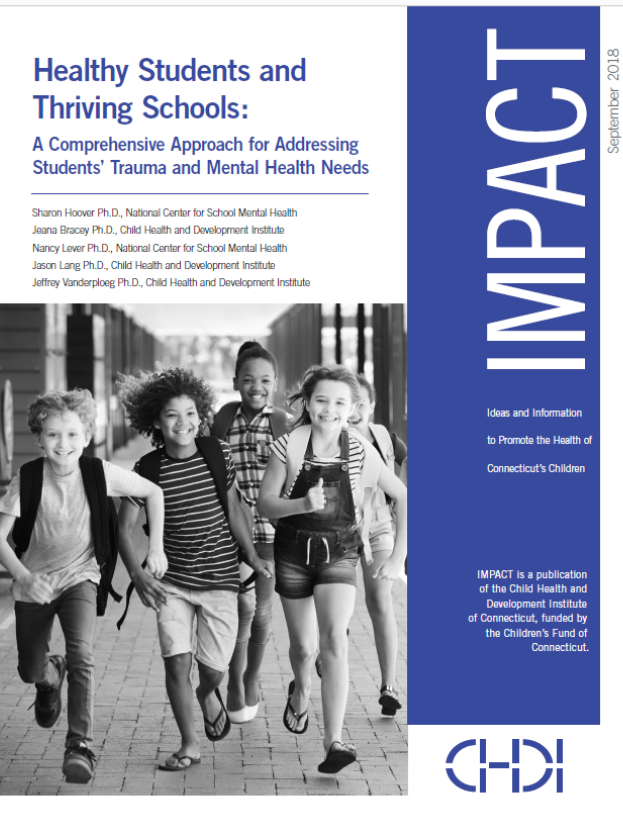 The 40-page report, developed by The Child Health and Development Institute of Connecticut (CHDI), a subsidiary of the Children’s Fund of Connecticut, in partnership with the national Center for School Mental Health at the University of Maryland, provides a framework for policymakers and school districts interested in improving outcomes by addressing the mental health and trauma needs of students. The report indicates that “in a typical classroom of 25 students, approximately five will meet criteria for a mental health disorder but most of them are not receiving appropriate mental health treatment or support. Among those who do access care, approximately 70 percent receive services through their schools.”
 “Approaching student mental health with a comprehensive lens that integrates health promotion, prevention, early intervention, and more intensive treatments leads to better school, student and community outcomes," said Dr. Sharon Hoover, Co-Director of the Center for School Mental Health at the University of Maryland and lead author of the report.

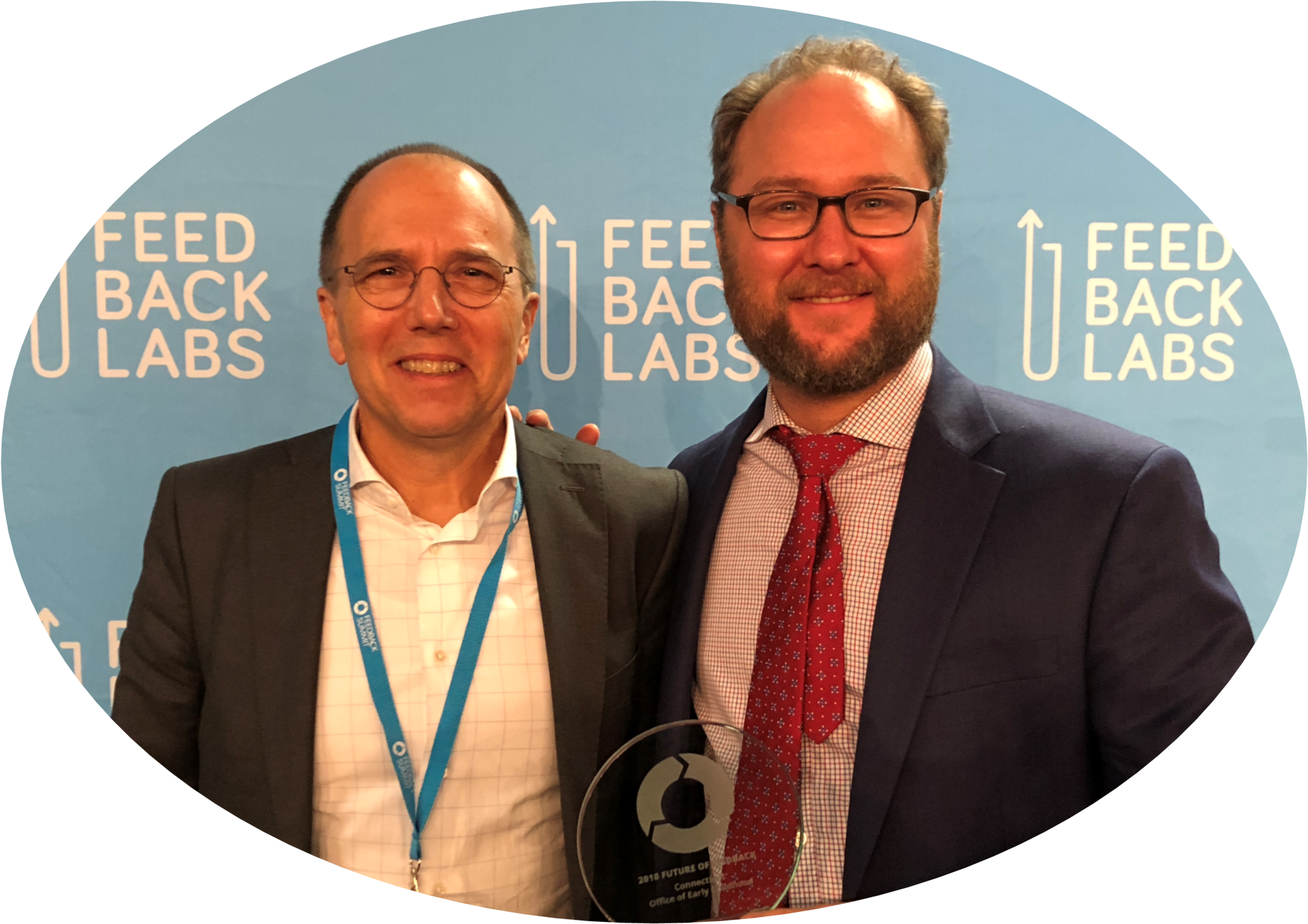 Among the 10 largest state agencies in Connecticut, OEC’s goal is to keep the state’s children safe, healthy, learning and thriving. Through its innovative feedback efforts, the agency is acting on evidence that engaging providers and parents in policymaking yields better results. Officials said that the agency combined data from 1,700 family surveys, another survey shared with all providers in the state, and 400 community and provider meetings in order to build a draft plan to transform the ECE system in the state, which serves 200,000 children.


 Among the report’s other key findings:

 Atop the rankings in the pediatric specialty were Children’s National Medical Center (Washington, DC), Children’s Hospital of Philadelphia, Boston Children’s Hospital, Children’s Hospital Colorado, Cincinnati Children’s Hospital Medical Center, Rainbow Babies and Children’s Hospital (Cleveland), UCSF Benioff Children’s Hospital of San Francisco and Oakland, New York-Presbyterian Morgan Stanley-Komansky Children’s Hospital, St. Louis Children’s Hospital-Washington University, and C.S. Mott Children’s Hospital – Michigan Medicine (Ann Arbor).
 e, infection rates in the NICU and other data collected from a detailed U.S. News clinical survey of children's hospitals, produced 85 percent of each hospital's score. The other 15 percent reflects nominations from pediatric specialists and subspecialists who responded to surveys in 2016, 2017 and 2018 and recommended the hospital for serious cases in their specialty.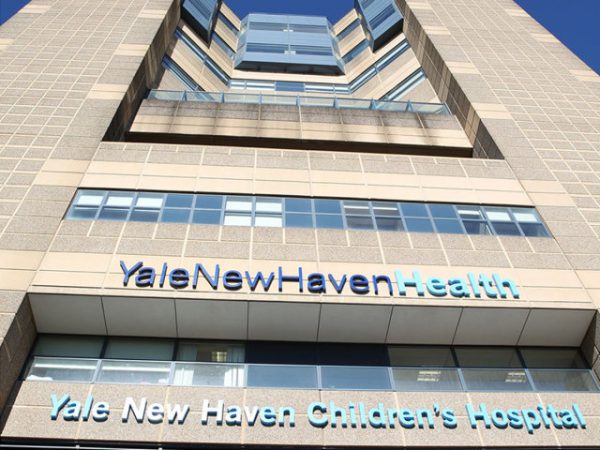


 The review of the research, conducted by Connecticut-based Rodriguez Data Solutions, points out that policymakers often promote K-12 regionalization as a way to achieve cost savings, but often fail to consider the consequences for student educational achievement. The report reviewed initiatives to promote K-12 regionalization in several states including Connecticut, Maine, New York and Vermont. Among the findings:
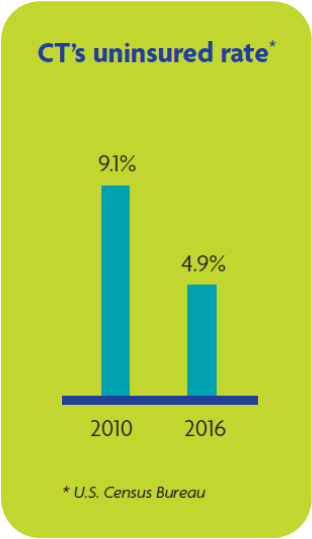
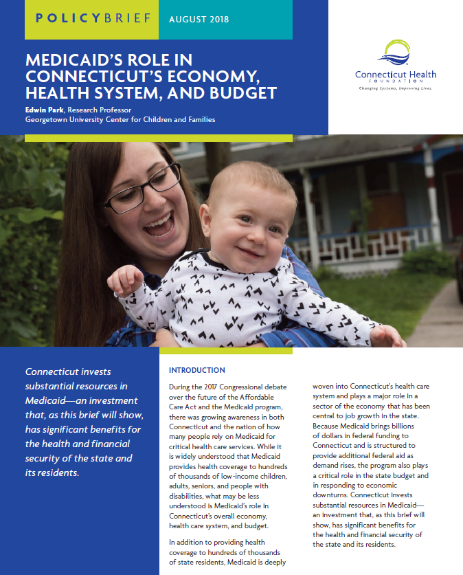
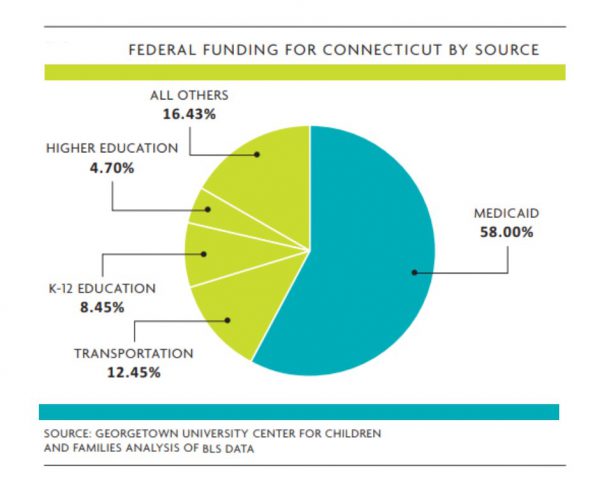
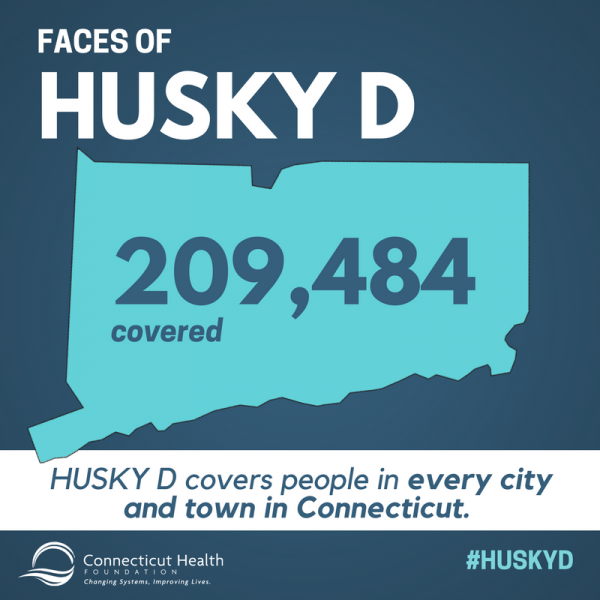 han 90 percent of the cost of the program, allowing Connecticut to cover more than 200,000 people with a relatively small budgetary impact.” Currently, the federal government pays 94 percent of the cost of coverage and the state pays 6 percent. The report also identifies challenges associated with HUSKY D, including concerns raised by health care providers about Medicaid payment rates and uncertainty in federal funding.
 The survey found that 38 percent of students whose grades were mostly A’s texted or e-mailed while driving a car on at least one occasion in the 30 days prior to the survey. The percentage was slightly less among students with lower grades: 31% of students with mostly B’s, 30% of students with mostly C’s and 23% of students with mostly D’s and F’s.