Connecticut's Mechanical Engineers Honored for Driving Innovation, Advancing Technology

A quick glance at the program book for the evening suggested this was not your typical awards ceremony.  The “detailed schedule” in the program featured a level of precision not often seen – the specific time that each speaker would reach the podium was listed… 8:17 Hartford Steam Boiler, 8:23 United Technologies Aerospace Systems, 8:34 Westinghouse Electric, and so on. This was the Awards Banquet of the Hartford Section of the American Society of Mechanical Engineers (ASME) – a night highlighting Connecticut’s longstanding role as a state of innovation and preeminent engineering expertise, and the people on the front lines – so the exactness was understandable.photo 2

A standing-room-only gathering of engineers from some of the region’s largest corporate names, joined by nearly 50 engineering students from area colleges – honored lifelong achievement, recent initiatives to advance new technologies and significant contributions to the field.  The ceremonies were held at the Society Room in Hartford.

Among the corporations presenting awards were Alstom, Belcan Engineering, Firstlight and Power, Hartford Steam Boiler, Pratt & Whitney, United Technologies Aerospace Systems, Westinghouse Electric.  Awards were also given to four veteran engineering faculty members at Central Connecticut State University, University of Hartford and University of Connecticut.

Congresswoman Elizabeth Esty (D-5th District), recalling that her father and grandfather were engineers, said in opening remarks that among the nation’s challenges is a “failure to invest consisphoto 3tently and robustly in research.”  Describing Connecticut as “the home of innovation in engineering,” Esty said that engineers provide “the inspiration to solve the world’s problems.”

The annual event, held days ahead of National Engineers Week, is part of an effort “to raise public awareness of the profession’s positive contributions to improving society and quality of life,” and highlight “the importance of a technical education and a high level of math, science and technology literacy.”

The Hartford Section of ASME, with approximately 800 members, is among the largest in the nation.  Connecticut has two other ASME sections, geographically focused in New Haven and Fairfield County.  The not-for-profit professional organization’s mission, in part, is to “serve diverse global communities by advancing, disseminating and applying engineering knowledge.”  That mission was evident as the work of each award recipient was highlighted.

Amy Ericson, Alstom U.S. Country President, noted that her company has 93,000 employees in 100 countries – and that Windsor, Connecticut is their largest U.S. location.  “We’re very committed to the United States, and to Connecticut,” she said.  The three Alstom honorees – Manager of Performance Design Engineering Danny Gelbar, Head of Global Performance Scott Herman and Consulting Engineer Rahul Terdalkar – recalled Alsom’s predecessors, ABB and Combustion Engineering, well-known names in Connecticut’s heritage.  They also looked ahead to the impact of innovations developed in Connecticut.  Alstom equipment can be found in one of every two U.S. power plants, 40 percent of all power grids and the nation’s busiest rail transportation systems.

ASMEAmong the faculty award recipients was Dr. Alfred A. Gates, Professor of Engineering at Central Connecticut State University, whose two decades at the university have been a steady stream of technical innovation and teaching.  Gates noted that CCSU has just become the first university in the United States to receive a Certificate of Authorization (COA) from the Federal Aviation Administration  to “fly unmanned aircraft in the wire zone,” within feet of electric lines.  The FAA has closely regulated such authorizations to assure public safety, conducting a comprehensive operational and technical review on each application.  Approval, after a nearly year-long review, reflects Gates record of skill and accomplishment in engineering and testing such devices.

The University of Hartford’s Leo T. Smith, a member of the engineering faculty since 1978, and UConn School of Engineering professor Nejat Olgac, a faculty member since 1981, were also honored.  Each program highlighted its recent growth, with CCSU’s program increasing to 300 students in just under a decade.

State Rep. Lonnie Reed (D-Branford), co-chair of the state legislature’s Energy and Technology Committee, saluted the “sense of buoyancy and possibility” that engineers embody, and the “solution-oriented optimism” that they bring to technical challenges.  She recalled her years as a television news reporter and the inspiring excitement of covering NASA space shuttle missions and the “failure is not an option” approach that permeated the space program, noting Connecticut’s significant contributions to those initiatives.

Honorees included Shaila Kambli, Chief Engineer, Systems and Software Engineering, at Belcan; Peter A. Goodell, Supervisor Code Services at HSB Global Standards; Tadry Domagala, Chief Project Engineer at UTC Aerospace Systems; Edward Hathaway, Senior Engineer at First Light; and Michael Foster of Westinghouse.  The Pratt & Whitney award recipients were Jesse Boyer, Fellow, Additive Manufacturing; Christopher L. Dyer, Deputy Director, Cold Section Engineering; Matthew R. Feulner, Discipline Manager of Operability, Propulsion Systems Analysis; David P. Houston, Manager of Cor Structures, Mechanical Disciplines; Katherine A. Knapp Carney, CIPT Leader, Next Generation Product Family Programs; John P. Virtue, Jr., Discipline Chief for Aero Thermal Fluids, Compressor Heat Transfer; and Ryan Walsh, Validation Manager, PW1100G-JM Engine Program.  It was the 29th annual awards ceremony; the Engineer's Night chairman and emcee was Aaron Danenberg of Belcan Engineering.

http://youtu.be/iPmdZJhVUfk

Connecticut, New England Have Lowest Church Attendance, Survey Says

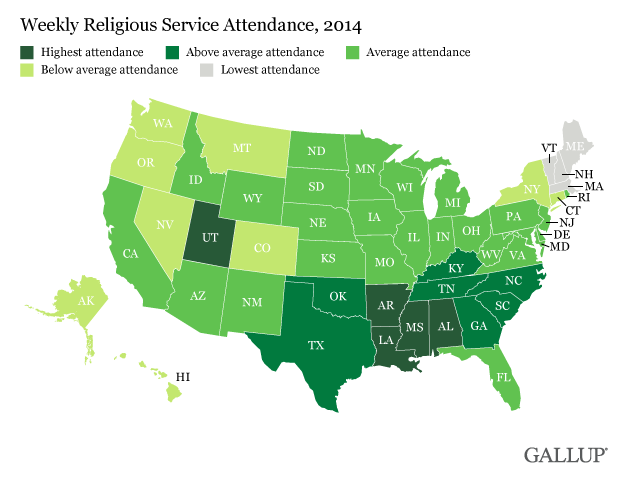
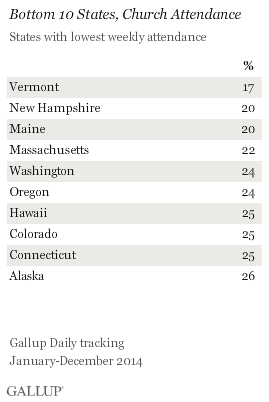
Connecticut residents rank #41 in the nation in regular church attendance, according to a new survey.  The state had plenty of company from New England neighbors at the bottom of the list.  The bottom four slots were occupied by New England states – Vermont at #50, New Hampshire at #49, Maine at #48 and Massachusetts at #47. Rhode Island ranked at #34. In the survey by the Gallup organization throughout 2014, slightly more than half of Utah residents say they attend religious services every week, more than any other state in the union. Residents in the four Southern states of Mississippi, Alabama, Louisiana and Arkansas are the next most likely to be frequent church attendees, with 45 percent to 47 percent reporting weekly attendance.framed church Lee, MA

At the other end of the spectrum is Vermont, where 17 percent of residents say they attend religious services every week.  In Connecticut, 25 percent say they attend religious services weekly.  In addition, 19 percent say they attend nearly weekly or monthly, and 54 percent say they seldom or never attend religious services.

The results are based on Gallup Daily tracking interviews throughout 2014 with 177,030 U.S. adults, and reflect those who say "at least once a week" when asked, "How often do you attend church, synagogue or mosque -- at least once a week, almost every week, about once a month, seldom or never?"

Church attendance self-reports are estimates, Gallup notes, and “may not reflect precise week in and week out attendance, but provide an important measure of the way in which Americans view their personal, underlying religiosity.”

Gallup concludes that “within the U.S. there religious services mapare stark geographic differences in religiosity. In some states of the union -- Utah and Southern states -- roughly half of residents report attending religious services weekly, while in others -- mostly in the Northeast and the West -- a fourth or less of residents attend weekly.”
Ten of the 12 states with the highest self-reported religious service attendance are in the South, along with Utah and Oklahoma, according to the Gallup survey. “The strong religious culture in the South reflects a variety of factors, including history, cultural norms and the fact that these states have high Protestant and black populations -- both of which are above average in their self-reported religious service attendance,” Gallup noted in an analysis of the data.zonvslpedusjhk_03s9f8g

Utah's No. 1 position on the list, Gallup indicated, “is a direct result of that state's 59% Mormon population, as Mormons have the highest religious service attendance of any major religious group in the U.S.”

In Vermont, 71 percent of respondents indicated they “seldom or never” go to religious services.  That percentage was 65 percent in Maine, 63 percent in New Hampshire, 59 percent in Massachusetts, 54 percent in Connecticut and 53 percent in Rhode Island.

More US Cities Seek to Join Stamford in Commitment to Energy, Water Usage Reductions in Commercial Buildings

Efforts are underway this year for seven additional cities, from Albuquerque to Ann Arbor, to follow Stamford and seven others across the nation, in making a long-term commitment to reduce energy and water consumption in commercial buildings and reduce emissions from transportation, while increasing competitiveness in the business environment and owners' returns on investment. The “2030 District” initiative began with Seattle in 2011, grew by two cities in 2012, to four in 2013, and then to eight in 2014 when Stamford joined Seattle, Pittsburgh, Cleveland, Los Angeles, Denver, Dallas, and San Francisco as a 2030 District.  Now working towards the designation, in addition to Albuquerque and Ann Arbor, are Detroit, San Antonio, Ithaca, Toronto and Portland.Stamford---Website

Across the United States and Canada, 2030 Districts are forming with greater frequency to meet incremental energy, water and vehicle emissions reduction targets for existing buildings and new construction called for by Architecture 2030 in the 2030 Challenge for Planning.  Districts are generally private/public partnerships that commit to dramatic reductions in water consumption and energy and greenhouse gas (GHG) emissions, as well as adaptation and resiliency actions that address projected climatic impacts.

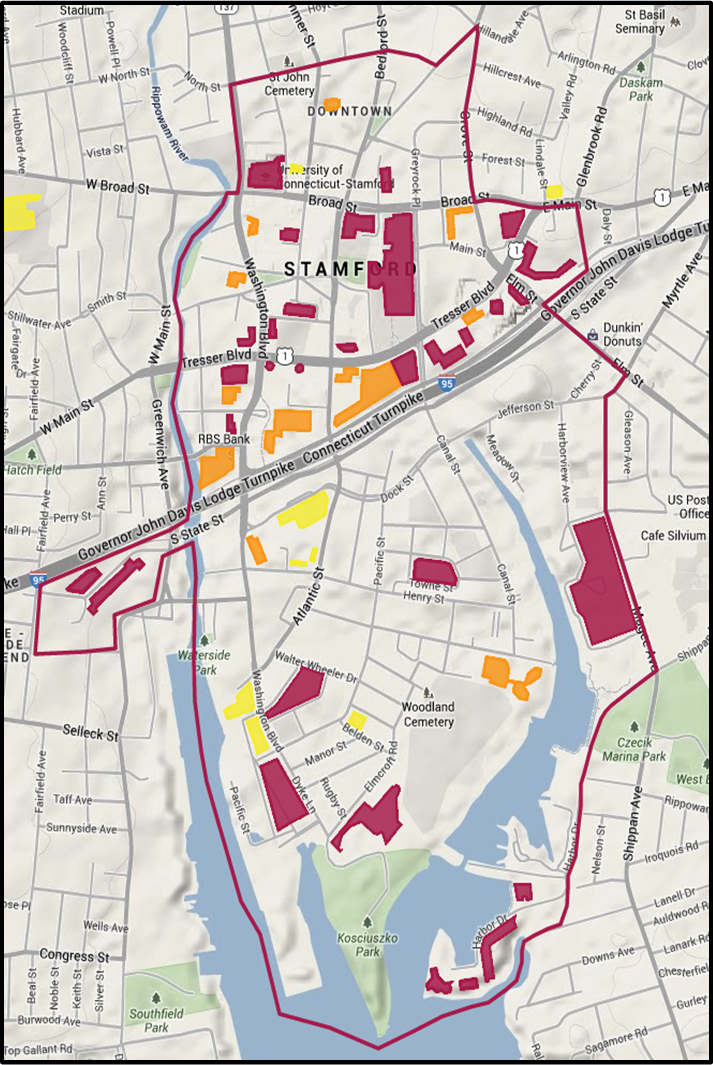
The Stamford 2030 District – launched this past  November - is an interdisciplinary public-private-nonprofit collaborative working to create a groundbreaking high performance building district in downtown Stamford.  Leading the way in the Stamford 2030 District are the Business Council of Fairfield County and Connecticut Fund for the Environment. As Stamford is a coastal city, its 2030 District will also implement a proactive vision to ensure resiliency against projected sea-level rise and storm surge.

The Stamford 2030 District – the first in New England - began with 23 founding members, including 11 property owners and 12 prominent professional and community stakeholders committed to meeting the 2030 Districts goals and targets. High performance buildings have proven track records of simultaneously increasing business and property profitability, reducing environmental impacts, and improving occupant health.Stamford

Now in the process of assessing the District’s current building performance levels, one-on-one assistance is provided to property owners and managers in benchmarking their buildings.  In addition, a first-time webinar will be held this week, on Wednesday, February 18, with several founding members highlighting best practices and procedures:

  • Jay Black of SL Green Realty/Reckson Properties will offer industry perspective through his experience with benchmarking buildings in both NY and CT.
  • WegoWise will present an overview of their web-based software that is able to benchmark a portfolio and provide deeper analytics into a buildings’ energy performance to find savings opportunities.
  • Steven Winter and Associates will demonstrate how to take benchmarking a step further with tools such as building energy audits to help identify opportunities within the building.
  • New Neighborhoods, Inc. will serve as a case study project in Stamford that has contracted with WegoWise for their benchmarking and will share their experience.

Officials indicate that District Members develop realistic, measurable, and innovative strategies to assist district property owners, managers, and tenants in meeting aggressive goals that keep properties and businesses competitive while operating buildings more efficiently, reducing costs, and reducing the environmental impacts of facility construction, operation, and maintenance.

Stamford2030boundary“These collective efforts will establish the Stamford 2030 District as an example of a financially viable, sustainability focused, multi-sector driven effort that maximizes profitability and prosperity for all involved. Through collaboration of diverse stakeholders, leveraging existing and developing new incentives and financing mechanisms, and creating and sharing joint resources, the Stamford 2030 District will prove the business case for healthy and high performing buildings.”

Property owners and managers are voluntarily committing their properties to Stamford 2030 District goals; they are not required to achieve the District goals through legislative mandates or as individuals.

“Stamford is already a business leader in Connecticut. The Stamford 2030 District will make the city a sustainability leader nationwide,” said Megan Saunders, Executive Director of the Stamford 2030 District. With over 170 million square feet of commercial building space (including 6 million thus far in Stamford), 2030 Districts are rapidly emerging as a new model for urban sustainability, officials indicate.

The Stamford 2030 District provides members a roadmap and the support they need to own, manage, and develop high performance buildings by leveraging Community and Professional Stakeholders, market resources, and by creating new tools, partnerships, and opportunities to overcome current market barriers. This type of collaborative action is not only a strategic undertaking to keep Stamford competitive in the year 2030, but also represents a major investment in Stamford's future and reflects the collaborative nature of our region.

State Report Calls for Tax Incentives, Better Insurance, Greater Flexibility to Improve Care for Rapidly Growing Older Population

A new report by the state legislature’s Commission on Aging, examining state funding and support for home and community-based care for older adults and individuals with Alzheimer’s Disease, has issued more than a dozen recommendations, including establishment of a Dependent Care Tax Credit, release of funds to support home modifications, and extension of paid sick leave to cover care of elderly relatives.  Incentives for employers to offer long-term care insurance coverage are also suggested. The Commission on Aging is a nonpartisan public policy and research office of the Connecticut General Assembly.  A law passed by the legislature last year charged the Commission with studying private sources of funding available to elderly persons and persons with Alzheimer's disease in need of home or community-based care, including the cost effectiveness of such programs funded by the state with recommendations on which state programs should be expanded.aging report

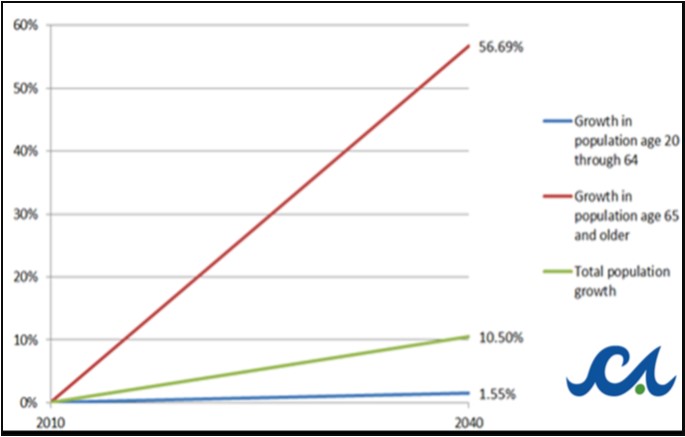
Connecticut is the 7th oldest state in the nation.  Over 70,000 people age 65 and older live with Alzheimer’s Disease or another dementia, and disabilities affect 10.4 percent of all Connecticut residents – nearly 400,000 people. Due to factors including aging demographics and consumer choice, demand for home-care based services is expected to “increase exponentially in coming decades,” according to the report. Between 2010 and 2040, Connecticut’s population of people age 65 and older is projected to grow by 57 percent, with less than 2 percent growth for people age 20 to 64 during the same period.seniors 2

The 23-page report noted that “informal caregivers are the backbone of the long-term service and support system. It is estimated that the economic value of the care provided by unpaid caregivers is $5.8 billion in Connecticut. Supporting caregivers is a cost effective means of reducing the reliance on costly formal care system.”  The report went on to caution that “without support, caregivers are likely to become emotionally and physically ‘burnt-out’ and find few options” short of turning to institutional care.

The report recommends amending the state tax code to include a Dependent Care Credit where the tax filer can receive a credit for care expenses incurred while a caregiver is working. Home care and adult day care costs are cited as examples of work‐related expenses that may be eligible.

To provide further support to informal caregivers, the report calls on the legislature to extend paid sick leave for those caring for an aging parent or other relative.  Connecticut’s law currently allows paid sick leave to be used for a worker’s own illness or injury, or to care for the worker’s child or spouse.  It does not extend to cover workers who care for a parent or other relative. aging population

Policies that “allow for flexibility” in work schedules are also urged, cited studies have shown such schedules not only are “an import way to support a caregiver but also… positively affect recruitment and retention efforts.”

The report urges the authorization of $6 million in bond money for home modifications and adaptive technology, which was allocated by last year’s legislature, and development of a list of “vetted home repair and home modification contractors and programs” to improve the likelihood that individuals would be able to “age in place.”

The goal, the report indicated, would be to “enable them to function with greater independence in the home, remain in the community and reduce the need for human assistance. Simple modifications include adding nonslip strips to bathroom floors or other smooth surfaces, improving lighting, providing telephones with large numbers and letters, and installing grab bars. More complex (and expensive) modifications include installing ramps, chair lifts, stair glides, widened doorways, roll-in showers, and lowered countertops.”

Among the other recommendations, the report urges professional development for those whose job it is to care for individuals with Alzheimer’s and dementia, to align with changing demographics in the state’s population.

seniorsThe report also suggests that policy makers “explore the possibility of incenting employer-based long-term care insurance coverage.”  In 2009 almost 25,000 employers in the U.S. offered long-term care insurance to their employees – just 35 percent of the 7.5 million insurance policies in effect.  In addition, the report encourages the Connecticut Congressional delegation to support a federal tax deduction for long-term care insurance, and urges policy makers to consider making reverse mortgages “a more viable option.”

Additionally, the report also considers advances in technology in the care of older residents.  It describes “telehealth” as a mode of delivering health care, public health and certain non-clinical services using electronic communications technology, stating that it “represents an opportunity for Connecticut to improve access to care, coordination, quality and outcomes for individuals, all while reducing cost, promoting local economic health, and offering a patient-centered approach.”  The Commission on Aging calls on Connecticut to join at least 21 other states that have telehealth parity laws for private insurance, meaning that providers can collect reimbursement for telehealth services.RdN-XMIb_400x400

The report, “Study of Funding and Support for Home and Community-Based Care for Older Adults and Persons with Alzheimer's Disease,” also recommends that the state “address service challenges specific to housing, transportation and behavioral health,” including conducting “walkability audits” to assess sidewalks, crosswalks, and pedestrian access to essential services.  It also suggests that the state “explore the use of taxi vouchers, public and private paratransit services, paid and volunteer driver services, on-demand car rental services and other forms of transportation in the growing “shared mobility” economy.


Mall Walking Is Alternative to Navigating Snow Banks, Frigid Temperatures

With wind chills hovering well below zero and snow and ice piled high just about everywhere, it is a tough season for joggers and walkers. The dangers of trudging along snow snarled streets is plainly evident, and every so often tragedy reminds us of the degree of danger. mallwalkers

Just over two decades ago, at age 33, a local television reporter at the pinnacle of her career, a popular, talented reporter for New Haven’s WTNH, was killed after being struck by a car while jogging in mid-March.  Ellen Abrams was “facing traffic while jogging west on the side of snow-banked Frog Hollow Road in Ellington,” according to published reports at the time.

Tragically, it would not be the last fatality involving someone looking to get some exercise on local roads before the snow banks had receded.  Last month, police in Torrington reported that a jogger was fatally struck by a snowplow.

Through the years, individuals looking for a safe alternative to outside conditions have turned to area shopping malls in their prior-to-opening hours.  While jogging may not be favored, walking is certainly an option.  And winter’s unrelenting cold makes the alternative even more attractive.

runningwithyaktrax2Officials at Waterford’s Crystal Mall indicate that their mall walking program is year-round, and has been running for over 10 years.  They have approximately 20 regular participants, and doors open for the program at 8 a.m. Monday through Saturday and 10 a.m. on Sundays.  Advance sign-up is required, and people who are interested can easily sign up at Guest Services or the mall office during regular shopping hours.

At the Enfield Square Mall, early walking hours are Monday – Saturday at 8 a.m. and Sunday at 10 a.m.  While The Shoppes at Buckland Hills does not have a formal mall walker program; the mall is open two hours before stores open to shoppers (8 a.m. Monday-Saturday, 9 a.m. Sunday) year-round for walkers seeking a climate-controlled environment, officials say.

Westfarms Mall on the West Hartford-Farmington line opens for walkers at 7 a.m. Monday through Sunday.  Individuals should enter through the main entrance. Coat racks are conveniently located on the upper level near the Security Dispatch Desk.  At Westfarms, by walking completely around the upper level (including all corridors) you will have walked .76/mile, and by walking completely around the lower level (including all corridors) you will have walked .72/mile, according to the mall’s website.  The mall walkers club is sponsored by Hartford HealthCare, which presents informational seminars with HHC doctors and nurses.Snow Banks - car

More than twenty years after her death, Ellen Abrams is remembered at the University of Hartford each year with  the Ellen Abrams Memorial Scholarship, a $1,500 scholarship awarded annually to a deserving junior or senior Communication major with demonstrated financial need.  Her family continues to attend the awards ceremony, sharing her commitment to journalism with students receiving the scholarship in her name.

School Suspensions Down, But Students of Color, Low Income Receive Disproportionate Share

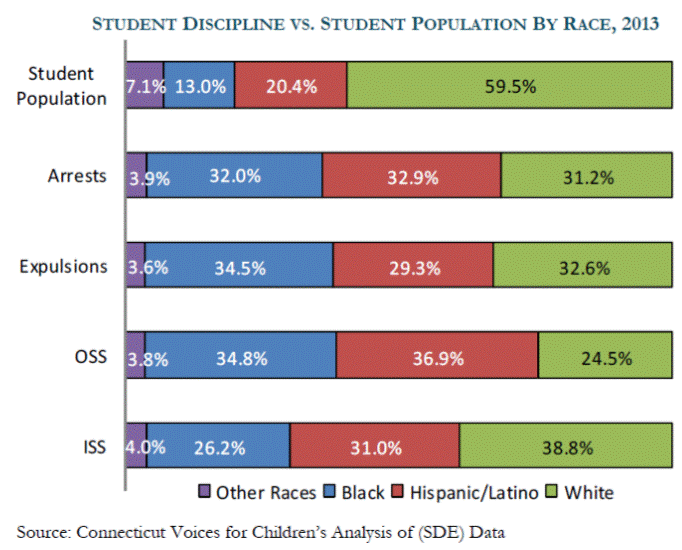
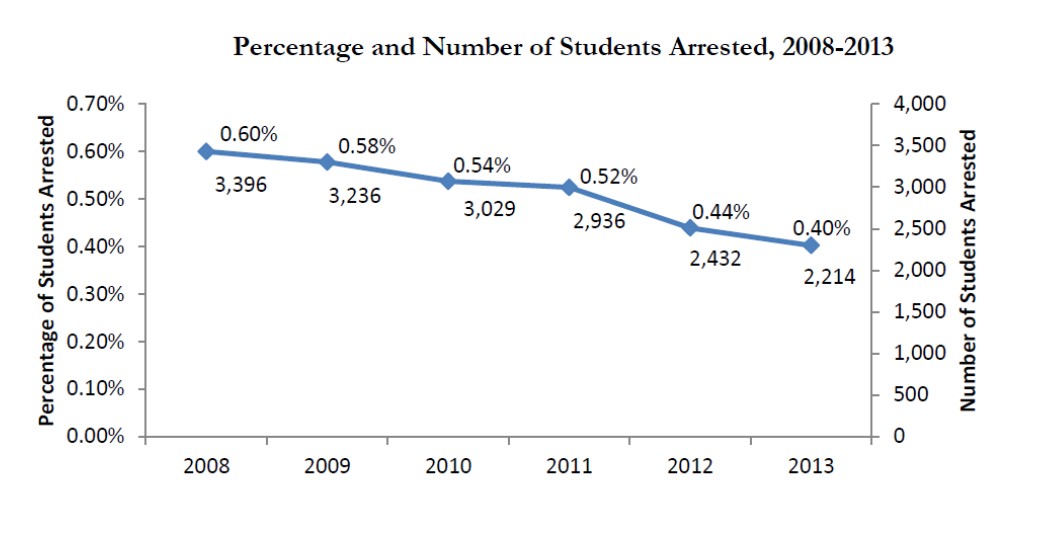
There’s good news and bad news in a new analysis of suspensions, expulsions, and arrests of students in Connecticut schools.  The report, by Connecticut Voices for Children, found that overall significantly fewer students have been excluded from the classroom in recent years, but that suspension, expulsion and arrest rates were much higher for minority students, special education students, and students from poorer districts.arrested The report also found that “many of these discipline measures were used for behaviors that were probably not criminal and could likely have been handled within the school.”  Stressing that “children learn best when they are in school,” the report indicated that “arrests, expulsions, and suspensions are often costly, ineffective, and unnecessary.”

Connecticut Voices for Children is a research and advocacy organization that works to improve opportunities for the state’s children, youth and families. The report, “Keeping Kids in Class: School Discipline in Connecticut, 2008-2013,” uses data provided by local school districts, found that in 2013, 7.4 percent of all students received at least one expulsion or suspension, down from 8.5 percent as recently as 2011.

First, the good news:

  • The number of students arrested, expelled, and suspended in Connecticut has decreased significantly in recent years. In the 2013 school year, Connecticut schools arrested 35 percent fewer students, expelled 31 percent fewer students, and gave out of school suspensions to 47 percent fewer students than in 2008.

The not-so-good news:

  • Despite the overall reduction in these “exclusionary” school discipline practices, many students are still removed from the classroom for non-criminal behaviors that could, in the view of Connecticut Voices, be managed in the classroom. “School policy violations” – such as skipping class, insubordination, or using profanity – were involved in 9 percent of student arrests, 6 percent of expulsions, 50 percent of out-of-school suspensions, and 79 percent of in-school suspensions in 2013.report

From 2008-2013 the percentage of students suspended out-of-school fell from 4.9% to 2.7%. During the same time period, the percentage of students suspended in-school increased from 4.9% to 5.2%.

Of particular concern was the data related to students of color and those with limited financial resources or disability:

  • In 2013, black students were 4.7 times more likely to be arrested, 4.9 times more likely to be expelled, and 6.5 times more likely to be suspended out-of-school than white students.
  • Hispanic students were 3.1 times more likely to be arrested, 2.6 times more likely to be expelled, and 4.4 times more likely to be suspended out-of-school than white students.
  • Special education students were arrested at 3 times the rate of general education students, and they were 1.8 times more likely to be expelled, and 2.6 times more likely to receive out-of-school suspensions.
  • Students in the poorest urban areas were arrested nearly 23 times more often, expelled over 17 times more often, and suspended out-of-school 24 times more often than students in the wealthiest suburban areas.suspensions

Based on the data, the report makes a series of recommendations for the state Department of Education and policymakers to consider, including:

  • Require districts with police stationed in schools to create a memorandum of agreement between the schools and police that sets ground rules concerning arrests. Promote police and educator training, such as that provided by the state’s Juvenile Justice Advisory Committee, which offers instruction to officers and educators in understanding and responding productively to adolescent behavior.
  • Implement preventive strategies and alternative discipline measures to reduce racial and other disparities and ensure those excluded from school are provided equal opportunities.
  • Establish and support community collaborations across the state. National studies show that engaging all stakeholders in the discipline process positively impacts student behavior and achievement.

The top 10 reasons for expulsion in 2013:  1) drug/alcohol/tobacco, 2) weapons, 3) fighting/battery, 4) personally threatening behavior, 5) school policy violations, 6) theft/theft related behaviors, 7) verbal confrontation/conduct unbecoming 8) violent crimes against persons, 9) sexually related behavior, and 10) property damage.

The report concludes that “the disproportionate rate by which students of color and students from poorer districts are excluded from school may in fact contribute to widening the achievement gap; students from less privileged backgrounds will continue to perform worse than their more advantaged peers if they are excluded from the classroom in the first place.”

The report also recommends expanding access to behavioral and mental health services and utilize Juvenile Review Boards (JRBs), locally-run groups that offer a diversionary alternative to the court system for youth who have committed minor delinquent acts or misdemeanors.  In addition, it calls for improving data collection by clearly defining “student arrests” (not currently defined by the state) and collecting and publishing data on all student arrests (currently not required for all incidents resulting in arrests).

“This report tells us that many schools in Connecticut have reformed their disciplinary practices and reduced student arrests, expulsions and out-of-school suspensions,” said Ellen Shemitz, Executive Director of Connecticut Voices for Children. “Yet these reforms have not benefited all children equally. How can we hope to reduce the yawning achievement gap when school disciplinary practices push minority children out of school at disproportionate rates?”

CT Ranks Last in Job Creation, Poll of Workers in 50 States Reports

To say that the latest Gallup Poll on state-by-state job creation reflects little good news for Connecticut would be an understatement.  Connecticut ranked last in the survey for 2014, which is determined based on full- and part-time workers' reports of whether their employer is hiring and expanding the size of its workforce, not making changes, or letting people go and reducing its workforce. “Connecticut has consistently ranked in the bottom tier for job creation, and its position at the very bottom in 2014, along with continued low ratings of other New England states and neighboring New York, suggests that is unlikely to change in 2015,” the survey summary predicted.

It marked the second time this month that Gallup reported diminished economic rankings for Connecticut.  The national poll’s economic confidence report, based on Gallup Daily tracking interviews with 176,702 national adults conducted from January through December 2014, indicated that Connecticut dropped out of the top 10 and into the middle-of-the-pack among the nation’s 50 states.  Leading the nation in “economic confidence” were Minnesota, Maryland and California.    Gallup by state

The newly released 50-state survey on job creation placed Connecticut at the bottom of the pile, as workers reported the worst hiring climate, although still net positive.  All 50 states had positive net hiring scores, and all but three -- West Virginia, Alaska and New Mexico -- have markedly improved on this measure since these ratings hit their low point in 2009, according to Gallup’s survey.

Joining Connecticut in the bottom dozen were the New England states of Rhode Island, Vermont, and Maine, along with Neighboring New York and New Jersey, as well as Alabama, Kentucky, Mississippi, West Virginia, New Mexico and Alaska.

North Dakota maintained its position at the top of Gallup's annual ranking, with employed North Dakota residents providing a strongly upbeat report on hiring conditions where they work -- the most positive of any state.   In North Dakota, 48 percent of workers in 2014 said their employer is hiring and 12 percent said their employer is letting workers go, resulting in a +36 Job Creation Index score.worst list

By contrast, Connecticut's +16 index score reflects 33 percent of workers saying their employer is hiring and 17 percent letting go, the Gallup survey found.  Only two states – Vermont (31%) and Montana (33%) – had equal or lower percentages responding that their employer is hiring, expanding the workforce. Connecticut and Rhode Island tie for compiling the worst collective job creation scores since 2008 and are the only states to have ranked in the bottom 10 each year.gallup-poll-logo

The 2014 state-level findings are drawn from 201,254 interviews with employed adults nationwide, conducted throughout the year as part of Gallup Daily tracking. In Connecticut, 2,503 individuals were interviewed, with one-third saying their employer was hiring, nearly half (43%) reported hiring was not changing, and 17 percent saying that their employer was reducing the workforce.

Beyond North Dakota, other top states were Texas, Nebraska, Wisconsin, Iowa and South Dakota.  Michigan's presence among the states with the highest Job Creation Index scores is notable because it represents one of the sharpest turnarounds of any state in the seven years Gallup has measured job creation, according to Gallup. Michigan was among the worst-performing states in 2008 and 2009, but with significant improvements in that state's economy, it rose to about average net hiring in 2010, and has ranked among the top-performing states in each of the past two years, Gallup pointed out.

The index was up year-over-year in most states, the Gallup survey revealed, but particularly in Oklahoma, Oregon and New Hampshire, where it rose nine points each. At the same time, net hiring failed to improve in a handful of states -- North Dakota, Alaska, Hawaii, Delaware, South Dakota, Minnesota, Tennessee and Connecticut -- where the index was basically flat in 2014, the report indicated.

http://youtu.be/fLPPLHDo2FU

Tweed Gauges Demand for Flights to Washington, D.C., Other Destinations

Tweed New Haven Regional Airport, the City of New Haven and the Greater New Haven Chamber of Commerce are currently soliciting feedback from businesses regarding existing air travel patterns and expenditures, as well as anticipated air service needs this year.  The survey is intended to quantify the demand for air service and to pinpoint the most critical destinations sought by local businesses. Of particular interest:  Dulles Airport in Washington, D.C.  A recent email from the New Haven Manufacturers Association to members of the association, for example, seeks opinions regarding travel to the nation’s Capital.  The email asks two questions:

  • Does your company have a need to be in the DC area on a regular basis?
  • If so how many flights a month would you estimate you company would use?

Under consideration is service that would include three flights down and three flights back each day, Monday - Friday, “which means you could be there and back within the day.” Though Dulles is outside of DC, the email continues, “the Silver Line train will soon be connecting the airport to the DC subway system.”img_logo

In urging participation in the survey, officials note that “with accurate information regarding the potential market for increased destinations, the airport can make a compelling case for additional flights and carriers.”  The survey is also posted on the Tweed New Haven website.

Currently, Tweed’s flights to Philadelphia are the airport’s primary gateway hub.  The airport’s website highlights “Fly first to Philadelphia and connect to hundreds of destinations for less that it would cost to drive and park at our other nearest airports. These costs in time, stress, and dollars are seldom counted in the cost of travel.” Tweed offers US Airways Express service to and from Philadelphia International Airport, currently three flights a day.  US Airways is currently in the midst of merging with American Airlines. img_airport_hvn3_lg

Tweed New Haven Airport Authority manages and operates Tweed New Haven Regional Airport under a long term lease from the City of New Haven, according to the Chamber of Commerce website.  Chartered by the State legislature, the Authority is a 15-member board of directors appointed by the mayors of New Haven and East Haven and by the South Central CT Regional Council of Governments.  The Airport is operated by the firm of AvPORTS and administered in part by Chamber staff.

“Improving scheduled air service and the physical infrastructure at Tweed is considered the #1 economic development priority of the region,” the Chamber website points out.

Racial, Ethnic Disparities Common in CT Hospital Readmissions, Study Finds

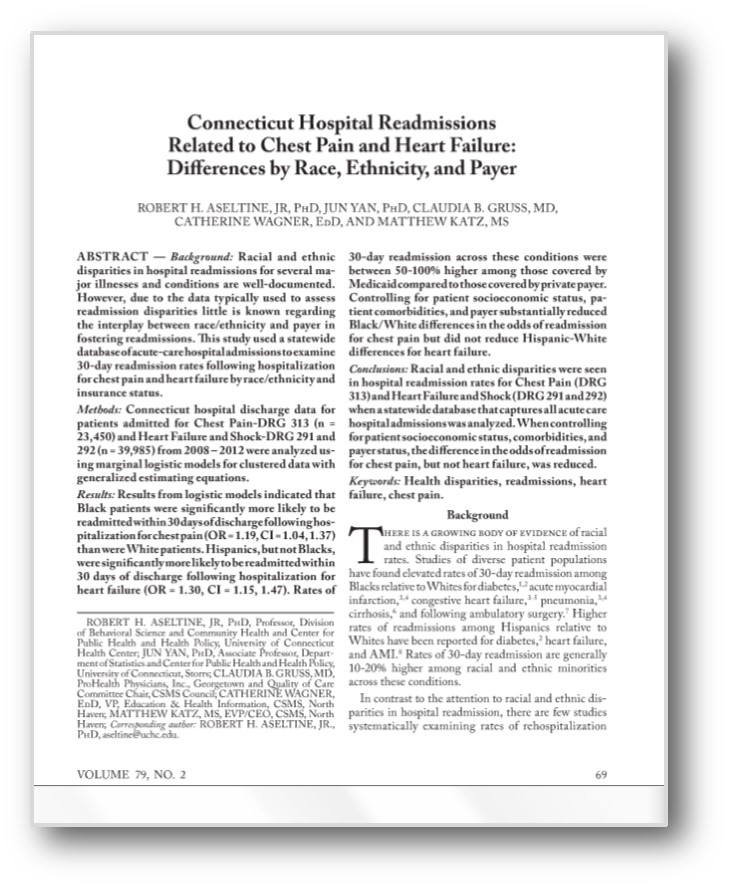
An Hispanic patient hospitalized in Connecticut for heart failure is 30 percent more likely than a White patient to end up back in the hospital within a month, according to a study published in Connecticut Medicine, the journal of the Connecticut State Medical Society.  The study also found that a Black patient hospitalized for chest pain is 20 percent more likely to be readmitted within 30 days after discharge. The study was based on an analysis of the Connecticut Hospital Inpatient Discharge Database -admissions to Connecticut hospitals from 2008-2012. The findings, the study noted, “should serve as a catalyst for further investigation of the interplay between patient characteristics, hospital practices, community-based resources, and insurance coverage” in fostering “racial and ethnic disparities in health and healthcare.”medical journal

The multi-year study discovered significant and pronounced disparities in readmission rates for Black and Latino patients compared to White patients in 9 of 10 major diagnostic categories.

The Connecticut State Medical Society hosted a well-attended symposium last week highlighting its multi-year research into racial and ethnic disparities in readmissions.  The symposium, funded by the Connecticut Health Foundation, brought together physicians, nurses, patients, and other stakeholders from across the state. The stakeholders had an opportunity to review and discuss the CSMS research data, and also provided insight and interpretations of the disparities. The feedback will be integrated into clinical recommendations for care delivery models that may help to reduce the level of disparity in hospital readmission rates.

The symposium was designed to provide an opportunity to take a fresh look at these readmission disparities and determine more effective ways to address them. Stakeholders included physicians and other licensed health care providers; social service providers; healthcare/social service administrators, leaders, and managers; lawmakers and policy analysts; patients and their family members; healthcare consumers and patient advocates.  It focused on documenting potential best practices of the four conditions with the greatest racial and ethnic disparities in readmission rates, as determined in the study:  Uncomplicated Delivery, Joint Replacement Surgery, Heart Failure & Chest Pain, and Digestive Disorders.

logoThe study also noted that “barriers to accessing community based care among Connecticut Medicaid beneficiaries are well-documented, often leaving such patients with few options other than hospital care for both urgent and non-urgent conditions.”

The study’s authors noted that “this study adds to a growing body of evidence on disparities in hospital readmissions in several important respects.”  First and foremost, they point out, “racial and ethnic disparities observed in this study were considerably more pronounced than disparities generally reported in previous studies.”

“We’re seeing large disparities in readmissions for a number of conditions,” Robert Aseltine, the study’s lead author and professor of behavioral science and community health at the University of Connecticut Health Center, told the Connecticut Health Investigative Team (C-HIT). “There’s no one factor that jumps out. There’s no simple answer. ” Co-existing health conditions and socioeconomic status, for example, “don’t explain everything away.”hands

In March 2014, a report by Mathematica Policy Research for the Robert Wood Johnson Foundation indicated that the U.S. Department of Health and Human Services observed a year earlier that “while overall quality is improving, access is worse and there has been no improvement in lessening disparities.” The report goes on to point out that there “appears to be a shift from the concept of disparities to one of equity. The shift provides more focus on action and social justice relevant to a wide variety of subpopulations.”

In 2010, when “nearly half of U. S. physicians identify language or cultural communication barriers as obstacles to providing high-quality care,” physician adoption of practices to overcome such barriers was described as “modest and uneven, according to a national study by the Center for Studying Health System Change (HSC).

The new Connecticut study was conducted by Robert H. Aseltine, Jr, PhD, Jun Yan, PhD, Claudia B. Gruss, MD, Catherine Wagner, EdD, and Matthew Katz, MS.

CT Ranks #4 in Planned Parenthood Locations Per Capita; 17 Sites in State

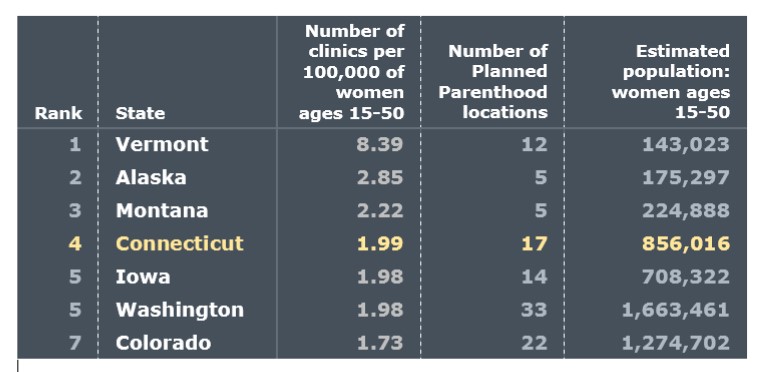
Connecticut ranks #4 in the nation in the number of Planned Parenthood locations per capita, according to a state-by-state analysis. Connecticut, with a total of 17 locations in the state, ranks behind only Vermont, Alaska and Montana in the number of clinics per 100,000 women ages 15-50.  According to the analysis by Bloomberg.com, Connecticut’s estimated population of 856,016 women ages 15-50, or a ratio of 1.99 locations per 100,000 women.  Rounding out the top 10 are Iowa, Washington, Colorado, Wisconsin, New Hampshire, and Indiana.

The 17 lplannedocations in Connecticut are in Bridgeport, Danbury, Danielson, Enfield, Hartford, Manchester, Meriden, New Britain, New Haven, New London, Norwich, Old Saybrook, Stamford, Torrington, Waterbury, West Hartford and Willimantic.
The mission of Planned Parenthood is to “protect the fundamental right of all individuals to manage their own fertility and sexual health, and to ensure access to the services, education and information to realize that right,” the organization’s website points out.

Among the states with the fewest number of Planned Parenthood locations, and the lowest number per capita, are North Dakota (0 locations), Mississippi (1 location), and Alabama, South Carolina, Louisiana, and Kentucky, each with 2 locations in the state.chart

California has the most locations, with 115, followed by New York with 59, Texas with 39, Pennsylvania with 38, Washington with 33 and New Jersey and Ohio with 28.  Connecticut ranks fifteenth in the number of Planned Parenthood locations in the state.

Planned Parenthood’s website describes the organization as “your trusted source for STD/STI testing, birth control, pregnancy tests and counseling, emergency contraception and more - all in a convenient, confidential and safe environment.”  The site notes that the organization offers “a sliding fee scale based on your income” and participates with many insurance plans.

Last month, as part of Cervical Health Awareness Month, Planned Parenthood of Southern New England (PPSNE) urged women to “start the year off right by taking charge of their health with important preventive screenings, such as a Pap test, which can detect irregularities that lead to cervical cancer.”

The Centerswomen for Disease Control and Prevention (CDC) recently released new data showing that while cervical cancer screenings have been proven to save lives, about eight million women ages 21 to 65 have not been screened for cervical cancer in the past five years. More than 12,000 women in the U.S. are diagnosed with cervical cancer each year, and more than half of these cases are in women who have never been screened or in those who haven’t been screened in the past five years, according to Planned Parenthood.


The analysis ranking the states for Planned Parenthood locations uses data from the U.S. Census and Planned Parenthood, as of December 31, 2014.