FEMA to Upgrade Emergency System at WTIC-AM Tower As Station's License Renewal Remains Unresolved

As the license renewal application of WTIC-AM radio continues to languish at the Federal Communications Commission, nearly one year after the station’s broadcast license expired, another federal agency is proceeding with WTIC on a local project aimed at assuring the availability of broadcast communication in the event of an emergency. This week the Federal Emergency Management Agency (FEMA), part of the U.S. Department of Homeland Security, testified at the Avon Planning and Zoning Commission outlining a plan to upgrade the Primary Entry Point System (PEP) facility which is located on Avon Mountain at the site of the station's transmitter and operated in conjunction with WTIC. 600px-us-fema-pre2003sealsvg
The facility is part of a nationwide network of about 70 such installations, which for the past 30 years have provided a “broadcast-based capability to communicate critical life-saving information to the public in times of extreme emergencies,” according to FEMA officials.  FEMA coordinates with local broadcast stations with the most far-reaching signals in their respective regions.  WTIC is the only PEP station in Connecticut.
FCC-LogoAlso this week, an official at the FCC indicated that the "enforcement hold" status of the station’s license renewal was "unchanged," and the station continues to operate until a decision is made, as is customary with delayed renewal applications. The WTIC-AM license renewal application has been on enforcement hold at the FCC since the license expiration date of April 1, 2014, as the agency’s Enforcement Bureau continues to consider “an alleged violation of FCC rules,” according to an FCC official. The renewal application was filed by the station almost 16 months ago, on November 27, 2013. Stations must file an application for license renewal) four months prior to the expiration date of the station’s license.

The facility at the WTIC broadcast tower and antenna in Avon would be the last in the country to be upgraded by FEMA.  After hearing a FEMA presentation and comments from local residents, the Avon Planning and Zoning Commission unanimously approved the plan and construction is slated to begin later this spring.

FEMA, noting that the PEP system “proved invaluable” to the New Orleans community in the aftermath of Hurricane Katrina, places back-up generators and diesel power at the transmitter sites of key commercial radio stations, to assure that they stay on the air to broadcast emergency information if other media is off-line due to power outages or other “extreme emergencies.”  Such was the case in New Orleans with WWL-AM, which, like WTIC-AM, is a 50,000 watt broadcast station.

Federal officials noted that “WTIC is the only original PEP station that has not been upgraded with long-term back-up components.  This leaves Connecticut and its local communities in a very vulnerable position when a major disaster strikes.”  The plan approved this week calls for installation of a new emergency back-up transmitter, two state-of-the-art generators and diesel fuel tank that would enable the station to transmit broadcast signals for longer than two months if necessary.  Nationally, FEMA continues to upgrade and expand the PEP system. The agency's website indicates that direct coverage of the nation’s population will expand from approximately 67 percent in 2009 to over 90 percent through 77 PEP stations by the end of this year.

WTIC_1080_AM_Radio_logoWTIC-AM, which is licensed to Hartford but operates from studios in Farmington and has its broadcast tower on Avon Mountain, can continue broadcasting under the license that expired  on April 1, 2014, until the FCC acts on its renewal application. Until the enforcement hold is lifted the FCC Media Bureau cannot proceed with a decision on whether or not to renew the station’s broadcast license.  The Enforcement Bureau must first determine whether or not a violation of FCC rules has occurred.  If the allegation is substantiated, the agency has a range of options, such as warning that the violation not be repeated or imposing a monetary fine on the station, officials said.

Precisely what the allegation under review involves is not made known to the public, officials reiterated this week.  That information is only made available to the licensee or their attorney, FCC official have said. The agency can, and often does, communicate with the station as part of their review process.  WTIC has declined to comment on the ongoing review process at the FCC.

Hartford Attorney Ken Krayeske filed an informal objection last fall to WTIC’s broadcast license renewal, alleging that the station “demonstrated serious malfeasance” and “helped conceal violations of federal law,” related to former talk show host John G. Rowland’s use of his radio program to promote the Congressional campaign of Lisa Wilson-Foley. Krayeske had filed a previous complaint in 2012 that did not result in FCC action against the station.

When the license renewal application does reach the agency’s Media Bureau, they will consider “how the allegation of violation was resolved,” as well as a range of other factors in deciding whether or not to renew the station’s license.  The other, more routine, factors include whether any other objections have been raised about the station, whether the station has been adequately serving the public in their area of license, their history of compliance with FCC regulations, and their overall performance.  License renewals for radio stations are issued by the FCC for a period of eight years.

Connecticut Medal of Science Nomination Deadline Approaches

The Connecticut Medal of Science is Connecticut’s highest honor for scientific achievement in fields crucial to Connecticut's economic competitiveness and social-well-being. Nominations for the 2015 awards, to be announced in May, are due by Friday, March 13. The Medal recognizes an individual who has made extraordinary contributions to the advancement of science in Connecticut. For this competition, science spans the physical and biological disciplines as well as mathematics, engineering and the social and behavioral sciences.medal of science

Modeled after the National Medal of Science, the award is bestowed in alternate years with the Connecticut Medal of Technology.  (Science in odd-numbered years; Technology in even-numbered years.) The most recent Medal of Science recipient, in 2013, was Thomas A. Steitz, Sterling Professor of Molecular Biophysics and Biochemistry, Professor of Chemistry, at Yale University and Howard Hughes Medical Institute Investigator.

Unlike their federal counterparts, the state medals are designed to recognize individuals, not teams or entire corporations. The work the awards honor must also have a "clear association with Connecticut," meaning it must have been performed in the state, at least in its final stages, or in a company or institution closely affiliated with the state. Profiles of all Medal recipients are featured permanently in the Hall of Fame, located at the Connecticut Science Center in Hartford.

Selection of the Medalist is conducted by the Connecticut Academy of Science and Engineering, using the following criteria:

  1. Total impact of the candidate’s work on the current state of physical, biological, mathematical, engineering, or social and behavioral sciences. (primary criterion)CASE-Announces-Election-9-Members-from-Industry
  2. Achievements of an unusually significant nature and their potential effects on the development of scientific thought.
  3. Distinguished service in the general advancement of science and engineering accompanied by substantial contributions to the content of science.
  4. Recognition by peers within the scientific community.
  5. Contributions to innovation and industry.
  6. Influence on education through publications, students, etc.
  7. A significant portion of the candidate’s work must have been performed in, or be associated with, an institution/organization/business located in Connecticut at least in its more mature and developed stage and during which time the candidate was a citizen of the U.S. or permanent resident who had applied for citizenship.

Nominations include a narrative statement by the individual making the nomination and three statements of support “from persons familiar with the technological aspects of the candidate's work.”

To date, Connecticut Medalists are:

Medal of Science

  • Frederick M. Richards, Yale University
  • Ronald R. Coifman, Yale University
  • William C. Stwalley, University of Connecticut
  • Michael P. Snyder, Yale University
  • Robert R. Birge, University of Connecticut
  • Steven L. Suib, University of Connecticut
  • Thomas A. Steitz, Yale University

Medal of Technology

  • Joseph Gerber, Gerber Scientific
  • Charles H. Kaman, Kaman Corporation
  • Anthony J. DeMaria, DEOS, LLC
  • Gene Banucci, ATMI, Inc.
  • Tso-Ping Ma, Yale University
  • Jonathan M. Rothberg, Ion Forrent
  • Yaakov Bar-Shalom, University of Connecticut
  • Frederick J. Leonberger, EOvation Advisors

The 2015 Medal of Science will be presented at the May 19, 2015 Annual Dinner of the Connecticut Academy of Science and Engineering. Additional information is available from Richard Strauss, Executive Director of the Connecticut Academy of Science and Engineering, at 860-571-7135.

Simsbury, Trumbull Are Best Communities for Young Families, Analysis Shows

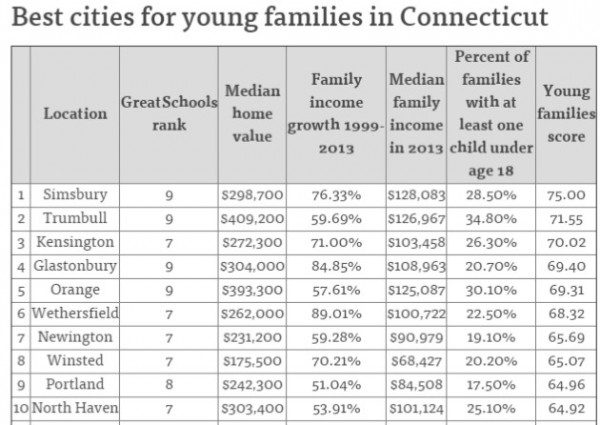
Simsbury, Trumbull, Kensington, Glastonbury and Orange are the best communities for young families in Connecticut, according to a new analysis by a national financial website. “While parts of Connecticut have some of the highest housing costs in the country,” the website NerdWallet noted, their review of local data “found the communities in the Constitution State that offer young families the best combination of solid schools, great neighbors and affordability.”connecticut

The analysis highlighted three main takeaways:

  • Small towns are a good bet. Eight of the top 10 best cities for young families in Connecticut have populations of less than 30,000 residents.
  • Schools add value. Even though eight of the top 10 cities have median home prices that are above the state median, the excellent schools help families get a solid return on their housing investment.
  • Greater Hartford is a winner. Six of the 10 cities are near Hartford, the state’s capital.young families

The next five communities, following Orange, were Wethersfield, Newington, Winsted, Portland, and North Haven.  West Hartford ranked #11, followed by Terryville (Southington), Bethel, Pawcatuck, Oakville (Watertown) and Shelton.

Data used in the analysis were from the 2013 U.S. Census Bureau’s American Community Survey.  The factors that were considered include:

  • Home affordability – the survey looked at median home value and selected monthly homeowner costs to prioritize affordable communities.
  • Prosperity and growth - reviewing current and past family incomes, NerdWallet calculated the income of residents, as well as the projected long-term growth of each city.
  • Quality of education - the ratings at GreatSchools.org were used to determine the best schools.
  • Family friendliness - the percentage of families with school-age children and the poverty rate for young children. That measure was designed to help determine if an area is not only affordable for families, but if it is also a healthy one for children, NerdWallet explained.

NerdWallet analyzed the data for 47 places in Connecticut — cities, towns and census-designated places (such as Oakville and Terryville). Only places with over 5,000 residents were analyzed.  The data was weighted 30 percent each for home affordability and family friendliness, 20 percent each for prosperity and growth, and quality of education.best families

Simsbury topped the list “because it offers young families an outstanding combination of affordability and quality schools” and Trumbull earned the runner-up slot although it has “the most expensive housing in the top 10” because “young families get top value for their housing dollar.”

The website also pointed out that Wethersfield “has done exceptionally well economically in recent years: median family incomes have jumped 89% since 1999, the largest gain in the top 10” and  Glastonbury residents “experienced an 85% jump in median income since 1999.”

Last year’s top 10 included Westport, Wallingford, Milford, Darien, and West Hartford, which all dropped out of the top 10.  New to the top 10 this year were Winsted, Portland, Glastonbury, Kensington, and Simsbury.  The population cut-off for last year’s list was 10,000; this year it was lowered to 5,000.  Trumbull remained at #2 for the second consecutive year, while Orange slipped from #1 to #5. Simsbury, this year’s best town for young families, did not reach the top 10 a year ago, largely due to its population being under 10,000.

3 Cities, 3 Towns from CT Take Up National Challenge on Pedestrian, Bicyclist Safety to Launch Thursday

Six Connecticut towns and cities are among the first 150 in the nation to respond to a challenge issued by U.S. Secretary of Transportation (USDOT) Anthony Foxx aimed at promoting bicyclist and pedestrian safety.  The year-long nationwide initiative will officially kick-off this Thursday. The chief elected officials of the cities of Hartford, Stamford, and Bridgeport, and the towns of Glastonbury, Simsbury, and South Windsor have signed on to the Mayor’s Challenge, announced earlier this year at the annual meeting of the U.S. Conference of Mayors.  The Mayors’ Challenge for Safer People and Safer Streets is a call to action by Secretary Foxx for mayors and local elected officials  to take significant action to improve safety for bicycle riders and pedestrians of all ages and abilities over the next year.mayors

The challenge is based on the 2010 USDOT Policy Statement on Bicycle and Pedestrian Accommodation to incorporate safe and convenient walking and bicycling facilities into transportation projects. In the policy statements, USDOT recognizes the many benefits walking and bicycling provide — including health, safety, environmental, transportation, and quality of life.

The challenge calls on Mayors, First Selectmen and other chief elected officials to:sign_ped-bike-share

  • Issue a public statement about the importance of bicycle and pedestrian safety
  • Form a local action team to advance safety and accessibility goals
  • Take local action through seven Challenge activities (listed below)

In Connecticut, the advocacy organization Bike Walk Connecticut is urging Connecticut's chief elected officials to participate in the challenge and engage their residents in carrying out the initiative’s objectives. They applauded Foxx, a former Mayor of Charlotte, N.C., for making “bicycle and pedestrian safety is his signature issue as the head of USDOT.”

The challenge activities, as outlined by USDOT, include:

  • Take a Complete Streets approach
  • Identify and address barriers to make streets safe and convenient for all road users, including people of all ages and abilities and those using assistive mobility devices
  • Gather and track biking and walking data
  • Use designs that are appropriate to the context of the street and its uses
  • Take advantage of opportunities to create and complete ped-bike networks through maintenance
  • Improve walking and biking safety laws and regulations
  • Educate and enforce proper road use behavior by all

A total of 154 cities nationwide have signed on as of March 6, with the official kick-off later this week in Washington, D.C.  Additional municipalities in Connecticut and across the country are expected to add their names to the list of participating cities.  USDOT has invited Mayors' Challenge participants to attend the Mayors' Challenge Summit kick-off event at USDOT’s Headquarters’ office in the nation's capital on Thursday, March 12. The Summit will bring together participating cities to network and learn more about the Challenge activities, and USDOT staff members will share the resources and tools available to help cities with Challenge activities.

Federal officials note that the lack of systematic data collection related to walking and bicycling transportation, such as count data, travel survey data, and injury data, creates challenges for improving non-Cycling to Workmotorized transportation networks and safety. Communities that routinely collect walking and biking data, they point out, are better positioned to track trends and prioritize investments.


In advocating a “complete streets” approach, USDOT emphasizes that complete streets “make it safe and convenient for people of all ages and abilities to reach their destination whether by car, train, bike, or foot” and they call for “a policy commitment to prioritize and integrate all road users into every transportation project.”

Bike Walk Connecticut has reported that there were 49 bicycle or pedestrian fatalities in Connecticut in 2012, the most recent data available.  There were an additional 1,226 injuries to bicyclists or pedestrians.  In total, from 2006 to 2012, there were more than 10,000 injuries and nearly 300 fatalities from crashes involving pedestrians or bicyclists, according to the organization, based on federal and state data.

New “Digital Cookie” Program Brings On-Line Sales to Girl Scouts of Connecticut

Another time-honored tradition has transitioned to the digital age.  Girl Scouts are now selling their celebrated line of cookies on-line.  Connecticut is one of the Girl Scout Councils across the country to be participating in the inaugural year of the Digital Cookie program – and the response has been better than expected. The new Digital Cookie program strengthens, expands, and enhances the well-known and highly regarded Girl Scout Cookie Program by “combining the values and lessons of door-to-door and booth sales with crucial 21st century business and entrepreneurial skills,” official say, “continuing Girl Scouts’ long tradition of preparing today’s girls to be the female leaders of tomorrow.”14_GSCP_digital-channel_4C_multi-color

Here’s how it works:  Prospective cookie customers are able to purchase cookies on-line, after having been contacted by a Girl Scout. (Or you can tell a Girl Scout you know that you're interested in becoming a Digital Cookie customer.) Each scout has their own personal page thru which the cookies are ordered, so the scout will receive credit for the sale, just as when the transaction is completed in-person.  Officials say that some girls will market their online cookie business by inviting customers to visit their personalized cookie websites through a link sent via email.  Others will take in-person orders using a unique mobile app designed specifically for Girl Scouts.

pin“We were excited here in Connecticut to give our Girl Scouts the opportunity to participate in a pilot of Digital Cookie, a first-of-its-kind web platform that lets girls sell cookies from their own protected, personalized websites,” said Tiffany Ventura Thiele, Communications & PR Manager for Girl Scouts of Connecticut.


“Digital Cookie represents the next evolution of the iconic Girl Scout Cookie Program, adding a digital layer that broadens and strengthens the Five Skills girl learn, while introducing modern elements like website customization and e-commerce,” Thiele explained.

Those skills haven’t changed:  goal-setting, decision-making, money management, people skills and business ethics.  With the new on-line system, customers will be able to pay by credit card and have cookies either delivered by the Girl Scout or shipped.Girl-Scout-Cookies-2015-665x385

Sales are running strong thus far.  To date, in Connecticut, nearly 38,000 packages have been sold on-line, with more than 2,500 girls participating.  In fact, orders placed in Connecticut have been shipped to 49 states and the District of Columbia, as well as to military personnel.  (If you’re wondering, nearly two million boxes of cookies were delivered this past weekend, based on initial orders taken by Girl Scouts in Connecticut.)

Nationwide, a majority of the 112 local Girl Scout councils are participating in the Digital Cookie program for the inaugural 2014–2015 cookie season, which began in January.  Additional councils expected to be on board by the end of the year, using an updated version of the program, which will be tweaked based on the feedback received from participating Councils.

mtc_raisins_w_backgroundOfficials stress that “because 100 percent of the net revenue raised through the Girl Scout Cookie Program stays with local councils, when you purchase Girl Scout Cookies you’re not only getting a delicious treat — you’re also making an important investment in your community.”
There are two new cookie options locally this year:  Rah-Rah Raisins, an oatmeal cookie, and Toffee-tastics, a gluten-free butter cookie with toffee pieces.

An informal poll on the national Girl Scouts website asks visitors to vote for their favorite Girl Scout cookie.  The top three thus far:  Samoas (30%), Thin Mints (27%), and Samoas (13%).

If you’ve yet to place an order, there’s still time if you have a sweet tooth for Samoas, Thin Mints, Tagalongs, Do-Si-Dos, Savannah Smiles, Trefolis or the two new offerings.  The Girl Scouts of Connecticut’s cookie program will continue with booth sales through the month of March, so there’s still a chance to fill the cookie jar.


Hospital Outreach Program, New Website and Video Advance Mission of The Hole in the Wall Gang Camp

The Hole in the Wall Gang Camp in Ashford, Connecticut began in 1988 as a way for seriously ill children, including those with cancer, to “raise a little hell,” as founder Paul Newman described it – a time and place when kids could simply be kids, without being self-conscious about their ongoing medical needs.  Twenty-seven years later, it is much more than a summer camp, offering a robust range of programs year round, in Connecticut and beyond. To tell that story, and increase public awareness of the array of programs available to children with acute medical needs, the Camp has launched a newly redesigned website (www.holeinthewallgangcamp.org) that eases navigation through the various program offerings, and produced a new video that highlights the range of activities and impact.hole web

Among the programs highlighted is the less widely known Hospital Outreach Program (HOP), one of a number of programs that have blossomed in recent years to extend the mission and impact of The Hole in the Wall Gang Camp into communities to reach more children.

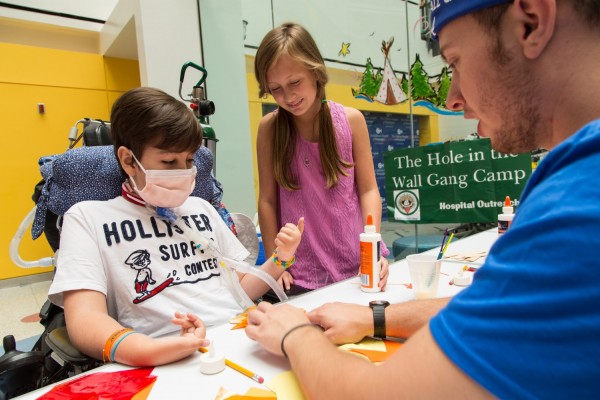
Through one-on-one interactions and group activities, HOP “brings Camp’s unique summer programming and spirit to hospitals and clinics. Whether working bedside, in playrooms or outpatient clinic settings, our interactions and activities with children and families include arts & crafts projects, and interactive games specifically adapted for use in the medical setting, as well as other Camp-inspired programming and events. Just like at Camp, all interactions are guided by the child’s choice and are child-driven,” the website explains.

Responding to the fact that children in the hospital often feel isolated, fearful, stressed, and uncertain because of their illnesses, the Hospital Outreach Program “brings the hopeful, playful spirit of The Hole in the Wall Gang Camp to children, families, and their caregivers in the hospital setting, at no cost, year-round on a weekly basis.”

The HOP program has expanded to 35 medical facilities in Connecticut, Massachusetts, New York, New Jersey and Pennsylvania.  The Connecticut programs are offered at Connecticut Children’s Medical Center in Hartford, Yale-New Haven Hospital, Yale Pediatric Hematology and Oncology Clinic in Trumbull, and the Yale-New Haven Hospital’s Bridgeport Campus.281_2014CampWeekatCHOP-4576

The HOP Specialists that provide one-on-one sessions visits “have a bachelor’s degree, excellent kid skills, experience developing fun and exciting programming and knowledge of hospitals systems. They attend both a HOP and Hospital Orientation and receive regular opportunities for professional development,” the website points out.

At Children’s Hospital of Philadelphia (CHOP) last fall, the facility was “transformed into Downtown Camp” for a week, as nearly 30 Camp staff and volunteers and more than 60 CHOP volunteers provided five full days of Camp programming. In alogo-hop@2xll, there were “approximately 800 healing experiences with children and families throughout the week, bringing the safety, respect and love of Camp to many families” in Philadelphia.


Building on the success of the week, the Hospital Outreach teach is looking ahead to similar events across the network of partner hospitals.

Among the other programs offered during the year, in addition to the centerpiece Camp experience, are CampOut, which brings the Camp experience to campers in their own hometowns, weekend programs in Ashford in fall and spring, and Hero’s Journey for campers who have aged out of the summer program.  In addition, programs are offered for parents, caregivers and siblings of children participating in The Hole in the Wall Gang Camp.


http://youtu.be/P2516LEl6AM

CT Organization Leads Efforts to Increase Awareness of Rare Disesases

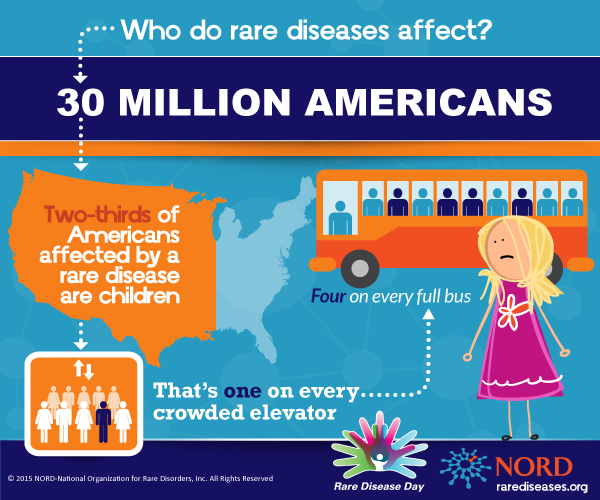
Rare Disease Day, observed on February 28, is an annual awareness day dedicated to elevating public understanding of rare diseases and calling attention to the special challenges faced by patients and the community. According to the National Institutes of Health (NIH), a disease is rare if it affects fewer than 200,000 people.  Nearly 1 in 10 Americans live with a rare disease—affecting 30 million people—and two-thirds of these patients are children. There are more than 7,000 rare diseases and only approximately 450 FDA-approved medical treatments.  Many rare diseases are chronic and life-threatening.rdd-logo-small

The National Organization for Rare Disorders (NORD), with national headquarters in Danbury and offices in Washington D.C. and Massachusetts, is a federation of voluntary health organizations dedicated to helping people with rare "orphan" diseases and assisting the organizations that serve them. NORD is committed to the identification, treatment, and cure of rare disorders through programs of education, advocacy, research, and service.

Rare Disease Day takes place every year on the last day of February (February 28 or February 29 in a leap year)—the rarest date on the calendar—to underscore the nature of rare diseases and what patients face.

In Connecticut this year, the Morgan Leary Vaughan Fund, Inc. (Morgan’s Fund), an all-volunteer public charity dedicated to Necrotizing Enterocolitis (NEC), will be holding a public awareness event on February 28 in Stratford. The organization’s inaugural event, Illumin8ing Rare, is designed to provide “a moment of reflection and appreciation for all those who have been directly affected by a rare disease,” organizers say, adding “it is an opportunity to celebrate survivors and to share tributes to those who are no longer with us.”nord

Morgan’s Fund mission is to promote public awareness about NEC and the potentially devastating effects it can have on preemies and their families, and to advance research to prevent, dNORD-logoiagnose, treat, and ultimately, cure NEC. Named after Morgan, it celebrates his survival, courage and strength. Morgan and his twin brother were born at 28 weeks, nearly three months early and each weighing less than 2.5 pounds. At four days old, Morgan developed NEC and lost approximately 20 percent of his small intestine. Morgan not only survived but has also thrived since his bout with NEC. The fund is his family’s way of paying it forward.

NEC is an inflammatory disease that leads to necrosis (death) of the intestine. It is predominately due to prematurity and its statistics are startling. NEC is the second leading cause of death in premature infants. NEC is the 10th leading cause of infant death overall. NEC is a rare disease — occurring in approximately 25,000 babies per year in the United States. Despite extensive study, the cause of NEC is uncertain.logo

Earler this week, the UConn School of Medicine Disabilities Interest Group hosted a Rare Diseases Awareness Event on February 25th at the University of Connecticut Health Center, celebrating individuals who have rare diseases and the many researchers and physicians who are fighting to find cures for these conditions.NORD-INFOGRAPHIC-Who-Does-Rare-Disease-Affect-RDD-1-21-15-no-reference

To raise awareness nationwide this year, NORD is coordinating a new social media campaign, #1in10, to highlight the 1 in 10 Americans living with a rare disease.  “It’s astounding that there are just as many Americans living with a rare disease as there are people who are left-handed,” said Lisa Phelps, director of marketing and community relations at NORD. “We are launching this campaign to help raise important awareness for this major public health issue and the need for safe, new treatments.”

To help support the #1in10 campaign, NORD has launched the Instagram account, @rarediseasedayUS.  Instagrammers are invited to tag @rarediseasedayUS in their photos and celebrations to share what’s happening now for Rare Disease Day.  Instragram members are invited to use the official Rare Disease Day hashtags #RDD2015 and #RareDiseaseDay and follow Rare Disease Day on Facebook (/RareDiseaseDay.US) and Twitter (@RareDayUS).

For more information about Rare Disease Day, go to www.rarediseaseday.us. or visit NORD’s website, www.rarediseases.org.

http://youtu.be/DpIt8vH6xC8

Norwalk is First in Connecticut to Approve Concussion Program for All Youth Sports

Norwalk has become the  first community in Connecticut to approve a city-wide concussion program for all youth sports, according to city officials.  The Norwalk Common Council, on the recommendation of its Recreation & Parks Committee, approved the new concussion guidelines this week, modeled after The Concussion Aware and Prepared Program (CAPP). Officials said the guidelines will apply to organized youth sports programs using Norwalk recreation facilities. The guidelines are intended to “plug the loophole that exists” in the current Connecticut Concussion Law which protects only public middle and high school athletes who play for school-sponsored teams, officials said.concussion

“It is important that our children are protected and that parents and coaches have the information they need to keep them safe,” said Norwalk Mayor Harry Rilling. “Norwalk is proud to be a leader in providing these updated guidelines for all leagues who play on our public fields. We aim to make youth sports as safe as possible."

Last month, Connecticut’s Task Force on Youth Athletics and Concussions, staffed by the State Commission on Children, reported the results of their mandated study of  "occurrences of concussions in youth athletics” and issued recommendations for possible legislative initiatives.  The 21-member Task Force noted that “there exists within the State of Connecticut the need for guidelines in the arena of non-scholastic youth athletics,” indicating that private clubs and public recreation teams are examples of “non-scholastic” youth athletics.concussion_tf

The Norwalk Guidelines apply to any youth up to age 19 who participates in any organized sporting or athletic event or activity either conducted by the City of Norwalk or permitted to take place on any property or facility owned by the City of Norwalk. Activities including practices, training, performances, scrimmage, games and other organized competitions involving athletic activities such as sports and dance. With a population of just over 85,000, Norwalk is Connecticut’s sixth largest city, and has the third largest population in Fairfield County.

Former Norwalk Junior Lacrosse and RCA Soccer Coach, Katherine Snedaker, now Executive Director of the non-profit, PinkConcussions.com , and advocacy organization Sports CAPP.com which developed The Concussion Aware & Prepared Program, said, “our mission with these new guidelines is to help youth sports leagues update their policies with best practices, and increase safety for our kids while lowering personal liability for our coaches and city.”  The Concussion Aware and Prepared Program, which uses free online materials from the United States Centers for Disease Control and Prevention (CDC), is designed to provide up-to-date information regarding concussions for youth coaches and their staffs, parents and youth players and is available in English and Spanish.

photo-150x150“Hopefully this program will be a model for the rest of state,’’ Snedaker said. “Parents will now know their young children will have some of the same protections that benefit public middle and high school athletes.”  In Norwalk, the newly approved guidelines had received support for the Norwalk Youth Football and Cheer, Norwalk Junior Soccer Association, Norwalk Cal Ripkin Baseball, Norwalk Little League and Norwalk Junior Lacrosse, according to the SportsCAPP website.

The Sports CAPP program recommends five components that should be included in every concussion program. They are:

The new guidelines for school programs in Connecticut approved by the State Board of Education (SBE) in January, will go into effect July 1, 2015, requiring that:

  • Prior to taking part in athletic activities high school athletes and their parents or guardians will be required to read materials, watch videos, or attend in-person training regarding the school district’s concussion plan.
  • Parents and guardians must sign an informed consent form that includes a summary of the district’s concussion plan.
  • Coaches must complete training to recognize the signs and symptoms of concussions and learn how to get appropriate medical treatment for students.

The new State Department of Education “Concussion Education Plan and Guidelines for Connecticut Schools” indicates that “concussions can cause a wide range of functional short- or long-term changes affecting thinking (memory and reasoning); sensation (touch, taste and smell); language (communication , expression and understanding); or emotions (depression, anxiety, personality changes, aggression, acting out, and social inappropriateness).”  It points out that “athletes should rest their bodies and brains until they are no longer experiencing any symptoms of concussion.  Physical and cognitive exertion, such as homework, playing video games, texting, using a computer or watching TV may worsen symptoms.”

Under the state guidelines for schools, coaches must immediately remove any student participating in athletic activity who exhibits symptoms or behaviors consistent with a concussion or who is diagnosed with a concussion. Parents or legal guardians must be notified as soon as possible and no later than 24 hours after such removal. Before a student can return to any team activities, a licensed health care professional trained in evaluating concussions must provide written clearance.


http://youtu.be/Sno_0Jd8GuA

http://youtu.be/OFQcZHkLPuk

Will Olympic Footprint Extend into Connecticut? State Officials Offer Possibilities to Planners; April 2 Public Forum in Springfield

Should Boston be selected in 2017 by the International Olympic Committee (IOC) to host the 2024 Olympic Summer Games, Massachusetts may not be the only northeast city to host Olympic events. Published reports indicate that venues outside the Bay State are being actively considered, and Connecticut’s Capital Region Development Authority (CRDA) is among the organizations reaching out to express interest.  Network coverage of the 2024 Olympic Games would come from NBC Sports - which has facilities based in Stamford, Connecticut - under an agreement between the network and the IOC signed last year.  Boston 2024

The official Boston 2024 website indicates that “there may be opportunities for preliminary rounds of certain events in other states.” The Boston Globe has reported that bid organizers have “held high-level conversations” with cities in addition to Boston about hosting events, including New York and Washington.  There are no indications that talks with Connecticut officials are underway.

Connecticut officials – and residents – may have an opportunity to weigh in when Boston 2024 holds a community meeting in Springfield, MA, on April 2 - one of 20 such sessions being held around the state of Massachusetts over the next few months, and the nearest location to Connecticut.  The community meetings begin in Lowell on March 11.  There does not appear to be a requirement that speakers be Massachusetts residents.

Rhode Island Gov. Gina Raimondo told the Associated Press earlier this month that she has spoken with Massachusetts Gov. Charlie Baker about collaborating and plans to put together her own team to explore how Rhode Island could benefit from Boston's bid.

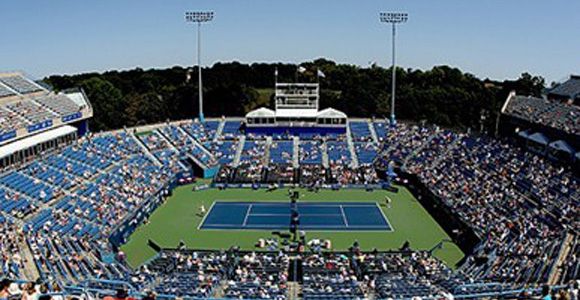
CRDA, in a January letter to Boston 2024 officials, suggested that a number of Connecticut facilities “could serve for official events, whether preliminary or final; or for practice sites for teams and individuals competing in the Games.”  State officials suggested the Connecticut Convention Center and XL Center in Hartford, Rentschler Field in East Hartford, and the Connecticut Tennis Center in New Haven as facilities that could be considered by leaders of the Boston 2024 bid “as you advance your thinking and planning.”

The Globe recently reported that “by following the IOC’s guidelines and taking advantage of existing world-class facilities in other cities, Boston 2024 organizers believe they can avoid the white crda-logo-2-72053-1elephant venues and out-of-control costs that have plagued Olympic hosts for decades.”  Recently adopted IOC guidelines are aimed at reducing costs by host cities and are more amenable to having some events take place outside the immediate Olympic perimeter.
The Globe pointed out that at the most recent Summer Games in London, sailing was held 142 miles southwest of the host city and organizers staged mountain biking an hour’s drive from London. Soccer matches took place at stadiums in several cities, including Cardiff, Coventry, Glasgow, Manchester, and Newcastle, prior to finals in London.

The correspondence from CRDA Executive Director Michael Freimuth includes information about each of the Connecticut venues, and an invitation to “visit the facilities to assess them as a means to meet the demands of the Olympics.”  No word thuConnecticut-Tennis-Centers far on whether such a tour has been scheduled.  Possible sports at the Connecticut venues, as suggested by CRDA, include badminton, table tennis, wrestling, martial arts, and weightlifting.  Basketball, volleyball and soccer could be additional possibilities, along with tennis.   The Connecticut Tennis Center is described as the fourth largest tennis venue in the world, with seating capacity of 15,000.  Within the past week, options for major renovations or reconstruction of Hartford’s XL Center have been announced, with a decision on how to proceed due later this year.

The Boston 2024 website also notes that “many national Olympic and Paralympic teams will arrive months in advance of the Games to acclimate and train; they may lease facilities at high schools and colleges around the region.”

NBC owns the exclusive U.S. media rights for an unprecedented 11 consecutive Summer and Winter Olympics, a run which began with the 2000 Sydney Games and continues through the 2020 Summer Olympics.  In January 2013, the networkNBC-Sports-Logo-Small3-432x235 opened a state-of-the-art 300,000 square foot facility headquartered in Stamford, Connecticut on a thirty-three acre campus. The facility brought NBC Sports, NBC Sports Network, NBC Olympics, NBC Sports Digital, and NBC Regional Networks all under one roof.  In May 2014, NBC Universal agreed to pay a reported $7.75 billion for the exclusive broadcast rights to the six Olympic Games from 2022 to 2032.

International Olympic Committee president Thomas Bach, of Germany, called Boston’s 2024 Olympic bid “very strong” in an interview that aired during NBC’s Super Bowl XLIX pregame show earlier this month.  Boston could face formidable opposition from cities including Paris, Berlin, Rome and Hamburg and when the 102-member IOC votes to choose the host city. The deadline for cities to file bids is September 2015.


Local Election Officials Less Responsive If They Think You’re Latino, Study Finds

The answers vary, depending who is believed to be asking.  In an academic study, researchers have found that individuals thought to be Latino by local election officials receive less responsive and accurate answers to basic questions seeking information about voting.  It is described as the first large-scale field experiment investigating bureaucratic behavior that provides “causal evidence of discrimination on the basis of ethnicity or race by election officials.” The authors, Ariel R. White, Noah L. Nathan and Julie K. Faller, Ph.D. candidates at Harvard University, have published the results of their 2012 study, “What Do I Need to Vote? Bureaucratic Discretion and Discrimination by Local Election Officials,” in the February 2015 issues of American Political Science Review.  The graduate students contacted more than 7,000 elections officials in 48 states (Maine and Alaska were not included) – and asked two questions via email of the people who are responsible for both implementing voter-ID laws in many states and providing election-related information to voters.study

“We find that officials provide different information to potential voters of different putative ethnicities,” the authors explained.  “Emails sent from Latino aliases are significantly less likely to receive any response from local election officials than non-Latino white aliases and receive responses of lower quality. This raises concerns about the effect of voter ID laws on access to the franchise and about bias in the provision of services by local bureaucrats more generally.”

The field study, in which fundamental voting-related questions were emailed to election officials, was designed to “isolate the effect of ethnicity on real-world performance” of election officials.  It indicates that the officials are less likely to respond to informational inquiries from individuals thought to be Latino.  Emails from Latino names are roughly five percentage points less likely to receive a reply to a question about voter ID requirements than those from non-Latino whites, the Boston Globe reported.

The experiment was designed to determine if “street-level bureaucrats discriminate in the services they provide to constituents.”  The results provide “strong evidence” that they do.  The study concluded that “the responses that Latino emailers received to voter ID questions were less likely to be accurate and were more likely to be non-informative.”  The results “suggest that bias from street-level bureaucrats can occur even when there are not clear strategic reasons for officials to discriminate on the basis of ethnicity.”amerian political science review

The study, just prior to the 2012 election, also indicated that “we find no evidence that whether local officials are elected or appointed, partisan or nonpartisan, or members of specific political parties influences the extent of bias.”

Significantly, given recent court decisions that have rolled back oversight of elections in certain jurisdictions around the country, the study authors indicate that “consistent with the claim that enhanced monitoring reduces discrimination, we find no evidence of bias against Latinos in jurisdictions subject to federal regulation under the Voting Rights Act.”

“These findings have important implications for debates about voter ID laws, and indeed for any changes to voting requirements or election administration,” the authors emphasize in the study’s conclusion.  “Our results indicate that changes to existing voting regulations are likely to differentially increase information costs for Latino voters because public officials are less responsive to their requests for information.”

The 14-page study report also suggests that:

  • There is “some evidence that officials respond at lower rates to Latinos, even when asked a question”
  • “Public officials can be biased even in exceptionally low cost interactions” such as when only a single word answer (“No”) is necessary
  • “If minority voters are less able to acquire information about ID requirements and more likely to be asked for ID at the polls, this could manifest in lower voting rates. This may be greatest where officials are not monitored to prevent discrimination.”

The researchers suggest that future research could “expand the use of experimental methods to examine the presence of bias in service delivery in many other aspects of local administration in the United States” – from” trash collection and snow plowing to the management of welfare offices.”  They raise the question as to whether “similar ethnic or racial biases may affect the quality of services delivered in these other arenas.”

emails