

First-Time Home Purchases Poised for Increase Nationwide; Buyers Market in Connecticut
/Nearly one-in-five potential first-time home buyers nationwide are actively looking to buy and nearly two-thirds would like to provide a sizable down payment of 20 percent or more. Nearly two-thirds, 62 percent, of potential first-time home buyers think they will purchase a home within the next two years. Among millennial survey respondents, this number is slightly higher, rising to 67 percent.
New research from TD Bank, with 75 locations in Connecticut, indicates that “consumers are gaining confidence in the economy and many are looking to enter the housing market within the next two years,” explained Scott Haymore, Head of Pricing and Secondary Markets, TD Bank. The bank polled more than 1,000 Americans looking to purchase their first home within the next five years, producing the TD Bank First-Time Home Buyer Pulse report. 
Connecticut, with the strongest inventory of homes on the market in the New England region, is especially attractive to first-time home buyers, points out Maryruth Ryan, TD Bank's Regional Mortgage Sales Manager for Massachusetts, Rhode Island, Connecticut and southern New Hampshire. “Rates are at historical lows, mortgage programs are good. It’s a good time to buy in Connecticut,” Ryan said.
The Connecticut Association of Realtors reported earlier this month that single-family house sales across Connecticut rose nearly 14 percent in June, compared with June 2014, with the median sale price dropping just under one percent. There were 3,756 homes sold in Connecticut last month, 459 more than during the same month a year ago.
Ryan said that as the millennial generation looks to first-home purchases, they “have done their research, they are more prepared, they know what they need to do to qualify for a mortgage for their first home.”
When asked what is preventing them from purchasing their first home, respondents most often cited needing to save money for a down payment (64 percent) and needing to pay down debt (45 percent). For millennials, the entry to homeownership is even tougher: 70 percent of millennial respondents said they need to save for a down payment and 52 percent said they need to pay down debt. Millennials are more likely to purchase their first home with a partner or spouse (70 percent) compared to potential first-time home buyers of other generations 49 percent.
"Many first-time buyers today are finding it difficult to save for a large down payment, especially young adults who are saddled with substantial student loan debt," said Haymore. “Many lenders today are offering home affordability and down payment assistance programs so it's important for these buyers and potential buyers to shop around for a mortgage and learn more about the options available to them."
 The survey noted that more than two-thirds of consumers (68 percent) looking to purchase their first home are interested in move-in ready homes while one-third would like to buy a fixer-upper. And when it comes to amenities, respondents are most interested in their first home having a backyard or pool and an attractive design, followed by energy efficient / smart homes technologies.
The top four financing options first-time buyers consider include cash savings, 30-year mortgage, and an affordability program and government loan. Ryan points out that financial institutions such as TD Bank provide consumer education about the mortgage process, discussing aspects including budgeting and affordability with prospective home buyers. "The right lender will help first-time buyers understand what they can afford and share information on the different loan options available,” Haymore added.
Some Connecticut home purchases are now including a contingency clause, Ryan indicated, something that isn’t happening at the same frequency elsewhere. The so-called “Hubbard Clause” is a contingency in a purchase agreement that expressly conditions the buyer's offer upon their ability to sell and close on another home or property, most often their current residence.
Because of the strong inventory currently in Connecticut, rather than more than one buyer lining up to purchase a house and an ensuing bidding war, as is happening in other parts of New England and around the country, first-time home buyers here tend to be able to select the home they’d prefer, and often are the only bidder seeking to make the purchase. The Greater Hartford Board of Realtors reported that home sales rose for the fifth consecutive month in June in the 75-town region, and that sales increased and prices dropped during the first six months of 2015, compared with a year ago.
The TD Bank First-Time Home Buyer Pulse isavailable at http://mediaroom.tdbank.com/homebuyer. The survey was conducted by Vision Critical, June 11-16.
 U.S. Commerce Secretary Penny Pritzker honored a total of 45 American companies and organizations, many of which are small- and medium-sized enterprises (SMEs), at the 2015 President’s “E” Awards ceremony, held earlier this year. The six Connecticut businesses were among the 45 honored.

 Proton Onsite makes hydrogen and nitrogen generators. Mutualink manufactures equipment used to facilitate collaborative communication between public safety and first response teams at the scene of emergencies. Jonal Laboratories makes sealant used in the aerospace industry. Dymotek manufactures custom injection molded plastic and silicone parts for electronics, plumbing valves and juice dispensers.

 t assist and facilitate export activities were honored with the “E” Award for Export Service. Four firms received the “E” Star Award for Exports, which recognizes previous “E” Award winners who have reported four years of additional export growth. And, three companies were awarded the “E” Star Award for Export Service, which recognizes previous “E” Award winners that have shown four years of continued support of exporters since first winning the “E” Award.

 This year marks the 53rd anniversary of the

 using, residents between 35 and 44, and the percentage of residents under age 9. The final two categories used in the calculation, access to day care and access to grocery stores, were weighted at 5 percent.
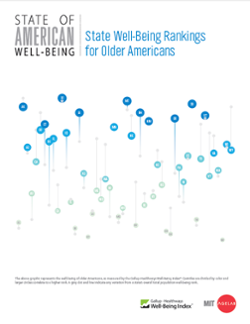
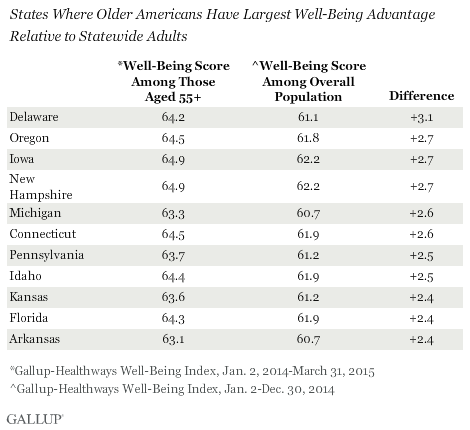 The Well-Being Index is calculated on a scale of zero to 100, where zero represents the lowest possible well-being and 100 represents the highest possible well-being. Connecticut’s well-being score was 64.5 for those age 55+, compared with 61.9 for the overall adult population. The difference of 2.6 was the sixth highest among the states.



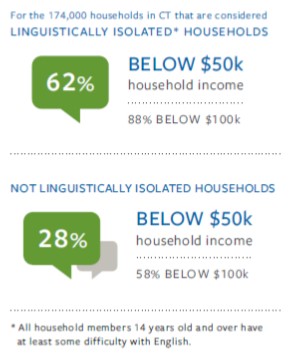
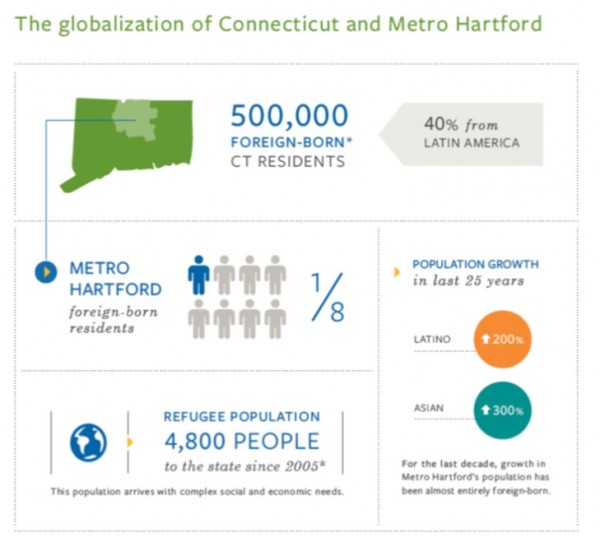 “The Latino Endowment Fund has offered this report as a means to expand the important discussion on efforts to support English Language Learners in our communities,” said Luis Cabán, chair emeritus of the Latino Endowment Fund Steering Committee. “This document provides us with an opportunity to reframe how we think about our increasingly global community and recognize the advantages of people speaking more than one language to enhance the richness of our community and create stronger links to the global marketplace.”

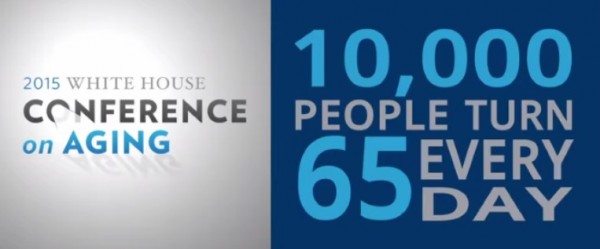
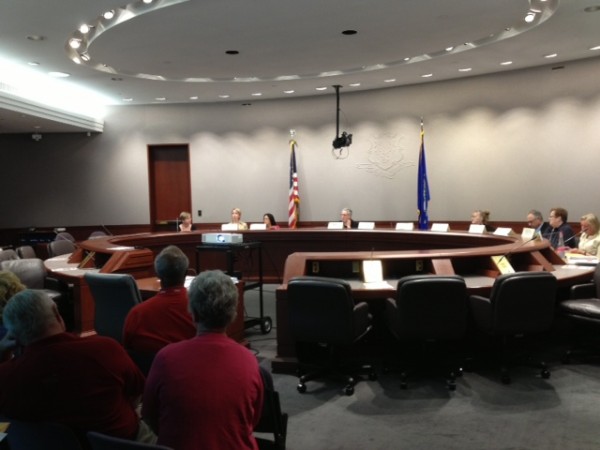
 Rather than having delegates from throughout the nation stream into Washington, D.C., Americans are asked to watch events unfold via live stream – either at home, or by getting together with co-workers or people from their local communities. Officials note that more than 600 public and private Watch Parties—in every state—have been organized and registered with WHCOA.

 rez, U.S. Department of Labor. The panel will include Jean Chatzky, AARP Financial Ambassador; Vickie Elisa, Mothers’ Voices Georgia;
 emarks or participating in panels are Secretary Tom Perez, U.S. Department of Labor; DJ Patil, White House Office of Science and Technology Policy; Secretary Tom Vilsack, U.S. Department of Agriculture; professional athlete Diana Nyad; Vice Admiral Vivek Murthy, U.S. Surgeon General; Director Richard Cordray, Consumer Financial Protection Bureau; and Stephanie Santoso, White House Office of Science and Technology Policy.



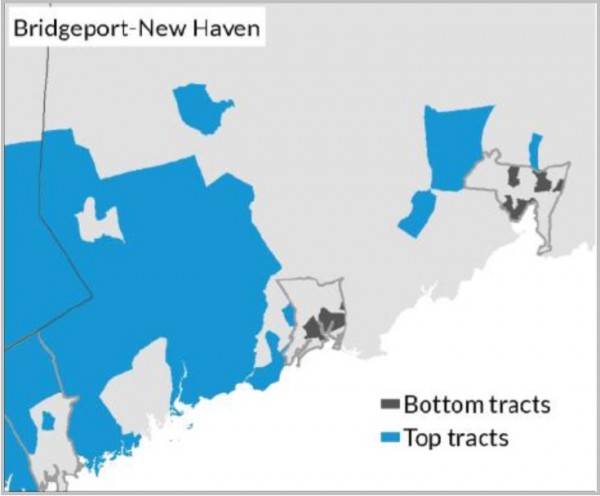
 As a result, the study found that inequality between “top and bottom income” neighborhoods intensified in the great majority of commuting zones. Even where inequality dropped, the story was not always positive: it often occurred because top-neighborhood incomes fell in the wake of economic stagnation.


 Later this month, Bike Walk CT is offering the League of American Bicyclist-designed Traffic Skills 101 program, a comprehensive day long course to give cyclists the skills, knowledge and confidence to handle on-road cycling.




















