First-Of-Its-Kind Audio Service for Spanish-Speakers with Print Disabilities Launched in CT

CRIS Radio, a 36-year-old nonprofit based in Windsor and Connecticut’s only radio-reading service, has introduced its new Spanish-language streaming service, expanding the services offered by the volunteer-based organization with a longstanding, solid track-record of responsive programming. The service, called CRIS en Español, is the first in the nation to offer an extensive line-up of audio versions of Spanish-language magazines – all featuring human narration -- for Spanish-speakers who are blind or have a print disability, including those with learning, physical, emotional or intellectual disabilities.cris-logo

“This collaboration is essential to the people we serve in the Hispanic community,” said Annette Deonarine, director of Latino Initiative of Advocacy Unlimited at Toivo Center in Hartford. “It will enable people who are disabled to receive quality broadcasts that are culturally competent and in a language that is understood by many people from different Latino cultures.”

Hartford Mayor Pedro E. Segarra, who attended the launch of the new audio services, said: “CRIS Radio has for years made sure people stay connected to current events, culture and literature. I’m very grateful to see that they’re expanding this valuable service to Spanish-speaking audiences.”

Included in the CRIS en Español programming are articles published in Spanish-language magazines and newspapers such as Identidad, National Geographic in Spanish, Cosmopolitan in Spanish, Hola and People in Spanish.  All CRIS recordings feature human narration, thanks to CRIS volunteers who provide the voice talent. The recordings also are available on-demand at crisradio.org or from special CRIS Internet radios.

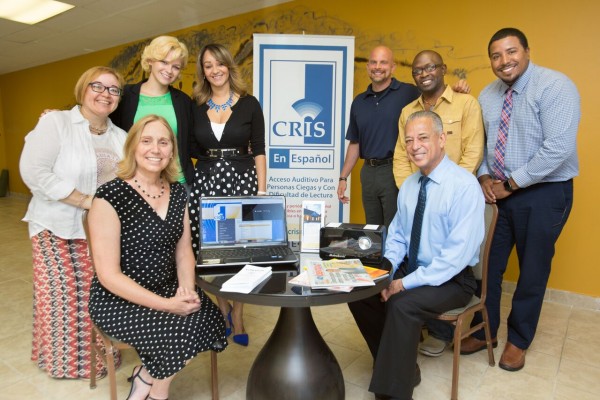
“Thanks to funding from the Hartford Foundation for Public Giving, CRIS Radio is launching Spanish-language programming to better meet the needs of the Latino community who are blind or print disabled,” said Diane Weaver Dunne, executive director of CRIS Radio. “CRIS is now providing Internet radios tuned to CRIS en Español’s URL free-of-charge to organizations that serve Spanish-speakers with disabilities.”Sitting, Diane Weaver Dunne and Pedro Segarro. Standing, from lieft, Annette Deonarine, Yanira Rios, Alice Diaz, Deron Drumm, Kelvin Young and Jon Jacobs.
CRIS (Connecticut Radio Information System) provides audio access to news and information for people who are blind or print-challenged, including those unable to read due to physical, learning, intellectual or emotional disabilities. CRIS operates with more than 300 volunteers at its broadcast center in Windsor and regional studios located in Danbury, Norwich, Trumbull, West Haven and at ESPN in Bristol.

Jon Jacobs, program director of Humanidad, which operates group homes for Spanish-speakers with intellectual and developmental disabilities in Greater Hartford, piloted the service at two group homes. “CRIS en Español is an impactful and informative service that brings Spanish-language programming right to the homes of our consumers, Jacobs said. “This is a warm, informative, and user-friendly way to bring culturally competent content to the members of our community with special needs.”

CRIS Radio broadcasts 24 hours a day, seven days a week featuring articles published in more than 70 newspapers and magazines, including award-winning children's magazines available online and on-demand. Programs powered by CRIS Radio include: CRIS Radio; CRIS Listen Now (online streaming); CRIS Listen On Demand; CRISKids, and CRISKids for Schools.

Photo:  Attending the demonstration of CRIS en Español, are: (sitting), Diane Weaver Dunne, executive director of CRIS Radio; and Hartford Mayor Pedro Segarro; Standing, from left, are Standing, from left, Annette Deonarine, Yanira Rios, Alice Diaz, Deron Drumm, Kelvin Young and Jon Jacobs.

https://youtu.be/DzN3Bi-vjyw

Norwalk Joins Stamford, Bridgeport in Rebranding Efforts to Attract Business

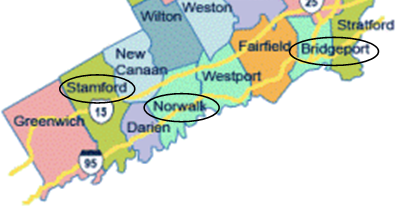
Norwalk Mayor Harry Rilling and Economic Development Director Elizabeth Stocker have selected South Norwalk-based branding and design firm, Zunda Group, to develop a strategic marketing plan that will include a brand implementation program.. With this week's announcement, Norwalk becomes the third major municipality in Fairfield County to turn to a rebranding initiative to boost business prospects and spark interest among potential developers. Bridgeport and Stamford have similar efforts either underway or in the planning stages.rebranding

Mayor Rilling said that “Norwalk recognizes the power of presenting the city with a strong brand image” and is moving forward as part of his recently released economic development action plan, which aims to capitalize on the city’s assets, attract and sustain new business, develop its workforce, and to continually improve its quality of life.

Rilling stated that “essential to the plan’s success is the city’s ability to communicate and build local pride around an ownable brand position that brings to life Norwalk’s unique personality and benefits.   Norwalk has an eye on the future and the new brand will elevate its position as a destination to live, work and play.”  The new branding and marketing communication is targeted to launch in early 2016.

Norwalk doesn’t need to look far to see other municipal branding efforts underway. map

Thomas Madden, Stamford’s economic development director, told the Fairfield County Business Journal this summer that the city Office of Economic Development is working on a multiphase plan to make Stamford more attractive to businesses in a nationally competitive market. Initiatives include conducting research on Stamford’s economic landscape, outreach, rebranding and improving digital resources, the business paper reported.

“It puts us on par with a lot of the economic development corporations to make sure we have the right information out there to make businesses look at Stamford,” Madden said, noting that it is the first time this type of project has been undertaken in Stamford. Planning began about a year ago, and the nonprofit Stamford Partnership, a civic organization, is leading the effort with Stamford-based brand development company Daymon Worldwide handling the marketing.

Daymon is to conduct surveys and focus groups in Stamford and in the tristate area exploring people’s views on Stamford. The data will guide which industries Stamford should focus on and provide guidance to the city’s Office of Economic Development regarding information about income level, incentives, taxes and transportation that can be highlighted in brochures to distribute to businesses considering Stamford as a location. It is anticipated that Stamford will begin using a new logo and launch a marketing campaign as part of the initiative.mq1

In Bridgeport, the administration of incumbent Mayor Bill Finch is already working with a pair of companies -- Mandate Media of Oregon and Gum Spirits of Maine – on an advertising campaign launched late last year, “Better Every Day.”  Mandate has created an economic development website, www.bridgeportbettereveryday.com, along with a digital and web-based marketing strategy for the city.  Ads have been seen not only locally but in statewide media, such as the website CT Capitol Report.  Gum Spirits was to develop radio and television spots focused on local success stories and revitalization efforts, according to plans for the initiative, and a series of videos are currently posted on the website.

According to the website, which touts the Park City as a “great place” to live, “Bridgeport is a city on the way up. We've got a lot of work to do, but we're investing in the future, making our city a place where our kids and grandkids will choose to live, work and raise their families. We're improving the city by building schools, re-opening parks, making downtown more vibrant, and developing the waterfront.”  The website is separate and distinct from the official Bridgeport government website, which features a range of city services traditionally highlighted on municipal sites.

In Norwalk, Zunda Group is owned and managed by longtime Norwalk business leaders Charles Zunda and Gary Seve Esposito. In announcing the selection, the city stressed that the firm “has enjoyed a 35 year history of building and positioning strong, relevant brands.”  Zunda Group has proven success with Connecticut based brands like Newman’s Own, start-up brands like Chobani, and global brands such as Dove, city officials pointed out.  The local Norwalk community is invited to share their feedback about Norwalk by completing a voluntary public survey that is available from September 8 through September 22 at www.norwalkct.org/survey


https://youtu.be/-77lj-hO2Xc

CT Ranks 35th in Economic Clout of Women-Owned Businesses

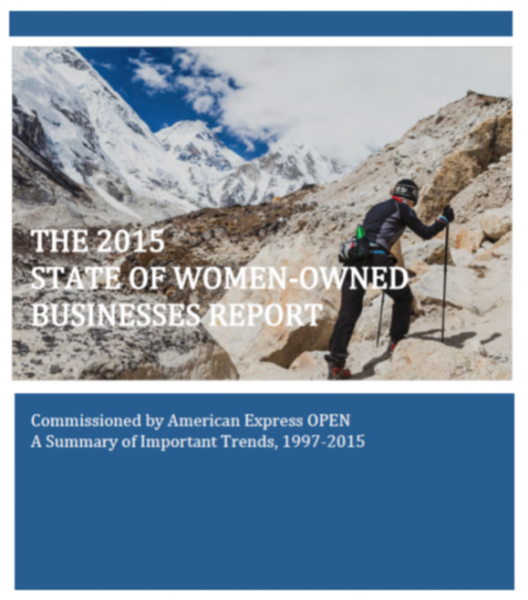
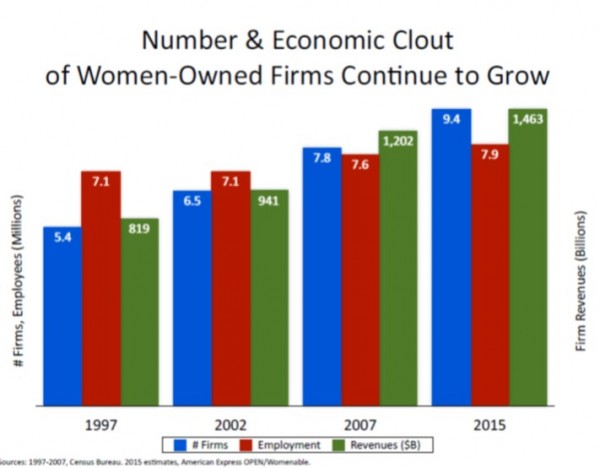
Connecticut ranks 35th in the economic clout of women-owned businesses over the past 18 years, according to a newly released analysis.  Women now run more than 9.4 million businesses in the United States, 30 percent of the nation’s businesses, with just over 100,000 of them in Connecticut Between 1997 and 2014, the number of women owned businesses in Connecticut grew by 42.1 percent, ranking the state 43rd in the nation.  Total revenue growth of 80.2 percent ranked Connecticut 28th, and employment growth of 20.9 percent among women owned business placed the state 22nd among the 50 states. cover

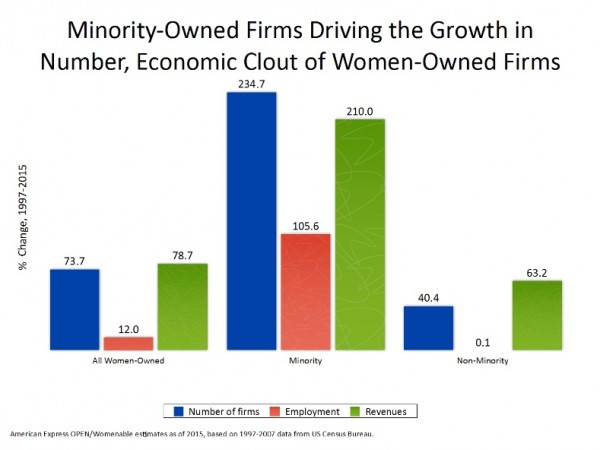
Nationwide, the number of women-owned firms grew from 5.4 million in 1997 to an estimated 9.4 million this year, an increase of 73 percent over the nearly two decades.  Employment in those businesses grew by 12 percent and sales by 78 percent, nationally.  The number of women-owned firms is increasing at a rate 1.5 times the national average.swob-report-weeks-openforum-embed1

In Connecticut, the number of businesses owned by women climbed from 72,393 in 1997 to 102.900 by this year.  Employment increased from 78,598 to an estimated 95,000, and sales grew from just over $9 million to nearly $17 million.

The industries with the highest concentration of women-owned firms nationally are healthcare and social assistance (53 percent of firms in this sector are women-owned, compared to a 30 percent share overall), educational services (45 percent), other services (42 percent), and administrative support and waste management services (37 percent).

The states with the fastest growth in the number of women-owned firms during the 18 year period are Georgia, Texas, North Carolina, North Dakota and New York.  The slowest growth has taken place in Alaska, West Virginia, Iowa, Kansas and Maine.

Since 1997, the number of female-run businesses has grown by 74 percent, well above the national growth rate of 51 percent for all firms. In 2014, women opened the doors of 887 new businesses every day, on average, up from 602 in 2011.

Women of color contributed to more than half of that growth last year, opening on average nearly 500 businesses daily, according to the new 2015 State of Women-Owned Businesses Report, prepared with U.S. Census data by Womenable, a research organization supporting women's entrepreneurship, and commissioned by American Express OPEN.

chartOf the nation’s women-owned businesses, African-American women own 1.3 million, Latinas 1 million, and Asian women more than 700,000. Businesses owned by women of color tend to be smaller in terms of their average employment and revenue, the report indicated. But their growth, both in numbers and in their economic clout—the combined average of their growth, revenue, and employment—continues to outpace that of their white peers, the data indicates.
“Back in 1997, there were just under one million firms owned by non-Caucasian women, representing one in six (17 percent) women-owned firms. Nlogoow, there are an estimated 3.1 million minority women-owned firms, representing one in three (33 percent) women-owned firms,” pointed out Julie Weeks, President and CEO of Womenable.  “The growing diversity of women-owned firms is one of the most remarkable trends of the past decade.”

Middle Schools Use Lunchtime to Break Social Isolation, Prevent Bullying

No One Eats Alone is a lunchtime school event that seeks to reverse the trends of social isolation by asking students – for one lunchtime period - to engage in a simple act of kindness at lunch.  Students make sure that no one is eating alone and they make an effort to eat with new classmates and peers. Developed by a national organization – Beyond Differences - No One Eats Alone Day 2015, held in February, saw more than 400,000 middle school students participate -- in over 700 schools in 38 states, including Connecticut.

nooneeatsaloneIn 2015, just over a dozen participating schools in Connecticut included North St School (Windsor Locks), Broadview Middle School (Danbury), Eastern Middle School (Greenwich), O.H. Platt High School (Meriden), Fairfield Woods Middle School (Fairfield), Washington Middle (Meriden), Northeast (Stamford), Schaghticoke Middle School (Warren), King Street Intermediate School (Danbury), Dag Hammarskjold Middle School (Wallingford), Orville H. Platt High School (Meriden ), Avon Middle (Avon), and Moran Middle School (Wallingford).


Among the partner organizations from across the country is Sandy Hook Promise, based in Newtown.sandy hook

As the 2015-16 school year got underway, one Connecticut middle school decided not to wait for the annual observance, scheduled for February 13, 2016.

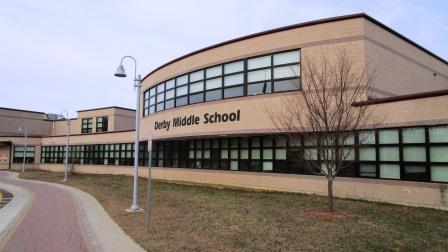
Derby students were greeted on the first day of school by staff all sporting red t-shirts with the logo and words "No One Eat Alone.”  The shirts signify the kickoff of a new program that several education organizations hope to launch across every district in the state, the CT Post reported.  Derby Schools Superintendent Matthew Conway told the CT Post that he would like to see “no one eats alone” practiced every day.

Involved in the project in Connecticut are the Connecticut Education Association, Connecticut Association of Public School Superintendents, Connecticut Association of Schools/Connecticut Interscholastic Athletic Conference, Beyond Differences and Derby Public Schools.

date 2016

California-based Beyond Differences (beyonddifferences.org) is a non-profit organization dedicated to ending social isolation in middle schools across the country and creating a culture in which all kids feel included, valued and accepted by their peers. The organization is based on the tenet that students are in charge of their own campus culture of inclusion.

Social isolation is a problem in every school, officials say, emphasizing that the problem of social isolation to be universal. They also “acknowledge the relationship between social isolation and bullying and violence. By reducing social isolation, we believe we can help end much bullying and violence.”

Beyond Differences we are dedicated to helping teens and schools make social inclusion the new reality. The organization was founded by the parents of Lili Smith who was born witSchool_Front_Wide_Webh a cranial facial syndrome and was socially isolated during her middle school years, the organization’s website explains.  After Lili died at the age of 15 due to medical complications from her syndrome, a group of teens from the local community banded together to bring change to their local schools. They had not realized that they had been leaving Lili out from all the fun social get-togethers. Upon hearing about Lili's feelings of being left out, they were determined to never let anyone feel that way again.  The initiative was born.

Officials stress that “school communities with a culture of inclusion will have far fewer instances of bullying and cruelty. We believe that much of the bullying and violence in our schools can be addressed by treating the underlying causes, rather than just the symptoms.”


https://youtu.be/VPH4OSMBr_c

New Mission for Graustein Memorial Fund Is Equity in Education, End to Racism and Poverty

The heightened racial unrest and unrelenting racial disparities that have risen in the public consciousness in recent years have prompted a mission shift for the New Haven-based William Caspar Graustein Memorial Fund, one of the state’s venerable family foundations. In an open letter to the community, Executive Director David Addams, who came to the fund just over a year ago, explained that “The Graustein family, trustees and staff, during our planning process, were confronted by the depth and persistence of racial and economic inequality, struck by the seeming acceptance of the status quo, concerned for the destructive effects of inequity on our individual and collective futures, and united in our resolve that rigorous attention to equity underlies our future work.”

WCGMF - Header LogoAddams said that “to guide us as we work to help remove these barriers,” the trustees adopted a new mission:  The mission of the William Caspar Graustein Memorial Fund is to achieve equity in education by working with those affected and inspiring all to end racism and poverty.
In recent years, the mission focus of The William Caspar Graustein Memorial Fund has been to “work collaboratively to improve education for Connecticut's children by strengthening the involvement of parents and the community in education, informing the public debate on critical policies, and improving educational practice.”  Connecticut’s children have been the focus of the Graustein Memorial Fund’s grantmaking, working with rural, urban and suburban communities, and both public and private schools.mission statement

Addams noted that the many accomplishments in that area have included providing help to increase access to early childhood learning, build community capacity, and create a new state office to support and grow the field.”  The Fund, and its supporters, have “moved Connecticut closer to the goal of ensuring that every child has what they need,” Addams said.

Referencing that “50 years after the passage of major civil rights legislation, racial disparities persist more in Connecticut than anywhere else in America,” Addams said that “these inequities are barriers for families of color and families living in poverty to reaching their full potential.”

Addams said that one of the state’s strongest assets – the families and neighborhoods that have direct experience in raising children and dealing with the barriers of racism and poverty – are underutilized, noting that “within all of us, and especially those most affected by racism and poverty, there are the strengths, determination, creativity and wisdom we need to succeed.”

Indicating that “real change takes a long-term commitment from many partners,” Addams said that the fund intends to “start slowly and co-create the path forward with those who would like to join us on this journey.”


https://youtu.be/ya2vq4dEhOs


CT Ranks 25th in Telecommuting Jobs; Nationwide 37 Percent Say They’ve Telecommuted

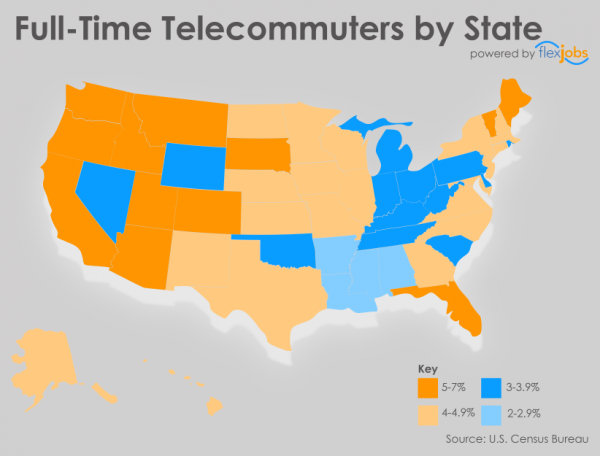
Thirty-seven percent of U.S. workers say they have telecommuted, up slightly from 30 percent last decade but four times greater than the 9 percent found in 1995, according to a newly released Gallup poll.  Connecticut ranks 25th in the nation in full-time telecommuters, data compiled by the website flexijobs.com indicates. The leading states for full-time telecommuters, based on percentage of workforce, are Colorado (6.9%), Vermont (6.8%), Oregon (6.3%), Montana (6%), Maine (5.7%), Arizona (5.5%), Idaho (5.5%) and New Hampshire (5.4%).  In Connecticut, 4.3 percent of the workforce are telecommuters.25th

Based on years of researching companies that hire for telecommuting, part-time, flextime, or freelance jobs, FlexJobs has compiled the best list of 100 of companies located in Connecticut that specifically have hired for jobs with at least one of these flexible working options.

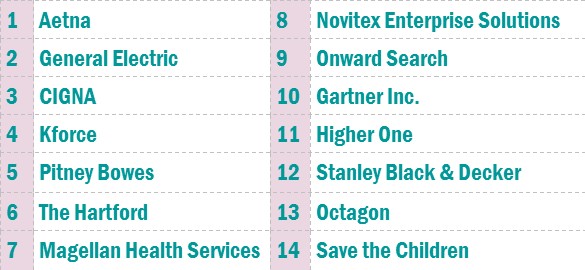
Connecticut’s top companies for flexible jobs are Aetna, General Electric, CIGNA, Kforce, Pitney Bowes, The Hartford, Magellan Health Services, Novitex Enterprise Solutions, Onward Search, Gartner Inc, Higher One, and Stanley Black & Decker.Full-Time-Telecommuters-by-State-by-FlexJobs-2015

The percentage of telecommuters nationwide is based on Gallup's annual Work and Education poll, conducted earlier this month, Aug. 5-9, 2015. Technology has made telecommuting easier for workers, and most companies seem willing to let workers do their work remotely, at least on an occasional basis if the position allows for it, the Gallup analysis points out. Even though telecommuting has become more common, the growth in the practice appears to have leveled off in recent years, according to Gallup.

The survey indicated that U.S. workers say they telecommute from home rather than go into the office about two days per month, on average. Nine percent of workers say they telecommutop companieste more than 10 workdays -- meaning at least half of all workdays -- in a typical month.  The majority of Americans, including both those employed and not employed, believe workers who work remotely are just as productive as those who work in a business office.


New CT Consumer Confidence Survey Shows More Residents Likely to Stay, Although Outlook Relatively Unchanged

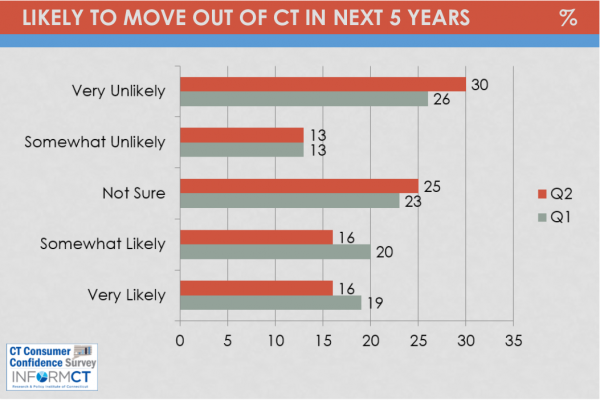
Fewer Connecticut residents now expect to move out of the state in the next five years, according to the results of the 2015 Connecticut Consumer Confidence Survey released today by InformCT, covering the second quarter of the calendar year. In the first quarter, the percentages were even, with 39 percent saying it was likely they’d move from the state during the next five years and the same percentage saying a move out of state was unlikely.  In the new survey, 32 percent said it is likely they will move out of state in the next five years, a slight drop, while the percentage who say it is unlikely has grown to 43 percent.CTConsumConfSurveyLOGO

Overall, Connecticut residents’ confidence in the state’s economy and their personal financial prospects are nudging along tentatively and unevenly, but relatively unchanged in the year’s second quarter compared with the first few months of the year.

Results of the Q2 Survey (April-June 2015) tend to reinforce what was found in Q1 (January-March).  Consumers see little change in what is perceived as a sluggish economy and do not envision any change in the next 6 months. This is also reflected in their attitudes toward the job market, with 6 in 10 feeling that there are insufficient jobs for the available workforce.move out

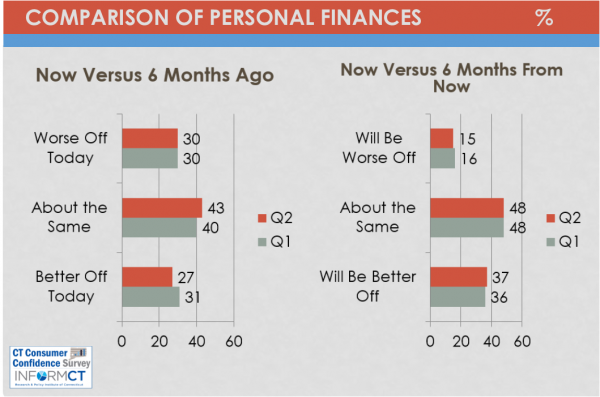
Regarding personal finances, slightly fewer state residents felt they were better off today than six months ago, but slightly more felt they would be better off six months from now.  A plurality, however, felt that their personal finances were about the same as six months ago, and were unlikely to change in the next six months.

Inform CT is a public-private partnership that provides independent, non-partisan research, analysis, and public outreach to help create fact-based dialogue and action in Connecticut.  The survey is designed to generate an ongoing measure of consumer confidence in the Connecticut economy.  The survey also found that:

  • Fairfield County residents are the most likely (32%) to think that business conditions are better.
  • Residents of Litchfield (36%) and Windham (34%) counties are the most likely to feel that jobs are very hard to get.
  • Residents of Tolland County (38%) are the most likely to feel that they are better off.

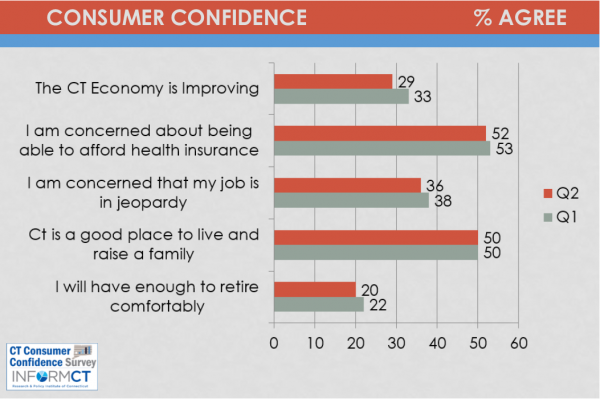
Concerns that survey respondents “job may be in jeopardy” dropped slightly from the first to second quarter, as did concerns “about being able to afford health insurance.”  However, slightly fewer people felt they had “enough to retire comfortably,” or that the state’s economy was improving.  On the question of whether Connecticut is a “good place to live and raise a family,” for the second consecutive quarter, the split was 50-50.  As income increases, respondents are more likely to agree that Connecticut is a good place to live and raise a family, the survey results showed.

personal financesThe survey is being administered for InformCT by the Connecticut Economic Resource Center, Inc.(CERC) and Shelton-based Smith & Company. The analysis, which is based on the responses of 400 randomly selected Connecticut residents (roughly 50 per county), addresses key economic issues such as overall confidence, reactions to housing prices, upscale consumer purchases, leisure spending and current investments. InformCT is a public-private partnership that currently includes staff from CERC and the Connecticut Data Collaborative.
The results also indicated that women (78%) are significantly more likely than men (52%) to indicate that they are likely to move out of Connecticut, and respondents with household incomes of $50,000 or less are significantly more likely to indicate that they will move out of Connecticut, according to survey officials.

More than 60 percent of state residents said they plan to take a vacation outside Connecticut (22% very likely, 39% somewhat likely) and 44 percent said they planned to vacation in Connecticut (26% very likely, 18 percent somewhat likely).  The most likely vacation location appears to be state parks, with 43 percent indicating that such a visit was likely in the next six months.  Forty-one percent planned to visit a casino, outdistancing visits planned to aquariums (27%), the Connecticut Science Center (13%) and other state attractions.

Regarding plans for major purchases in the next six months, often considered a harbinger of economic strength, 28 percent said they planned to make a “major consumer expenditure,” 22 percent anticipated purchasing a new car, and 15 percent said they were planning to refinance or purchase a new home. consumer confidence

CERC, based in Rocky Hill, is a nonprofit corporation and public-private partnership that provides economic development services consistent with state strategies, leveraging Connecticut’s unique advantages as a premier business location. Smith & Company LLC is a market research firm.  More information about the survey, and subscribing, can be found at www.informct.org.

“This research provides a measure of the strength of our economy as well as a gauge of select economic factors,” stated Alissa DeJonge, Vice President of Research at CERC.  “It is a valuable and cost-effective strategic planning tool for any company or organization that wishes to take the temperature of the Connecticut consumer.”

“Whether you are a financial services institution, health care provider, insurer, developer, utility, trade association, or advertiser, those who wish to subscribe to this regular information can add proprietary questions for their own purposes,” added Stephen A. Smith, President of Smith & Company.


Putnam Pushing New Reputation as Arts and Culture Mecca, Gaining Recognition

When the Connecticut Main Street Center announced its Award of Excellence would go to the Town of Putnam, the Putnam Business Association, and the Putnam Arts Council for First Fridays in Downtown Putnam, there may have been more than one individual uncertain as to why. Many around the state may have been unaware of the northeastern Connecticut community’s goal of connecting artists, audiences, and arts and culture agencies to enhance the economic vitality of the community, while also showcasing downtown assets including a Bandstand and Outdoor Stage, the Downtown Farmers' Market Pavilion, and the local scenic River Trail.putnam

Driven by the vision to create a 'sense of place' and feature their downtown destination, the Town, the Business Association and the Arts Council collaborated to launch a monthly arts and culturally based Street Faire from May to October each year.  Now in its fifth year, the initiative has proven quite successful.

In 2014, approximately 3,000 people attended each event, with 15-20 street artisan vendors participating. The success of First Fridays has demonstrated the town's credentials as a 'destination' in Connecticut. Putnam was voted #4 Fan Favorite Town through the state Office of Tourism in 2013, and #2 Town in 2014 - the only town in the top 5 without waterfront. To overcome the obstacles of empty storefronts, the Putnam community worked diligently to reinvent itself as the arts and cultural hub of northeastern Connecticut, leading to recognition by Boston Magazine as "One of the Best 15 Small Towns to Visit in New England".

First Fridays define cultural diversity with a different theme each month. These themes are explored through dance, theatre & storytelling, architecture, song, food, and folklore.  Each monthly theme includes: 'Art Attacks' - random acts of art to surprise, entertain, and educate; 'Menu Celebrations' - local restaurants designing and creating menu specials to pair with the monthly theme; plus street bands, artisan vendors, and children events.arts

This year, the overarching theme is 'A Century of Art'.  To start this year, the monthly themes have been:  May - Turn of the Century; June - The Roaring 20's / The Jazz Age; July - The 1940's / WWII and the Arts; August - Pop Art of the 1960's;.  Still to come: September - The 1980's / Urban Art; and October - Turn of the Century / The Digital Age.

First Fridays "feature great live entertainment, variety of art vendors lining the streets, fun and interactive art projects, and stimulating events" hosted by such downtown galleries as Arts & Framing and the Sochor Gallery, The Empty Spaces Project Gallery, Sawmill Potteryand Silver Circle Gallery, according to the event website. Officials say that since the inception of First Fridays, the exponential growth has been manageable only because of business partners, volunteers and partners stepping up to assist with the Town administration. Town employees provide services for sound systems, street closures and safety measures. Police traffic patrol has been set in place; corps of volunteers handle facilities management; and valet service companies have been hired by restaurants to assist with parking.

Putnam has begun to be described as “a mecca of revitalization and community pride.” Participants last year, for example, were given disposable cameras to take shots of Downtown architecture. The photos were then pieced to create a 9' X 3' collage spelling out the word "PUTNAM".  Educating and advocating through multi-disciplinary and inter-generational events has earned new found recognition for Putnam, and made First Fridays a destination for audiences from Northeast Connecticut, Rhode Island, and Massachusetts.  All of which makes the recognition from the Connecticut Main Street Center less surprising.

Three CT Counties Among the Nation's 244 Most Dense in Population, Comprising Half Nation's Residents

New York City's borough of Manhattan has about 1.6 million residents sharing just under 23 square miles of land. Meanwhile, 669 square mile Loving County, TX has just 86 residents, Business Insider reports in an analysis of U.S. Census Bureau data. According to the U.S. Census Bureau's population estimates and their tabulations of the land area of each county, 50.1 percent of the US population lives in the nation’s densest counties, indicated in dark purple on the illustrated map, which highlights the wide dispersion in the population density of the US's 3,142 counties. The 244 densest US counties are shown in dark purple, developed using U.S. Census Bureau data for 2014.US map pop

The nation's largest populations, by county, are in Los Angeles County, CA; Cook County, IL; Harris County, TX; Maricopa County, AZ, San Diego County, CA; Orange County, CA, Miami-Dade County, FL and Kings County, NY. CT

The most populous county in Connecticut, Fairfield County, ranked 51st by population (945,438) among the nation’s counties.  Just behind are Hartford County, ranked 59th (897,985) and New Haven County, ranked 64th (861,277).

All three are among the 244 densest U.S. counties that comprise just over half of the nation's population.

CT county population


Go Ask ALICE – Child Care Front and Center

The phrase “go ask ALICE” may have been a lyric a few decades ago, but today it is taking on renewed significance when assessing the day-to-day life challenges of a surprisingly large segment of Connecticut’s population, an updated report by Connecticut United Ways shows. In Connecticut, 1-in-4 households have earnings that exceed the Federal Poverty Level (FPL) but fall short of a basic cost of living threshold. The United Way has defined these households as ALICE-an acronym for Asset Limited, Income Constrained, Employed, and together with the 10% of Connecticut households in poverty, more than one-third of Connecticut households (35%) are struggling to make ends meet.MonthlyExpenses_Pie

The original analysis revealed last fall has now been updated and expended with new data, which indicates that cost of child care is a significant burden, and that child care is “often the single-largest expense for families with young children.”

The Connecticut ALICE Report estimates that the cost of child care for two children (1 preschooler and 1 infant) is at least 28% of the monthly expenses included in the Household Survival Budget for a family of four. In a newly released ALICE Update, the latest available cost data from 2-1-1 Child Care is used to examine the biggest child care challenges facing ALICE families in Connecticut:

  1. Child care is often the single-largest expense for families with young children, with limited options for affordable infant and toddler care posing a significant challenge. This is especially true for ALICE families.
  2. Child care subsidies are available for working families, but some ALICE families have earnings that exceed the eligibility threshold, and others struggle to cover the difference between the subsidy and the provider fee.
  3. Availability and cost of child care varies throughout the state, limiting options for ALICE families who may not be able to find child care providers they can afford that are located near where they work or live.
  4. There are limited child care options that are available during evening, night, or weekend shifts. 2nd shift, 3rd shift, and weekend hours are more common among low- to moderate-income ALICE workers. When work schedules are unpredictable, and vary from week to week, it can be hard for ALICE families to find child care when they need it.

ALICEForumSiteThe most recent fee data available from 2-1-1 Child Care estimates the statewide average cost of full-time child care in a licensed center-based day care setting is $211/week for 1 preschooler and $253/week for an infant, which adds up to $2,011 per month. This may be less than what many Connecticut families pay for child care each month, due to variations in cost and availability throughout the state, differences in family size, and other costs associated with child care that are not included—such as the cost of alternate care arrangements when the child care setting is closedChildCareFamily

The report indicates that statewide, the average weekly cost of Infant/Toddler care ranges from $135 to $400 in Home-Based settings and from $175 to $400 in Center-Based settings. The high cost of Infant/Toddler care creates the greatest burden, as the weekly cost amounts to the highest percentage of median income in both Home-Based (30.9%) and Center-Based (48.8%) settings in Hartford, where the median income is $29,430/year.

Adding to the challenge posed by the high cost of Infant/Toddler care is the fact that its availability varies throughout the state. There are six municipalities in the state that have no licensed Center- or Home-Based Infant/Toddler child care providers at all, and 15 that only have a single provider offering Infant/Toddler care in their town. A total of 52 Connecticut towns have two to five providers of Infant/Toddler care, and the remaining 96 municipalities have at least six providers who offer Infant/Toddler care.

The report also indicates that “there are limited child care options available during evening, night or weekend shifts, and it can be hard for ALICE families to find childcare when they need it.”  The vast majority of Center-Based child care providers in Connecticut do not offer evening or weekend care, according to the report. Another challenge for ALICE workers without stable, predictable work schedules is that child care providers are typically paid for a full week of care in advance, whether the care is ultimately used or not. When work schedules change from week to week or on short notice, ALICE families may end up paying for child care that they do not use.

In November 2014, Connecticut United Ways released the first statewide ALICE Report, a data-driven, comprehensive research project that quantifies the situation confronting many low-income working families across our state - in our urban, suburban and rural communities. The Report documents that the number of Connecticut households unable to afford all of life's basic necessities far exceeds the official federal poverty statistics.