Survey Says Hartford Residents Want Healthier Foods and Beverages, Action Steps Suggested
/Two-thirds of Hartford residents believe that fresh, healthy foods are too expensive, and 4 in 5 believe that it is very important for local childcare programs to offer healthy food options.
In a survey commissioned by the American Heart Association's Hartford Accelerating National Community Health Outcomes through Reinforcing (ANCHOR) Partnerships Program, a majority of women, parents and young adults in the city see healthy foods as too expensive.
"Making healthier food more accessible to all will greatly improve health outcomes and move us closer to our goal of reducing deaths from cardiovascular disease and stroke," said Dr. Seth Lapuk, pediatric cardiologist and American Heart Association of CT/Western Massachusetts board president. "Healthy food access is especially critical for our children. Obese children as young as 3 years old show indicators for developing heart disease later in life. These survey findings show the community wants the healthy choice to be the easy choice."
The survey was part of an overall initiative to improve access to healthy foods in underserved communities. It was conducted in September 2015 and included 400 Hartford residents. The survey also revealed that 70 percent strongly support matching a portion of SNAP (Supplemental Nutrition Assistance Program) so people can spend more on healthy foods. Respondents would also like to see an increase in the number of farmers' markets and wider acceptance of SNAP at farmers' markets and mobile markets. 
Based on the findings of this survey, the organization highlighted recommendations to address residents' concerns:
- Encourage local community, government and business leaders to increase access to healthy foods
- Present child care programs as an example of a key setting that has important influence on family nutrition and healthy food policy
- Promote farmers' markets as a way to increase competition and drive down price
Hartford Mayor Luke Bronin said "As a mayor and as a parent of three young kids, I'm proud to say that our schools and our Department of Children & Families have been making great efforts to promote healthy foods. To keep Hartford healthy and strong, we need to continue working hard to make sure that healthy food and beverage options are available wherever our residents live, work, play and learn."
 Just over the city line in West Hartford, ShopRite supermarket (corner of Kane and Prospect Streets) is offering a series of free courses with a registered dietician to help individuals know “where to start on your path to becoming healthier.” The “Eat Well Be Happy” Weight Management Series begins on February 24, and will be held every Wednesday from 6-7:30 p.m., for six weeks. Each class focuses on a different topic including: meal planning, portion control, importance of fiber, protein and hydration and controlling sugar cravings, among others. Individual consultation is also available, and all nutritional services are available to customers free of charge. (Interested individuals can contact shana.griffin@wakefern.com)
"Healthy food does not have to be out of reach on the basis of cost," said Martha Page, executive director of Hartford Food System and chair of the Hartford Advisory Commission on Food Policy.
"Based on the findings of this survey, I am glad to see that our residents view early childhood programs as a key opportunity to provide a positive influence on family health," said Jane Crowell, Assistant Director, Hartford Department of Families, Children, Youth and Recreation, Division for Young Children. "Hartford's Little City Sprouts program does exactly that by providing healthy foods and beverages to the children, encouraging community gardening, offering caregiver support and information to promote healthy food preparation through recipes and snack ideas."
The ANCHOR Project is a federally funded collaboration between the American Heart Association and the Centers for Disease Control and Prevention (CDC). The focus of the ANCHOR project is to improve access to healthy foods through the promotion of healthy food financing initiatives with grocery stores, healthful food and beverage contract arrangements among organizations and institutions, and farmers' markets. For more information on the American Heart Association's ANCHOR Partnerships Program, go to www.heart.org/ANCHOR .

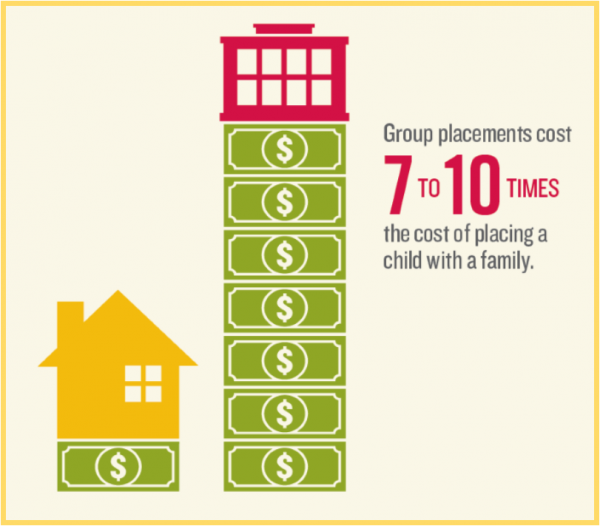
 y percent of the children in group placements have no documented behavioral or medical need that would warrant placement in such a restrictive setting.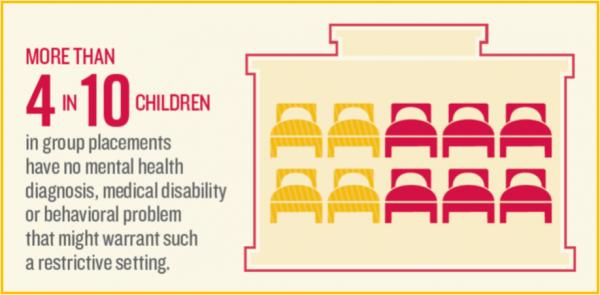
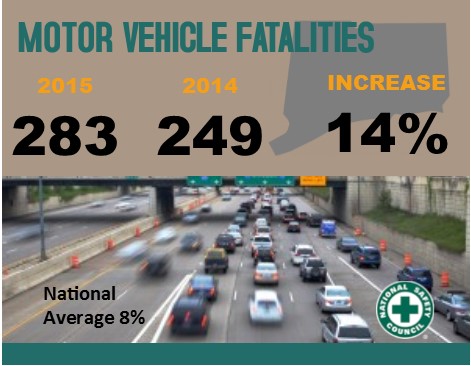 Nationally, 2015 saw the largest single-year percent increase in motor vehicle deaths since 1966. Estimates from the National Safety Council (NSC) show an 8 percent increase in 2015 compared with 2014 – with substantial changes in some states, including Connecticut. There were 283 motor-vehicle related deaths in Connecticut last year, compared with 249 in 2014 and 276 in 2013.
 safety, the National Safety Council recommends drivers:


 When Connecticut voters go to the polling places on Tuesday, April 26, voters in nearly two-thirds of the states will already have made their preferences known. The same day as Connecticut, presidential primaries will also be held in Delaware, Maryland, Pennsylvania and Rhode Island. The previous week, primaries will be held in New York, a state called home, at various times, by three of this year’s leading contenders – Hillary Clinton, Bernie Sanders and Donald Trump.
 diana, New Mexico, California, New Jersey, Nebraska, West Virginia, Oregon and Montana. Most states have their Democratic and Republic primaries on the same day, although a handful hold party primaries on different days. South Carolina’s Republican primary will be on February 20, for example, and its Democratic primary on February 27.

 age, MSW, Director of Community Organizing, Yale Program for Recovery and Community Health. “We know that good nutrition plays a key role in mental health and that’s why the mental health community is here today to support the Witnesses.”
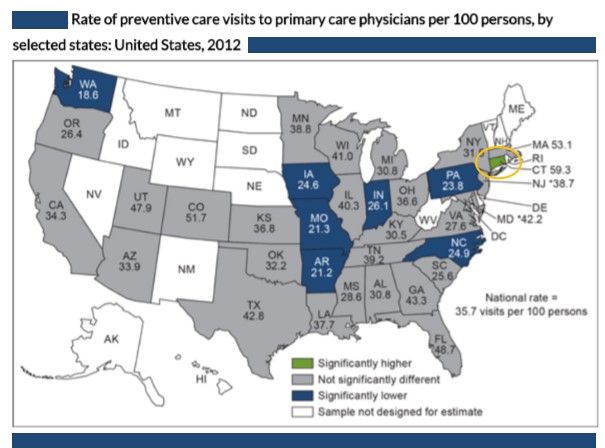
 The rate of preventive care visits in the 34 most populous states ranged from 33.1 visits per 100 persons in Arkansas to 120 visits per 100 persons in Connecticut. Among those 34 states, the rate of preventive care visits was lower than the national rate in 11 states (Arkansas, Indiana, Iowa, Michigan, Missouri, North Carolina, Oklahoma, Oregon, Pennsylvania, South Carolina, and Washington). The national average was 61.4 visits per 100 persons. The data is from 2012, the most recent year available from the National Ambulatory Medical Care Survey.