Influx of Chinese Students in CT High Schools Reflects National Trend

When the soon-to-be-vacated UConn campus in West Hartford attracted the interest of a Chinese education company looking to establish their first international high school in the United States, some may have been surprised by the interest by the interest in having American, Asian, and other international students live and receive instruction on the suburban campus. But for those who have noticed the nearly exponential growth of Chinese high school students coming to the United States to study, the proposal submitted to the town of West Hartford and the UConn Board of Trustees was less surprising.

students CTChinese made up 35 percent of the 92,000 foreign secondary school students in the United States in 2015, according to the US Department of Homeland Security, by far the largest group studying here, the Boston Globe reported this week. That number has grown rapidly from only dozens a decade ago, fueled by the growing middle class in China and a desire to their children to gain an early advantage in efforts to attend college in the United States.

The number of international students across New England, with its long history and tradition of private schools, rose from 9,338 in 2010 to nearly 14,000 last year.

In Connecticut, with the second largest international student population in the region, the number has quickly climbed from 2,548 to 3.548, an increase of 39 percent in the past five years, the Globe reported, based on data from U.S. Immigration and Customs Enforcement.   In Massachusetts, the number has jumped from 3,780 to 5,963 during the past five years.  Every New England state has seen the number of international students attending local high schools increase, which Chinese students spurring the growth.

The number of Chinese K-12 students rose 290% percent to 34,578 as of November 2015 from 8,857 five years previously, according to data collected by the Student Exchange and Visitor Program, a unit of the Department of Homeland Security that tracks foreigners on student visas and the schools they attend, the Wall Street Journal reported.  Chinese students make up roughly half of the 60,815 foreign pupils in U.S. high schools and the 6,074 in primary schools, according to the newspaper.students

Founded in 1999, the Beijing-based Weiming Education Group is the largest and leading provider of private schools in China with over 40,000 students in 42 campuses. The Group, which is looking to establish the new international high school in West Hartford, has established a long-term international education partnership with more than 20 schools and education institutions from a dozen of countries including the United States, Britain, Canada, Singapore, and South Korea.

The company’s website points out that “Internationalized education has become the strategic direction” of the Weiming Education’s operation management, noting U.S. offices in Michigan and Connecticut. To date, about a half-dozen partner high schools in the United States are in Michigan.

The Hartford Courant reported last summer that Cheshire Academy, a private school with 400 boarding and day students in grades 8 through 12, had 85 students from mainland China this past academic year among its international contingent of 164 students from 32 countries, or more than 40 percent of its total enrollment.

West Hartford has yet to make a decision regarding the disposition of the UConn property, with a number of competing proposals under consideration.  The UConn Board of Trustees is poised to move forward with a sale of the property to Weiming, but the town retains right of first refusal, and ultimately has zoning control over the property, regardless of the owner.

Gender Identity in Schools Among Topics at Connecticut School Health Issues Conference

The keynote address “When Boys Will be Girls: Getting A Grip on Gender” will greet attendees – school nurses and school health officials from across Connecticut - attending the 38th Annual School Health Conference on Thursday in Cromwell. “Critical Issues in School Health 2016,” a two-day conference, will have expert presentations on issues ranging from absenteeism to infectious diseases, food allergies to mental health.  But no issue has grown in attention and interest recently than how to respond to LGBT students in the school setting.

The conference is coordinated by the Connecticut chapter of the American Academy of Pediatrics with the assistance of the Association of School Nurses of Connecticut.  school-health

The keynote will be given by Robin McHaelen, MSW, founder and executive director of True Colors, a Hartford-based non-profit organization that works with social service agencies, schools, organizations, and within communities to ensure that the needs of sexual and gender minority youth are both recognized and competently met. McHaelen is co-author of several books and articles on LGBT youth concerns, and has a national reputation as a thought leader in LGBT youth concerns, programs and interventions.

In her presentation, titled “When Pink and Blue Are Not Enough,” McHaelen offers suggestions on working with LGBT students, and seeks to increase “understanding, knowledge and cultural competency regarding LGBT students,” while identifying issues of “risk, challenge and strengths specific to LGBT youth.”  She also will point to “opportunities for intervention that will ensure appropriate care within a safe, affirming environment.”

Among the recommendations:  offer gender-neutral bathroom options, always use the patients’ chosen name and chosen gender pronouns, and “recognize that there are additional stressors (and that there may be significant feat on the part of) transgender patients.” logo

McHaelen will be offering a similar presentation at the New England School Nurse Conference, to be held in late April in Mystic, hosted by the Association of School Nurses of Connecticut.  The president of the Association is Suzanne Levasseur, Supervisor of Health Services for the Westport Public Schools.  The New England affiliates include Massachusetts, Vermont, New Hampshire and Maine.  The conference theme is “Waves of Change, Oceans of Opportunity.”

Lesbian, gay, bisexual, and transgender students are the targets of bullying, harrassment, and disproportionately high discipline rates at school, researchers have pointed out. But without consistently collected, reliable, large-scale sources of data, it's difficult to track the extent of those problems or the effectiveness of proposed solutions, a group of researchers at Indiana University said in a briefing paper released this week.

Expanding existing federal surveys on youth safety and well-being to include more questions about gender identity and sexual orientation could provide a clearer picture, according to the researchers, noting that “if you don’t measure it, you can’t improve it.”  They suggest addressing the data gap by adding discipline and harassment items to existing health surveys that currently include measures of sexual orientation and gender identity, such as the Youth Risk Behavior Survey, collected by the Centers for Disease Control and Prevention.logo

“Although these measures provide more specific information about sexual orientation and in some cases gender identity, they do not provide sufficient information about the specific negative outcomes experienced by LGBT students,” the research paper points out.  They conclude: “the availability of data documenting the experiences of LGBT students is a civil rights concern, and the expansion of data collection efforts to include sexual orientation and gender identity is a critical next step in ensuring the rights of LGBT and all students to participation and protection in school.”

The mission of the Association of School Nurses of Connecticut is to support, assist and enhance the practice of professional school nurses in their development and implementation of comprehensive school health services that promotes students' health and academic success.  The Connecticut Chapter of the American Academy of Pediatrics has over 600 active members committed to both improving the health and safety of Connecticut's children and supporting those who provide care to these children.


Increased Municipal Burden, Disproportionate Impact on Low-Income Drivers Among Possible Effects of Highway Tolls, Report Finds

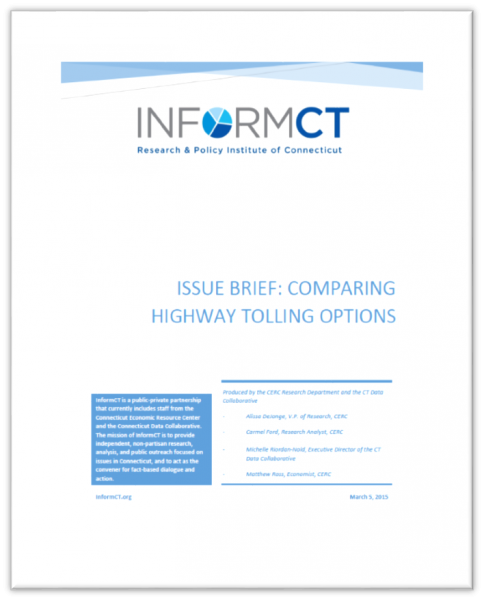
If Connecticut opts to introduce a system of tolls on the state’s roads to help fund a significant expansion of transportation infrastructure projects in the years ahead, the toll system instituted could run the risk of causing an increased use of local roadways that “could shift the burden of maintenance and congestion to municipalities,” and lower income residents in the state could be faced with “a higher burden relative to their incomes than wealthier Connecticut residents.” Those warnings to policy makers are included in an Issue Brief  by Inform CT that reviews the various tolling options and respective challenges posed.  Connecticut eliminated tolls more than 30 years ago in the aftermath of a horrific accident at the Stratford toll plaza, and state leaders have been in a “perpetual debate about whether to reinstate them ever since,” the paper points out.issue brief

With overhauling the state’s transportation system is a leading element in Governor Malloy’s agenda to boost the state’s economy, renewed attention is being paid to methods of generating sufficient revenue to support those initiatives, and to issues raised in the 2015 policy brief.  Spurred by advances in technology, the possibility of imposing a system of electronic tolls, such as those in use in other states, are among the considerations, with border tolling, distance tolling and congestion pricing among the options.

920x920The issue brief indicated that a disadvantage of a distance toll system on all limited access highways in Connecticut would be that it “could create an incentive for people to use alternative roadways. The increased use of these roadways could shift the burden of maintenance and congestion to municipalities.” The advantage would be that distance tolls “could help to more efficiently allocate the cost of these roadways to drivers who use them the most.”
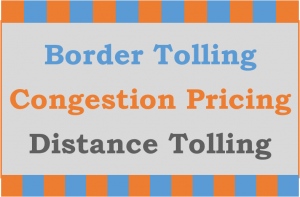
In analyzing the potential impact of tolls placed at Connecticut’s borders, the policy paper notes that while such an approach would “help to ensure that out-of-state residents driving through Connecticut pay for their use of Connecticut’s roadways,” border tolls “place a disproportionate burden on residents of Connecticut who commute out-of-state to work. This burden is further amplified if we believe that, on average, these out-of-state commuters use a smaller share of the roadways than their in-state commuting counterparts.”

toll optionsCongestion pricing, which provides for higher toll charges at peak traffic times, “helps to limit traffic on major roadways and create an incentive for people to use more environmentally friendly forms of public transportation,” the policy paper indicates.  However, a congestion pricing system “could polarize roadway use by displacing low income commuters during peak driving hours. Congestion pricing could also create displacement effects whereby the increased use of local roadways could shift the burden of maintenance and congestion to municipalities.”Print

The report suggests that “congestion pricing and distance tolls could become more affordable for low income residents if electronic payment systems were implemented that allow for income-based rate reductions.”

Earlier this year, a study panel recommended installing tolls and raising taxes in order to pay for Malloy's 30-year, $100 billion transportation program.  Legislators have said that any decision on the imposition of tolls is at least a year away, as attention focuses during the current session on establishing a method to assure that money allocated to transportation is not redirected to other areas of government.

The issue brief also stress that “a key consideration when trying to outweigh the benefits and costs of implementing tolling in Connecticut is how the revenue from the tax will be redistributed to the residents of the state.” It goes on to highlight that “as the bill stands, the monies raised would go into the Special Transportation Fund but allocation of the monies from there is not specified. The allocation of these funds is an important discussion that needs to take place before the impact of the legislation can be considered in earnest.”

InformCT is a public-private partnership that currently includes staff from the Connecticut Economic Resource Center and the Connecticut Data Collaborative. The mission of InformCT is to provide independent, non-partisan research, analysis, and public outreach focused on issues in Connecticut, and to act as the convener for fact-based dialogue and action.

Legislature to Examine Why Zero Convictions for Human Trafficking, Even As Incidents Increase in CT

Human trafficking is a form of modern-day slavery. This crime occurs when a trafficker uses force, fraud or coercion to control another person for the purpose of engaging in commercial sex acts or soliciting labor or services against his/her will.  It is happening in Connecticut. Connecticut’s Permanent Commission on the Status of Women (PCSW) is convening a Joint Informational Forum with the state legislature’s Judiciary, Public Safety and Security, and Children’s Committees on Thursday, March 31 at the Legislative Office Building to examine the issue, the response of law enforcement and other agencies in Connecticut, and where changes in state law need to be made.

A decade ago, in 2006, Connecticut enacted Public Act 06-43, which created the felony charge of trafficking in persons.

“And yet, since then, only 10 arrests have been made and there have been no convictions,” according to PCSW, which noted that during that same time, the Department of Children and Families has received more than 400 referrals of individuals with high-risk indicators for human trafficking that demanded a collaborative response, including the participation of law enforcement.  Those numbers have climbed each year, with 133 referrals in 2015, according to the Governor’s office. human trafficking

“We decided to convene trafficking experts because, as we learn more about human trafficking, in particular sex trafficking of adults and minors, we need to ensure that victims are supported and that law enforcement and prosecutors have the tools to adequately punish traffickers, those buying sex, and those permitting and facilitating the sale of sex in Connecticut,” said Jillian Gilchrest, senior policy analyst for the PCSW, and chair of the state's Trafficking in Persons Council.

“Although the legislature has made great strides to increase awareness and enhance training programs against human trafficking, and especially the sex trafficking of minors – the truth is that this modern-day slavery is a national issue,” said State Rep. Noreen Kokoruda, the ranking member of the General Assembly’s Committee on Children. “Connecticut must take the critical steps necessary to combat human trafficking and to make sure that the legislation we passed is enforced. In order to proactively address this issue, we need a collaborative effort from all agencies; this issue is simply too important to ignore.”

Data from the National Human Trafficking Resource Center (NHTRC) indicates that in 2015 there were 120 calls made and 39 human trafficking cases reported in Connecticut – the highest numbers in the past three years. The statistics are based on phone calls, emails, and webforms received by the NHTRC that reference Connecticut. The NHTRC works with service providers, law enforcement, and other professionals in Connecticut to serve victims and survivors of trafficking, respond to human trafficking cases, and share information and resources.

Since 2007, the NHTRC has received more than 600 calls to their hotline that reference Connecticut.  As Connecticut’s felony crime of trafficking in persons, Connecticut Statute §53a-192a approaches its 10-year- anniversary, members of the Judiciary, Public Safety, and Children’s Committees are interested in understanding why no one has been convicted under §53a-192a and what policy or legislative changes can help remove current barriers to prosecution in these cases, officials said.

chartIn Connecticut, a person is guilty of trafficking in persons when such person compels or induces another person to engage in sexual contact or provide labor or services by means of force, threat of force, fraud or coercion. Anyone under the age of 18 engaged in commercial sexual exploitation is deemed a victim of domestic minor sex trafficking irrespective of the use of force, threat of force, fraud or coercion.

In a January report to the state legislature, the Trafficking in Persons Council pointed out that “Connecticut is not unique; there are many states that have yet to prosecute a trafficking case. In fact, according to the U.S. Department of State, as of 2011 only 18 states brought forward human trafficking cases under state human trafficking statutes.”

A series of proposals are now being considered by the state legislature.  In recent testimony, the PCSW pointed out that “the demand side of human trafficking and prostitution has all but been ignored in Connecticut. Arrests have been concentrated first on prostitutes, and secondarily on those buying sex. In fact, in the last 10 years in Connecticut, prostitutes were convicted at a rate of 7 times that of those charged with patronizing a prostitute It’s a basic premise of supply and demand: if you reduce the demand, you reduce the supply, which in this case, is the purchase of women and children for sex.”

In legislative testimony last month, the PCSW pointed out that “more and more trafficking and prostitution are being arranged online and taking place at hotels and motels throughout Connecticut. According to the National Human Trafficking Resource Center (NHTRC), Hotels and Motels are among the top venues for sex trafficking in Connecticut.”  PCSW stressed that “as we learn more about human trafficking, and what the crime looks like in Connecticut, we must ensure that our policies keep pace with that reality.”  Among the proposals is one designed to “give more tools to investigators,” Gov. Malloy and Lt. Gov. Wyman recently told a legislative committee.

The Trafficking in Persons (TIP) Council is chaired and convened by the Permanent Commission on the Status of Women and consists of representatives from State agencies, the Judicial Branch, law enforcement, motor transport and community-based organizations that work with victims of sexual and domestic violence, immigrants, and refugees, and address behavioral health needs, social justice, and human rights.

The report recommended that “Connecticut must ensure the creation of laws that address the continuum of exploitation, the implementation of laws, and the pursuit of criminal punishments for such cases. Sentences should take into account the severity of an individual’s involvement in trafficking, imposed sentences for related crimes, and the judiciary’s right to impose punishments consistent with its laws.”

Regarding victims of trafficking in Connecticut, the report recommended that “Key victim protection efforts include 3 "Rs" - rescue, rehabilitation, and reintegration. It is important that human trafficking victims are provided access to health care, counseling, legal and shelter services in ways that are not prejudicial to victims’ rights, dignity, or psychological well-being. Effective partnerships between law enforcement and service providers mean victims feel protected and such partnerships help to facilitate participation in criminal justice and civil proceedings.”

According to Rep. Rosa C. Rebimbas, ranking member of the Judiciary Committee, “Connecticut has made great strides to protect vulnerable women and children with strong laws against human trafficking, and resources to help them escape from the horrors of human trafficking, yet we are still behind when it comes to prosecution of the criminals who perpetrate such heinous offenses. We will continue to press for stronger laws to protect Connecticut residents, and to bring justice on their behalf.”

Combatting Childhood Obesity Starts From Day One; Wide-Ranging Policies Proposed

Less “screen time,” more physical activity, more nutritional foods and fewer sugary beverages – that’s the formula to prevent obesity from taking root in infants and toddlers in the formative years of childhood, according to new recommendations by the Child Health Development Institute (CHDI) of Connecticut.  A series of “science-based policy opportunities” for Connecticut, outlined this week, also include support for breastfeeding in hospitals and child care centers.scale The need for stronger action is underscored by recent statistics.  In Connecticut, one of every three kindergartners is overweight or obese, as is one of every three low-income children. Children who are overweight or obese are more likely, according to the policy brief, to have:

  • risk factors for future heart disease, such as high cholesterol and high blood pressure
  • a warning sign for type 2 diabetes called “abnormal glucose tolerance,” although many children are being diagnosed with the full-blown disease in increasing numbers
  • breathing problems such as asthma
  • gallstones, fatty liver disease, and gastroesophageal reflux (acid reflux and heartburn)
  • problems with their joints

“Recent research shows that obesity may be very difficult to reverse if children are not at a healthy weight by 5 years of age,” the policy brief indicated. “Investing early in preventing childhood obesity yields benefits for all of us down the line by fostering healthier children, a healthier population overall and greatly reducing obesity-related health care costs over time.”

The policy brief recommends five ways Connecticut’s child care settings and hospitals can help our youngest children grow up at a healthy weight:

  1. Support breastfeeding in hospitals and in child care centers and group child care homes.
  2. Serve only healthy beverages in all child care settings.
  3. Help child care centers and group child care homes follow good nutrition guidelines.
  4. Increase physical activity time for infants and toddlers in all child care settings.
  5. Protect infants and toddlers in all child care settings from “screen time.”

The recommendations stress that “talking, playing, singing and interacting with people promotes brain development and encourages physical activity,” and urges that healthy infant and toddler development be encouraged by:

  • Never placing them in front of televisions, computers, or tablets to occupy them
  • Never allowing infants and toddlers to passively watch a television, computer, mobile phone or other screen that older children in the same room are watching

“Healthy lifelong weight begins at birth,” said Judith Meyers, President and CEO of CHDI and its parent organization the Children’s Fund of Connecticut. “Investing in obesity prevention policies makes sense for Connecticut.”  Meyers added that “the numbers are staggering,” and it has become clear that “to really address this problem we need to prevent it in the first place.”

If Connecticut were to implement the five recommendations highlighted in the policy brief, it would be the first state in the nation to do so, officials said. 1-5 A number of the proposals have been successfully implemented in other jurisdictions, including states and cities.  Marlene Schwartz, Director of UConn's Rudd Center for Food Policy and Obesity, noted that Connecticut has long been a leader in providing nutritional lunches in schools, and said that now the state’s attention needs to move to the earlier years of childhood.  “The field has realized that we need to start even earlier,” she said.  Rudd also indicated that determining "policy changes that might help reduce the disparities" in Connecticut, which are apparent in race, ethnicity and socioeconomic data, is also essential.

Legislation now pending at the State Capitol, which is not as comprehensive as the policy brief recommendations, is designed to "increase the physical health of children by prohibiting or limiting the serving of sweetened beverages in child care settings, prohibiting children's access to certain electronic devices in child care settings, and increasing children's participation in daily exercise."  The proposed legislation, HB 5303, was recently approved by a 10-3 vote in the Committee on Children, but has an uncertain future before the full legislature.

Dealing with childhood obesity has been a challenge because of the “many different systems and programs that impact childhood development – which can also provide “many different places for opportunities to influence what happens.”  Officials said that some of the policy proposals can be realized through legislative action, others by regulatory changes, and others through voluntary initiatives.  They indicated that since Connecticut established the Office of Early Childhood in recent years, coordination of oversight and services has improved, which is an encouraging development.  Child care settings provide an opportunity to impact a large proportion of the state’s pre-kindergarten children, but plans to disseminate the message more broadly, including through pediatrician’s offices, are being considered. obesity consequences

The recommendations call for “allowing toddlers 60-90 minutes during an 8-hour day for moderate to vigorous physical activity, including running, and “adherence to federal nutrition guidelines” including more whole grains and low-sugar cereals, no sugary drinks, and fewer fried foods and high-sodium foods.  Through 11 months, infants should be served “no beverages other than breast milk or infant formula, and those 12 months through 2 years old should be served no beverages other than breast milk, unflavored full-fat milk water, and no more than 4 ounces of 100% fruit juice.”

The CHDI policy brief indicates that “childhood obesity can contribute to poor social and emotional health because overweight and obese children are often bullied and rejected by their peers as a result of their weight. That stress can affect every part of their development, interfering with their learning (cognitive), health (physical and mental), and social well-being.”

k obeseThe recommendations, described as “affordable, achievable, common sense measures,” were prepared for CHDI as part of a grant to the UConn Rudd Center for Food Policy and Obesity, funded by the Children’s Fund of Connecticut.  The author was public health policy consultant Roberta R. Friedman, ScM.

CHDI began focusing on strategies to promote healthy weight in children from birth to age two after publishing thechdi_logo IMPACT “Preventing Childhood Obesity: Maternal-Child Life Course Approach” in 2014. The report reviewed scientific research on the causes of obesity and explored implications for prevention and early intervention. In 2015, the Children’s Fund of Connecticut funded four obesity prevention projects in Connecticut that addressed health messaging, data development, policy development and baby-friendly hospitals.

Raising Revenue Getting Tougher for Towns, Cities in Connecticut; Property Tax Drives Disparities

The Connecticut Data Collaborative has launched a series of reports that will examine the fiscal situation of Connecticut’s 169 municipalities making the data compiled in several recent statewide initiatives that examined fiscal challenges facing the state and its towns more readily accessible to the public. The goal is to “highlight the major findings from these initiatives and reports; expand on the research that was done; present it through a new medium; and inform a broader audience on the work being done in the state.”

The first data story, published this month, highlights the findings from a report to the General Assembly’s Program Review and Investigations Committee prepared by the Federal Reserve Bank of Boston’s New England Public Policy Center (NEPPC), “Measuring Municipal Fiscal Disparities in Connecticut.”map

The conclusion: the capacity to raise revenue from property taxes is the main driver of fiscal disparities in Connecticut.

  • 78 of 169 towns have a deficit, with revenue capacity below the cost of providing services. These 78 towns represent almost 60 percent of state’s population.
  • 91 of 169 towns have sufficient capacity to raise revenue capacity to cover the cost of services.
  • Municipal cost differences exist but are not as dramatic as the differences in the ability to raise revenue
  • Current state non-school grants made to towns have a limited effect in reducing non-school fiscal disparities in Connecticut.
  • Five cost factors were identified as driving non-school municipal costs: unemployment, population density, private sector wages, town road maintenance, and jobs per capita.
  • Statistical analysis shows that the following factors do not impact costs: poverty, population, the share of foreign-born population, and the share of older rental housing units

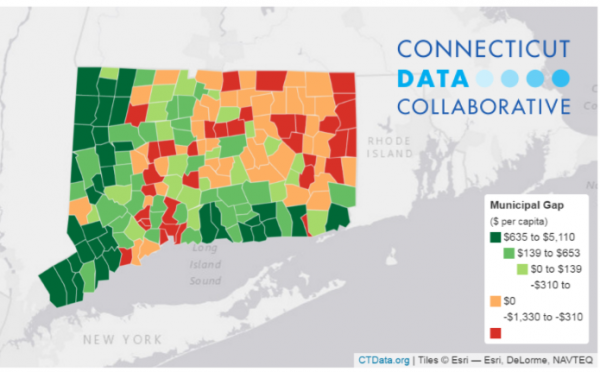
The website points out that “a municipal gap exists when the costs are higher than the revenue raising capacity,” and provides an interactive town-by-town listing of the “gaps.”  The highlighted findings:

  • The largest gaps are in Hartford (-$1,330), Bridgeport (-$1,168), New Haven (-$1,101), New Britain (-$1,056) and New London (-$896). The largest surpluses are in Westport, New Canaan, Darien, and Greenwich.  The data is FY 2007-2011, averaged.
  • 78 towns in the state have a deficit - the capacity is below the cost of providing services. These towns cover almost 60 percent of state’s population.
  • 91 towns have sufficient capacity to raise revenue greater than the cost of services. These towns cover 40 percent of the state’s population, primarily in Fairfield County, Litchfield and the shoreline.

Since property taxes are the primary way that municipalities raise revenue, the website examined the trends in the Equalized Net Grand List (ENGL) since 2011.  Overall, property tax revenue has been on the decline, the data indicated. An interactive table on the site shows - by town- the average annual growth rate (or decline) in the grand list from 2011 to 2014, and also shows the Municipal Gap calculated by the report. In total, ENGL has declined for 145 of the 169 towns since 2011 – “thus the revenue raising capacity for towns has only become more difficult.”

73 Local Health Departments Serve CT's 169 Municipalities

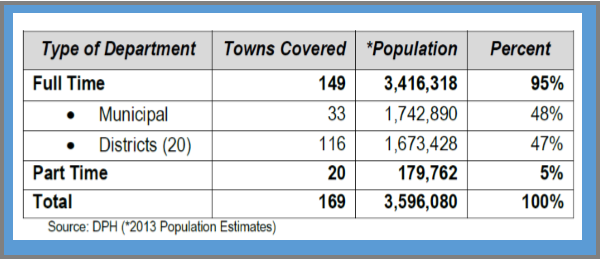
Connecticut has 73 local health departments serving the state’s entire population – individuals residing in the state’s 169 cities and towns. Data compiled by the state Office of Legislative Research breaks down the health departments by full-time and part time, as well as their geographic coverage. Of the 73 local health departments across the state, 53 are full-time departments, while the remaining 20 are part-time. The full-time departments include 33 individual municipal health departments and 20 health district departments (multi-town departments serving from two to 20 towns).numbers

By law in Connecticut, a town may have a part-time health department if: (1) it did not have a full-time department or was not part of a full-time district before January 1, 1998, (2) it has the equivalent of one full-time employee, and (3) the Department of Public Health commissioner annually approves its public health program and budget.

According to the Department of Public Health (DPH), based on the state’s 2013 estimated population, full-time health departments (both municipal and district) serve about 95 percent of the state’s population, while part-time departments serve the remaining 5% percent, OLR reports.

Connecticut’s local public health system is decentralized and a local health department falls under the jurisdiction of its respective municipality or district. Staff are hired and employed by the municipal or district health department.

The law requires towns, cities, and boroughs to nominate a municipal health director, who must be approved by their respective legislative bodies and DPH. The DPH commissioner may remove the director for cause. The town, city, or borough may also take such action with the commissioner’s approval.public health

Municipal and district health departments enforce the state’s public health laws, rules, and regulations, including the Public Health Code. Responsibilities include jurisdiction to:

  • examine and remediate public health hazards, nuisances, and sources of filth;
  • levy fines and penalties for Public Health Code violations;
  • grant and rescind license permits (e.g., for food service establishments or septic systems);
  • establish fees for health department services;
  • submit to DPH reports on reportable diseases from health care providers and clinical laboratories; and
  • provide for sanitation services (district directors may serve as sanitarians as practical).

Full-time municipal and district health departments receive state funding. The legislature eliminated funding for part-time health departments in 2009, according to OLR.


State Residents Express Confidence in Public Schools; CT Ranks 12th in Poll

North Dakota residents (89%) are more likely than those living in any other U.S. state to rate the K-12 education provided in their state as excellent or good, followed closely by those living in Minnesota and Nebraska (82%). Connecticut ranked at number 12 in the nation, for residents’ assessment of their state’s public schools, with 71 percent viewing the caliber of education provided as good or excellent. In stark contrast to the top states, about half as many Nevada and New Mexico residents, 42% in each state, rate their public edCHDIucation systems positively, the lowest percentages in the country, in a new poll released by Gallup.  Joining the two southwest states at the bottom of the list are Hawaii (47%), Louisiana (49%), Arizona (50%), California and Alabama (52%), Mississippi (53%) and  Oregon and Rhode Island (54%).

71State residents were asked “how would you rate the quality of public education provided in grades K-12” on a scale including excellent, good, fair and poor.  The top 10 states after North Dakota, Minnesota and Nebraska are Iowa, New Hampshire and Massachusetts (80%), Wyoming (79%), South Dakota (78%) and Vermont and Virginia (75%).

These results are based on a Gallup poll conducted from March through December 2015, and released this week, with approximately 500 interviews in every state.

Residents in states where a large share of residents rate the quality of education as excellent or good are also more likely to believe their public school system prepares students for success in the workplace, according to Gallup.230px-Gallup_Corporate_logo

When asked “Do you believe your state public school system prepares students for success in the workplace?” North Dakota and Nebraska again topped the list, at 89 percent and 81 percent, respectively.  Connecticut ranked 18th at 68 percent.


Focus Shifts from Veterans to Children in Efforts to Combat Homelessness

As progress is being made in Connecticut and across the country to end homelessness among veterans, greater attention appears to be turning next to homelessness among families with children. Families with children under age 6 are the fastest growing segment of the homeless population in the United States, Myra Jones-Taylor, Commissioner of Connecticut’s Office of Early Childhood, told state legislators recently.

In Connecticut, an estimated 3,000 to 9,000 families with young children are homeless, Jones-Taylor said. Of that estimate, approximately 1,125 families experienced homelessness in 2015 with 2,022 children impacted. Of those children, 43 percent were under the age of 5 and 42 percent were between the ages of 5 and 12.quote

Governor Malloy announced last month that the federal government has certified Connecticut as having effectively ended homelessness among veterans.  Just the second state in the nation to accomplish the milestone, Connecticut has implemented a comprehensive, unprecedented system to target homelessness among veterans.  Connecticut was one of the first states to join a national initiative that sought to secure commitments from communities across the country to end veteran homelessness by the end of 2015.

Nationally, between 2009 and 2015, there has been a 35 percent reduction in the number of homeless veterans, according to a Governing magazine’s review of data from the Department of Housing and Urban Development, published this month.  In addition to Connecticut, major cities including New Orleans, Houston and Las Vegas have indicated that “they’ve effectively eliminated homelessness among veterans.”

“But most people who are homeless are not veterans.  And in many of the nation’s large cities, homelessness among the general population appears to be getting worse,” the magazine points out.  Between 2014 and 2015, overall homelessness in the nation’s 50 largest urban areas increased by 3 percent.  The numbeyouth hr of unsheltered individuals in those cities went up 10.5 percent and the number of unsheltered people in homeless families grew by 18.8 percent, Governing revealed.

Many attribute the success in reducing the veteran homeless population to an aggressive well-planned effort initiated at the federal level, and are looking for similar efforts focused on homeless youth.

In President Obama’s budget plan submitted to Congress this year, he requested $10.967 billion for the purpose of reaching and maintaining the goal of ending family homelessness by 2020. The National Alliance to End Homelessness emphasizes that “should this request be enacted by Congress, it would give communities what they need to end homelessness for families with children.”

Connecticut Child Advocate Sarah Healy Eagan has said that “research has shown that homelessness puts children at increased risk of health problems, developmental delays, academic underachievement, and mental health problems.”

According to the National Low Income Housing Coalition (NLIHC), the federal Department of Housing and Urban Development (HUD) is asking Congress to provide sufficient funding for 10,000 new housing choice vouchers for homeless families with children, funding for 25,000 new permanent supportive housing units, and funds to provide 8,000 families with rapid rehousing assistance.

In addition, HUD announced a legislative proposal where it will seek $11 billion in mandatory spending over the next 10 years to serve a total of 550,000 families with additional vouchers, permanent supportive housing, and rapid rehousing assistance.

At a February public hearing at the State Capitol focused on proposed Senate Bill 10, which focuses on child care for homeless families with children.  It would create a “protective services” category for children experiencing homelessness, making them “categorically eligible” for child care subsidies regardless of the parent’s work status; and, ensure immediate access to child care for all children by creating a 90-day grace period for providing documentation of health and immunization records when enrolling in a child care center, group children care home, or family child care home.youth

The executive director of the Partnership for Strong Communities, Alicia Woodsby, testifying in support of the legislation, expressed the hope that its passage would “assist providers in resolving each case of family homelessness more quickly,” noting that families experiencing homelessness lack employment and are struggling with extreme instability.  The lack of child care makes it even more challenging for them to participate in worker training or secure new employment.”

The coalition of organizations and agencies led 2016 Homelessness & Housing Advocacy Days on March 2 and 3 at the State Capitol, drawing attention to the issue of homelessness, including homelessness among children and families.

There are wide estimates of just how many young people are homeless nationwide, according to the Child Welfare League of America, ranging from half a million to 1.6 million with estimates that up to 40 percent are gay, lesbian, questioning or transgender. Many of these young people have been kicked out of their own homes and are responsible for their own survival and are frequent targets of exploitation, trafficking and abuse while living on the streets CWLA points out.

The White House has pointed out that three years ago, in February 2013, the U.S. Interagency Council on Homelessness (USICH) issued a  Framework to End Youth Homelessness detailing the steps necessary to achieve the goal of ending youth homelessness by 2020, and strategies to improve outcomes for children and youth experiencing homelessness.

Officials noted that “the framework articulates the need for government, non-profit, civic, and faith community partners to focus together on the overall well-being of youth experiencing homelessness — addressing not just their need for stable housing, but also their educational and employment goals, and the importance of permanent adult connections in their lives.”

The conclusion of that report stated flatly that “we can end youth homelessness in America by 2020.”  The report emphasized that “Reaching this goal will require more resources at all levels and sectors, but resources are not enough. At all levels of policy and programming, we have to continuously challenge ourselves to gather and use better data, to leverage existing resources available to us, to implement more deliberate service strategies informed by good data and stakeholder input, and to coordinate systems and services around those strategies.”

“Access to high quality early care and education is extremely important for all children, but especially for children in vulnerable circumstances,” Rachel Leventhal-Weiner, Education Policy Fellow at Connecticut Voices for Children, told legislators.  “We consider homeless children to be among the most vulnerable.”

Plans for Expanded State Civic Network Gains Support of Open Government Advocates

Advocates for government transparency are lining up in support of legislation that would establish a “state civic network” for Connecticut, similar in structure to the national C‐SPAN model. The independently financed, non-profit network would expand access to the workings of the three branches of state government by building on the present CT-N system, which has been funded directly by the General Assembly since 1999. ctnThe new network would dramatically extend televised and online coverage and “on-demand access” to all legislative hearings and debates, as well as public policy conferences, regulatory hearings, executive agency meetings, and state Supreme Court and Appellate judicial proceedings.

The result would be searchable, shareable library of state government deliberations, decisions and activities – and the tools to make it understandable and useful – available to every citizen through cable TV, online and mobile devices.

“Access to government information is the key way for the public to know what its government is doing,” according to the Connecticut Commission on Freedom of Information. Calling the proposal “pro‐ transparency and cost‐saving,” Executive Director Colleen Murphy underscored the Commission’s commitment to encouraging citizen engagement. The State Civic Network “will bring the workings of government into people’s homes...in a most productive, timely, and professional manner.”

The Board Chair of the Connecticut Public Affairs Network, which operates CT-N under contract to the state legislature, indicated that the network “was never intended to be a service OF government, but rather ABOUT government – as are the national and municipal services that welcome citizens to unbiased channels that provide access and context," said veteran Connecticut television news anchor Pat Sheehan. "Technology now allows the coverage of all government activities, archived and searchable files, and presentations that appeal not-only to government insiders, but to the general public as well.”

The public’s expectation of coverage has changed over the past seventeen years,” said Paul Giguere, the founder of the network and CEO of the independent non‐profit Connecticut Public Affairs Network (CPAN). “Technological innovations have changed how and when citizens access information, and a state civic network will use emerging technologies to allow greater public engagement with the development of policies and legislation that affect us all.”

1932481_10152248599276937_845195084824203420_nGiguere pointed out that “there are 10 hearing rooms, but CT¬N’s physical plant limits us to covering only two events concurrently. That means up to 80% of the Legislative committee process at any given time goes unseen. Our capacity to cover the Executive and Judicial Branches is even more limited.”

The Connecticut Council on Freedom of Information, the Society of Professional Journalists, and the Connecticut Conference of Municipalities (CCM) have endorsed the proposed legislation to expand coverage throughout state government, as have advocacy groups such as the American Association of Retired Persons (AARP), CT Community Non‐Profit Alliance, the League of Women Voters, the Connecticut Education Association, Common Cause, and the Connecticut Citizens Action Group (CCAG).

The proposed State Civic Network is now being considered by the legislature’s Joint Committee on Government Administration and Elections. Under the plan, management and operational funding would be provided through a process that already exists for local community access stations, regulated by PURA, the state’s Public Utility Regulatory Authority. PURA has an extensive history of selecting non‐profit managers for government‐use channels that provide local public, educational, and government programs within cable television franchise areas. These channels are likewise supported through programming fees charged by cable companies, rather than by taxpayer funds, CT-N officials pointed out.

The plan drew opposition from AT&T, with the cable provider warning in legislative testimony that it would "have a real impact on consumers’ ability and willingness to continue to buy video service."   CT-N "should be required to annually justify its budget to the General Assembly like any other proposed expenditure,"AT&T said in a prepared statement.

CFOG, the Connecticut Foundation for Open Government, noted dramatic changes in the way citizens access news, with increased reliance on social media and mobile devices. Funded by a subscriber fee similar to how C‐SPAN and community access stations arestate civic network currently funded, CFOG notes, “the new entity would be monitored and accountable to the public, but independent from government itself.”


The State’s Office of Consumer Counsel, created in 1975 by the legislature to act as the advocate for consumer interests in all matters and “fight for the most reasonable rates,” endorsed the State Civic Network proposal after “carefully analyzing” a monthly fee of less than $0.50 per subscriber. Consumer Counsel Elin Katz said “a thriving democracy requires citizen access to information relating to their government, access that is ideally broad and unfettered.”

“Best of all,” she added, “this proposal will create a permanent and searchable online library of public documents and visual recordings of state government events that would be of great use both to the public and to the elected officials who serve them.”

CPAN launched the CT-N network for the Connecticut General Assembly in 1999 as a 24‐hour media service providing gavel‐to‐gavel coverage of state government and public policy on both television and internet platforms. In the intervening years, CPAN has extended the scope of its CT-N programming, adding coverage of electoral politics, news conferences, and a weekly review program, Capitol Report.