New London’s Hearing Youth Voices is Finalist for Region’s First-Time $50,000 Prize

Hearing Youth Voices, a youth-led social justice organization working to create systemic change in the education system in New London, is one of seven youth organizations in New England with a chance to win a $50,000 grant from The Nellie Mae Education Foundation, the largest philanthropic organization in the region focused exclusively on education. The first-ever Nellie Mae Education Foundation Youth Organizing Award honors a New England youth organizing group that has shown tremendous commitment to advancing student-centered learning or redesigning education to meet the needs of all students - specifically focused on public secondary education.hearing-youth-voices-logo

At Hearing Youth Voices (HYV), youth leaders identify issues, research solutions, and run campaigns aimed at making concrete, meaningful changes in their public schools. The core membership and leadership are working class youth of color, many of whom are also LGBTQI, and/or immigrant, and/or have been pushed out of school.

The winner from among the finalists will be decided by online votes of the public, during a month of balloting.  From November 1 at 12:00 PM EST – November 30 at 12:00 PM EST, the public is invited to vote for finalists through email on the Students at the Center Hub and via text message. The organization with the most votes will receive a $50,000 grant to continue the organization's work around advancing student-centered learning or redesigning education to meet the needs of all students.picture3

Hearing Youth Voices describes itself as “a youth-led organization that trains young people of color to organize, fight, and deconstruct systems of oppression in our community.” Recently, HYV youth ran the “We Want to Graduate Campaign,” which focused on systemic obstacles to students graduating, specifically absence-based credit loss and suspensions.

After two years of hard work on the part of hundreds of youth, the New London Public Schools (NLPS) revised its attendance policy to offer supportive interventions instead of punishments for absent students, a change that affected the more than 3,000 students and families in NLPS. Additionally, HYV youth worked alongside a broader coalition of parent advocates, school staff, and Board of Education members to create the district's first-ever Restorative Practices pilot project.

Most recently, HYV successfully advocated for students to become voting members of the Board of Education's Policy Committee, integrating student voice into the highest level of policy decision-making in the district. Youth leaders identify issues, research solutions, and run campaigns aimed at making concrete, meaningful changes in their public schools.

“Our seven Youth Organizing Award finalists are leaders in promoting student ownership and voice as part of school decision-making in New England,” said Nick Donohue, president and CEO of the Nellie Mae Education Foundation. “These students have committed themselves to improving educational experiences for their peers while building the knowledge and skills which will serve them long after graduation. I’m proud to offer a well-deserved congratulations on the great work they’ve achieved as well as the impact they are making for future students.”

In a student-centered environment, learning is personalized, competency-based, happens anytime, anywhere and allows students to take ownership of their education. Student-centered learning prepares students to master the academic knowledge, critical thinking, problem solving and communication skills they need to thrive.

Also vying for the prize are Portland Empowered (Maine), Sociedad Latina (Boston), Granite State Organizing Project (New Hampshire), Young Voices (Providence), Providence Student Union (Providence), and UP for Learning (Vermont).

The HYV website explains that “our work is different- it is about collective action to solve systemic problems. We don't want to make life easier for one young person or one family. We want to go right down to the root of the problem and fix the system so that no more youth and families have that problem! And we believe that the people who have lived the problem are experts on it and need to help define what the solution could be.......and lead the charge to make that change happen.”

The Nellie Mae Education Foundation supports the promotion and integration of student-centered approaches to learning at the high school level across New England—where learning is personalized; learning is competency-based; learning takes place anytime, anywhere; and students exert ownership over their own learning. To elevate student-centered approaches, the Foundation utilizes a four-part strategy that focuses on: building educator ownership, understanding and capacity; advancing quality and rigor of SCL practices; developing effective systems designs; and building public understanding and demand.

https://youtu.be/WtTuHED6TM4

Diverse Hispanic Workforce More Likely to Face Challenges, Report Finds

There are about 24 million workers of Hispanic descent in the United States. While this group is frequently referred to as a single entity, the reality is that these workers come from a variety of ethnic backgrounds, each with their own challenges in the labor market. A new report from the Center for Economic and Policy Research (CEPR) provides an overview of the diverse backgrounds of the Hispanic workforce, and shows how each group experiences unique challenges in the labor market, specifically in terms of unemployment, wages, poverty, language barriers, and access to health and retirement benefits.workforce

The report, “Hispanic Workers in the United States” also shows that union representation has helped to address some of these challenges. Some highlights from the report include:

  • Workers of Mexican descent are by far the largest subgroup of the Hispanic workforce (14.9 million);
  • Women make up only 43.3 percent of the overall Hispanic workforce, but they are a majority of several subgroups, including Panamanians (58.1 percent), Bolivians (53.2 percent), and Paraguayans (51.0 percent);
  • sq-social-media-logo-gray200pxby200pxAbout two-thirds of Hispanic workers are U.S. citizens – Puerto Ricans (98.7 percent) and Spaniards (90.9 percent) are the groups most likely to be citizens;

  • Hispanic workers in general are more likely than workers of any other race/ethnicity to be in poverty. Among Hispanics, Guatemalans are most likely to be members of the working poor (19.1 percent);
  • About 30 percent of Hispanic workers do not have health insurance, but over half of Guatemalan and Honduran workers lack health insurance.

hispanics-ctConnecticut’s population is 15 percent Hispanic, the 11th largest Hispanic statewide population share nationally, according to the Pew Hispanic Center.  The Latino population increased by 50 percent in Connecticut from 2000 to 2010. The highest percentage of Hispanics in Connecticut municipalities are in Hartford, Willimantic, Bridgeport, New Britain, Waterbury, Meriden, New Haven, New London, Stamford and Danbury, according to Zip Atlas. In Connecticut, Mexicans are the second largest Hispanic community in the state behind Puerto Rican residents, CT Mirror has reported. Willimantic, New Haven and Norwalk have the three highest Mexican populations in Connecticut, with 5.24 percent, 2.8 percent and 2.28 percent, according to 2013 data.

The American Immigration Council reports that the Latino share of Connecticut’s population grew from 6.5% in 1990, to 9.4% in 2000, to 14.7% (or 527,163 people) in 2013. In 2009, 94.4% of children in Latino families in Connecticut were U.S. citizens.

Orlando Rodriguez, former legislative analyst at the now-defunct state Latino and Puerto Rican Affairs Commission, told ctlatinonews.com last year that Connecticut’s future is largely dependent on how successful Latinos are in getting into the middle class, and how successful the state is in being able to create middle class jobs for them.

“Simply put,” he said, “The numbers are growing, and if Latinos don’t enter the middle class of Connecticut in large numbers, the state’s economy will feel it negatively…and if they do enter it in large numbers, the economy will grow.”

Cherrie Bucknor, author of the CEPR report explained, “Understanding the diversity and challenges faced by Hispanic workers is key to making better policy decisions.”  The Center for Economic and Policy Research (CEPR) is an independent, nonpartisan think tank that was established to promote democratic debate on the most important economic and social issues that affect people's lives.

Pasta Making Business Continues to Grow, Government Continues to Help

Sometimes, home-grown businesses decide to stay in Connecticut.  That was the case this fall as Carla’s Pasta – an American Dream business success story – reportedly spurned an offer to relocate to a western state, and chose instead to expand in South Windsor, aided by a significant tax abatement. The company produces filled pastas, Italian sauces and pestos, appetizers, and entrees. The brainchild of Carla Squatrito, the business now employs 156 people, including her sons, Sandro Squatrito and Sergio Squatrito, who are vice presidents of business development and operations, respectively. The Italian food product manufacturer, which was launched in 1978, in Manchester and moved to South Windsor in 1997. carlas1

The latest expansion deal, as reported by the Journal Inquirer, will see the town give the family-run Carla’s Pasta a 70 percent tax abatement for seven years, reducing the company’s tax burden by well over $200,000 per year.  The planned expansion is expected to generate 60 to 100 new jobs, and is due to be completed next fall. In 2013, Carla's completed a 30,000-square-foot expansion of its South Windsor facility, the Hartford Business Journal reported.

Town Manager Matthew Galligan, the JI reported, said the state of Utah was courting the company, but Carla’s ultimately decided to stay in town as a result of the deal that was approved by the Town Council.

Carla, a native of the small Italian village of Madonna del’Olmetto, emigrated to the U.S. at age 27.  Her business began as a means of bringing “home-made filled pastas, Italian Sauces and Pestos, made from fresh ingredients, the flavors of her youth” to local customers, retail and later wholesale.  Since 2010, Carla has been recognized by the National Women Business Owners Corporation as an outstanding CEO.carla

The company distributes its pasta to restaurants, institutions and supermarkets. In 2012, the company estimated that it was making about 2 million pounds of pasta per month, with projections to increase that number by a third.

The company received a bridge loan of $2,175,000 from Connecticut Innovations that year to help purchase and install a fuel cell along with a $750,000 grant from the Connecticut Clean Energy Fund. The state assistance was aimed at supporting the company efforts to be environmentally conscious and energy efficient.

In Oct. 2015, the company launched its own retail brand, Cucina di Carla.  Among the distinctive products inspired by the season:  autumn-inspired cinnamon clove pasta ravioli filled with golden pumpkin, whole milk ricotta and Fall spices.

https://vimeo.com/150720277

Digital Citizenship Summit, Born in CT, Grows on Twitter

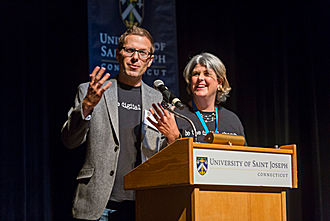
A year ago, the first annual Digital Citizenship Summit was held in West Hartford, hosted by the University of Saint Joseph.  This Friday, the second annual Summit will be held in San Francisco, hosted by Twitter at their global headquarters.  The livestream is expected to reach 3.2 million people globally via Twitter Livestream. The mission of the initiative hasn’t changed as the reach has grown - to unite people, organizations, and companies around the world committed to the safe, savvy, and ethical use of social media and technology. The Digital Citizenship Summit, being held on October 28, is described as a global event, with speakers from Australia, Spain, England, Ireland, Canada, and Kenya.  Attendance can be in-person or virtual.digcitsummit-logo-twitter

The event includes a diverse range of well-known and emerging voices with “quick and powerful” 10-minute talks, along with a range of panels covering the breadth of digital citizenship.  The three themes for the Summit are: Citizenship, Literacy, and Advocacy.

Organizers say “the Digital Citizenship Summit isn’t a conference, it is a movement - away from fear and distrust, and towards educating, empowering and engaging all groups.”  The Summit will share best practices and insights, and promote collaboration, bringing together educators, parents, students, organizations and industry.

The initiative was launched by West Hartford’s David Ryan Polgar and academician Marialice B.F.X. Curran.  Dr. Curran's teaching, scholarship and service focus on digital citizenship and social media in K-12 teacher education. She was named one of the Top 10 Digital Citize65ea16_1edb198f98dd4c51bfd32665595a5f99-mv2nship bloggers to follow in 2014 by Common Sense Media. Polgar, an attorney and college professor, is a frequent speaker (three-time TEDx) and tech commentator on television and in print, focusing on digital citizenship, creativity, cyber ethics, tech balance and humanizing the online experience.

“Millions of people are struggling with modeling safe, savvy and ethical behavior online.  Beneath the surface, there are major conflicts between parents, students, educators and administrators that span personal safety to politics.  The Digital Citizenship Summit bridges the gap between what we want to see online and how to actually be the digital change,” organizers point out.

The event will be emceed by Kelly Wallace, a digital correspondent and editor-at-large for CNN. It is also serving as the kick-off for US Media Literacy Week. The Digital Citizenship Summit will be livestreaming from Twitter headquarters from 9 AM PST to 5:00 PM PST. It can be seen on the Summit website or from Twitter's @Safety account. Individuals do not need to register in order to watch the live stream, but all registrants will receive post-event videos and resources, according to organizers.

2fbe44_14adf49eed2f4d16a1a2b224de945ee0-mv2Joining internationally renowned speakers, there will be student voices – “passionate voices from elementary school students to college-age advocates who are already leading us into the future as positive role models.”  Among the speakers is Jim Steyer, Founder and Chief Executive Officer of Common Sense Media, the nation’s leading non-partisan organization dedicated to improving media and technology choices for kids and families. He is also the Co-Founder and Chairman of the Center for the Next Generation.

In addition to the annual flagship summit event, past digital summits have been held in Ireland and the United Kingdom, with plans for a summit in Australia later this year.

Almond Joy, Born in Connecticut, Is State's Candy Sales Champion

Almond Joy, Milky Way and M&Ms are the likely candies to be greeting Connecticut trick-or-treaters as they move from door to door later this month.  That’s according to candystore.com, which sells bulk candy on-line, in their review of sales data from 2007 through 2015.ct-joy Connecticut's favorite Halloween candy is Almond Joy, with 2,619 pounds of it, on average, ordered each year, the website indicated. Milky Way is Connecticut's second favorite Halloween candy, with 1,366 pounds ordered. M&M's placed third, at 910 pounds on average.
Among Connecticut’s neighboring states, the candy favorite in Massachusetts is Butterfingers; in New York it is Sour Patch Kids, in Rhode Island candy corn topped the list.  Connecticut was the only state where Almond Joy ranked first in candy sales.

Industry research shows that since 2015, online candy sales have increased by 15 percent, according to candystore.com.

The Almond Joy candy bar was introduced in 1946, just after the World War II, when sugar, tropical coconuts and chocolate became more readily available, by the New Haven-based Peter Paul Manufacturing Company,  which was already well-known for its popular Mounds bar introduced in 1921. Today, the Peter Paul Candy Manufacturing Company is a candy-making division within the Hershey Company. It was originally founded in the Elm City in 1919 by six Armenian immigrants led by Peter Paul Halajian, with a manufacturing plant in nearby Naugatuck.

"Almond Joy has seen a resurgence in popularity over the past few years.  No where is that more apparent than Connecticut.  While it cracked the top 3 in a few other states (MN, SD, TX), it was the #1 candy in Connecticut, " said co-CEO of CandyStore.com, Tom Hoeck.

CandyStore.com is an industry leader in candy sales in the United States and Canada, and offers candies of all shapes, sizes, colors, and brands. To determine the best sellers by state, the company reviewed sales from 2007–2015, focusing on the three months leading up to Halloween.candy-map

“Since we sell candy to all 50 states (and Canada), it was easy for us to see a state-by-state breakdown of candy trends and top orders. And we have relationships with all the major candy companies, so they helped us verify as well. Based on this analysis, we determined the Halloween best-sellers that people all over the country love to use in Halloween crafts and treats and give out to trick-or-treaters.”

The company also provides “candy trivia” on its website, noting that during the 1981 inauguration of Ronald Reagan, three tons of jelly beans were served, candy corn is the top selling candy, and two-thirds of American candy bars were introduced more than 50 years ago.

CT Has Nation's 10th Lowest Rate of Cigarette Smoking

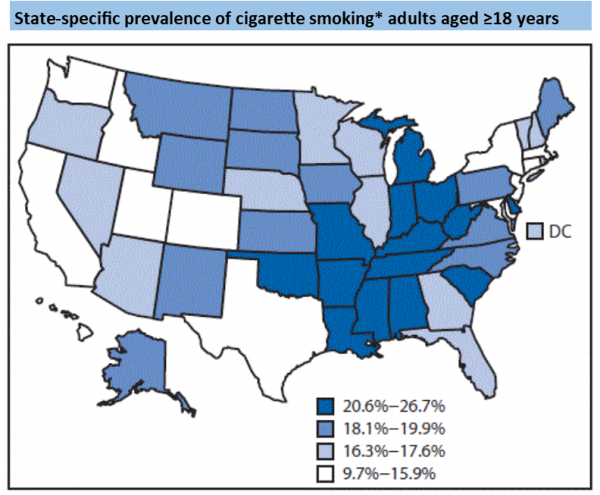
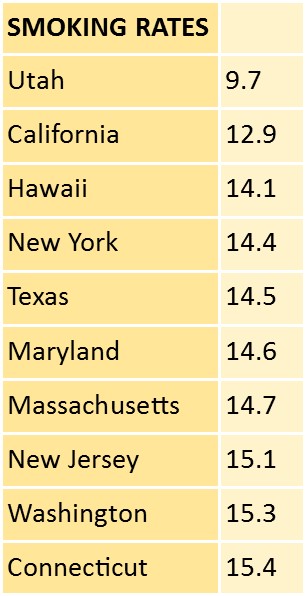
West Virginia had the highest prevalence of cigarette use in the United States, according to a new CDC study.  Utah had the lowest, and Connecticut had the 10th lowest rate. Using data from the 2014 Behavioral Risk Factor Surveillance System, CDC determined that the prevalence of cigarette use in West Virginia was 26.7%, while the lowest rate was 9.7% in Utah.  In Connecticut the rate of cigarette use was 15.4 percent.map

CDC recommended that continued implementation of proven population-based interventions, such as increasing tobacco product prices and enforcing comprehensive smoke-free laws, and increasing access to evidence-based clinical interventions can help reduce tobacco use.

"These findings highlight the importance of enhanced implementation of evidence-based strategies to help smokers and other tobacco users quit completely," CDC said.

Cigarette smoking was significantly higher among males than females in 34 states. Among males, cigarette smoking ranged from 11.2% (Utah) to 27.8% (West Virginia), and among females, from 8.2% (Utah) to 25.6% (West Virginia).

The report also indicated that the prevalence of smokeless tobacco use ranged from 1.4% (Hawaii) to 8.8% (Wyoming). It was 1.8 percent in Connecticut.

ratesPrevalence of any cigarette and/or smokeless tobacco use ranged from 11.3% (Utah) to 32.2% (West Virginia).  Connecticut was 15.3 percent.

The CDC also indicated that the prevalence of any cigarette and/or smokeless tobacco use differed significantly by race/ethnicity in 21 states. Prevalence was highest among whites in eight states (Arizona, Delaware, Georgia, Maryland, New York, North Carolina, Texas, and Virginia), followed by adults of non-Hispanic other races in six states (Arkansas, Florida, Kansas, Nebraska, Oklahoma, and South Carolina), blacks in five states (California, Illinois, Indiana, New Jersey, and Wisconsin), and Hispanics in two states (Connecticut and Michigan).

The report was issued last week from the CDC.  The report concluded that “continued implementation of proven population-based interventions, including increasing tobacco product prices, implementing and enforcing comprehensive smoke-free laws, warning about the dangers of tobacco use through mass media campaigns, and increasing access to evidence-based clinical interventions (including behavioral counseling and FDA-approved medication), can help reduce tobacco use, particularly in populations with the highest use prevalence.”

smoke-that-cigarette


Obesity Rate Climbs in Connecticut, Is Among the Nation's Lowest

Connecticut now has the 10th lowest adult obesity rate in the nation, according to The State of Obesity: Better Policies for a Healthier America. Connecticut's adult obesity rate is currently 25.3 percent, up from 16.0 percent in 2000 and from 10.4 percent in 1990.42

reportAccording to the most recent data, adult obesity rates now exceed 35 percent in four states, 30 percent in 25 states and are above 20 percent in all states. Louisiana has the highest adult obesity rate at 36.2 percent and Colorado has the lowest at 20.2 percent.
U.S. adult obesity rates decreased in four states (Minnesota, Montana, New York and Ohio), increased in two (Kansas and Kentucky) and remained stable in the rest, between 2014 and 2015. This marks the first time in the past decade that any states have experienced decreases — aside from a decline in Washington, D.C. in 2010.

The data, released in September 2016 by the Trust for America’s Health and the Robert Wood Johnson Foundation, reflects information compiled nationwide in 2015.

Connecticut’s childhood obesity rates are 15.8 percent for 2-to-4 year olds from low-income families, 15 percent of 10-17 year olds, and 12.3 percent of high school students.

Regarding obesity-related health issues, Connecticut ranked 31st among the states in the current adult diabetes rate, which is 9.3 percent, and 30th in hypertension at 30.4 percent of the population. rate

In 1985, no state had an adult obesity rate higher than 15 percent; in 1991, no state was over 20 percent; in 2000, no state was over 25 percent; and, in 2006, only Mississippi and West Virginia were above 31 percent.  Nationwide, obesity rates are higher among women (40.4 percent) compared to men (35.0 percent).


CT Families Continue to Struggle Financially, United Way Report Reveals

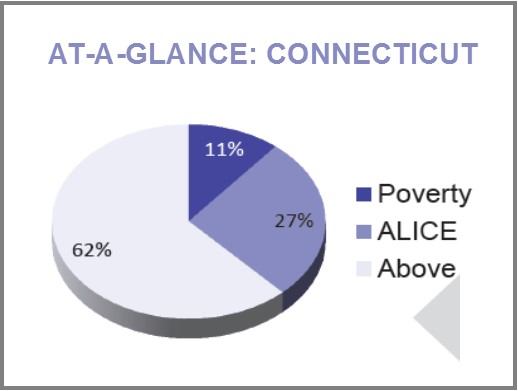
More Connecticut households are struggling to pay for their most basic needs, according to a new report from United Way.  More than one out of four households - in one of the wealthiest states in the U.S. - are employed, yet still fall below what is needed to thrive financially.  That is an increase in both the number and percentage of such households in 2014 as compared with 2012, according to the updated ALICE report. Two years ago, United Ways introduced ALICE, which stands for - Asset Limited Income Constrained Employed - to place a spotlight on a large population of residents who are working, but have difficulty affording the basic necessities of housing, food, child care, health care and transportation.pie

In those two years, the problem has grown worse, even has the recession has given way to a slow economic recovery, in Connecticut and nationwide.  ALICE and poverty households combined account for 38 percent of households in the state that struggle to make ends meet.

A total of 361,521 Connecticut households fall into what the study describes as the ALICE population. These are households earning more than the official U.S. poverty level, but less than the basic cost of living. This is more than 2.5 times the number of households that fall below the federal poverty level. ALICE households make up 20% or more of all households in 114 (67%) of Connecticut’s 169 cities and towns.

The highest levels (ALICE and poverty households) were in Hartford (74%), New Haven (65%), Waterbury (63%), Bridgeport (63%) and New Britain (63%).  Also above 50 percent are Meriden, West Haven, East Hartford and New London.  From 2007 to 2014, two cities, Danbury and Waterbury, saw their total household population decrease, by 7 and 9 percent respectively, while the rest experienced an increase in households, with the largest increase of 8 percent in Stamford, according to the report. The number of household below the ALICE Threshold increased in every one of the nine largest cities and towns with Norwalk seeing the largest percent increase (38 percent).

2016-alice-report-update-coverWhile the prevalence of low-wage jobs still defines Connecticut’s economy for ALICE, for the first time in the past decade, the percent of jobs paying less than $20 per hour fell below 50 percent of all jobs.  The report also highlights a number of trends in Connecticut, including:

  • The population is aging, and many seniors do not have the resources they need to support themselves.
  • Differences by race and ethnicity persist and ethnicity persist, creating challenges for many ALICE families, as well as for immigrants in Connecticut.
  • Low-wage jobs are projected to grow faster than higher-wage jobs over the next decade.
  • Technology is changing the workplace, adding some jobs, replacing many others, while also changing where people work, the hours they work, and skills required. The report notes that technology creates opportunities as well as challenges for ALICE workers.

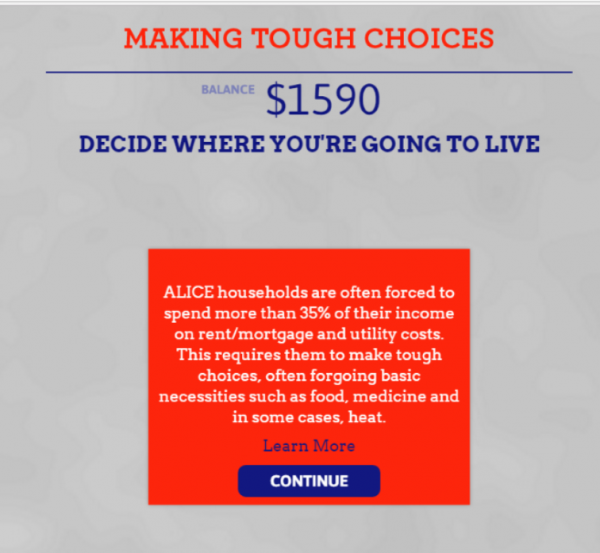
For the first time, an online simulator is also available to experience the financial challenges that ALICE households in Connecticut face at www.MakingToughChoices.org.  The updated Report uses data from a variety of sources, including the U.S. Census and the American Community Survey to provide tools that quantify the number of households in Connecticut's workforce that are struggling financially. The updated United Way ALICE Report reveals:

  • The composition of the ALICE population is men and women, young and old, of all races.
  • The breakdown of jobs in Connecticut by hourly wage (51% of jobs pay more than $20/hour) compared to what it costs to survive for a family of four (2 adults, 1 infant, 1 preschooler) - $70,788.
  • Every city and town in Connecticut has ALICE households. More than two-thirds of Connecticut's cities and towns have at least 1 in 5 households that fit the ALICE definition for financial hardship.cropped-alicemicrositelogo2

Poverty and ALICE households exist in every racial and ethnic group in Connecticut, but the largest numbers are among White non-Hispanic households. There were about one million White households in 2014, compared to 328,000 households of color (Figure 4 shows the populations of color for whom there is income data: Hispanic, Black and Asian). However, these groups made up a proportionally larger share of households both in poverty and ALICE: 64 percent of Hispanic households, 58 percent of Black households, and 30 percent of Asian households had income below the ALICE Threshold in 2014, compared to 31 percent of White households.

The largest population of color in Connecticut, Hispanics, has been growing since 2007, totaling 156,837 households in 2014, a 25 percent increase. As the number of Hispanic households increased, so did the number and proportion of Hispanics living below the ALICE threshold. The percentage of Hispanic ALICE households rose from 34 percent in 2007 to 39 percent in 2010 and then to 43 percent in 2014. Together Hispanic households in poverty and ALICE made up more than two-thirds of Hispanic households in 2014.

making-tough-choicesThere are some signs of improvement in the education gap among racial and ethnic groups, suggesting that some structural changes are occurring in Connecticut. In K-12 education, the Education Equality Index (EEI) shows that the achievement gap – the disparity in educational measures between socioeconomic and racial or ethnic groups – narrowed slightly between 2011 and 2014 in Connecticut.

Achievement gaps impact graduation rates and college performance. Among the Class of 2013, 64 percent of Black students and 59 percent of Hispanic students in the state went on to college within a year after graduating from high school, compared to 78 percent of White students. They also had lower 6-year college graduation rates: While 54 percent of White students got a college degree within 6 years, only 24 percent of Black students and 21 percent of Hispanic students did the same (Connecticut State Department of Education, 2015).

The updated ALICE Report recommends both short-term and long-term strategies to help ALICE families and strengthen our communities. United Ways work with many community partners to provide support to ALICE families to help them get through a crisis and avoid a downward spiral into even worse circumstances such as homelessness as well as assisting with financial literacy, education and workforce readiness.

Further, United Ways in Connecticut have invested more than $8.5 million in child care and early learning; $1.3 million in housing and homeless prevention work; $5 million in basic needs programs; and, have assisted working families in obtaining nearly $40 million in EITC and tax refunds and credits in 2016.

The updated Connecticut ALICE Report was funded by the 16 Connecticut United Ways. For more information or to find data about ALICE in local communities, visit http://alice.ctunitedway.org.  Connecticut United Ways are joining with United Ways in fifteen other states to provide statewide ALICE Reports. The updated Connecticut ALICE Report provides analysis of how many households are struggling in every town, and what it costs to pay for basic necessities in different parts of the state (Household Survival Budget).

https://youtu.be/u7gPJGu2psw

 [2014 ALICE introductory video]

First Niagara Transitions to KeyBank This Weekend

For customers of the soon-to-be-history First Niagara Bank, this will be a holiday weekend of banking transition, as KeyBank becomes the new name on the door on Tuesday morning after a host of changes inside. First Niagara branches, converting to KeyBank, will close at 3 p.m. Oct. 7 and reopen for business the morning of Oct. 11, the day after Columbus Day. The company promises a smooth transition, and has been providing customers of the bank’s more than 60 branches in Connecticut with step by-step previews of what to expect. The changes represent the completion of the $4.1 billion KeyCorp purchase of First Niagara.logo-lockup

“As KeyBank and First Niagara come together you can continue to bank as you currently do, using your same account number, checks, debit card, ATM card, credit card, telephone banking, online access and branches,” the company website points out.

First Niagara has 65 branches in Connecticut that will be transitioned to KeyBank branches. There were no existing KeyBank branches in the state prior to the merger, so there was no overlap that required branch closings, as is often the case with bank mergers.

Headquartered in Cleveland, KeyBank’s footprint includes 15 states via a network of more than 1,200 branches and more than 1,500 KeyBank ATMs. The company’s roots trace back 190 years to Albany, New York. Since then, KeyCorp has grown into one of the nation's largest bank-based financial services companies, among the top 15, with assets of approximately $135 billion, according to the company.

keybank-mapIn recent months, First Niagara did consolidate five Connecticut branches (Woodstock, Dayville, Hamden, East Haven and Madison), and all of the employees who worked at those branches were offered positions within the bank, officials indicated, and no layoffs were associated with that consolidation.

"By asset size, this is the largest bank merger since the financial crisis,” Beth E. Mooney, Key’s chairwoman and CEO, told the Buffalo News last month, during a visit to Key’s Northeast regional headquarters in Buffalo, which had been First Niagara’s corporate headquarters.

“So there is a significance and an importance for us to do it well that’s critical for our communities, our clients, our employees and our shareholders. But from an industry perspective, this is actually one that there’s a fair amount of eyes on us, as well.”

The conversion of First Niagara accounts and services to KeyBank will begin at with a 3 p.m. close of business on Friday, October 7.  Due to Online Banking updates, customer balances that appears online on Thursday, October 6 at 11:59 p.m. will not change until Saturday, October 8, at 6 a.m., so any purchases or deposits made during that time will not be reflected on online balances until Saturday. Customers can continue to use current First Niagara ATM/debit card, account numbers and PINs will not change.

The acquisition of First Niagara by Keycorp was announced on Oct. 30, 2015, and includes the addition of approximately 300 First Niagara branches in New York, Pennsylvania, Connecticut and Massachusetts.  First Niagara had entered the Connecticut market in 2011 with the purchase of New Alliance Bank.

Global Health and Innovation Conference, World's Largest, in New Haven in April

The Innovation Prize is a $10,000 and a $5,000 cash prize that is awarded to the two best social impact pitches that are presented at the 2017 Global Health & Innovation Conference, to be held in New Haven at Yale University on April 22-23, 2017. The Global Health & Innovation Conference (#GHIC) is the world's leading and largest global health conference as well as the largest social entrepreneurship conference, with 2,200 professionals and students from all 50 states and more than 55 countries, according to conference organizers.

The conference was developed by Unite for Site, a 501(c)(3) nonprofit global health delivery organization that is free of commercial interests and committed to promoting high-quality health care for all. GHIC 2017 will be Unite For Sight's 14th annual conference, having grown from a conference of about 100 participants in its first year.unite-for-sight-logo

Unite For Sight, headquartered on Church Street in New Haven, supports eye clinics worldwide by investing human and financial resources in their social ventures to eliminate patient barriers to eye care. Unite For Sight applies best practices in eye care, public health, volunteerism, and social entrepreneurship to achieve our goal of high-quality eye care for all. The programs are locally led and managed by ophthalmologists at Unite For Sight's partner eye clinics.

unite-2Unite For Sight's international eye care services with partner local eye clinics are provided year-round and are comprehensive, including examinations by local eye doctors, diagnosis and care for treatable conditions, education, and preventative care. The organization’s website indicates that Unite For Sight has provided eye care services to more than 2.1 million people worldwide, including more than 93,166 sight-restoring surgeries.

The conference is expected to include 300 speakers, including keynote addresses from:

  • Vanessa Kerry, Founder and CEO, Seed Global Health
  • Jeffrey Sachs, PhD, Director of Earth Institute, Columbia University; Quetelet Professor of Sustainable Development, Professor of Health Policy and Management, Columbia University; Special Advisor to Secretary-General of the United Nations Ban Ki-moon
  • Sonia Sachs, Director, Health Sector, Earth Institute, Columbia University; Health Coordinator, Millennium Village Project
  • Leana Wen, Baltimore City Health Commissioner

Unite for Sight was founded in 2000 by Jennifer Staple-Clark, then a sophomore at Yale University, in her dorm room. Unite For Sight is now a leader both in global health education and in providing cost-effective care to the world's poorest people. Staple-Clark, the organization’s Chief Executive Officer, is being honored in November by the Greater New Haven Chamber of Commerce as a Millennial Move Maker.unite

She is the recipient of the 2011 John F. Kennedy New Frontier Award, presented by the John F. Kennedy Library Foundation and the Institute of Politics at Harvard's Kennedy School of Government to "an individual whose contributions in the realm of community service, advocacy or grassroots activism have elevated the debate or changed the landscape with respect to a public issue or issues." In 2015, Middlebury College's Center for Social Entrepreneurship presented Jennifer with the Vision Award "to recognize leadership and vision in the world of social entrepreneurship."

Topics at the April conference will also include design thinking; education and school-based programs; environment health, energy, food and agriculture; healthcare delivery, university education initiatives; health policy, mental and neurological health; patient-centered initiatives; marketing communications; social entrepreneurship; surgery & global health; technology in global health; and non-communicable diseases.

unite-3The conference also includes Social Impact Labs, which provide an opportunity for selected speakers to present their new idea in the format of a 5-minute pitch. All of the presentations are ideas that are being developed, meaning that the ideas are in the brainstorming, early development, or early implementation stage.  Following each presenter’s 5-minute pitch, there is a 15-minute period for discussion and coaching with two expert speakers, questions, answers, and feedback from the audience.

For Innovation Prize at the 2017 GHIC, there are two categories: Early Stage (idea, program, or organization is less than 3 years old, and ideas in the brainstorming stage are also eligible) and Established Stage (program or organization is 3-6 years old). A newer program (0-6 years old) that is within an established (7+ year old) organization qualifies for the Social Impact Lab category as well.

https://youtu.be/Lt818tE5AUc

https://youtu.be/NtTtFAv-uTQ