Efforts Forge Awareness From Tragedy, As CT Nonprofit Stresses Fire Safety
/Jeff Block founded One Innocent Life, a Connecticut-based nonprofit organization, 18 months ago while battling for a new state law to improve Connecticut fire safety standards. He has been campaigning for fire safety in Connecticut homes since 2012, when his daughter, Eva, of Woodbridge, and two friends, died in a fire in their off-campus housing at Marist College in upstate New York on January 21st. Approximately 66 percent of students attending college in the U.S. live in off-campus housing, according to the Center for Campus Fire Safety Student Committee.
His efforts led to legislation in Connecticut, but One Innocent Life is continuing to advocate for greater awareness, in Connecticut and beyond, on campuses and in local communities.
According to the National Fire Protection Association, U.S. fire departments responded to an estimated annual average of 3,870 structure fires in dormitories, fraternities, sororities, and barracks between 2009 and 2013. From 2000 - 2015, 89 fires that killed 126 people have occurred on a college campus, in Greek housing or in off-campus housing within three miles of the campus. Of these, 76 off-campus fires caused 107 deaths, while 7 on-campus building or residence hall fires claimed 9 victims and 6 fires in Greek housing took the lives of 10 people.
Public Act 15-5, approved by the Connecticut legislature in the June 2015 Special Session, took effect on October 1, 2015. The law requires landlords to include a notice in each dwelling unit's lease disclosing whether the unit has a working fire sprinkler system. If a unit has a working system, the lease must also include a notice indicating the date of its last maintenance and inspection. Both notices must be printed in a uniform font of at least 12-point, boldface type.
Under the state law, a “fire sprinkler system” is a system of piping and appurtenances designed and installed according to generally accepted standards so that heat from a fire automatically causes water to discharge over the area, extinguishing the fire or preventing it from spreading.
There were seven college students in the rental house that night in Poughkeepsie. Four made it out. New Canaan resident Kevin Johnson, a student at Duchess Community College at the time, Kerry Fitzsimmons, a Marist senior from Long Island, and Eva Block, a Marist senior, did not. “One Innocent Life is dedicated to raising awareness about the living conditions of college students, involving fire safety,” the organization’s website explains.
“The annual number of fires in dormitories, fraternities, sororities and barracks reported to U.S. fire departments has been substantially higher in recent years than any time prior to 2000,” the NFPA’s Richard Campbell said in August 2016.
The National Fire Prevention Association suggests that students renting off campus housing – and other renters – ask the following of landlords:
- Does every room have a smoke alarm?
- What is the power supply to the detector (hardwire/battery/both)?
- Who provides the battery replacement?
- Does the off-campus housing have sprinklers and fire extinguishers?
- What is your disciplinary policy toward tenants who cause false alarms or fail to evacuate during an alarm?
- Do the rooms have enough outlets with enough power to feed energy needs?
- Can the exit doors be opened from the inside without a key?
- What fire safety training does your building staff receive?
One Innocent Life's video to extend awareness, made with the help of Wesleyan University, the City of Middletown Professional Firefighters Local 1073, includes more than a dozen volunteers from Connecticut.
https://youtu.be/9tVQGDyzUHQ

 Also this month, the State Treasurer’s office is closing the year with a push urging consumers to check the agency’s CT Big List to determine if misplaced assets can be claimed. State Treasurer Denise L. Nappier said the special online publication is one component of the Treasury’s efforts to reunite rightful owners with their unclaimed property and is available through its homepage, www.ott.ct.gov.

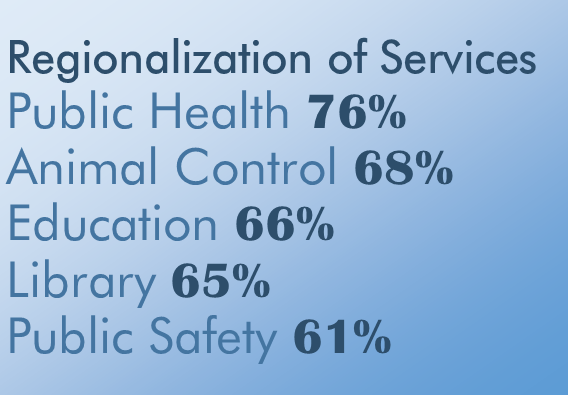 “Increasingly, towns will not be able to afford to sustain the level of services to which they have become accustomed, as budget pressures increase along with a reluctance to raise taxes. Residents showed concern, and a willingness to consider regionalism as a partial solution,” said Robert W. Santy, who serves as Board Chair of Inform CT and is President & CEO of the Connecticut Economic Resource Center (CERC) Inc.


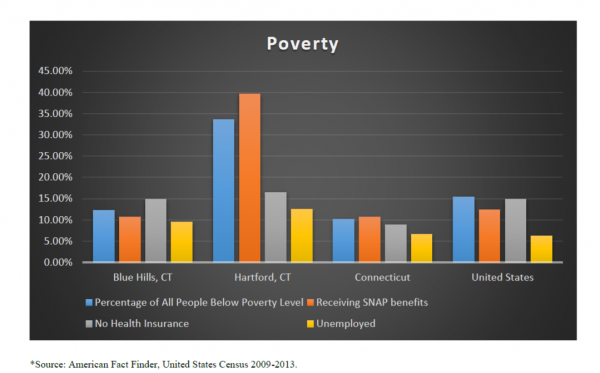 this book, education is the ultimate determinate of success. In order for Hartford to excel, the population must be educated. The emerging majority must be able to support itself and children require cutting edge educational opportunities.”
 explains. “Anyone can become a victim of abuse, but vulnerable older Americans — especially those who are women, have disabilities and rely on others for care or other type of assistance — are among the easiest targets for such misconduct.”
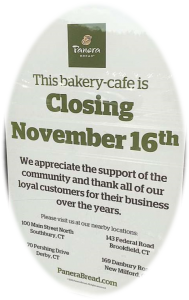
 As of June 28, 2016, there were 2,007 bakery-cafes in 46 states and in Ontario, Canada operating under the Panera Bread, Saint Louis Bread Co. or Paradise Bakery & Cafe names. Published reports indicate the company has 97,000 employees nationwide and saw a 3.4 percent growth in sales in its third quarter this year. In 2015, it reportedly generated roughly $2.7 billion in revenue. Founder and CEO Ron Shaich

 Each monthly addition of New Haven Living was nearly identical to Hartford Magazine, usually with a handful of New Haven-focused articles and features added. The Courant reported that it made the decision while evaluating opportunities to invest in higher-growth areas and the cost of distribution in Greater New Haven.
 A limited number of promotional copies will be limited “based on a proprietary algorithm for the support of our advertisers,” Young noted. He also indicated that plans are in the works to expand the publication’s
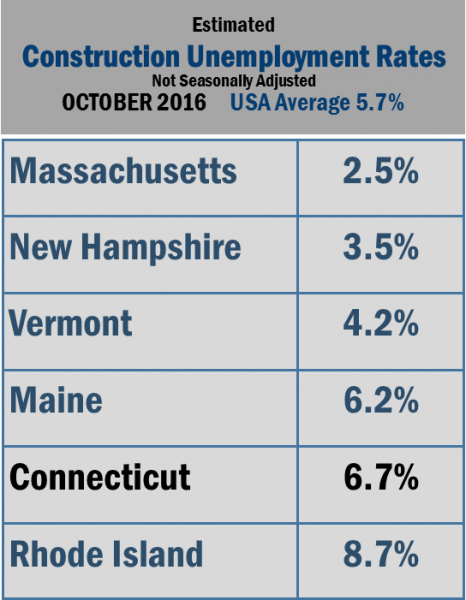
 The state’s construction industry unemployment rate nudged downward from 7.1 percent in September, but was 6.4 percent in July 2016. In recent years, the rate ballooned to 18.1 percent in October 2010, at the height of the recession, from a low of 5.8 percent in October of 2008.


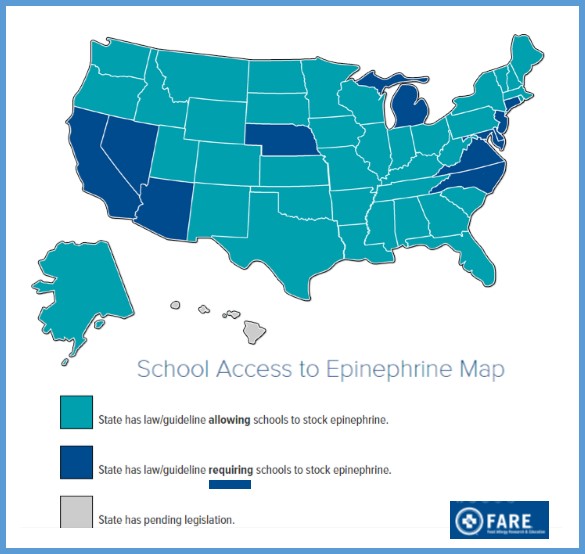
 In 2015 the legislature considered, but did not pass, a bill requiring the insurance commissioner to study and report on health insurance coverage of and out-of-pocket expenses for EpiPens, according to the OLR report. The 2014 legislation requires (a) schools to designate and train nonmedical staff to administer EpiPens to students having allergic reactions who were not previously known to have serious allergies and (b) the public health and education departments to jointly develop an annual training program for emergency EpiPen administration.
 Quality of life in the United States is heavily dependent on financial status, the survey summary points out. As a consequence, the nation’s best states to live in often report very high incomes. With a median household income of $71,346 a year, fifth highest of all states, Connecticut is the second