CT Voter Turnout Appears Highest for a Gubernatorial Race Since 1990
/In the early 1990’s, voter turnout in Connecticut’s gubernatorial elections reached 68.2 percent in 1990 and 65.1 percent in 1994. Turnout hasn’t reached that high level in the state’s quadrennial gubernatorial elections since – until Tuesday. The Office of Secretary of the State is reporting, as of Wednesday night, that statewide voter turnout was 66.9 percent. If that turnout percentage stands, it would be the highest turnout in a race for Governor in nearly three decades, since 1990.
 The strong turnout percentage this year is underscored by the fact that the number of registered voters is considerably larger. As of Nov. 2 – not including those individuals who registered and voted on Election Day – the number of registered voters in Connecticut was 2,165,045, according to the Office of Secretary of the State. Back in the ‘90’s, the list of registered voters hovered between 1.7 million and 1.8 million. This year’s election brought a higher percentage of voters to the polls from a larger list of individuals registered to vote.
Voter turnout – the percentage of registered voters who actually vote – was 56.6 in 1998, 56.5 in 2002 when there were 1.8 million registered voters, and 59.8 in 2006 when the voter rolls reached 1.9 million.
The 1990 race featured well-known, high profile candidates for Governor – former U.S. Senator Lowell Weicker, Congressman Bruce Morrison and Congressman John Rowland. The race was won by Weicker, running as a third party candidate. Rowland would go on to win the office four years later, when voter turnout was somewhat lower.
In 2006, when the Connecticut voters considered their choices in a gubernatorial match-up between Gov. Jodi Rell and New Haven Mayor John DeStefano, a U.S. Senate race that featured Sen. Joe Lieberman, Democratic candidate Ned Lamont and republican Alan Schlessinger was also on the ballot drawing considerable interest. Turnout that year reached 59.8 percent.
In 2010, Democrat Dannel Malloy won his first term as Governor, defeating Republican Tom Foley by the relatively narrow margin of 6,404 votes. A third party candidate, Tom Marsh, received 17,629 votes. Voter turnout that year was 57.4 percent.
Voter turnout is consistently higher in presidential election years. In 2016, for the Donald Trump – Hillary Clinton contest, the voter turnout in Connecticut was 76.9 percent. It had been slightly higher in 2008, when Barack Obama was on the ballot here for the first time, at 78.1 percent.
The number of people registered to vote also tends to surge in presidential election years. In 2016 in Connecticut, the voter list included 2.1 million residents. This year’s voter registration numbers, just prior to Election Day, were closing in on that total.
This story was updated at midnight Wednesday to reflect latest turnout percentage provided by the Office of Secretary of the State, which increased slightly throughout the day as additional information was provided by municipalities.
 The accelerated change in attitude at DOT since Redeker took the helm in 2011 was evident in his being warmly introduced as a friend prior to his keynote address – not the adversary that previous vehicle-centric commissioners may have been. He went on to highlight the department’s work on state projects, and in concert with municipalities, that is steadily transforming Connecticut into a more pedestrian and bike-friendly state.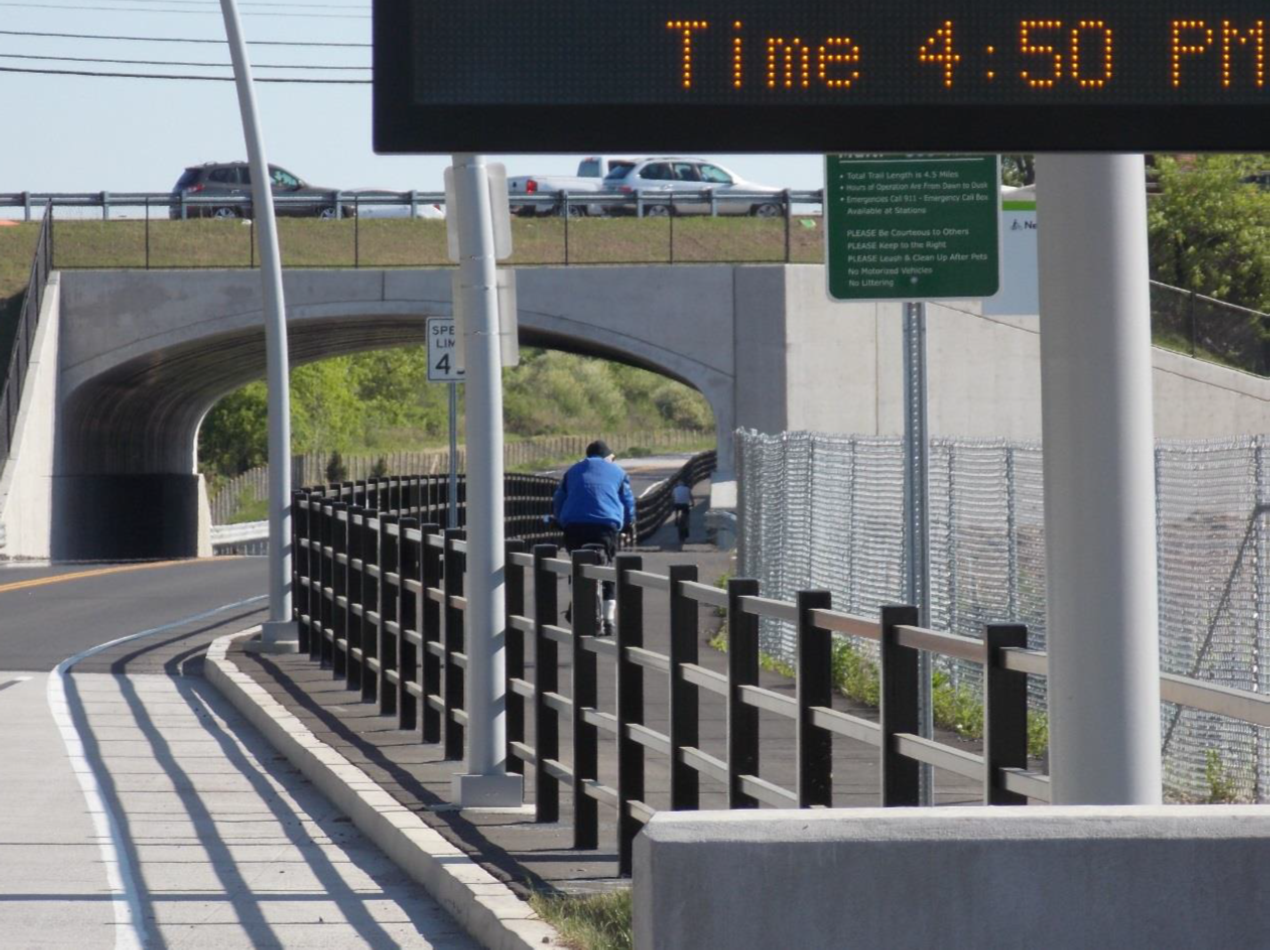




 Leading the way in the five-year analysis, released this month, are Barnstable in Massachusetts, at 13.7 percent employment growth; in New Hampshire it is Portsmouth at 10.1 percent, in Rhode Island, Providence/Warwick at 7.7 percent; Maine the greatest job growth has been in Portland/South Portland at 7.1 percent. Vermont is the only New England state with a leading city growing jobs at lower rate than Connecticut’s – Burlington/South Burlington at .8 percent. Only Alaska and Wyoming are lower, rounding out the 50 states.
 t have increased as much in comparison to other states, but isn’t the real question, ‘Why is it increasing at all?’” Luis Perez, president and CEO of

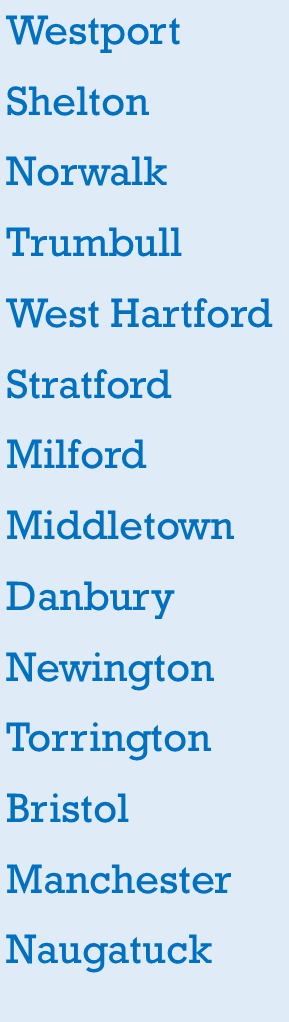 The analysis, by the financial services website WalletHub, was based on 40 key indicators of livability, ranging from housing costs to school-system quality to restaurants per capita. The indicators were grouped into five categories – affordability, economic health, education & health, safety, and quality of life.


 The comprehensive assessment of Hartford’s ecosystem also noted that “Hartford’s [startup] founders claim to have the right ambition to go global,” concluding that “Hartford’s startups have more potential to strengthen Global Market Reach and Global Connectedness.” In a number of areas analyzed in the assessment, Hartford is seen as having potential to strengthen the local startup community, its reach beyond Hartford, and the demographic of startup teams.
 The 40-page report, developed by The Child Health and Development Institute of Connecticut (CHDI), a subsidiary of the Children’s Fund of Connecticut, in partnership with the national Center for School Mental Health at the University of Maryland, provides a framework for policymakers and school districts interested in improving outcomes by addressing the mental health and trauma needs of students. The report indicates that “in a typical classroom of 25 students, approximately five will meet criteria for a mental health disorder but most of them are not receiving appropriate mental health treatment or support. Among those who do access care, approximately 70 percent receive services through their schools.”
 “Approaching student mental health with a comprehensive lens that integrates health promotion, prevention, early intervention, and more intensive treatments leads to better school, student and community outcomes," said Dr. Sharon Hoover, Co-Director of the Center for School Mental Health at the University of Maryland and lead author of the report.

 The personal-finance website WalletHub compared the largest U.S. cities – including at least two from each state - across 31 key indicators of disability-friendliness. The data set ranges from wheelchair-accessible facilities per capita to rate of workers with disabilities to quality of public hospital system. The 31 indicators were grouped into three categories: Economy, Quality of Life and Health Care.
 “Bridgeport has one of the lowest number of wheelchair accessible art, entertainment and recreational establishments per capita, and a large number of older buildings with little to no access for disabled residents," Gonzalez said.