Girls With Impact, Girl Scouts Collaborate to Increase Entrepreneurship Among Teen Girls
/In an effort to get girls career-ready, Connecticut-based Girls With Impact, the nation’s only tech-enabled entrepreneurship program for teen girls, is launching a partnership with Girl Scouts of Connecticut to enable girls to parlay their cookies experience into their own businesses.
“Entrepreneurship is one of the four programmatic pillars that comprise the Girl Scout Leadership Experience,” said Mary Barneby, CEO for Girl Scouts of Connecticut. “We welcome the opportunity to partner with Girls With Impact to provide our older Girl Scouts with a ‘virtual MBA’ in developing their own business plans. We are creating the next generation of female leaders and programs like this give our girls a real edge and help them become more confident and career-ready.”
Girls With Impact CEO Jennifer Openshaw says her goal is to train 10,000 young women as entrepreneurs, equipping them with the skills to start businesses or serve as innovators within corporate America.
Girl Scouts members will be entitled to participate in the Girls With Impact Academy – a 12-week “mini-MBA” program, valued at $2,000, that equips girls with business skills. The program, now in its third year, has helped some past participants to earn full scholarships at top colleges. Sessions are offered throughout the year, with various schedules. The reduced fee for Girl Scouts will be just $450, and scholarships are available.
It is both a skills-builder and confidence builder, critical for teenage girls as they navigate their teens and look forward to careers. Openshaw points out that only 6 percent of Fortune 500 CEOs are women and just 36 percent of entrepreneurs are women. Those are statistics she hopes to change. The after-school, extra-curricular program has seen exceptional results in confidence, empowerment, college prep and career readiness, including STEM areas.
 “Girl Scouts is one of our nation’s most powerful leadership training grounds for young women,” said Openshaw. “We’re thrilled to support Girl Scouts as it seeks to modernize and remain relevant for young women in the new global economy.”
Girl Scouts of Connecticut serves over 26,000 girls and over 12,000 adults giving girls the skills they need to empower themselves for life. Through the Girl Scout Cookie Program, the largest girl-led entrepreneurial program in the world, Girl Scouts learn five essential skills that they will carry with them for a lifetime: goal setting, decision making, business skills, money management, and people skills.
Through the Digital Cookie® platform, Girl Scouts are able to take their cookie businesses online, using their own personal website to reach customers across the country, experiencing true enterprise. Barneby called on girls to bring a friend to Girls With Impact and “build your network for tomorrow.” She says the tech delivery enables girls to connect with others nationwide and build that support system so critical to career success.
Girls With Impact, a nonprofit, is the nation’s only entrepreneurship program just for teen girls, delivered live from the home or road. Applications are accepted at www.girlswithimpact.com.
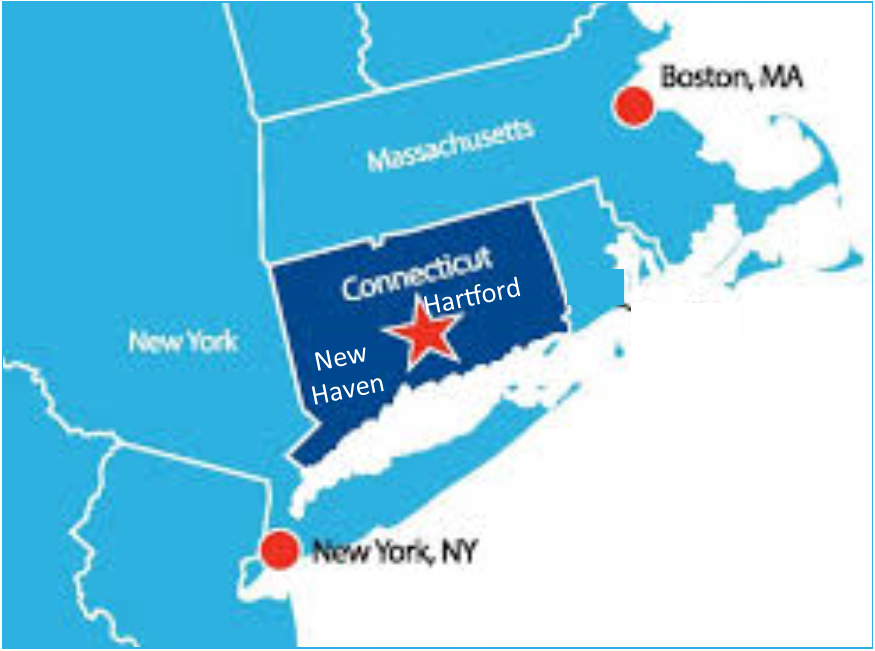 The characterization of two of the state’s largest cities as potential “suburbs” of New York and Boston, seemingly overlooking Bradley International Airport and Tweed-New Haven in the process, has raised questions from officials.

 Cohen, who has received national recognition in his field, praised the CTrail Hartford line - which connects New Haven, Hartford, and Springfield, MA - and CTfasttrak bus line – which links Hartford and New Britain - noting that “we are starting to see residential and business development near the stations, and this is one of the big benefits of transit.”
 The strong turnout percentage this year is underscored by the fact that the number of registered voters is considerably larger. As of Nov. 2 – not including those individuals who registered and voted on Election Day – the number of registered voters in Connecticut was 2,165,045, according to the Office of Secretary of the State. Back in the ‘90’s, the list of registered voters hovered between 1.7 million and 1.8 million. This year’s election brought a higher percentage of voters to the polls from a larger list of individuals registered to vote.
 The accelerated change in attitude at DOT since Redeker took the helm in 2011 was evident in his being warmly introduced as a friend prior to his keynote address – not the adversary that previous vehicle-centric commissioners may have been. He went on to highlight the department’s work on state projects, and in concert with municipalities, that is steadily transforming Connecticut into a more pedestrian and bike-friendly state.




 Leading the way in the five-year analysis, released this month, are Barnstable in Massachusetts, at 13.7 percent employment growth; in New Hampshire it is Portsmouth at 10.1 percent, in Rhode Island, Providence/Warwick at 7.7 percent; Maine the greatest job growth has been in Portland/South Portland at 7.1 percent. Vermont is the only New England state with a leading city growing jobs at lower rate than Connecticut’s – Burlington/South Burlington at .8 percent. Only Alaska and Wyoming are lower, rounding out the 50 states.

 t have increased as much in comparison to other states, but isn’t the real question, ‘Why is it increasing at all?’” Luis Perez, president and CEO of


 The analysis, by the financial services website WalletHub, was based on 40 key indicators of livability, ranging from housing costs to school-system quality to restaurants per capita. The indicators were grouped into five categories – affordability, economic health, education & health, safety, and quality of life.


 The comprehensive assessment of Hartford’s ecosystem also noted that “Hartford’s [startup] founders claim to have the right ambition to go global,” concluding that “Hartford’s startups have more potential to strengthen Global Market Reach and Global Connectedness.” In a number of areas analyzed in the assessment, Hartford is seen as having potential to strengthen the local startup community, its reach beyond Hartford, and the demographic of startup teams.

 The 40-page report, developed by The Child Health and Development Institute of Connecticut (CHDI), a subsidiary of the Children’s Fund of Connecticut, in partnership with the national Center for School Mental Health at the University of Maryland, provides a framework for policymakers and school districts interested in improving outcomes by addressing the mental health and trauma needs of students. The report indicates that “in a typical classroom of 25 students, approximately five will meet criteria for a mental health disorder but most of them are not receiving appropriate mental health treatment or support. Among those who do access care, approximately 70 percent receive services through their schools.”
 “Approaching student mental health with a comprehensive lens that integrates health promotion, prevention, early intervention, and more intensive treatments leads to better school, student and community outcomes," said Dr. Sharon Hoover, Co-Director of the Center for School Mental Health at the University of Maryland and lead author of the report.