Nearly Two-Thirds of Americans Would Consider Coworking, If Only They Knew What It Was
/Good news, bad news. That might be the best way to describe the results of a national survey by CoworkCT into public awareness of, and interest in, coworking. Nearly two-thirds of Americans (63%) said they would consider working in a collaborative work environment once they understood the concept (good news), but 60% said they had never heard of it (bad news). CoworkCT, a network of coworking communities whose members include small businesses, entrepreneurs, freelancers, and contractors who share space, resources, and ideas, conducted the national survey to better understand how familiar Americans are with coworking. Answer: they're not.
A new website will be launched next week at www.coworkct.org, with more information about coworking in Connecticut. Additional data, links and information will be added to the current test site, to assist in explaining the coworking concept to what the study suggests will be a receptive public.
According to the survey, the demographic groups most inclined to consider a coworking environment were 18 to 34 year olds (75%) and residents of the Northeast (72%). That is certainly true of Conne cticut, which has seen growth in the concept in recent years, with coworking locations established in communities across the state, including Danbury Hackerspace, reSET (Hartford), the Grove (New Haven), B-Hive (Bridgeport), Stamford Innovation Center and Axis 901 (Manchester). Each will have a presence on the news website, reflecting their growing community presence.
CoworkCT reports that the average cost of a coworking membership is $200 per month and the average cost of a private desk or office in a coworking facility is $350. The data from the survey showed that on average, people think the monthly cost of an individual coworking membership is $1,300. Not even close.
Other key findings from the research include:
- Nearly 40% of respondents said that collaboration with other professionals (not necessarily within their organization) was the most attractive feature of a coworking space, followed by 19% of respondents who chose affordability
- Forty percent of respondents thought small businesses with fewer than 10 employees were best-suited for coworking, followed by 21% of respondents who said entrepreneurs w
 ould be the best fit
 - More than half of respondents (55%) said they thought it costs more than $500 per person per month for an individual space in a coworking environment
CoworkCT is a network of Connecticut coworking communities where members share space, resources, and ideas. The goal of the network is to educate the public on the benefits of coworking and increase general awareness for the collaborative work style.
CoworkCT is coordinated by CT Next, Connecticut’s innovation ecosystem supporting the success of companies and entrepreneurs by providing guidance, resources and networks to accelerate their growth. The statewide network “connects promising companies to mentors, collaborative work spaces, universities, vendors, suppliers and other like-minded entrepreneurs to help facilitate the growth and scalability of their business.” CT Next is a program of CT Innovations, the leading source of financing and ongoing support for Connecticut’s innovative, growing companies.
Among the other coworking sites in Connecticut that are expected to be invited to the new CoworkCT website are SoNo Spaces in South Norwalk, Group 88 in Simsbury , and The Soundview, Colodesk and Comradity, all in Stamford.
The national data in the report was based on an ORC International telephone CARVAN® Omnibus survey conducted among a sample of 1,006 adults 18 and older living in the continental U.S. Interviews were completed from April 24 to 27, 2014. 
 vable Communities
 rcent, with less than 2 percent growth for people age 20 to 64 during the same period.
 nd Connecticut Coalition of Mutual Assistance Associations. The project was also supported by the Asian American Studies Institute at UConn, the UConn School of Pharmacy and the UConn School of Social Work. It focused on housing, education, language access, employment, access to public resources, and medical and mental health.
 Healthcare Concerns
 d education, promoting preventative care, actively recruiting APA members in various professional fields, creating diversity in the workforce, translating materials into the most common APA languages, and raising awareness among the APA population regarding their rights.
 ist were the small towns of Woodstock, Cornwall, and Prospect.
The Hearst analysis to determine the state’s best towns for teens, included five sets of numbers: the town’s four-year graduation rates for high schools; the percentage of the population between the ages of 15 and 19; the percentage of teens holding a job; teen pregnancy rates; and arrests numbers for teens charged with drug offenses and driving while intoxicated.
ist were the small towns of Woodstock, Cornwall, and Prospect.
The Hearst analysis to determine the state’s best towns for teens, included five sets of numbers: the town’s four-year graduation rates for high schools; the percentage of the population between the ages of 15 and 19; the percentage of teens holding a job; teen pregnancy rates; and arrests numbers for teens charged with drug offenses and driving while intoxicated.

 lvania (#43) are also in the bottom ten. New Jersey has the highest percent of young people in the region, ranked at #30, with 23.2 percent.


 In addition, it calls for creation of a consent form for parents of student athletes to sign on the warning signs, symptoms and treatment of SCA and relevant school policies. Similar legislation has already been adopted in Pennsylvania, several other states are also considering SCA bills, according to the SCAF. The provisions of the new law take effect a year from now, with the school year that begins in the fall of 2015.
 Raising Expectations 2014: A State Scorecard on Long-Term Services and Supports for Older Adults, People with Physical Disabilities, and Family Caregivers – an update of the inaugural 2011 Scorecard –
  lex medical tasks – so that their loved ones don’t end up back in the hospital and can continue to live independently at home, according to AARP officials.
 “When it comes to helping older Connecticut residents live in the setting of their choice, this silent army of family caregivers assumes the lion’s share of responsibility,” explains Duncan. “Many juggle full-time jobs with their caregiving duties; others provide 24/7 care for their loved ones. With every task they undertake, these family caregivers save the state money by keeping their loved ones out of costly nursing homes – most often paid for by Medicaid. They have earned some basic support.”

 tion, Mamoun’s, Prime 16, Skappo, Bella’s Care and Da Legna.
 The first Knights game took place on April 11, 2014. (photo at left) The stadium features a two-level club with skyline views as well as a VIP, climate-controlled club with full service bar. In addition to corporate suites, there are 987 club seats at the new Charlotte stadium. Of those, 170 on the upper level sell for $41.50 per game, or nearly $3,000 per season. The remaining 817 club seats, at $21 per game, sell for about $1,500 annually. All of the club seats were sold out 10 months prior to the season opener, according to the Knights


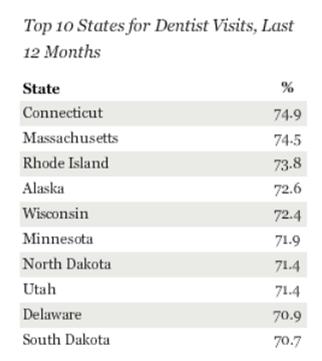
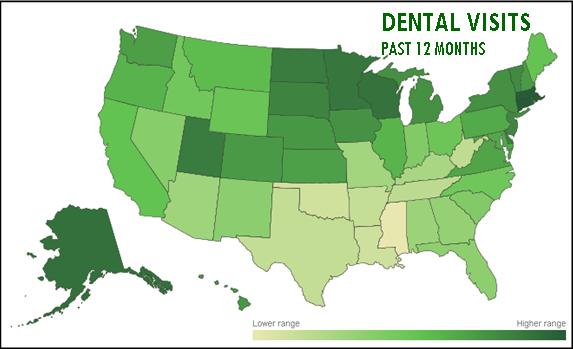
 These findings are based on interviews with more than 178,000 American adults conducted during 2013 as a part of the Gallup-Healthways Well-Being Index. Respondents were asked whether they visited the dentist in the last 12 months.